June 12, 2026 · Texas Autopsy Services
Does Mychart Have My Blood Type: Does MyChart Have Your
Does mychart have my blood type - Does MyChart have your blood type? Our guide shows you where to look, why it might be missing, and how to get this vital info

On this page
Blood type is sometimes available in MyChart, usually under Test Results or a similar lab section, but it appears only if it was tested and released by the healthcare provider. If it isn't there, that often reflects how the record was entered or shared, not whether the person ever had a blood type on file.
Families often ask us this after a death, especially when they're trying to make sense of hospital care, prior transfusions, pregnancy records, or identity details in a medical file. In that setting, the answer matters because a portal can be useful, but it is not the medical-legal record we rely on in a death investigation.
- MyChart is a patient portal, not the original lab system. A blood type result appears only if the provider documented and released it.
- The best place to look is usually Test Results or Labs and Reports. Blood type is typically stored as an ABO and Rh lab result, not a basic profile field.
- A missing result in MyChart doesn't prove it was never tested. It may exist in prenatal, surgical, transfusion, donor, or hospital records instead.
- For a deceased person, the original medical record matters far more than the portal view. In forensic review, the underlying lab or blood bank record is the authoritative source.
- Blood type can matter in an investigation, but it is rarely the central answer. Cause of death and manner of death depend on a broader review of records, circumstances, and postmortem findings.
Why Blood Type Is Often Missing from MyChart
A family may open MyChart after a death, search for something as basic as blood type, and find nothing. In our practice, that absence often creates more confusion than the medical facts themselves.
MyChart presents selected information from a health system's record. It does not function as the primary laboratory file or blood bank record. The original documentation remains the controlling source, including the lab report, transfusion service record, and hospital charting, as described in MyChart's published feature overview.
That difference matters in death investigation. Families and attorneys often need to know whether blood type was ever tested, where it was documented, and whether the result can be relied on for legal or medical review. A portal screenshot may help orient the search, but it does not replace the underlying record.
Blood type is usually recorded as the result of ABO and Rh testing tied to a specific episode of care. It is not always carried forward into a summary page or patient profile. A person may have a confirmed blood type in one part of the chart and no visible blood type entry in the portal at all.
For families trying to reconstruct care before death, a full analysis of medical records is often more useful than anything visible in MyChart. We regularly see relevant details in prenatal records, operative documentation, transfusion workups, and blood bank files that never appeared in the patient-facing portal.
Why blood typing may never have been uploaded
Blood typing is ordered for a reason. Common examples include pregnancy, anticipated surgery, transfusion planning, trauma care, or evaluation after bleeding. If none of those events occurred in that health system, there may be no blood type result to display.
Even when testing was done, the result may still be hard to find. Some health systems keep blood bank documentation in a separate module. Some release only certain lab categories to the portal. Some carry forward older results inconsistently after mergers, software changes, or outside record imports.
A missing entry in MyChart usually reflects one of these situations:
- No blood typing was performed in that system: The patient may never have had ABO and Rh testing there.
- The result exists in a different part of the chart: Blood bank, prenatal, surgical, or hospital records may contain it.
- The portal did not display the result: Interface and release settings vary by institution.
- The record came from outside the system: Imported records often appear as PDFs or scanned documents rather than searchable lab data.
In forensic review, we do not treat an empty portal field as proof that blood type was unknown. We treat it as an incomplete view until the primary records are obtained and reviewed in context.
How to Check for Blood Type in a MyChart Account
A careful search is usually faster than anticipated, if the right place is checked first.
Start with test results
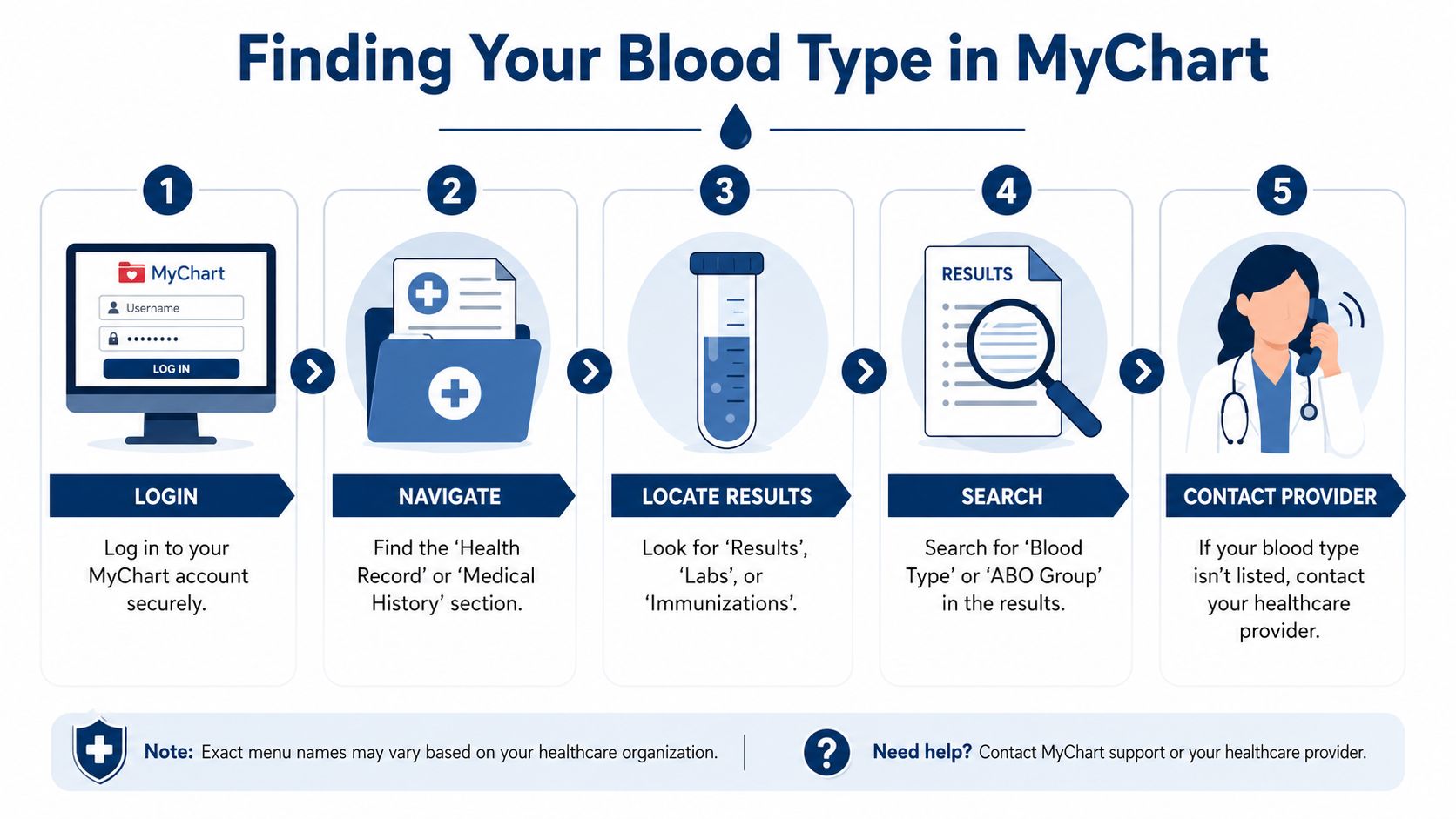
The most reliable place to check within MyChart is the Labs and Reports or Test Results area, based on practical guidance focused on portal use in this MyChart blood type walkthrough. Blood type is most often stored as a historical lab result rather than a standalone profile item.
A useful search sequence looks like this:
- Sign in securely to the MyChart account tied to the relevant provider or hospital system.
- Open Health Record, Medical History, or a similar menu if one appears.
- Check Test Results, Labs, or Labs and Reports first.
- Search for terms such as ABO, Rh, blood type, or type and screen.
- If the system has a summary page, review Health Summary after the lab sections.
For people trying to understand the terminology before searching, our guide on how blood type is determined can help make lab labels easier to recognize.
After checking those sections, it can help to see the process visually:
What to do if you still don't see it
If blood type isn't listed, don't assume the answer is no. In practice, the absence often means the provider's source system never transmitted or indexed the result into MyChart.
Sometimes the blood type exists in the chart, but not in the portal view the family can see.
At that point, the next step is usually one of these:
- Check another health system's portal: A surgery hospital, obstetric provider, or transfusion center may have the relevant result.
- Review older admissions: Historical records may contain a type-and-screen or blood bank entry from years earlier.
- Contact medical records directly: Ask whether the facility has any ABO/Rh testing, transfusion records, or prenatal records on file.
Portal searches work best for convenience. They work poorly as final proof.
Obtaining Records for a Deceased Loved One in Texas
After a death, families often discover that portal access is limited, outdated, or no longer practical for the questions they need answered. At that point, the right path is not more portal searching. It is a formal request for the decedent's underlying medical records.
What families usually need to gather
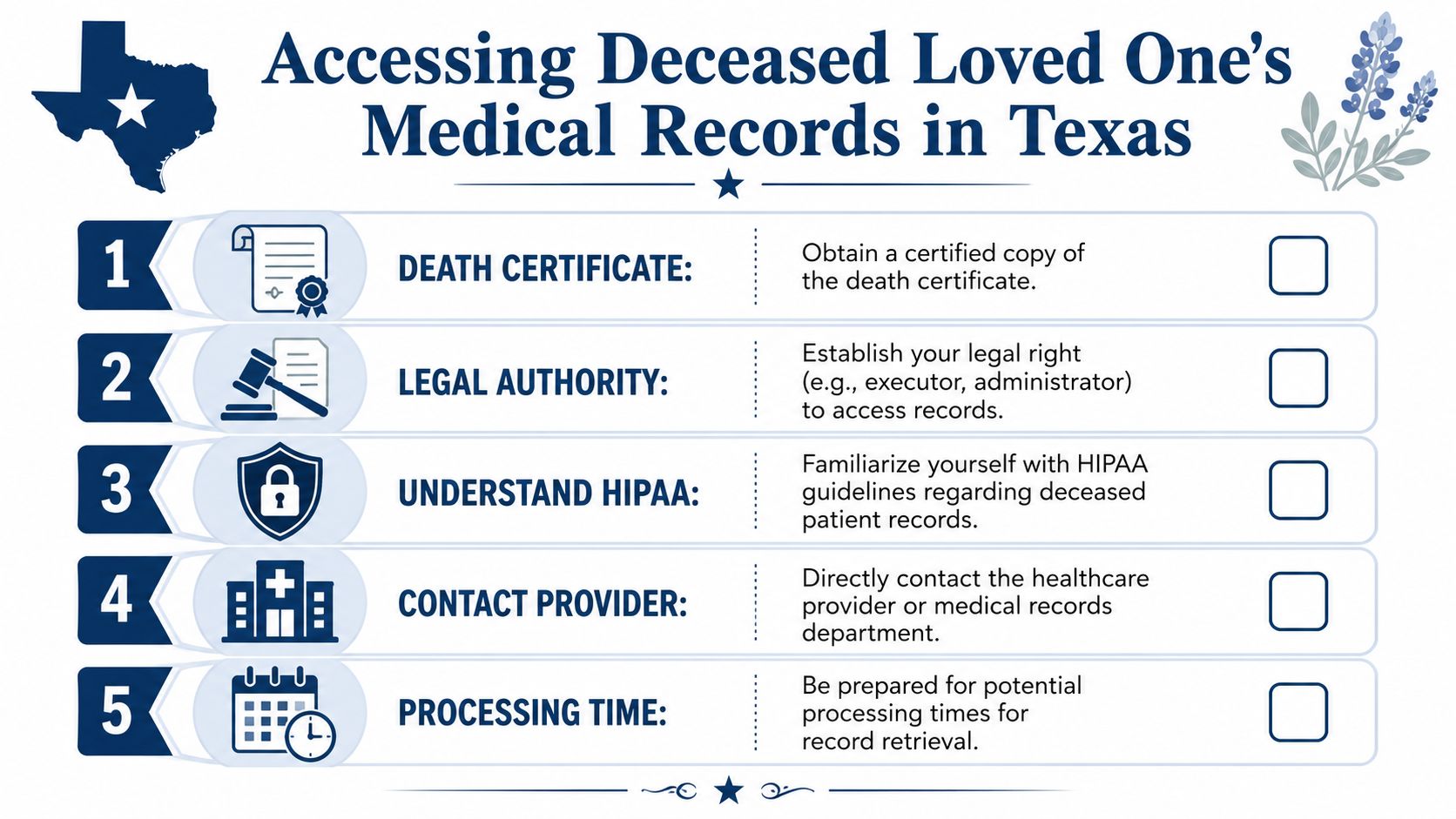
In Texas, the medical records department will usually want documentation showing both the death and the requester's authority to receive records. The exact documents can vary by facility and legal posture, especially if an estate has been opened or litigation is involved.
Families and attorneys are commonly asked for:
- A certified death certificate
- Proof of legal authority, such as executor or administrator documentation when applicable
- Identification for the requester
- A written records request that is specific about dates, facilities, and the types of records sought
When the goal is to find blood type, broad requests are often better than narrow ones. Asking only for "blood type" may miss the actual source. Asking for blood bank records, lab reports, prenatal records, surgical records, admission records, and transfusion documentation is usually more effective.
If the provider still uses faxed authorizations and release forms, a secure workflow matters. Many families and law offices find that understanding the best way to fax medical files helps reduce delays caused by incomplete submissions or unreadable attachments.
Why original records matter in death review
From a clinical workflow standpoint, blood type in a portal is best treated as a retrieved historical result, and a missing portal entry should be resolved by asking the healthcare provider or medical records team for the original blood bank or lab report, which is the authoritative source, as explained in Health.com's discussion of how to find blood type.
That point becomes especially important when a family is trying to understand a hospitalization before death. The original chart may show far more than ABO and Rh status. It may reveal whether blood was ordered, whether compatibility testing occurred, whether a transfusion reaction was considered, or whether pregnancy-related records are relevant.
A portal can answer a convenience question. The full record can answer a chronology question.
A practical request often includes these categories:
| Record type | Why it may matter |
|---|---|
| Lab reports | May contain the actual ABO/Rh typing result |
| Blood bank records | May show typing, screening, crossmatching, or transfusion support |
| Operative and perioperative records | Can clarify whether surgery created a reason for typing |
| Prenatal or obstetric records | Often contain blood typing when pregnancy care was involved |
| Discharge and admission records | Help place the blood-type result in clinical context |
When families later need expert review, the records request itself becomes part of the process. Our general guide on how to request an autopsy report also helps explain why exact record sourcing and document control matter in postmortem review.
The Role of Blood Type in a Forensic Autopsy
Blood type has a real place in forensic medicine, but it is usually a supporting data point, not the main answer. In a death investigation, the central questions are still cause of death and manner of death.
Cause of death means the disease or injury that started the fatal sequence.
Manner of death is the medical-legal classification of how the death occurred, such as natural, accident, suicide, homicide, or undetermined.
Where blood type can help
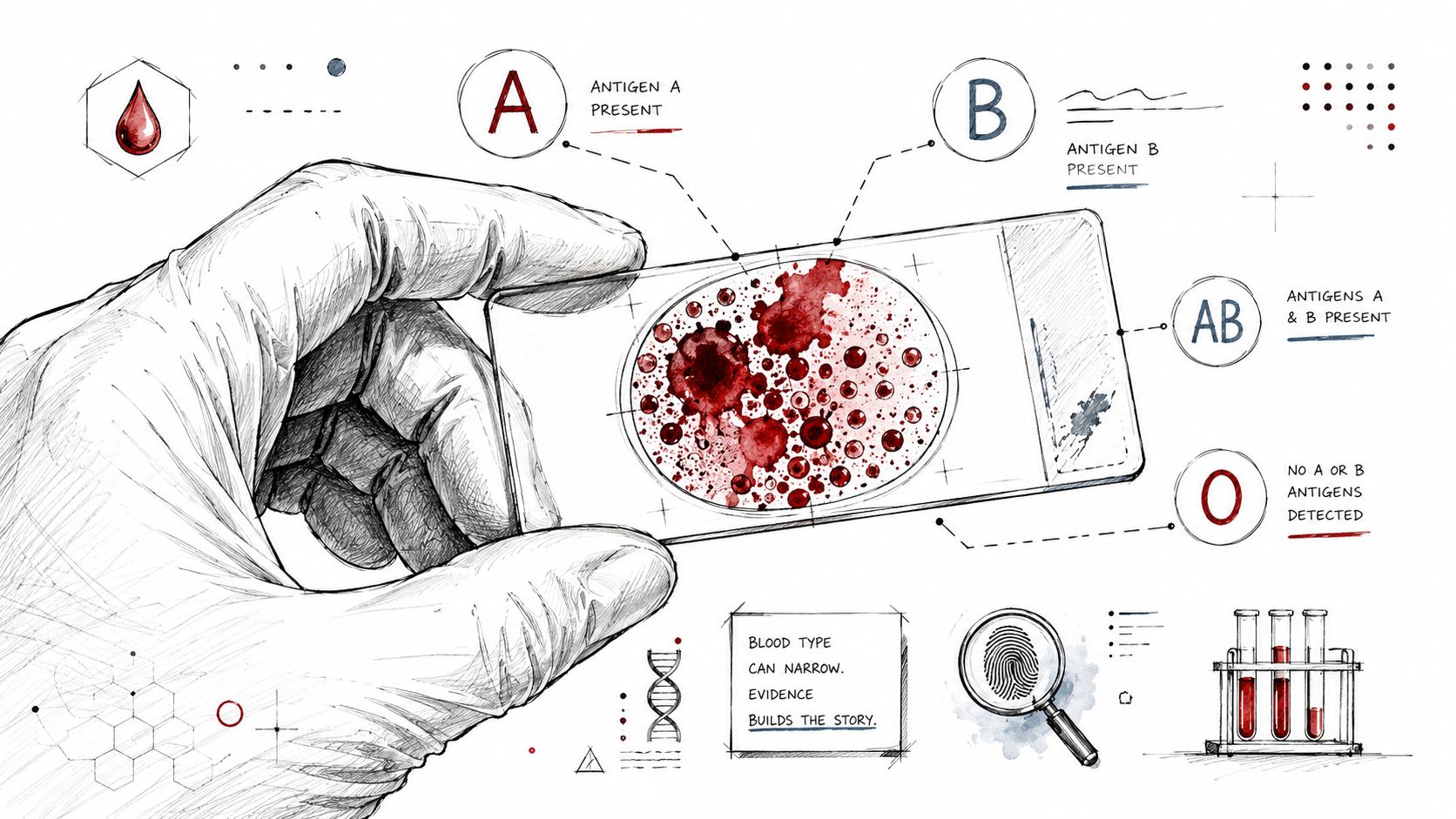
In selected cases, blood type can contribute useful background information.
- Identity review: It can support comparison with known medical records, though it is not enough by itself to establish identity.
- Transfusion history: It may help evaluate whether prior blood bank activity is relevant to the terminal hospitalization.
- Pregnancy-related context: ABO and Rh status can matter when reviewing obstetric records.
- Record reconciliation: It can help compare information from different hospitals or time periods.
For readers considering a formal postmortem review, our page on Private Autopsies explains the broader framework in which records, scene history, and examination findings are interpreted together.
Where it does not answer the main question
Transfusion medicine depends on accurate ABO and Rh typing, and an important caution is whether a MyChart-listed blood type is verified and current enough to rely on, since it may be copied from older records or be inconsistent across facilities, as noted in Kaiser Permanente's blood type test guidance.
That is why we do not treat a portal entry as a life-or-death credential in forensic review. If a case turns on compatibility, transfusion timing, or possible blood product issues, the primary lab and blood bank records matter more than the patient-facing display.
Blood type can help frame a medical history. It rarely determines the entire conclusion.
A chain of custody is the documented control of evidence and records from one person or system to another. In postmortem work, that matters because conclusions must rest on traceable source material. When blood type becomes relevant, we want to know where it came from, when it was recorded, and whether the source record is complete.
Frequently Asked Questions From Families and Attorneys
A common call to our office starts this way: a family member is looking through MyChart after a sudden death, sees no blood type listed, and worries that something important is missing. Attorneys often face the same issue from a different angle. They need to know whether a portal entry is enough to support an opinion, a timeline, or a records request. In both settings, the answer depends on the source record, not the portal screen alone.
Can a MyChart blood type be wrong or outdated
Yes. A portal entry may reflect older information, an incomplete import from another facility, or a display choice within that health system. For medical-legal review, we confirm the underlying laboratory report or blood bank documentation before treating the blood type as established.
That distinction matters in court and in grief work. Families deserve a clear answer, and attorneys need a record that can be traced to the testing laboratory.
Why wouldn't a doctor already know the blood type
Blood type is usually documented only when a clinician has a reason to order it, such as pregnancy care, surgery, transfusion preparation, or active bleeding. Outside those settings, it may never appear prominently in the chart, even if the patient received routine care for years.
A treating physician may know the blood type during an admission where typing was performed. In a later visit, or across a different health system, that information may not be visible or may not have been carried forward in a reliable way.
Will an autopsy automatically determine blood type
A forensic autopsy is designed to answer the questions raised by the death investigation. Blood typing is not a routine part of every examination. It is considered when it has a defined purpose, such as reviewing transfusion issues, sorting out identity concerns, or comparing postmortem findings with antemortem records.
In many cases, the better answer comes from records created before death. If blood type may affect the legal or medical analysis, raise that point early so the reviewing pathologist can decide whether existing documentation is enough or whether additional testing should be considered.
Can blood type help identify a person
It can support an identification review, but it cannot identify a person by itself. Many unrelated individuals share the same ABO and Rh type. In forensic practice, identity is established by the total record, which may include medical history, radiology, fingerprints, dental comparison, investigative findings, and family-provided documents.
For official public death investigations, families sometimes also need to understand the difference between a county-ordered examination and an independent review. Our page on County Forensic Autopsies explains that distinction in the Texas setting.
MyChart is empty. What should the family do next
Request records from the provider most likely to have performed blood typing. That is often a hospital admission, a surgical facility, an obstetric practice, or any setting involving transfusion care.
Keep copies of what is already available, including portal screenshots, discharge paperwork, and lab summaries. Those materials help orient the review. For a formal opinion, however, we rely on the complete chart and the original lab source documents.
Does blood type usually change the cause of death opinion
Usually, it does not. Blood type is more often a supporting fact than the deciding fact. It becomes more important in cases involving transfusions, pregnancy-related events, disputed identity, or questions about whether records from different facilities belong to the same person.
Cause and manner of death opinions are based on the full medical and investigative record. That includes scene information, prior treatment records, autopsy findings, microscopic examination when needed, and laboratory data.
If your family is trying to sort through records after a loss, or if an attorney needs an independent forensic review, Texas Autopsy Services can help clarify what records matter, what questions an autopsy can answer, and how to proceed in a careful, respectful way. Every examination is performed by a forensic pathologist certified by the American Board of Pathology, and our team serves families, attorneys, and agencies across Texas with direct communication and a medically precise, compassionate process.