June 29, 2026 · Texas Autopsy Services
Mortuary vs Funeral Home a Practical Texas Guide
Mortuary vs funeral home—what's the difference in Texas? Our guide explains services, costs, and how private autopsy services fit into your family's plans.
On this page
- The First Call The Sudden Need for Answers
- Defining the Terms Mortuary and Funeral Home
- A Practical Comparison of Services Staffing and Costs
- How Private Autopsy Services Intersect with Your Plans
- A Guide for Texas Families and Attorneys
- Making Informed Decisions with Confidence
- Frequently Asked Questions
- A mortuary and a funeral home are often closer in function than families expect.
- Traditional differences still matter in some cases, especially when a facility is more clinical or more service-oriented.
- In Texas, the practical question is usually not the name of the facility, but what services that specific provider handles.
- A private autopsy is a separate medical-legal service that can coordinate with either a mortuary or a funeral home.
- Legal authority, chain of custody, and timing all matter when families or attorneys need answers about cause of death.
A family gets a call from a hospital, a nursing facility, or law enforcement. Within hours, they hear unfamiliar terms. One person says the decedent has been taken to a mortuary. Another says they need to choose a funeral home. An attorney may already be asking whether an independent autopsy should be arranged before cremation or burial planning moves forward.
That confusion is common. In grief, even ordinary administrative language can feel difficult to sort through. Families often worry they are being asked to choose between two completely different systems, when it is usually more practical and less mysterious.
The distinction between mortuary vs funeral home matters, but not always in the way online definitions suggest. In Texas, the more useful questions are these: Who has custody of the body right now? Who is authorized to make decisions? Which provider is handling preparation, ceremony, transport, cremation coordination, or burial logistics? And if an independent autopsy is needed, how does that fit into the timeline without disrupting lawful and respectful care?
The First Call The Sudden Need for Answers
A loss often turns into logistics before a family has had time to absorb the news. Someone is asked to confirm identity. Someone else is told to contact a funeral provider. If the death was unexpected, a lawyer may advise preserving evidence and considering an autopsy before final arrangements continue.

What families usually need first is not more jargon. They need a clear sequence. Who can release information. Who can authorize transport. Whether the body is under a medical examiner or justice of the peace hold. Whether the place named in a phone call is handling only preparation, or the full service plan as well.
A common Texas scenario looks like this. A hospital or facility asks the next-of-kin to choose a funeral provider. A relative hears the word mortuary and assumes that means a temporary holding place only. Another relative starts calling funeral homes separately because they think a service location must be found elsewhere. Time is lost, not because anyone failed to act, but because the terminology is unclear.
For families dealing with probate and immediate legal tasks, a practical checklist like Legal steps when a loved one passes can help organize the first decisions after death.
Immediate priority: Confirm who has legal authority to act, where the decedent is being held, and whether any investigative hold applies before making assumptions based on the facility name.
Attorneys face a related problem. They may need records preserved, an independent examination considered, and a lawful transfer coordinated, all while the family is also planning visitation, cremation, or burial. The right approach is usually calm coordination, not a race between competing providers.
Defining the Terms Mortuary and Funeral Home
The historical distinction
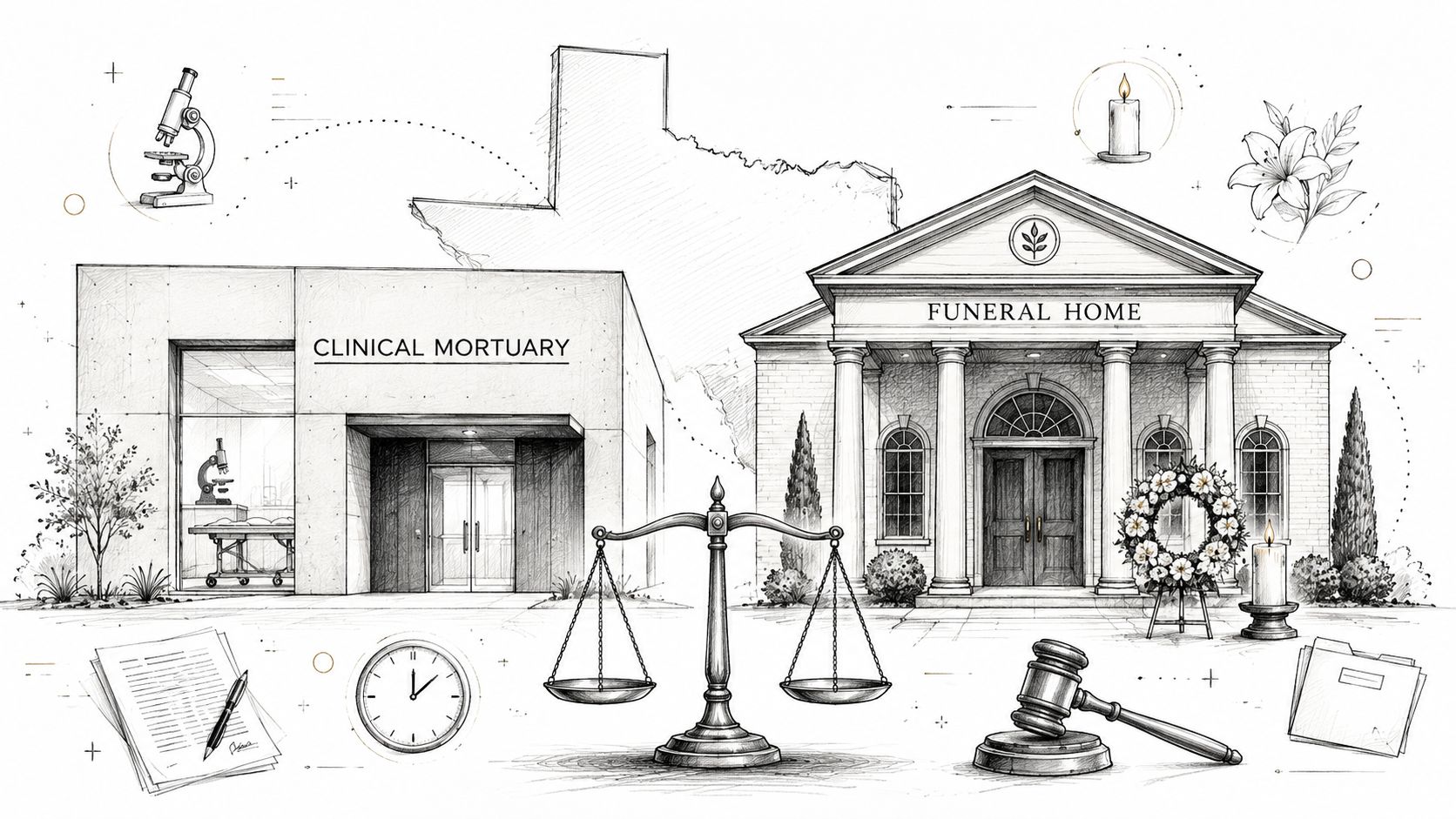
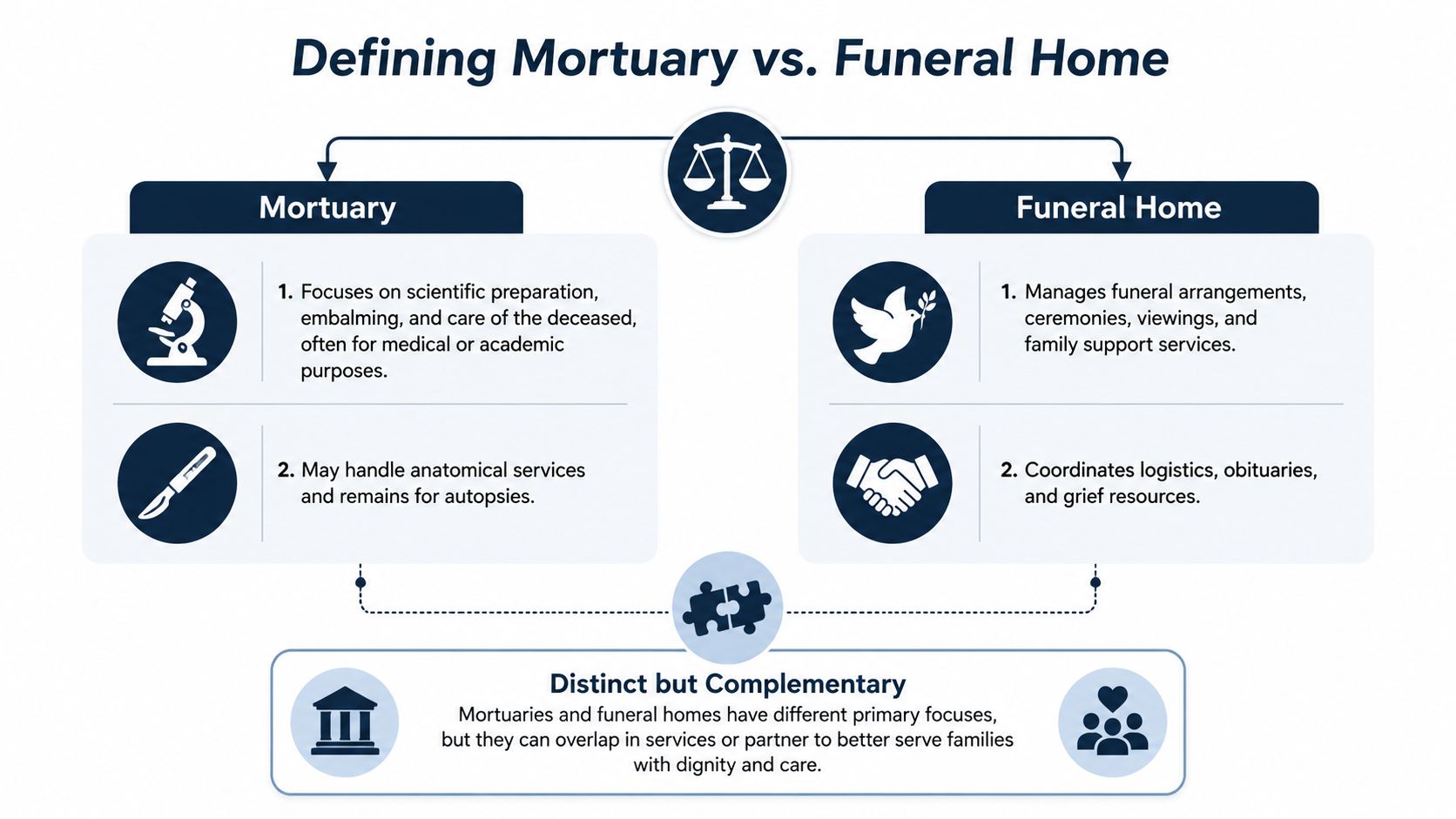
Historically, a mortuary referred more often to the place where the deceased was cared for physically. That included preparation, preservation, and other technical postmortem work. A funeral home traditionally referred more to the place where families made arrangements, gathered for visitation, and held memorial or funeral services.
That older distinction still helps explain the language. It is one reason some people hear “mortuary” and picture a more clinical setting, while “funeral home” sounds more public-facing and family-centered.
For readers who want a related explanation of physical care after death, our discussion of postmortem care helps place these terms in a broader medical and logistical context.
Later in this section, this short video gives a general overview of the terminology families often hear:
Why the terms overlap now
Modern practice is less divided. The U.S. funeral industry generates approximately $16.3 billion annually, and industry analysis from the NFDA indicates that the terms “mortuary” and “funeral home” now have no significant bearing on the type of service received, as most facilities offer blended services, dissolving the historical separation of duties (NFDA media center).
That matters because families often assume they must locate one business for body care and a different one for ceremony planning. In many cases, that is no longer true. A facility may use one name for tradition, branding, or local custom while still providing a broad range of services.
In practice, the name on the building often tells you less than the service list, licensing, staffing, and transfer procedures.
This is why the mortuary vs funeral home question should be answered operationally, not just semantically. Ask what the establishment does. Does it arrange visitation? Coordinate cremation? Handle transport? Work directly with cemeteries? Accept remains back after a medical or forensic examination? Those answers matter far more than the label.
A Practical Comparison of Services Staffing and Costs
The traditional terms still point to real differences in emphasis. A mortuary is often a more clinical environment focused on mortuary sciences and technical preparation, while a funeral home provides a full-service, support-oriented experience for grieving families, often with staff trained in grief counseling to coordinate memorialization (Science Care explanation).
That does not mean one is better. It means the fit depends on what the family needs, what the provider offers, and whether another service, such as a private autopsy, must be coordinated alongside final arrangements.
Mortuary vs. Funeral Home At a Glance
| Aspect | Mortuary (Traditional Definition) | Funeral Home (Traditional Definition) |
|---|---|---|
| Primary focus | Technical care of the deceased | Family arrangements and memorial services |
| Typical environment | More clinical and private | More public-facing and support-oriented |
| Staff emphasis | Preparation and mortuary sciences | Funeral directing, ceremony planning, family support |
| Viewings and ceremonies | May be limited or handled selectively | Commonly central to the facility's role |
| Coordination role | May focus on preparation and release | Often manages broader event and paperwork logistics |
| Autopsy interaction | May be familiar with postmortem transfers and returns | May coordinate family planning while outside medical services proceed |
| Cost structure | Can vary based on preparation-focused services | Can vary based on service packages, facilities, staffing, and ceremony options |
The cost question deserves careful wording. There is no universal rule that a mortuary costs less or that a funeral home costs more. Charges depend on the actual services selected. A simple direct disposition may be modest compared with a full visitation and ceremony, regardless of what the facility is called. By contrast, a provider with chapels, arrangement staff, printed materials, and event coordination may have a different pricing structure because it is providing more family-facing services.
What families should ask before choosing
A short call can answer most of the confusion if the questions are concrete.
- Ask about services, not labels. Does the provider handle viewing, funeral ceremony, direct cremation, burial coordination, and transport?
- Ask about staffing. Who will be your day-to-day contact, and who is supervising preparation and logistics?
- Ask about outside coordination. If a private autopsy, tissue donation issue, or legal hold is involved, has the facility handled that process before?
- Ask for an itemized explanation. Families deserve to understand which charges relate to preparation, facility use, staff time, printed materials, obituary placement, transportation, or cemetery coordination.
Obituary planning is a good example of a task families underestimate. Newspaper and memorial platform practices differ, and many people are surprised that publication can involve separate charges from funeral service fees. A practical guide to understanding obituary costs can help families ask the right questions early.
Practical rule: Choose the provider that can clearly explain custody, preparation, scheduling, and documentation. Clear answers are usually a better sign than familiar terminology.
For attorneys, the decision criteria are even more specific. If litigation is possible, they often need a provider that will coordinate release and transfer lawfully, preserve documents, and work reliably with outside forensic professionals. A family may prioritize chapel space and support staff. Counsel may prioritize timing, records, and custody documentation. Both concerns can be met, but only if everyone understands each provider's actual role.
The best approach is to treat “mortuary” and “funeral home” as starting points for questions, not final descriptions. In Texas, the same business may function as both in everything but name.
How Private Autopsy Services Intersect with Your Plans
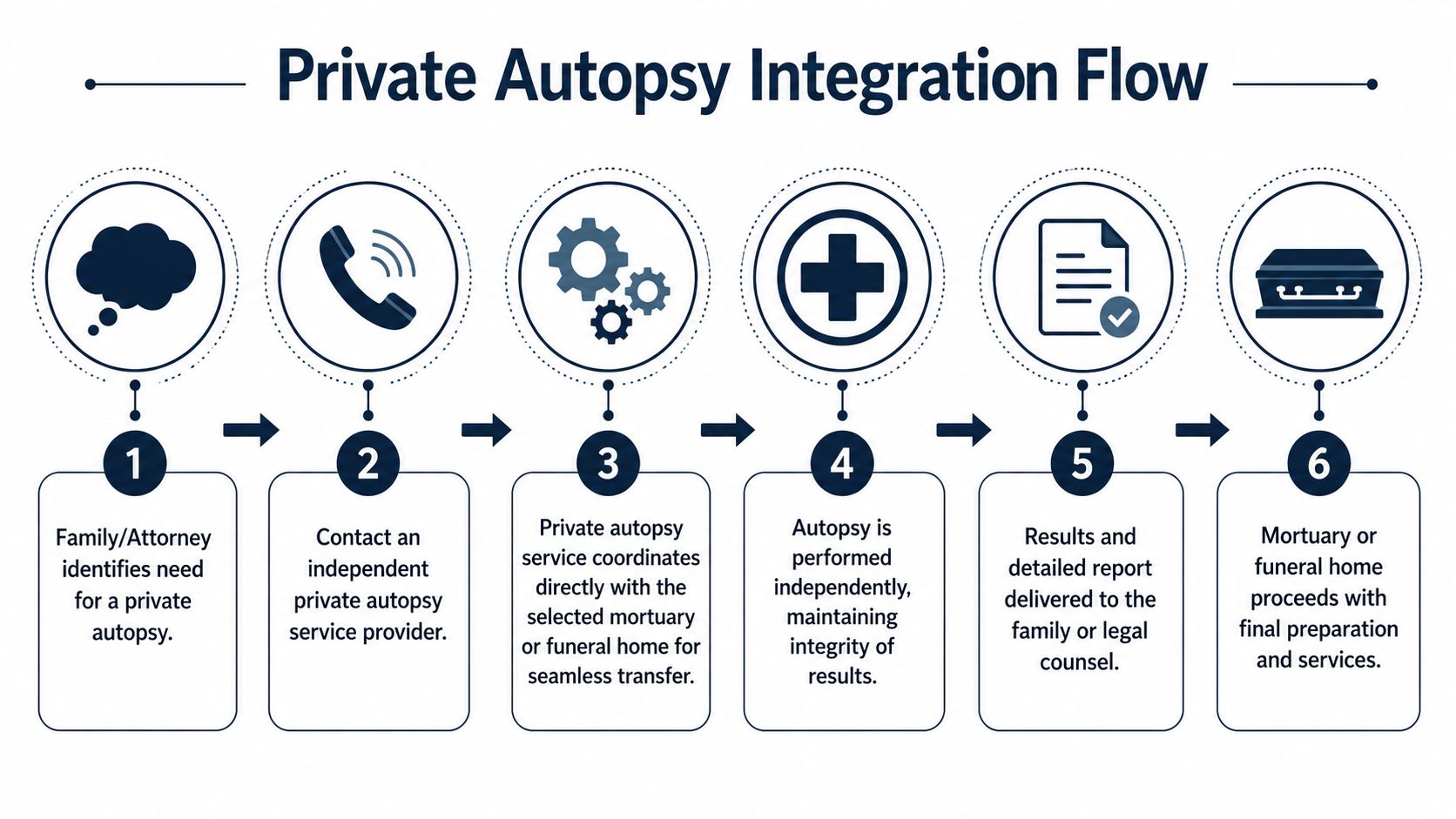
An independent autopsy is not a substitute for a mortuary or funeral home. It is a separate medical-legal examination that can be coordinated with either one. Families and attorneys usually seek it when they need clearer answers about the cause of death investigation, when they want an independent autopsy, or when there are concerns about timing, treatment, injury, or an unclear death certificate.
Where an independent autopsy fits
The operational point is simple. A family may select a funeral home. Another family may be working with a facility that identifies itself as a mortuary. In either case, the body may be transferred for an independent examination, then returned for final preparation and disposition.
A private autopsy, such as those coordinated by board-certified forensic pathologists in Texas, can typically be completed within 24–48 hours, allowing funeral arrangements to proceed without significant delay (Waterloo Mortuary Partnership). That timing still depends on legal authority, release status, and the circumstances of the case, so it should never be treated as an unconditional guarantee.
Families who want a plain-language overview of the autopsy process can review this private autopsies guide, which explains the sequence from authorization through reporting.
Definitions that matter in forensic work
Three terms often need clarification when autopsy planning intersects with funeral planning.
- Cause of death means the disease, injury, or complication that led to death. It answers what physically caused the person to die.
- Manner of death is the medicolegal classification, such as natural, accident, suicide, homicide, or undetermined. It answers the broader context.
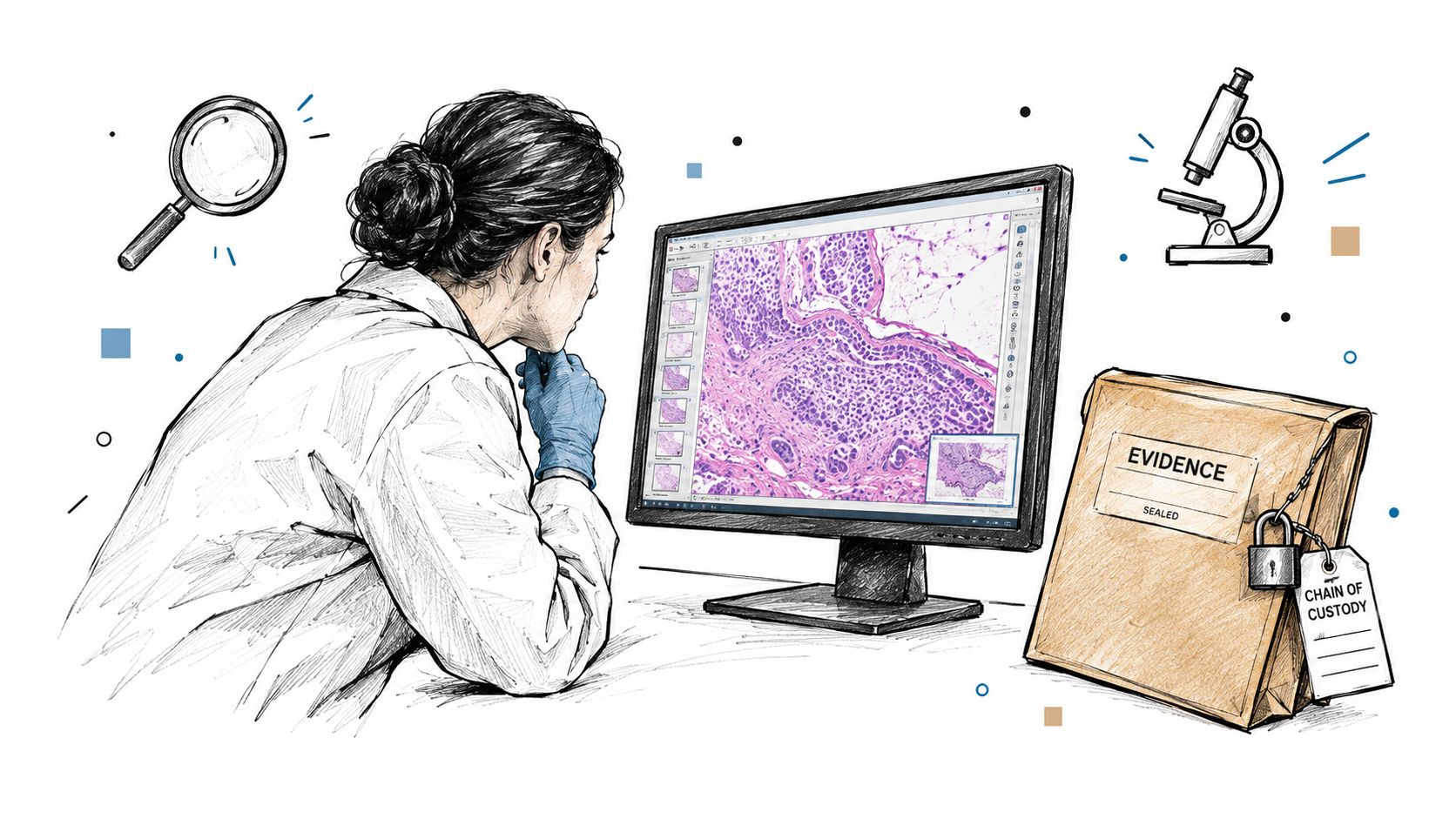
- Chain of custody means documented control over the decedent, specimens, and related evidence from one responsible party to the next.
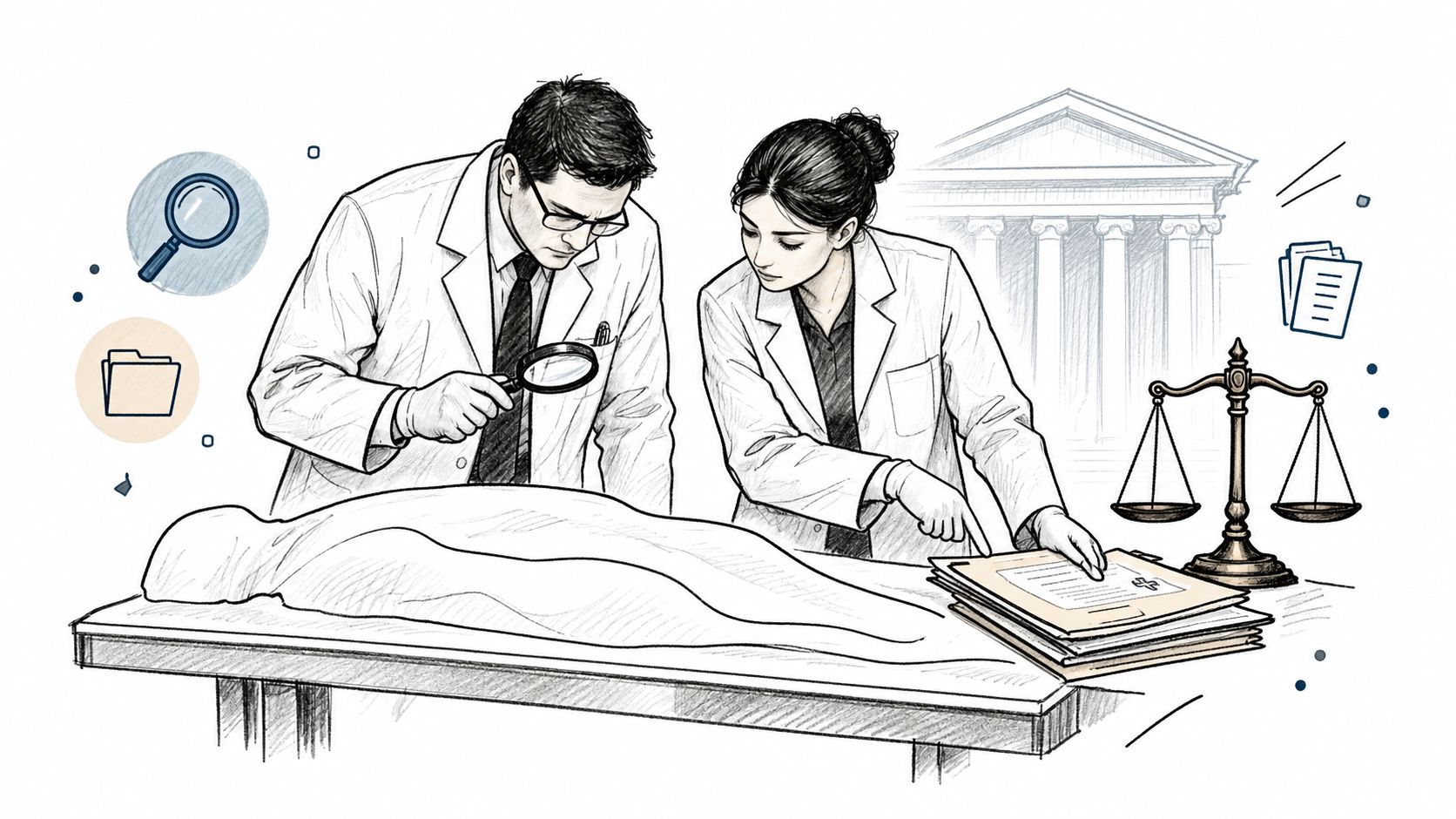
These definitions matter because funeral planning and forensic examination operate on different tracks. A funeral provider is focused on care, scheduling, and disposition. A forensic pathologist is focused on objective examination and documentation. The two should coordinate closely, but they do not serve the same function.
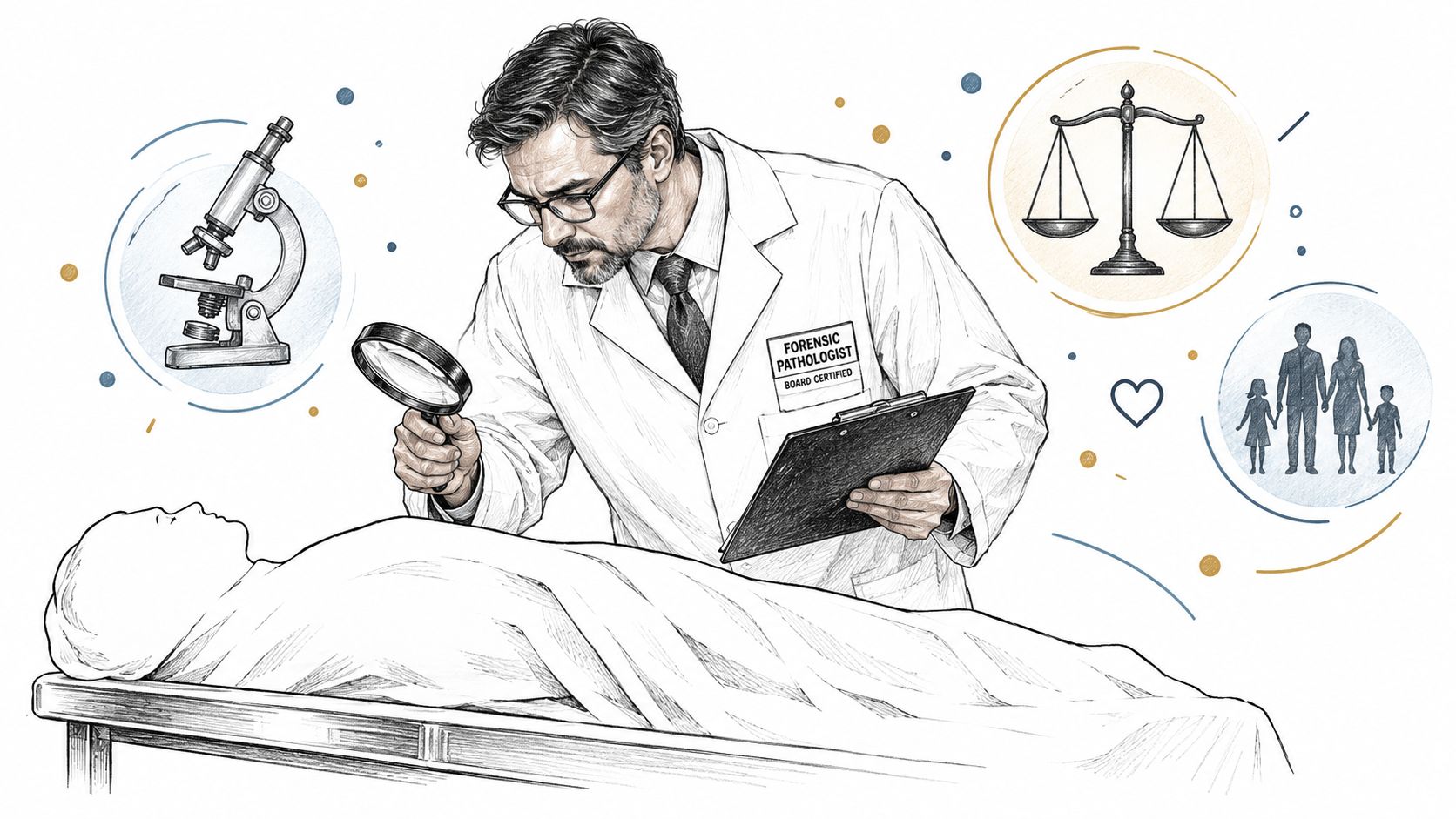
This is also where independence matters. An outside forensic pathology practice is not planning the ceremony, selling memorial options, or managing cemetery logistics. Its role is narrower and more exacting. Examine the body, document findings, preserve integrity, and issue an unbiased medical opinion.
Independent forensic work should fit into the family's plans without becoming part of the sales or ceremonial process.
For many families, that separation is reassuring. It allows them to continue practical arrangements while an independent medical review addresses unanswered questions.
A Guide for Texas Families and Attorneys
In Texas, the first issue is authority. Before any private autopsy or transfer can proceed, the right person must authorize it, and any legal hold must be respected. Depending on the circumstances, that may involve next-of-kin decision-making, a justice of the peace, a medical examiner office, or facility release procedures governed by Texas law and funeral service regulation.
Step by step coordination in Texas
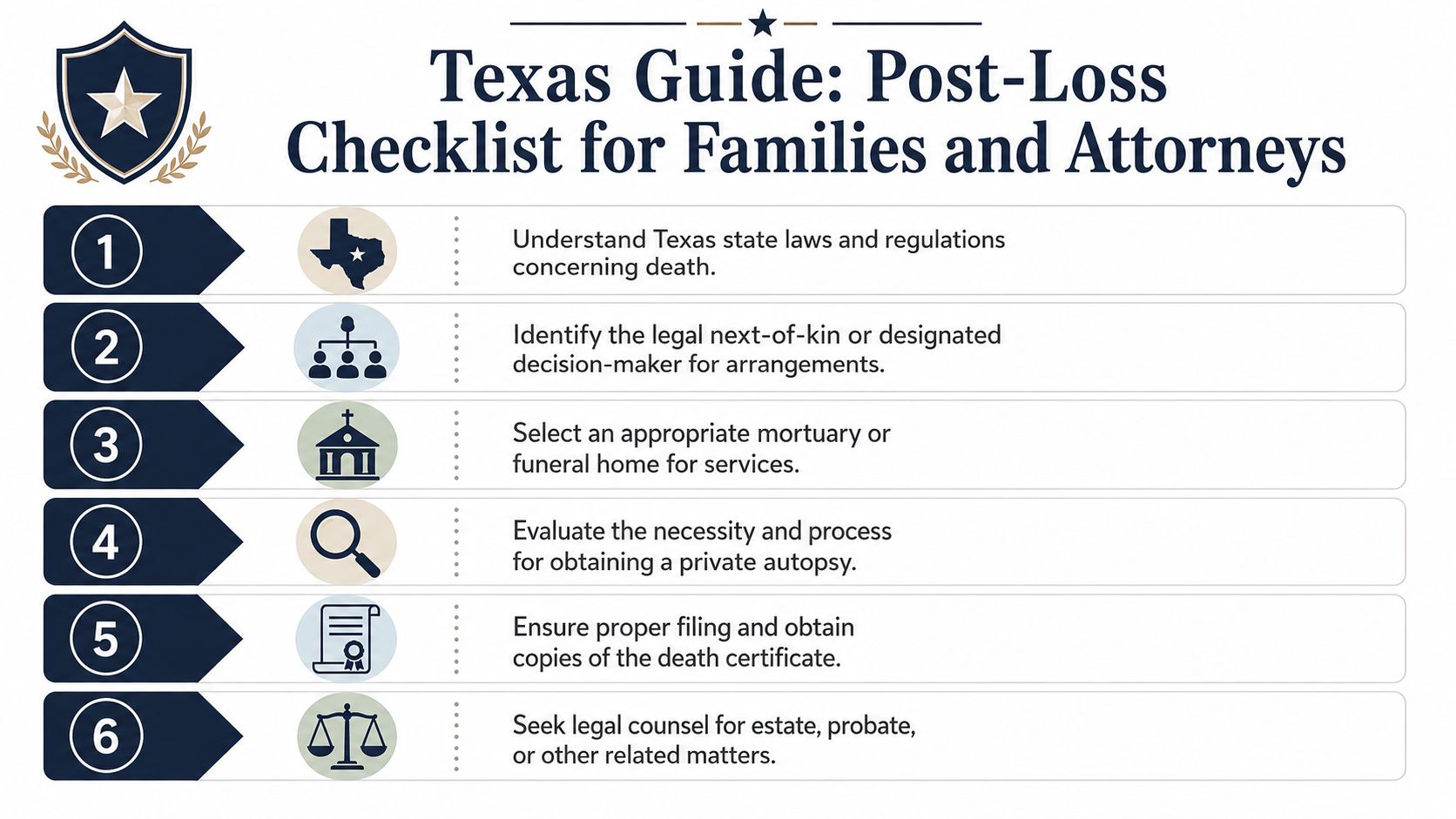
A workable process usually looks like this:
- Confirm legal authority. Determine who is the lawful next-of-kin or who otherwise has authority to act.
- Confirm custody and release status. Ask whether the decedent is at a hospital, nursing facility, funeral establishment, or under a justice of the peace or medical examiner hold.
- Decide whether an independent examination is needed. This often arises when the death is sudden, disputed, medically complex, or likely to lead to litigation.
- Coordinate transfer carefully. The funeral provider, facility, and autopsy service need a clear documented handoff.
- Preserve records and communication. Attorneys should gather relevant medical records and confirm the scope of the requested examination.
- Resume funeral arrangements after release. Once the examination is complete and the decedent is returned, preparation and services continue through the selected establishment.
For readers trying to understand how postmortem records are requested and released, our explanation of how to request an autopsy report addresses common documentation questions.
Misunderstandings that cause delay
One common misconception is that a mortuary cannot host a funeral or manage family-facing arrangements. That confusion is widespread. In over 70% of U.S. states, “mortuary” is legally synonymous with “funeral home,” yet 68% of first-time callers incorrectly believe mortuaries cannot host funerals, a misconception that can delay arrangements (Funeral Vision discussion of mortuary and funeral home terminology).
That kind of misunderstanding can matter in Texas even when the legal framework is local and fact-specific. Families may spend valuable time searching for a second provider they do not need. Attorneys may also encounter avoidable scheduling conflicts if they assume the named facility has a narrower role than it does.
Another source of confusion is estate authority. The person handling probate later is not always the person who has immediate authority to act at the time of death. For a broader legal reference point, the Bryan Fagan PLLC estate code guide can help families and counsel understand how Texas estate law fits into post-loss decision-making.
If there is a legal hold, no family preference or funeral timeline overrides it. Release must come from the authority controlling the case.
Texas families also benefit from understanding the regulators and statutes involved. Funeral establishment practices fall within the authority of the Texas Funeral Service Commission. Other parts of post-death handling and disposition may implicate the Texas Health & Safety Code, including Chapters 711, 716, and 651, depending on the issue involved. That does not mean every family must master statutory text during grief. It means lawful coordination matters, and professionals involved should be able to explain which authority governs the next step.
Making Informed Decisions with Confidence
The most helpful way to think about mortuary vs funeral home is this. The name matters less than the provider's actual role, the legal status of the decedent, and the family's immediate needs. A clinically oriented facility may still coordinate full arrangements. A funeral home may also manage technical preparation and transport. An independent autopsy service may work alongside either one without replacing either one.
Families often feel pressure to make rapid decisions with incomplete information. Clear definitions reduce that pressure. So does knowing that different professionals serve different functions. Funeral providers care for arrangements and disposition. Forensic pathologists address medical questions about death. Attorneys protect legal interests. Each role has boundaries, and those boundaries are useful.
When the facts are uncertain, slow the process enough to ask precise questions. Who has authority. Who has custody. What services are being provided. Whether an independent examination is needed before cremation or burial. Clarity at those points prevents avoidable mistakes and helps families proceed with greater confidence and less confusion.
Frequently Asked Questions
Common Questions for Texas Families
| Question | Answer |
|---|---|
| Who can order a private autopsy in Texas? | Private autopsies in Texas may only be ordered by the legal next-of-kin or an individual with appropriate legal authority, and the examination can be complete or limited to a specific area of concern (Forensic Med Texas guidance on requesting an autopsy). |
| Can a private autopsy happen if funeral plans are already underway? | Often, yes. Coordination depends on lawful release, transport, and the selected provider's procedures. The key is to raise the issue before cremation or final disposition moves forward too far to preserve the option. |
| Does a private autopsy replace the funeral home or mortuary? | No. It is a separate medical-legal service. The funeral establishment still handles preparation, ceremony coordination, disposition, and related logistics unless another arrangement has been made. |
| What if the death is under investigation? | If a justice of the peace, medical examiner, or another legal authority has placed a hold on the case, that authority controls release. A family or attorney should confirm hold status before arranging a private examination. |
| Is every autopsy the same? | No. Some examinations are broad and comprehensive. Others are limited to a particular injury, organ system, or disputed medical issue. The lawful decision-maker and the forensic pathologist define the scope based on the reason for the request. |
Medical and legal circumstances differ from case to case. General educational information is helpful, but it does not replace case-specific guidance about authority, custody, or the scope of a postmortem examination.
If your family, law office, hospital, or county needs clear guidance after a death, Texas Autopsy Services is available to help explain the process with care and precision. Every examination is performed by a forensic pathologist certified by the American Board of Pathology, and our team serves all 254 Texas counties with direct communication, lawful chain of custody, and a respectful, medically precise approach. Families and attorneys who need help understanding next steps can contact our office directly at (806) 230-1889.