July 21, 2026 · Texas Autopsy Services
Communicable Disease Screening: Autopsy Process Safety
Understand communicable disease screening in autopsy. See what's tested, why it matters, and how Texas Autopsy Services ensures safety and accuracy.
On this page
- The Unseen Story a Postmortem Examination Can Tell
- Why We Screen for Communicable Diseases
- Common Pathogens Screened in Forensic Examinations
- The Science Behind Postmortem Screening Methods
- Ensuring Safety and Integrity Throughout the Process
- Understanding and Using Screening Results
- Frequently Asked Questions About Disease Screening
A sudden death leaves families with a narrow set of facts and a long list of unanswered questions. When the medical record doesn't explain what happened, communicable disease screening during a postmortem examination can uncover an infectious cause that was missed in life, clarify risk to others, and give attorneys a more complete record for review. That work has real public health value too, because the burden of undiagnosed infection remains high, including 8 million new syphilis infections in 2022 and 254 million people living with chronic hepatitis B in 2022 with 1.1 million deaths linked to that infection burden WHO data overview.
The Unseen Story a Postmortem Examination Can Tell
A family may be told that a loved one died “unexpectedly,” but that phrase isn't an answer. In the setting of a private autopsy or other forensic examination, we look beyond the immediate death scene impression and ask whether an infectious process, missed during life, helped cause or accelerate death. That matters when the person never had routine screening, when symptoms were vague, or when a test that should have been done never happened.
Why the postmortem view is different
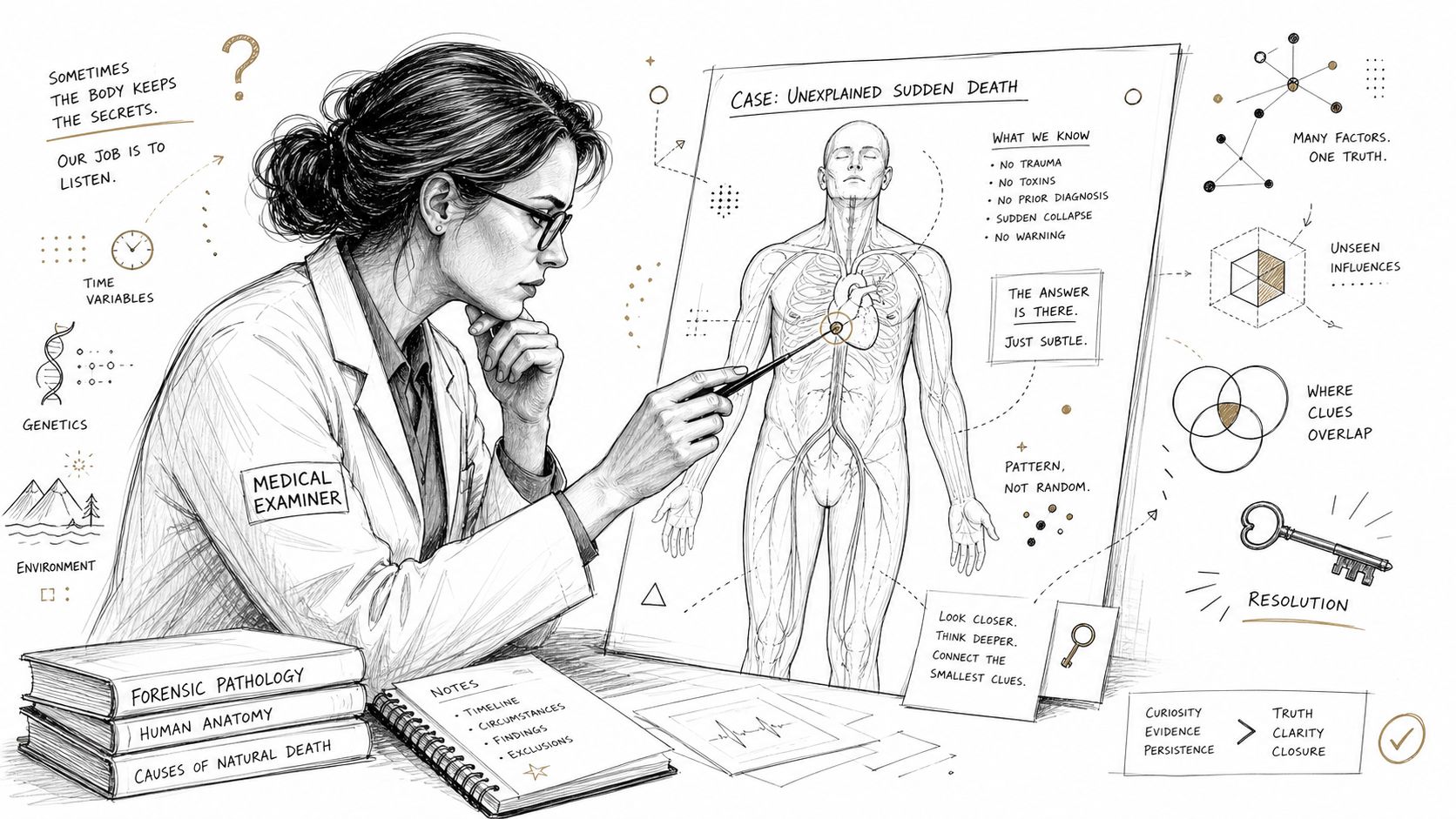
Living-patient screening guidelines focus on prevention, but they don't solve every unanswered death. A postmortem examination can identify terminal communicable disease when clinical screening was missed or inconclusive, and that can support both family understanding and legal clarity postmortem screening gap discussion. In practical terms, that means the autopsy is not only a medical review of organs and tissues, it's also a chance to reconstruct the final disease process with care.
For families, this can reduce uncertainty around what caused the decline. For attorneys, it can separate a suspected natural death from an infectious one when the medical trail is thin. For public health, it can bring a silent infection into view before it affects other people involved in care, transport, or body disposition.
A careful postmortem infection review often answers a question no bedside chart could settle.
Why safety starts before the first incision
When infection is possible, the exam team has to think about exposure control immediately. That includes biosafety, specimen handling, and communication with mortuary partners so no one is asked to manage a body without the right precautions. In a communicable disease case, the autopsy is part medical investigation and part safety protocol.
The point is simple. If an infection was never screened for while the person was alive, the postmortem exam can still uncover it, and that discovery can shape every later step with dignity and caution.
Why We Screen for Communicable Diseases
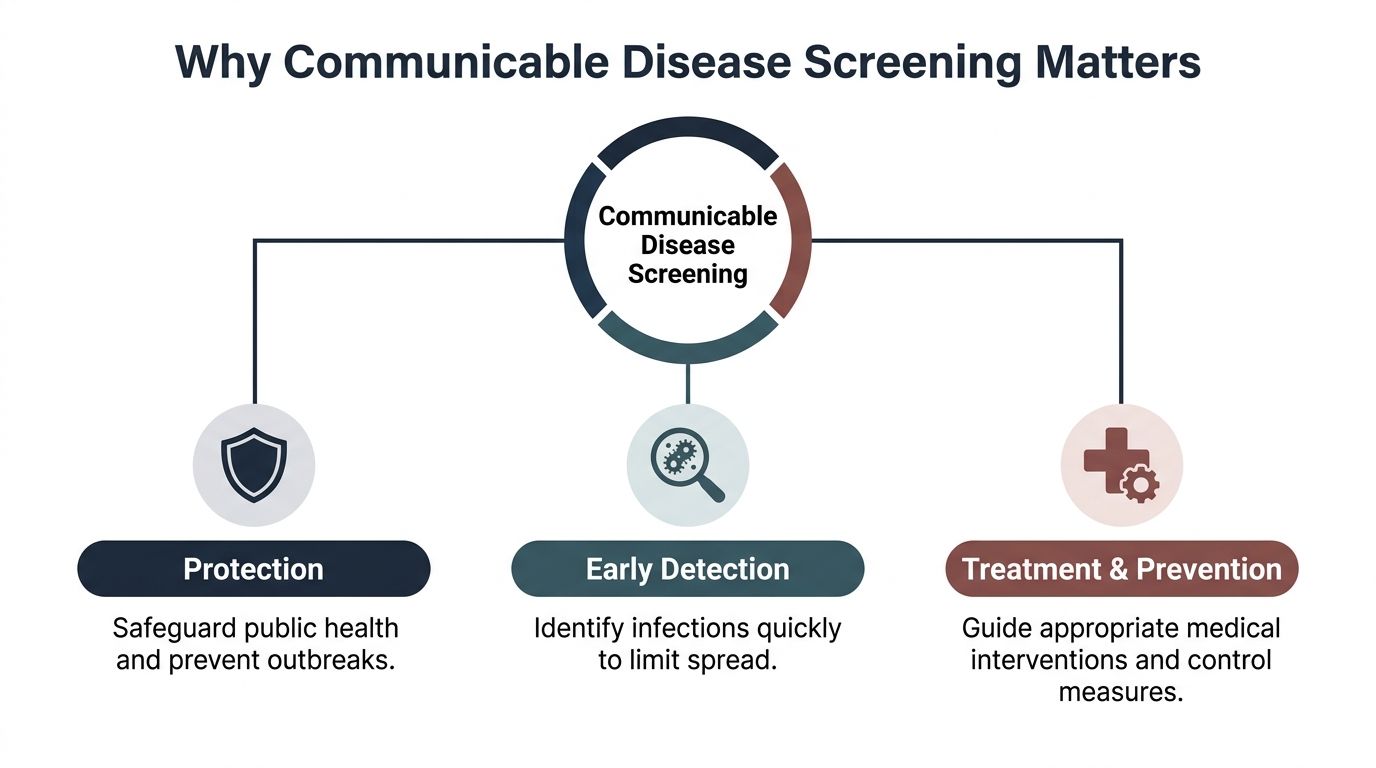
We screen for communicable disease because the work affects more than the report. It protects the people who handle the body, it gives families a more complete cause-of-death investigation, and it can support public health follow-up when an infectious disease might still matter to others. That three-part duty is what keeps screening from becoming a routine checkbox.
Protection for the living
Our first obligation is to the people doing the work. Pathologists, assistants, transport staff, and partner mortuary professionals all need a clear biosafety plan when an infection is possible, especially in cases involving bloodborne or respiratory pathogens. Screening helps us decide how to handle the body, which specimens deserve priority, and what precautions should be in place before any further steps occur.
Complete answers for the family
The second duty is completeness. A cause-of-death investigation should not stop at what is visible on the surface if an infectious disease could have contributed internally. When the medical story is incomplete, screening can strengthen the final autopsy opinion and avoid leaving the family with a vague or misleading explanation.
Public health responsibility
The third reason is community protection. Communicable diseases don't stop with the person who died, and postmortem findings can matter to hospitals, health departments, and the broader public record. That's especially important in settings where routine screening in life didn't reach the target population or where infections spread without being recognized WHO screening milestone and gaps.
Practical rule: if an infectious cause could change how a body is handled, how a death is certified, or how contacts are advised, screening belongs in the examination plan.
The scale of infection burden reinforces why this matters. In 2020, there were an estimated 374 million new infections of chlamydia, gonorrhoea, syphilis, and trichomoniasis in adults aged 15 to 49 globally, and that kind of burden makes missed infection a real issue in death investigation WHO data overview. Screening in postmortem practice doesn't replace clinical care, but it helps close the gap when clinical care never had the chance to finish the job.
Common Pathogens Screened in Forensic Examinations
The organisms we screen for depend on the history, the circumstances, and the body's findings, but several categories come up often in forensic work. Bloodborne infections, respiratory infections, and chronic viral disease can all matter in a death investigation because they may explain organ damage, sepsis, respiratory failure, or an unexpected collapse.
Bloodborne infections
HIV and hepatitis B are important because they can be clinically silent for long periods, then contribute to advanced illness or complicate interpretation of organ findings. Hepatitis B deserves special attention because the global burden remains substantial, with 254 million people living with chronic hepatitis B in 2022 and 1.1 million deaths linked to cirrhosis and liver cancer WHO data overview. In a postmortem setting, that burden is a reminder that “undetected” doesn't mean “unimportant.”
Hepatitis C often enters the discussion when liver disease is present or when the person had exposure risks that were never investigated in life. Screening can help determine whether chronic infection contributed to the terminal illness picture, especially when the medical record is sparse.
Respiratory infections
Tuberculosis is a major forensic concern because it can be missed when symptoms are nonspecific or absent. In high-prevalence settings, the recommended first-line diagnostic is Xpert MTB/RIF Ultra, a molecular assay that detects MTB complex DNA and rifampin resistance with 90.4% sensitivity and 98.9% specificity in symptomatic people, far above the 50 to 60% sensitivity of older smear microscopy TB SOP. That difference matters when the question is whether a contagious disease was present at the time of death.
Viral infections with public health impact
SARS-CoV-2 may still matter in death investigation when respiratory failure, inflammation, or a sudden decline occurred without a clear clinical pathway. Even when it isn't the primary cause, it can still shape the final medical interpretation and the handling precautions used in the autopsy suite.
Syphilis also deserves mention because missed maternal infection can lead to congenital harm, and the WHO's global elimination targets were built around screening and treatment goals that remain unevenly reached across regions WHO milestone. When a communicable disease is part of the differential, testing isn't speculative. It's a necessary part of answering the cause-of-death question correctly.
The Science Behind Postmortem Screening Methods
Postmortem screening works because different tests answer different questions. Some detect evidence of exposure, some detect the organism itself, and some show how the disease has affected tissue. In forensic pathology, we choose the method that best fits the death scene, the autopsy findings, and the specimen that still has the best chance of telling the truth.
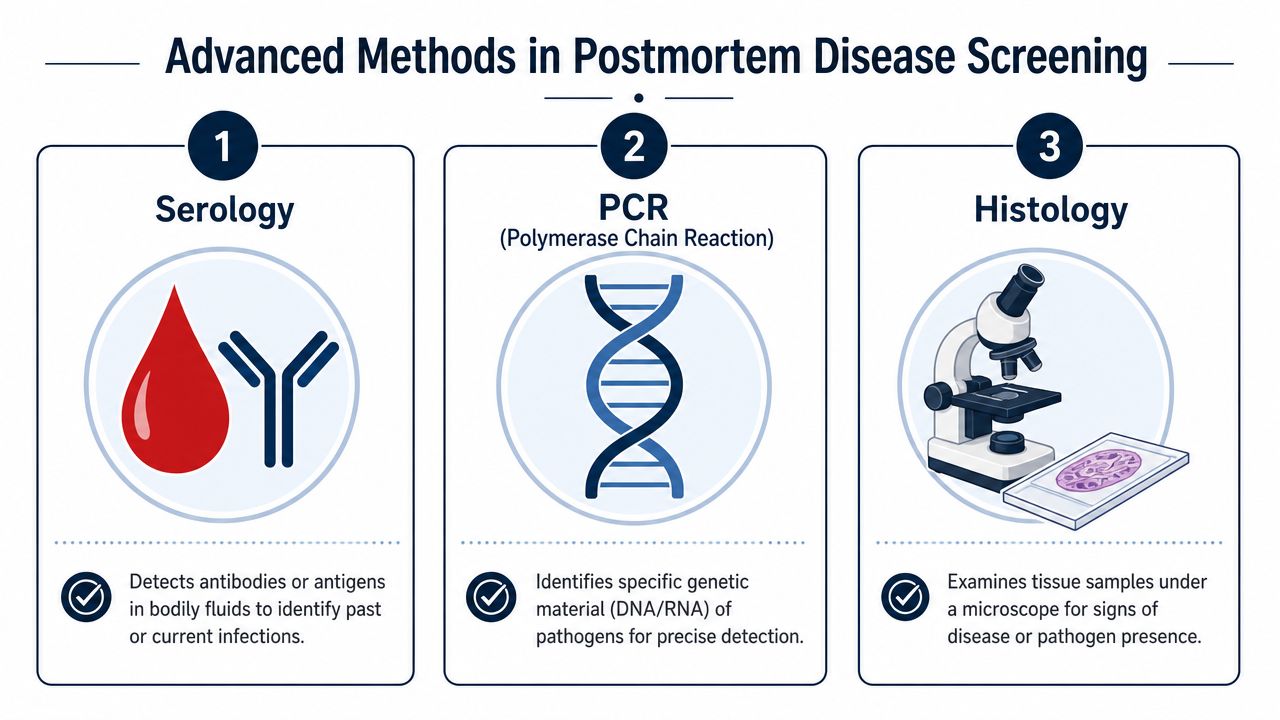
Serology and what it tells us
Serology looks for antibodies or antigens in blood or other fluids. It can show past exposure or active infection, depending on the test and the timing. In a postmortem setting, serology is useful when we need to understand whether an infection was likely present before death, especially if tissue damage or clinical history suggests an ongoing disease process.
PCR and why precision matters
PCR, or polymerase chain reaction, identifies the genetic material of a pathogen. It's a highly specific way to detect organisms even when the body has started to break down, which is one reason it's so useful after death. If a family or attorney is trying to understand why a person deteriorated so quickly, PCR can help tie the findings to a named infectious agent rather than leaving the result at the level of suspicion.
For lab teams and specimen handlers, practical materials matter too. A useful reference for the lab side of this work is PCR tubes for DNA amplification, because the quality of the collection and containment process affects whether the molecular result can be trusted.
Histology and the tissue story
Histology examines tissue under the microscope. It can show inflammation, necrosis, granulomas, viral effects, or patterns that support infection even when direct organism detection is limited. Histology is especially valuable because it doesn't just answer whether something was present, it also shows what the infection did to the body.
The collection step has to be correct before any of this works. Our own specimen collection procedures are designed around preserving interpretive value, because a poorly collected sample can't produce a reliable answer later.
Practical rule: PCR can identify the organism, but histology shows the tissue response. In difficult cases, both are needed.
Method selection also depends on what the body can still tell us. If decomposition is advanced, molecular testing may carry more weight. If organs are preserved, microscopy can add the context that raw detection alone can't provide.
Ensuring Safety and Integrity Throughout the Process
Safety in forensic work isn't a side issue. It's built into every step, from receiving the body to sealing the final sample for the lab. The National Association of Medical Examiners requires that a forensic autopsy be conducted by a forensic pathologist who directly supervises all ancillary testing, so board-certified expertise stays connected to the whole investigation, not just the incision phase NAME standards.
Universal precautions and biosafety
We treat every suspected infectious case with universal precautions, because a body may carry risk even when the chart doesn't clearly say so. That means appropriate barriers, controlled handling, and limiting unnecessary exposure during transport, receipt, and examination. It also means coordinating with mortuary partners so embalming, refrigeration, and transfer decisions are made with the infectious risk in mind.
Chain of custody and why it matters
Chain of custody is the documented path of each sample, from collection to final analysis and storage. If that chain is weak, the result can be challenged, and a good scientific finding can lose legal value. For attorneys, that's not a small issue, because the strongest medical conclusion still has to stand up to questions about handling and identity.
Documentation that holds up
Every specimen has to be labeled, logged, and linked to the case record with care. That record protects the family, the court, and the integrity of the conclusion. It also creates accountability when a communicable disease finding may affect reporting or later review by a health authority.
Our infection control procedures reflect the same principle. If a disease can change the risk profile of the case, the workflow has to change with it.
Standards-based practice means no shortcuts. A sample that isn't handled correctly can't be trusted later, no matter how advanced the test is.
In Texas, this matters even more because the legal framework around death investigation can differ by circumstance. Texas law also places a specific limit on a justice of the peace in certain public health disaster cases involving communicable disease Texas coroner guidance, which makes careful compliance part of the examination itself.
Understanding and Using Screening Results
A screening result only helps if it's interpreted in context. In forensic pathology, we read the laboratory data together with the gross autopsy findings, the medical history, and the scene information so the final opinion doesn't overstate or understate what the evidence supports. That's especially important when a result may affect public health reporting, family counseling, or litigation.
What happens after the lab work
After analysis, the finding is incorporated into the autopsy report when it changes the medical explanation of death. If the result suggests a reportable communicable disease, the appropriate notification pathway has to be followed under Texas rules and the governing public health framework. Confidentiality remains important throughout, because families deserve discretion as well as accuracy.
How the result changes the record
A positive screen can confirm that infection was part of the death process, even if it was never recognized during life. A negative result can be just as useful, because it helps narrow the differential and prevents a family from being told the wrong story about what happened. In either case, the report should explain the limits of the evidence and avoid pretending the answer is broader than it is.
Legal and practical consequences
Texas law also treats communicable disease cases differently in some inquest settings. A justice of the peace may order many autopsies, but Texas law specifically prohibits that order when death was caused by a communicable disease during a public health disaster Texas coroner guidance. That distinction matters because it shows how closely forensic procedure and public health authority can intersect.
For families and counsel reviewing lab-based findings, blood work often becomes the bridge between organ findings and the final conclusion. Our blood test overview explains why that bridge matters in postmortem work.
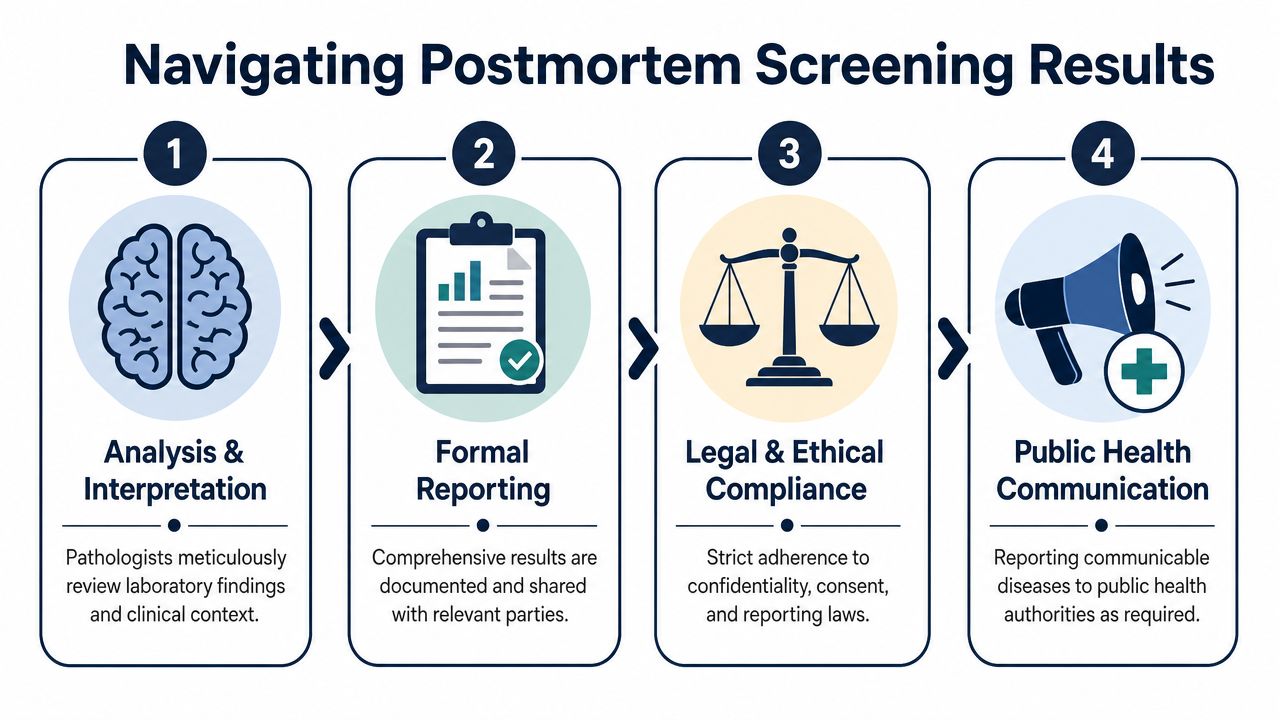
A result is never just a lab value. It becomes meaningful only when the pathologist explains how it fits the death.
Frequently Asked Questions About Disease Screening
Is communicable disease screening always required in a private autopsy
No. It depends on the circumstances, the history, and the findings during examination. When infection is possible or when the cause of death is unclear, screening can be an important part of a complete forensic review.
Who can see the results
Access is usually limited to the people with a legitimate role in the case, such as the family's attorney, the authorized family representative, or the agencies that must receive the information by law. We handle sensitive findings with discretion and document the release carefully.
Can a family decline this testing
Families can discuss the scope of testing before the exam whenever timing and legal conditions allow it. If a suspected communicable disease could affect safety, reporting, or the accuracy of the cause-of-death finding, we explain why the test is being recommended and what may be lost if it's not done.
Does screening change the cost
It can, depending on the number of tests ordered and the laboratory methods needed. The right question isn't whether a test adds work, but whether the test is necessary to answer the death investigation accurately and safely.
How long do results take
Most cases return within 24 to 48 hours for the core postmortem process, but test timing can vary based on the specimen, the method used, and the lab's workload. Infectious disease work sometimes takes longer when confirmatory testing is needed, so we never promise a fixed turnaround when the evidence may require more careful review.
Families deserve answers that are medically sound, legally usable, and delivered with respect. If you need guidance on a death where infection may have played a role, contact Texas Autopsy Services and speak directly with our team about the next step.