July 6, 2026 · Texas Autopsy Services
How to Understand Medical Terminology in Autopsy Reports
Learn how to understand medical terminology found in autopsy reports. Our guide helps families and attorneys decode complex terms with clarity and confidence.
On this page
- Medical terms follow a pattern. Most can be understood by breaking them into prefixes, roots, and suffixes.
- Autopsy reports use precise language for a reason. Clear terms help define findings such as cause of death, manner of death, injury patterns, and disease processes.
- Families and attorneys don't need to guess. A structured reading method can turn a dense report into something understandable.
- Direct communication matters. Speaking with the forensic pathologist can clarify what a finding means and what it does not mean.
- In Texas, process and integrity matter. Private autopsy work should follow ethical and legal standards, including chain of custody and compliance with the Texas Funeral Service Commission and Texas Health & Safety Code.
A family receives an autopsy report after a sudden death. They open the document hoping for answers, then stop at words like atherosclerosis, pulmonary edema, or subdural hematoma. An attorney may have the same reaction for a different reason. The report may be central to a case, but the language can still feel difficult to pin down.
That moment is common. Medical terminology is precise, but precision can feel cold when you're grieving or trying to make an urgent decision. Our board-certified forensic pathologists see this often in private autopsy services Texas families and legal teams request when they need an independent explanation of the findings.
Understanding the language matters because the words in a report shape the meaning of the whole document. A term can describe a disease, an injury, a timing issue, or a limit in what can be concluded. Even small wording differences can affect how a reader understands the death. For a plain-language example of report structure, our overview of a report of autopsy can help readers see how findings are organized before they tackle the terminology itself.
Receiving a Report Can Feel Overwhelming
An autopsy report often arrives at a time when people are tired, grieving, and trying to understand what happened as clearly as possible. The document may include anatomy terms, disease names, laboratory references, and legal language in the same set of pages. Even highly educated readers can feel lost because the report wasn't written as a beginner's guide. It was written to document findings with medical and legal precision.
Our work in independent autopsy and cause of death investigation often involves helping families, attorneys, and healthcare professionals translate that precision into ordinary language. We don't believe readers should have to guess what a finding means. They should be able to understand what was observed, how the findings connect, and where the limits of interpretation begin.
Why the wording matters
Medical terminology isn't just technical style. It affects safety and understanding. Standardized language is critical for patient safety, and over 40% of medical errors are linked to miscommunication or unclear terminology in healthcare settings according to the verified data provided for this topic. That same need for precision carries into postmortem reports, where a misunderstood word can distort how a family or legal team understands the death.
Practical rule: Slow down when you read a report. One unfamiliar term doesn't mean the whole sentence is beyond reach.
Readers also get tripped up because some words sound more alarming than they are. Edema means swelling. Hemorrhage means bleeding. Infarction means tissue death caused by loss of blood supply or oxygen. The report may sound severe because the findings are serious, but the language itself usually follows a consistent pattern.
Where confusion usually starts
Most confusion starts in one of three places:
- Dense disease names that combine several word parts into one term
- Anatomy terms that identify a precise location instead of using a broad body part
- Forensic terms that have a specific legal meaning as well as a medical one
A report can still be understood. It just helps to read it the way a forensic pathologist does. That starts with the parts of the word itself.
The Building Blocks of Medical Language
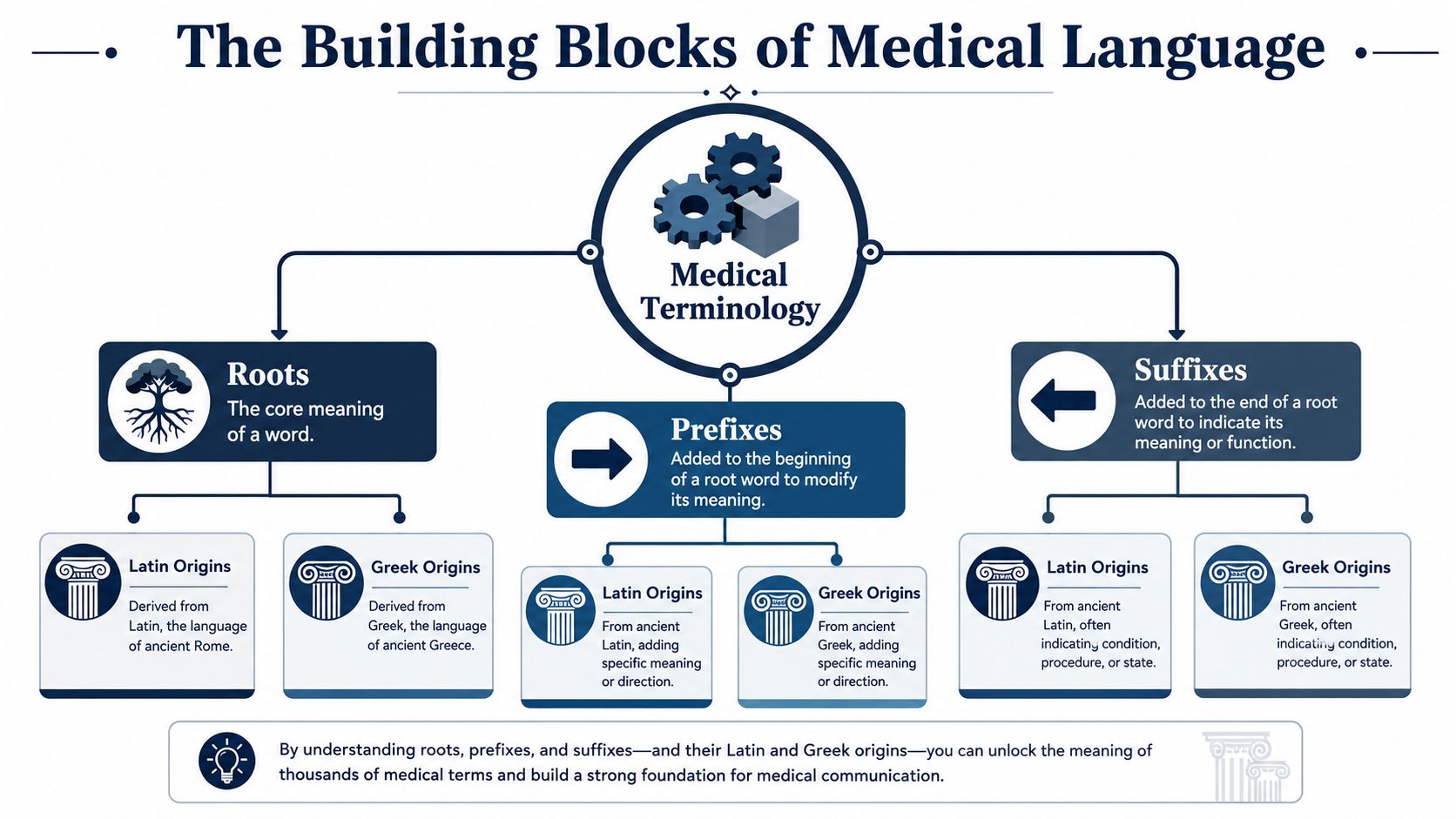
Medical language can seem random until you see its structure. Most terms are built from smaller pieces that carry meaning. Once you recognize those pieces, the report becomes less like a wall of jargon and more like a set of clues.
The method our pathologists use
The National Library of Medicine teaches a structured method called Analyze Components for decoding complex medical words in this NCBI medical terminology reference. The process is straightforward:
- Divide the term into word parts
- Label each part
- Define each part and build the final meaning
That approach matters because it gives readers a repeatable way to read an unfamiliar word instead of relying on memory alone. If you're trying to master medical terminology for exams, this same word-part approach is often the fastest way to move from memorization to true understanding.
A pathology report guide such as our explanation of a pathology report meaning can also help readers connect the terminology to the way findings are presented in a real report.
How prefixes roots and suffixes work together
A prefix appears at the beginning of a word and modifies meaning. It often tells you location, amount, timing, or direction.
Examples:
- hyper- means excessive
- peri- means around
- sub- means under
- anti- means against
A root gives the core subject of the word. It often names an organ, tissue, or body system.
Examples:
- card refers to the heart
- cerebr refers to the brain
- hemat refers to blood
- derm refers to skin
A suffix appears at the end and often tells you what is happening to the body part.
Examples:
- -itis means inflammation
- -emia refers to a blood condition
- -oma often means mass or collection
- -pathy means disease
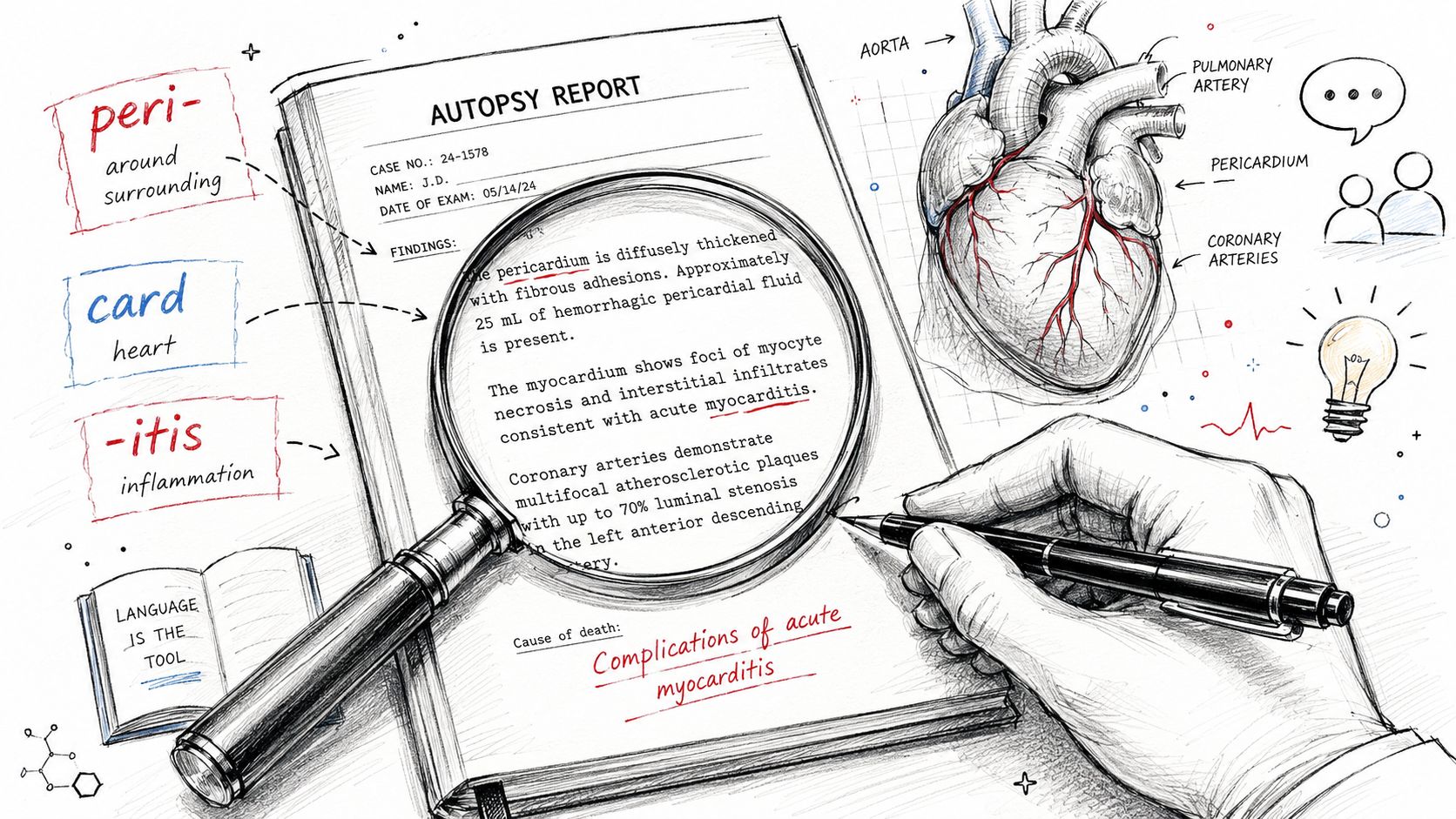
Take the word pericarditis.
- peri- means around
- card refers to the heart
- -itis means inflammation
Put together, it refers to inflammation involving the tissue around the heart.
When readers learn the word parts, they stop treating every term as a separate vocabulary test.
A quick reference for reading unfamiliar terms
The suffix often gives the clearest first clue, so many readers should start there.
| Word | Breakdown | Plain meaning |
|---|---|---|
| hyperglycemia | hyper + glyc + emia | high sugar level in the blood |
| subdural | sub + dural | beneath the dura, the outer covering of the brain |
| hematoma | hemat + oma | a localized collection of blood |
| neuropathy | neur + opathy | disease affecting nerves |
This is one of the clearest ways to learn how to understand medical terminology without memorizing endless lists. The report may still contain difficult findings, but the words stop looking arbitrary.
Common Terms Found in a Forensic Autopsy Report
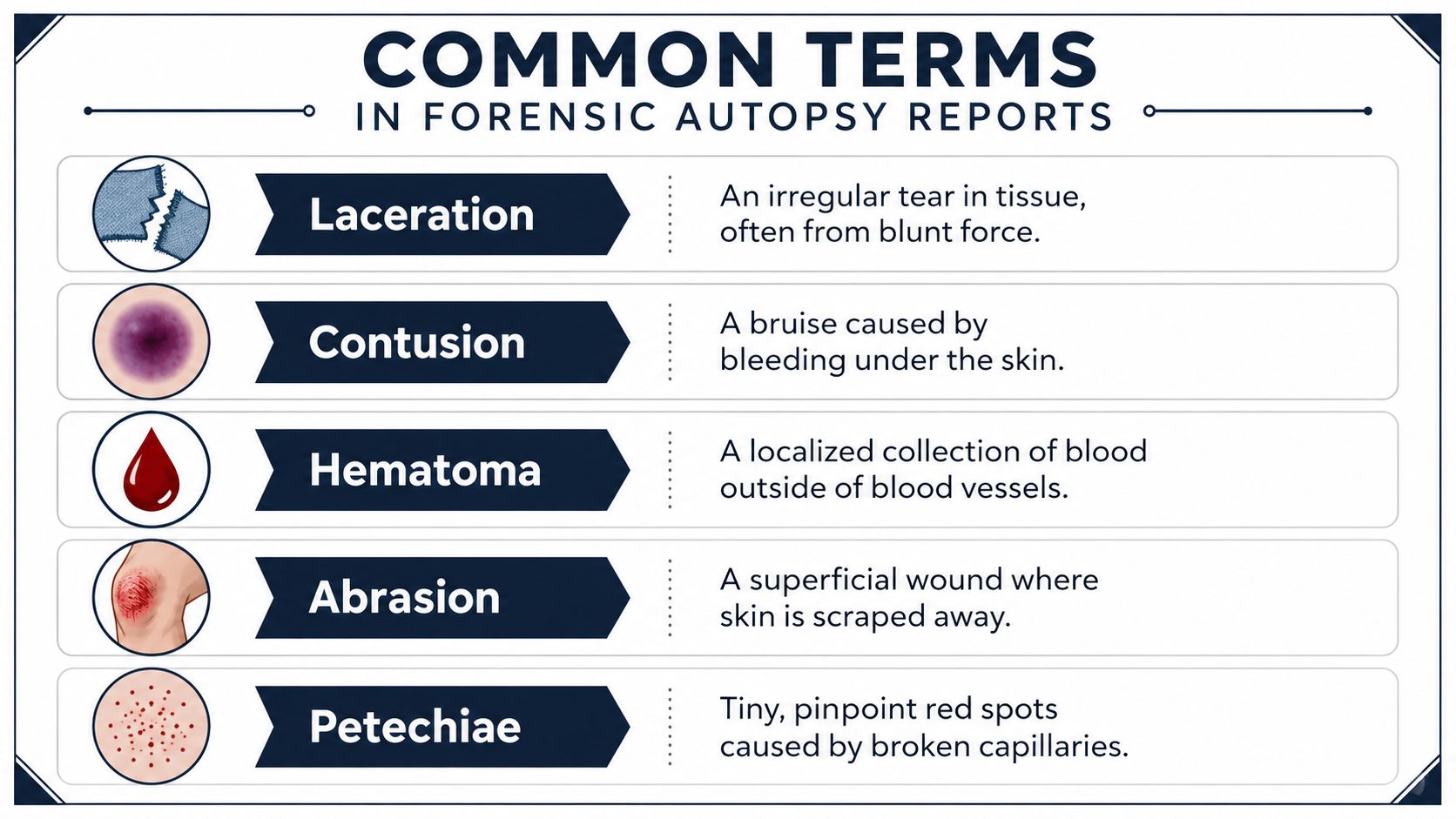
Some terms appear again and again in forensic pathology. Learning those common words can make a report much easier to follow. It also helps readers separate a finding from a conclusion. A report may list many observations, but only some of those observations become central to the final determination.
Terms that define the official conclusion
Cause of death means the specific disease or injury that led to death. It answers the question, "What physical process caused the person to die?"
Manner of death describes the category of circumstances surrounding the death. In forensic practice, this classification helps place the death in a medicolegal framework such as natural or accident. It answers a different question from cause of death.
Chain of custody means the documented handling of the body, specimens, and evidence from one step to the next. In forensic work, that record helps preserve integrity and supports court-admissible reporting.
Every examination in our practice is performed by a forensic pathologist certified by the American Board of Pathology, which supports medically sound, court-admissible findings from a modern forensic setting at Texas Autopsy Services. Families considering one of our Private Autopsies often want exactly this kind of independent explanation of the final report language.
Terms that describe injury and disease
Some report terms describe what was found in the body, not the legal conclusion.
- Hemorrhage means bleeding. It can occur inside the skull, within organs, in tissue, or externally.
- Edema means swelling caused by fluid accumulation.
- Infarction means tissue death caused by interrupted blood flow or oxygen supply.
- Atherosclerosis refers to hardening and thickening of arteries due to plaque buildup.
- Contusion means a bruise caused by bleeding beneath the skin or within an organ.
- Laceration means an irregular tear in tissue, often associated with blunt force.
- Abrasion means a superficial scrape of the skin.
- Petechiae are tiny pinpoint spots caused by broken capillaries.
A term may sound dramatic even when it describes a routine observation in pathology. Cerebral edema means swelling in the brain. Pulmonary edema means fluid-related swelling in the lungs. Those findings matter, but their meaning depends on context.
Reading note: A single term rarely tells the whole story. The location, severity, and surrounding findings matter just as much as the word itself.
Attorneys often focus first on injury terms, while families may focus on disease terms. Both are understandable. The report usually requires both views at once.
A Sample Report Finding Walkthrough
A sentence from an autopsy report often looks intimidating because it compresses several findings into a few words. The fastest way to make sense of it is to slow it down and translate each piece in order.
A plain sample can help. Consider this representative finding:
Evidence of severe coronary atherosclerosis and acute myocardial infarction.
For readers who want to compare that kind of phrasing to a report layout, a blank autopsy report example can make the surrounding sections easier to recognize.
Reading one sentence step by step
Start with coronary. That term refers to the arteries that supply the heart.
Then look at atherosclerosis. Even if the full word feels dense, many readers already know it refers to plaque buildup and hardening in arteries.
Next is acute. In medical language, that usually signals something sudden or recent rather than long-standing.
Then comes myocardial:
- myo means muscle
- card refers to the heart
- -ial makes it descriptive
So myocardial means "related to the heart muscle."
Finally, infarction refers to tissue death caused by loss of blood supply.
What the sentence means in plain language
Put together, the sentence says there was severe disease in the arteries that feed the heart, and there was a sudden area of damage in the heart muscle caused by loss of blood flow. In ordinary language, that points to a heart attack associated with significant coronary artery disease.
That doesn't mean every heart-related term points to the same conclusion. A report could describe old scarring, recent injury, chronic disease, or a combination of findings. The surrounding sections matter, including microscopic examination, toxicology when applicable, and the final opinion.
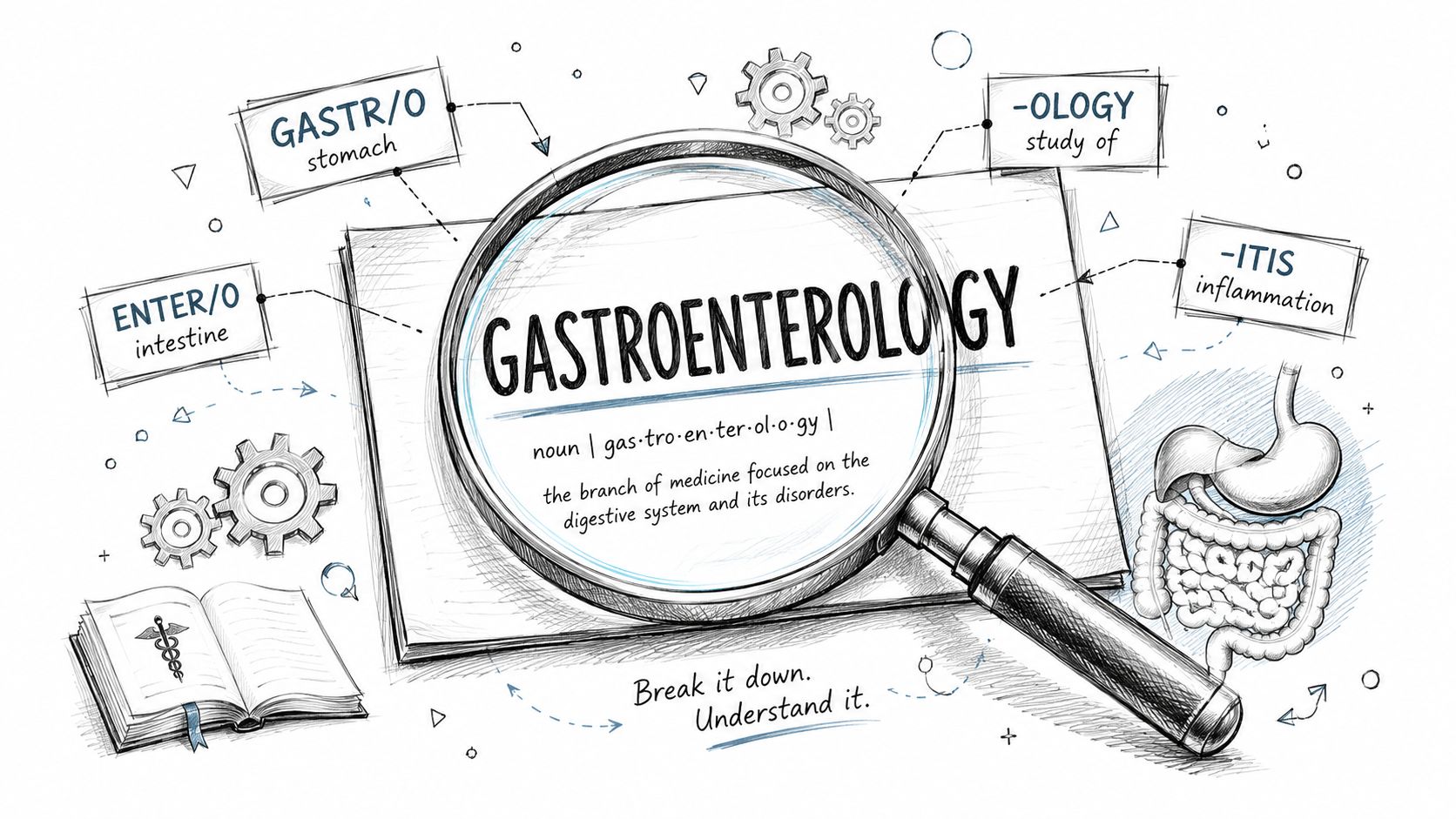
A short visual explanation can also help readers see how medical word parts combine into larger terms:
When families learn to translate one sentence like this, the rest of the report often becomes less intimidating. They can see that the language is compact, not mysterious.
Tips for Speaking with a Pathologist
Reading the report is only part of the process. A direct conversation can provide the context that the written document cannot fully capture. That matters because a report is designed to record findings precisely, not to anticipate every question a family or attorney may have.
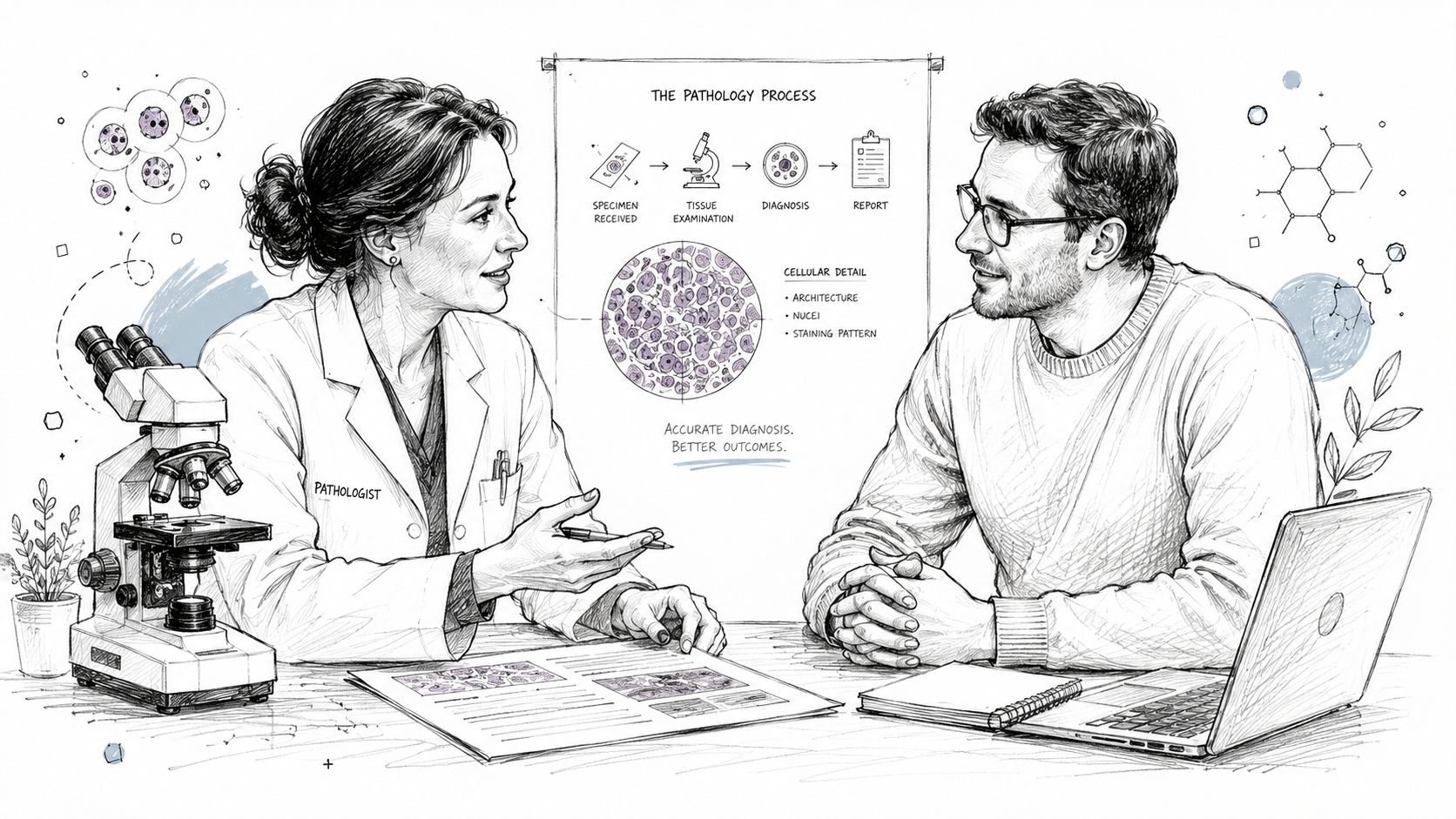
In our practice, direct communication with the forensic pathology team is standard. Clients speak with our team without call centers or middlemen, which helps keep the discussion clear and focused. That can be especially important in an independent autopsy or second opinion autopsy where the family or attorney has specific concerns about language in the findings.
What to ask before the call
It helps to write down the terms that feel unclear instead of trying to remember them in the moment.
Consider questions like these:
- Ask for plain language: "Can you explain this phrase in everyday terms?"
- Ask about significance: "Is this finding central to the cause of death, or is it a secondary finding?"
- Ask about certainty: "How strongly do the findings support this conclusion?"
- Ask about limits: "What can this report determine, and what can it not determine?"
A good explanation doesn't remove complexity. It makes the complexity understandable.
If you're seeking a private or family-requested examination, it's also useful to know that such autopsies may be obtained for decedents who would not otherwise require an autopsy by statute, including situations involving natural disease questions, inherited conditions, or possible treatment complications, as described by Forensic Medical of Texas on requesting an autopsy.
What information helps the pathologist
The pathologist's interpretation becomes stronger when it is informed by reliable background information. That doesn't mean the history dictates the conclusion. It means it helps place the findings in context.
Useful information may include:
- Known medical history such as heart disease, seizures, diabetes, or prior surgeries
- Recent symptoms including chest pain, confusion, shortness of breath, or fever
- Medication information if available
- Circumstances of death as accurately known by family, counsel, or investigators
Readers searching for autopsy near me or a forensic pathology expert often focus on logistics first. Those details matter, but communication matters too. An understandable explanation can help families process what the report says and help attorneys identify which findings need closer legal review.
Frequently Asked Questions About Autopsy Reports
How long does a private autopsy take
In most cases, private autopsies requested by families or legal representatives can be completed within 24–48 hours, which can allow funeral arrangements to proceed without significant delay, according to the Waterloo Mortuary pathology information page. That is not an unconditional promise. Case complexity, transport, testing needs, and legal circumstances can affect timing.
Is a private autopsy legally valid
A private autopsy can produce a report designed to be medically sound and court-admissible when the work is performed with proper documentation, qualified forensic review, and preserved chain of custody. In Texas, legal and ethical handling should align with the Texas Funeral Service Commission and Texas Health & Safety Code Chapters 711, 716, and 651.
What is the difference between cause of death and manner of death
Cause of death is the specific injury or disease that led to death.
Manner of death is the medicolegal classification of the circumstances.
Those are related, but they are not interchangeable.
Can families ask questions after receiving the report
Yes. They should. A written report may answer the central medical question while still leaving readers uncertain about wording, timing, or the importance of a particular finding. Families and attorneys often understand the report better after a direct discussion with the forensic pathologist.
What if a report uses terms we don't understand
Start by identifying repeated terms, location words, and the final diagnostic phrases. Then ask for clarification in plain language. Readers do not need medical training to ask careful questions. They only need a clear explanation from the reporting team.
If you need help understanding an autopsy report, our team at Texas Autopsy Services can speak with you directly and explain the language with care, precision, and respect for the seriousness of the loss.