August 23, 2026 · Texas Autopsy Services
Understanding Death by Pulmonary Fibrosis and Forensic
Death by Pulmonary Fibrosis. Learn how pulmonary fibrosis leads to respiratory failure, what autopsy findings reveal, and when families in Texas should seek
On this page
- When a Pulmonary Fibrosis Death Raises Questions
- How Pulmonary Fibrosis Progresses to Respiratory Failure
- What Autopsy Findings Reveal About the Final Event
- When to Seek a Second Opinion or Independent Autopsy
- The Private Autopsy Process in Texas
- Forensic Answers to Common Questions About Pulmonary Fibrosis Deaths
- Getting Clarity and Moving Forward
A loved one with pulmonary fibrosis may have been living with a known lung disease, yet the death can still feel sudden and difficult to understand. The death certificate may list pulmonary fibrosis, while the family is left wondering whether an infection, aspiration, medication effect, heart problem, or acute respiratory crisis caused the final decline. Those questions are medically reasonable and may matter in a legal investigation.
- Pulmonary fibrosis is often the underlying disease, not the complete description of the final event.
- Acute exacerbation, diffuse alveolar damage, infection, aspiration, and cardiovascular disease can contribute to death.
- Autopsy examination can distinguish extensive fibrosis from the immediate process that caused fatal respiratory failure.
- A records review and a full independent autopsy answer different questions.
- Texas law requires detailed medical examiner records, including the cause and manner of death and autopsy findings.
When a Pulmonary Fibrosis Death Raises Questions
A family may receive a death certificate stating pulmonary fibrosis after a loved one dies in a hospital or at home. The diagnosis may be accurate, but it may not explain why the person worsened when they did, why oxygen needs changed, or whether another condition triggered the final crisis. A person can have longstanding scarring in the lungs and still die from a superimposed event that requires separate evaluation.
Pulmonary fibrosis is a group of conditions in which normal lung tissue becomes scarred. The scarred tissue can become stiff and less effective at transferring oxygen into the bloodstream. Idiopathic pulmonary fibrosis, often called IPF, is the best-studied form, but related fibrosing interstitial lung diseases can follow different patterns and may have different contributing causes.
Families also face practical uncertainty. A gradual decline may seem consistent with the diagnosis, while a rapid deterioration can raise concerns about pneumonia, aspiration, a pulmonary embolus, medication-related injury, or an unexpected cardiac event. The fact that a person had pulmonary fibrosis doesn't automatically establish that fibrosis alone caused death.
A death certificate provides an official cause-of-death statement. It may not provide the detailed pathology needed to identify every immediate terminal event.
Our team often sees the difference between a clinical label and a forensic explanation. A treating clinician may have had limited time, incomplete information, or no opportunity to examine the lungs after death. An independent autopsy can assess the organs directly, preserve tissue for laboratory testing, and compare the findings with medical records.
Families dealing with a possible legal claim may also need to understand how medical causation is evaluated. A general resource such as this Houston wrongful death lawyer guide can help explain legal questions, but a forensic pathologist addresses the medical evidence, including whether the documented disease matches the postmortem findings. When the cause is unclear or disputed, our discussion of an unknown cause of death may help families identify what information should be gathered.
How Pulmonary Fibrosis Progresses to Respiratory Failure
A person may still appear comfortable while sitting, yet have very little respiratory reserve. Walking across a room, developing an infection, or experiencing another injury can expose how much gas-exchange capacity has been lost.
Healthy lungs contain tiny air sacs called alveoli. Small blood vessels lie alongside them, allowing oxygen to enter the bloodstream and carbon dioxide to leave it. Pulmonary fibrosis repeatedly injures this exchange surface, and abnormal healing deposits scar tissue between and around the alveoli.
The progression can be understood in stages:
- Initial injury affects the delicate tissue involved in gas exchange.
- Fibrosis replaces flexible lung tissue with thicker, less functional material.
- The lungs lose compliance, meaning they require more effort to expand.
- The person breathes faster or works harder to maintain oxygen levels.
- Gas exchange becomes inadequate, producing hypoxemia and potentially respiratory failure.
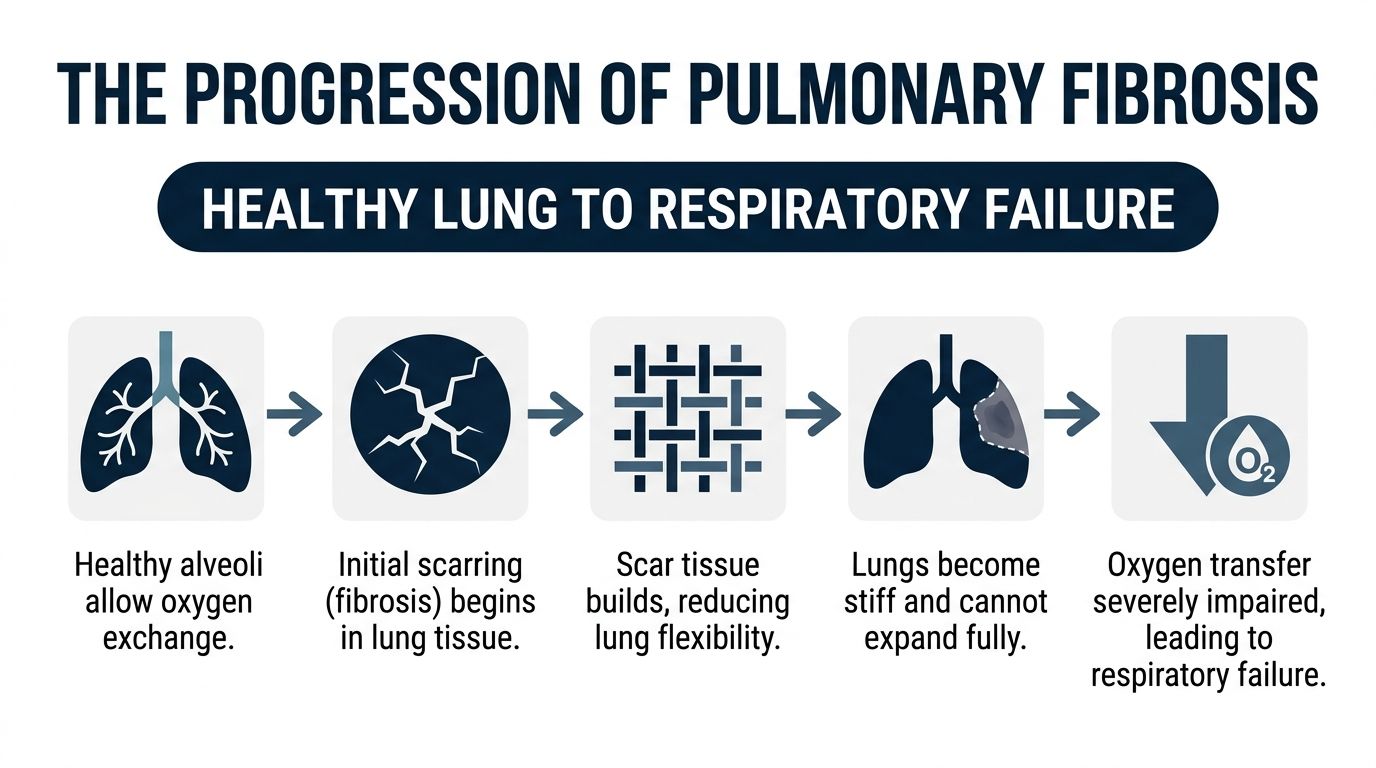
Stiffness is only part of the problem. Scar tissue also increases the distance oxygen must cross to reach the blood. Air may still enter the lungs, but altered alveolar walls and surrounding tissue can prevent adequate transfer. The result is similar to trying to pass through a thicker filter: airflow may continue while oxygen delivery falls.
Slow decline and acute worsening
Some patients experience a gradual loss of exercise tolerance, strength, and oxygenation. Others develop an acute exacerbation, a sudden worsening of breathlessness or hypoxemia accompanied by new ground-glass opacities after heart failure or infection has been excluded. Established fibrosis may then be joined by diffuse alveolar damage, creating a more severe barrier to oxygen exchange. A review of acute exacerbation and fatal respiratory failure in IPF describes this pathway.
Family observations may not reveal how close a person is to respiratory failure. Someone can look stable at rest but have little reserve when infection, aspiration, fluid overload, or another injury occurs. Older adults may also have heart disease alongside lung disease, making the final mechanism harder to identify from symptoms alone.
Population mortality data describe groups, not an individual's prognosis. A global analysis reported that 87.5% of IPF deaths occurred in people aged 65 years or older, while the crude mortality rate rose from 2.10 per 100,000 in 2001 to 3.14 per 100,000 in 2022. These findings also help explain why several diseases may be present at death. The global mortality analysis is available through PubMed.
What Autopsy Findings Reveal About the Final Event
A forensic autopsy answers several different questions that are often blended together after a death. Cause of death is the disease, injury, or combination of conditions that produced death. Immediate cause identifies the final physiological event, such as refractory hypoxemic respiratory failure. Manner of death describes the circumstances, usually classified as natural, accident, suicide, homicide, or undetermined when the evidence supports that conclusion.
For example, idiopathic pulmonary fibrosis may be the underlying cause, while an acute exacerbation with diffuse alveolar damage becomes the immediate event. In another case, advanced fibrosis may have left the lungs with little reserve, and bacterial pneumonia may have triggered the final deterioration. Aspiration, drug-related injury, pulmonary embolic disease, and cardiogenic pulmonary edema also require careful consideration.
The lungs may show interstitial fibrosis, honeycombing, diffuse alveolar damage, inflammation, fluid, consolidation, or evidence of infection. The pathologist examines the heart, pulmonary arteries, and other organs as well. Gross findings are then correlated with microscopy, toxicology, cultures, special stains, molecular testing, and the clinical history when appropriate. Each test addresses a different possible explanation, much like separate pieces of a medical and legal puzzle.
What the mortality data show
A review of IPF autopsy findings reported acute exacerbation as the immediate cause in 29% of consecutive autopsied IPF cases, while respiratory causes overall accounted for 64%. Once mechanical ventilation was required, reported mortality was 78% to 86%, underscoring how refractory hypoxemic respiratory failure can become the final mechanism. These findings are summarized in a peer-reviewed review of acute exacerbation.
A separate autopsy series of 42 patients found that immediate deaths were 64% respiratory, 21% cardiovascular, and 14% noncardiopulmonary in origin. The European Respiratory Journal series reports these distributions. Another cohort found respiratory causes accounted for 37.8% of deaths among patients with IPF, a proportion about ten times higher than in the control group. The cited cohort data are available in this Texas legislative document.
| Immediate cause | Frequency in autopsy series | Key findings |
|---|---|---|
| Acute exacerbation | 29% of consecutive autopsied IPF cases | New acute lung injury, often with diffuse alveolar damage over established fibrosis |
| Respiratory causes overall | 64% in one autopsy review | Fatal hypoxemic respiratory failure and other pulmonary mechanisms |
| Respiratory origin | 64% in an autopsy series of 42 patients | Pulmonary disease was the leading immediate category |
| Cardiovascular origin | 21% in an autopsy series of 42 patients | Cardiac or vascular disease contributed to immediate death |
| Noncardiopulmonary origin | 14% in an autopsy series of 42 patients | A defined cause outside the heart and lungs |
Why mixed pathology matters
Forensic pathology may identify several processes acting together. One autopsy-diagnosed advanced interstitial pneumonia case involved severe respiratory failure from mixed interstitial pneumonia, diffuse alveolar damage, extensive fibrosis, and honeycombing. Another series reported 20.0% of IPF deaths from severe respiratory failure, 23.3% involving bacterial pneumonia, and 17.4% involving lung cancer. The PubMed report describes these mixed terminal findings.
The practical conclusion is clear. Fibrosis should not be listed as the sole explanation without examining for infection, aspiration, embolic disease, and cardiogenic edema. A useful postmortem report explains how the findings fit together, distinguishing the chronic disease from the event that ended the person's life. That distinction can clarify family questions and provide a more defensible medical record for legal proceedings.
When to Seek a Second Opinion or Independent Autopsy
A death certificate may be sufficient when the clinical course, imaging, treatment records, and documented findings agree clearly. A second opinion becomes more useful when the records contain contradictions or when an important question remains unanswered. The right choice depends partly on whether the body is still available for examination and partly on the question the family or attorney needs answered.
A second-opinion review examines existing records. That may include the death certificate, hospital chart, imaging, laboratory results, prior biopsy reports, medical examiner materials, and any autopsy report. A full independent autopsy adds direct examination of the body, organ sampling, microscopy, and targeted testing. A records review can assess whether the existing conclusion is medically supported, but it can't replace tissue findings that were never collected.
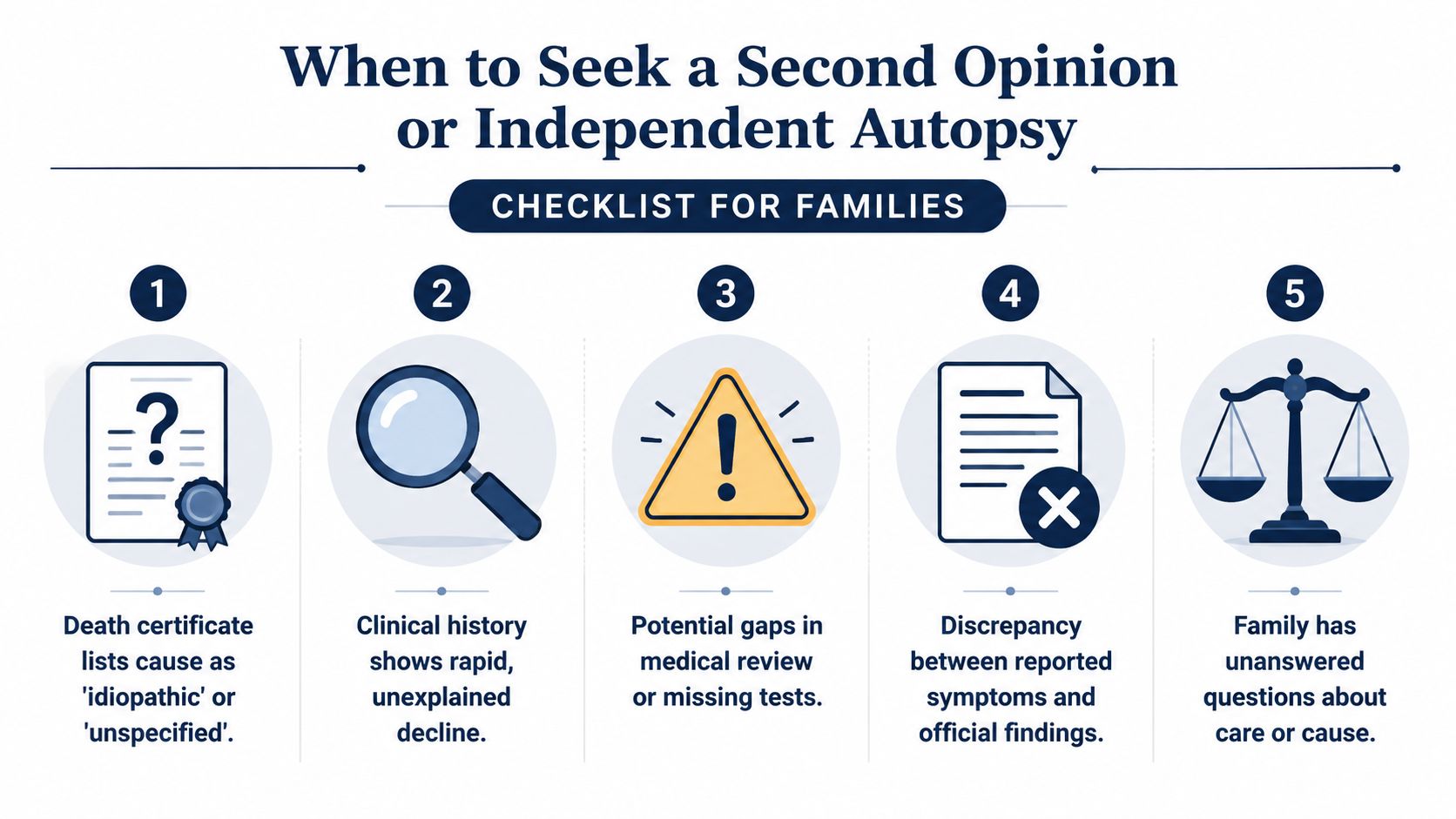
Circumstances that deserve closer review
- Unexpected rapid decline: The person appeared relatively stable, then developed severe breathing difficulty or died without a clear explanation.
- Possible infection or aspiration: Fever, vomiting, swallowing difficulty, altered consciousness, or new lung findings may raise questions about a precipitating event.
- Questions about treatment: The family is concerned about medication effects, delayed recognition, missed testing, or a change in care.
- Possible occupational or environmental exposure: The history includes dust, fibers, fumes, or other exposures that may affect the medical and legal analysis.
- Inconsistent documentation: The symptoms described by witnesses don't match the hospital records, death certificate, or reported examination findings.
- Potential litigation: An attorney needs an independent medical opinion about causation, contributing conditions, or the adequacy of an existing investigation.
Before authorizing an examination, ask which questions the pathologist will address, what records are needed, whether toxicology or histology is indicated, how transport will be arranged, and how chain of custody will be maintained. Families can also begin with a structured review of an existing case when a full autopsy isn't feasible or when the body has already been cremated.
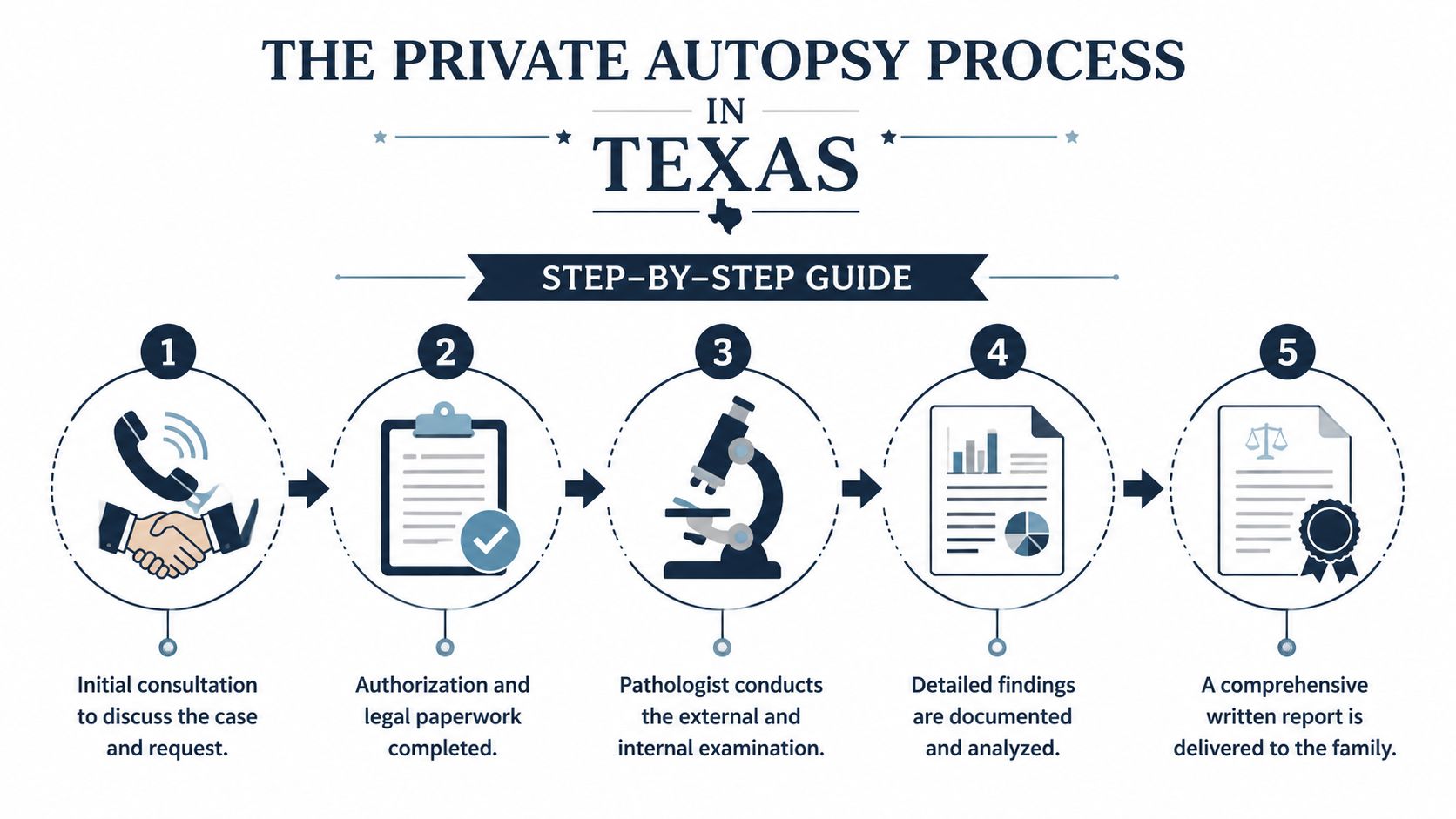
The Private Autopsy Process in Texas
A private autopsy is an independent postmortem examination requested by an authorized person, usually a family representative, attorney, or other legally permitted party. It doesn't automatically replace a medical examiner investigation. If a death falls under a county medical examiner or justice of the peace process, that agency controls the official investigation and release of the body under applicable law.
The Texas Funeral Service Commission regulates funeral service activity, while provisions of the Texas Health & Safety Code, including Chapters 711, 716, and 651, provide relevant legal context for handling human remains, funeral practices, and professional responsibilities. The precise authority involved depends on the circumstances of the death and the county's system.
A practical sequence
- Initial consultation: Our team gathers the medical history, circumstances of death, location of the body, concerns about the official findings, and the requested scope of review.
- Authorization and coordination: The responsible party completes the required authorization and identifies the funeral home, hospital, medical examiner, or justice of the peace holding the body.
- Transport and custody: Licensed transport moves the decedent to the examination facility. Each transfer is documented, and records identify who had custody, when custody changed, and where the body was stored.
- Examination and testing: Every examination is performed by a forensic pathologist certified by the American Board of Pathology. The examination includes external and internal review, with detailed assessment of the respiratory tract, lungs, heart, and other organs. Tissue may be retained for histology, and additional testing may include cultures, special stains, PCR, toxicology, or fluid analysis when medically justified.
- Reporting: Findings are organized into a written report addressing the cause of death, manner of death when supportable, significant contributing conditions, and the basis for the conclusions. The report is prepared for medical and legal review and may support testimony when needed.
Texas medical examiner law requires a full record containing the name, place where the body was found, date, cause and manner of death, and the full report and detailed findings of any autopsy. The statutory text is available through this Texas law reference. The law also directs that when an autopsy is necessary, it must be performed immediately by the medical examiner or an authorized deputy.
Our practice serves all 254 Texas counties from its Elgin, Texas facility and coordinates in-house licensed transport. Families and attorneys receive direct communication with the team, transparent flat-rate, all-inclusive pricing, and a report that preserves the distinction between observed findings, laboratory results, and medical interpretation.
Forensic Answers to Common Questions About Pulmonary Fibrosis Deaths
What if important medical records are unavailable?
An independent pathologist can still examine the body, lungs, airways, and available laboratory material. The interpretation will be narrower without imaging, treatment notes, oxygen records, or witness accounts. The report should identify which conclusions rest on direct findings and which questions remain unresolved.
How can an autopsy distinguish an acute exacerbation from gradual decline?
A slow decline may leave extensive established fibrosis, architectural distortion, and honeycombing without a newer widespread injury. An acute exacerbation can add diffuse alveolar damage, a pattern of fresh injury that may help explain a sudden respiratory collapse. Infection, aspiration, embolic disease, or cardiac pathology may provide another explanation or contribute to the final event. Timing still requires correlation with hospital records and the reported course.
How long do histology results take?
Microscopic examination is performed after tissue is processed, sectioned, and stained. The time required depends on the number of samples, the need for special stains or additional testing, and whether the findings require consultation. Families can review what a histology report means to understand how microscopic observations become part of the final interpretation.
Can an autopsy show whether pneumonia or aspiration occurred?
It can provide supporting or contradictory evidence, but neither diagnosis should rest on one isolated finding. The pathologist examines the airways and lungs for material, inflammation, consolidation, and injury, then considers cultures, special stains, molecular testing, medical history, and witness information. Some findings can reflect treatment, resuscitation, or changes after death, so context matters.
Is pulmonary fibrosis alone enough for a death certificate?
That depends on the evidence and the wording required by the circumstances. Pulmonary fibrosis may represent the underlying disease, while a separate process explains why death occurred at that time. An independent review can assess whether the documented cause is supported by the examination and available records, or whether the level of certainty should be stated more cautiously.
What can an autopsy not answer?
An examination cannot reconstruct every moment of the final illness or prove negligence by itself. It also cannot resolve a question unsupported by the available evidence. Its value is greatest when direct findings, laboratory results, records, and witness accounts are weighed together, with the limits of each source stated plainly.
Getting Clarity and Moving Forward
Death by pulmonary fibrosis may involve longstanding scarring, but the final event can be acute respiratory failure, diffuse alveolar damage, infection, aspiration, cardiovascular disease, or another complication. That distinction helps families understand what happened and gives attorneys a sound medical foundation for reviewing causation.
A records review may be appropriate when the body is unavailable or the existing documentation is extensive. A full independent autopsy may provide additional clarity when the death was unexpected, the findings conflict, or important testing was not performed. Seeking that clarity is a respectful decision, not an accusation.
If questions remain, gather the death certificate, hospital records, imaging, medication list, medical examiner documents, and the names of agencies or facilities involved. Our team can discuss the circumstances without obligation and help determine whether a second-opinion review or complete examination is medically and legally appropriate.
Texas Autopsy Services provides independent autopsy examinations and second-opinion reviews for pulmonary fibrosis deaths, with every examination performed by a forensic pathologist certified by the American Board of Pathology. Visit Texas Autopsy Services to contact our team about records review, statewide licensed transport, and a clear explanation of the next appropriate step.