September 14, 2026 · Texas Autopsy Services
Forensic Toxicology Services Explained for Families
Learn what forensic toxicology services include, how testing and chain of custody work, and how results support cause of death findings in Texas.
On this page
- Introduction When Answers Depend on Toxicology
- What Forensic Toxicology Services Are and How They Work
- Common Types of Toxicology Testing and Specimen Choices
- Sample Collection and Chain of Custody Procedures
- Turnaround and Reporting With Court Admissible Results
- How Toxicology Integrates With Autopsy Findings
- When to Order Testing and How Texas Autopsy Services Helps Statewide
A death can leave a family, attorney, or county official with an immediate but difficult question: did a drug, alcohol, poison, or chemical contribute to what happened? A toxicology result may provide important evidence, but it rarely works as a simple yes-or-no answer. The meaning of a finding depends on the specimen, collection site, storage history, concentration, postmortem changes, medical history, scene evidence, and autopsy findings.
Forensic toxicology services are designed for that broader question. They combine laboratory testing with interpretation suitable for a medicolegal investigation. Our team at Texas Autopsy Services works with families, attorneys, healthcare professionals, and Texas counties when a private autopsy, independent review, or forensic pathology consultation requires careful toxicology correlation.
- Toxicology is interpretive: Detecting a substance doesn't automatically establish impairment, timing, or cause of death.
- Specimen choice matters: Peripheral blood, central blood, urine, tissue, vitreous fluid, and hair answer different questions.
- Postmortem changes affect results: Redistribution and degradation can alter concentrations after death.
- Chain of custody protects credibility: Every collection, transfer, storage, and analysis step must be documented.
- Autopsy and toxicology work together: Cause and manner of death require medical, scene, record, and laboratory context.
- Texas law governs the process: Autopsy authority, body handling, organ removal, and crematory matters fall under specific Texas statutes and regulatory frameworks.
Introduction When Answers Depend on Toxicology
A family may receive an autopsy report that says the cause of death remains pending because laboratory testing is still needed. An attorney may review medical records and find a medication list that doesn't match the substances reported at the scene. A justice of the peace may need an independent forensic opinion when a county lacks access to a medical examiner. In each situation, toxicology can supply an important part of the answer, but only when professionals interpret the result in context.
Forensic toxicology developed from early courtroom poisoning investigations into a central part of modern death investigation. James Marsh's 1836 arsenic test is widely described as the first use of toxicology in a jury trial, and Theodore Wromley's 1867 publication Microchemistry of Poisons is described as the first American book devoted to the chemical study of poisons. These milestones are discussed in the historical overview of forensic toxicology.
Today, forensic toxicology supports death investigations, impaired-driving cases, drug-facilitated crime investigations, and postmortem examinations. The field has also become a sizable global market. One industry report estimated a USD 1.54 billion market in 2024, with a projection of USD 3.71 billion by 2033 and a projected 10.2% CAGR from 2025 through 2033. The report links that growth to greater institutional use of toxicology, technological advances, and rising demand for forensic services (market report).
Our board-certified forensic pathologists approach toxicology as one part of a complete cause of death investigation. Every examination is performed by a forensic pathologist certified by the American Board of Pathology. We explain what testing can establish, what it can't establish, and how the laboratory findings relate to the autopsy, records, scene, and legal questions.
Practical rule: A positive toxicology result identifies exposure. It doesn't, by itself, prove that the substance caused death.
What Forensic Toxicology Services Are and How They Work
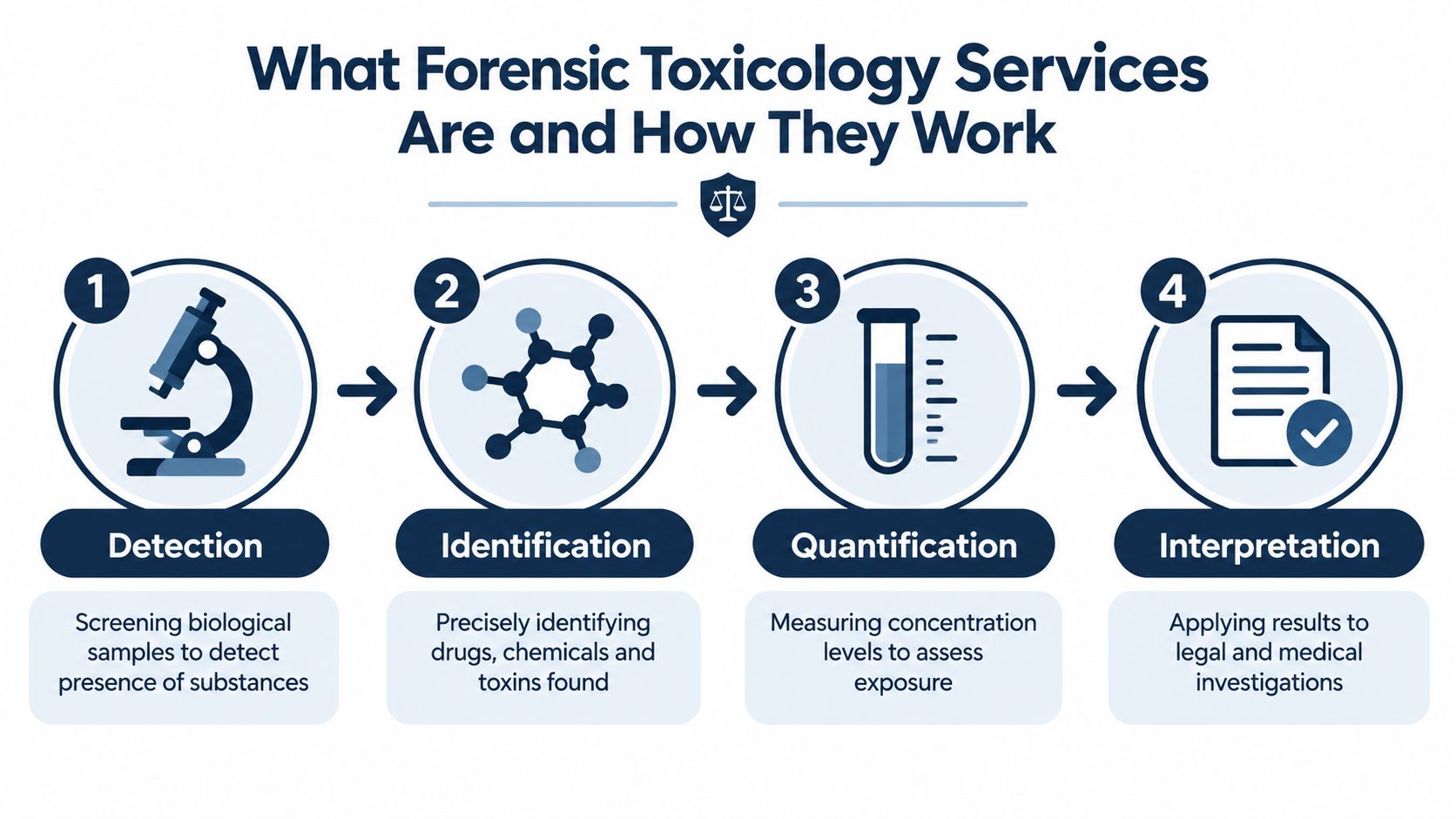
Forensic toxicology services involve the detection, identification, measurement, and interpretation of drugs, alcohol, poisons, and other chemicals in biological specimens for legal and medical investigations. The laboratory may test blood, urine, tissue, vitreous fluid, hair, or other materials, depending on the case question and the condition of the body.
The work follows a logical sequence:
- Detection uses screening methods to identify substances that may be present.
- Identification uses more specific laboratory methods to determine what the substance is.
- Quantification measures the concentration when the method and specimen support that conclusion.
- Interpretation considers the result alongside pathology, medical history, scene evidence, and the circumstances of death.
A routine clinical drug screen and a forensic toxicology service aren't interchangeable. A clinical test may help a treating physician make an immediate care decision. A forensic service must also address specimen identity, collection conditions, analytical limits, confirmation, documentation, and the meaning of the result after death.
A simple analogy helps. Finding a medication in blood is like finding a message in a file. The message is real, but the reader still needs to know when it was written, whether the file changed, and what question the message answers. Toxicologists examine the concentration, specimen type, stability, and case context before drawing a conclusion.
The difference between presence and significance is especially important. A substance may reflect prescribed treatment, prior exposure, contamination, recreational use, or a concentration that contributed to impairment or death. It may also be present at a level that has no meaningful role in the death. Our plain-language explanation of forensic toxicology provides additional background for families and legal professionals.
Forensic toxicology services have become a core component of forensic pathology because modern cases often involve multiple substances, therapeutic medications, novel psychoactive substances, and complex postmortem changes. Educational and government materials also describe growing attention to global detection trends and artificial intelligence or machine-learning tools, but no tool replaces a qualified professional's review of the specimen, method, and complete case record (National Institute of Justice report).
Common Types of Toxicology Testing and Specimen Choices
The specimen determines what a toxicology test can reasonably show. Blood may help assess circulating concentration, urine may show that the body processed a substance, and hair may indicate exposure over a broader period without proving impairment at a specific time. No single specimen answers every question.
| Specimen | What It Shows | Best Use and Limitation |
|---|---|---|
| Peripheral blood | Substance concentration in blood from a site less affected by nearby organs | Often preferred for postmortem interpretation, but collection must account for decomposition and storage |
| Central blood | Substance concentration in blood from a central body site | May be useful, but concentrations can be higher or less stable because of postmortem redistribution |
| Urine | Evidence that the body absorbed and processed a substance | Useful for exposure history, but usually cannot establish current impairment or a precise concentration in circulating blood |
| Tissue | Drug or chemical presence in organs or other sampled tissues | Helps correlate findings and assess possible redistribution, but tissue concentrations don't translate directly into blood concentrations |
| Vitreous fluid | Certain chemical measurements that may remain useful after death | Can support selected investigations, but it doesn't replace blood, tissue, or case-specific testing |
| Hair | Longer-term exposure patterns in some circumstances | May support an exposure history, but it generally can't establish exact timing, impairment, or cause of death |
Why collection site changes interpretation
After death, substances can move from tissues into blood. This process is called postmortem redistribution. Diffusion from organs and other tissues can create large differences between central and peripheral blood concentrations. Reviews commonly use central-to-peripheral ratios as a warning sign, but no universal marker reliably predicts how much a particular drug will shift in a particular body.
The forensic toxicology laboratory standard emphasizes the need to consider redistribution, specimen location, and case circumstances together. The most defensible approach may pair peripheral blood with tissue sampling and a careful review of the scene and medical history.
Why stability matters after death
Postmortem blood is an unstable matrix. Published reviews identify cocaine, heroin, several antidepressants, antipsychotics, and benzodiazepines as especially vulnerable to degradation. Some sedative-hypnotics remained within 20% loss for at least a month when refrigerated or frozen, but stability differs by substance and storage conditions (postmortem stability review).
This is why collection should occur promptly when possible, specimens should be preserved under cold conditions, and the laboratory should receive the storage history. A changed concentration may reflect decomposition or handling rather than the amount present before death.
Sample Collection and Chain of Custody Procedures
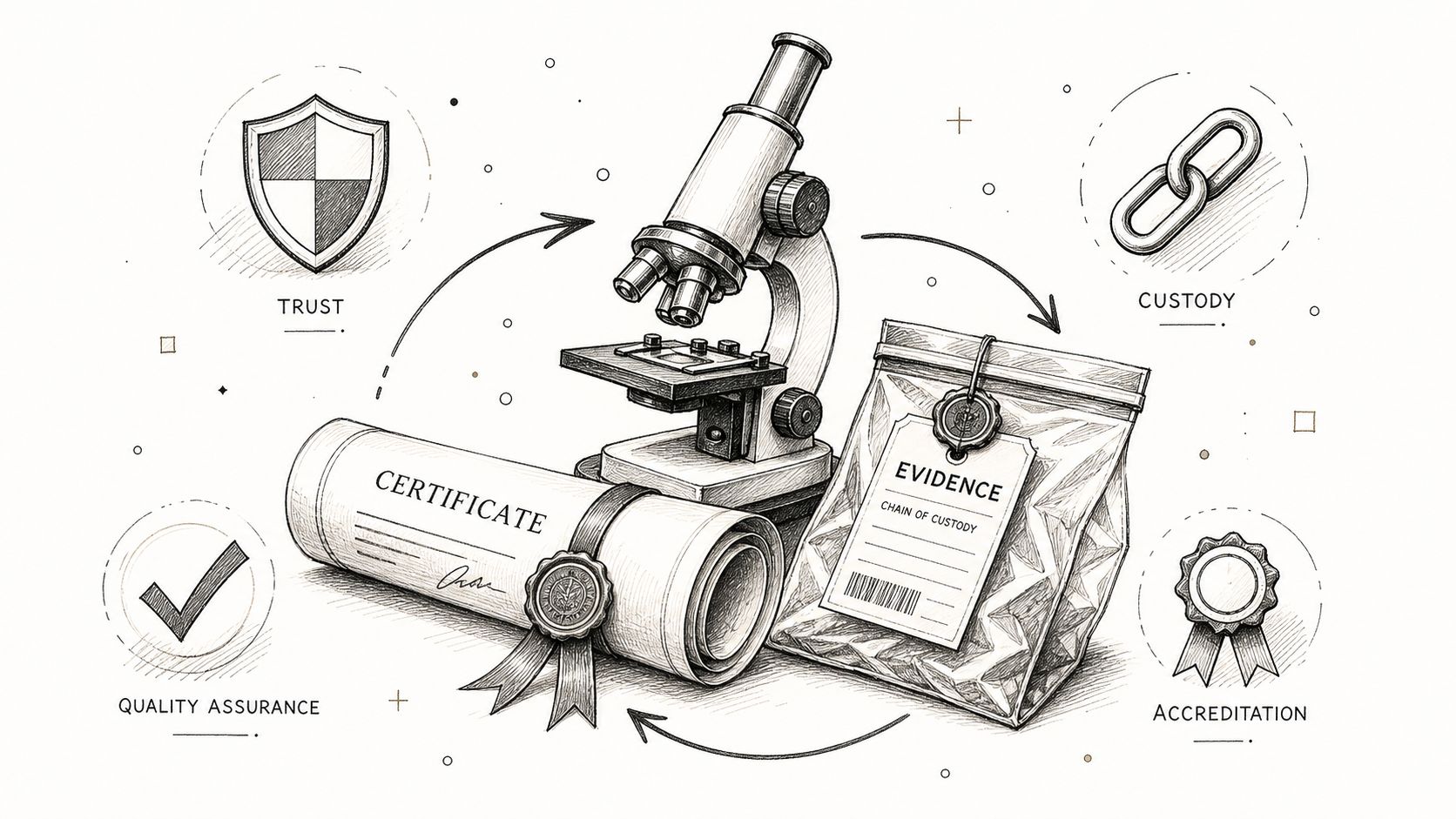
Chain of custody is the documented history of a specimen from collection through final disposition. It identifies who handled the sample, when each transfer occurred, why the transfer happened, where the specimen was stored, and how the laboratory analyzed it. This record helps attorneys, courts, families, and investigators determine whether the tested specimen is the same specimen collected during the examination.
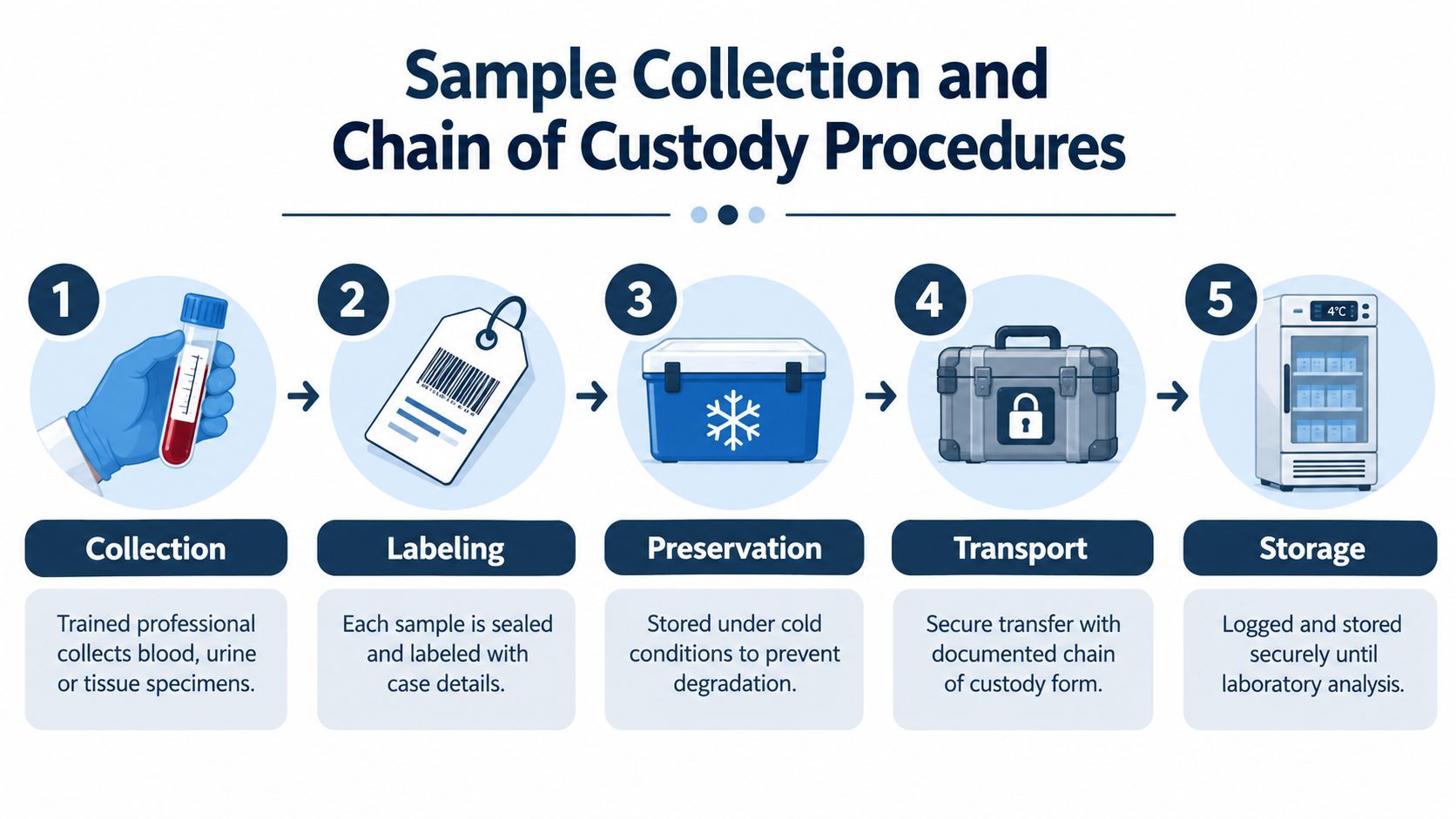
A defensible sequence generally includes these steps:
- Collection: A trained professional obtains the appropriate specimens using procedures suited to the case.
- Labeling: Each container is identified with case information and sealed to show whether it has been opened.
- Preservation: Samples are placed under cold conditions when required to limit degradation.
- Transport: A secure transfer occurs with the receiving person, date, and purpose documented.
- Storage: The laboratory logs the specimen and stores it securely until analysis, retention, or authorized disposal.
Forensic laboratory standards require documentation of every person who handles a specimen, including the date and purpose of each receipt, transfer, analysis, storage, and disposal step. A missing entry doesn't automatically determine the scientific result, but it can create questions about identity, integrity, or admissibility.
Temperature and timing also matter. A specimen that remains warm, sits without documentation, or arrives with a broken seal may require additional review. Our team records the collection and transport history and coordinates secure handling so the pathologist and laboratory can evaluate the result in light of known conditions.
The specimen collection procedures guide describes practical considerations for obtaining and preserving samples. Families typically don't need to manage the technical steps themselves, but they can ask who collected the specimen, where it was stored, which laboratory performed the testing, and whether the chain-of-custody record is complete.
Texas-specific authority matters as well. The Texas Funeral Service Commission regulates mortuary practice under Texas Occupations Code Chapter 651 and crematory practice under Texas Health and Safety Code Chapter 716, as confirmed on the commission's governing-law page. Body release, transport, autopsy coordination, and cremation-adjacent steps may involve more than one legal framework.
Turnaround and Reporting With Court Admissible Results
A family may receive an initial autopsy update while the toxicology report remains pending. That timing is expected in many cases. Laboratory capacity, the tests ordered, confirmation requirements, specimen condition, and the complexity of interpretation all affect completion.
A public laboratory report described a toxicology backlog of 40,051 cases. Separate published findings have reported delays ranging from weeks to months. A U.S. National Institute of Justice study reported that internal postmortem toxicology could take 10 to 12 weeks, while outsourced testing sometimes returned results in 1 to 2 weeks. These figures describe possible workflows, not a guaranteed schedule for a Texas case.
A short turnaround is useful only when screening, confirmation, quality review, and interpretation are complete. A preliminary finding may identify a substance, while a final report explains the method, concentration, limitations, and forensic meaning.
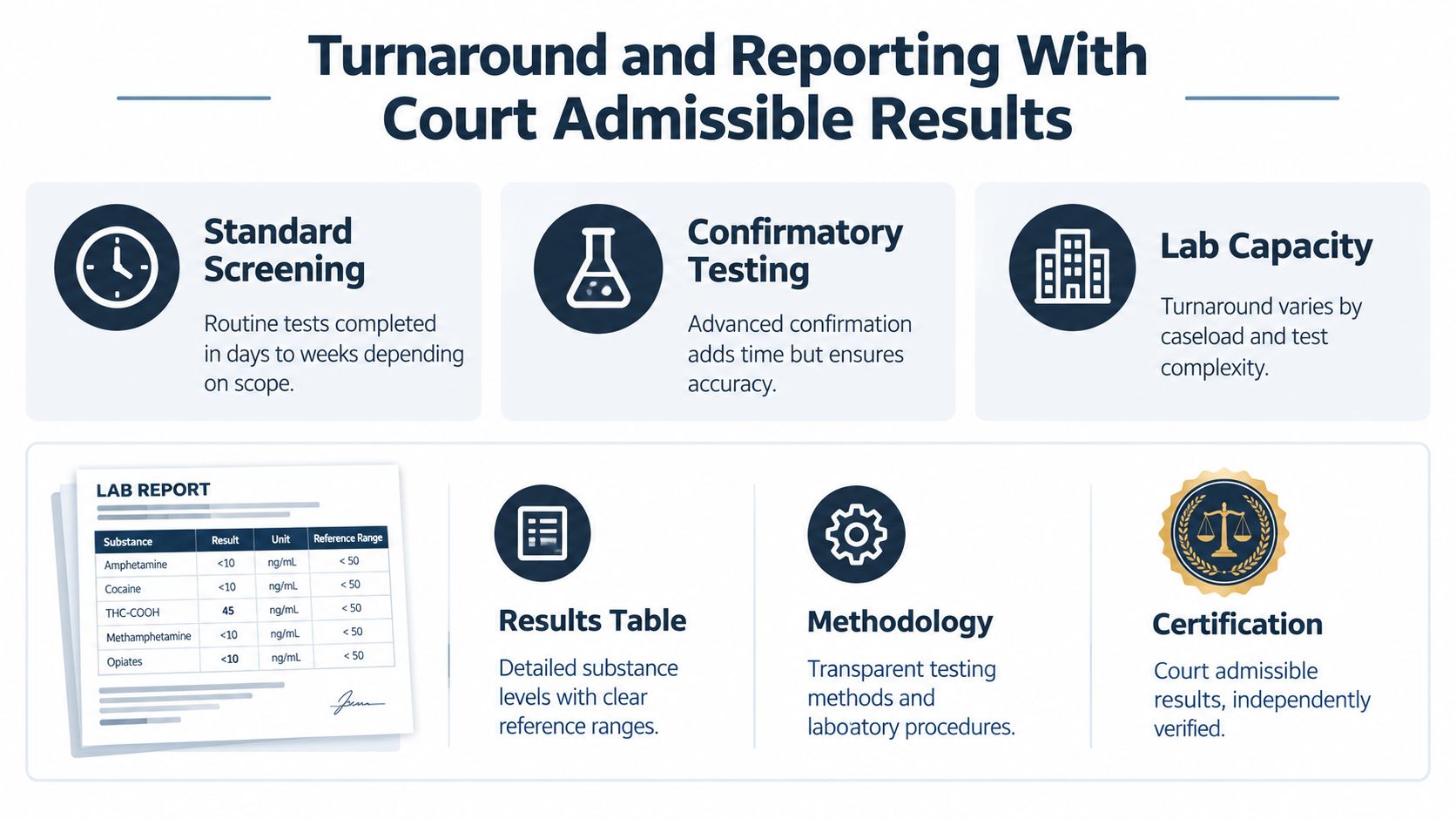
A court-admissible report should let an attorney or investigator follow the reasoning. Depending on the service, it may identify:
- Specimens tested: The type, source, collection information, and condition of each sample.
- Methods used: Screening, confirmation, quantification, and analytical limitations.
- Results: Detected substances and concentrations when supported by the method.
- Interpretation: What the findings may indicate and what they cannot establish.
- Case correlation: How toxicology relates to records, scene information, autopsy findings, and the legal question.
The autopsy portion of many cases is completed within 24 to 48 hours, but laboratory testing and review may take longer. Texas Autopsy Services does not promise a fixed completion date because the timeframe depends on testing scope and laboratory workflow.
Attorneys evaluating report reliability may also review the laboratory accreditation standards discussion, which explains how documented methods, quality controls, and review procedures support forensic reporting.
How Toxicology Integrates With Autopsy Findings
Cause of death is the disease, injury, or toxic exposure that initiates the sequence leading to death. Manner of death is the legal classification of how the death occurred, such as natural, accident, suicide, homicide, or undetermined. Toxicology may inform both questions, but it doesn't answer either one in isolation.
A pathologist may find a substance in blood and still need to determine whether it was therapeutic, incidental, contributory, or fatal. The answer depends on the concentration, specimen site, stability, tolerance, medical history, physical findings, scene evidence, and other substances present. Mixed findings are especially difficult because each substance may alter the effects of another, while postmortem redistribution may affect measured concentrations.
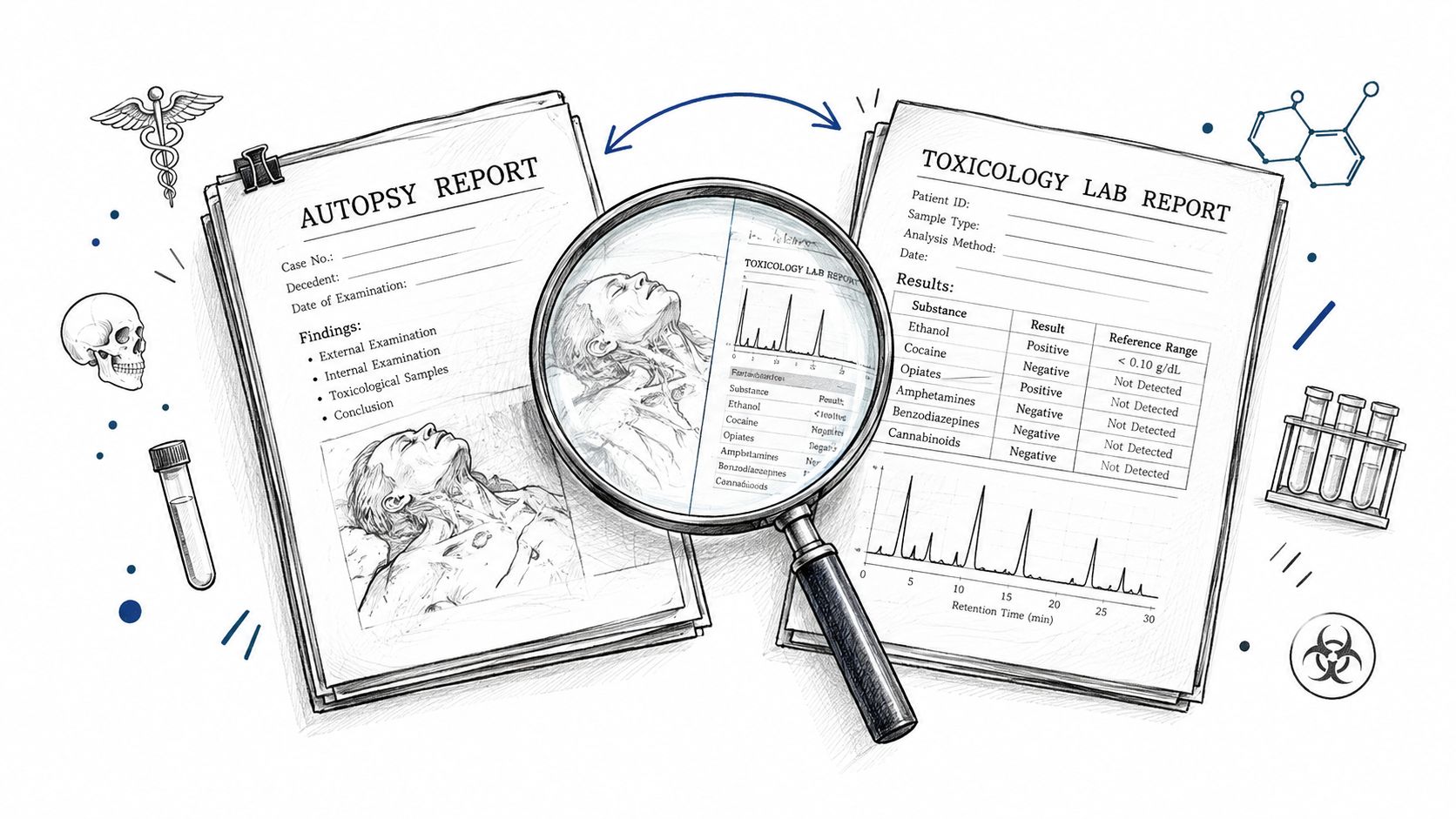
Three questions guide the correlation
- Was there exposure? Laboratory testing can identify a drug, alcohol, poison, or chemical in a submitted specimen.
- What did the exposure mean? The team considers concentration, specimen type, timing, metabolism, interactions, and postmortem change.
- Did it cause or contribute to death? The pathologist compares toxicology with autopsy findings, medical records, scene information, and circumstances.
Toxicology may clarify an otherwise unexplained death, challenge an assumption based only on a medication list, or support an attorney's review of whether a reported substance could explain the medical findings. It may also show that a substance was present but doesn't adequately explain the death. In that situation, the final opinion may identify another cause or leave the manner undetermined when the available evidence doesn't support a more specific conclusion.
A second-opinion autopsy review can assess an existing report, laboratory data, photographs, medical records, and death investigation materials. That review doesn't guarantee a different conclusion. It provides an independent assessment of whether the original interpretation is supported by the available evidence and whether important limitations were addressed.
When to Order Testing and How Texas Autopsy Services Helps Statewide
Families and attorneys often seek forensic toxicology services when a death was sudden, unexplained, disputed, or associated with medication, alcohol, drugs, chemicals, or possible exposure. Testing may also be appropriate when a medical examiner declines a case, when an independent autopsy is requested, or when litigation requires a forensic pathology expert to evaluate existing findings.
County officials may need an outside forensic autopsy service when local resources are limited. Texas law gives a justice of the peace broad discretion in inquest deaths. For each body subject to an inquest, the justice may direct a physician to perform an autopsy or certify that no autopsy is necessary. Certain child deaths require an autopsy when it is needed to determine or confirm the cause of death. Texas rules also restrict autopsies in specified communicable-disease circumstances, including deaths caused by Asiatic cholera, bubonic plague, typhus fever, or smallpox, and deaths caused by communicable disease during a public health disaster (Texas coroner and medical examiner law).
Texas Code of Criminal Procedure Article 49A permits a physician to perform a postmortem examination or autopsy without consent only when no authorized person is available after due diligence and the physician has authorization from a medical examiner, justice of the peace, or county judge. In that circumstance, the examination must occur not less than 24 hours and not more than 48 hours after death or after the body is taken into possession (Texas Code of Criminal Procedure Article 49A).
Texas Autopsy Services is an independent private autopsy and forensic pathology practice based in Elgin, Texas, serving all 254 Texas counties. Every examination is performed by a forensic pathologist certified by the American Board of Pathology. Our operations include in-house licensed transport, secure temperature-controlled storage, direct communication with the team, flat-rate all-inclusive pricing, and coordination with independent forensic laboratories for toxicology testing.
For families, our private autopsy services may provide an independent examination or second opinion. For justices of the peace and counties, county forensic autopsy services can support cases requiring professional forensic pathology resources. Body handling and organ removal must also be coordinated carefully. Texas Health and Safety Code Chapter 693 allows organ removal in qualifying inquest deaths only when proper consent is obtained and removal won't interfere with the investigation or autopsy. The statute requires the autopsy to be performed in a timely manner after organ removal (Texas Health and Safety Code Chapter 693).
Frequently asked questions
Does a positive toxicology result prove cause of death?
No. It proves that a substance was detected in the tested specimen. Cause of death requires interpretation of concentration, specimen site, stability, autopsy findings, medical history, scene evidence, and other circumstances.
Is urine testing enough to determine impairment?
Usually, urine is better understood as evidence of exposure and processing than as a direct measure of impairment at a specific time. Blood and other evidence may be needed, depending on the question.
Why can central and peripheral blood results differ?
Postmortem redistribution can move substances from tissues into blood. Central and peripheral samples may therefore show different concentrations, and no universal marker reliably predicts the amount of change for every drug.
Can toxicology determine exactly when a substance was taken?
Not always. Toxicology may support an exposure assessment, but timing depends on the substance, specimen, concentration, metabolism, postmortem changes, and case information.
Can a private autopsy include toxicology?
Yes, when legally authorized and appropriate for the case. The pathologist selects specimens, documents their handling, coordinates laboratory analysis, and interprets the findings with the autopsy and investigation.
Texas Autopsy Services provides independent autopsy examinations, second-opinion reviews, forensic pathology reporting, and coordinated toxicology services across all 254 Texas counties. If a death has raised unanswered questions, visit Texas Autopsy Services to contact our Elgin team directly for respectful guidance about the next appropriate step.