September 10, 2026 · Texas Autopsy Services
Sudden Unexplained Death: A Forensic Guide
Learn how board-certified forensic pathologists investigate sudden unexplained death through comprehensive autopsy, molecular testing, and independent review.
On this page
A family may receive an autopsy report that says only “undetermined” after a loved one dies without warning. That word describes the limits of the initial investigation, not necessarily the limits of forensic science. A careful review of the circumstances, medical history, preserved specimens, toxicology, histology, and genetic evidence can sometimes identify a cause that routine examination could not show.
Texas Autopsy Services is an independent private autopsy and forensic pathology practice based in Elgin, Texas. Our team serves families, attorneys, healthcare professionals, agencies, and county officials across all 254 Texas counties. Every examination is performed by a forensic pathologist certified by the American Board of Pathology, with licensed logistics support, secure transport, full chain of custody, and direct communication throughout the process.
- Sudden unexplained death is a defined medicolegal category, not a description of a shocking loss.
- A normal-looking heart does not rule out fatal electrical disease, inherited arrhythmia, or other hidden medical conditions.
- A forensic autopsy includes imaging, toxicology, histology, and examination of the brain, heart, and thorax.
- Molecular autopsy and postmortem genetic testing may provide answers after routine autopsy findings are negative.
- An independent autopsy or second-opinion review can preserve evidence and clarify disputed or incomplete findings.
- Texas law assigns specific roles to justices of the peace, medical examiners, prosecutors, and other agencies.
Defining Sudden Unexplained Death
A sudden loss often begins with an ordinary moment. A person appears well, goes to sleep, exercises, or continues a normal day. Then a relative receives an urgent call and learns that the person has died. The first report may mention cardiac arrest, respiratory failure, or an unknown cause, but those descriptions may identify the final event rather than the disease that caused it.
In medicolegal practice, sudden unexplained death generally means an unexpected death in an apparently healthy person where a complete autopsy does not identify a conclusive cause. Expert consensus commonly places the event within one hour of symptom onset or within 24 hours of the person last being seen alive, depending on the circumstances and the definition used. The category applies to an individual older than one year in the cited consensus definition, while infant and childhood classifications use separate terminology and investigative standards. The expert consensus on sudden unexplained death describes autopsy as essential and recommends preserving tissue for possible genetic analysis.
This classification differs from an unexpected death with an obvious explanation. A person may die suddenly from a clearly documented traumatic injury, a witnessed overdose, or a disease already demonstrated by examination. In an unexplained case, the circumstances and the postmortem findings don't establish a defensible cause after the available evidence has been reviewed.
The public-health significance
These deaths aren't rare one-off events. A population-based analysis estimated approximately 67,390 sudden unexplained deaths each year among U.S. adults ages 20 to 64, with an age- and sex-adjusted incidence of 35.1 per 100,000. The analysis reported 49.3 per 100,000 in men and 21.7 per 100,000 in women, showing a substantial sex difference. The population-based analysis of sudden unexplained death in adults also estimated about 2 million years of life lost, representing 10.0% of years of life lost from all causes, and approximately $51 billion in lifetime productivity loss.
Infant deaths require separate classification and careful scene investigation. The CDC reports about 3,400 sudden unexpected infant deaths each year, and reported approximately 3,700 such deaths in 2022, including 1,529 SIDS deaths, 1,131 deaths from unknown causes, and 1,040 deaths from accidental suffocation and strangulation in bed. CDC data on sudden unexpected infant death distinguishes these categories because they aren't interchangeable.
Practical rule: “Unexplained” should be treated as an investigative conclusion that may warrant further review, not as proof that no medical explanation exists.
Hidden Medical Causes Behind Sudden Events
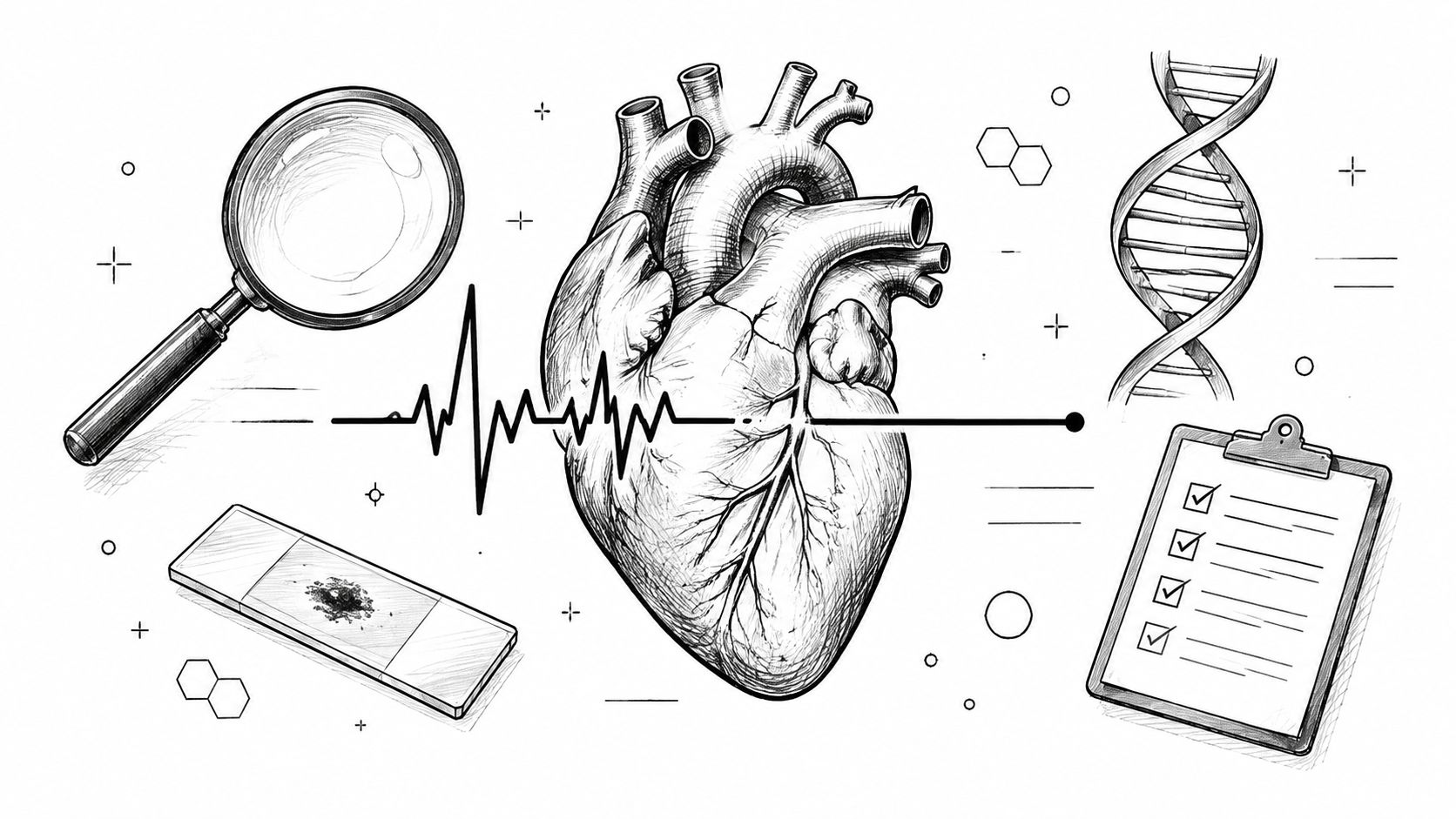
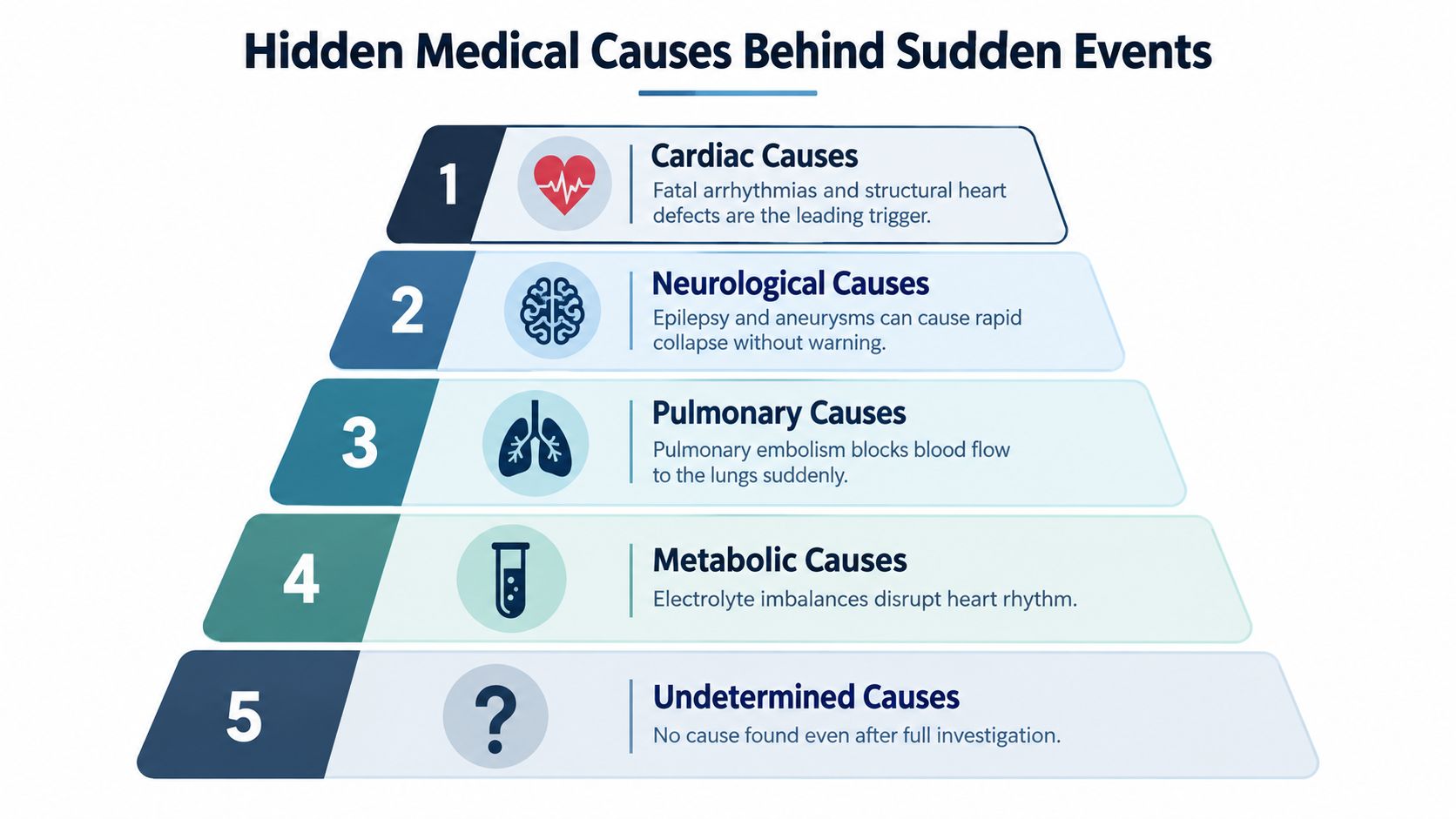
A sudden fatal cardiac rhythm can occur without a dramatic structural abnormality. This is the central difficulty in many sudden unexplained death investigations. The heart may appear normal during an external examination and may show no obvious lesion during gross dissection, yet an inherited electrical disorder can still produce ventricular arrhythmia and death.
In people younger than 40, inherited arrhythmogenic disease is an important explanatory pathway. Cardiomyopathies, including hypertrophic, dilated, and arrhythmogenic cardiomyopathy, occur more often in that age group. Pediatric and young adult cases may also involve channelopathies, disorders affecting the cardiac ion channels that regulate electrical signaling. Examples include long QT syndrome, short QT syndrome, Brugada syndrome, and catecholaminergic polymorphic ventricular tachycardia. A review of sudden unexplained death and inherited cardiac disease explains why targeted cardiac histology and, when indicated, molecular testing may be necessary.
Why a grossly normal heart can mislead
A gross examination evaluates anatomy. Channelopathies often affect electrical function rather than producing a visible defect. A negative external examination therefore has limited value by itself, and even a careful internal examination may not identify the mechanism without microscopic sampling, medical history, toxicology, and genetic evidence.
The differential diagnosis must also extend beyond the heart. Investigators may need to consider subarachnoid hemorrhage, asthma or bronchopneumonia, a ruptured aneurysm or ulcer causing hemorrhagic shock, septic shock, pulmonary disease, metabolic disturbances, or neurologic causes. The absence of a cardiac lesion doesn't eliminate these possibilities.
A precise explanation of cardiac arrest, heart attack, and stroke can help families understand why the final event isn't always the underlying cause. For a basic clinical distinction, families and legal teams can consult this certification guide to cardiac events, while recognizing that a postmortem cause-of-death determination requires forensic examination rather than general educational material.
The Comprehensive Forensic Autopsy Process
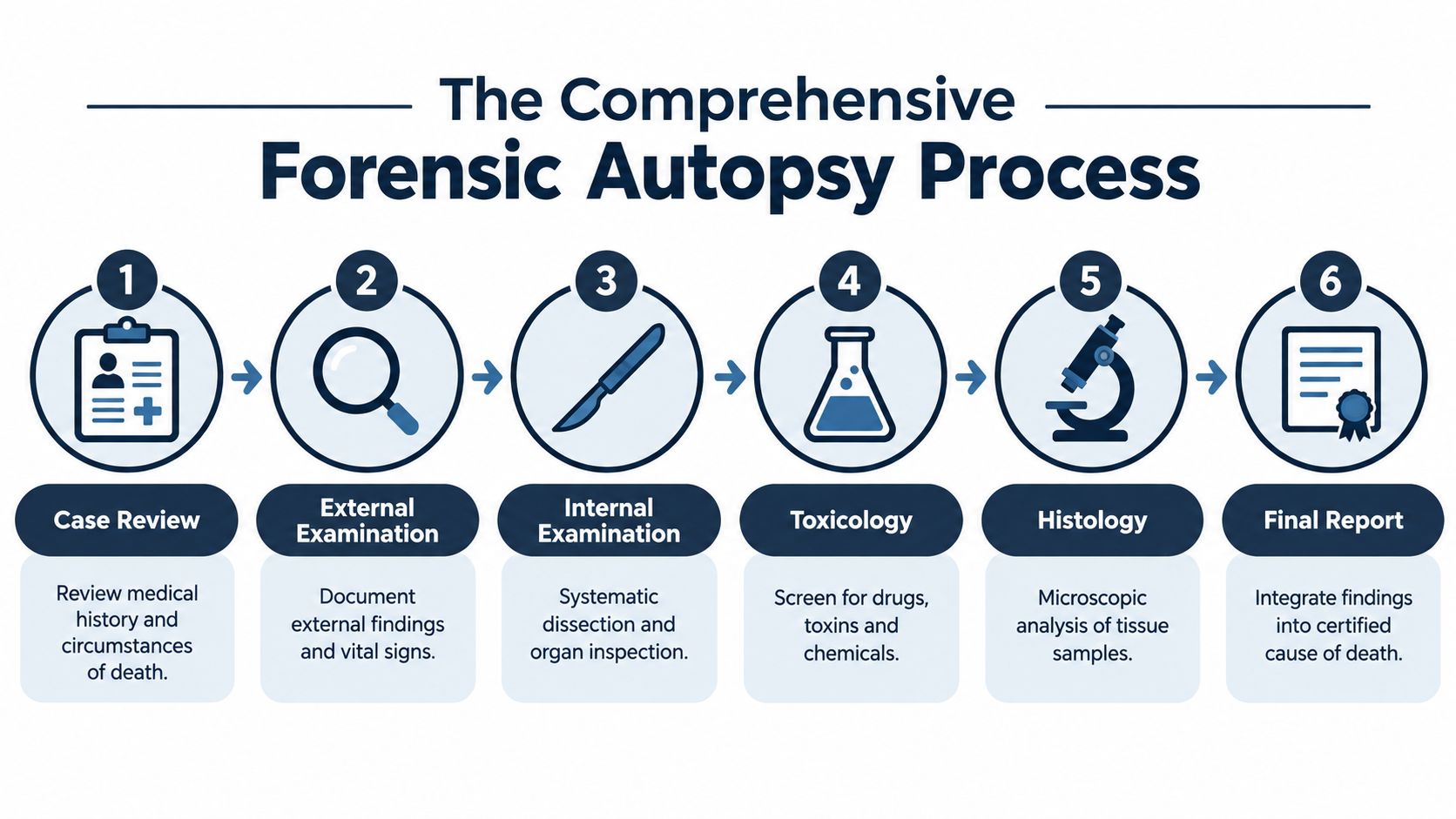
A technical investigation begins with the case, not the incision. Our board-certified forensic pathologists review the reported circumstances, available medical records, medications, witness information, emergency response, and scene findings. This context helps determine which specimens to preserve and which potential causes require special attention.
Texas law defines an autopsy as a postmortem examination that includes X-rays and examination of internal organs and structures after dissection to determine the cause of death or identify pathological changes that may have contributed to death. Texas statutory provisions governing autopsy records and examinations also require complete records that include the cause and manner of death and make the full report and detailed findings part of the record.
Six parts of a complete examination
Case review: The team examines the timeline, medical history, circumstances, medication exposure, and available records. A witnessed collapse differs from an unwitnessed death discovered after an unknown interval.
External examination: Photographs and detailed observations document clothing, injuries, medical devices, identifying marks, and other findings. The examination also records evidence that may affect interpretation of internal findings.
Imaging and internal examination: Imaging can identify fractures, foreign material, or other findings before dissection. The pathologist then examines all organs, with particular attention to the brain, heart, and thorax.
Toxicology: Properly collected specimens are tested for drugs, alcohol, poisons, and other chemicals when indicated. Toxicology isn't limited to confirming overdose. It can help evaluate medication effects, intoxication, poisoning, and alternative explanations for sudden collapse.
Histology: Tissue sections are examined microscopically. Histology is essential because inflammation, early myocardial disease, small areas of fibrosis, infection, and other conditions may not be visible during gross examination.
Report integration: The final report connects the scene, history, examination, laboratory results, and microscopic findings. Cause of death identifies the disease or injury that initiated the fatal process. Manner of death classifies the circumstances, such as natural, accident, suicide, homicide, or undetermined. These are separate conclusions.
The process also protects evidence. Chain of custody is the documented record of who collected, handled, transferred, stored, and analyzed each specimen or item. Without reliable documentation, even scientifically useful evidence may become difficult to interpret or defend in court.
The following video provides general visual context for the examination sequence. It doesn't replace a case-specific forensic consultation.
When Routine Autopsies Return Negative Results
A negative routine autopsy can be accurate and still incomplete as an explanation. It may establish that no obvious structural disease, injury, or toxicologic cause was found, but it may not answer whether an inherited electrical disorder contributed to death. The next step depends on the quality of the original examination, the specimens retained, the medical history, and the circumstances surrounding the event.
Molecular autopsy after anatomy reaches its limit
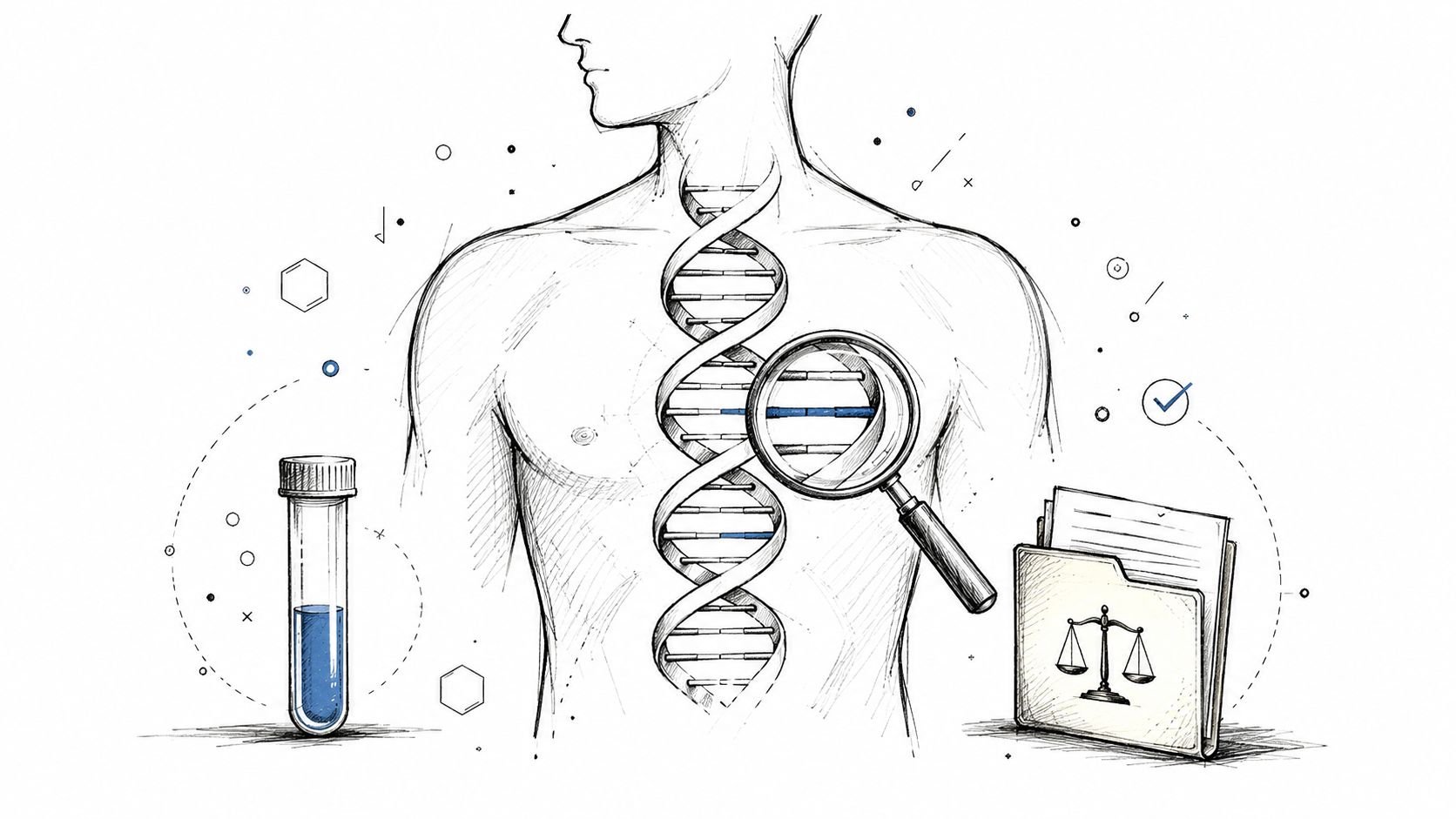
A molecular autopsy uses DNA from the deceased person to look for inherited variants associated with arrhythmia, cardiomyopathy, channelopathy, epilepsy, or other sudden-death mechanisms. It complements a conventional autopsy. It doesn't replace dissection, histology, toxicology, or scene investigation.
Postmortem genetic testing works best when DNA-capable specimens have been collected and stored properly. Depending on the case, the available material may include preserved blood or tissue. The forensic pathologist must interpret any genetic finding alongside the phenotype, pathology, toxicology, family history, and circumstances of death.
Published estimates indicate that roughly one-third of autopsy-negative sudden deaths in young people may be explained by inherited channelopathies, while some reviews estimate that 25% to 35% of autopsy-negative sudden unexplained deaths may involve susceptibility genes associated with long QT syndrome or catecholaminergic polymorphic ventricular tachycardia. The technical review of postmortem genetic testing emphasizes the importance of preserving suitable specimens and coordinating family cardiac screening when a heritable mechanism is suspected.
What a genetic result can and can't establish
A clearly pathogenic finding may direct surviving relatives toward appropriate cardiac or genetic evaluation. A variant of uncertain significance, however, doesn't establish a cause of death. Genetic interpretation can also remain limited when DNA is degraded, the relevant disease gene isn't known, or the available family history is incomplete.
Our team describes specimen preservation and interpretation in our guide to molecular autopsy. The practical objective isn't to order every possible test. It's to select testing that answers a defined forensic question and to report its limitations plainly.
The Value of Independent Private Autopsy Services
An independent autopsy is appropriate when a family needs an additional examination, when an existing report leaves important questions unresolved, or when an attorney needs an objective forensic review for potential litigation. A second opinion may involve a complete examination, a review of existing slides and blocks, a records review, or a combination of these services.
The right choice depends on the condition of the remains, whether cremation has occurred, what specimens remain available, and whether the county or medical examiner has already completed an investigation. A new examination can't recreate evidence that was never collected, and no pathologist can guarantee that a cause will be identified. A careful practice should explain those limits before accepting the case.
What independence adds
An independent forensic pathologist isn't replacing the authority of a medical examiner or justice of the peace. The independent role is to conduct an objective medical review, identify overlooked questions, assess whether the examination was adequate, and explain the strength of each conclusion.
Our private autopsy service information describes the kinds of cases that may benefit from an independent examination or second-opinion review. Every examination is performed by a forensic pathologist certified by the American Board of Pathology. Our practice provides in-house licensed transport, secure handling, direct communication, and reporting for families and legal teams across Texas.
Evidence that can withstand scrutiny
A useful report should distinguish established findings from interpretation. It should identify the materials reviewed, describe the examination and testing, state the cause and manner conclusions when supportable, and explain unresolved issues. Attorneys may also need photographs, laboratory documentation, retained specimens, chain-of-custody records, and testimony based on the report.
A private autopsy doesn't become objective merely because a family paid for it. Independence requires transparent methods, accurate documentation, appropriate testing, and willingness to state when the evidence doesn't support a definitive conclusion. Families considering civil litigation may also benefit from general wrongful death lawyer guidance about preserving records and coordinating expert evidence.
Guidance for Families and Legal Partners
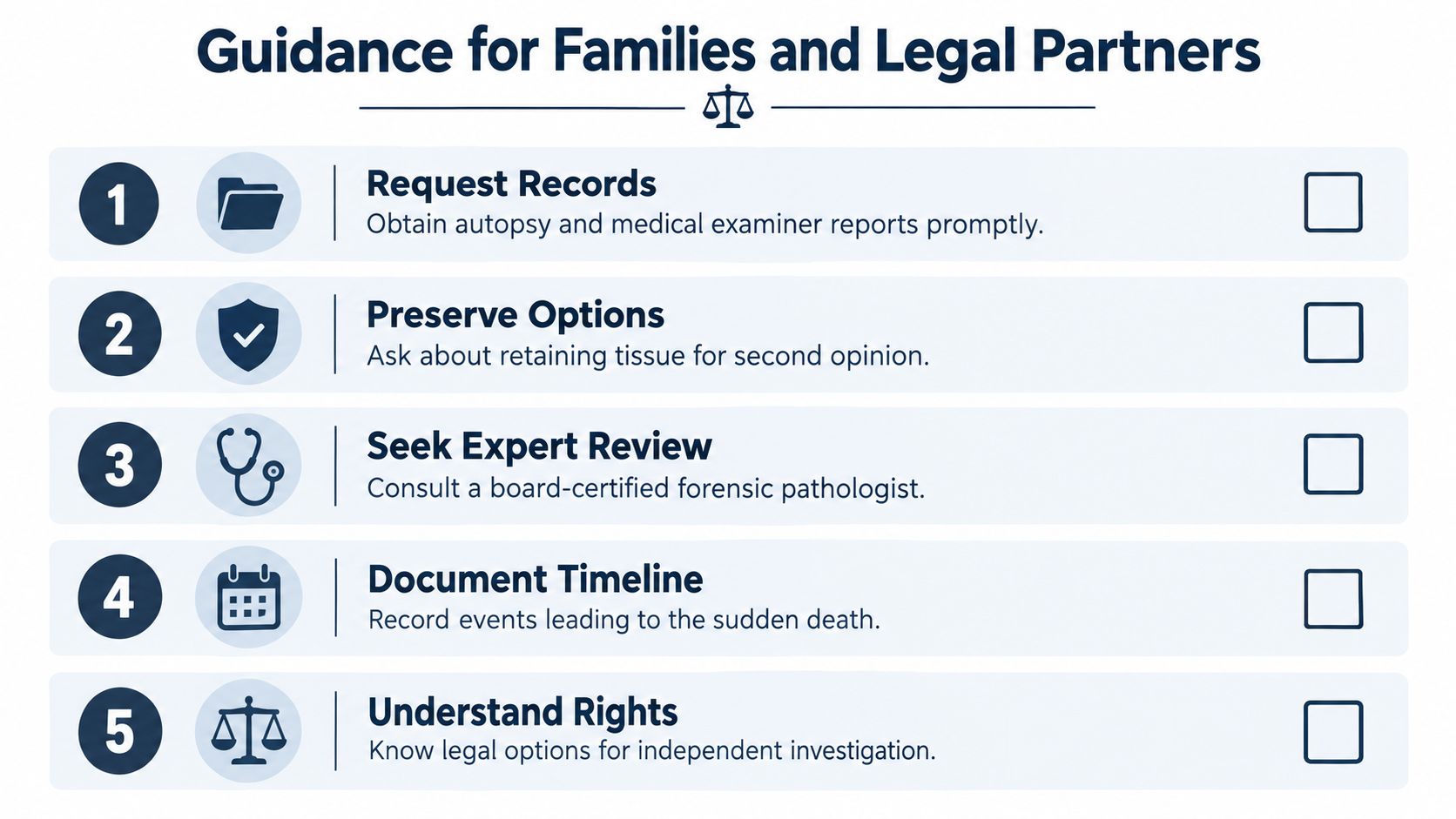
The first practical decision is whether to preserve the option for further examination. Families and attorneys should contact the responsible county authority, funeral home, or medical examiner promptly to determine where the decedent is located, whether an autopsy has occurred, what specimens were collected, and whether cremation or final disposition is pending.
Five steps that preserve options
Request records promptly. Obtain the medical examiner or justice of the peace report, autopsy report, toxicology results, histology findings, photographs, scene documentation, and relevant medical records. Texas law requires the medical examiner to maintain full and complete records, including the cause and manner of death. Texas law and medical examiner authority explains that a justice of the peace may order an autopsy when needed to determine or confirm the cause of death, and that the medical examiner must act when the law or an appropriate prosecutor requires it.
Preserve specimens and evidence. Ask whether tissue, blood, slides, paraffin blocks, or other DNA-capable material remains available. Don't assume a negative report means no further evidence exists.
Create a factual timeline. Record the last known well time, symptoms, medications, communications, witness accounts, emergency response, and discovery of the body. The details should be dated and separated from assumptions.
Obtain an independent review. A board-certified forensic pathologist can assess the original report, photographs, laboratory data, and retained material before advising whether a second examination or targeted testing is appropriate.
Coordinate logistics and legal needs. Licensed transport, identity verification, specimen labeling, secure storage, consent, and communication with the governing authority all need to be documented. Families can review what an unknown cause of death may mean before deciding how to proceed.
Understanding the Texas framework
Texas Autopsy Services works within the authority of the Texas Funeral Service Commission and applicable Texas Health & Safety Code provisions, including Chapters 711, 716, and 651. A private examination doesn't override a county investigation, a court order, or the authority of the medical examiner or justice of the peace. The responsible agency controls the official death investigation, while an independent forensic examination may provide additional medical evidence or an expert second opinion.
Families and attorneys should expect the process to vary with jurisdiction, the status of the body, the presence of an official investigation, and the availability of records and specimens. Most cases are completed within 24 to 48 hours, but that isn't an unconditional promise. Examination complexity, laboratory testing, genetic analysis, transport, authorization, and the need for outside consultation can affect the final report.
If a death has left your family or legal team without a clear explanation, contact Texas Autopsy Services directly. We provide independent autopsy examinations, second-opinion reviews, licensed statewide transport, molecular testing coordination, and court-admissible reporting with compassion and full chain-of-custody documentation.
Visit Texas Autopsy Services to speak with our team about preserving evidence and determining whether an independent forensic review is appropriate. We serve families and legal partners across all Texas counties and will explain the available options without promising an answer the evidence cannot support.