November 30, 2025 · Texas Autopsy Services
An Autopsy Pathology Report, Explained Section by Section
Struggling to understand a pathology report sample? This guide explains key sections, terms, and findings to help families and attorneys interpret the results.
On this page
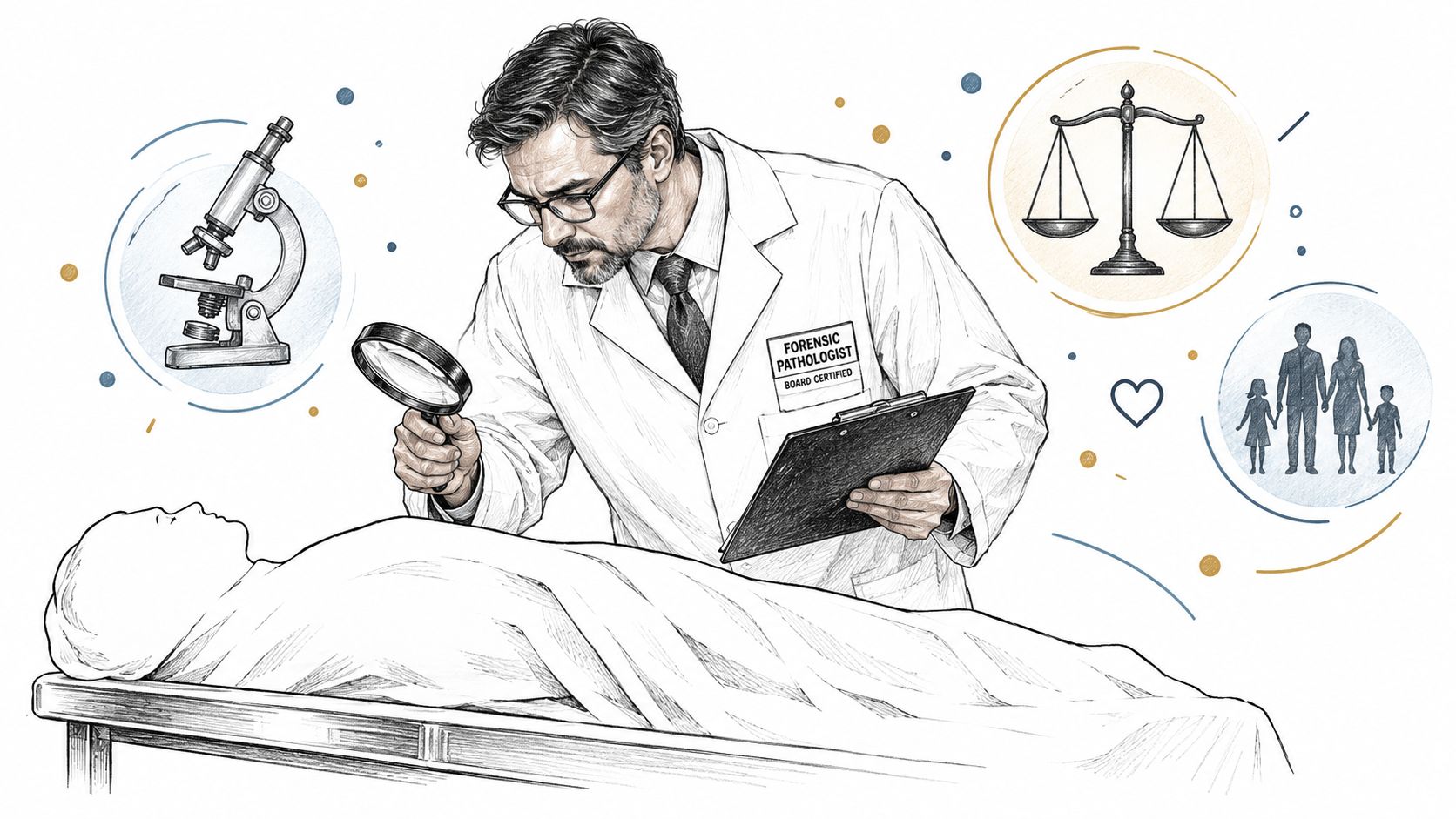
When a loved one passes away unexpectedly, the search for answers can be overwhelming. The medical documents you receive are often filled with technical terms, arriving at a time when clarity is needed most. As a board-certified forensic pathologist in Texas, I’ve performed over a thousand autopsies, and my primary role is to provide definitive, unbiased answers for families and their legal representatives. The final report is a scientific record, but it’s also a document that must offer closure.
- Private autopsies provide independent, objective cause-of-death findings.
- All examinations are performed by a board-certified forensic pathologist.
- Families receive transparent, comprehensive reports to help find closure.
- The process is confidential, legal, and fully compliant with Texas standards.
- A private autopsy can answer questions that a standard death certificate cannot.
Understanding the Need for an Independent Examination
I recently worked with a family whose elderly father passed away at a care facility. The death certificate listed "cardiac arrest," a term that describes what happened but not why. The family had concerns about his recent change in medication and wanted to be certain nothing was missed. A Private Autopsies examination revealed an undiagnosed infection that had led to sepsis, a condition that might have been treatable. For them, the autopsy provided not just a specific cause of death but also the peace of mind that comes from knowing the full story.
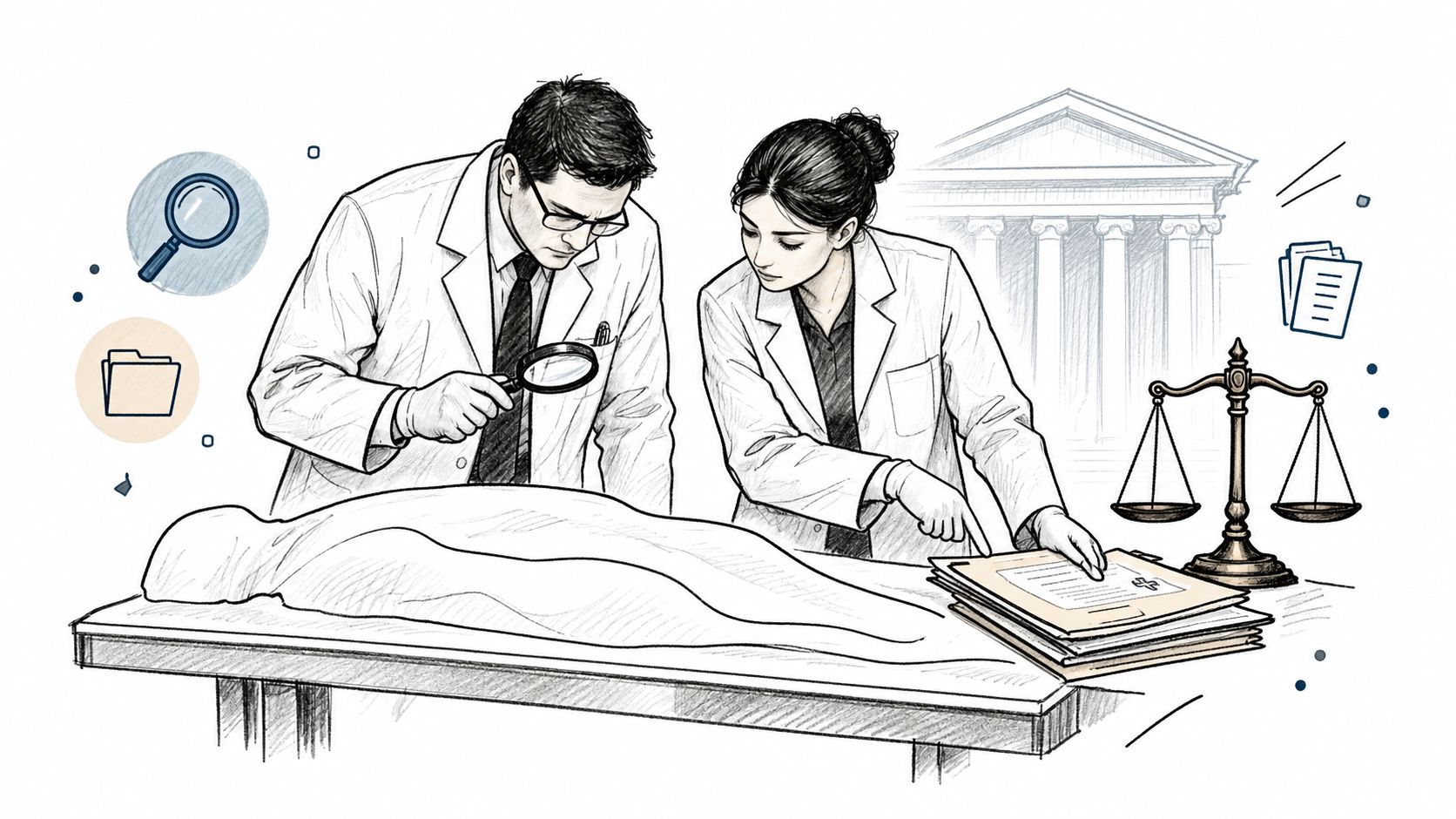
This is the core purpose of a private autopsy: to deliver an impartial, detailed investigation when questions remain. It’s a resource for families seeking certainty, attorneys building a case, or anyone who needs a clear, scientific explanation beyond the initial findings. The report I provide is not a story; it’s a factual, systematic document built to establish the truth with both medical precision and compassion.
Why a Clear, Independent Report Matters
A well-constructed private autopsy report serves several critical functions:
- It provides a definitive cause of death. This moves beyond general terms to identify the specific disease or injury responsible.
- It documents any contributing conditions. The report details every underlying medical issue or physical trauma found during the examination.
- It serves as impartial legal evidence. For attorneys, this objective record is critical for insurance claims, malpractice suits, or other legal matters.
- It offers families closure. Concrete answers are a vital step in helping a family process their grief and understand what truly happened.
The entire document is built on careful observation and scientific analysis. Each section logically flows into the next, and you can see how these elements lead to a final conclusion in our guide on the cause of death determination process.
For professionals managing complex records, modern tools are always emerging. Some learn how to extract data from documents to identify key points quickly. While technology has its place, my focus as a pathologist will always be on meticulous hands-on examination and translating those complex findings into human terms. You deserve nothing less than absolute clarity.
The Core Components of an Autopsy Report
When I prepare an autopsy report, I follow a specific, logical structure. It’s a formal medical-legal document, where every section is a building block supporting the next. It’s all about creating a complete, objective picture of what happened, step by methodical step. The key to understanding the report is to first understand its framework.
The report doesn't just jump to the conclusion. It starts by laying the groundwork, providing all the necessary context so anyone reading it understands the circumstances surrounding the death before the examination details are presented.
Starting with the Case Summary
The first major section is usually called the Clinical Summary or Circumstances of Death. This is the narrative backdrop, a snapshot of everything known before the physical examination begins.
It typically includes:
- Identifying Information: The person's name, age, and other basic demographics.
- Medical History: A summary of known health conditions, past surgeries, and relevant medical issues, often gathered from medical records or family.
- Circumstances: A straightforward, factual account of how the person was found or the events that led up to their death.
This section is critical. It establishes a baseline and often helps guide the focus of the investigation from the very start.
This visual shows how we move from these initial details to the final determination.
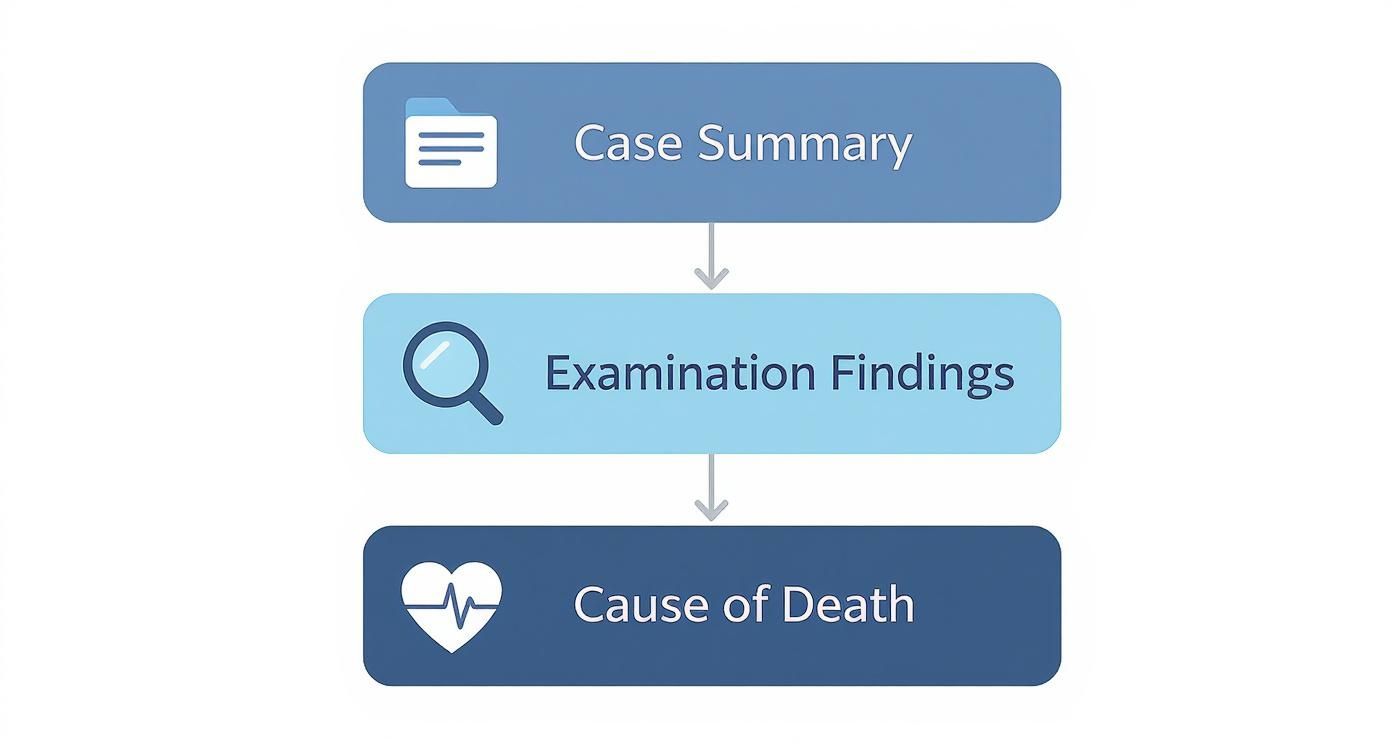
As you can see, the case summary is the foundation. It leads directly into the detailed examination, which in turn provides the evidence needed to determine the cause of death.
To give you a clearer picture of the entire report's structure, here are the main sections you’ll encounter and what they contain.
Key Sections of a Standard Pathology Report
| Section Heading | Purpose and Content |
|---|---|
| Case Summary | Provides background context, including the decedent’s identity, medical history, and the circumstances surrounding the death. |
| External Examination | A detailed, head-to-toe description of the body's exterior, noting height, weight, identifying marks (scars, tattoos), and any signs of injury or medical intervention. |
| Internal Examination | A systematic, organ-by-organ description of the internal body cavities. Documents the size, weight, and appearance of each organ, noting any visible abnormalities. |
| Microscopic Examination | Findings from tissue samples viewed under a microscope. This section reveals cellular-level details of disease or injury that aren't visible to the naked eye. |
| Ancillary Studies | Results from specialized tests, which can include toxicology (drugs, alcohol), microbiology (infections), or genetic testing. |
| Final Diagnosis / Cause of Death | The concluding summary that synthesizes all findings into a final, medically-supported determination of the cause and manner of death. |
Each of these sections plays a vital role in building the complete medical story.
Documenting the Physical Examination
Next, the report details the direct physical findings, broken into external and internal examinations. Both document what I can see with my own eyes.
The External Examination is a meticulous, head-to-toe inspection. I record everything from height and weight to identifying marks like scars or tattoos. I also look for any signs of injury or medical treatments that could provide clues.
After that comes the Internal Examination, which documents the condition of the internal organs. This is done systematically, looking at each organ individually. I describe its size, weight, and overall appearance, carefully noting anything that looks abnormal, diseased, or injured.
This kind of detailed tissue examination is part of a broader field called anatomic pathology, which is growing fast. The global market was valued at about USD 8.4 billion in 2025 and is expected to hit USD 13.9 billion by 2032. This growth is driven by the increasing need for precise diagnostic information. If you're interested, you can read more about these anatomic pathology market trends.
Findings Beyond the Naked Eye
A physical examination, no matter how thorough, can't tell the whole story. The final sections of the report detail results from specialized tests, which provide crucial microscopic and chemical evidence.
A complete pathology report integrates macroscopic observations with microscopic and toxicological data. It’s this combination that transforms observations into definitive medical conclusions.
These final components often solidify the diagnosis. They include:
- Microscopic Examination: I take small tissue samples from each organ, which are then processed and examined under a microscope. This is where we can spot things like cancer, infections, or subtle tissue damage.
- Toxicology Report: Samples of blood, urine, or tissue are sent to a lab for chemical analysis to determine if alcohol, prescription medications, or other drugs were present.
- Ancillary Studies: Depending on the case, we might need other tests, from genetic testing to microbiology cultures, to identify a specific bacteria.
Every piece of information is a clue. When put together, they create the full body of evidence needed to arrive at a final, comprehensive diagnosis.
An Annotated Pathology Report Sample Explained
Reading about the structure of a report is one thing, but seeing it in action makes it click. Let's walk through a sample report to make this tangible. I'll break down the technical terms and show you how a pathologist documents findings to build a final conclusion.
When you see how findings like 'cardiac hypertrophy' (an enlarged heart) or 'pulmonary edema' (fluid in the lungs) are documented, you start to understand how each observation is a clue. Every detail is a piece of the puzzle, recorded with precision.
Case Summary and Circumstances
Every report starts here, with the basic facts. This section grounds the entire examination in what was known before the medical investigation began.
- Identifying Information: John Doe, 65-year-old male.
- Medical History: Known history of hypertension (high blood pressure) and hyperlipidemia (high cholesterol).
- Circumstances: Mr. Doe was found unresponsive at home by a family member. Paramedics were called, but he was pronounced deceased at the scene.
This initial summary is crucial. It tells me right away that Mr. Doe had major risk factors for heart disease, which naturally directs my focus toward his cardiovascular system.
External Examination Findings
Next, I move to the external state of the body. This head-to-toe inventory of everything on the surface helps establish a baseline and allows me to note any signs of injury or recent medical intervention.
A typical entry would read something like this:
EXTERNAL EXAMINATION: The body is that of a well-developed, well-nourished adult male consistent with the stated age of 65 years. Height is 70 inches and weight is 210 pounds. There is no evidence of acute traumatic injury. Lividity is present and fixed on the posterior surfaces of the body, and rigor mortis is fully developed.
This short paragraph tells us a lot:
- There are no obvious signs of an accident or struggle.
- The lividity (pooling of blood after death) and rigor mortis (stiffening of muscles) help estimate a general time of death.
- We get a quick snapshot of the person's general physical state.
Internal Examination Organ by Organ
This is the heart of the autopsy, where I systematically examine each organ. The findings are meticulously recorded with specific measurements and descriptions. Let's look at the key organ systems from our sample report.
Cardiovascular System:
- Heart Weight: 550 grams (normal for his size is around 350 grams).
- Description: The heart shows significant concentric left ventricular hypertrophy. The left anterior descending coronary artery exhibits severe calcific atherosclerosis with up to 90% stenosis.
- What this means: Mr. Doe’s heart was significantly enlarged, a classic sign of long-term high blood pressure. More critically, a major artery feeding his heart was hardened and narrowed by 90%. That's a life-threatening blockage.
Respiratory System:
- Lungs Weight: Right lung 500 grams, Left lung 450 grams (a bit heavy).
- Description: The lungs are congested and exhibit pulmonary edema, with frothy fluid present in the airways.
- What this means: His lungs were filled with fluid. This isn’t a lung problem—it’s a direct result of his heart failing to pump blood effectively, causing a "backup" of fluid into the lungs.
Hepatic System (Liver):
- Liver Weight: 1800 grams (normal is closer to 1500 grams).
- Description: The liver is enlarged and demonstrates hepatic steatosis (fatty change).
- What this means: There was a significant accumulation of fat in the liver, a condition often linked to metabolic issues like his known high cholesterol.
Each of these is a medical fact on its own. But when you put them together, a clear and consistent story of severe, chronic cardiovascular disease emerges.
Ancillary Studies and Microscopic Findings
What I see with my own eyes is just the start. Further testing helps confirm and add detail to these observations. Looking at tissue under a microscope shows me disease at the cellular level, while toxicology checks for any substances in the body.
- Microscopic Examination: Sections of the heart muscle show myofiber hypertrophy and interstitial fibrosis, confirming long-term damage from hypertension.
- Toxicology Report: Results are negative for alcohol and common drugs of abuse. Prescription medications consistent with his medical history were present at therapeutic levels.
The microscopic findings back up what I saw, showing the cellular-level proof of heart strain. The toxicology screen effectively rules out an overdose, which is a critical step in any death investigation.
Final Anatomic Diagnosis
This is where it all comes together. This section synthesizes every finding into a clear, numbered list of diagnoses. It’s the summary of all the evidence I've gathered.
For our sample case, the final diagnosis would look like this:
- Severe Coronary Artery Disease: With up to 90% narrowing of the left anterior descending artery.
- Cardiomegaly with Left Ventricular Hypertrophy: An enlarged heart from chronic high blood pressure.
- Pulmonary Edema and Congestion: Fluid-filled lungs caused by heart failure.
- Hepatic Steatosis: Fatty liver.
The Cause of Death is then stated plainly: Atherosclerotic Cardiovascular Disease. This isn't a guess or an opinion; it's a conclusion directly supported by every piece of evidence in the report. This methodical, step-by-step process is how a forensic pathologist finds definitive answers.
Making Sense of the Medical Language in a Pathology Report
A pathology report is a medical document, written in a language that can feel dense and unfamiliar. For families and attorneys trying to get clear answers, this specialized vocabulary is often the biggest hurdle. My goal here isn't just to give you dictionary definitions, but to translate what these terms actually mean in the context of a person's story.
Think of these terms as the foundational building blocks of the report. Once you understand them, the final conclusions start to come into focus.
Cause, Mechanism, and Manner of Death
These three terms are the cornerstone of any death investigation, but they're easily confused. It's crucial to know they are three distinct pieces of a puzzle that fit together to create a complete explanation.
- Cause of Death: This is the actual disease or injury that started the chain of events leading to death. It's the "why." Examples could be atherosclerotic cardiovascular disease, a gunshot wound, or lung cancer.
- Mechanism of Death: This is the physiological process—what went wrong inside the body—that resulted from the cause. For example, if the cause was a heart attack, the mechanism might be a cardiac arrhythmia (a fatal irregular heartbeat). This is the "how."
- Manner of Death: This is a legal classification of the circumstances. In Texas, the five official manners are Natural, Accident, Suicide, Homicide, or Undetermined.
Let’s put it together: A person's Cause of Death might be a heart attack (a natural disease process). The Mechanism is the heart stopping its normal rhythm. Because it was caused by an internal disease, the Manner of Death is classified as Natural.
This framework is essential because it clearly separates the medical reason for death from the circumstances surrounding it.
Common Findings in Major Organ Systems
During the internal examination, I carefully document the state of each organ. Certain findings appear frequently and act as key indicators for underlying health conditions. Here are a few you are likely to see.
The Cardiovascular System (Heart and Blood Vessels)
- Atherosclerosis: You’ve probably heard this called "hardening of the arteries." It's a buildup of plaque that narrows the arteries. I often describe the percentage of blockage, which is called stenosis. A note like "90% stenosis" means a blockage was severe enough to be life-threatening.
- Cardiomegaly: This simply means an enlarged heart. It's often a sign of chronic high blood pressure (hypertension) that has forced the heart muscle to overwork for years.
- Myocardial Infarction: The technical term for a heart attack. This means a part of the heart muscle has died because its blood supply was cut off.
The Respiratory System (Lungs)
- Pulmonary Edema: This means there's excess fluid in the lungs, making them heavy and waterlogged. It’s usually a direct result of heart failure, not a primary lung disease.
- Pulmonary Embolism: This is a blockage in a lung artery, almost always caused by a blood clot that formed elsewhere—typically the legs—and traveled to the lungs. It's a sudden and often fatal event.
The Neurological System (Brain)
- Cerebral Edema: This is swelling of the brain. It can happen after a head injury, stroke, or any condition that increases pressure inside the skull.
- Cerebral Hemorrhage: This means bleeding directly into the brain tissue. It's often caused by a ruptured blood vessel from uncontrolled high blood pressure or an aneurysm.
Understanding these individual findings helps you see how I connect the dots to reach the final diagnosis. In some cases, a substance is the main factor in a death, and you can see how we document that in our guide to the toxicology report sample.
Technology is constantly improving how we analyze tissues. The field of digital pathology, which involves scanning microscope slides to create high-resolution digital images, is changing how we work. This market was valued at around USD 7.8 billion and is expected to grow to USD 13.7 billion by 2029. As you can read in this BCC Research report, this innovation is driving a need for more precise and efficient diagnostics.
How Families and Attorneys Use Autopsy Reports
After I complete my examination, the final report serves two different but equally important purposes. For a grieving family, it can provide closure. For an attorney, it becomes a cornerstone of objective fact.
Ultimately, both are searching for the same thing: a definitive answer to "why."
An autopsy report can bring a profound sense of relief to a family struggling with a sudden, unexplained loss. It can confirm or rule out hereditary conditions, which gives living relatives critical information about their own health risks. Above all, it offers a clear, scientific explanation, which is often a vital step in the healing process.
The Report as a Legal Instrument
In the legal world, the autopsy report is a critical piece of evidence. It’s an unbiased, scientific document that can anchor an entire case, whether it involves personal injury, medical malpractice, or a disputed insurance claim. The findings can draw a direct, undeniable line between a specific event and the cause of death.
Legal teams rely on the report to construct a clear timeline of events. For attorneys, organizing complex data from medical records and pathology findings is key, and this is where tools for building a winning medical chronology template can be invaluable. This structured approach is essential for translating complex medical science into a clear legal argument.
The conclusions in a pathology report are not opinions; they are medical determinations based on verifiable physical evidence. This objectivity is what gives the document its power in both medical and legal settings.
As a forensic pathologist, my job sometimes continues long after the report is signed. I am often asked to explain my findings in court, a role you can read more about in our article on forensic expert witnesses.
Practical Next Steps After Receiving the Report
Once you have the report, the first step is to read it carefully. If you encounter terms or conclusions you don't understand, the next step is to discuss them with a trusted medical or legal professional. They can help put the medical jargon into context and explain the real-world implications of the findings.
This kind of diagnostic work is central to modern medicine and our legal system. The global pathology laboratories market was valued at around USD 380.88 billion and is expected to grow to an estimated USD 818.4 billion by 2034. This growth highlights how much we rely on precise diagnostic services to understand and address causes of death.
At the end of the day, whether you're seeking personal understanding or preparing for legal action, the pathology report provides the factual foundation to guide your next steps. It is a tool for clarity.
Common Questions I Get About Autopsy Reports
When families and attorneys are faced with an autopsy report, many questions come up. It's a confusing and emotional time, and my goal is to provide clear, direct answers based on my experience as a board-certified forensic pathologist here in Texas. Let's walk through some of the things people ask me most often.
How Long Until We Get the Final Report?
This is the number one question I'm asked. While the hands-on part of the autopsy is usually done in a single day, the final report takes much longer, often several weeks. Why the wait? It comes down to the specialized testing that happens behind the scenes.
The physical exam is just the first step. The real story often unfolds through meticulous lab work that can't be rushed.
- Toxicology: We need to check for drugs, alcohol, or other substances. This isn't a quick test; it can easily take four to eight weeks, sometimes longer if the case is complex.
- Microscopic Examination: Looking at tissue samples under a microscope is crucial. Just preparing the slides is a delicate, multi-day process before a pathologist can even begin analysis.
- Specialized Studies: Sometimes, a case requires genetic testing or other unique analyses. We often have to send these samples to highly specialized labs, which adds more time.
I know the waiting period is incredibly difficult for families. But cutting corners on these scientific processes would risk the accuracy of the final report, and that’s a compromise I'm not willing to make.
Is an Autopsy Possible After Embalming or Cremation?
You can perform an autopsy after a body has been embalmed. It’s more challenging because embalming fluids can change tissues and interfere with some toxicology tests. However, a skilled pathologist knows how to work around these issues and can still uncover a great deal of vital information.
Cremation, on the other hand, is final. Once a body has been cremated, an autopsy is no longer possible. The process completely destroys the physical evidence needed for any examination.
If you are even considering a private, independent autopsy, that decision must be made before you authorize cremation. This is critical to ensure you don't permanently lose the chance to get the answers you're seeking.
In Texas, Who Can Legally Request a Private Autopsy?
The authority to request and consent to a private autopsy in Texas belongs to the legal next-of-kin. The law is specific about the hierarchy to ensure everything is done correctly.
The order of authority generally follows this path:
- A person specifically designated in writing by the deceased.
- The surviving spouse.
- Any one of the surviving adult children.
- Either one of the surviving parents.
This is governed by the Texas Health & Safety Code. If you're not sure where you fall in this order or have a complex family situation, it’s always a good idea to speak with an attorney to clarify your standing.
Can We Get a Second Opinion on an Autopsy?
Yes, and it's often a very good idea. If the findings in the first report feel confusing, incomplete, or don't seem to line up with the facts as you know them, a second opinion can bring much-needed clarity.
A significant part of my work as an independent forensic pathologist is reviewing reports completed by other medical examiners or hospital pathologists. I can re-examine the original findings, review the microscopic slides if they're available, and offer a fresh, independent interpretation. This can either confirm the original cause of death, giving you peace of mind, or it might uncover details that need a closer look.
Going through the loss of a loved one is one of life's most difficult experiences, and unanswered questions only add to the pain. At Texas Autopsy Services, my work is dedicated to providing objective, compassionate, and clear answers to help your family find a measure of closure. If my team or I can be of service, please do not hesitate to contact our office.