December 1, 2025 · Texas Autopsy Services
What Is Exhumation A Guide for Texas Families
Learn what is exhumation from a forensic pathologist. This guide covers the legal process, reasons, and what to expect in Texas.
On this page
As a forensic pathologist, I often talk with families and attorneys searching for answers that can only be found after a loved one has been laid to rest. Exhumation is the authorized, careful process of unearthing buried remains for a specific reason, most often a postmortem examination. It's a difficult step, I know, but sometimes it’s the only way to find justice and clarity.
Understanding Exhumation
Exhumation is a carefully planned procedure, not a disturbance. It's a tool for finding the truth when every other path has led to a dead end. The decision is never made lightly and is always guided by strict legal and ethical rules to protect the dignity of the deceased and the integrity of the investigation. My goal is to walk you through this sensitive process, ensuring the utmost respect while pursuing the facts your family deserves.
There are several powerful reasons why a family or legal team might need to consider an exhumation. Each one comes from a deep-seated need for certainty that just can't be found any other way.
The Purpose of Exhumation
The reasons for this procedure usually fall into three main categories:
- Criminal Investigations: Law enforcement might request an exhumation if new evidence points to foul play. A second look can reveal hidden signs of trauma, identify toxic substances, or gather DNA that wasn't available before. This can be crucial for building a case or, just as importantly, clearing an innocent person's name.
- Civil Litigation: In civil cases, like wrongful death lawsuits or disputed life insurance claims, the exact cause of death is everything. An independent autopsy after exhumation provides the objective, scientific evidence needed to settle these arguments and ensure a fair outcome.
- Confirming Identity: Sometimes, questions pop up about who is actually in a specific grave. This could be due to a simple paperwork error, old historical uncertainties, or even family disputes. Modern DNA analysis after an exhumation can provide a definitive answer, finally giving the family peace of mind.
In my work at Texas Autopsy Services, I’ve seen firsthand how a properly handled exhumation and autopsy can end years of agonizing uncertainty. It helps families replace doubt with facts, which is a powerful part of healing.
As a board-certified forensic pathologist with over 1,000 autopsies performed, I approach every exhumation with one mission: to deliver an unbiased, scientifically sound determination of the cause and manner of death. My job is to provide answers, not speculation.
Ultimately, understanding exhumation means seeing it as a final, powerful step toward resolution. Whether it's for a criminal trial, a civil matter, or personal closure, the entire process is managed with meticulous care, legal precision, and profound respect.
The Legal Steps for Exhumation in Texas
Before anything else can happen, we have to navigate the legal side of things. Honestly, this is often the biggest hurdle. Texas has very specific laws governing exhumation, and for good reason—they’re in place to protect the dignity of the deceased and the rights of the family.
Essentially, you have two main routes to get the green light: either you get consent from the next of kin, or you get a court order.
No matter which path you take, a Disinterment Permit is non-negotiable. This official document is usually issued by the vital statistics unit in the county where the person is buried. A licensed funeral director has to sign the application, which makes sure the cemetery and local authorities are all in the loop and that the entire process is properly documented.
The decision to exhume a body isn't made lightly. It's almost always triggered by a critical need for answers in criminal, civil, or identity-related cases.

As you can see, each of these paths stems from a deep-seated need for truth, making exhumation a powerful tool for resolving some of life's most serious questions.
Securing Consent from Next of Kin
The most straightforward way to get approval is directly from the family. The Texas Health & Safety Code, Chapter 711, lays out a crystal-clear pecking order for who has the authority to give this permission. This legal hierarchy is designed to prevent family disputes by defining who gets to make the final call.
Here’s how the order of priority works:
- The surviving spouse.
- The surviving adult children.
- The surviving parents.
- The surviving adult siblings.
Permission has to come from the person highest on that list. For instance, if there’s a surviving spouse, they are the one who decides—the decision doesn't pass down to the children. If there’s no spouse but several adult children, a majority of them must agree to the exhumation. We’ve covered the specifics of who can request an autopsy before, and a lot of those same principles apply here.
Obtaining a Court Order
What happens when the family can’t agree, or when getting consent just isn't an option? That’s when you have to go to court. This path is most common in criminal investigations or complicated civil lawsuits. A judge won’t just hand over an order for exhumation; they need to see compelling evidence that digging up the body is absolutely necessary to serve justice.
In a criminal case, for example, a district attorney might petition the court if new evidence points to foul play or throws the original cause of death into question. The bar is set very high because the court has to weigh the need for evidence against the sanctity of a final resting place.
It's a similar story in civil lawsuits. An exhumation might be requested to prove—or disprove—a critical claim in a case. This is where understanding legal deadlines, like the wrongful death statute of limitations, becomes incredibly important. An attorney has to build a strong argument to convince a judge that a new postmortem exam is the only way to get the evidence they need.
The legal framework in Texas is designed to be methodical and respectful. It ensures that the decision to exhume is never taken lightly and is always backed by either unified family consent or a clear judicial mandate.
Whether you're trying to get family consent or need to pursue a court order, sticking to these legal rules is essential. At Texas Autopsy Services, I work side-by-side with families and their legal teams to make sure every single requirement is met. Following the law to the letter not only provides peace of mind but also ensures that any findings from an autopsy are legally sound and can be used in court.
Why Would Anyone Need an Exhumation?
The decision to exhume a body is never easy. It's a deeply personal and often painful process, but sometimes, it's the only way to get the answers a family or a legal team desperately needs. Over the years, I've seen that these difficult choices are almost always driven by a profound need for clarity and truth.
For families grappling with a sudden or suspicious death, an exhumation can be a critical step in processing their unresolved grief and trauma. Getting a second, independent look at the evidence often provides the clarity they need to start healing.
Criminal Investigations
A classic reason for a court-ordered exhumation is a criminal investigation that gets a second wind. This usually happens when new evidence pops up long after someone has been buried, throwing the original cause of death into question. Maybe a new witness finally comes forward, or a piece of information emerges that suggests a death wasn't an accident after all.
A fresh postmortem examination can uncover things missed the first time around:
- Hidden Injuries: We can find subtle signs of trauma like hairline fractures or deep bruises that weren't initially documented.
- Advanced Toxicology: Forensic science is always evolving. We can now test for drugs, poisons, or other substances that were impossible to detect just a few years ago. This is a game-changer in suspected poisoning cases.
- Modern DNA Evidence: Today’s DNA analysis is incredibly precise. It can help connect a suspect to the crime or simply confirm a victim's identity beyond any doubt.
When I’m called in for these cases, my job is to be meticulous. I’m looking for any piece of physical evidence that can either support or dismantle the suspicion of foul play.
Civil Lawsuits and Legal Fights
Exhumations also play a key role in the civil arena, especially when the cause of death is the linchpin of a legal dispute. A definitive, scientific answer can make or break a case with huge financial or legal consequences. For instance, think of a life insurance policy that won't pay out if the death was a suicide. An exhumation and a second autopsy can provide objective, scientific evidence about the true manner of death.
It’s the same for wrongful death lawsuits. To win, a family has to prove that someone's negligence directly caused their loved one's death. The findings from a new autopsy can give an attorney the rock-solid evidence they need to build their case and fight for accountability.
An exhumation provides a final opportunity to apply modern forensic science to a case. It’s about ensuring that the medical record is as accurate and complete as possible, which is essential for justice to be served.
Finding a Second Opinion and Peace of Mind
Sometimes, the reasons are far more personal. A family might just feel that something is off about the initial autopsy report. The findings might seem rushed, incomplete, or totally at odds with what they knew about their loved one's life and health. These lingering doubts can be incredibly painful.
This is where a private autopsy following exhumation can help. It brings in a fresh set of expert eyes to conduct an independent review. The point isn't necessarily to challenge the first opinion, but to get a thorough, unbiased analysis that either confirms it or provides new insights. It’s about giving a family the peace of mind that comes from knowing they explored every avenue to find the truth.
This need for answers is a powerful human drive. In Latin America, for example, exhumations have been crucial for families seeking justice after periods of political violence. Relatives initiated the process in 11 out of 14 countries studied, showing just how deep the personal need for truth and accountability runs.
The Step-by-Step Exhumation and Autopsy Process
When families or attorneys are considering an exhumation, the process can feel overwhelming and even a little intimidating. As a forensic pathologist, I've seen firsthand how a clear understanding of the steps involved can bring a sense of order and calm. The entire procedure is a carefully coordinated effort, built on a foundation of respect, precision, and maintaining the integrity of every finding.
Let’s walk through what actually happens, from getting the legal green light to the final steps.

Securing Authorization and Coordination
Nothing happens without the proper legal authority. The process officially begins once a court order is issued or the next of kin provides formal consent and the required disinterment permit is secured from the county.
With the paperwork in place, the logistical planning kicks off. I work directly with the chosen funeral home, the cemetery staff, and any legal counsel involved to schedule a specific date and time for the disinterment. The funeral home handles the dignified transportation, the cemetery manages the physical unearthing, and I am on-site to oversee the entire process and take custody of the remains. It's a team effort, and every party knows their role.
Respectful Disinterment and Chain of Custody
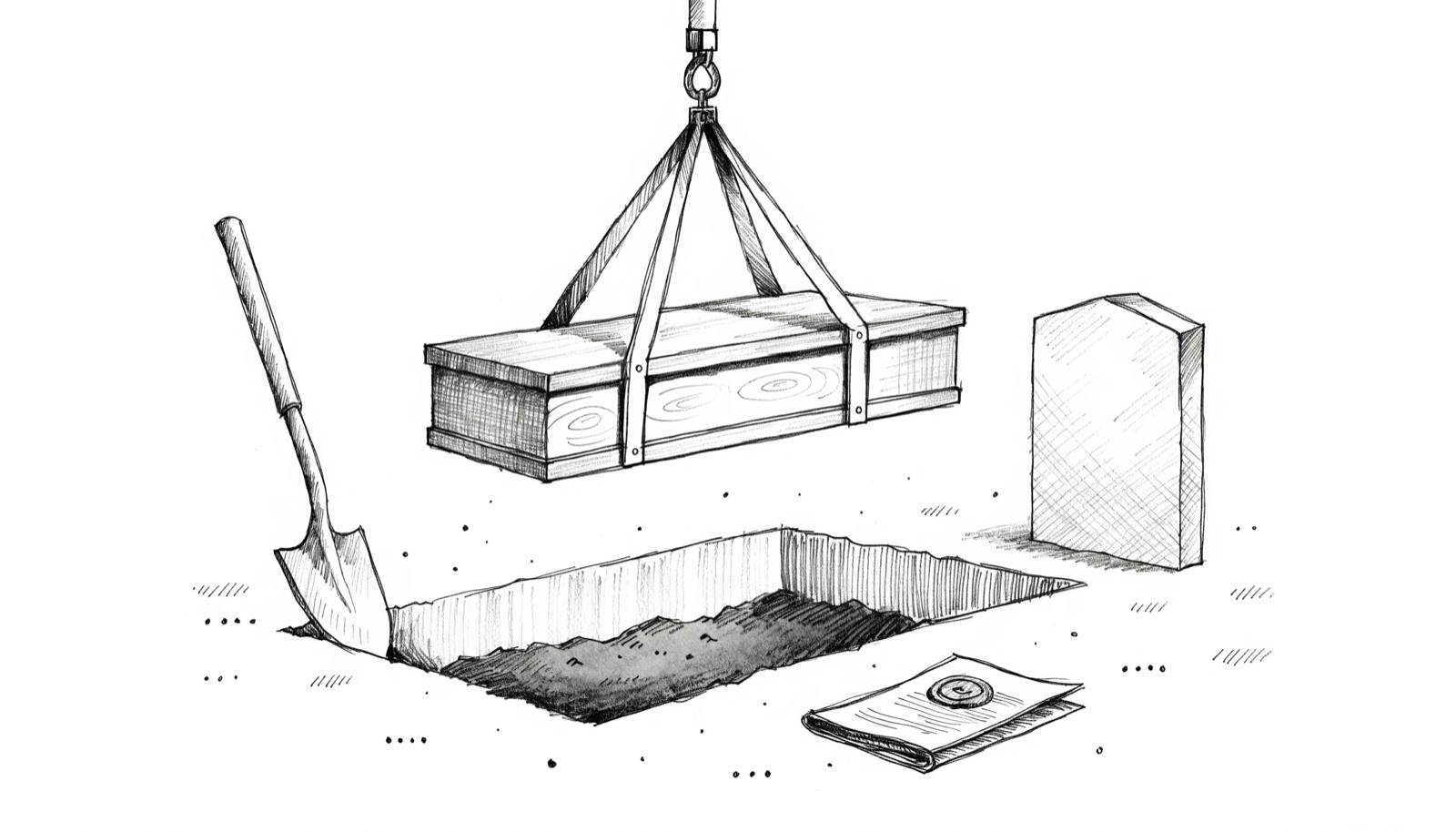
On the scheduled day, the disinterment is performed with the utmost care and discretion. The goal is to honor the deceased and maintain the sanctity of the cemetery. As soon as the casket is raised, a crucial forensic protocol begins: establishing the chain of custody.
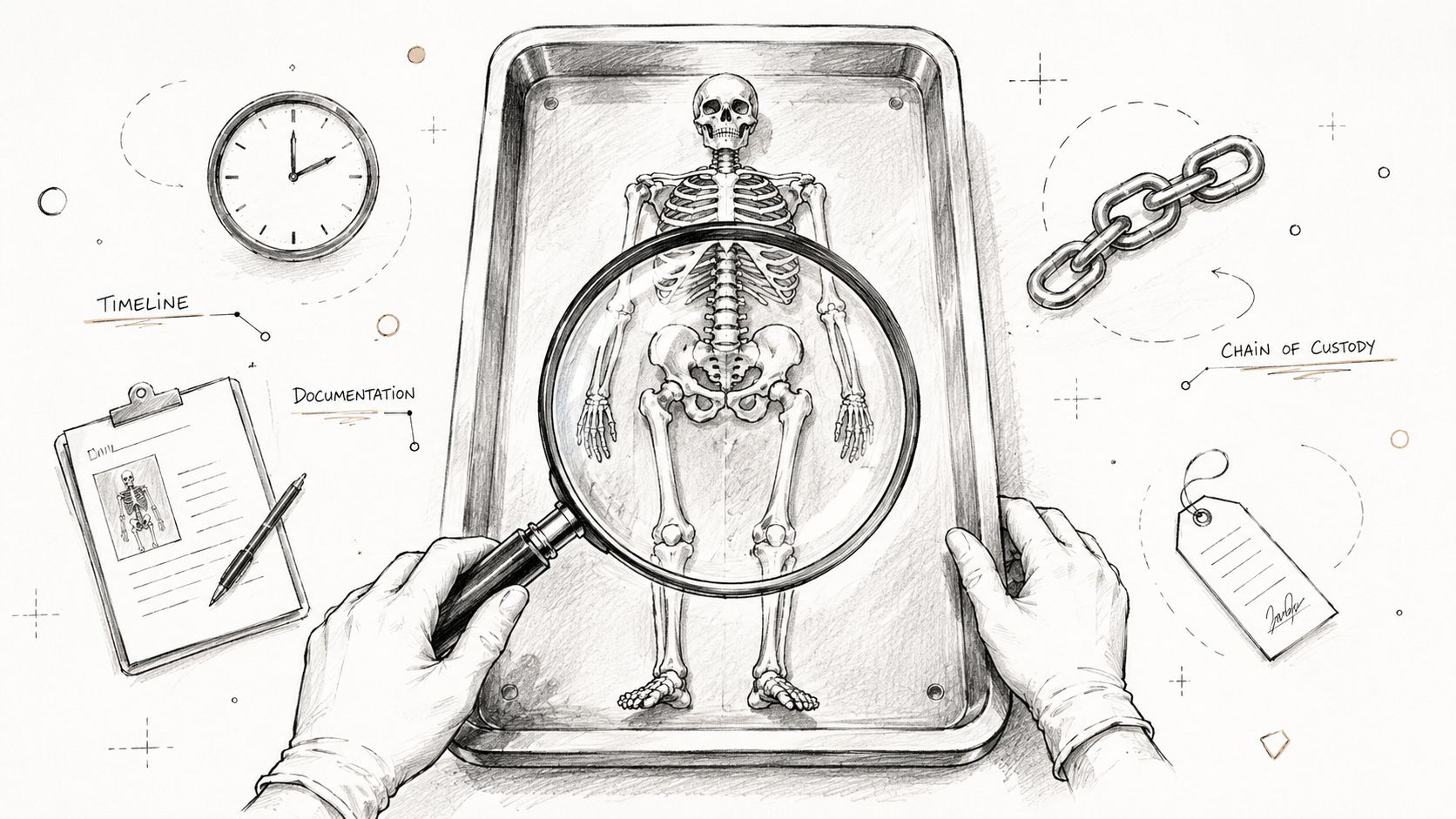
Think of the chain of custody as an unbroken, documented trail. It's a log that meticulously tracks every person who handles the remains, every location they are moved to, and the precise time of each transfer. This isn't just bureaucracy; it's the bedrock of forensic science that ensures any evidence found during the autopsy is legally sound and has not been compromised. I personally oversee this from the moment the casket is accessible.
An exhumation requires a coordinated effort from several professionals, each with a specific and vital role.
Key Roles and Responsibilities in an Exhumation
| Professional or Entity | Primary Responsibility |
|---|---|
| Forensic Pathologist | Oversees the process, establishes chain of custody, and performs the postmortem examination. |
| Funeral Home Director | Arranges for dignified transport, handles the casket, and manages reinterment logistics. |
| Cemetery Staff | Physically unearths and re-inters the casket, ensuring the gravesite is handled respectfully. |
| Legal Counsel | Manages court orders, provides legal guidance, and represents the family’s or estate’s interests. |
| Law Enforcement (if criminal) | May be present to secure the site and officially witness the chain of custody transfer. |
Each person's contribution is critical to ensuring the process is handled with both legal precision and deep respect.
Transportation and Examination
Once the chain of custody is established, the funeral home transports the deceased to an appropriate facility for the examination. I conduct these procedures at our partner facility, Waterloo Mortuary, which is fully equipped for comprehensive postmortem examinations.
Upon arrival, I perform the autopsy, laser-focused on answering the specific questions that led to the exhumation. This detailed investigation might involve:
- A thorough external and internal physical examination.
- Collecting tissue samples for microscopic analysis (histology).
- Toxicology testing to screen for drugs, poisons, or other substances.
- Using radiological imaging like X-rays to identify old fractures or foreign objects.
To get a better sense of what these procedures entail, you can read our guide that breaks down the steps in an autopsy.
The core objective of an exhumation autopsy is to apply modern forensic techniques to uncover facts that were previously unknown or unclear. It is a search for objective, scientific truth, conducted with deep respect for the individual.
Comprehensive Reporting and Reinterment
After the examination is complete, I compile all findings into a detailed and comprehensive report. This document clearly explains the procedures performed, the evidence observed, and my professional conclusions on the cause and manner of death. It becomes a vital legal tool for the family and their attorneys.
The final step is the reinterment. After my work is done, the funeral home prepares the deceased for their return to their final resting place. The cemetery staff then handles the reburial with the same dignity as the original interment, and families can hold a small service if they wish.
This need to find answers is a universal one. Globally, forensic exhumations are a recognized tool for justice. For instance, in Dar es Salaam, Tanzania, 53 forensic exhumations were recorded between 2015 and 2021 for criminal investigations, showing just how critical this process can be in providing definitive answers. You can review the study here to learn more about the findings.
Understanding the Limitations and Potential Findings
While exhumation can provide invaluable answers, it’s crucial for families and attorneys to have realistic expectations. As a forensic pathologist, part of my job is to walk you through what we might find, but also to be upfront about the inherent challenges. I want to make sure you have all the information you need to make a confident, fully-informed decision.
The biggest hurdle we almost always face is the natural process of decomposition. The condition of the remains has a direct impact on how successful a new postmortem examination can be. Several key factors come into play here, and it’s important to think about them before moving forward.
Factors That Affect Examination Quality
Time is, without a doubt, the single most significant variable. The longer a person has been buried, the more decomposition will have advanced, which can unfortunately obscure or even destroy critical evidence.
But time isn't the only thing. Other factors include:
- Embalming Quality: A professional, thorough embalming can dramatically slow down decomposition, which does a great job of preserving tissues and organs. On the flip side, a poor or incomplete embalming offers far less protection.
- Casket Integrity: The type of casket and its current condition matter a great deal. A properly sealed casket helps shield the remains from the elements, but if it has been compromised, water and soil can get in and speed up the decomposition process.
- Burial Environment: The ground itself plays a role. Things like soil conditions, moisture levels, and the local climate all influence how quickly natural changes occur. Remains buried in a dry, stable environment will fare much better than those in wet, acidic soil.
All these variables directly affect my ability to spot subtle injuries, collect good tissue samples for toxicology testing, or find microscopic clues. It’s a hard truth, but sometimes a definitive answer is simply no longer achievable.
Managing Expectations and Finding Closure
I also want to acknowledge how emotionally difficult this is for the family. The decision to exhume a loved one is a heavy one, and the process itself can bring a lot of grief back to the surface. I am committed to handling every single step with dignity and to communicating what I find with clarity and compassion, no matter the outcome.
An autopsy after exhumation isn't always about finding a single, smoking-gun cause of death. Often, its greatest value is in ruling out other possibilities. Eliminating worries about foul play or a potential hereditary condition can provide its own powerful form of closure.
Even when we can't pinpoint one definitive cause, the examination can still bring clarity. For example, if a family is worried about poisoning, a negative toxicology report can provide immense relief. Likewise, if there are concerns about physical trauma, my examination can either confirm or deny that any injuries were present.
At Texas Autopsy Services, helping you weigh the potential benefits against these limitations is a core part of my responsibility. This process is a search for truth, and sometimes, the truth is that a conclusive answer has been lost to time. But by conducting a thorough, methodical examination, we can ensure that every possible stone has been turned to find the answers you deserve.
How a Forensic Pathologist Can Help Your Case
https://www.youtube.com/embed/N5P3ow2Lk_8
When your family or legal team decides to move forward with an exhumation, you need more than just a person to perform a procedure. You need a trusted expert who understands the profound responsibility of the task. As a board-certified forensic pathologist, my role is to bring that specialized expertise to the table, making sure every single step is handled with medical precision and genuine respect.
At Texas Autopsy Services, our entire focus is on providing independent, objective examinations to uncover the truth. My commitment to you is simple: deliver clear, medically sound answers that your family and legal team can count on.
Our Comprehensive Role in Your Case
When you bring me into your case, you get a dedicated specialist who personally manages the entire postmortem examination from start to finish. I don't just show up to perform an autopsy. I coordinate with everyone involved to make the process as seamless and respectful as possible during what is already an incredibly difficult time.
This hands-on coordination includes:
- Expert Consultation: I work directly with your attorney to get a deep understanding of the legal questions at the heart of your case. This ensures the examination is precisely focused on finding relevant, impactful evidence.
- Logistical Oversight: I personally liaise with the funeral home and cemetery staff to oversee the chain of custody and confirm that all protocols are meticulously followed. There is no room for error.
- Objective Examination: The postmortem examination I conduct is held to the same rigorous standards I apply when working on forensic cases for Texas counties.
My focus is unwavering: to provide impartial, evidence-based findings. You can get a better sense of the unique skills and duties involved by reading our guide explaining what is a forensic pathologist.
Having performed over 1,000 autopsies—spanning adult, pediatric, and the most complex forensic cases—I know that my first and only duty is to the truth. The final report you receive will be meticulously documented, completely objective, and ready to stand up to scrutiny in court.
Delivering Clarity with Compassion
Ultimately, my job is to give your family the clarity you need to either find closure or pursue justice. I take complex medical findings and translate them into a straightforward, understandable report that directly answers the questions that led to the exhumation in the first place. This document gives you the objective facts needed to move forward, whether that means settling a legal dispute or simply finding peace.
Throughout this sensitive process, my team and I are always here to answer your questions and offer support. We are absolutely committed to balancing clinical precision with the compassion your family deserves. The road to getting answers can be difficult, but you don't have to walk it alone.
Frequently Asked Questions About Exhumation
Going through an exhumation is a difficult journey, and it’s completely natural for families and their attorneys to have a lot of questions. I've put together answers to some of the most common things people ask me, hoping to bring some clarity to a very sensitive process. My aim is to make sure you feel well-informed and supported every step of the way.
How Much Does an Exhumation and Autopsy Cost in Texas?
The final cost isn't a single flat fee but a sum of different professional services. Think of it as a few separate bills that come together to cover the entire process.
You'll typically be looking at costs for:
- Cemetery Fees: This covers the actual work of disinterring the casket and, later, reinterring it.
- Funeral Home Fees: They handle the dignified transport of your loved one to and from the examination facility. Often, a new casket is needed if the original one can't be reused, which would be part of this fee.
- Professional Autopsy Fee: This is what I charge for performing the detailed postmortem examination, interpreting all the findings, and writing up the final, comprehensive report.
Here at Texas Autopsy Services, I believe in being completely upfront about my fee structure. It's a good idea to get itemized quotes from everyone involved—the cemetery, the funeral home, and my office—so you have a clear picture of the total financial commitment before you move forward.
How Long Does the Entire Process Take?
Honestly, the timeline can really vary depending on the unique legal and logistical details of your case. Just getting the necessary permits and coordinating with the cemetery can take a few weeks. If you need to go through the courts to get an order, that can definitely add more time to the clock.
Once we have all the legal green lights, the disinterment, transportation, and the autopsy itself are usually done within a day or two. After that, my work shifts to preparing the final report. This is the part that often takes several more weeks, because it can involve complex lab work like toxicology or histology. I always believe in delivering a thorough, accurate report over a fast one.
Can Family Members Stop an Exhumation?
Yes, they absolutely can. If someone is trying to get a court order for an exhumation, other family members who have legal standing can object in court. The judge will listen to both sides before deciding what to do.
It’s a bit different if the exhumation is based on consent from the next of kin. In that case, another family member who has equal or higher standing under the Texas Health & Safety Code can challenge the decision. This is exactly why the law lays out a very clear hierarchy of who can give consent—it helps prevent these kinds of disputes and keeps the process legally sound.
Will a Second Autopsy Damage the Body?
I know this is a major worry for families, and I want to put your mind at ease. Every professional involved handles the process with the greatest care to minimize any disturbance. A postmortem exam is, by nature, an invasive medical procedure, but I conduct every autopsy with the highest level of respect for the deceased.
All incisions are made with surgical precision and are carefully repaired afterward. The body is always treated with dignity and is properly prepared by the funeral home for a respectful reinterment. My commitment is to find answers while honoring your loved one.
If you still have questions or just want to talk through whether an exhumation is the right path for your family, please don't hesitate to contact my office. At Texas Autopsy Services, we're here to offer the clarity and support you need during this difficult time.