January 26, 2026 · Texas Autopsy Services
How Do Autopsies Work? The Process, Step by Step
As a forensic pathologist in Texas, I explain how do autopsies work. Learn the process, purpose, and what your family can expect from an independent autopsy.
On this page
- What Is a Private Autopsy and When Is It Needed
- How the Autopsy Process Works
- The Role of Independence and Objectivity in Forensic Pathology
- The Importance of Laboratory Testing
- What Families Can Expect from the Autopsy Report
- Ethical and Legal Safeguards in Texas
- Frequently Asked Questions About Private Autopsies
As a forensic pathologist, I often begin my work after a family has experienced a profound loss. When a loved one passes away unexpectedly, or when the circumstances surrounding their death are unclear, the search for answers can be overwhelming. An autopsy isn't just a medical procedure; it's a meticulous investigation designed to provide truth and clarity during a time of immense uncertainty. The process begins not with an incision, but with a careful review of the individual's medical history and the events that led to their passing, ensuring that every step is guided by facts and respect.
My role is to provide definitive answers. I'm our forensic pathology team, a board-certified forensic pathologist and the owner of Texas Autopsy Services. I have performed over 1,000 autopsies, and in my experience, families and attorneys seek a private autopsy because they need an independent, objective analysis to bring them peace of mind or to support legal and insurance matters.
- A private autopsy is an independent medical examination requested by a family or their legal representative to determine an exact cause and manner of death.
- The process involves a respectful external and internal examination, along with comprehensive laboratory testing, including toxicology and histology.
- Performed by an independent, board-certified forensic pathologist, a private autopsy provides unbiased answers free from potential conflicts of interest.
- The examination does not interfere with funeral plans, including open-casket viewings.
- The final report is a detailed legal document that provides closure for families and essential evidence for legal proceedings.
- The entire process is confidential and strictly complies with all Texas laws and regulations.
What Is a Private Autopsy and When Is It Needed
It’s important to understand that not all autopsies are the same. They serve different purposes and are initiated for different reasons.
- A forensic autopsy is mandated by law and ordered by a government official, like a Justice of the Peace or Medical Examiner, when a death is suspicious, violent, or unnatural. A forensic autopsy is a matter of public record.
- A clinical autopsy is typically performed by a hospital with the family’s permission, often to understand the effects of a known disease or to evaluate the outcomes of treatment.
- A private autopsy is commissioned directly by a family or their attorney. It provides an independent, second-opinion analysis when a government-mandated autopsy is not performed but unanswered questions remain.
Families often turn to private autopsies when they have concerns about the medical care a loved one received, when a cause of death on a death certificate seems vague or incorrect, or simply when they need a definitive answer to find closure. An independent examination focuses entirely on their specific questions, ensuring a thorough and impartial investigation. As the forensic pathologist for county jurisdictions and private families, my commitment is to provide objective truth through methodical science.
How the Autopsy Process Works
The autopsy process is systematic and precise, grounded in deep respect for the deceased. Each step is designed to gather specific evidence, which, when combined, provides a clear and accurate picture of what happened. The examination consists of two main parts: the external and internal examinations.
External Examination
Before any incisions are made, I conduct a thorough external examination. This involves a detailed head-to-toe inspection of the body’s surface. I document height, weight, and general physical condition, along with any identifying features such as scars, tattoos, or birthmarks. I also meticulously search for any signs of injury, no matter how minor. Every observation is photographed and recorded to build a complete and accurate record.
Internal Examination
Following the external review, the internal examination begins. I make a standard "Y-shaped" incision to access the chest and abdominal cavities, a technique that allows for a comprehensive view while remaining compatible with open-casket funeral arrangements. Each organ is first examined in its natural position within the body, then carefully removed for closer inspection. I weigh each organ, as changes in weight can indicate disease, and I meticulously inspect them for signs of trauma, abnormalities, or illness.
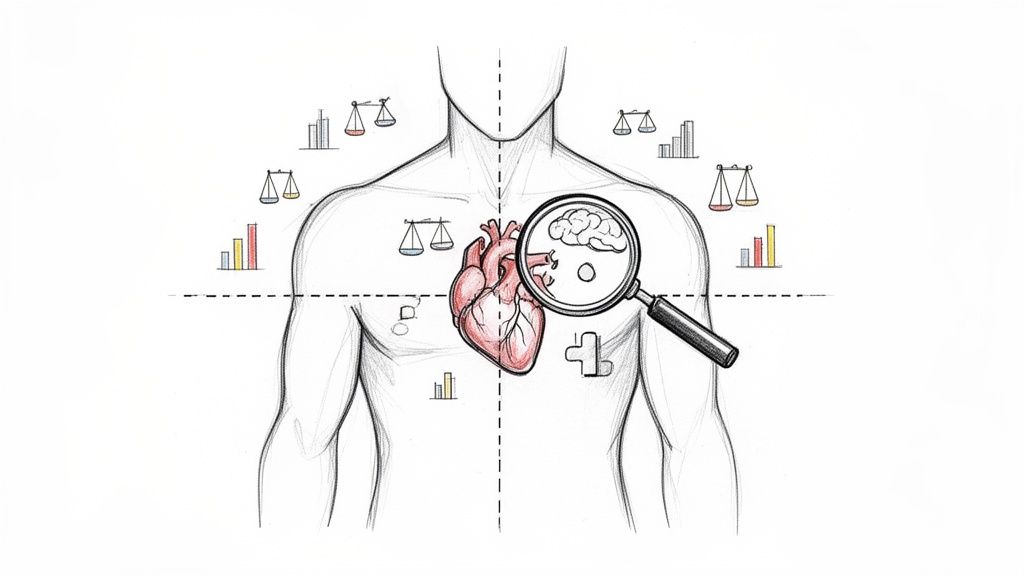
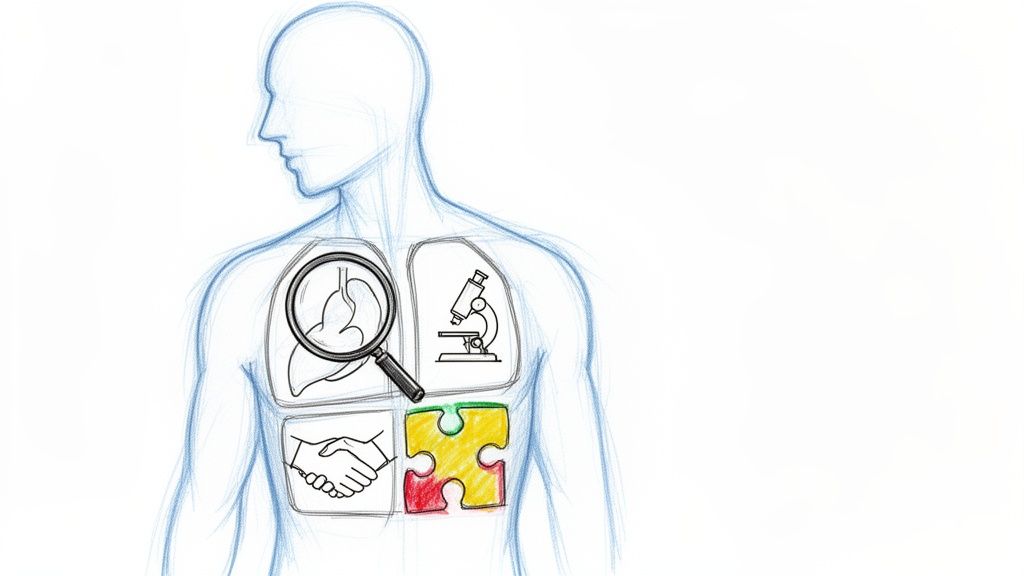
This simple flowchart illustrates the general workflow of the entire investigation.

This process shows that the physical examination is the central component of a larger investigation that starts with a review of records and concludes with a final, comprehensive report.
Laboratory Analysis and Documentation
The examination doesn't end in the autopsy suite. I collect small tissue samples from each major organ for microscopic analysis, a process called histology. This allows me to see cellular-level changes that are invisible to the naked eye and can reveal underlying conditions like heart disease or hidden infections. I also collect fluid samples, such as blood and urine, for toxicology testing. This analysis is critical for detecting prescription medications, illicit drugs, alcohol, or other substances that may have contributed to the death.
From the first observation to the final lab report, meticulous documentation and a secure chain of custody are fundamental. This rigorous process ensures that every finding is verifiable and provides the objective evidence needed to determine the cause and manner of death.
The Role of Independence and Objectivity in Forensic Pathology
One of the most common questions I hear from families is, "Why do we need a private autopsy if the death occurred in a hospital?" The answer lies in the importance of an independent and unbiased perspective. Autopsy rates have declined significantly over the last 50 years. Data from the National Vital Statistics Reports from the CDC show that autopsies were performed in just 7.4% of deaths in 2020, down from over 19% in 1972. This means many deaths, even those in medical facilities, don't receive a final, detailed examination, leaving critical questions unanswered.
When an autopsy is performed by the same hospital where the death occurred, an inherent conflict of interest can exist, even if unintentional. A private autopsy from an independent expert like myself at Texas Autopsy Services ensures a completely objective analysis. My duty is to the medical evidence alone, free from any institutional pressures. This independence is essential in several situations:
- Unclear Cause of Death: The initial death certificate may be vague or list a cause that doesn't align with the individual's known health.
- Concerns About Medical Care: Families may have questions about the quality of treatment their loved one received.
- Legal or Insurance Claims: An independent expert report is often necessary for legal cases or to resolve insurance disputes.
A private autopsy is centered on a family's specific concerns. Before I begin, I review all available medical records and consult with the family or their legal counsel to understand their questions. This focused approach ensures the investigation is targeted to provide the answers they need for closure and peace of mind. You can explore more about how this applies to substance-related questions in our guide on post-mortem toxicology.
The Importance of Laboratory Testing
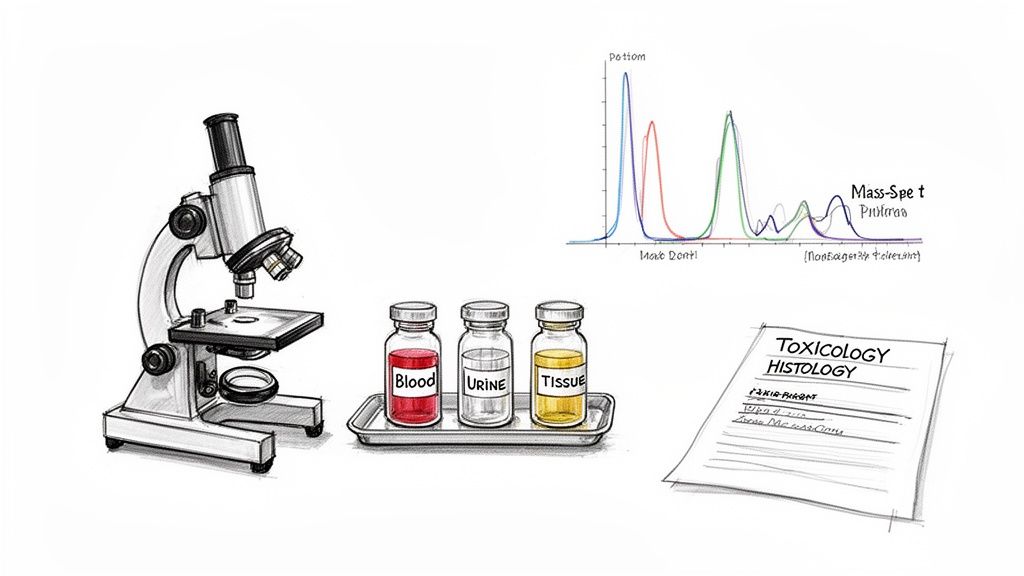
While the physical examination provides the structural framework of the investigation, advanced laboratory testing reveals what was happening at a chemical and cellular level. Toxicology and histology are the two pillars of this analysis.
Toxicology identifies substances within the body, such as prescription medications, illegal drugs, alcohol, or environmental toxins. This testing can determine if medications were at therapeutic or toxic levels and if other substances contributed to the death. The evidence provided is critical, as forensic toxicology reveals the presence of substances in a high percentage of cases.
Histology involves the microscopic examination of tissue samples. This process can reveal subtle signs of disease that are not visible during the physical exam, such as early-stage heart disease, hidden infections, or microscopic cancer cells. It often provides the definitive evidence needed to confirm a cause of death. The integration of lab results is key; toxicology might explain a chemical trigger, while histology can explain why an organ failed. This synergy is fundamental in forensic science and has parallels in other legal contexts, such as Understanding the Legal Aspects of Drug Testing by CPS.
What Families Can Expect from the Autopsy Report

After the examination is complete and all lab results are analyzed, I compile the final autopsy report. This document is the culmination of the entire investigation, detailing every finding and conclusion. It is a precise legal and medical record that formally states the cause of death (the specific disease or injury) and the manner of death (classified as natural, accident, suicide, homicide, or undetermined).
A comprehensive autopsy report typically includes:
- Case Summary: A brief history of the deceased and the circumstances of their death.
- External Examination Findings: A detailed description of the body, including identifying marks and any external injuries.
- Internal Examination Findings: An organ-by-organ account of all internal observations, noting any disease, abnormalities, or injuries.
- Laboratory Data: The results from toxicology, histology, and any other specialized tests.
- Final Diagnoses and Opinion: My concluding summary, which synthesizes all evidence to state the official cause and manner of death.
I understand that waiting for this report can be difficult. I typically provide preliminary verbal findings within 24 to 48 hours of the examination to offer immediate answers. The final, written report is usually available within 60 to 90 days, once all specialized lab tests are complete. My priority is accuracy, and this timeline ensures a thorough and reliable report. For a more detailed breakdown, you can learn more about what is in an autopsy report.
Ethical and Legal Safeguards in Texas
As an independent forensic pathologist, my work is governed by a strict code of ethics and a clear legal framework. In Texas, all postmortem examinations must comply with the Texas Health & Safety Code and guidelines from the Texas Funeral Service Commission. This begins with obtaining explicit, documented consent from the legal next of kin before any examination can proceed.
Maintaining an unbroken chain of custody for all evidence and biological samples is non-negotiable. This meticulous tracking ensures that our findings are scientifically sound and legally defensible. My ultimate duty is to the evidence. I am ethically bound to provide objective, unbiased findings, regardless of external pressures.
My practice adheres to the highest standards, which is especially important in a field where data can be inconsistent. Globally, only about 30.3% of countries consistently publish autopsy data, which can affect public health insights. You can read the full research on global autopsy reporting practices to understand this issue better. By conducting thorough local examinations for private autopsies and Texas counties, we contribute to accurate mortality data while providing families with the truth.
Frequently Asked Questions About Private Autopsies
Here are answers to some of the most common questions I receive from families and attorneys. My goal is to provide straightforward information to help you navigate this process.
How Much Does a Private Autopsy Cost?
Unlike a government-mandated autopsy, a private autopsy is paid for by the family or their legal representative. The cost depends on the complexity of the case, including the extent of laboratory testing required and any necessary travel. I provide a transparent, all-inclusive quote upfront that covers transportation of your loved one by our partners at Waterloo Mortuary, my professional examination, all standard lab work, and the final written report.
Will an Autopsy Interfere With Funeral Plans?
No. A properly performed autopsy will not prevent you from having a traditional funeral, including an open-casket viewing. I conduct all examinations with the utmost respect for the deceased. Incisions are carefully placed so they are not visible after your loved one is dressed. My commitment is to find answers for the living while always preserving the dignity of the deceased.
How Long Until We Get the Results?
I provide preliminary verbal findings within 24 to 48 hours after the physical examination is complete. This initial summary can help answer your most immediate questions. The final, comprehensive report is typically ready in 60 to 90 days. This timeline allows for the completion of specialized lab tests like toxicology and histology, which are essential for an accurate and thorough conclusion.
If you have further questions or need to discuss your specific situation, please do not hesitate to reach out. My team at Texas Autopsy Services and I are here to provide clarity and support.
Contact our pathologist at Texas Autopsy Services for a confidential consultation