January 30, 2026 · Texas Autopsy Services
Professional Pathology Services for Families and Attorneys
Discover what professional pathology services include, why they're vital for families and attorneys, and the process from a forensic expert in Texas.
On this page
- Answering Difficult Questions With Clarity and Compassion
- Understanding Professional Pathology Services
- The Private Autopsy Process Step by Step
- Why Independence and Objectivity Matter in Pathology
- Navigating the Legal and Ethical Landscape in Texas
- What to Expect From Your Final Autopsy Report
- Frequently Asked Questions About Private Autopsies
- A private autopsy provides an independent, objective investigation into a cause of death when questions remain.
- The examination is performed by a board-certified forensic pathologist, ensuring the highest level of medical and legal expertise.
- Families receive a transparent, comprehensive report detailing all findings, which can provide closure or support legal matters.
- The process is confidential, dignified, and fully compliant with Texas laws, and does not interfere with funeral arrangements.
As a board-certified forensic pathologist, I've spent my career in rooms with families and attorneys trying to make sense of an unexpected loss. They are often left holding medical records that raise more questions than they answer, searching for a certainty that feels just out of reach. In these moments, a private autopsy, one form of professional pathology services, can create a clear path to medically sound, objective answers.
Answering Difficult Questions With Clarity and Compassion
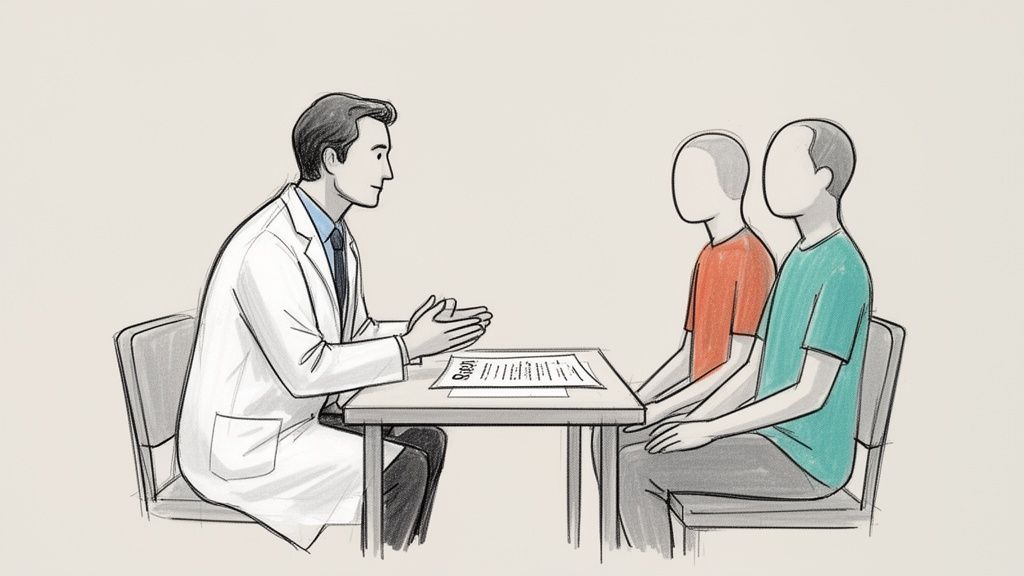
My practice, Texas Autopsy Services, is built on providing those answers with the compassion and respect every family deserves. In my career, I've performed over 1,000 autopsies. Each one told a unique story, and each one represented a family looking for closure.
Whether I'm helping a family with a Private Autopsy, an attorney building a case, or one of the many Texas counties I serve, the mission is always the same: deliver the truth through meticulous science. This guide will walk you through how these services work, what you can expect, and how an independent examination can bring clarity when you need it most.
Why an Independent Examination Matters
A private or independent autopsy plays a crucial role when questions about a person's death remain. Families often turn to this option when a hospital autopsy isn't offered or when a death doesn't fall under the medical examiner's jurisdiction.
Think of it as a second look—an unbiased investigation focused only on the medical facts. This process is vital for:
- Clarifying the Cause of Death: Pinpointing the exact medical reason for death when it's unknown or in dispute.
- Addressing Concerns About Medical Care: Investigating worries about the treatment a person received before they died.
- Providing Legal Evidence: Supplying objective findings that can be critical for insurance claims, medical malpractice suits, and other legal proceedings.
- Understanding Genetic Conditions: Identifying hereditary diseases that might affect the health of living relatives.
As a pathologist certified by the American Board of Pathology in anatomic, clinical, and forensic pathology, my responsibility is to ensure this examination is comprehensive, impartial, and fully compliant with Texas law.
My Commitment to You
Losing a loved one is overwhelming. Piling uncertainty on top of that grief is a difficult weight to bear. I founded Texas Autopsy Services because I believe every family has the right to clear, factual information, delivered with empathy.
My commitment is to bridge the gap between medical complexity and a family's need for understanding. It isn't just about a final report; it’s about providing answers that can help begin the healing process.
For legal professionals, that commitment means providing irrefutable, scientifically grounded evidence. An investigation into a cause of death must be able to withstand intense scrutiny. My work ensures the chain of custody is meticulously preserved and every finding is defensible.
Understanding Professional Pathology Services
When people contact me, they often say they need an “autopsy.” While that's a perfect place to start, my job is to help families and legal professionals understand the different services available, each designed to answer specific questions. Knowing the difference ensures we're on the right track from day one.
The need for precise medical answers has been growing. You can see it reflected in the global pathology services market, which has expanded as people seek definitive diagnoses and clarity around unexplained deaths. If you're interested, you can read more about these market trends and their drivers. While every service I offer is grounded in rigorous medical and legal standards, its application is shaped by the unique needs of each case.
Private Autopsy Services for Families
A Private Autopsy is a thorough examination requested directly by a family after a loved one has passed. This is the right path when a death isn't automatically investigated by a coroner or medical examiner, but the family is left with painful questions.
Common reasons include:
- An Unclear Cause of Death: The death certificate may be vague or seem inconsistent with the person’s health history.
- Worries About Medical Care: Families sometimes need to know if the medical treatment their loved one received met the standard of care.
- Looking for Hereditary Diseases: An autopsy can reveal genetic conditions important for the health of living relatives.
My goal here is simple: to provide a clear, medically sound cause of death that brings a measure of closure.
Second Opinion Autopsies
When an autopsy has already been performed but the findings feel incomplete or don't add up, a second opinion autopsy is appropriate. This involves a complete re-examination of the original tissue samples, toxicology reports, photos, and all case files. My job is to either confirm the original findings or, if the evidence points elsewhere, provide a new, independent conclusion. This is especially crucial for attorneys who need an objective, expert review of the evidence.
A second opinion provides an essential check and balance. It ensures that conclusions about cause and manner of death are based on an exhaustive and unbiased interpretation of the scientific evidence.
Specialized Forensic and Perinatal Pathology
My work also extends into highly specialized areas that demand specific expertise.
County Forensic Autopsies
I partner with Texas counties that don't have a full-time medical examiner. In these cases, I perform County Forensic Autopsies to determine the official cause and manner of death for cases that fall under state law, such as accidents, homicides, suicides, or any death with unclear circumstances. I follow Texas legal standards precisely, ensuring every report can stand up to scrutiny in a courtroom.
Fetal and Perinatal Autopsies
Losing a baby during pregnancy or shortly after birth is a devastating experience. A fetal or perinatal autopsy is a delicate examination focused on understanding why the loss happened. This compassionate investigation can uncover congenital anomalies, hidden infections, or placental problems. For parents, these medical answers can be a vital step in their grieving process and for planning future pregnancies.
Overview of Professional Pathology Services
| Service | Primary Audience | Key Purpose |
|---|---|---|
| Private Autopsy | Families, Legal Representatives | Determine an exact cause of death for personal clarity or legal proceedings when a death isn't under ME jurisdiction. |
| Second Opinion Autopsy | Attorneys, Families | Independently verify or contest the findings of a previously conducted autopsy to ensure accuracy and objectivity. |
| Fetal/Perinatal Autopsy | Grieving Parents, Physicians | Identify the medical reasons for a stillbirth or neonatal death, offering answers and guidance for future health. |
| County Forensic Autopsy | Texas County Officials | Provide official, legally sound cause and manner of death determinations for medicolegal death investigations. |
Each of these professional pathology services is a tool for finding the truth. Whether for a family seeking peace of mind or an attorney building a case, my work is about delivering that truth with precision, compassion, and respect.
The Private Autopsy Process Step by Step
When you're facing a loss, you don't need more uncertainty. I want to explain the private autopsy process so you know exactly what to expect. From our first phone call to the final report, every step is handled with respect, compassion, and a commitment to getting you answers.
It begins with a conversation. You'll speak with me directly to discuss what happened and what you hope to learn. This ensures the entire process is focused on your specific needs, whether that’s finding personal peace of mind or getting clarity for a legal matter. After we talk, we'll handle the necessary legal paperwork, which requires authorization from the legal next of kin as defined by Texas law.
Authorization and Coordination
With authorization in place, my team and I arrange for the deceased to be transported with dignity. We partner with professional, licensed mortuary services, like our colleagues at Waterloo Mortuary, to manage this part of the process seamlessly. We also maintain a strict, unbroken chain of custody from start to finish. This is a crucial step that preserves the integrity of the examination, especially if legal action is a possibility.
The autopsy itself is a careful investigation. It includes a thorough external and internal examination to document any physical signs, injuries, or disease. To see the whole picture, we often need to look deeper with supporting tests.
These can include:
- Toxicology: A screen for drugs, alcohol, or other substances.
- Histology: Examining tissue samples under a microscope to find evidence of disease at the cellular level.
- Microbiology: Testing for infections that could have played a role.
This approach ensures my findings are built on a solid foundation of scientific evidence. If you're interested in the finer details, I've written another piece that explains how an autopsy is performed step-by-step.
The chart below gives you a clear visual of how different pathology services work.
As you can see, while the commitment to a thorough investigation is constant, the path we take depends on the specific service you need.
Commitment to the Highest Standards
Pathology relies on advanced diagnostic technology. North America's pathology labs are a global leader, accounting for a 36-40% revenue share of the market in 2025 due to access to advanced tools and strong regulatory oversight. This infrastructure allows me to provide the high-caliber professional pathology services that families and legal professionals depend on. You can explore more on this pathology market growth at Precedence Research.
My one job is to provide an objective, medically sound determination of the cause and manner of death. I hold myself to the highest ethical and legal standards, ensuring every conclusion is backed by science and can withstand scrutiny.
I believe in open communication. You'll get updates from me as the process unfolds and will be the first to know when the final, comprehensive report is ready. This blend of transparency and rigorous science is the cornerstone of my work at Texas Autopsy Services.
Why Independence and Objectivity Matter in Pathology
When families or attorneys contact me, it's often because they are navigating a difficult time. The cause of a loved one's death might be unclear, or they may have questions about the medical care received. In these situations, the true power of an independent autopsy is its complete objectivity.
As an independent forensic pathologist, my sole obligation is to the medical evidence. I'm not affiliated with any hospital or large institution, which means my findings are free from potential conflicts of interest. This isn't about being emotionally detached; it's about ensuring every conclusion is built on a rock-solid foundation of objective, verifiable facts.
The Role of an Unbiased Pathologist
Think of me as a neutral investigator working for the family. When I begin an examination, I don’t start with a preconceived notion. My goal is to meticulously gather evidence and piece together a clear, factual story of what happened medically.
This objectivity is critical in several situations:
- Concerns about Medical Care: If you have questions about whether the care provided was appropriate, an independent review offers an impartial assessment of the medical facts.
- Uncertainty About the Cause of Death: When a death is sudden or the listed cause seems incorrect, a private autopsy can uncover missed diagnoses or hidden conditions.
- Legal and Insurance Matters: For legal disputes or insurance claims, a clear and impartial determination of the cause of death is often essential.
My commitment, as a forensic pathologist certified by the American Board of Pathology, is to deliver the highest level of medical precision and ethical conduct in every case.
Grounded in Texas Legal and Ethical Standards
This dedication to objectivity isn't just a personal philosophy; it's backed by strict adherence to Texas law. Every step of the process, from obtaining proper authorization to maintaining a secure chain of custody, is guided by regulations like the Texas Health & Safety Code Chapters 711 and 716. This legal structure guarantees that every examination is handled ethically, respectfully, and transparently.
An independent examination provides more than just a medical report; it provides a trustworthy account of the facts. It is a process designed to deliver clarity and certainty, ensuring the final conclusions are scientifically sound and legally defensible.
By focusing only on the evidence, I can give families and their legal teams the straightforward answers they need. My entire practice is built on this foundation of trust and scientific integrity.
Navigating the Legal and Ethical Landscape in Texas
As a forensic pathologist in Texas, my work is built on a solid foundation of legal and ethical standards governed by bodies like the Texas Funeral Service Commission. These aren't just bureaucratic hurdles; they are the rules that guarantee every examination is handled with dignity, scientific accuracy, and legal integrity. For families and attorneys, understanding this framework helps clarify the process behind every report I issue.
Everything I do is guided by state law, especially the Texas Health & Safety Code. This code clearly defines who can legally authorize an autopsy. In a private autopsy, that authority rests with the legal next of kin, following a specific hierarchy set by the state. We cover this in detail in our guide on who can request an autopsy.
Cause of Death Versus Manner of Death
One of the most important parts of my job is explaining the difference between two often-confused terms: cause and manner of death.
- Cause of Death: This is the specific medical reason a person died, such as a heart attack, a gunshot wound, or complications from pneumonia. It's a purely scientific conclusion drawn from physical evidence.
- Manner of Death: This classifies the circumstances of the death. In Texas, there are five official categories: natural, accident, suicide, homicide, and undetermined.
My role is to determine the cause of death through objective analysis. The manner of death is then classified by considering my findings alongside information from the scene and other investigations.
The Importance of Chain of Custody
When an autopsy might lead to legal action, the chain of custody is non-negotiable. It’s a detailed, unbroken log that tracks every piece of evidence, from tissue samples to toxicology results, from the moment it's collected.
The chain of custody is our promise that the evidence is secure. It proves that what we analyzed is exactly what was collected, free from tampering or contamination.
This strict documentation is what makes our findings hold up in a court of law.
Privacy is also paramount. Professional pathology services must be incredibly careful with sensitive information. We must always consider the risks of patient data breaches during video meetings to protect families and comply with HIPAA. Every procedure at Texas Autopsy Services is performed with the utmost respect for the deceased, strictly following Texas law and the high standards of the American Board of Pathology.
What to Expect From Your Final Autopsy Report
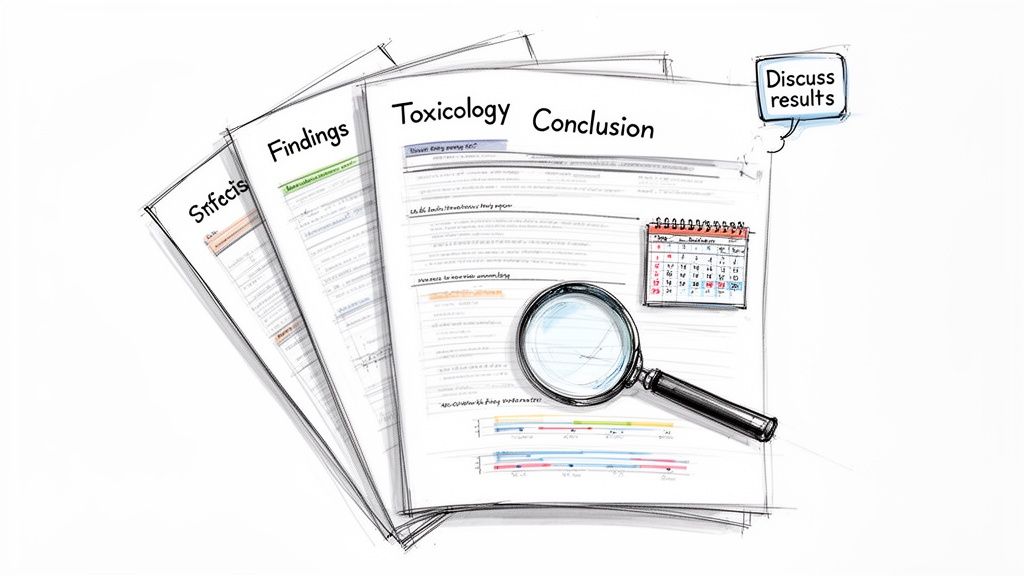
After the physical examination and lab work are complete, everything comes together in the final autopsy report. This is the definitive story of what my investigation found, a detailed medical document designed to answer your difficult questions.
This isn't just a collection of data. It's a carefully constructed narrative that explains the medical facts. While the language is precise, I always make sure to walk families, their doctors, or their attorneys through the findings. My job isn't done until you have clarity.
Key Components of the Report
Every report is different, but they all follow a logical structure to present the evidence clearly.
A complete report will almost always include:
- Gross Findings: A detailed description of the external body and the internal organs, noting their condition, size, and any visible abnormalities.
- Microscopic Findings: A description of what tissue samples look like under a microscope, which can reveal signs of disease or injury invisible to the naked eye.
- Toxicology Results: A list of any medications, alcohol, or other substances found in the body and at what levels.
- Ancillary Studies: Any other specialized tests we may have run, like cultures to check for infections or genetic analysis.
All of these pieces lead to the final, crucial section: the cause of death determination. This is my medical opinion, based entirely on the scientific evidence gathered. If you want a deeper dive, I've put together a guide on how to read a pathology report.
Timelines and Communication
One of the first questions people ask is when they will get the report. I can often provide some preliminary findings fairly quickly, but the final, detailed report takes time, often several weeks.
The main reason for the wait is specialized testing. Toxicology and microscopic slide analysis are meticulous processes that can't be rushed without compromising accuracy. I believe in keeping you informed, so my team will provide a clear timeline for your case and update you as we go.
The final report is more than a document; it is the definitive answer to your questions. It is constructed to be thorough, objective, and legally sound, providing the clarity needed for closure or legal proceedings.
In legal situations, the quality of medical evidence is critical. For example, understanding what evidence is needed in medical malpractice settlements underscores how vital an independent, detailed pathology report can be. I am committed to providing professional pathology services that produce an unshakeable, factual record you can rely on.
Frequently Asked Questions About Private Autopsies
When families or attorneys contact me, they often have similar questions. It’s completely understandable, as this is a situation most people hope never to face. My goal here is to provide straightforward answers to help you navigate this difficult time.
What does a private autopsy cost?
I believe in being upfront about costs. We operate on an all-inclusive, flat-fee basis. That single price covers everything: the initial consultation, transportation, the full examination, any specialized testing like toxicology, and the final, detailed report. There are no hidden fees. We will discuss the total cost with you from the start so you can make a clear decision.
Will an autopsy interfere with funeral arrangements?
No, a private autopsy will not disrupt your plans for a funeral or viewing. I conduct every examination with respect, using techniques that ensure no visible signs of the procedure once your loved one is dressed. This allows families to have an open-casket viewing and any other traditional service they wish. We work closely with your funeral home to handle the entire process smoothly.
Who can authorize an autopsy in Texas?
Texas law is specific about who can authorize a private autopsy. The right belongs to the legal next of kin, and there's a clear order of priority. The hierarchy generally works as follows: the person designated by the deceased in writing, the surviving spouse, any surviving adult children, and then the surviving parents. We will walk you through these legal requirements to ensure everything is properly authorized according to the Texas Health & Safety Code.
How long does it take to get the final report?
I can often provide preliminary findings within a day or two. However, the comprehensive final report typically takes several weeks. The main reason for this is the meticulous testing that happens behind the scenes, such as toxicology and microscopic tissue examination. These complex analyses cannot be rushed if you want accurate answers. My team will give you a specific timeline for your case and keep you updated.
If you have other questions or need to discuss your specific circumstances, please do not hesitate to call our office. At Texas Autopsy Services, my purpose is to provide clarity with compassion when you need it most.