March 7, 2026 · Texas Autopsy Services
What Families and Attorneys Should Know About Private Autopsies in Texas
Learn how a photography expert witness validates evidence and strengthens legal cases. A guide for attorneys and families on their role in court.
On this page
As a board-certified forensic pathologist, I've conducted more than a thousand autopsies. Each one reinforces a single, guiding principle: the truth is found in objective evidence. When a loved one passes away unexpectedly or under confusing circumstances, a private autopsy offers families and their legal counsel a way to find clear, unbiased answers. The process isn't just about medical science; it’s about providing certainty and closure with compassion and precision.
- A private autopsy is an independent medical examination requested by a family or their legal representative to determine an exact cause and manner of death.
- The examination is performed by a qualified, board-certified forensic pathologist, ensuring objectivity apart from hospitals or government agencies.
- Families receive a comprehensive, confidential report detailing the medical findings, which can be essential for legal, insurance, or personal closure.
- All procedures are conducted with the utmost respect for the deceased and in full compliance with Texas law, including the Texas Health & Safety Code.
The Role of a Private Autopsy in Providing Answers
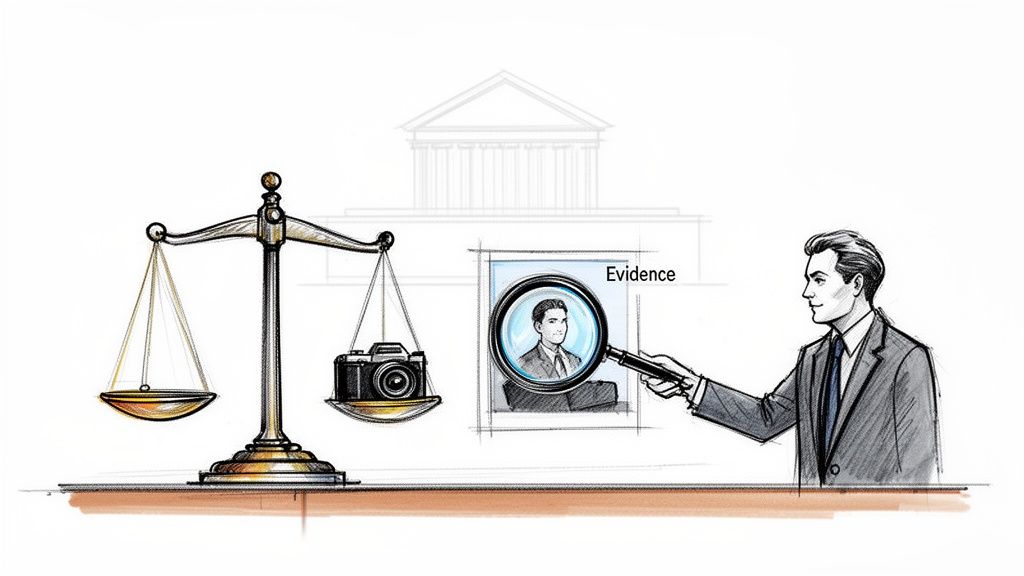
Recently, I worked with a family whose elderly father passed away in a nursing facility. The death certificate listed "natural causes," but the family was concerned about his rapid decline and the care he had received. They needed to know for sure. Through a Private Autopsy, my examination uncovered evidence of severe dehydration and an untreated infection, which provided a more specific cause of death. This information gave the family the clarity they deserved and the factual basis needed to address their concerns with the facility.
This is the central purpose of an independent autopsy: to provide an objective, medically sound explanation when questions remain. It’s a path to certainty when the initial cause of death seems incomplete, unclear, or doesn't align with the circumstances.
What is a Private Autopsy?
A private, or independent, autopsy is a thorough medical examination of a deceased person performed by a forensic pathologist at the request of the next of kin or their legal representative. Unlike autopsies conducted by a medical examiner or coroner, which are required by law in specific situations like homicides or accidents, a private autopsy is a choice. It's an option for families who seek a second opinion or an initial investigation when one isn't automatically mandated.
The process involves a detailed examination to establish the precise cause of death (the specific injury or disease that led to the person's passing) and the manner of death (the circumstances, which fall into five categories: natural, accident, suicide, homicide, or undetermined).
My work is guided by a few core principles:
- Objectivity: As an independent pathologist, my only duty is to the medical evidence. My findings are free from any potential institutional bias.
- Precision: My findings are based on a meticulous examination, supported by laboratory testing and a complete review of medical records.
- Compassion: I understand that families are going through a difficult time. My process is designed to be transparent, respectful, and clear, helping families navigate this step with dignity.
The final report provides a detailed, factual record that can be used to answer personal questions, settle insurance claims, or support legal proceedings.
Key Functions of a Private Autopsy
| Area of Focus | Description of Role and Impact |
|---|---|
| Cause of Death Determination | A definitive medical reason for death is established through a meticulous external and internal examination. |
| Second Opinion | Provides an independent review when families question the findings of a hospital or government-mandated autopsy. |
| Legal Evidence | The final report can serve as critical evidence in cases of medical malpractice, wrongful death, or insurance disputes. |
| Genetic and Hereditary Disease | Identifies hereditary conditions that could have implications for the health of surviving family members. |
| Chain of Custody | Ensures all evidence, from tissue samples to the final report, is handled with documented integrity, which is vital for legal cases. |
Ultimately, a private autopsy empowers families with factual information, ensuring that final decisions are based on a clear and accurate understanding of what happened.
The Autopsy Process: What to Expect
The decision to proceed with a private autopsy is significant, and it’s important for families and attorneys to understand the process. My approach at Texas Autopsy Services is structured to be clear, respectful, and thorough, adhering to the highest medical and ethical standards. It’s a process built on the same principles of meticulous documentation you'd see from a photography expert witness, where every detail is preserved.
The process begins with a consultation. I speak directly with the family or their attorney to understand their questions and explain what the autopsy can and cannot reveal. From there, every step is handled with professional care.
The Foundation of a Credible Examination
To ensure every finding is defensible and accurate, my work is grounded in established medical protocols and legal requirements. As a forensic pathologist with board certifications from the American Board of Pathology in Anatomic, Clinical, and Forensic Pathology, my methods are held to a national standard. This isn't just a professional credential; it’s a guarantee of quality and trustworthiness for the families I serve.
Key steps in the process include:
- Authorization and Logistics: The legal next of kin must provide written consent. My team and I coordinate with the funeral home or mortuary service, like our partners at Waterloo Mortuary, for respectful transportation to the examination facility.
- Review of Records: I conduct a comprehensive review of all available medical records, witness statements, and circumstances surrounding the death. This context is vital.
- The Examination: The autopsy includes a detailed external and internal examination, where I document all findings and collect tissue and fluid samples for laboratory analysis (histology and toxicology).
- Reporting: After the examination and lab tests are complete, I prepare a detailed report. This document explains the medical findings in clear language, states the cause and manner of death, and answers the specific questions the family had.
This entire process is conducted in compliance with Texas laws, including regulations set by the Texas Funeral Service Commission.
A private autopsy isn't just a procedure; it's a comprehensive investigation. The credibility of its findings rests on the pathologist’s expertise, adherence to standards, and commitment to objective truth.
This level of detail ensures that the final report is not just an opinion but a scientifically sound document that can provide peace of mind or stand up to legal scrutiny.
Beyond the Medical Findings
An autopsy report can be complex. Part of my role is to ensure you understand it. I make myself available to families and their legal counsel to review the report, explain the medical terminology, and answer any follow-up questions. Clear communication is just as important as the examination itself. It’s the final step in providing the answers you're seeking.
How a Private Autopsy Is Validated
When the findings of a private autopsy are used in a legal or insurance matter, they must be beyond reproach. The validity of my work rests on a foundation of documented procedures, strict evidence handling, and unwavering objectivity. Every step is designed to create a factual record that is both medically accurate and legally defensible.
It all starts with an unbreakable chain of custody. This is a formal term for a simple concept: a detailed log that tracks every piece of evidence, from tissue samples to the body itself, from the moment it comes into my care until my work is complete. This documented trail proves that nothing has been contaminated or compromised.
The Autopsy Examination
Once all authorizations are in place, the examination begins. This process is systematic and designed to miss nothing.
It is a detailed and methodical process, much like the forensic analysis used to address challenges in digital forensics.
- External Examination: The first step is a head-to-toe examination of the outside of the body. I document height, weight, and identifying features like scars or tattoos. I also meticulously document any sign of injury or disease.
- Internal Examination: Next, I conduct a respectful and systematic examination of the internal organs. Each organ system is weighed, measured, and inspected for any sign of disease, abnormality, or injury. I take small tissue samples from each major organ to be processed for microscopic examination (histology).
- Toxicology and Ancillary Studies: Fluid samples, such as blood and urine, are collected and sent to a specialized laboratory for toxicology testing. This can detect the presence of medications, illicit drugs, or other substances. Depending on the case, I may also order microbiology, genetic testing, or other specialized studies.
This structured process ensures that all potential factors contributing to death are considered.
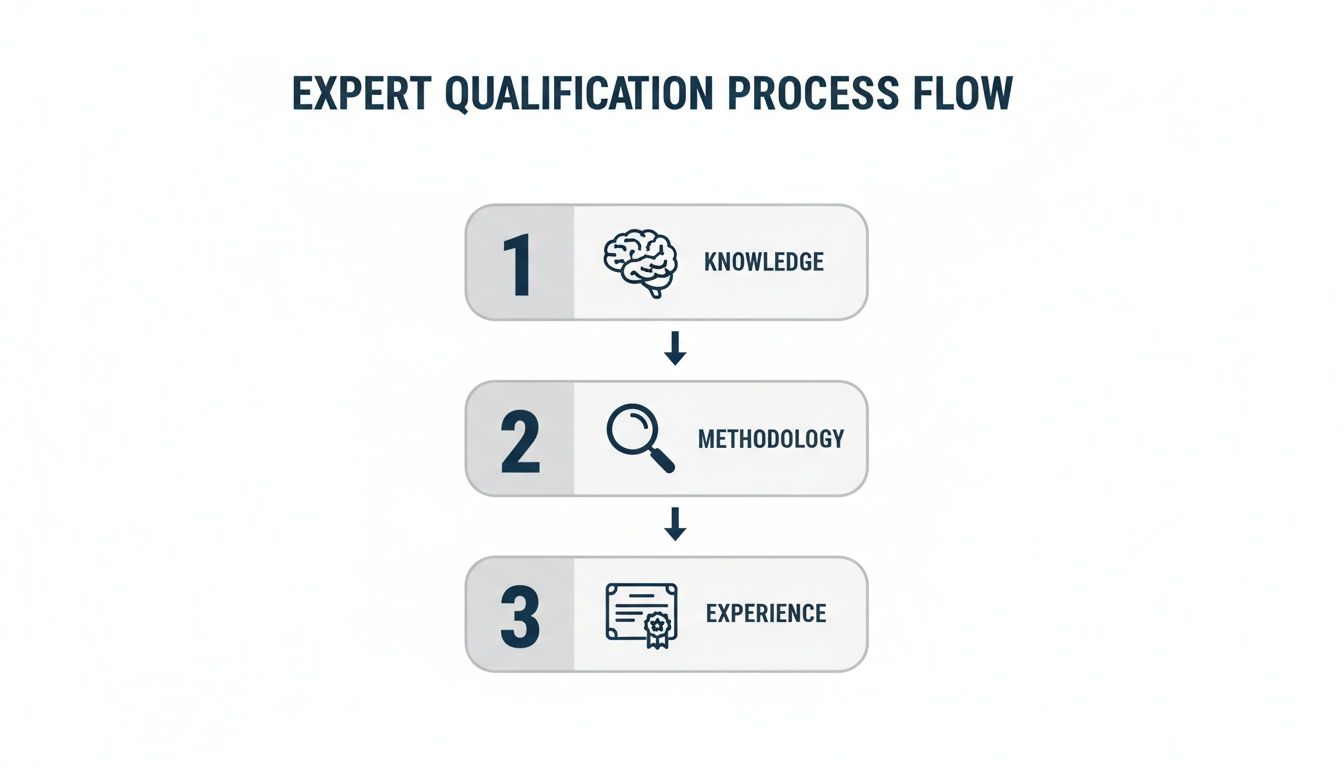
The credibility of the final report is a direct result of this combination of deep knowledge, a repeatable process, and extensive experience.
The Standard of Proof in Practice
The final autopsy report synthesizes all of these findings into a single, cohesive narrative. It’s not just a list of medical observations; it’s a medical-legal document that explains what happened. The report details the external and internal findings, the results of all laboratory tests, and provides a clear summary that states the cause and manner of death.
For example, in a potential medical malpractice case, my report might detail the presence of a pulmonary embolism that was not diagnosed prior to death. The report would not only identify the clot but also document its size, location, and the downstream effects on the body, providing a factual basis for legal review. This type of detailed, objective evidence is often the cornerstone of such cases, similar to how an expert’s testimony was critical in the judicial analysis of People v. Snyder.
The autopsy report provides the court, insurance companies, and families with the confidence that the stated cause of death is not an opinion, but a conclusion based on verifiable medical fact.
Ultimately, this validation process gives the private autopsy its power. It transforms a medical procedure into a source of definitive answers that can provide closure, resolve disputes, and ensure that justice is served.
Using Private Autopsy Findings in Legal and Insurance Claims
While many families seek a private autopsy for personal closure, the findings are often crucial in civil litigation and insurance matters. In these situations, the autopsy report is more than just a medical document; it's a powerful piece of evidence. It provides an objective, scientific foundation for cases involving wrongful death, medical malpractice, workers' compensation, or disputed life insurance claims.
An attorney can use the report to establish a direct link between an event (like a car accident or a medical error) and the death. My role as a forensic pathologist is to provide the unbiased medical facts; it's up to the legal system to determine fault or liability. The report I produce is designed to be a clear, factual instrument that helps the court do its job.
Quantifying Harm and Proving Causation
In a civil lawsuit, a primary challenge is proving causation—demonstrating that a specific action or inaction directly led to the death. A private autopsy provides the unassailable medical evidence needed to build that chain of events.
For example, in a wrongful death claim after a workplace accident, the initial death certificate might list a generic cause like "cardiac arrest." A private autopsy might reveal that the cardiac arrest was caused by an undiagnosed internal injury sustained during the accident. This finding directly links the death to the workplace event and becomes the cornerstone of the family's legal claim.
Similarly, in insurance disputes, an autopsy can provide definitive proof. If an insurance company denies a claim by arguing a death was due to an undisclosed pre-existing condition, an autopsy can either confirm or refute that assertion. I've seen cases where my findings proved a death was accidental, not the result of a chronic illness, forcing the insurer to honor the policy. This level of clarity can prevent a family from facing a devastating financial loss on top of their grief, much like the creator who won a major award with help from expert analysis in a 2024 copyright case. You can read more about this landmark verdict and its implications for creators.
Key Applications in Civil Cases
The findings from a private autopsy are versatile and can be applied to many areas of civil law. They provide a foundation of fact that can clarify disputes and lead to a just resolution.
- Medical Malpractice: The report can identify missed diagnoses, surgical errors, or adverse reactions to medication that led to a patient's death.
- Wrongful Death: It provides concrete proof linking an injury from an accident or assault to the eventual death, even if there was a delay.
- Workers' Compensation: The autopsy can determine if a death was related to a workplace injury or exposure to hazardous materials.
- Insurance Claims: It provides a definitive cause of death to resolve disputes over life insurance or accidental death policies.
In legal and insurance matters, the autopsy report serves as the silent, objective witness. As the forensic pathologist, I am the interpreter who ensures that witness speaks clearly, accurately, and truthfully.
For an attorney, a comprehensive autopsy report from an experienced, board-certified forensic pathologist is an invaluable tool. It anchors the legal strategy in solid medical fact and provides the credible evidence needed to advocate effectively for a client.
I also provide services for County Forensic Autopsies across Texas, offering the same level of expertise and objectivity to government officials.
The Role of Photography in a Private Autopsy
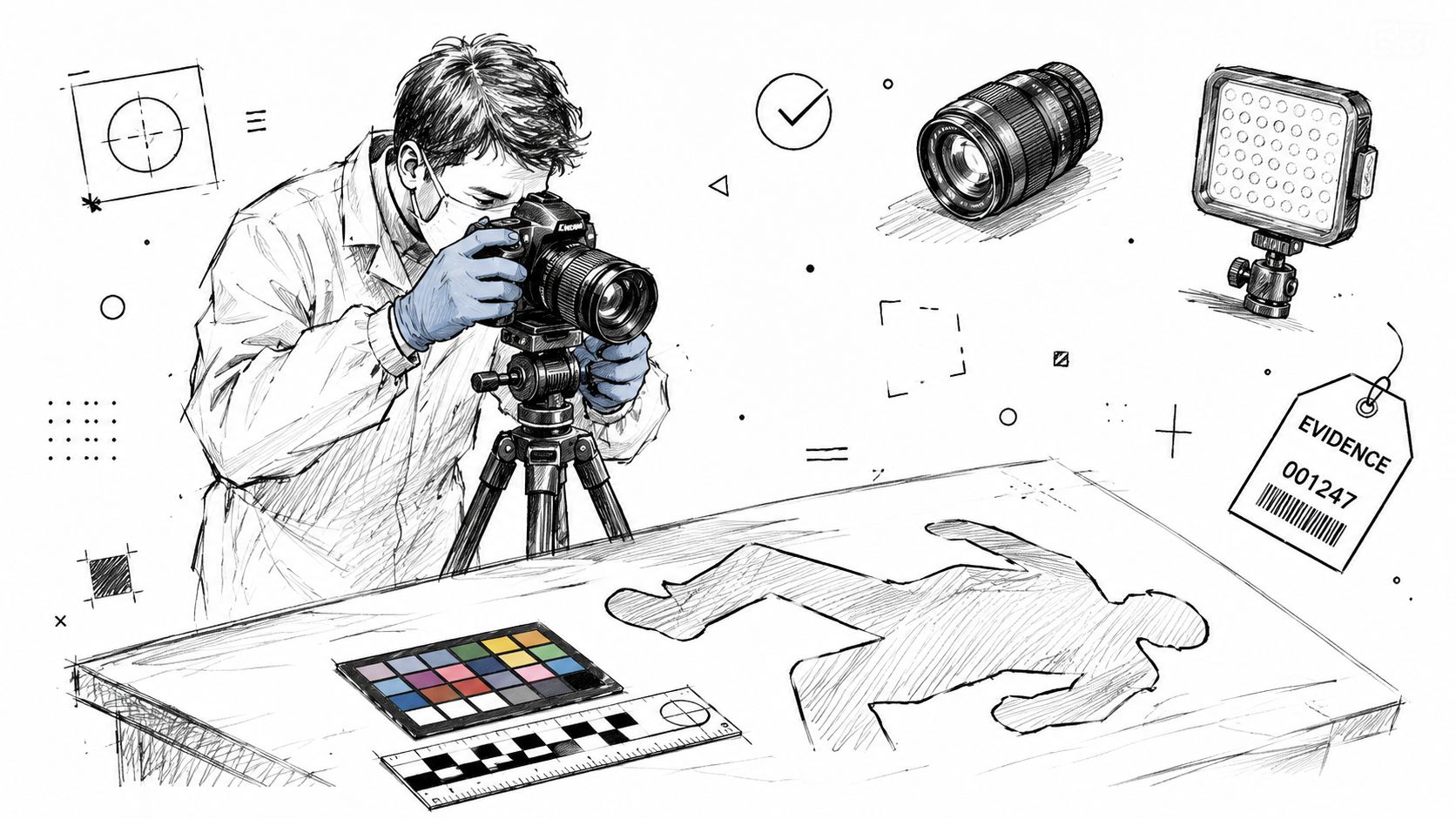
When I'm conducting an autopsy, one of my most important tools isn't a scalpel—it's my camera. It might sound surprising, but photography isn't just an afterthought; it’s one of the most critical ways I preserve evidence. A postmortem examination is a moment in time, and high-quality, systematic photographs create a permanent, indisputable visual record of my findings.
These images are essential for documenting the true nature and scale of injuries, revealing subtle patterns that might not be obvious at first glance, and capturing evidence that can quickly degrade or disappear.
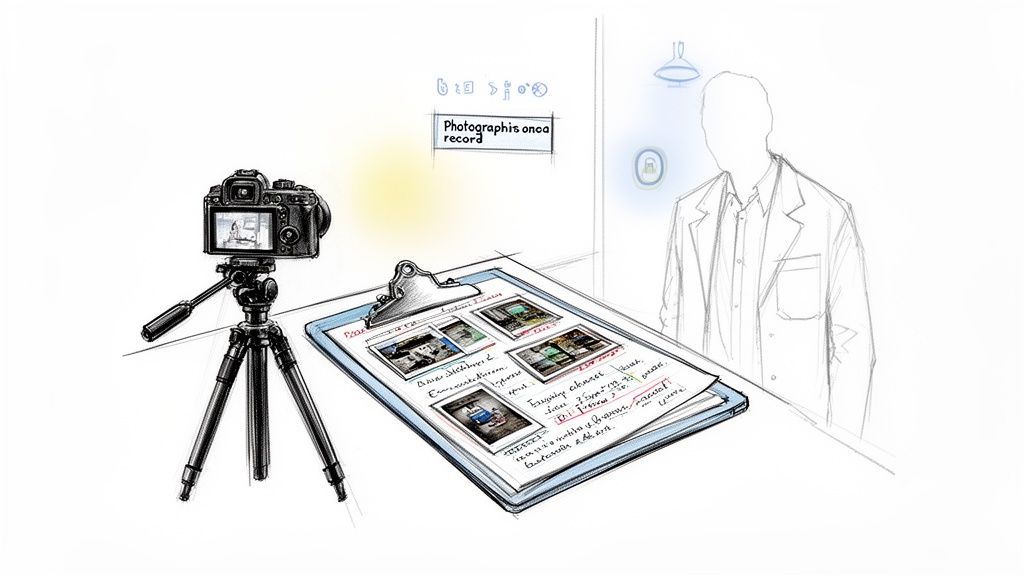
This visual documentation is the bedrock of my analysis, and it allows other experts—and eventually, a jury—to see what I saw. I am the expert on interpreting the medical evidence in the photos. The photographs themselves are objective data points that support my conclusions.
They ensure that the truth is not only found but also communicated with complete clarity.
The Role of Photography During the Examination
In the autopsy suite, the camera is always within reach. Every examination I perform follows a strict photographic protocol, creating an unbiased visual story from start to finish. This is far more than just taking a few pictures.
The photographs I take serve several key functions:
- Documenting Initial Condition: They capture the state of the body exactly as it was received, which can be crucial for establishing a clear timeline of events.
- Recording External Evidence: Photos meticulously record clothing, personal effects, and any trace evidence found during the external examination in an autopsy.
- Visualizing Injury Patterns: I take high-resolution images of every injury. These pictures help me analyze characteristics like size, shape, and location, all of which point toward the type of weapon or force involved.
- Preserving Transient Findings: Some types of evidence, like specific bruises or lividity patterns, can change or fade. Photography freezes them in time, preserving them exactly as they appeared during my exam.
Every single photo is taken with a scale to provide an immediate, clear reference for size. This process builds a detailed visual narrative that works hand-in-hand with my written report, offering objective proof that can be scrutinized long after the physical examination is over.
In an autopsy, every photograph is a piece of a puzzle. When you put them all together, they tell an objective story that helps reveal the cause and manner of death.
How Photographic Evidence Supports My Findings
My expertise is in forensic pathology—I tell the court what the medical evidence in a photo means. When questions arise about the technical aspects of the photograph itself, a photography expert can provide support.
Imagine my autopsy photos are shown in court. An opposing attorney might raise questions: "Were these images digitally altered? Could the lighting be making that bruise look worse than it is? Is the color true to life?" These are fair technical questions.
This is where a photography expert can become a valuable partner. They can testify to the integrity of my images.
Here’s how they could contribute:
- Validating the Chain of Custody: They can confirm that the digital photo files were handled correctly from the moment they were created, ensuring they haven't been tampered with.
- Analyzing Image Metadata: They can analyze the technical data embedded in each image file (the EXIF data) to confirm when the photo was taken and that it hasn't been run through editing software.
- Explaining Technical Aspects: They can explain to a judge and jury, in simple terms, how factors like camera settings and lighting affect an image. This reassures everyone that what they are seeing is a fair representation of reality.
By confirming the reliability of the photographic evidence, the expert reinforces the credibility of my medical conclusions. This dual expertise—pathological and photographic—builds a powerful, evidence-based foundation that can withstand legal scrutiny.
How to Arrange a Private Autopsy
Arranging a private autopsy may seem daunting, but a professional forensic pathologist will guide you through the process. It's about forming a partnership to find clear answers, backed by credible medical evidence. For both families and attorneys, understanding the steps involved ensures you get the full benefit of the examination.
It all starts with an initial consultation. This first conversation is a chance to discuss the circumstances of the death, review what is known, and understand what questions you hope to answer. It's a two-way street: you can determine if a private autopsy is the right path, and I can determine if an examination is likely to provide the answers you need.
Once you decide to proceed, the process is straightforward and handled with discretion.
Setting Expectations for Deliverables and Process
A true professional will have a methodical process that produces concrete, court-ready materials. You should know exactly what to expect.
From Texas Autopsy Services, you will receive:
- A Detailed Written Report: This is the cornerstone of my work. The report will break down my methodology, my findings, and the solid conclusions I’ve drawn from the evidence. It’s written to be clear, precise, and ready to serve as a definitive medical record.
- Direct Communication: I make myself available to discuss the findings directly with the family and their legal counsel. My goal is to ensure you understand the medical conclusions and their implications.
- Expert Testimony: If needed, I am prepared to present my findings in a deposition or on the witness stand. I will confidently explain my analysis and defend my conclusions under the pressure of cross-examination.
The earlier you can engage a forensic pathologist, the better. Timeliness is important, as the body undergoes natural changes after death. An early examination can preserve crucial evidence. We explore the dynamics of expert engagement more in our article on what to expect when hiring a forensics expert witness.
Understanding Costs and Logistics
A private autopsy is a significant investment in obtaining definitive answers. The cost reflects the extensive training, specialized facility, laboratory tests, and time required to perform a comprehensive examination and produce a detailed report. Fees are transparent and discussed upfront during the initial consultation. You can see more about how expert fees are structured in various expert witness fee studies.
Choosing the right forensic pathologist is about more than credentials; it's about finding an expert with the experience, objectivity, and communication skills to provide the clarity you need. The value of certainty often far outweighs the cost.
Logistically, my team and I handle the coordination with the funeral home or mortuary holding the deceased. We arrange for respectful transport to the examination facility and ensure the deceased is returned promptly afterward, so funeral arrangements are not significantly delayed. This entire process is managed with sensitivity and professionalism.
Common Questions About Private Autopsies
As a forensic pathologist, part of my job is to demystify the autopsy process. Families and attorneys often have questions, and providing clear answers is the first step toward building trust. Here are some of the most common questions I receive.
What Is the Difference Between a Private Autopsy and a Medical Examiner's Autopsy?
This is the most important distinction. A Medical Examiner's (or Coroner's) autopsy is a legal requirement mandated by the state. These are performed in specific cases, such as suspected homicides, suicides, accidents, or any death that occurs under unusual or suspicious circumstances. Their primary duty is to the public and the state.
A private autopsy, on the other hand, is requested and paid for by the family or their legal representative. It is a choice, not a requirement. It provides an opportunity for a second opinion or an in-depth investigation when a government-mandated autopsy is not performed. My duty as a private forensic pathologist is directly to the family that has retained me. I am there to answer their questions.
A private autopsy provides an independent, objective investigation focused entirely on the family's need for answers, separate from any government or hospital inquiry.
When Is a Private Autopsy Necessary?
You should consider a private autopsy whenever you have unanswered questions about a loved one's death. If the cause of death listed on the death certificate seems vague, incomplete, or wrong, an independent examination can provide the clarity you need.
It becomes particularly valuable in these situations:
- Sudden or Unexpected Death: When a person dies without a clear medical reason, even if "natural causes" are presumed.
- Concerns About Medical Care: If you suspect a medical error, misdiagnosis, or negligence contributed to the death.
- Legal or Insurance Disputes: To provide definitive evidence for a wrongful death lawsuit, workers' compensation claim, or a contested life insurance policy.
- Hereditary Disease Concerns: To identify genetic conditions that could impact the health of living relatives.
How Much Does a Private Autopsy in Texas Cost?
A private autopsy is a comprehensive medical service, and the cost reflects the level of expertise involved. The fee covers the pathologist’s time, use of a specialized facility, coordination with the funeral home, all laboratory and toxicology testing, and the preparation of the detailed final report.
Generally, you can expect the cost to range from $4,000 to $7,000, depending on the complexity of the case and the extent of ancillary testing required. I provide a clear, all-inclusive quote after the initial consultation, so there are no surprises. While it is a significant expense, families often find the definitive answers it provides to be invaluable.
At Texas Autopsy Services, my focus is on providing definitive, evidence-based answers with compassion and respect. If you are a family or an attorney in Texas seeking clarity in a complex and difficult time, a private autopsy may be the key to finding the truth. Please feel free to call our office at (806) 230-1889 for a confidential consultation.