March 24, 2026 · Texas Autopsy Services
What Forensic Pathologists Wear for Autopsies and Court
Discover what do forensic pathologists wear for autopsies, court testimony, and consultations. We explain the attire for safety and professionalism.
On this page
When people ask me what a forensic pathologist wears, they’re often surprised by the answer: it depends entirely on the day. My job isn't a one-uniform-fits-all profession. Instead, what I wear is dictated by my surroundings, shifting between three very different settings that define my work.
Each environment—the autopsy suite, the courtroom, and a consultation room—comes with its own set of rules and expectations. My attire has to be practical, professional, and appropriate for the task at hand.
The Three Contexts of a Forensic Pathologist's Attire
My professional life essentially plays out in three distinct arenas, and I dress for each one accordingly. This isn't about fashion; it's about function, safety, and communication.
- The Autopsy Suite: This is where safety is the priority. My outfit is head-to-toe personal protective equipment (PPE) to protect both me and the integrity of the evidence.
- The Courtroom: When I’m called to give expert testimony, I wear a formal business suit. It conveys respect for the legal system and reinforces the authority of my findings.
- Consultations: For meetings with families or attorneys, I opt for business casual. The goal is to be professional yet approachable, creating a space where people feel comfortable asking difficult questions.
Changing my clothes is more than just a routine; it’s a mental reset. It helps me transition from the highly technical work of a cause of death investigation to the compassionate role of explaining those findings to a grieving family.
This deliberate approach ensures I can handle every part of my job with the right mindset and professionalism. Understanding where autopsies are done helps clarify why these environments demand such different approaches to attire. It’s a level of diligence that families seeking a private autopsy can count on, knowing every detail is managed with care.
Here’s a simple breakdown of how my wardrobe aligns with my work.
Quick Guide to a Forensic Pathologist's Attire
| Setting | Attire | Primary Goal |
|---|---|---|
| Autopsy Suite | Full PPE (Scrubs, Gown, Gloves, Mask, Shield) | Safety and Evidence Integrity |
| Courtroom Testimony | Professional Business Suit | Credibility and Respect |
| Family & Attorney Consultations | Business Casual | Trust and Clear Communication |
Ultimately, my clothing is a tool. Just like a scalpel or a microscope, it helps me do my job safely, effectively, and with the respect each situation deserves.
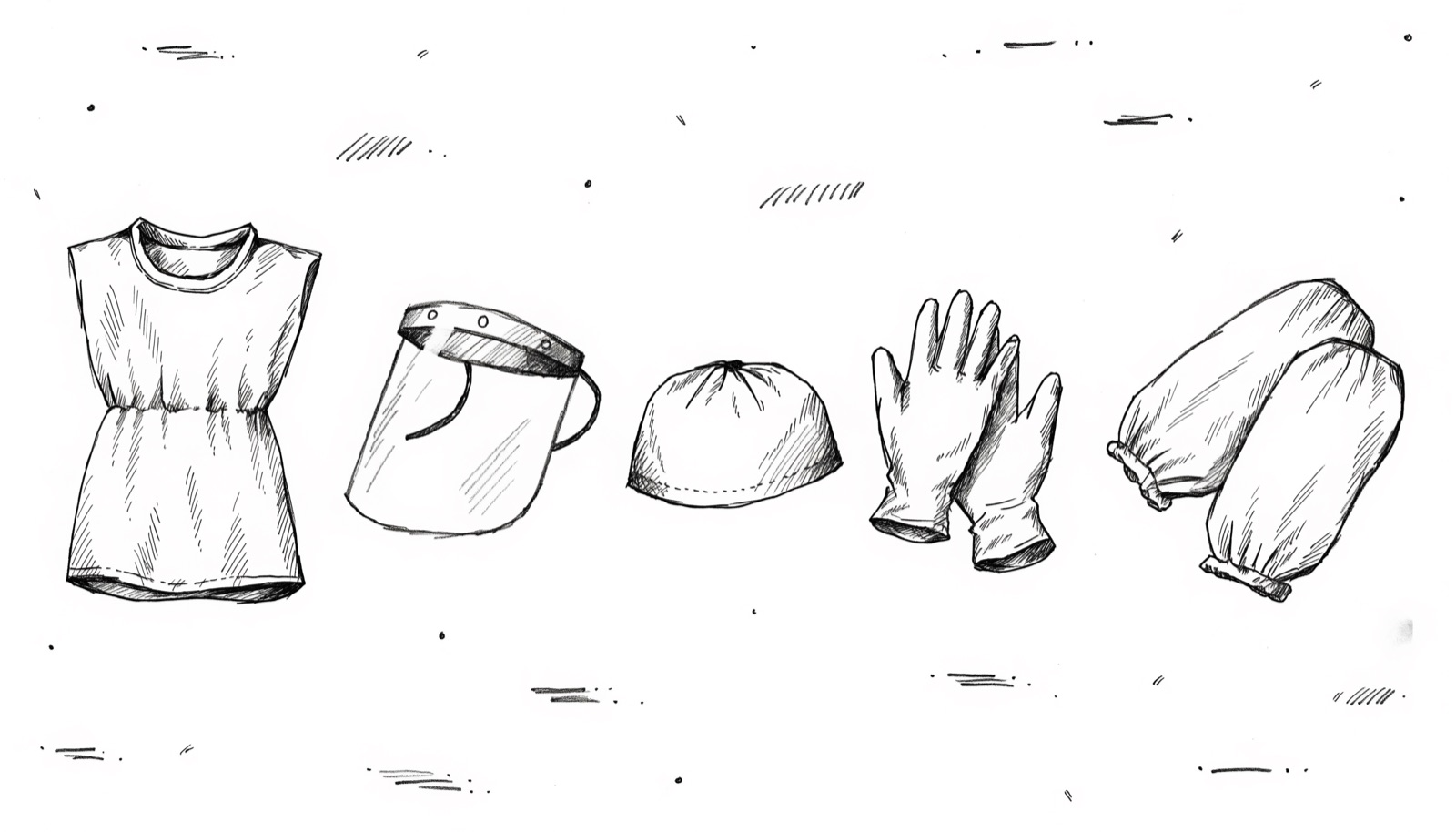
When people picture a forensic pathologist at work, they often imagine someone in a simple lab coat. The reality is quite different and far more involved. The attire I wear in the autopsy suite isn't a uniform; it's a carefully assembled system of personal protective equipment (PPE). Each piece has a specific job, creating a barrier that protects not only me and my team but also the integrity of the evidence itself.
Gearing up is a deliberate process. It all starts with a simple, practical base: standard surgical scrubs. They’re comfortable and easy to move in, but they're just the beginning.
Over my scrubs, I wear a full-length, fluid-impermeable gown. I think of it as a shield. On top of that goes a waterproof apron, giving me a second layer of defense against any fluids. It might sound like a lot, but this isn't about personal preference; it's about adhering to strict safety protocols. In this line of work, our gear is our lifeline.
For some high-risk cases, especially when airborne pathogens are a concern, we upgrade our protection significantly. This can involve using a powered air-purifying respirator (PAPR), a sophisticated hood that provides a constant flow of filtered air. You can learn more about why such stringent measures are necessary by reading about the full procedure of an autopsy.
Head to Toe Protection
My PPE is a complete, head-to-toe system designed to prevent any potential for exposure. Nothing is left to chance.
To give you a clearer picture, here's a breakdown of the essential PPE a forensic pathologist wears during an examination. Each item is chosen for a specific reason, contributing to a safe and sterile environment.
Standard Personal Protective Equipment (PPE) in the Autopsy Suite
| PPE Item | Description | Primary Purpose |
|---|---|---|
| Gown & Apron | A fluid-impermeable gown worn over scrubs, often with a waterproof apron on top. | Protects the torso and arms from splashes and direct contact with biological fluids. |
| Double Gloves | Two layers of nitrile gloves. The inner glove is tucked under the gown cuff, the outer over it. | Creates a secure seal and provides a backup layer in case the outer glove is torn or punctured. |
| Face Shield | A full-face plastic shield that covers from forehead to chin. | Guards the eyes, nose, and mouth against splashes and aerosolized particles. |
| Head & Hair Cover | A standard surgical cap that contains all hair. | Prevents hair from contaminating the examination field or becoming exposed to hazards. |
| Footwear | Fluid-resistant, closed-toe shoes covered with disposable shoe covers. | Protects feet from spills and prevents tracking contaminants out of the autopsy suite. |
| Respirator | An N95 mask or a PAPR, worn under the face shield when necessary. | Provides respiratory protection from airborne pathogens or chemical vapors. |
This comprehensive approach ensures that every angle is covered, allowing the focus to remain squarely on the examination at hand.
As you can see, what I wear changes dramatically depending on my task for the day—whether I'm in the autopsy suite, in court, or meeting with a family.

This visual really highlights how the autopsy environment demands the most specialized and intensive gear, all in the name of safety and sterility.
The Guiding Principle: Universal Precautions
Underpinning all of these choices is a core principle of modern pathology: universal precautions. In simple terms, this means we treat every single case as if it carries the potential for transmitting an infectious disease. There are no exceptions.
This philosophy is our first and most important line of defense against biological hazards. Standards from the CDC and OSHA guide our equipment choices, from the impermeable gowns to the specific type of nitrile gloves we use. The data speaks for itself—a good face shield, for example, can prevent up to 98% of splash exposures. Secure, impermeable footwear isn’t just for cleanliness; it helps prevent slips and falls, which are a major cause of injuries in lab settings.
At Texas Autopsy Services, this rigorous, safety-first approach is non-negotiable. It’s what allows me to conduct a thorough and objective cause of death investigation without risking my health or compromising the evidence. For the families and legal professionals who depend on my findings, it’s their guarantee of a scientifically sound and trustworthy process.
Why This Level of Protection Is Not Negotiable
The way we dress in the autopsy suite isn't for show. It comes down to two things that are absolutely critical in my work as a forensic pathologist: protecting my team and preserving the integrity of the evidence. Every single piece of gear serves these two vital purposes.
This isn't just a recommendation; it's a core principle of modern forensic science. It’s how we guarantee that every private autopsy is performed with the highest possible level of scientific care.
Protecting the Practitioner
First and foremost, all this gear is for our own safety. During an examination, we can be exposed to a number of infectious agents, including hepatitis, tuberculosis, and HIV. That's why we follow universal precautions—we treat every single case as if it were potentially infectious. It takes the guesswork out of the equation and ensures we are always protected.
These standards aren't just something we made up. The 1991 OSHA Bloodborne Pathogens Standard (29 CFR 1910.1030) set the stage, mandating specific attire that has become the benchmark in my field. Things like full surgical scrubs worn under gowns, hair covers that block 99% of potential contaminants, and boot covers are all part of the daily uniform. In fact, disposable suits are now used in 88% of U.S. facilities, showing how safety measures continue to evolve.
Of course, wearing the gear is only half the battle. Knowing how to use Personal Protective Equipment the right way—including the specific steps for putting it on and taking it off—is what truly prevents contamination.
Preserving Evidence Integrity
The other crucial reason for our protective clothing is to prevent cross-contamination. When I'm conducting a cause of death investigation, the evidence has to be pristine. A single hair, a stray fiber from my clothes, or a microscopic particle from another source could completely throw off toxicology results or DNA analysis.
By creating a sterile field with gowns, gloves, and masks, I ensure that the only biological material being analyzed belongs to the decedent. This is not just a best practice; it is an ethical obligation.
For families and legal teams who need the answers from an independent autopsy, this strict attention to detail provides peace of mind. It’s the guarantee that our findings are scientifically sound, unbiased, and can hold up under legal scrutiny. It’s a huge part of the trust you place in Texas Autopsy Services when you ask us to find the truth.
Professional Attire Beyond the Examination Room
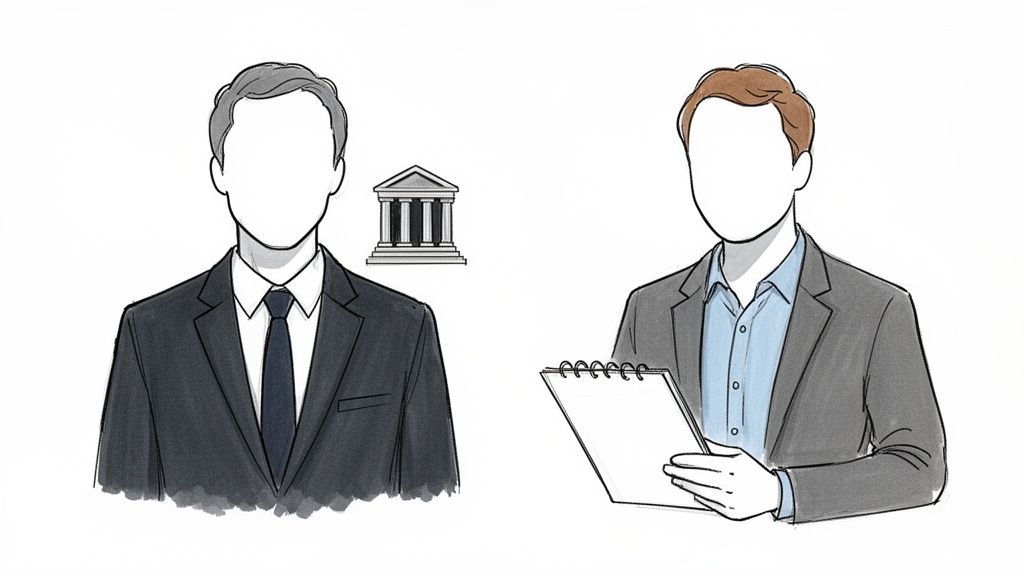
While the autopsy suite requires a specific uniform of protective gear, my work as a forensic pathologist often takes me to places where establishing trust and professionalism is paramount. In these settings, what I wear is just as intentional as my choice of PPE. My clothing becomes a part of my communication, helping to convey respect and build credibility.
When I’m asked to provide expert testimony, my focus shifts from the microscopic details of an examination to the clear, effective communication of my findings. For this, I always wear a professional business suit.
Courtroom Attire for Credibility and Respect
Appearing in court is an incredibly formal and serious occasion. A suit isn't just about looking sharp; it’s a non-verbal cue that I respect the judge, the jury, and the gravity of what's at stake. My responsibility is to present complex medical facts in a way that is both authoritative and easy to understand. The suit helps reinforce my role as a medical-legal expert.
Showing up in scrubs or a lab coat would be jarring and unprofessional in that environment. It would distract from the testimony itself. The whole point is to ensure the jury focuses on my conclusions from a cause of death investigation, and that my words carry the weight they deserve. I discuss this role in more detail in my article about the work of a forensic pathologist as an expert witness.
Meeting with Families and Attorneys
When I meet with grieving families or consult with legal teams, my wardrobe changes again. For these meetings, I opt for business casual. The setting is still professional, but the goal is to create an atmosphere that feels more approachable and less intimidating than a courtroom.
When a family is reeling from a loss, they need someone who can give them clear answers with compassion. A less formal, but still professional, appearance helps build trust and encourages open conversation about incredibly sensitive information.
This deliberate choice helps me connect with people on a human level while still providing the clinical expertise they need. It allows me to explain the findings of a private autopsy with both empathy and precision. Every detail, right down to my attire, is chosen to best serve the families and attorneys who depend on my work.
Upholding Dignity and Respect Through Process
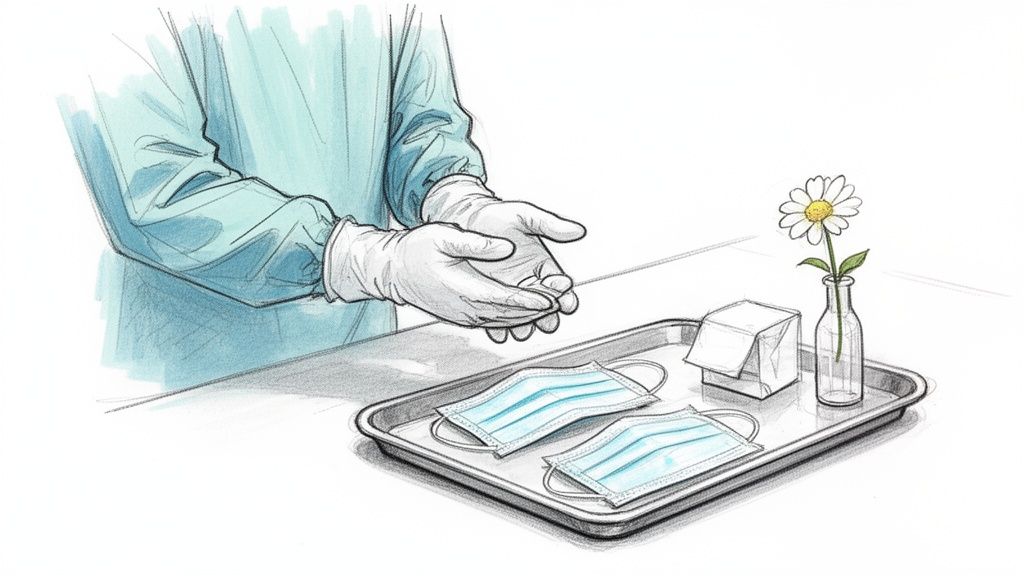
Beyond the obvious reasons for all this gear—safety and preserving evidence—there's something else at play that’s just as important: honoring the person on my table. The methodical process of getting ready for an examination, from scrubbing in to carefully putting on each piece of PPE, is almost a ritual. It helps me prepare mentally and set a solemn, focused tone before I begin.
The barriers aren't just physical. They create a necessary professional space. This allows me to conduct a cause of death investigation with the clinical objectivity it requires, but without ever losing sight of the person I am caring for. That separation is key to being scientifically thorough while always upholding the dignity of the deceased.
A Commitment to Dignified Care
When a family chooses a private autopsy, this procedural respect is a core part of our promise to them. They need to know that their loved one is being treated with the highest level of reverence at every single step, and that’s a commitment we take very seriously.
At Texas Autopsy Services, this philosophy guides everything we do. It starts the moment someone arrives in our care and continues through the entire examination until our work is done. The clothes we wear and the procedures we follow are all part of honoring that person.
My job is to find answers, but how I do my work is just as critical. The respect built into our process is as fundamental as the scientific answers we provide. It’s a vital part of helping families find closure.
This belief in a continuum of care extends to our partnerships with respected funeral service providers like Waterloo Mortuary. We work together to ensure that both the living and the deceased are treated with dignity. Everything we do, right down to what we wear, is a direct reflection of this deep professional and ethical duty.
Common Questions About My Work Attire
People are naturally curious about my work, and the clothes I wear are a big part of that. I get a lot of questions, especially from families trying to understand the process of a private autopsy during an incredibly difficult time.
I want to answer a few of the most common ones I hear at Texas Autopsy Services. My hope is to clear up any confusion and show how every detail of my work, right down to my wardrobe, is centered on safety, professionalism, and respect.
If my family comes for a viewing will they see you in full protective gear?
No, never. I want to be very clear about this: the full personal protective equipment (PPE) you might see in movies is strictly for the autopsy suite itself. It’s functional gear for a clinical procedure, not what I wear to meet people.
When I speak with families—whether it’s in a private consultation or at a viewing arranged with a funeral home like Waterloo Mortuary—I’ll be in professional business attire. We work hard to create an environment of compassion and support for you, and that’s completely separate from the technical setting of the examination.
Is all that gear really necessary for every autopsy?
Yes, it is. There are absolutely no exceptions. When I begin an examination, I often don't have a complete medical history or know if there are potential infectious diseases present. Because of that, we follow a simple but critical rule: universal precautions. This means we treat every single case with the exact same high standard of safety.
This isn't just about protecting my team and myself from biological hazards. It's also about you. This rigorous process prevents any chance of cross-contamination, ensuring that every sample we take is pure. It’s how we guarantee families get the most accurate results possible from their independent autopsy.
This non-negotiable safety standard is fundamental to providing a trustworthy and scientifically valid cause of death investigation. There are no shortcuts when the integrity of the findings is on the line.
Does the type of clothing worn affect the autopsy cost?
No, it doesn't. The cost of all our protective gear is a standard part of our operational expenses. It's already built into the overall fee for a private autopsy, not tacked on as an extra charge.
At Texas Autopsy Services, we practice transparent, all-inclusive pricing. The fee we quote covers everything needed for a safe, thorough, and dignified procedure. That includes all the disposable gowns, gloves, masks, and other gear required. You will never see a surprise fee for safety equipment on your invoice; it's a fundamental part of our professional service.
Why do you wear a suit in court instead of scrubs or a lab coat?
When I step into a courtroom, my role shifts. I'm no longer just the medical examiner who performed the procedure; I am an expert witness whose job is to communicate complex findings from a cause of death investigation to a judge and jury. They need the facts, and they need to trust the person delivering them.
Wearing a suit in that setting is a conscious choice. It does a few important things:
- It shows respect for the court and the gravity of the legal process.
- It reinforces my credibility as a medical-legal expert, not just another doctor from a clinic.
- It helps the jury focus on my testimony—the science and the facts—without being distracted by my clothing.
A lab coat or scrubs would feel out of place and might even come across as theatrical. My attire is chosen to make sure my objective, scientific conclusions are given the serious consideration they deserve. Whether I'm providing answers for a family's peace of mind or for county forensic autopsies in a legal case, my goal is always to provide clarity.
If you have more questions or need to understand if a private autopsy is the right step for your family, please do not hesitate to reach out. The team at Texas Autopsy Services is here to provide guidance with compassion and clarity. Contact us for a confidential consultation. https://www.texasautopsyservices.com