November 20, 2026 · Texas Autopsy Services
Molecular Profile Testing in Autopsies, Explained
Learn what molecular profile testing shows in autopsies, when forensic pathologists order it, how samples are preserved and how results are read.
On this page
- What Molecular Profile Testing Measures
- When a Standard Autopsy Points Toward Molecular Testing
- Targeted Panels, Exome and Genome Sequencing Compared
- How Samples Are Collected and Preserved for Testing
- Reading a Molecular Result Alongside Autopsy Findings
- What Results Mean for Relatives and Case Records
- Decide Whether Molecular Testing Fits Your Case
The autopsy report comes back with a phrase that answers nothing. Undetermined. Or it names a mechanism, cardiac arrhythmia, and leaves the reason blank. The person was 36. There was no blocked artery, no structural defect, no drug on the toxicology screen. Someone in the family has read that a DNA test can still find an answer, and now everyone is trying to decide whether to ask for something none of them fully understands.
That decision gets easier with a plain explanation of what the test reads, what it can prove, and where its limits sit. Molecular profile testing is one of the most useful tools available after a sudden death, and one of the easiest to misread. A result is a piece of evidence. It isn't a verdict.
The key point to consider before you go further.
- Molecular profile testing reads DNA for variants that may relate to how a person died. It supports the autopsy and never substitutes for it.
- Classification is the hard part. A detected variant has to be sorted into pathogenic, likely pathogenic, uncertain or benign before it means anything.
- Case selection drives yield. Testing pays off most in sudden deaths with no structural cause, especially in younger people with suspected arrhythmia or cardiomyopathy.
- Timing is physical. Blood or tissue has to be collected and preserved early, or the option disappears.
- A complete report states its limits, including specimen quality, test scope and how the finding lines up with the autopsy.
What Molecular Profile Testing Measures
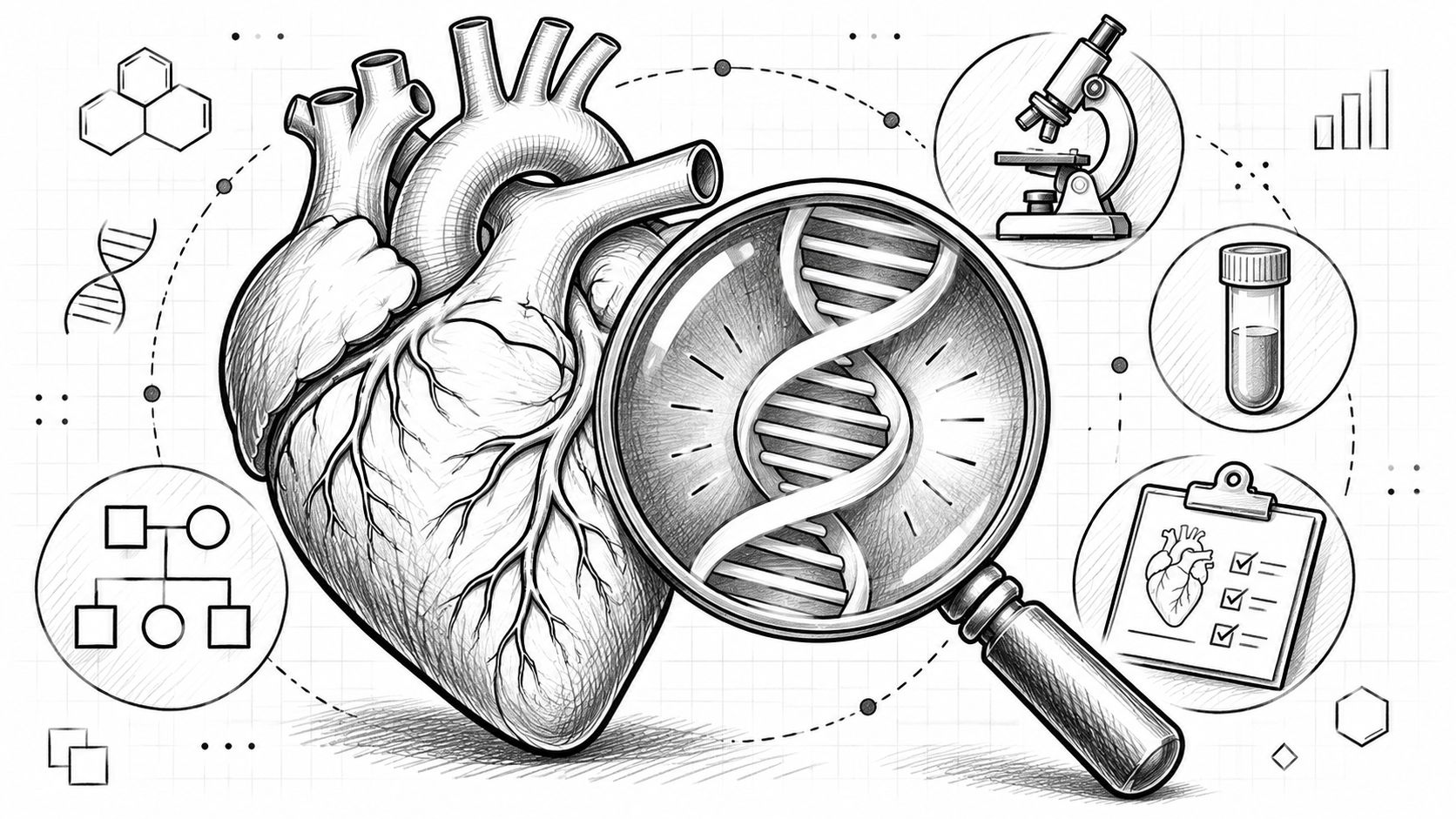
In a postmortem setting, molecular profile testing is a laboratory test that reads a decedent's DNA to look for gene changes, called variants, that may relate to how the person died.
A standard autopsy works on what can be seen and measured. The pathologist examines organs, studies tissue under a microscope, and reviews toxicology for drugs and poisons. Think of a building inspection. The inspector checks the walls, the wiring and the plumbing, then reports what failed. Molecular testing reads the blueprint underneath, the instructions that shaped how those systems were built.
Three terms come up constantly, so it helps to fix them now.
Variant means a difference from the most common DNA sequence. Everyone carries thousands of them. Most are harmless.
Pathogenic or likely pathogenic variant means a laboratory has weighed the evidence and classified the change as probably disease-causing.
Variant of uncertain significance means the evidence isn't yet strong enough to call it either way. It's a placeholder, not a diagnosis.
Two official phrases matter just as much. Cause of death is the disease or injury that started the chain of events ending in death. Manner of death is the category the death falls into, such as natural, accident, suicide, homicide or undetermined. A genetic finding can inform the first. It rarely settles the second on its own.
The same phrase is used in cancer care, where tumor profiling guides treatment. Since 2017, when the FDA granted its first tissue-agnostic approval for tumors with mismatch-repair deficiency, eligibility has been able to turn on a molecular feature rather than on where a tumor started, as a review of molecular testing in precision oncology describes. This article is narrower. It covers postmortem genetic testing after a sudden death, and how to read a result once you have one.
When a Standard Autopsy Points Toward Molecular Testing
The trigger is usually a gap. A previously healthy person dies suddenly, the autopsy finds no blocked artery and no structural defect, and the toxicology screen is clean. That combination, sudden death with no structural cause, is where a molecular autopsy earns its place.
Several patterns should prompt the question.
- Autopsy-negative sudden death in a younger person. Especially when death came at rest, during sleep, or without warning.
- A suspected arrhythmia or cardiomyopathy. Long-QT syndrome, catecholaminergic polymorphic ventricular tachycardia and Brugada syndrome can leave no visible scar on the heart.
- A family history of sudden unexplained death. Two or more relatives dying young, or a cluster of deaths along one family line.
- A personal history of fainting or seizures. Particularly when those episodes were never explained.
- Death during or just after exertion. Exercise-linked collapse points toward specific inherited electrical disorders.
- Findings that suggest aortic disease or myocarditis. These categories carry higher yields than most others.
What the evidence shows about yield
How often testing pays off depends on the case and on what counts as a positive result. A study of 302 sudden-arrhythmic-death victims applied sequencing to electrical-disorder and cardiomyopathy genes, then interpreted every variant under American College of Medical Genetics and Genomics (ACMG) criteria. Investigators identified 20 pathogenic and 20 likely pathogenic variants, an overall clinically actionable yield of 13 percent, or 40 of 302 cases, reported in the analysis of molecular autopsy in sudden arrhythmic death. The step that mattered wasn't sequencing. It was the stringent allele-frequency thresholds and formal classification that separated a plausible cause from background variation.
Age shifts the odds. A 2025 prospective study of unexplained sudden natural deaths found pathogenic or likely pathogenic variants in 7.6 percent of decedents aged 35 or younger and 4.9 percent of those aged 36 to 50 when testing was used selectively after autopsy review, according to the study of selective molecular testing in unexplained sudden death. Yield climbed to about 33 percent where death involved a thoracic aortic aneurysm or myocarditis. No variants were found in deaths attributed to coronary artery disease.
| Case situation | Molecular focus | Reported yield | Main limit |
|---|---|---|---|
| Sudden arrhythmic death with no structural cause | Electrical disorder and cardiomyopathy genes | 13% clinically actionable (40 of 302 cases) | Rare variants don't prove cause |
| Unexplained sudden death, age 35 or younger | Selective testing after autopsy review | 7.6% pathogenic or likely pathogenic | Requires a complete autopsy first |
| Unexplained sudden death, age 36 to 50 | Selective testing after autopsy review | 4.9% pathogenic or likely pathogenic | Lower yield than the younger group |
| Thoracic aortic aneurysm or myocarditis | Aortic and inflammatory cardiac genes | About 33% | Interpret with autopsy and history |
| Coronary artery disease at autopsy | Not a primary target | No variants found in the reported cohort | Testing rarely adds an explanation |
Families most often request a private autopsy when the medical examiner declined the case, when they want an independent second opinion, or when the cause of death was left unclear or unexplained. Our team performs private autopsies statewide and coordinates molecular testing when a case fits those patterns. Where the specific question is whether a sudden death had an inherited cause, our review of sudden unexplained death investigations sets out what the examination can establish.
A case fits when three things are true. The autopsy didn't explain the death. The circumstances suggest an electrical, muscular or aortic mechanism. And suitable samples were preserved at the time of examination.
Targeted Panels, Exome and Genome Sequencing Compared
A molecular test is a scope choice. A targeted panel looks through a small number of named drawers. Exome sequencing reviews the protein-coding portions across many genes. Genome sequencing reads the full DNA blueprint, including regions that do not code for protein. The broader the scope, the more findings can appear, and the more careful the interpretation must be.
The narrowest option starts from named genes. In autopsy-negative sudden unexplained death, published recommendations identify targeted or broader testing of KCNQ1, KCNH2, SCN5A and RYR2, associated with inherited electrical disorders. A series of 173 autopsy-negative sudden-unexplained-death cases found 45 putative pathogenic mutations, 26.0 percent of the cohort, after comparison against 400 to 700 controls, as reported in the study of genetic testing in sudden unexplained death. That figure shows why control comparison matters. A variant can look far more important before it is checked against how often it appears in the general population.
| Test type | What it reads | Main strength | Main trade-off |
|---|---|---|---|
| Targeted gene panel | Known disease genes chosen for the suspected mechanism | Focused results that are easier to interpret | May miss genes outside the panel |
| Whole-exome sequencing | Protein-coding regions across many genes | Broader discovery of unexpected variants | More variants of uncertain significance to review |
| Whole-genome sequencing | The entire genome, including non-coding regions | Most complete view of the DNA | Highest cost and the largest review workload |
What broader sequencing actually buys
Broader testing can find variants outside the genes a panel was designed to examine. That can matter when the autopsy leaves no clear mechanism, or when the family history suggests an inherited condition but does not point to one gene family. The value comes from widening the search, not from turning the result into an automatic answer.
A pooled analysis of sudden-death cases reported a prevalence of pathogenic or likely pathogenic variants of 22.1 percent among tested cases. A separate synthesis using ACMG-corrected classifications estimated an approximately 13 percent diagnostic yield, and found that broader sequencing produced only a modest increase over restricted panels while carrying a higher burden of uncertain findings, according to the meta-analysis of postmortem genetic testing yield. Those two numbers measure different things. One counts rare variants. The other counts variants that can bear weight in a conclusion about death.
That distinction is easy to miss. A reported variant is a clue, much like a footprint at a scene. It becomes more meaningful when its location, the autopsy findings, the circumstances of death, and the family history all point in the same direction. When those pieces do not align, the finding may remain uncertain even if the laboratory result is technically accurate.
Multigene panels made up about 41 percent of new FDA companion-diagnostic approvals from 2020 through 2024, or 11 of 27 tests, as the analysis of companion diagnostic approvals reports. That shows multigene testing is well established, though that data comes from clinical oncology rather than postmortem genetics. For postmortem work, the practical question is narrower: does the test scope fit the medical question left open by the examination?
Practical rule: start with a targeted panel when the suspected mechanism is clear, such as an inherited arrhythmia in a young decedent with a family history. Choose exome or genome sequencing when the cause is unknown, the autopsy showed nothing specific, and no pattern points to a single gene family.
A molecular result is one piece of evidence. It does not replace the autopsy, the medical history, or the family context. Those sources are weighed together, because a genetic finding can support an explanation, raise a new question, or remain unresolved after careful review.
How Samples Are Collected and Preserved for Testing
Sample problems end testing before it starts. The order of operations therefore matters more than the technology chosen.
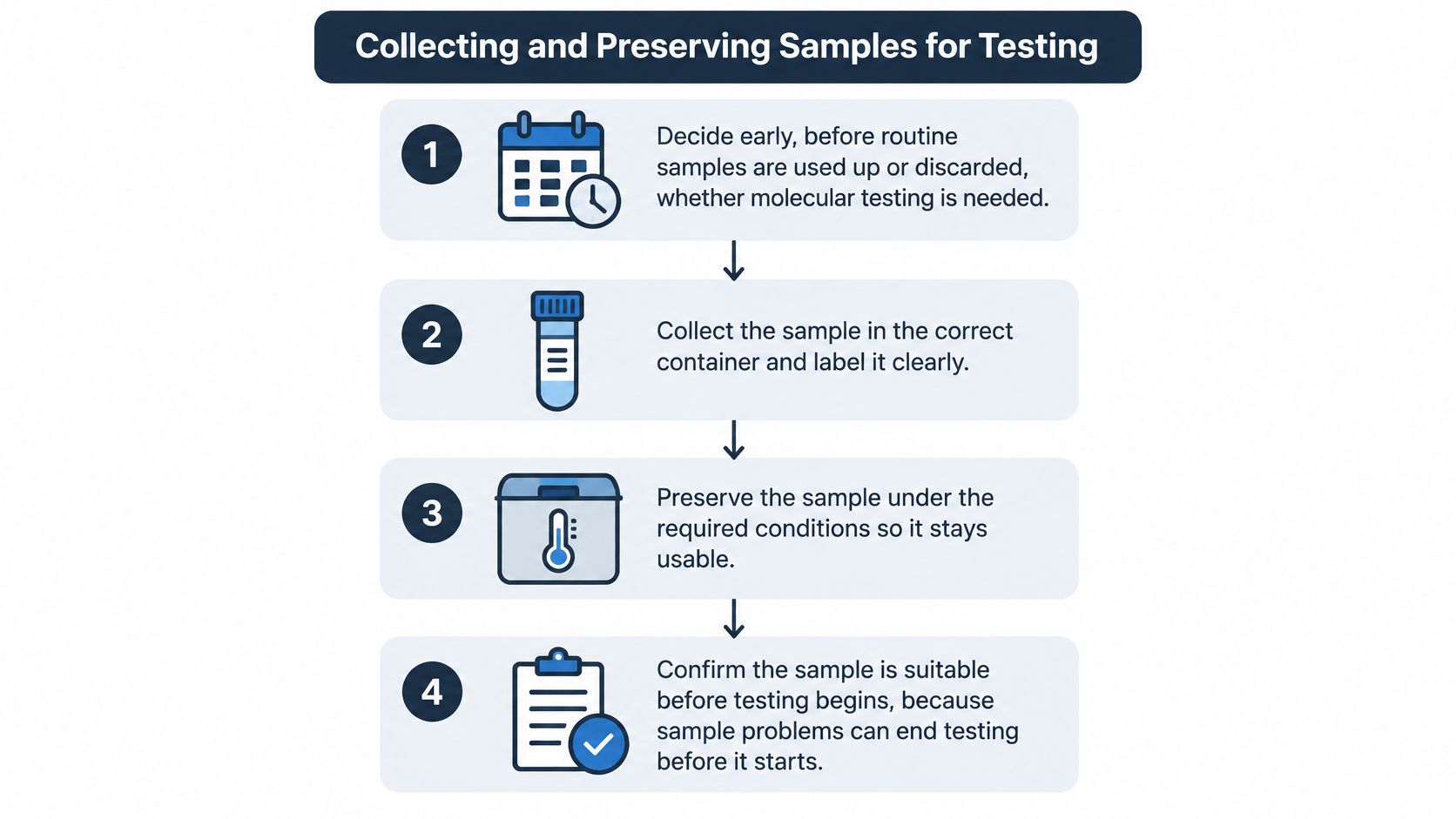
- Decide early. Molecular testing has to be considered during the examination, not weeks afterward. Once routine samples are used up or discarded, the option can be gone.
- Collect blood in the right tube. Blood drawn into a lavender- or pink-top K2 EDTA tube is the preferred DNA specimen, as the forensic pathology position paper on postmortem genetic testing sets out. The same guidance identifies targeted panels, whole-exome sequencing and whole-genome sequencing as the three main laboratory approaches.
- Keep the tube cold. That guidance states the specimen may be stored refrigerated at approximately 4°C while it waits for transport. Cold slows the breakdown that makes DNA harder to read.
- Retain tissue when blood is unavailable. Other retained tissue can serve as a fallback, but degradation, contamination and postmortem change can reduce testing reliability. A tissue substitute is a substitute, not an equal.
- Label every specimen at the moment of collection. A unique identifier, the specimen type and the collection date on the tube and on the paperwork prevent the worst possible error, which is a result attached to the wrong person.
- Record custody at every handoff. We keep documented chain of custody at every step of the process, from collection through laboratory receipt, because a result nobody can trace is a result a court can set aside.
A complete submission gives the laboratory more than a tube. It includes the specimen type and collection date, a clinical summary covering age, circumstances and autopsy findings, the test ordered and the question it's meant to answer, and the custody record. Our guidance on specimen preservation covers how handling decisions made in the first hours affect what a laboratory can still read months later.
The short video below walks through why these handling steps matter to the final interpretation.
Reading a Molecular Result Alongside Autopsy Findings
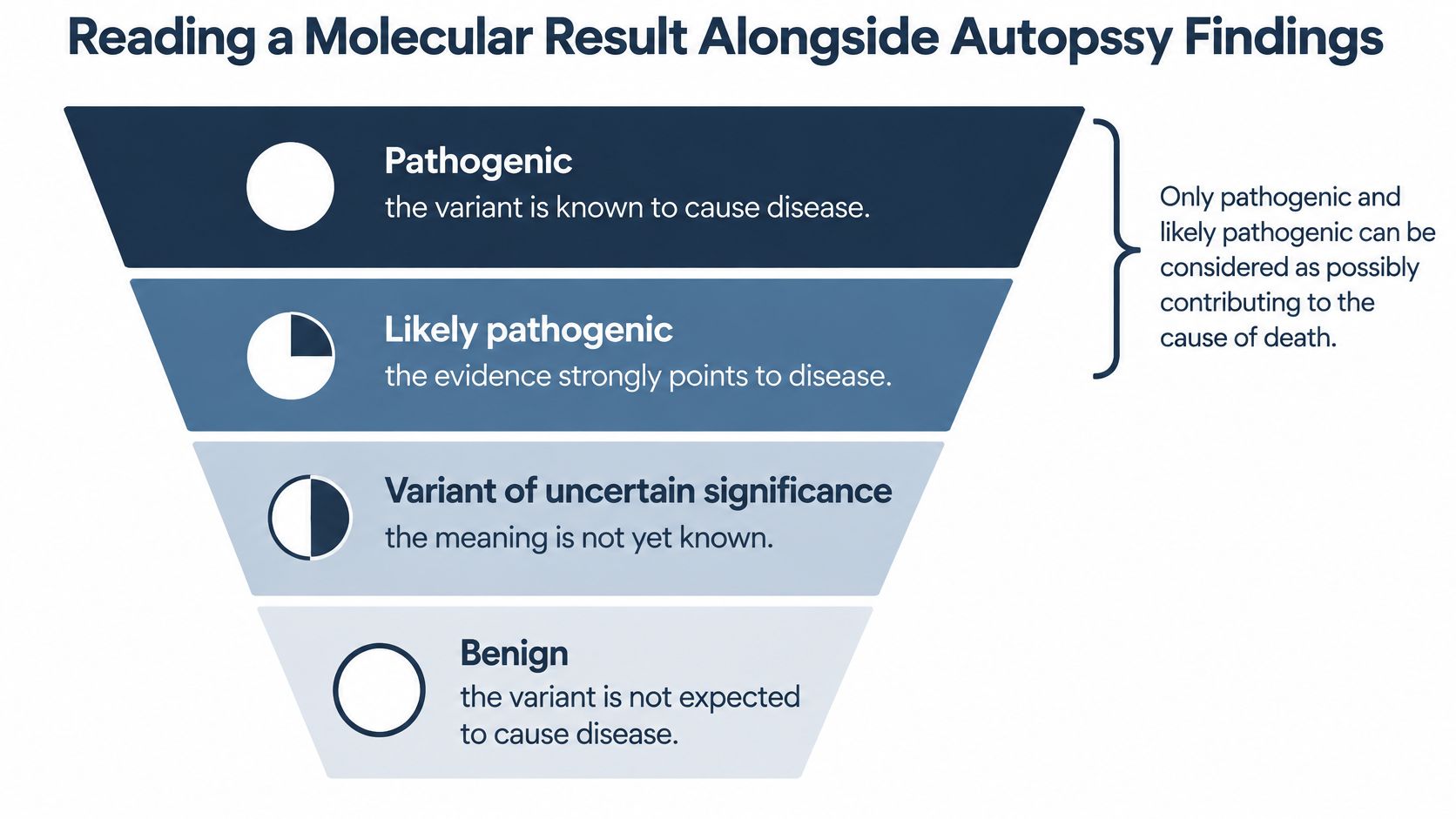
A molecular report is a classification, not a conclusion about death. Four tiers are used, and only the top two can be considered as possibly contributing to death.
| Tier | Meaning | Role in interpretation |
|---|---|---|
| Pathogenic | Strong evidence the variant causes disease | Can contribute to cause of death when findings are concordant |
| Likely pathogenic | Strong but incomplete evidence of disease causation | Can contribute, with the same layered review |
| Variant of uncertain significance | Evidence is insufficient to classify | Must not alone assign cause or manner of death |
| Benign | Evidence indicates a common population variant | Not considered a contributor to death |
The layers weighed against a result
A classification is one input among several. The pathologist reads it together with the rest of the file, and each layer can strengthen or weaken the case for causation.
- Autopsy findings, including organ weights, coronary anatomy and anything structural the dissection revealed.
- Histology, which shows inflammation, fibrosis or microscopic scarring invisible to the eye.
- Toxicology, because a drug can produce an arrhythmia that mimics an inherited one.
- Clinical history, covering fainting, seizures, prior cardiac workups and any hospital course before death.
- Family history, the single most useful context for an inherited electrical disorder.
- Circumstances of death, including exertion, emotional stress, sleep and position when found.
Concordance asks whether the genetic finding fits the condition the autopsy showed. A variant linked to a structural cardiomyopathy means little when the heart was microscopically normal. The gap between a rare finding and a usable one is wide. In a population-based whole-exome study of 25 young sudden-death victims, 64 percent carried ultrarare nonsynonymous variants in genes associated with sudden-death susceptibility, but only 28 percent had a variant classified as pathogenic or likely pathogenic under ACMG guidance. The decedent's autopsy phenotype was congruent with the genetic finding in just 14 percent of cases, the share the investigators treated as clinically actionable, as reported in the Circulation study of whole-exome sequencing in young sudden death.
Segregation is the follow-up question. If living relatives who share the same symptoms also carry the variant, the case for causation strengthens. If they don't, it weakens.
A variant of uncertain significance isn't a soft diagnosis. It's a statement that the evidence isn't there yet, and it shouldn't be used alone to assign a cause or manner of death.
A negative result doesn't close every question either. The test reads only the genes it selected, and sample quality caps how much of those genes can be read reliably. A written interpretation should state the specimen and its condition, the scope of the test and its coverage limits, the classification framework applied, and the link between the finding and the autopsy. Our guide to reading an autopsy report explains where those details usually sit in a report.
What Results Mean for Relatives and Case Records
A pathogenic or likely pathogenic result can matter beyond the decedent. It may point to an inherited risk that the autopsy itself cannot show, and that can give living relatives a reason to discuss cardiovascular evaluation and targeted testing with their own physicians. Think of the result as a signal in one part of a larger file. It gains meaning when it is read beside the autopsy findings, the circumstances of death, medical history, and what the family already knows.
A variant of uncertain significance carries a different message. Nobody should change medications, screening schedules, or surgical plans based on an uncertain finding alone. A physician should review the classification first, and the classification may look different later as evidence accumulates.
The questions families ask most
Four come up repeatedly, and each has a practical answer.
Who receives the result. The person with legal authority over the decedent's records, usually the next of kin or the estate representative, receives the report. That person decides who else may see it, which matters because a genetic finding can contain information about living blood relatives as well.
How consent is handled. Consent for postmortem testing is documented before the laboratory receives a specimen. The scope of testing is written down, not assumed, so the family and the case file reflect the same question.
How tissue and DNA are stored. Retained material has to be secured, identified, and kept under conditions that preserve it for reanalysis. Storage arrangements belong in writing. This is the laboratory equivalent of keeping the original document, not only a photocopy.
Whether the answer can change. It can. Variant classifications are revisited as evidence accumulates, so a report should carry the date its classification was made and the framework used. Without that context, a family may read a dated interpretation as a permanent verdict.
Broader testing does not automatically serve a family better. A systematic review found that broader approaches modestly outperformed restricted panels, with an odds ratio of 1.36, while carrying a greater burden of uncertain findings, as the review of postmortem testing strategies reports. Uncertainty has a cost. It can lead to appointments, anxiety, and decisions that cannot yet be made.
Attorneys and case officials need a different kind of clarity from the same file. The useful record includes a documented chain of custody from collection through laboratory handoff, a named classification framework, and a conclusion that says plainly what the result does and does not establish. For county use, reports should be written so they can be reviewed in court by other qualified experts without translation. Texas Autopsy Services provides court-ready forensic autopsies for Justices of the Peace, commissioners, medical examiner and sheriff offices, and documented chain of custody is kept at every step of the process.
Clinical records shape that reading too. Hospital records of neurological status before death, including records sometimes discussed with a gcs assessment, can help clarify the events leading up to death. That context matters because a molecular finding has to be weighed against what happened before death, not treated as a yes or no answer by itself.
Families should also know what the written record is meant to do. Every case ends in a clear, thorough written report the family can understand. Texas Autopsy Services prepares the complete written report and personally walks the family through the findings in plain language. The same board-certified forensic pathologist who conducts the examination also produces the written report and walks the family through every finding, so families are not handed off to a technician. Family information and findings are handled with strict confidentiality.
This material is educational and is not medical advice. Postmortem practice and specimen handling in Texas are governed by state health and funeral regulations. The provisions that apply should be confirmed for each case.
Decide Whether Molecular Testing Fits Your Case
Bring five questions to whoever is handling the case. The answers tell you whether testing will produce something usable or something you'll spend a year trying to interpret.
- Did the autopsy find a structural cause, and what remains unexplained? If a clear cause was found, molecular testing rarely adds to it.
- Was suitable blood or tissue collected and preserved early? If not, ask whether anything usable remains and how it was stored.
- Which test scope is recommended, a targeted panel, exome or genome sequencing, and why? The answer should name the suspected mechanism and match the test to it.
- How will the result be classified, and will the written report separate a confirmed explanation from a suggestive one? A report that doesn't draw that line isn't finished.
- Which relatives, if any, should be referred for clinical evaluation? Ask before the result arrives, so the referral can happen quickly if it's needed.
Timing deserves its own answer. Turnaround depends on laboratory workload, the scope of the test and whether reanalysis is required, so no fixed date can be promised. A provider should explain the factors in your case rather than quote a number.
Every examination we perform is conducted by a board-certified forensic pathologist, and the same pathologist who conducts the examination also produces the written report and walks the family through every finding. Families aren't handed off to a technician. When a case has been declined by a county, we can still examine the body and explain the findings to the family, and we're glad to talk through the options before anyone commits to anything.
If you're in that position now, call (806) 230-1889 at whatever hour suits your family. This is a hard period, and a conversation costs nothing.
Texas Autopsy Services performs independent postmortem examinations across all 254 Texas counties, and our board-certified forensic pathologists coordinate molecular testing when the circumstances call for it, then explain what the results do and don't establish in plain language. If a death was left unexplained, or a county declined the case, we can review what's known and tell you whether genetic testing would add anything to the record. Visit Texas Autopsy Services to start that conversation.