April 18, 2026 · Texas Autopsy Services
What Families Should Know About the Sangamon County Coroner Office
A clear guide to the Sangamon County Coroner Office. Learn about their duties, the investigation process, autopsy reports, and how to get answers.
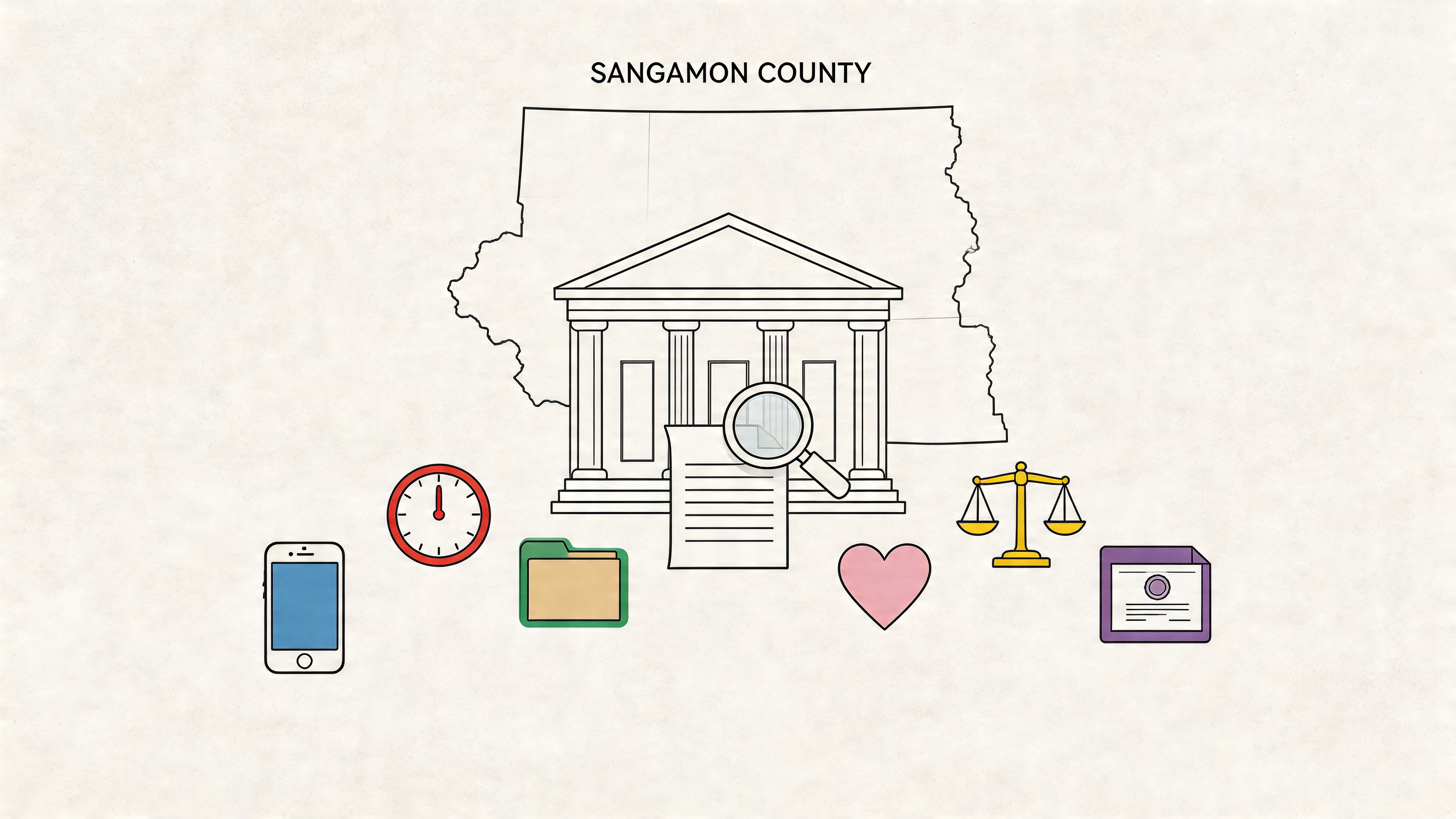
As a forensic pathologist, I've dedicated my career to finding clear, factual answers for families during times of profound loss. Though my practice, Texas Autopsy Services, is based in Texas, I frequently work with and advise families and agencies across the country. I understand that interacting with an office like the Sangamon County Coroner's Office can be confusing and intimidating, especially when you're grieving.
Recently, a family reached out to me for a second opinion. Their father had passed away suddenly in Illinois, and they were struggling to understand the coroner's role. They felt lost in a process they never expected to encounter. Their experience highlights a common need for clarity. This guide is intended to explain the vital role the coroner's office plays, what you can expect, and why its work is so important.
- TL;DR: Key Takeaways
- The Sangamon County Coroner's Office is an independent agency legally required to investigate sudden, violent, or unexplained deaths in Sangamon County, Illinois.
- Its primary duties are to determine the official cause and manner of death (Natural, Accident, Homicide, Suicide, or Undetermined).
- An autopsy is not automatic; it's a tool used when necessary to provide definitive answers. The decision rests with the coroner.
- There is no cost to the family for a coroner's investigation, including an autopsy if one is required by law.
- The office has a long history of service dating back to 1821 and is nationally accredited by the International Association of Coroners & Medical Examiners (IACME).
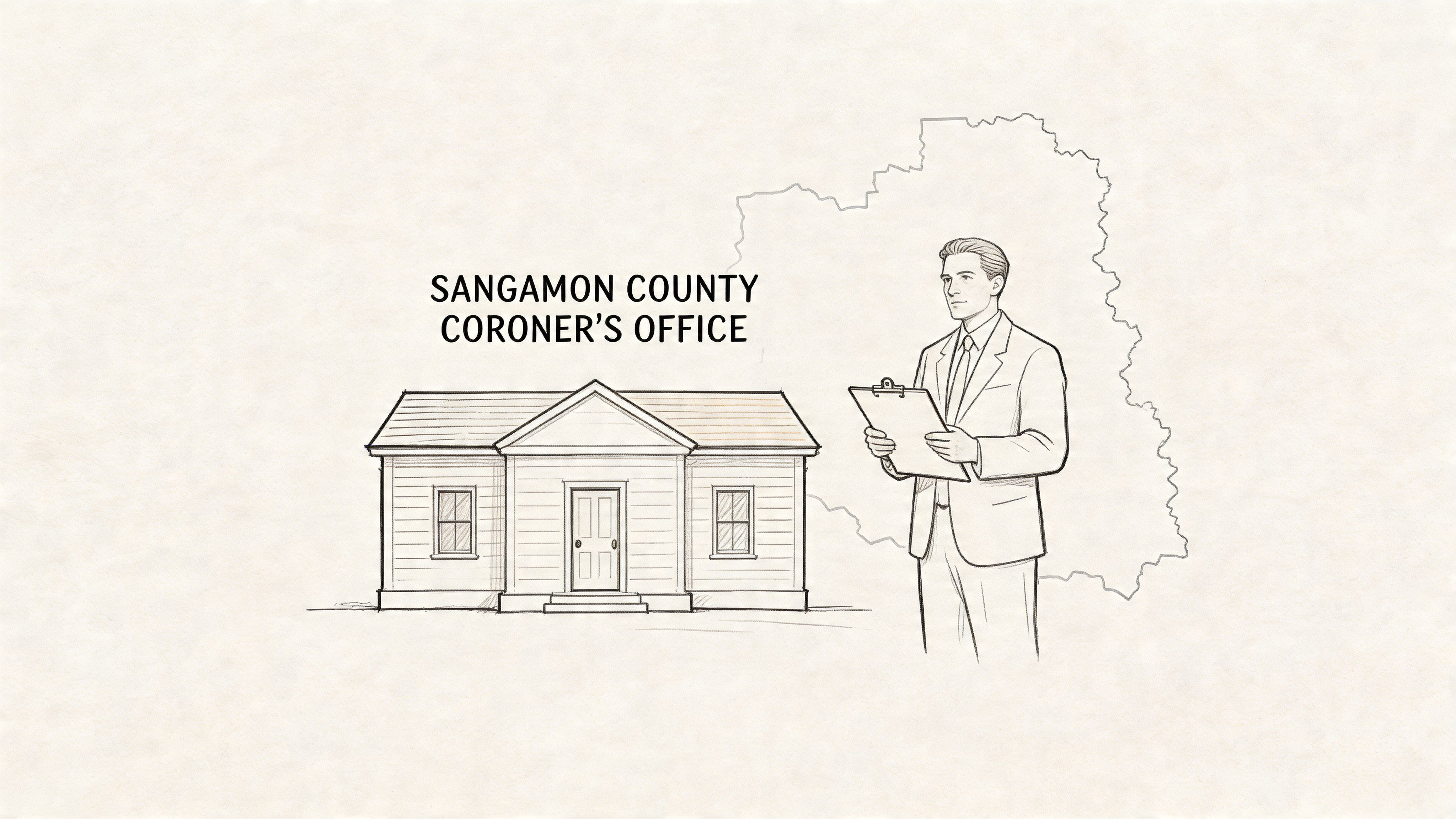
What the Sangamon County Coroner's Office Does
The Coroner is an elected official in Illinois. Along with a team of medico-legal investigators, the coroner has the legal authority to take jurisdiction over a deceased individual and the scene of their death. The office's primary goal is to conduct an impartial investigation to officially determine two critical facts:
- Cause of Death: The specific medical reason for the death, such as a myocardial infarction (heart attack) or a gunshot wound.
- Manner of Death: The legal classification of how the death occurred. There are five recognized categories: Natural, Accident, Homicide, Suicide, or Undetermined.
This work is essential. It identifies public health threats, provides objective evidence for the justice system, and offers families the science-based answers they deserve. Although they both investigate deaths, the role of a coroner can differ from that of a medical examiner, a distinction we explain in our guide on the differences between a coroner and a medical examiner. The authority of the Sangamon County Coroner ensures every death under its jurisdiction receives a thorough, independent investigation.
Sangamon County Coroner's Office at a Glance
| Attribute | Details |
|---|---|
| Current Coroner | Jim Allmon |
| Jurisdiction | Sangamon County, Illinois |
| Primary Role | Investigate and certify the cause and manner of death |
| Legal Authority | Defined by Illinois statute; independent of law enforcement and hospitals |
A History of Service Since 1821
The office of the Sangamon County Coroner is as old as the county itself, established in 1821. This isn't just a historical fact; it represents a two-century legacy of public service and trust. What began with an appointee in a log cabin courthouse has evolved into a modern, accredited institution.
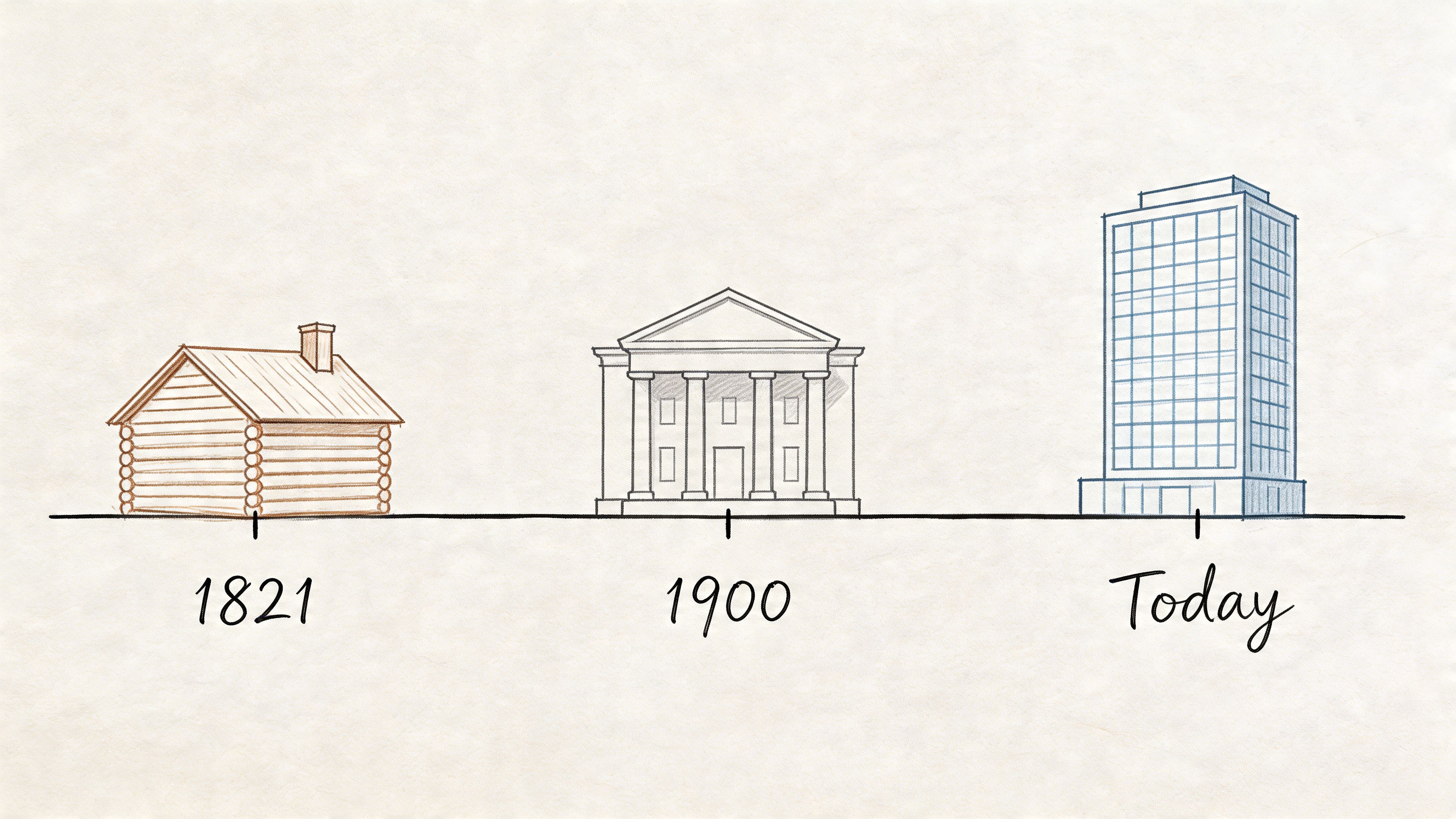
The first coroner, Joseph Dickson, was appointed alongside the county's other original officials, as documented on the Circuit Clerk's history page. This long-standing presence demonstrates a steadfast commitment to finding answers for families and serving the public good. When you interact with the Coroner's Office, you're engaging with an institution that has adapted through generations while maintaining its core mission: to speak for those who cannot speak for themselves.
Meeting National Standards for Excellence
As a board-certified forensic pathologist, I know that credentials matter. They represent a commitment to upholding the highest professional and ethical standards. That is why the Sangamon County Coroner's Office's decision to pursue and achieve national accreditation is so significant.
On July 8, 2026, the office earned accreditation from the International Association of Coroners & Medical Examiners (IACME). This achievement confirms its adherence to strict national standards for death investigation. You can find more information about this on the Sangamon County website.
This isn't about a plaque on the wall. It’s an independent validation that the office's policies, procedures, and practices meet or exceed industry best practices. For families, this accreditation provides a direct assurance of quality and integrity. It guarantees that every investigation is handled with competence and every conclusion is reached through a methodical, validated process.
Why Is the Coroner Involved in a Death?
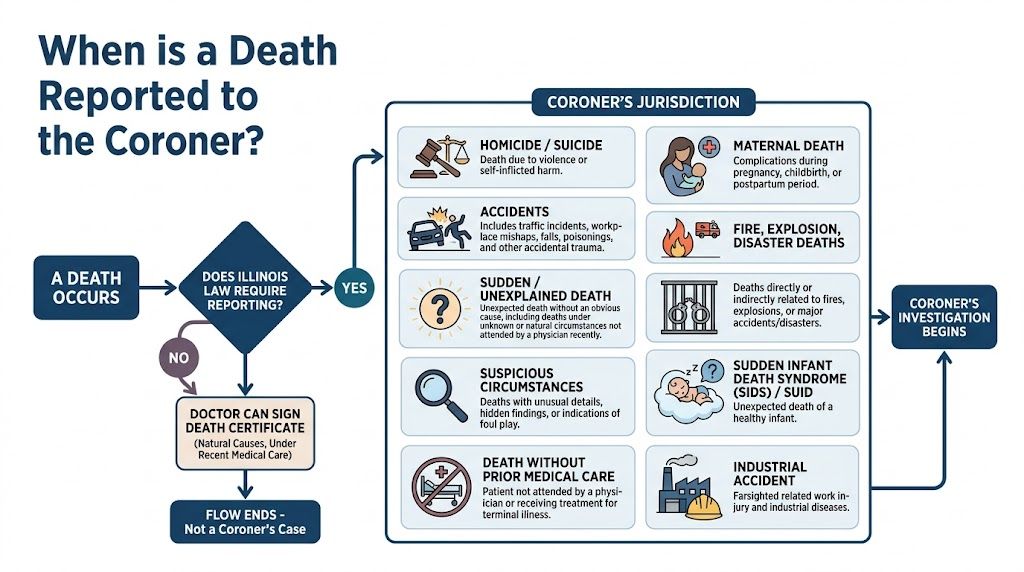
Families often ask why the Coroner's Office is involved, especially when a death occurs in a hospital or seems natural. The answer is straightforward: Illinois law requires it. The Sangamon County Coroner's Office must investigate any death that is sudden, violent, or otherwise unexplained.
This legal mandate serves to protect public health, support the justice system, and provide families with definitive answers. A death must be reported to the coroner in specific situations:
- Homicides and Suicides: All deaths resulting from violent acts, whether self-inflicted or at the hands of another.
- Accidents: This includes motor vehicle collisions, falls, drownings, or workplace incidents. The coroner's jurisdiction applies even if death occurs days later in a hospital.
- Sudden or Unexplained Deaths: Any death of a person in apparent good health or when a physician is not available to certify the cause of death.
- Suspicious or Unusual Circumstances: Any case where the circumstances surrounding the death are unclear or suggest foul play.
Our role is not to interfere but to provide an impartial, scientific answer to how and why someone died. This work provides the foundation for legal matters, insurance claims, and the personal closure that comes from knowing the truth.
The Investigation and Autopsy Process
When a death is reported to the Sangamon County Coroner's Office, an investigation begins immediately. A medico-legal death investigator responds to the scene to work alongside law enforcement, document findings, and gather information. Every step is taken with respect for the deceased and their family.
One of the most common questions I receive in my own private autopsy services practice is whether an autopsy is always required. It is not. The decision is based on the specific circumstances of the case, including the decedent’s medical history, the scene findings, and the results of an external examination. If these elements provide a clear cause of death, a full autopsy may not be necessary. However, if uncertainty remains, an autopsy is the most reliable method for providing definitive answers. This is a key part of both county forensic autopsies and private examinations.
When an autopsy is performed, it is a methodical medical procedure conducted to uncover the facts. In my examinations, whether at my facility or through my partnership with Waterloo Mortuary, my sole focus is on the scientific evidence. The Sangamon County Coroner's Office operates with the same professional diligence. The team, led by Coroner Jim Allmon, handles over 600 death investigations annually, as noted in a report on the office's recent move. The office's mission is to produce an accurate, unbiased report explaining how and why a death occurred. If you're interested in the details, you can learn more about how a coroner determines the cause of death in another of our guides.
Requesting Reports and Personal Belongings
After an investigation concludes, families need to obtain official documents and retrieve personal items. The process can feel overwhelming, but it is well-defined.
- Death Certificates: The Coroner's Office does not issue death certificates. Your chosen funeral director will file the certificate with the Sangamon County Clerk. Certified copies can then be ordered directly from the Clerk’s office.
- Coroner's Report: This detailed report is finalized after all tests, including toxicology, are complete. Once available, the legal next of kin can request a copy directly from the Coroner's Office.
- Personal Belongings: Any items collected are inventoried and held securely. The legal next of kin can schedule a time to retrieve them by calling the office and providing identification.
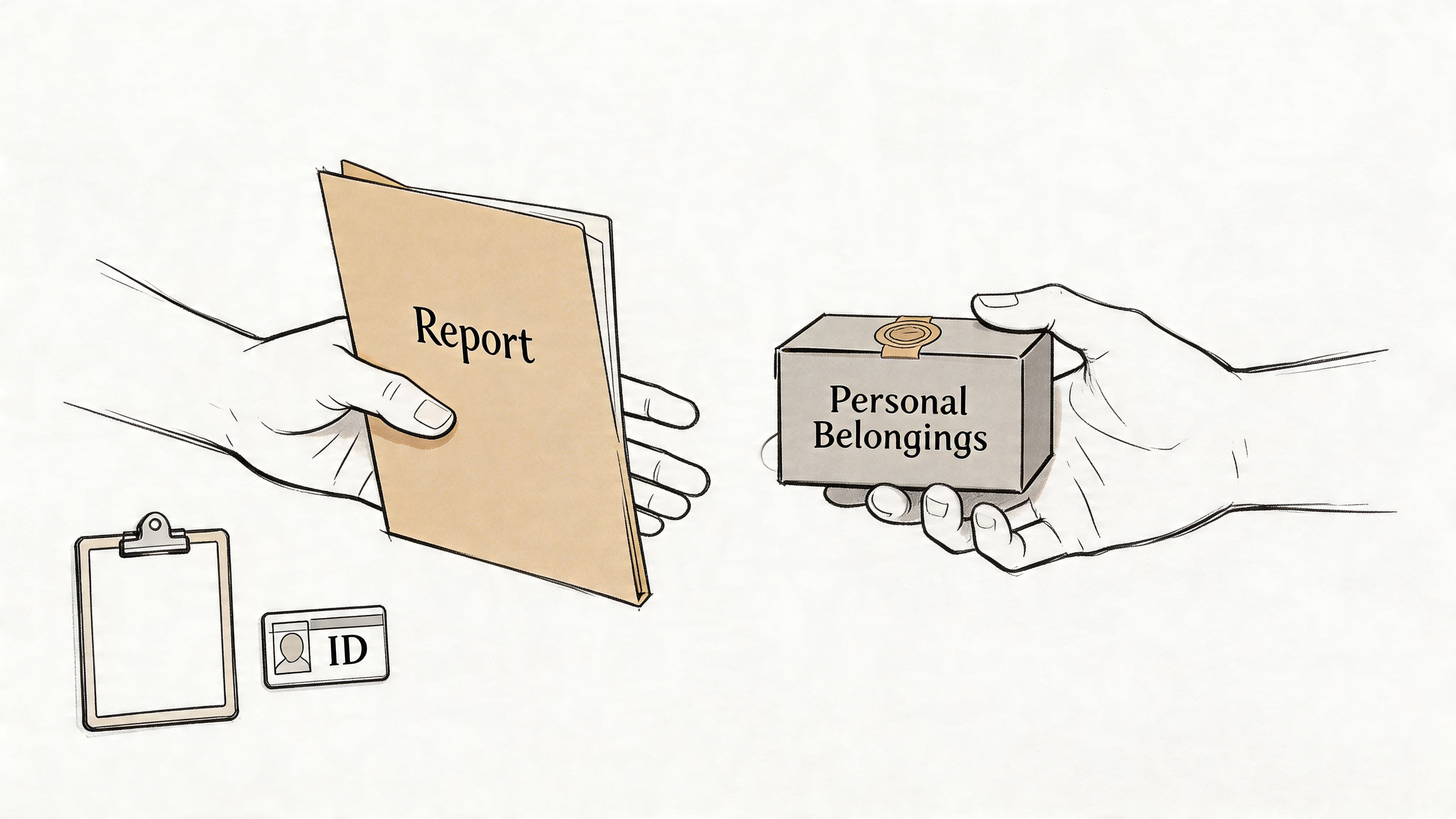
Understanding the paperwork involved is crucial. Our guide on how to request an autopsy report provides additional context that many families find helpful during this difficult time.
Frequently Asked Questions
It's natural to have questions when interacting with a coroner's office for the first time. Here are answers to some of the most common ones.
1. Is there a charge for a coroner's investigation or autopsy? No. There is no cost to the family for services performed by the Sangamon County Coroner's Office. This is a public service funded by the county to ensure every death is investigated properly.
2. How long does it take to get the final autopsy report? While the initial findings are often available quickly, a final, comprehensive report can take several weeks or even months. The primary reason for this timeframe is toxicology testing, a detailed scientific process that cannot be rushed. Accuracy is the highest priority.
3. Can a family refuse an autopsy? If an autopsy is deemed legally necessary by the coroner to determine the cause and manner of death, the family cannot refuse it. Under Illinois law, the coroner has a duty to find definitive answers in cases of sudden, violent, or unexplained death. The decision is made carefully and only when required to fulfill this legal obligation.
Navigating the loss of a loved one is an incredibly difficult journey. I hope this information provides some clarity and helps you understand the important and compassionate work performed by public servants like those at the Sangamon County Coroner's Office. If you are ever in need of guidance regarding a private or second-opinion autopsy, please don't hesitate to contact my office directly. My team and I are here to help you find the answers you deserve.