October 7, 2026 · Texas Autopsy Services
Chain of Custody Questions: A Forensic Guide
Learn essential chain of custody questions for forensic evidence. Understand documentation, transport procedures, and how breaks in custody affect cases.
On this page
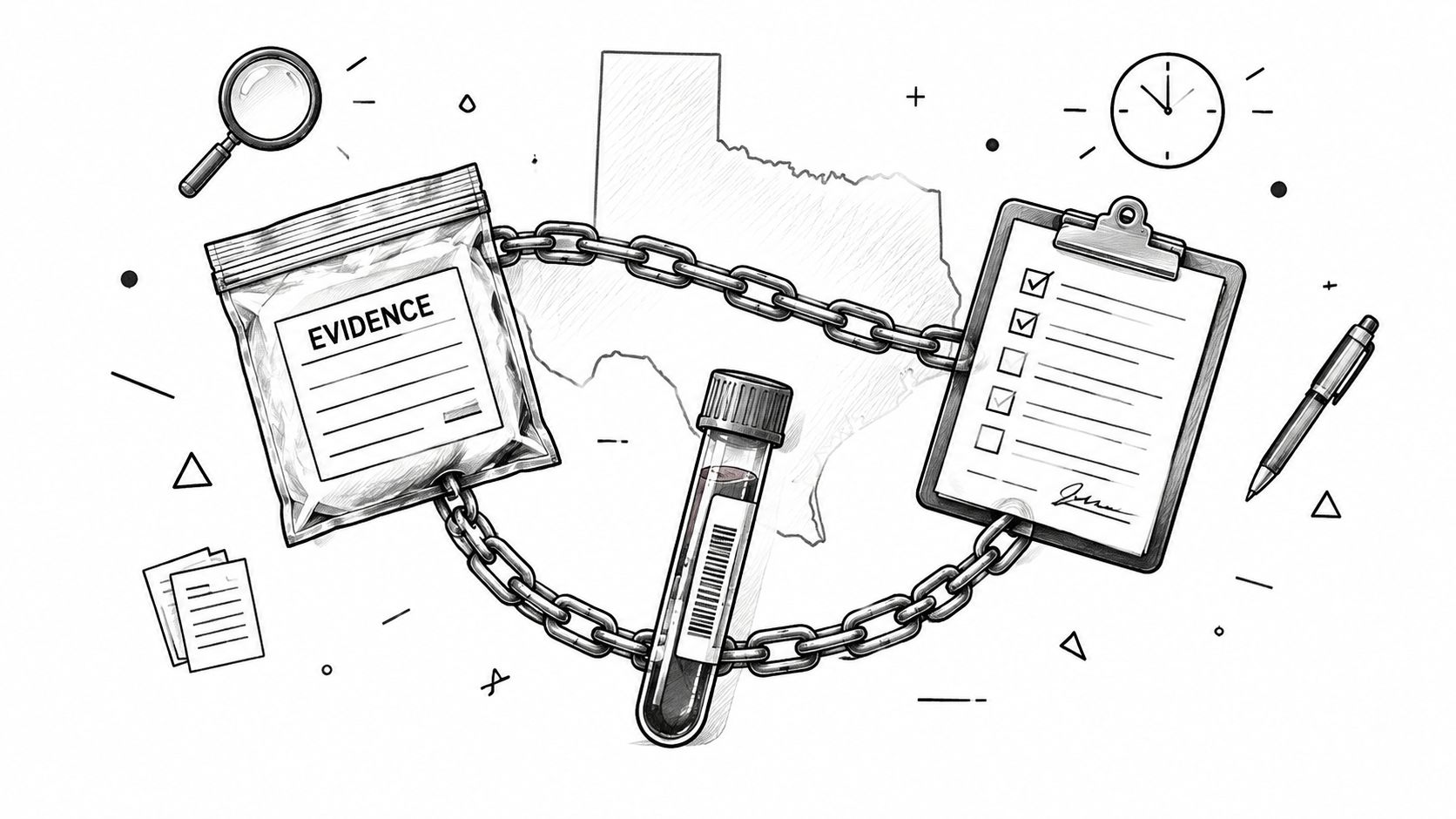
Chain of custody is an auditable timeline showing who handled evidence, when, where it was stored, and how it was packaged, examined, and ultimately dispositioned, not just signatures on a form. In a death investigation, that timeline should follow the decedent, specimens, photographs, laboratory records, and digital files from collection through final reporting.
A family may be reviewing an autopsy report after a loved one's death and notice an unexplained time period, an incomplete transfer line, or a specimen label that says only “blood.” An attorney may be preparing to ask whether the tissue tested in a laboratory is the same tissue collected during the examination. These are chain of custody questions, and they deserve careful answers rather than assumptions.
- Custody tracks more than possession. It also records condition, packaging, storage environment, access, examination, and final disposition.
- Four core records matter at collection: a unique identifier, item description, collector identity, and collection time, date, and location, as outlined by the National Institute of Justice chain-of-custody guidance.
- A missing signature isn't automatically fatal. Courts may treat a minor irregularity as an issue affecting the evidence's weight, while a serious gap may create an admissibility problem.
- Physical and digital evidence require different controls. A sealed specimen container needs condition and transfer records. A digital file also needs access logs, preservation of the original, documented tools, and integrity verification.
- Families and attorneys should ask about environment as well as paperwork. Temperature, storage access, damaged packaging, delays, and undocumented openings may affect whether a specimen remained suitable for examination.
- Independent autopsy work depends on documented handling. Every examination is performed by a forensic pathologist certified by the American Board of Pathology, with custody records supporting the examination and report.
What Chain of Custody Actually Means
Chain of custody is the documented history of an item from the moment it's collected until it's released, tested, reported, returned, or otherwise dispositioned. The item might be a tissue specimen, toxicology sample, retained foreign material, photograph, radiograph, scan, instrument file, or electronic report.
The purpose is straightforward: to show that the evidence presented later is the same evidence that was originally collected, and that people controlled its condition throughout handling. The National Institute of Justice explains that chain of custody helps prevent substitution, tampering, misidentification, damage, alteration, contamination, loss, and falsification.
The legal foundation
In U.S. evidence law, chain of custody is a foundational method for authenticating physical evidence that is fungible, easy to alter, or difficult to identify by appearance alone. Federal Rule of Evidence 901(a), adopted as part of the Federal Rules of Evidence in 1975, requires the party offering an item to present enough evidence to support a finding that the item is what the proponent claims it is.
That burden rests with the party offering the evidence. Testimony or records may come from the people who collected, transported, stored, tested, and produced the item. Documentation can also be supported by testimony about routine practices, such as secure storage procedures or laboratory handling protocols.
For readers who want a broader explanation of how records can establish facts, the guide on what counts as documentary evidence provides useful background. Chain-of-custody records are one important category of documentation because they connect an item's identity with the events in its handling history.
Practical rule: A chain-of-custody record should allow another person to reconstruct what happened without relying on memory alone.
Why continuity matters in an autopsy
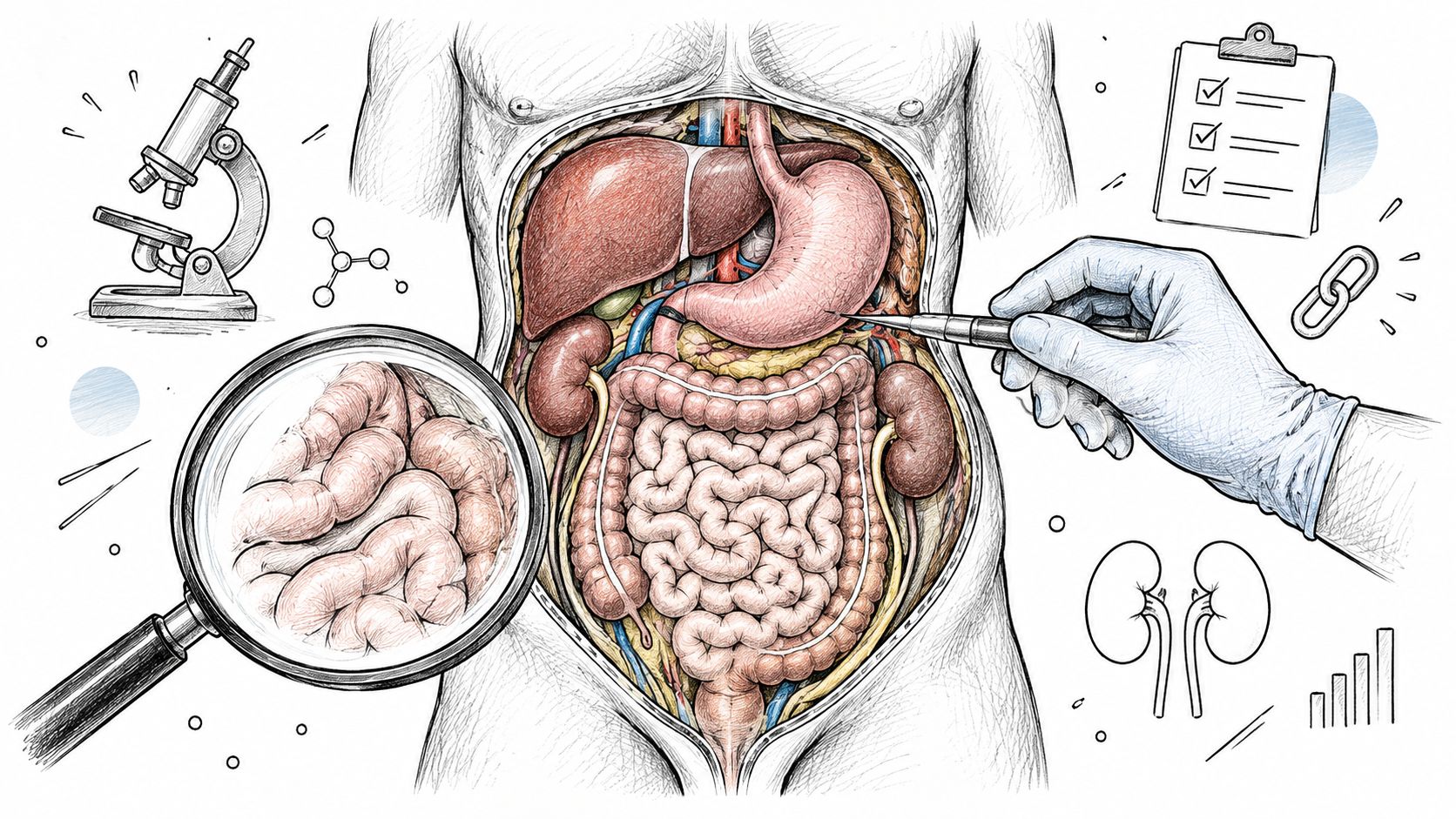
A specimen doesn't become reliable merely because it arrives at a laboratory. Its identity, condition, storage, and handling before testing can affect the interpretation of the result. For example, a tissue sample should be connected to the decedent, the collection event, the storage location, the laboratory accession record, the analytical method, and the final report.
The same principle protects families. A clear record reduces the risk that an important finding is questioned because no one can establish where a specimen came from or who controlled it. It also gives attorneys and reviewing pathologists a defensible basis for evaluating whether the evidence can support a cause-of-death investigation.
A cause of death is the disease, injury, or combination of conditions that produced death. A manner of death describes the circumstances or classification surrounding the death, such as natural, accident, suicide, homicide, or undetermined, when the responsible authority makes that determination. Chain of custody doesn't decide either term. It supports the integrity of the material and records used to reach and review forensic conclusions.
The Four Core Data Points Every Record Must Include
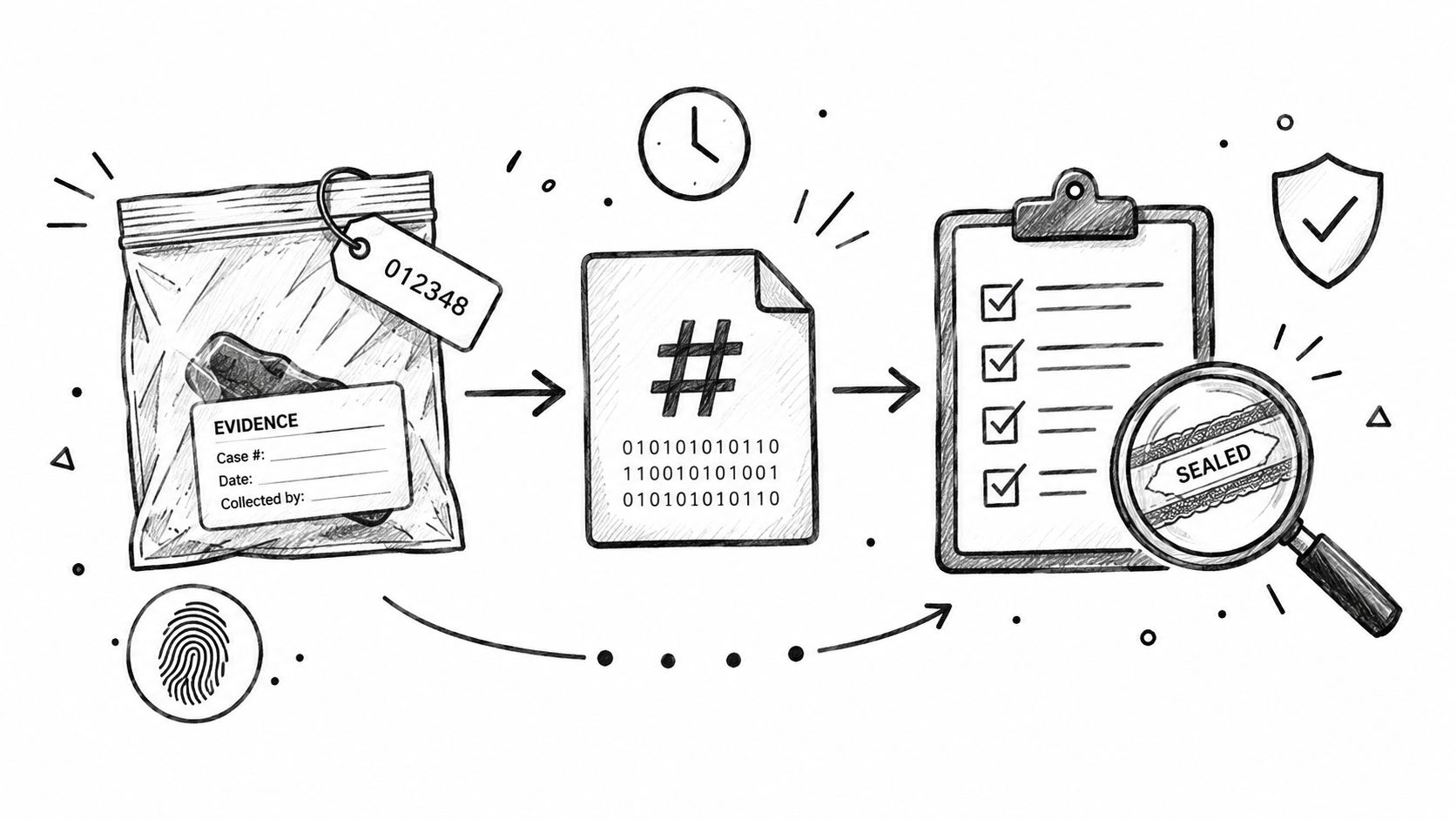
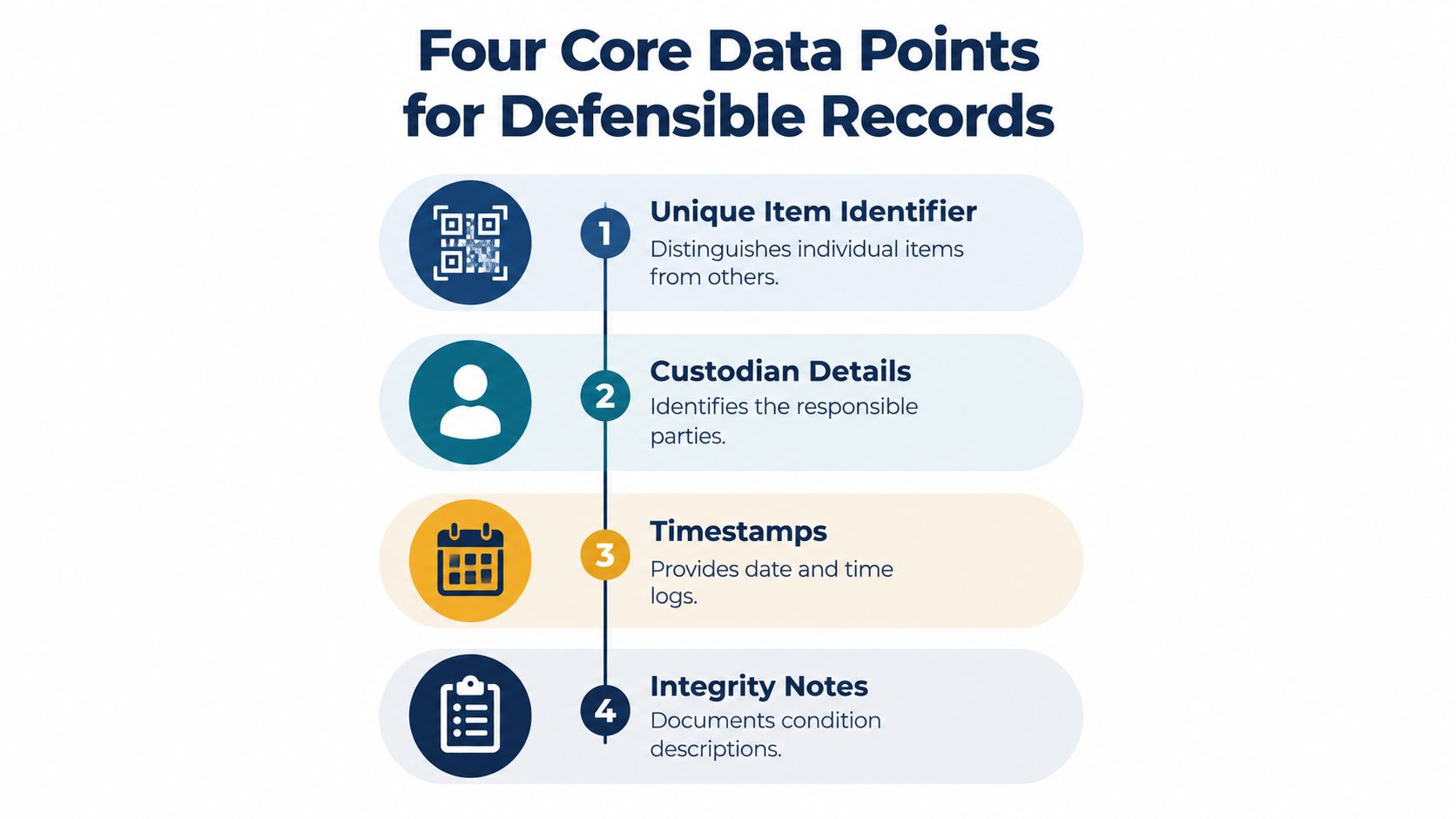
A defensible record begins with basic information that distinguishes one item from every other item in the case. The National Institute of Justice identifies four core data points for each item: a unique identifier, an item description, the identity of the person who collected it, and the time, date, and location of collection.
These details may look administrative, but each answers a different authentication question. Together, they create the foundation for every later transfer.
Identifier and description
A unique identifier separates one specimen or file from all other evidence in the case. It may be a case number combined with an item number, laboratory accession number, or another controlled identifier. The identifier should appear consistently on the container, submission paperwork, examination worksheet, laboratory record, and final report.
The item description explains what the item is and where it came from. “Blood” is not a complete description if the case contains more than one blood sample. A useful description may identify peripheral blood, the source location, the collection event, the condition of the container, and any relevant seal or label information.
The Office for Victims of Crime's guidance on medical-forensic evidence labeling calls for identifying information that connects the specimen to its source and handling history. Although that guidance addresses medical forensic examinations, the same logic applies to autopsy-derived evidence.
Collector and collection details
The record should identify the person who collected the item. A name, identification number, or other authorized identifier helps establish who had firsthand knowledge of the collection event.
The collection entry should also record the date, time, and location. These details place the item in the sequence of events. They may help answer whether the specimen was collected before or after another procedure, whether it came from the examination facility or another location, and whether the documented transfer sequence is complete.
A label alone isn't enough if the supporting records conflict. The identifier, description, collector, and collection details should agree across the evidence label, photographs, examination worksheet, laboratory submission form, storage log, and final report.
Why source information prevents confusion
Consider two containers that both contain tissue. If one is identified only as “tissue,” a later reviewer may not be able to determine whether it came from the liver, heart, brain, or another site. If the description connects the specimen to the decedent, collection location, date, collector, and case number, the reviewer can trace it through later handling.
For families, this level of detail can clarify whether a test relates to the specimen described in the autopsy report. For attorneys, it can identify the precise record that needs further examination during discovery or testimony.
The chain-of-custody form guidance from Texas Autopsy Services offers a practical reference for organizing these entries. A complete form shouldn't stand alone. It should reconcile with the physical item, photographs, laboratory records, and disposition documentation.
A strong identifier answers “which item?” A strong description answers “what is it and where did it come from?” The collection record answers “who collected it, and when and where did that happen?”
Documentation and Transport Procedures Explained
Chain of custody begins before transport. The person who recovers evidence should package, initial, and seal it before sending it onward or placing it in secure storage, consistent with National Institute of Justice evidence packaging guidance.
Packaging is a substantive control, not a clerical formality. The container should suit the evidence, prevent leakage or damage, carry complete identification, and show whether it has been opened. If a seal is broken for a destructive test, the laboratory should record the opening, the purpose, the person present, the testing performed, and the resealing or remaining disposition of the material.
A practical handling sequence
- Confirm identity. Verify the decedent or specimen against documented identifiers before release, transport, receipt, examination, or return.
- Record initial condition. Note the container, label, seal, packaging, visible damage, and any unusual condition. Photographs can preserve what the item looked like at intake.
- Package appropriately. Use a labeled container that protects the evidence from leakage, damage, contamination, or unintended access.
- Seal and initial. The recovering person or authorized personnel should initial the seal before submission or secure storage.
- Document each handoff. Record who released the item, who transported it, who received it, the date and time, location, purpose of transfer, and condition at receipt.
- Control storage. Identify the storage location and access restrictions. Biological specimens may require temperature-controlled storage, with records showing the relevant conditions.
- Record testing and disposition. Link laboratory receipt, examination, testing, return, retention, release, or final disposition to the same item identifier.
A transfer record should identify more than the destination. “Sent to laboratory” leaves unanswered who transported the specimen, when it left, who received it, whether the seal was intact, and whether the condition changed.
| Data Element | Required Information | Purpose |
|---|---|---|
| Unique identifier | Case number, item number, accession number, or controlled identifier | Distinguishes the item from other evidence |
| Description and source | Specimen type, anatomical source, collection location, packaging, and condition | Connects the item to the decedent and collection event |
| Collector information | Name or authorized identification of the collector | Establishes responsibility and firsthand knowledge |
| Transfer history | Releasing person, transporter, receiving person, date, time, location, and purpose | Accounts for each custody transition |
| Storage record | Storage location, access information, and relevant environmental record | Shows how the item was protected between events |
| Seal and package condition | Seal status, initials, damage, opening, resealing, or deviation | Helps identify unauthorized access or possible alteration |
| Testing and disposition | Laboratory receipt, method, examination, retention, return, release, or final disposition | Completes the evidence history |
Transport and environment
A signature trail cannot show that a specimen remained suitable if the environment wasn't controlled or documented. An unexplained delay, incomplete temperature record, damaged container, or undocumented opening may raise questions about deterioration, contamination, or access.
For a private autopsy or second-opinion autopsy, the record should follow the decedent and related specimens through authorized release, licensed transport, secure storage, examination, laboratory submission, and return or release. The documented custody procedures used in autopsy work provide a useful framework for reviewing whether each transition has an identified person, time, location, purpose, and condition.
Physical Evidence Versus Digital Records
Physical and digital evidence share the same central question: Is the item presented later identical to what was originally collected? The controls differ because a sealed container and an electronic file can be altered in different ways.
For physical evidence, personnel examine the label, seal, packaging, condition, storage, and transfer record. For digital evidence, investigators must also preserve the original data, control access, document the software and methods used, and show that the file remained unchanged.
Physical evidence
A tissue specimen, toxicology sample, retained medical device, photograph, or radiograph has a tangible form. A custody record should show who possessed it and whether the container remained sealed and properly stored.
The practical risks include substitution, contamination, leakage, damage, mislabeling, and unauthorized opening. A broken seal doesn't prove that someone altered the item, but it requires an explanation. A condition discrepancy at receipt may be more important than a missing administrative entry because it bears directly on the evidence itself.
Digital records
Digital files can be copied, renamed, exported, converted, edited, or accessed without visible changes to a physical container. Relevant records may include surveillance footage, smartphone data, photographs, radiographs, scans, instrument files, and electronic reports.
The National Institute of Standards and Technology guidance on digital evidence recommends documenting the original source and transfer history, generating a cryptographic hash with an approved algorithm, and storing the resulting hash separately so later verification can identify alteration. Investigators may also need to record whether the original device was write-protected, which software version created an image, where the image was stored, and whether access logs remained consistent.
Digital investigations have expanded sharply. South Korean authorities handled 11,575 cases involving the collection, preservation, and forensic analysis of digital evidence in 2017, compared with below 1,000 in 2008, according to a study hosted by Seoul National University](https://s-space.snu.ac.kr/handle/10371/151404). The figures illustrate why custody records now extend beyond paper labels and physical evidence lockers.
| Physical evidence | Digital records |
|---|---|
| Tamper-evident seal and package inspection | Cryptographic hash and integrity verification |
| Locked storage for the container | Controlled storage and access logs |
| Transfer signatures and receipt | Acquisition history and file transfer records |
| Condition at collection and receipt | Metadata, time zones, export settings, and software versions |
| Documented opening and resealing | Original master, controlled working copies, and audit trail |
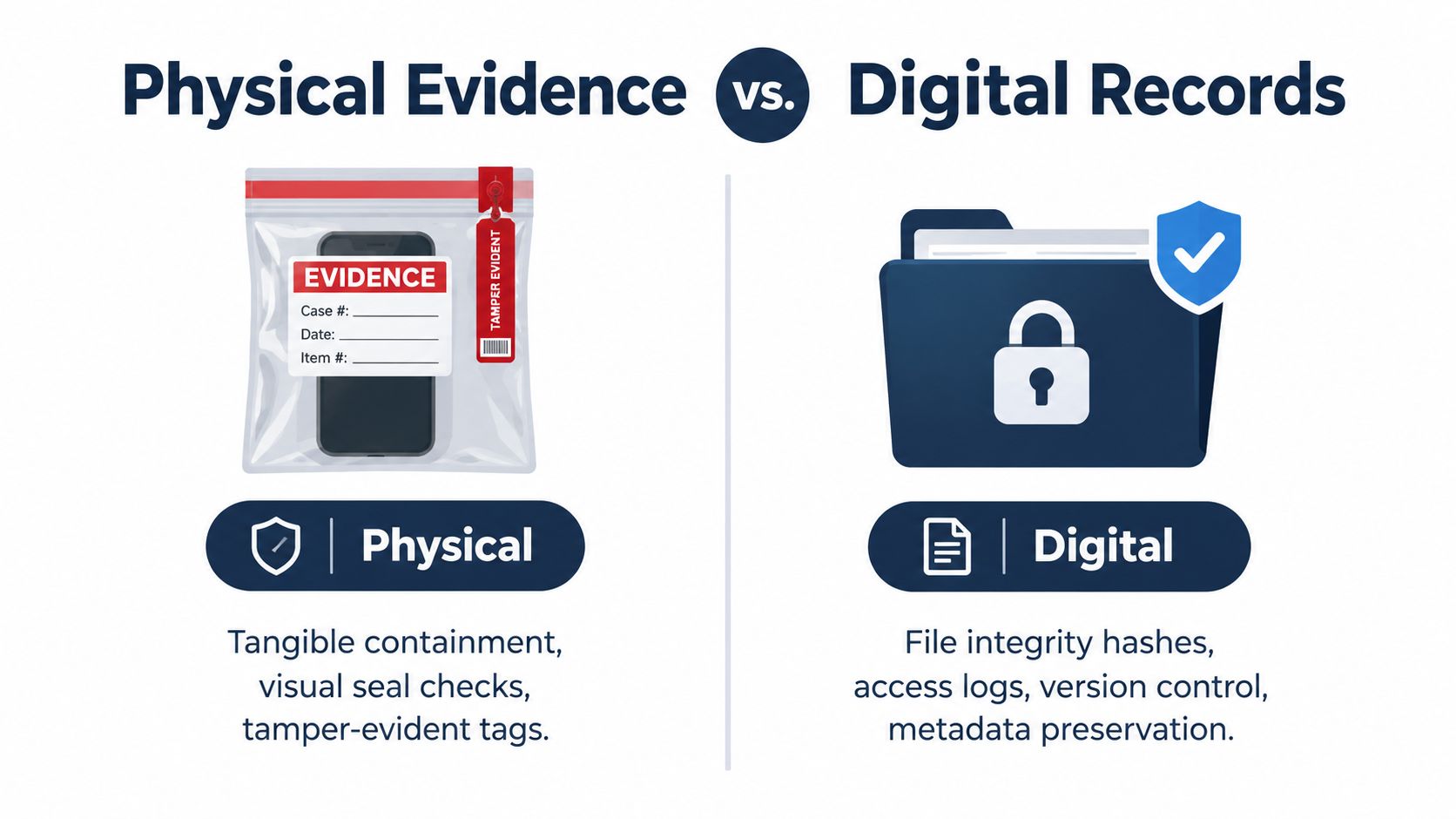
Digital preservation doesn't replace physical custody. In an autopsy case, a specimen and the digital photograph documenting its condition may need linked but separate histories. The specimen record shows packaging and storage. The image record shows the original source, acquisition process, file integrity, and any working copy used for review.
Information-security controls may also become relevant when custody records contain sensitive medical information. Guidance on chain of custody and cybersecurity for forensic records addresses the need to control access to digital evidence and document changes.
When Custody Gaps Affect Cases
A common misconception is that any missing signature automatically destroys an item's evidentiary value. That isn't the prevailing approach. Courts commonly distinguish between a minor irregularity that affects the evidence's weight and a serious gap that creates substantial doubt about identity, substitution, tampering, or integrity.
The party offering the evidence may be able to explain a minor documentation problem through testimony about routine practices or other records. For example, a missing receiving signature may be addressed by a laboratory receipt, storage log, access record, and testimony from the person who routinely accepted submissions.
Weight versus admissibility
Weight concerns how persuasive or reliable the evidence is. A court may admit an item but allow the opposing party to argue that incomplete records reduce its credibility.
Admissibility concerns whether the court will allow the item to be considered at all. A serious unexplained gap may become an admissibility issue if it creates substantial doubt that the exhibit is the same item collected.
The distinction requires a complete review of the surrounding records. Missing signatures, unexplained time gaps, inconsistent identifiers, damaged packaging, and undocumented access each raise different questions.
A complete signature trail doesn't establish specimen integrity if the storage condition was unsuitable or an unexplained opening occurred.
Conditions that deserve closer review
A family or attorney should look more closely when:
- Identifiers conflict. The specimen label, laboratory accession, photograph, and report describe different sources or case numbers.
- Time gaps lack explanation. The item appears to move from collection to testing without a documented storage or transfer interval.
- Packaging changed without a record. A seal is broken, a label appears replaced, or a container has damage that wasn't noted at receipt.
- Environmental information is missing. Temperature-controlled storage was required, but no relevant storage record exists.
- Access isn't documented. People handled or opened the item without an identified purpose or corresponding entry.
- The digital file lacks provenance. There is no original source, acquisition record, hash, software information, or controlled working-copy history.
These issues don't prove that evidence was altered. They identify points where the offering party may need additional records or testimony. Courts evaluate the whole chain, including whether the item can still be identified and whether substitution or tampering is reasonably possible.
Questions Families and Attorneys Should Ask
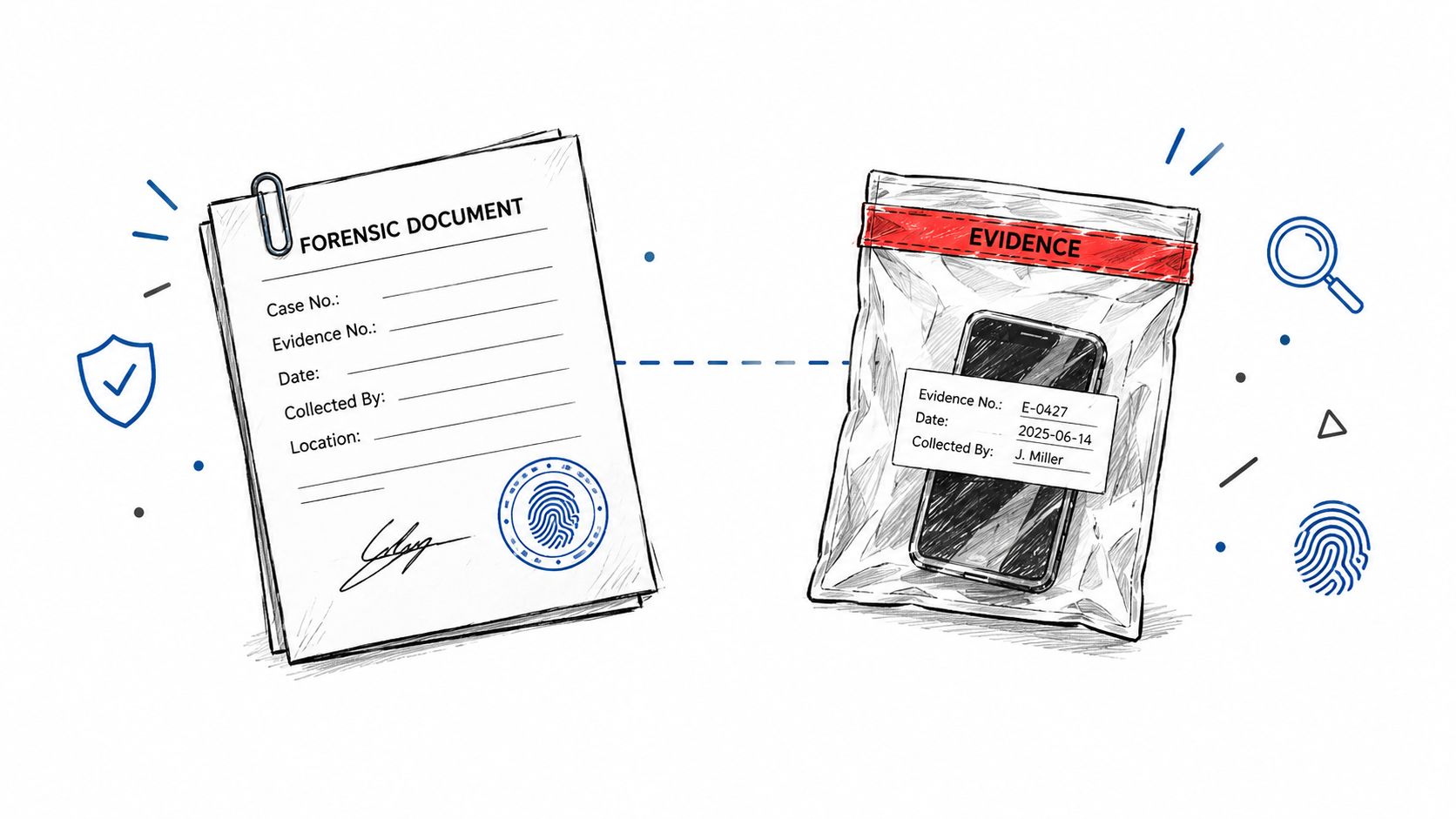
Good chain-of-custody questions are specific. Instead of asking whether the evidence was “handled properly,” ask who handled it, what was recorded, and whether the condition remained controlled at each transition.
At release and receipt
- Who released the decedent or specimen? The answer should identify the person and the authority for release.
- How was identity verified? The record should connect documented identifiers to the decedent, specimen, or case.
- What was the condition at receipt? Ask whether the seal, label, packaging, and item condition were recorded, including photographs when appropriate.
- Where and when did receipt occur? A proper entry includes date, time, and location.
During transport and storage
- Who transported the item? The record should identify the transporter and the purpose of the movement.
- What storage was used? For biological evidence, ask about temperature-controlled storage and available records.
- Were there any deviations? Delays, damaged packaging, broken seals, or unexpected openings should have explanations.
- Who had access? Facility access records and custody logs should account for people who could reach the decedent, specimen, or file.
During examination and testing
- Which specimen was tested? The laboratory accession number should connect to the original item identifier and source description.
- What method was used? The examination or analytical record should identify the testing or review performed.
- Was material retained? Ask whether the specimen or a portion remains available for re-analysis, and under what conditions.
- How was final disposition recorded? The record should show whether the item was returned, released, retained, or otherwise dispositioned.
When a case involves disputed events outside the medical record, an attorney may separately consult investigative professionals, including London private detective services, for lawful fact-gathering support. That work doesn't replace forensic custody documentation, but it may help counsel identify witnesses, locations, or records that clarify a transfer gap.
Frequently asked questions
Does a missing signature automatically invalidate evidence?
No. A minor irregularity may affect the evidence's weight rather than require exclusion. The significance depends on whether the item can still be identified and whether the gap creates a substantial concern about substitution, tampering, contamination, or alteration.
What should a private autopsy chain-of-custody file contain?
It should connect the decedent and specimens to identifiers, collection and receipt details, packaging and seal condition, transport, storage, examination, laboratory testing, access, and final disposition. Related photographs and digital files need their own preservation and integrity records.
Who has to prove that evidence is authentic?
The party offering the evidence has the burden of presenting evidence sufficient to support a finding that the item is what that party claims it is. The opposing side doesn't carry that initial burden.
Should families request the complete custody record?
Families and attorneys should discuss access with the responsible agency, facility, laboratory, or legal counsel. When reviewing records, request the entries needed to connect collection, storage, testing, and disposition, not only a single transfer form.
Does a private autopsy change the official cause or manner of death?
A private or independent autopsy provides an additional forensic examination or second opinion. It doesn't automatically replace a determination made by a medical examiner, justice of the peace, or other legally responsible authority. Texas Health & Safety Code Chapters 711, 716, and 651, along with the Texas Funeral Service Commission, may be relevant depending on the circumstances, so legal and agency-specific questions should be directed to qualified counsel or the responsible authority.
Our team provides independent autopsy and forensic pathology services across all 254 Texas counties, with documented custody handling for transport, storage, examination, laboratory transfer, and reporting. If you need help reviewing a specimen history, arranging a private autopsy, or seeking a second opinion, contact Texas Autopsy Services directly so we can discuss the records and next steps with care and clarity.