May 9, 2026 · Texas Autopsy Services
A Disaster Mortuary Operational Response Team Explained
Learn what a Disaster Mortuary Operational Response Team (DMORT) is, its mission, and how it responds to mass fatality events from a forensic pathologist.
On this page
- When Disaster Overwhelms Local Resources
- Defining the Disaster Mortuary Operational Response Team
- The Process for DMORT Activation and Deployment
- Core Capabilities During a Mass Fatality Incident
- Upholding Legal Standards and Chain of Custody
- The Role of Private Forensic Pathology in Preparedness
- Frequently Asked Questions About DMORT
When a family calls after a sudden death, they usually want the same thing any county official or attorney wants after a large disaster. They want the truth handled carefully. They want names matched correctly, records kept correctly, and remains treated with dignity from the first transfer to the final release.
That need doesn't change when the scale changes. It becomes harder.
A hurricane on the Texas coast, a major flood, or an industrial event can push a local death investigation system beyond its ordinary capacity in a matter of hours. In those moments, the country relies on a federal structure built for mass fatality response. That structure is the disaster mortuary operational response team, commonly called DMORT. As a board-certified forensic pathologist, I view DMORT as an important example of what good forensic work looks like under pressure: disciplined identification, documented chain of custody, and steady communication with families.
TL;DR
- DMORT is a federal mass fatality response system established in 1992 under the National Disaster Medical System, with 10 regional teams of civilian specialists who are federalized when activated (reference).
- Deployment begins only when local or state authorities request help because fatalities exceed manageable levels (reference).
- On scene, DMORT can set up Disaster Portable Morgue Units that can process up to 96 bodies simultaneously and support pathology, radiology, odontology, and fingerprinting workflows (reference).
- Identification depends on disciplined comparison of antemortem and postmortem evidence through a Victim Identification Center, with reported identification rates of 85 to 95 percent in complex disasters (reference).
- The same principles matter in everyday forensic practice in Texas: accurate documentation, lawful authority, and compassionate communication with families.
When Disaster Overwhelms Local Resources
A county system can function well in ordinary conditions and still be overwhelmed by a single event.
That's easy to understand in Texas. A coastal storm can interrupt power, transportation, communications, and refrigerated storage at the same time. An inland flood or large transportation incident can create a sudden need for scene recovery, temporary morgue space, identification work, and family notification, all while local officials are still trying to stabilize the community itself.
The public sometimes assumes that fatality management involves transport followed by autopsy. In reality, once an event grows beyond local capacity, the work becomes a coordinated forensic, legal, and logistical operation. Remains must be recovered systematically. Personal effects must stay associated with the correct decedent. Temporary workspaces may be needed. Families need a reliable way to submit dental records, fingerprints, medical history, or DNA reference samples.
In a mass fatality event, the first failure is rarely medicine alone. It is usually organization.
That's where DMORT matters. It exists for the moment when a local medical examiner, coroner, or other death investigation authority cannot safely manage the volume alone. The purpose isn't to replace local authority. The purpose is to preserve order, accuracy, and dignity when ordinary systems are stretched.
For families dealing with the scene aftermath, practical support outside the forensic system may also matter. A resource such as Phoenix trauma cleanup services helps illustrate that post-incident care often involves many parallel professionals, each with a distinct role, from environmental remediation to medicolegal investigation.
Defining the Disaster Mortuary Operational Response Team
A county morgue can absorb only so much before accuracy starts to suffer. At that point, the question is no longer whether help is needed. The question is what kind of help preserves identification, documentation, and dignity under pressure.
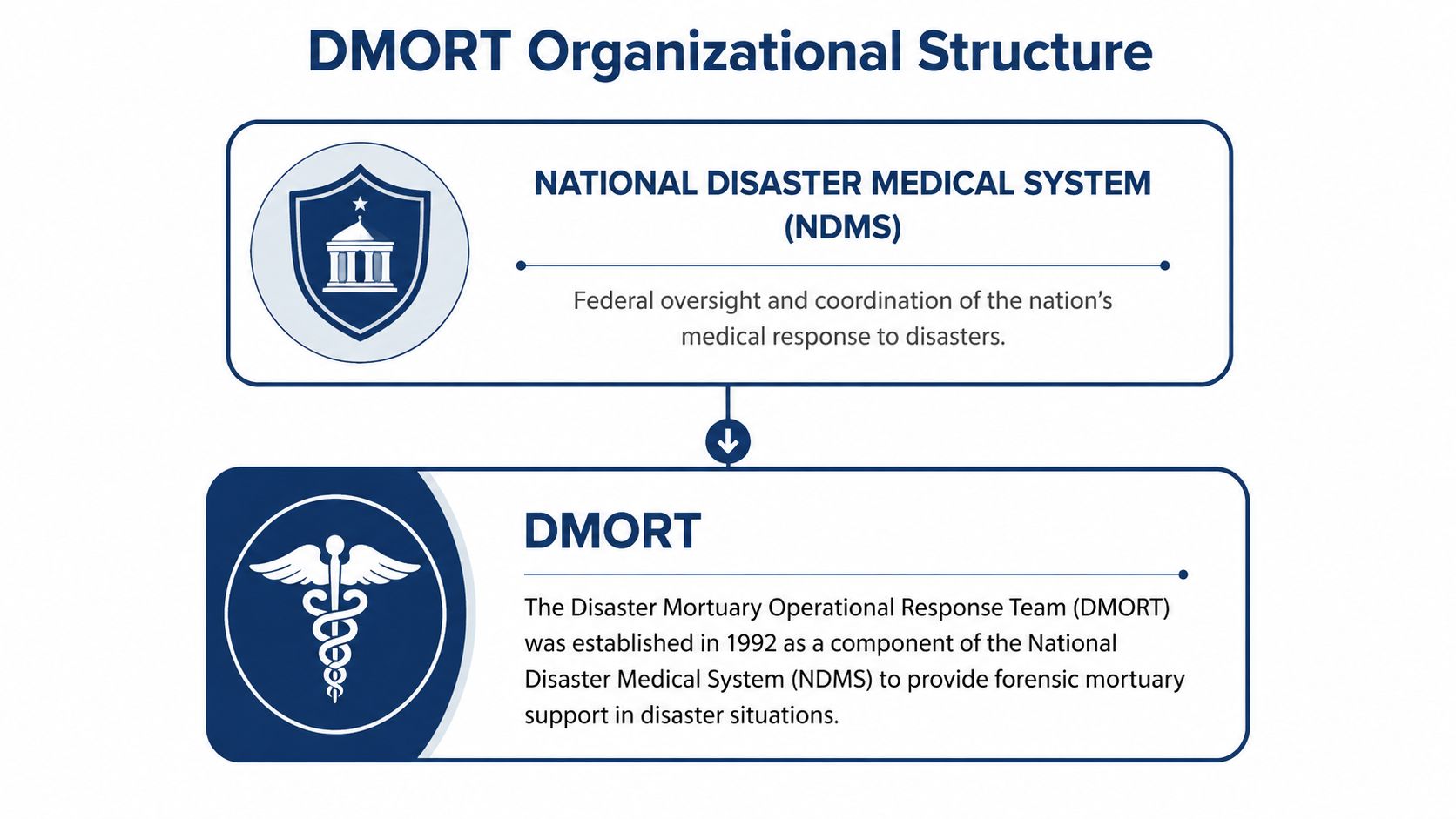
Disaster Mortuary Operational Response Team, usually shortened to DMORT, is the federal mortuary response system built for that problem. As noted earlier, it sits within the National Disaster Medical System and is staffed by civilian specialists who can serve in a federal role during deployment. For Texas families and local officials, that structure matters because DMORT supports the medicolegal process without changing the basic obligation to identify the right person, document every transfer, and return remains to the correct family.
Who serves on DMORT teams
DMORT is multidisciplinary because mass fatality work fails when one profession is forced to cover every task. Identification, decedent care, records control, and family assistance each require different training.
A team may include:
- Forensic pathologists and medical examiners for examination, documentation, and medicolegal review
- Funeral directors for decedent handling, transfer, preparation, and disposition logistics
- Forensic odontologists and dental assistants for dental comparison work
- Fingerprint specialists for friction ridge identification
- Forensic anthropologists for fragmented, burned, or skeletal remains
- Radiographers and records staff for imaging, data entry, and case tracking
- Mental health and administrative personnel for family operations and team coordination
That mix mirrors good private forensic practice on a smaller scale. Even in a single private autopsy case, the work is never just the physician's opinion. It depends on correct intake, labeling, photography, specimen handling, record review, and communication with the family or legal team.
What DMORT is designed to do
DMORT supplements local morgue and identification capacity during a mass fatality incident. The work may include temporary morgue operations, forensic examination, assistance with remains recovery, tracking of personal effects, ante-mortem information gathering from families, and coordination with the jurisdiction that retains legal authority over the dead.
The point is orderly forensic processing. In practical terms, that means fewer opportunities for misidentification, lost property, incomplete records, or preventable delay.
I tell families the same thing in private casework. Scale changes the logistics, but it does not change the principle. A disaster response system and a one-decedent private autopsy both depend on disciplined chain of custody, careful identification, and documentation that can withstand legal scrutiny years later.
Why the definition matters
DMORT is often described as a disaster team, which is true but incomplete. It is also a standards-based identification and documentation system. That distinction matters to attorneys evaluating evidence, to county officials planning surge capacity, and to families who need confidence that their loved one will not become one more untracked case in a crowded system.
Recent deployments have shown the range of incidents in which DMORT may be used, including large natural disasters, fire scenes, and public health emergencies. The common thread is not the cause of death. The common thread is that the jurisdiction needs disciplined mortuary support at a scale local resources cannot safely maintain alone.
The Process for DMORT Activation and Deployment
A county may have a functioning morgue on Monday and a mass fatality problem by Tuesday. After a major fire, flood, transportation incident, or heat-related surge, the first failure point is often not medical judgment. It is capacity. Refrigeration fills. Documentation slows. Identification work starts to compete with scene operations. That is the point at which local officials may request federal mortuary support.
DMORT enters through authority, not improvisation. It does not arrive because a federal team notices an event on the news. Local or state officials initiate the request through established emergency management channels, and the affected jurisdiction keeps legal control of the decedents and the investigation.
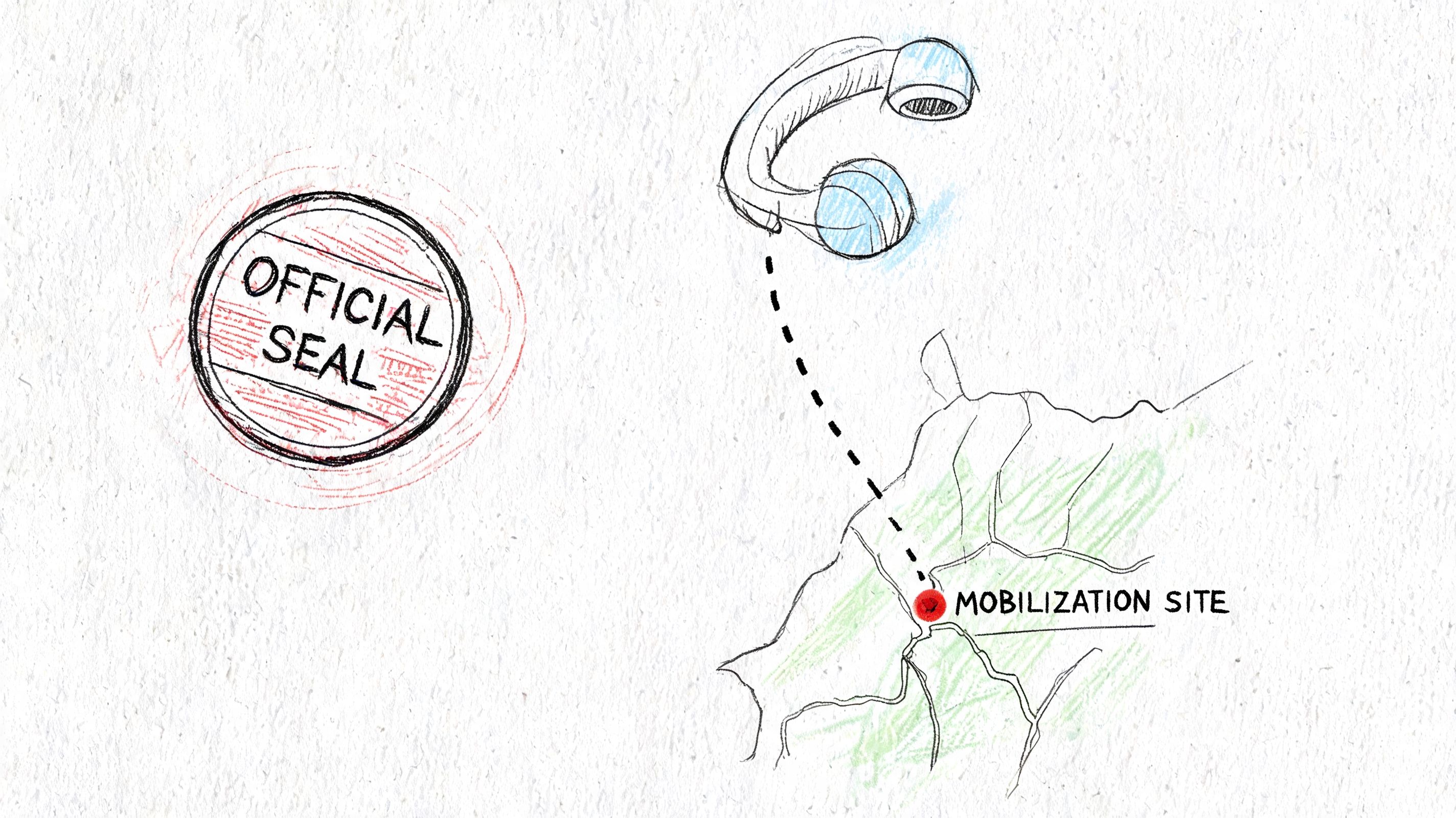
How the request begins
In practice, the need is usually recognized first by the medical examiner, coroner, emergency management staff, hospital leadership, or county officials overseeing body storage and transport. The pressure may come from too many decedents in too short a period, a damaged facility, limited staffing, or a scene that will require prolonged recovery and identification work. Those are different operational problems, but they lead to the same question. Can the jurisdiction continue to account for every decedent and every item of evidence without error?
If the answer is no, officials escalate the request through state and federal channels. The federal government can then assemble mortuary assets, personnel, and logistics support to supplement local operations. For readers who want a clearer foundation in what forensic pathology involves in practice, this step makes the larger point. Good disaster response starts with the same discipline used in a single properly worked death investigation.
What activation means on the ground
Activation is not a single phone call followed by instant deployment. There is an assessment phase. Officials define what problem needs to be solved, whether that is temporary morgue space, identification staffing, records management, family assistance support, or a combination of those needs. That distinction matters because the wrong resource package can waste time during the first operational period.
I have seen families assume that "federal help" means someone else takes over everything. That is not how this system is designed. The local death investigation authority remains the legal authority. DMORT personnel support that office inside the existing incident command structure and work to the standards the jurisdiction must defend later in court, on death certificates, and in conversations with families.
Partnership, timelines, and trade-offs
Deployment speed depends on transportation, incident conditions, and the type of support requested. Early requests usually produce a cleaner operation than late ones. Waiting until storage is exhausted or case tracking has already become inconsistent creates avoidable risk. In forensic work, disorder at the beginning tends to surface months later as delayed identifications, property disputes, or records that no one can fully reconcile.
For Texas counties, that trade-off is familiar even outside a federally supported event. Ask for help early, and the system is more likely to preserve identification integrity and documentation from the start. Ask late, and the same professionals may spend valuable time repairing preventable gaps instead of processing cases. That principle applies at every scale, from a national deployment to a private autopsy where one family needs answers they can trust.
Core Capabilities During a Mass Fatality Incident
A county official gets the call at 2 a.m. The fatalities exceed local cooler space, roads are partially blocked, families are already asking for answers, and every decision made in the first hours will affect identification, release, and documentation weeks later. In that setting, DMORT's value is practical. It brings a field-ready mortuary system that can receive remains, document them correctly, compare identifiers, and support the local authority without lowering forensic standards.
Disaster Portable Morgue Units
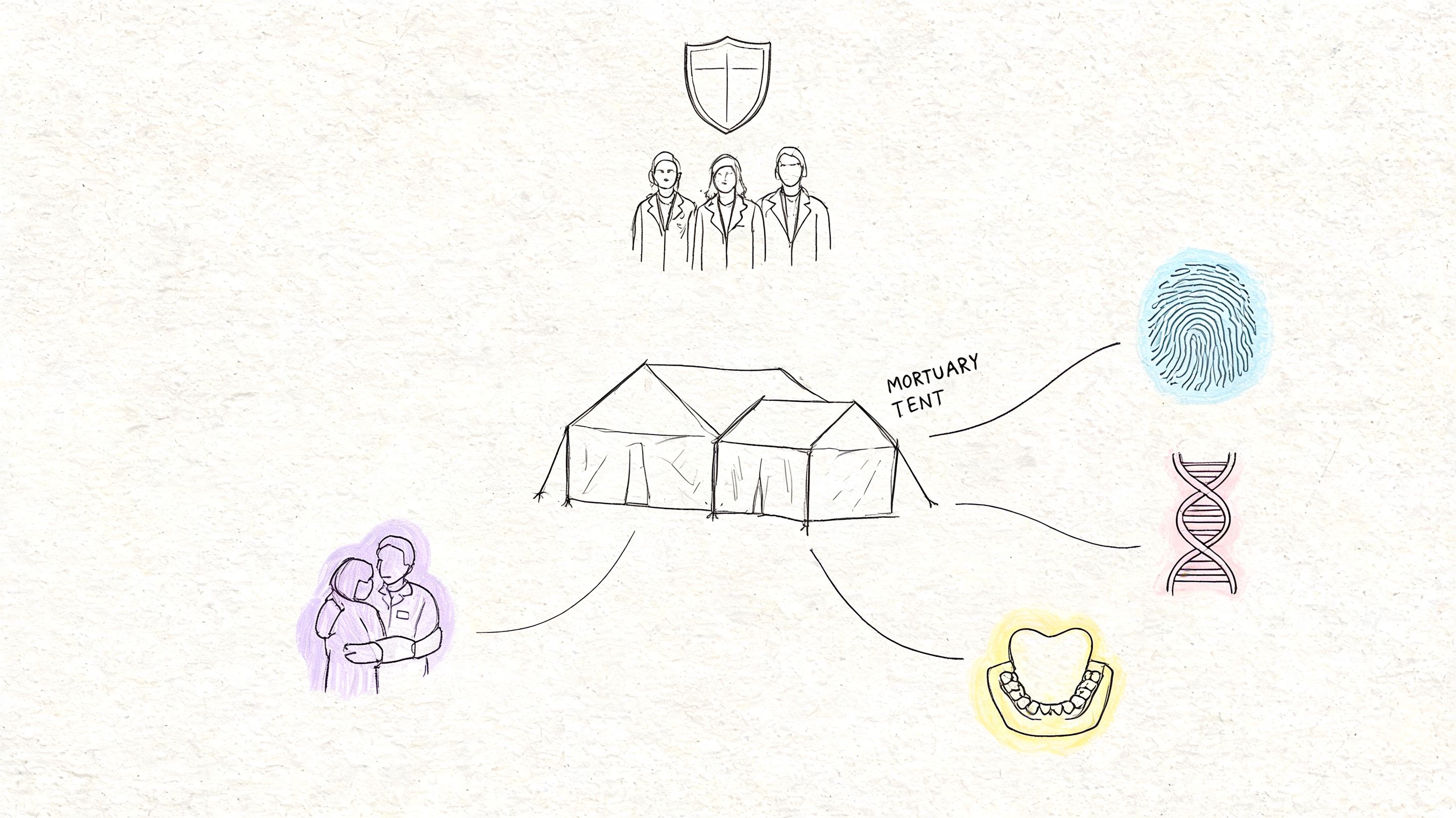
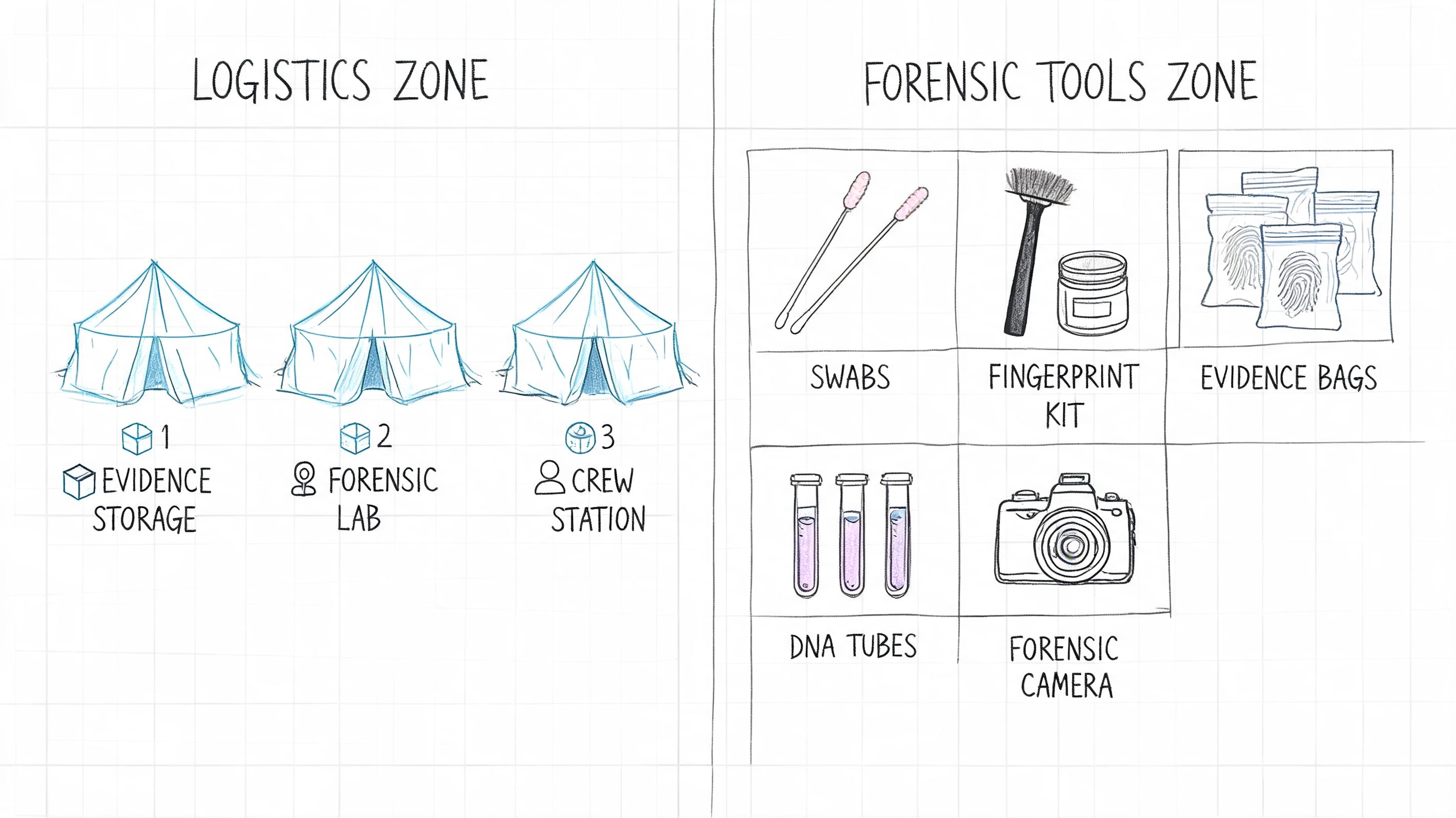
One visible part of that system is the Disaster Portable Morgue Unit, or DPMU. These units are designed to establish organized postmortem operations where fixed facilities are damaged, inaccessible, or too limited for the incident. They support the core tasks counties cannot afford to improvise, including secure intake, refrigerated holding, radiology, pathology, odontology, fingerprinting, and documentation.
That matters for a simple reason. Identification work deteriorates quickly when bodies, personal effects, paperwork, and specimen handling are split across ad hoc locations. A DPMU creates one controlled workflow, which reduces preventable mix-ups and gives the local medicolegal authority a workable environment for sustained operations.
Identification is a comparison process
Families often hear "DNA" or "dental records" as if one test solves everything. In practice, identification is a disciplined comparison of antemortem information against postmortem findings.
Antemortem information can include family interviews, medical records, dental charts, prior radiographs, fingerprints, scars, implants, and reference DNA. Postmortem findings can include external examination, radiographic imaging, fingerprints, dental examination, surgical hardware, and biological samples collected under controlled conditions.
If you want a plain-language foundation for the discipline behind this work, a short explanation of what forensic pathology is helps place autopsy, identification, and medicolegal review in the same framework.
In mass fatality work, no single method fits every case. Fingerprints can be fast when skin condition permits. Dental comparison remains highly useful because teeth and prior dental work often survive conditions that alter facial appearance. Radiographs can match prior fractures, prostheses, and other internal features that families would never know to mention. DNA is often the best path in fragmented, burned, or decomposed remains, but it takes more time and depends on suitable reference samples and laboratory capacity.
Those trade-offs are familiar in private forensic practice as well. The scale is different. The standard is not.
What tends to hold up in the field
The strongest field operations rely on methods that can be documented, reviewed, and repeated:
- Radiographic imaging helps identify prior surgery, healed fractures, and medical devices.
- Dental comparison can remain useful after fire, trauma, or decomposition.
- Fingerprint comparison can provide a rapid identification when ridge detail is preserved.
- DNA sampling helps resolve difficult cases, especially when remains are fragmented or records are sparse.
Visual recognition has a narrow role in this setting. I do not treat it as a stand-alone basis for identification in complex scenes, and neither should a disaster system. Families are doing their best under extreme stress. The forensic team's job is to protect them from an avoidable error.
A short visual overview can help make the operational side more concrete:
Victim Information Centers and family contact
The Victim Identification Center, or VIC, handles one of the most sensitive parts of the response. Staff collect family-provided information, obtain records from outside providers, and organize those materials so the identification team can make defensible comparisons.
Good family contact is structured and humane. Staff should explain why dental offices are being contacted, why prior X-rays matter, why a scar or implanted device may be more useful than a photograph, and why duplicate or conflicting submissions can slow the process. Families should not have to guess what to bring or which relative is best positioned to provide historical information.
Data handling matters here too. Large incidents generate multiple handoffs, scanned records, specimen logs, property inventories, and cross-checks between teams. County officials and attorneys who want a general framework for disciplined record systems can review the Verbex guide to GxP compliant data. Disaster mortuary work is not laboratory manufacturing, but the underlying expectation is similar. Records must be attributable, traceable, and consistent.
Why this matters beyond disasters
DMORT's field methods reflect the same principles that govern careful private forensic pathology in Texas. Correct intake. Accurate labeling. Controlled specimen handling. Clear documentation. Reliable comparison before release.
For a family requesting a private autopsy after a disputed death, those steps are personal. For a county managing a mass fatality incident, they are operational. In both settings, the reason is the same. Once identification or evidence handling goes wrong, no amount of later effort fully repairs the loss.
Upholding Legal Standards and Chain of Custody
A mass fatality scene creates pressure to move quickly. The legal record still has to be exact.
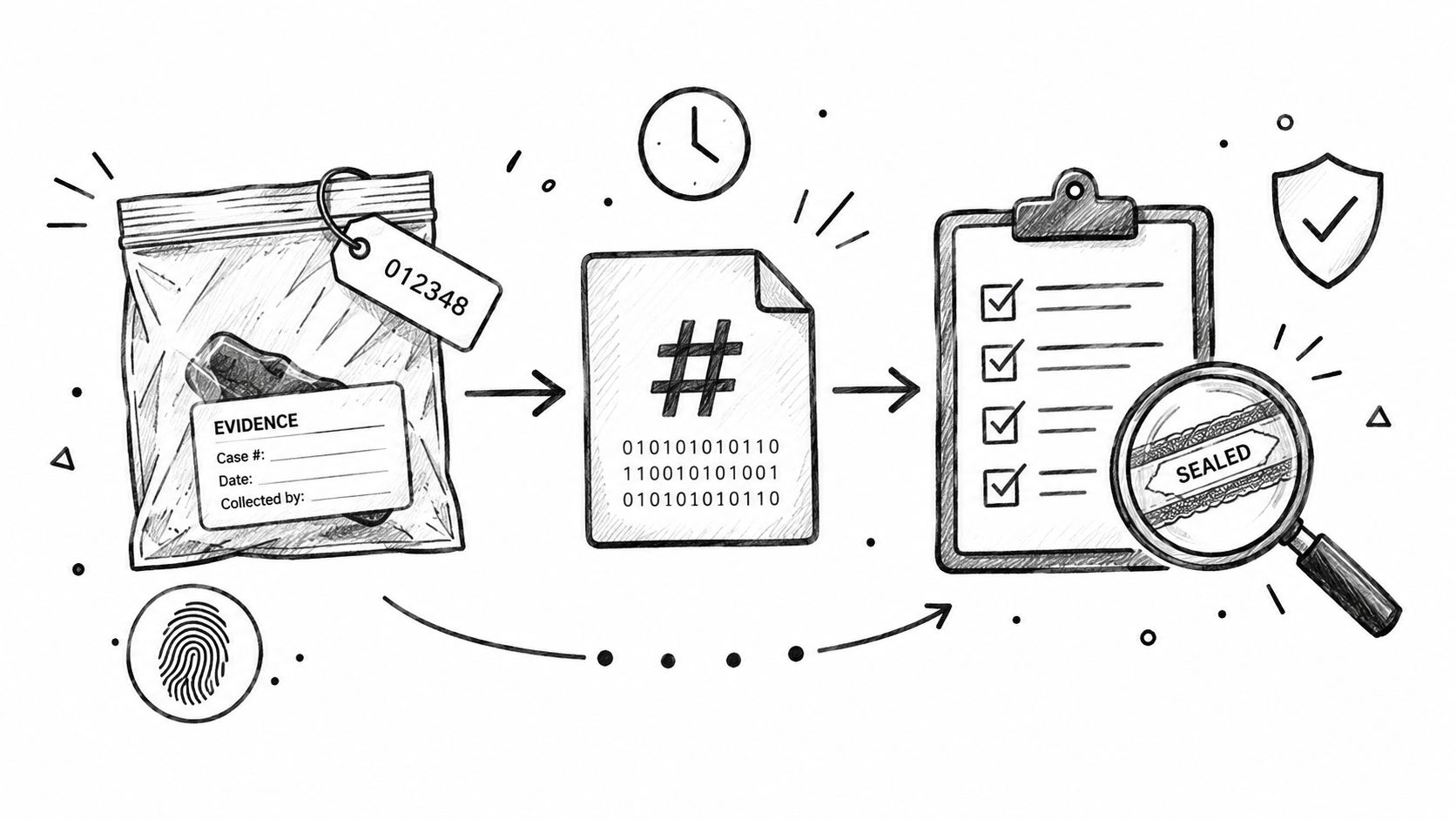
For attorneys, county officials, and families, chain of custody is the documented history of who recovered, transported, examined, stored, and released remains, specimens, and personal effects. In practice, that means names, dates, times, locations, seal status, and transfer records that can be checked later. If any link is missing, the problem reaches beyond paperwork. It can affect identification, admissibility, death certification, and public trust.
Why custody records protect families
In disaster work, identification is not based on a single reassuring detail. It is built from documented comparisons, reviewed findings, and controlled release procedures. Federal disaster mortuary teams use structured identification standards for that reason. The goal is simple. Release the right person to the right family, with a record that can withstand later review.
That same principle applies in a private forensic case in Texas. A wedding band, a hospital bracelet, or a visual recognition by a relative may feel persuasive in the moment, but those details do not replace formal identification methods. Families deserve certainty, not assumption.
Cause of death, manner of death, and legal authority
These terms are related, but they are not interchangeable.
- Cause of death is the injury, disease, or physiological event that produced death.
- Manner of death is the medicolegal classification, such as natural, accident, suicide, homicide, or undetermined.
- Chain of custody is the record that preserves the integrity of the body, specimens, and property from recovery through final release.
Even when federal personnel assist after a disaster, local authority does not disappear. In Texas, that authority usually remains with the county medical examiner or justice of the peace, depending on the county and the circumstances. That matters in court, in insurance disputes, and in any later review of how a case was handled. Readers who want that courtroom perspective can review this discussion of the forensic science expert witness role, because testimony is only as sound as the records behind it.
The mistakes that create lasting problems
I have seen how small intake errors create large downstream consequences. A transposed case number. An unlabeled specimen tube. Property logged under the wrong decedent. In a single-death private autopsy, those errors are serious. In a disaster with multiple recovery sites and repeated transfers, they can derail identification work and expose the county to avoidable legal challenge.
Good chain of custody requires disciplined habits at every step:
- unique case identifiers applied early and used consistently
- labels that stay with the body, specimens, and property
- documented transfers between recovery, transport, examination, storage, and release
- restricted access to remains and evidentiary items
- clear correction procedures when an error is found
These are operational details, but they are also family protections.
Record discipline applies in every setting
Disaster mortuary operations and private forensic pathology work at different scales, yet the recordkeeping standards should point in the same direction. Traceable entries. Controlled revisions. Auditable handling. Consistent logs across handoffs. For a plain-language comparison of those data integrity principles, the Verbex guide to GxP compliant data is useful, even though medicolegal death investigation follows its own statutory and evidentiary rules.
The practical lesson is straightforward. If the file cannot show who handled an item, when it moved, where it was stored, and why it was transferred, confidence in the case drops quickly. In disaster response, that threatens the integrity of the whole operation. In private forensic practice, it can leave a family with unanswered questions that should have been prevented.
The Role of Private Forensic Pathology in Preparedness
DMORT is designed for catastrophic events. Most death investigations in Texas happen outside that setting. Even so, the same standards should apply.
A well-run local system benefits from expert pathology access before a disaster ever occurs. Counties need dependable professional relationships, clear transport pathways, and established documentation habits. Families and attorneys need to know that if questions remain after an official investigation, there are lawful ways to seek further review.
Preparedness is local before it is federal
In practical terms, preparedness means knowing who can help when local capacity tightens. That may involve independent forensic pathology support, better evidence handling workflows, or stronger communication between county officials, funeral professionals, and legal representatives.
The principles are simple:
- Use qualified specialists: Complex postmortem questions should go to appropriately trained forensic physicians.
- Document early: Missing labels and incomplete transfer logs create preventable problems later.
- Separate grief from guesswork: Families deserve compassionate explanation, but they also deserve scientifically grounded conclusions.
- Know when a second review is reasonable: A disputed death, a litigation matter, or an unclear medical history may justify independent review.
A practical tool can sometimes help offices think through their own procedures. For example, a free template for evidence integrity can be a starting point for discussing custody logs, though any real county or medicolegal workflow must be adapted to applicable law and local protocol.
Why independent review still matters
Even after a large official response, questions may remain about injury interpretation, natural disease, toxicology, or whether the available records support the final opinion. In those situations, a private autopsy service or independent forensic review can be valuable for families and counsel.
That is not a rejection of the public system. It is a recognition that medicolegal review sometimes continues after the initial emergency phase ends.
The same principles at every scale
The national lesson from DMORT is straightforward. Accuracy comes from method, not speed alone. Dignity comes from process, not intention alone. And trust comes from documentation, not reassurance alone.
Those points apply whether a team is managing a federal deployment or one decedent in a private forensic setting. For families, that should be reassuring. Serious postmortem care follows standards. It does not depend on improvisation.
Frequently Asked Questions About DMORT
Does DMORT take over a local death investigation
No. DMORT supports local or state authorities when fatalities exceed manageable capacity. The local jurisdiction still retains its legal role in the death investigation and certification process.
Can a family still ask questions if a disaster mortuary operational response team is involved
Yes. Families can and should ask how identification is being performed, what records may help, and which office has legal authority over release and certification. In some situations, families or attorneys may later seek independent review of records or findings.
What information helps identify a loved one after a disaster
Useful information can include dental records, fingerprints, prior medical imaging, surgical history, implant details, tattoos, scars, and family reference DNA when requested through proper channels. The value of each item depends on the condition of the remains and the available comparison data.
Does DMORT perform autopsies on every decedent
Not necessarily. The response is adapted to the incident and the needs of the local authority. Some cases require full forensic examination. Others require identification support, documentation, and release coordination rather than a complete autopsy.
What should county officials do before a disaster happens
They should review fatality surge plans, identify storage and transport contingencies, clarify local legal authority, and make sure records and custody procedures can hold up under stress. They should also know when to request outside support rather than waiting for systems to break down.
If you need guidance after a death, whether you're a family member, attorney, physician, or county official, Texas Autopsy Services can help you understand the forensic questions, the available options, and the limits of what a postmortem examination can answer. My goal is always the same: clear medical analysis, careful documentation, and respectful care for the person who has died.