October 3, 2026 · Texas Autopsy Services
Locum Tenens Pathologist Guide for Texas County Services
Understand the role of a locum tenens pathologist in Texas. Learn how we fill statewide gaps, cover county services, and onboarding requirements.
On this page
- Why Temporary Forensic Pathology Is a Structural Necessity
- What a Locum Tenens Pathologist Does in Practice
- How Staffing Gaps Are Stabilized Through Temporary Placement
- Understanding Forensic Coverage Across Texas Counties
- Credentialing Standards and Market Compensation for Locums
- How Texas Autopsy Services Facilitates Onboarding and Coverage
- Frequently Asked Questions About Locum Tenens Pathology
The United States is operating at roughly 34% to 39% of the forensic pathology workforce it needs. That shortage makes temporary coverage a core part of death-investigation infrastructure, not an emergency-only fix.
For families, attorneys, hospitals, and county officials, the term locum tenens pathologist describes more than a physician filling an empty schedule. It describes a practical response to retirements, uneven geographic distribution, leave, sudden vacancies, and a training pipeline that cannot yet supply enough specialists. In Texas, that question also has a local legal dimension because many counties depend on justice-of-the-peace systems and regional forensic services.
- Temporary forensic pathologists help maintain coverage when a county or facility lacks a permanent specialist.
- Assignments may cover autopsies, surgical pathology, frozen sections, clinical services, or defined periods of leave.
- Texas law determines whether death-investigation authority rests with a medical examiner or a justice of the peace.
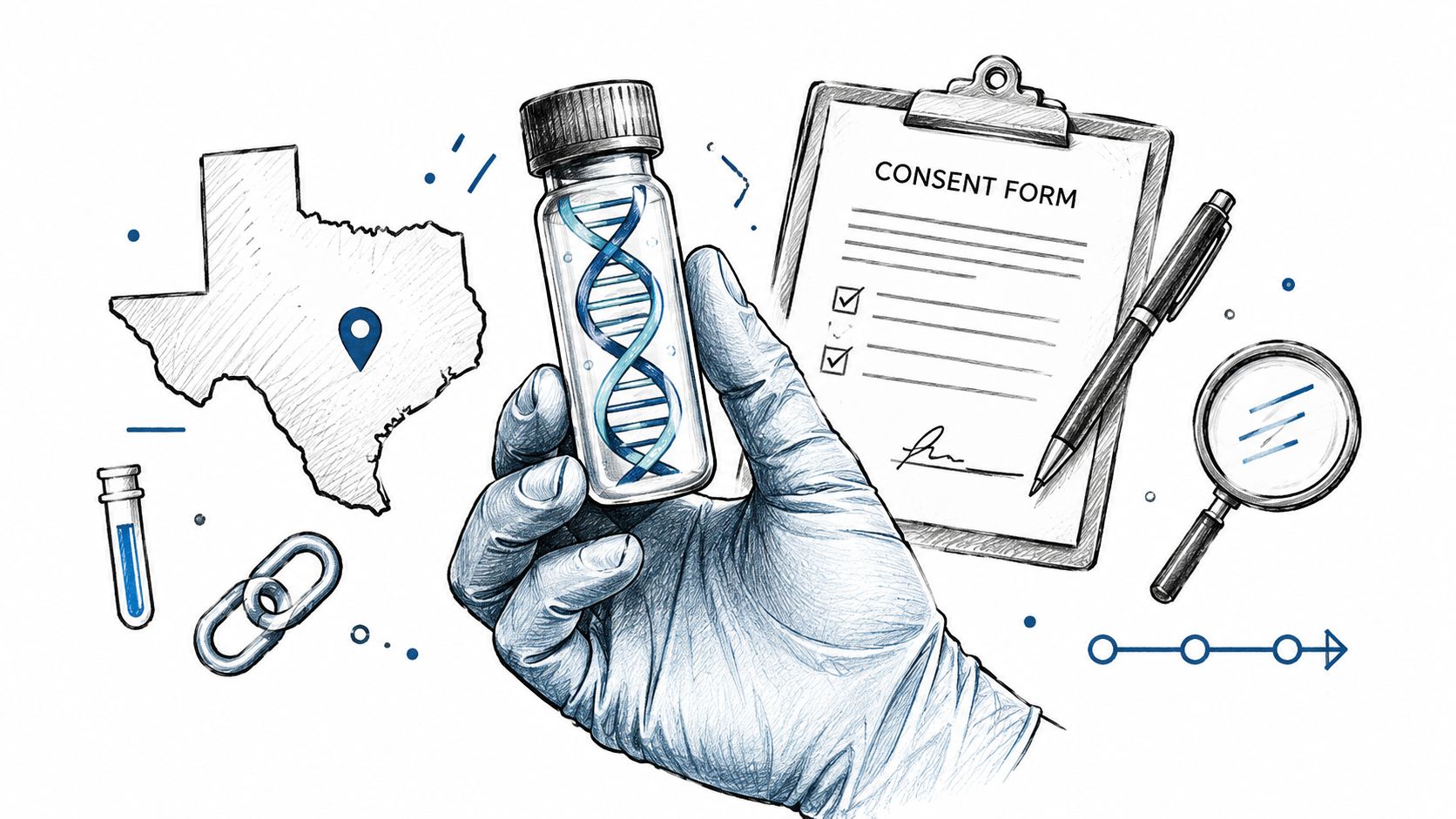
- Credentialing, licensing, privileges, transport, documentation, and chain of custody must be coordinated before independent work begins.
- Private and contract forensic services can support counties that refer autopsies to regional facilities.
A county may face a vacancy after a retirement while its death-investigation workload continues without interruption. A hospital may need coverage during protected leave, or a medical examiner office may need a pathologist who can work across jurisdictional boundaries. In each situation, the operational question is the same: how can authorized examinations continue without compromising independence, documentation, or respect for the deceased?
Why Temporary Forensic Pathology Is a Structural Necessity
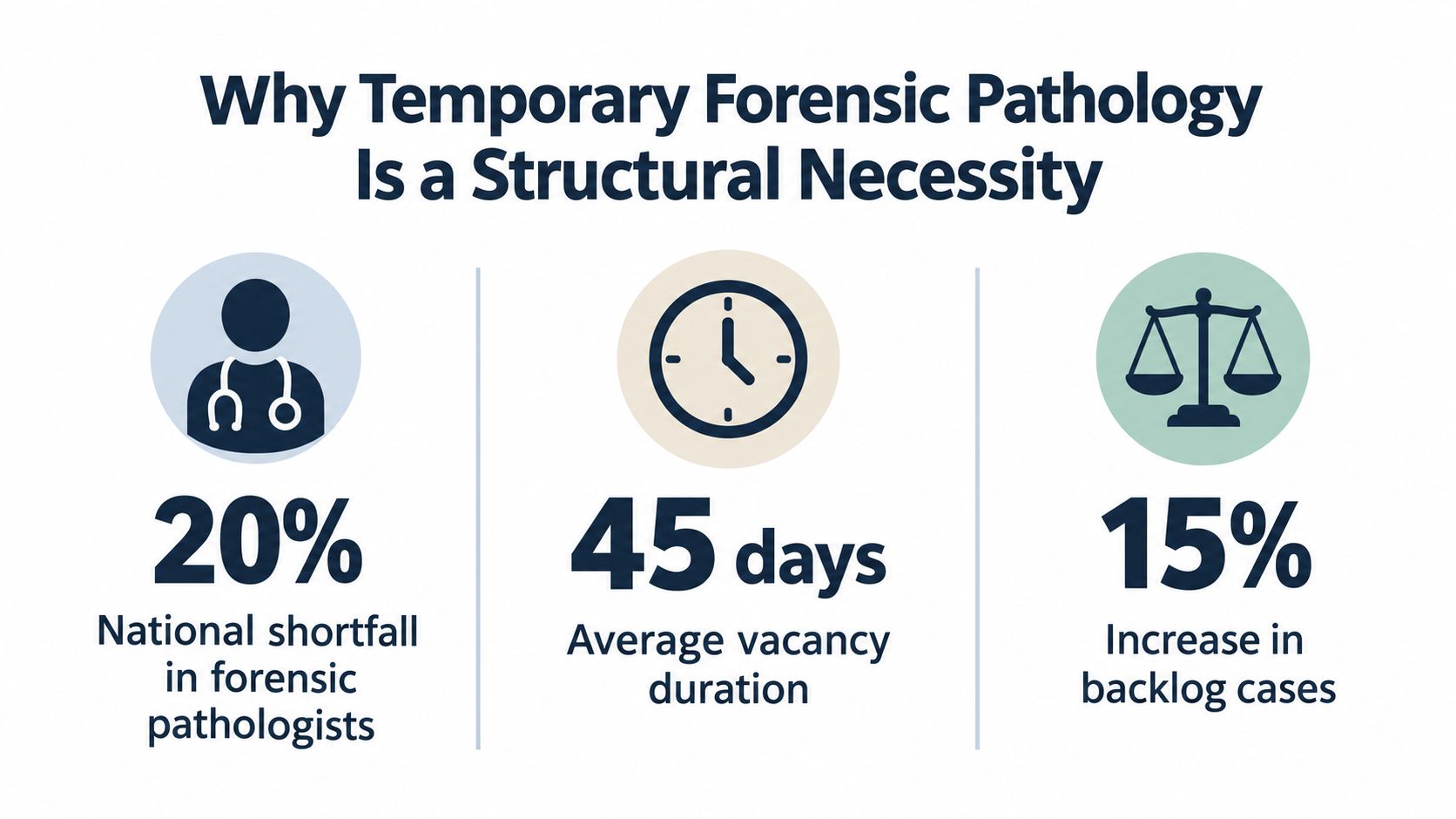
The shortage is not a short-term disruption, it is the system the work now has to operate within. A 2024 policy analysis reported that the United States had about 500 practicing forensic pathologists in 2020, while the workload required about 1,280, leaving the field at roughly 39% of needed capacity. The same analysis cited a 2018 census that counted 890 forensic pathologists employed by medicolegal agencies and noted that specialists often work across county or state lines as locum tenens physicians. The pathology staffing overview gives that workforce context.
A 2026 medical literature review estimated that the workforce was operating at approximately 34% of what is required, which shows why temporary coverage has become part of death-investigation operations. National reporting also cited the National Association of Medical Examiners as identifying only about 850 forensic pathologists practicing nationwide, with a shortage of roughly 400 compared with current demand. The medical literature review and national reporting on the shortage describe the broader staffing gap.
Why the gap persists
Retirements and uneven geographic distribution matter, but training capacity matters too. Workforce tracking indicates that only 30 to 60 pathologists complete forensic pathology training each year, while demand extends across all 50 states and more than 3 million deaths occur annually in the United States alone. That mismatch makes it hard for permanent hiring to catch up after a vacancy opens.
Temporary assignments act like a bridge over an open span. They let a county, medical examiner office, hospital, or regional facility keep authorized work moving while it recruits, reorganizes, or waits for a longer-term staffing solution.
Practical rule: A locum assignment should be treated as planned clinical and medicolegal coverage, not as evidence that a system has failed.
The structural shortage also explains why locum work appears in rural counties and smaller jurisdictions. A community may not have enough year-round volume or funding to support a full-time specialist, yet it still needs qualified forensic pathology when a death requires examination. Temporary and contract arrangements connect those cases with appropriately credentialed services.
What a Locum Tenens Pathologist Does in Practice
A locum tenens pathologist steps in for a defined period and carries the same professional duties the host site assigns to that role. The work may include autopsies, surgical sign-out, frozen sections, case review, or call coverage, depending on the setting and the privileges already approved by the facility.
The assignment is shaped by the service need, not by a one-size-fits-all schedule. A hospital may need help with surgical pathology and frozen sections, while a county or medical examiner office may need help with postmortem examinations, cause-of-death analysis, documentation, and communication with authorized agencies. Current locum listings are often organized around fixed coverage blocks and on-call expectations, which shows how these placements are built around operational gaps rather than a generic job description.
Before the pathologist works independently, the host organization still has to confirm licensure, board status, malpractice history, references, and any other required credentials. The site also has to clarify local procedures for evidence handling, specimen submission, photography, toxicology, and report release. In practice, the temporary physician needs the same guardrails a permanent hire would need, because the work affects both medical records and legal process.
Families and attorneys usually care less about the word “temporary” than about whether the exam is authorized, well documented, and easy to understand. A plain-language explanation of what a forensic pathologist does can help make that role clearer. The practical questions are the ones that matter, such as who signed the case, what authority the examiner had, and whether the findings can be explained clearly to the people who rely on them.
A locum pathologist also helps keep downstream work from stalling. Delayed sign-out can hold up treatment decisions, hospital operations, legal review, funeral arrangements, and death certificates. In forensic settings, delayed examinations can also slow investigative timelines and the release of information to authorized parties.
The pathologist does not replace local administrators, investigators, technicians, or transport staff. The role is narrower than the whole system, but it is often the specialist piece that keeps the system moving.
How Staffing Gaps Are Stabilized Through Temporary Placement
Temporary placement works best when an organization identifies the service gap early and defines the work precisely. The need may arise from FMLA leave, retirement, sabbatical, a seasonal volume increase, or a sudden departure. Each situation calls for a different coverage plan, especially when call responsibilities, autopsy volume, or reporting obligations vary.
The organization must first determine what work has to continue. That may include routine surgical sign-out, frozen sections, autopsies, death-certificate support, consultations, or supervisory duties. It should then establish the required privileges, schedule, equipment access, reporting platform, and communication pathway before the pathologist arrives.
Stabilization is more than filling a shift
A short-term physician can prevent a backlog from affecting several connected services. In a hospital, delayed pathology may slow diagnosis and treatment. In a county system, an unavailable forensic pathologist may delay examinations, reports, or communication with investigators and families.
A staffing plan should also account for the work surrounding the examination. Transport, secure storage, case intake, photography, specimen processing, toxicology coordination, report review, and records transmission all require assigned responsibility. If those tasks remain unclear, the temporary physician may be present without the support needed to work safely and efficiently.
The College of American Pathologists has described a pathology staffing shortfall projected to double by the end of the decade, making temporary coverage a capacity strategy rather than an emergency measure. CAP's discussion of locum tenens pathology places temporary practice within the broader pressure on pathology services.
What good coordination looks like
A practical placement plan identifies:
- The service boundary: Which examinations, sign-outs, consultations, and calls are included?
- The authority structure: Who requests work, reviews reports, releases records, and communicates with agencies?
- The facility requirements: Which systems, instruments, forms, and safety procedures must the pathologist use?
- The transition plan: Who receives pending cases and unfinished reports when the assignment ends?
This structure protects continuity. It also makes clear that temporary coverage should preserve the same standards expected from permanent staff.
Understanding Forensic Coverage Across Texas Counties
Texas divides death-investigation responsibilities between medical examiner offices and justices of the peace. When a county commissioners court establishes a medical examiner's office, the powers and duties related to death investigations and inquests transfer from the justices of the peace to that office. Where no medical examiner office exists, the justice of the peace remains the key local official for inquests and may determine whether an autopsy is necessary. The statutory framework appears in Texas Code of Criminal Procedure Chapter 49.
That distinction matters because a private autopsy and a county forensic autopsy are not interchangeable. A family may request an independent examination for clarification or a second opinion, while a justice of the peace or medical examiner may order an examination as part of a legally required death investigation. The responsible authority determines which process applies.
Why regional services matter
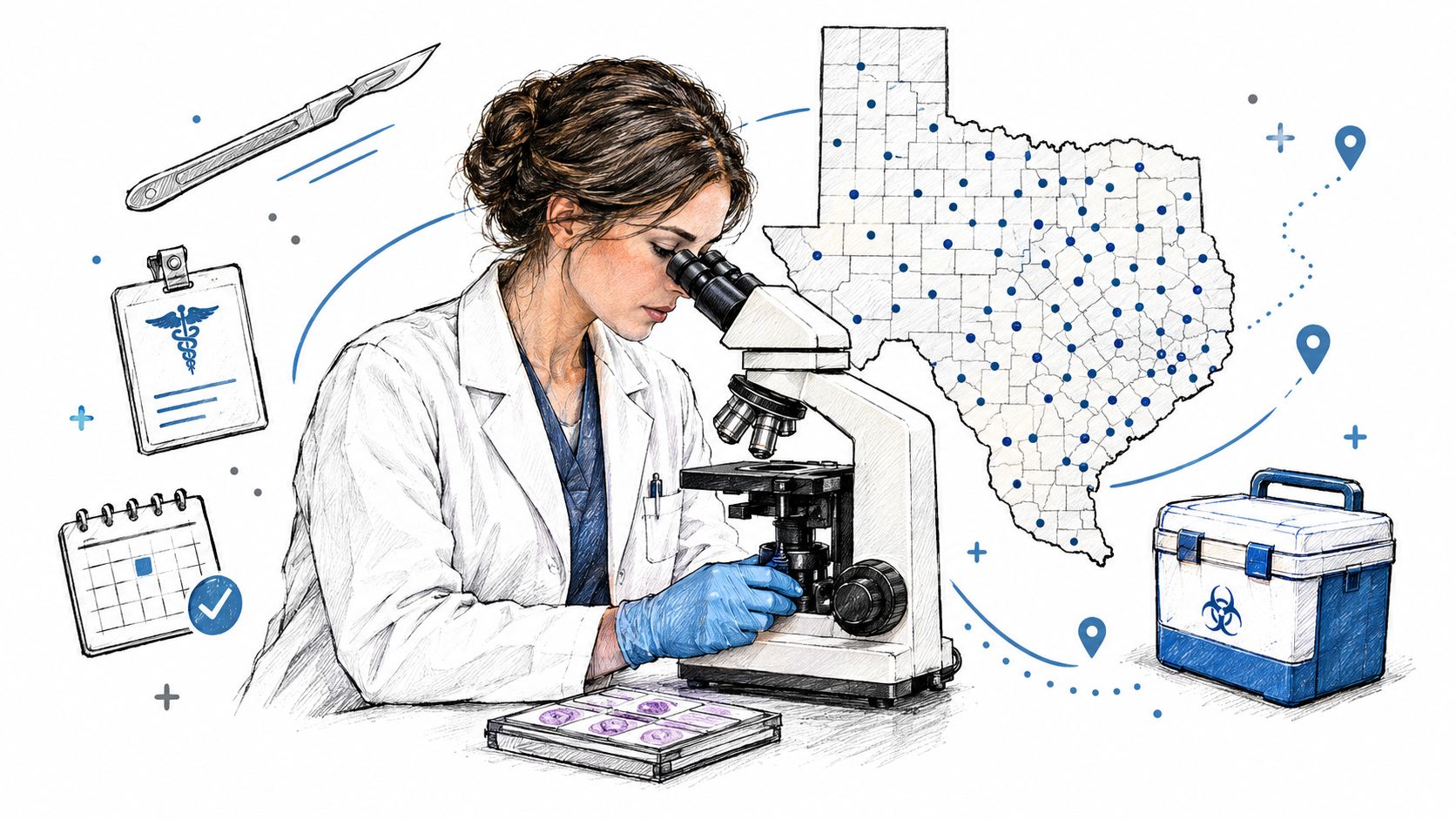
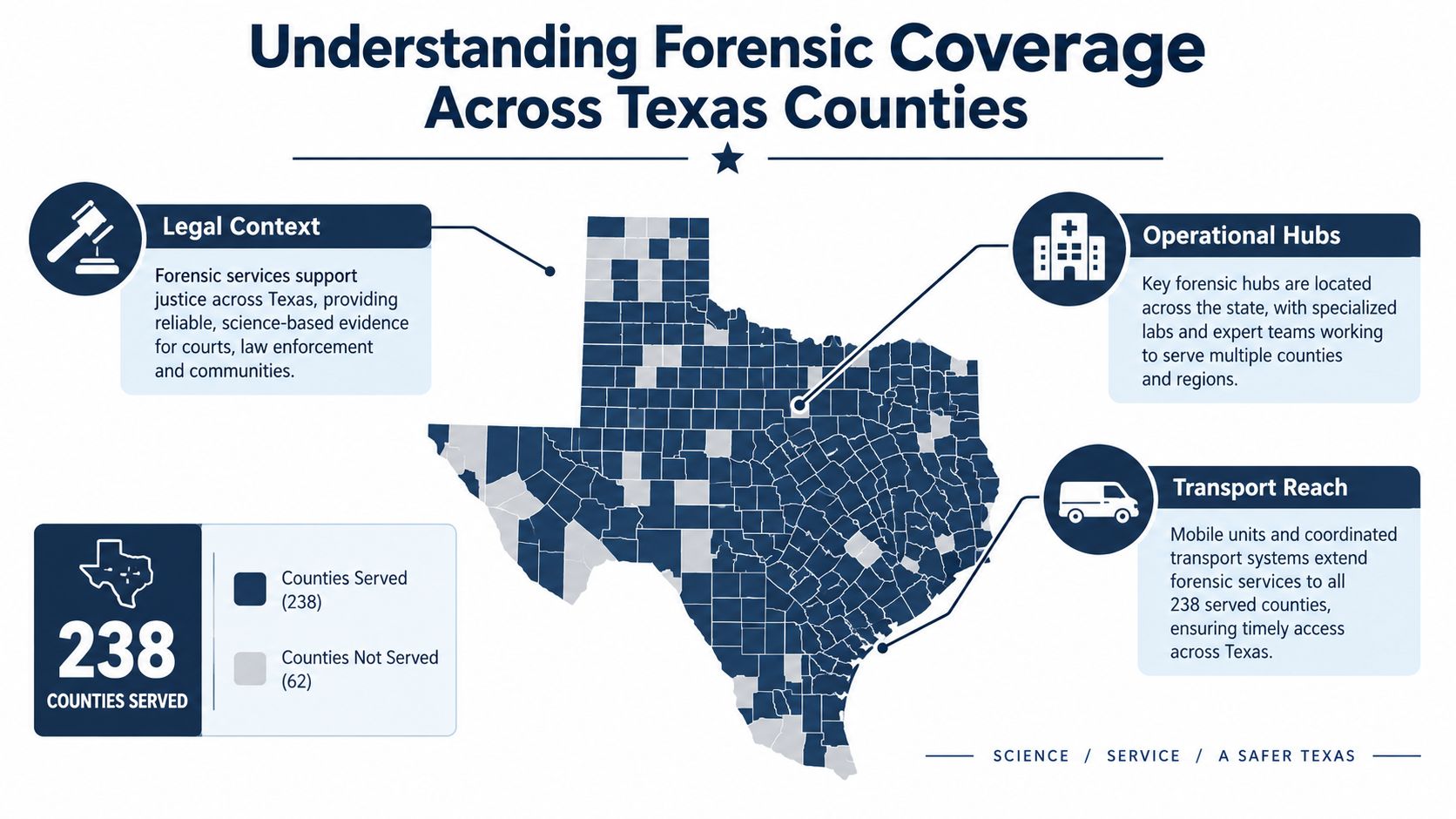
A Texas county autopsy service resource states that 238 of Texas's 254 counties don't have their own medical examiner and rely on the justice-of-the-peace system. Ordered autopsies may be referred to regional facilities, creating a practical need for private or contract forensic pathology coverage. The county autopsy resource describes that referral structure.
Consider a rural county where the justice of the peace determines that an autopsy is necessary. The county may need to arrange transport, identify a qualified forensic pathologist, coordinate the examination site, preserve evidence, and receive a report that supports the official investigation. The pathologist may be located outside the county, but the work still must follow the applicable authority's instructions and preserve the evidentiary record.
Texas legal limits and agency roles
Texas public-health guidance states that a justice of the peace may obtain an opinion from a county health officer or physician about whether an autopsy is needed. The justice of the peace may not order an autopsy when death was caused by Asiatic cholera, bubonic plague, typhus fever, smallpox, or a communicable disease during a public-health disaster. Texas public-health law guidance explains those limitations.
For families, the practical lesson is simple. The county authority governs a mandatory forensic investigation, while a private autopsy request follows its own authorization and consent requirements. Attorneys and officials should identify the responsible agency before arranging an examination, especially when jurisdiction, evidence, or public-health restrictions may affect the process.
Credentialing Standards and Market Compensation for Locums
Temporary coverage requires a faster operational response than many permanent hires, but it can't bypass professional verification. A facility must confirm the pathologist's license, board status, malpractice history, references, and eligibility for privileges. Hospitals and agencies may also require temporary-privileges workflows under their bylaws.
Credentialing before independent work
The organization should gather and verify:
- Licensure: The pathologist must hold the authorization required for the jurisdiction and assignment.
- Certification: The organization should confirm the applicable board status and specialty qualifications.
- Professional history: Malpractice history, references, disciplinary information, and employment records may form part of the review.
- Scope of work: Privileges must match the examinations and clinical services the pathologist will perform.
- Local orientation: The physician needs access to reporting systems, policies, equipment, evidence procedures, and emergency contacts.
Credentialing lead time depends on the facility, the assignment, the completeness of the records, and the need for temporary privileges. A short notice vacancy still requires a defensible verification process. Speed should reduce administrative delay, not remove safeguards.
Credentialing principle: A temporary start date is useful only when the organization can show that the pathologist was authorized to perform the assigned work.
Why locum rates differ from permanent salaries
Recent U.S. market data place pathology locum tenens compensation at about $119.71 per hour, or roughly $249,001 annually, with many listings between $203,500 and $301,000 per year. Top-end offers have reached approximately $387,000 to $526,000, depending on setting and urgency. Current pathology locum compensation data provides those market figures.
These rates reflect more than time spent at a workstation. A facility may be paying for immediate availability, travel, credentialing coordination, call coverage, specialized expertise, or work in a difficult-to-fill location. Faster start dates and heavier call schedules can move compensation toward the upper end of the market.
Budgeting should therefore separate the professional rate from related costs such as travel, lodging, transport, privileges, equipment, laboratory services, and administrative support. A clear scope of work helps both the hiring organization and the pathologist understand what the assignment includes.
How Texas Autopsy Services Facilitates Onboarding and Coverage
A temporary forensic assignment depends on the support system around the pathologist. Our team coordinates the operational details that allow a board-certified forensic pathologist to focus on examination, interpretation, and reporting.
The process begins with case authorization and assignment details. We confirm whether the work is a private autopsy, a second-opinion review, or a county-directed forensic examination. We then establish who has authority to request the work, what records and materials are available, where the examination will occur, and which agencies should receive communications.
Operational preparation
Our licensed transport team can coordinate statewide movement of the deceased, including one-way and round-trip arrangements. Secure temperature-controlled storage, digital imaging, toxicology coordination, molecular testing when appropriate, and HIPAA-compliant reporting support the examination record.
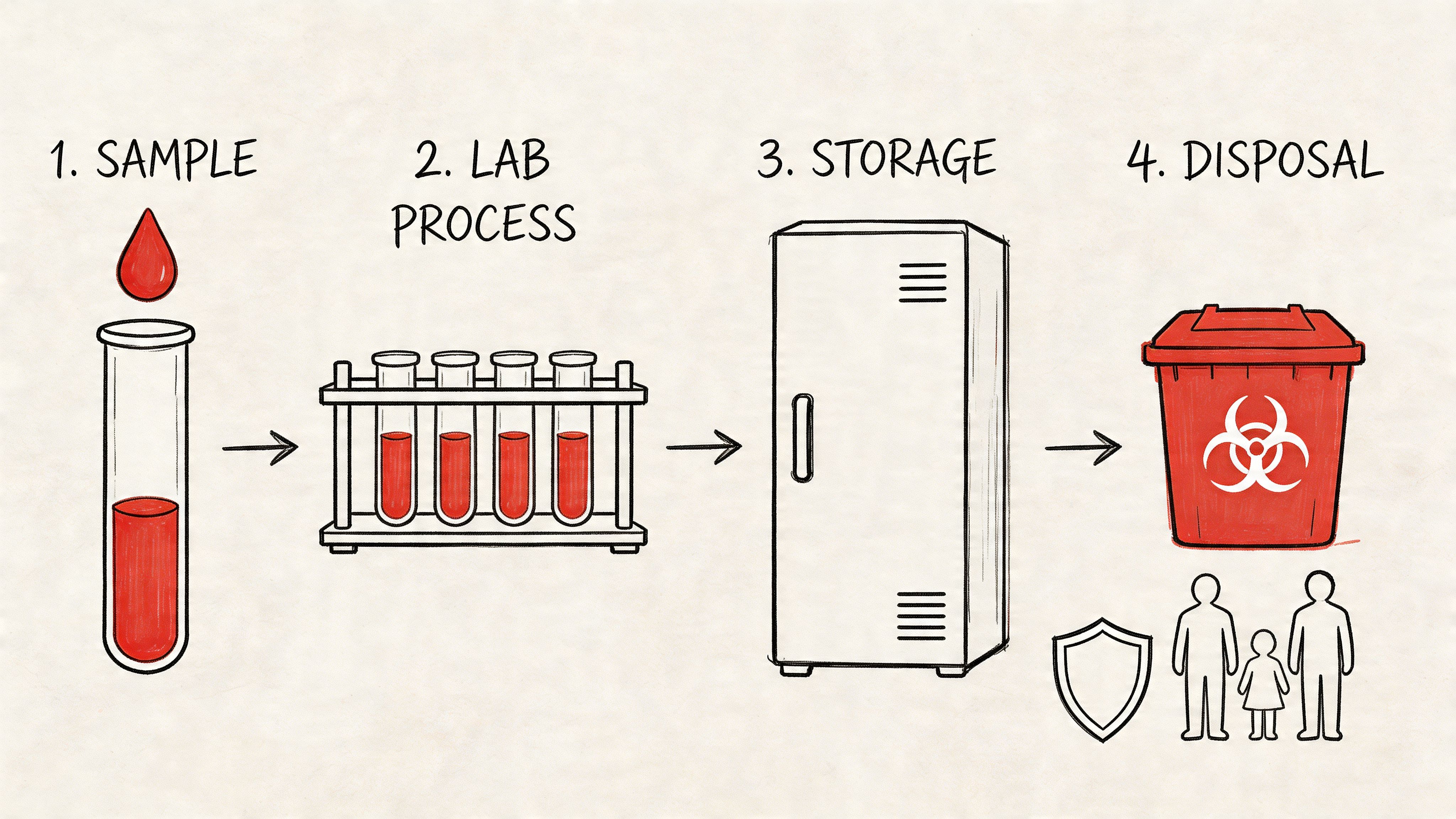
Chain of custody means documenting who receives, handles, transfers, stores, examines, and releases evidence or specimens. That record should be complete enough to show that materials were controlled throughout the process. It becomes especially important when an attorney, county official, or investigator may later need to rely on the report or supporting evidence.
The practice uses direct communication with the responsible parties rather than routing families or officials through a call center. Our forensic consultant services provide additional context about how consultation and reporting can support complex death investigations.
The following video offers a visual introduction to the type of coordination involved in forensic support and onboarding.
Reports and communication
A cause-of-death investigation should distinguish medical findings from legal conclusions. Cause of death identifies the disease, injury, or combination of conditions that produced death. Manner of death classifies the circumstances, such as natural, accident, suicide, homicide, or undetermined, when the responsible authority has sufficient information to make that classification.
Our role is to provide medically supported postmortem findings within the authorized scope of the examination. Families and attorneys should receive an explanation of what was examined, which tests were performed, what remains limited or uncertain, and how the findings affect the report. We use flat-rate, all-inclusive pricing for the services agreed upon, with direct discussion of any additional work before it proceeds.
Frequently Asked Questions About Locum Tenens Pathology
Is locum tenens pathology a short-term stopgap?
Temporary coverage is a structural response to a persistent forensic pathology shortage. The specialty has a limited training pipeline and an aging workforce, so retirements can outpace new entrants. Locum assignments may remain necessary even while an organization recruits for a permanent physician.
That makes temporary staffing more like a bridge in a continuing road network than a patch for a single pothole. It keeps examinations, reports, and consultations moving while the larger workforce problem remains.
Does a temporary pathologist perform the same kind of work as a permanent pathologist?
The assignment defines the work. A locum physician may perform forensic autopsies, anatomic pathology sign-out, frozen sections, clinical services, or consultations. The physician must hold the appropriate license and privileges, and the facility must define the approved scope before independent work begins.
A county should also confirm who will receive cases, review findings, sign reports, and communicate with authorized parties during the assignment.
What should a county consider before bringing in a locum pathologist?
Start with the coverage gap. Identify the required services, expected case volume, facility privileges, schedule, reporting responsibilities, and the length of coverage. The county or employing organization should also establish how records, specimens, photographs, and pending cases will be handled during the transition.
Clear expectations protect continuity. They help the temporary physician enter an existing system without confusing medical responsibilities with the legal authority held by county officials.
How can families or attorneys evaluate an independent autopsy?
Ask who will perform the examination and what certification applies. Confirm who has authority to release the deceased, how transport and storage will be handled, which testing is included, and how the report will distinguish cause of death from manner of death. Also ask how records, photographs, specimens, and chain-of-custody documentation will be preserved.
An independent autopsy can provide a second opinion when a family has unresolved concerns, an attorney needs an objective forensic review, or a prior report leaves important questions unanswered. Its value depends on proper authorization, qualified interpretation, transparent documentation, and clear communication. County investigations remain subject to their required legal authority.
Who can order an autopsy in Texas, and are there exceptions?
The answer depends on the county's forensic structure and the type of examination. For the full legal framework, including the roles of medical examiners, justices of the peace, and public-health restrictions, see Understanding Forensic Coverage Across Texas Counties.
What does Texas Autopsy Services provide for locum and forensic coverage?
Texas Autopsy Services provides independent autopsy, second-opinion, and county forensic pathology support across Texas, with examinations performed by a board-certified forensic pathologist certified by the American Board of Pathology. For help understanding process, transport, authorization, or reporting requirements, contact the team directly or visit Texas Autopsy Services.