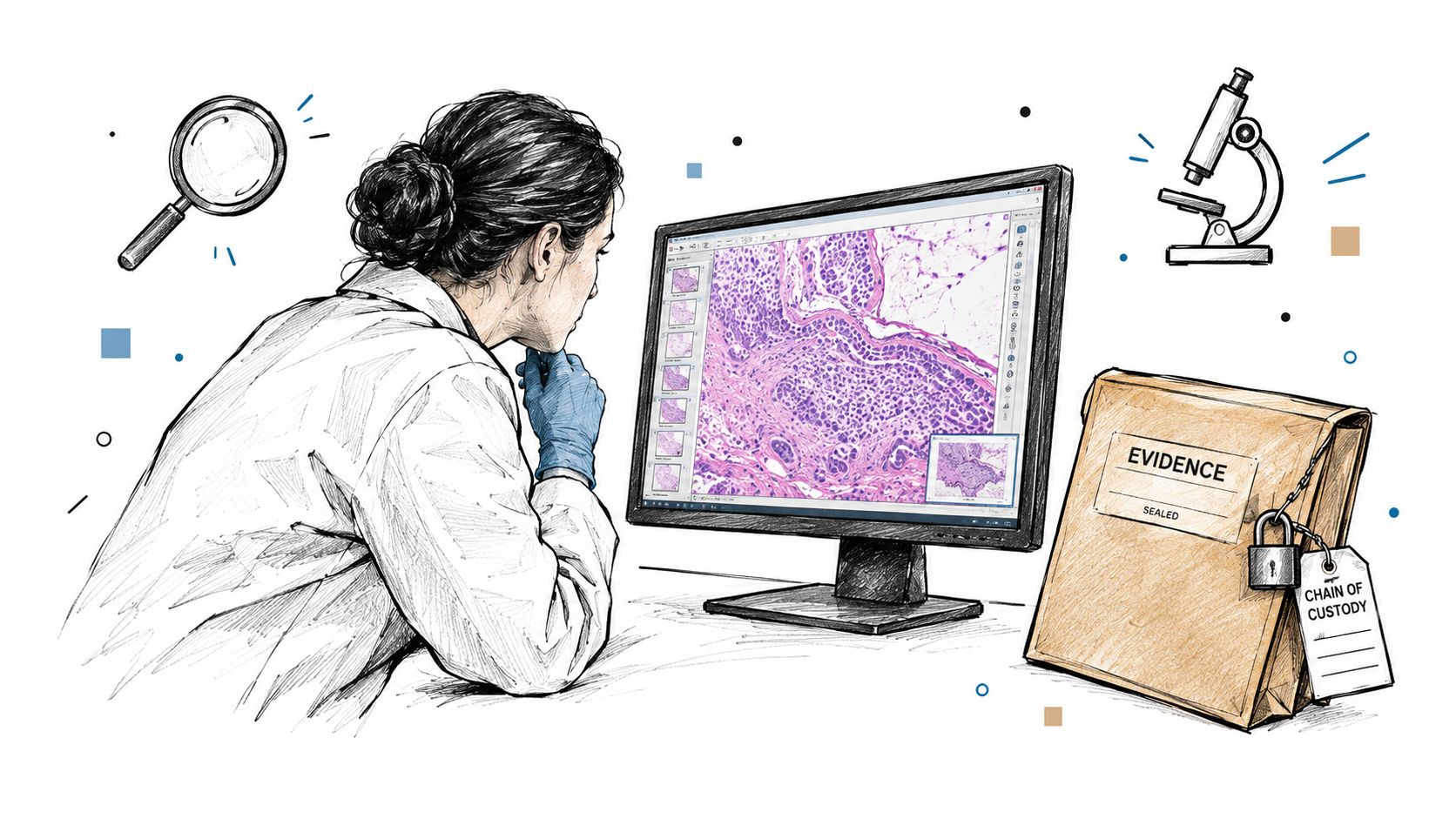
May 4, 2026 · Texas Autopsy Services
What Happens If You Swallow a Bee? Risks & First Aid
Wondering what happens if you swallow a bee? Learn the risks: stings, obstruction, anaphylaxis. Expert advice on first aid and when to call 911.
On this page
By the time one searches what happens if you swallow a bee, the event has already happened. A drink was left open outside, a bee landed in a can, or someone inhaled sharply while biking, working, or talking on a porch. Most of the time, the outcome is far less dramatic than people fear. In a small number of cases, though, the danger comes quickly and demands urgent attention.
At Texas Autopsy Services, every examination is performed by a board-certified forensic pathologist experienced in medicolegal death investigations. Our work centers on one principle: follow the evidence carefully, explain it plainly, and treat the deceased and their family with respect.
TL;DR
- Toxic poisoning from swallowed bee venom is not common, because the venom is destroyed by gastric secretions after ingestion, as described in a peer-reviewed toxicology study in Food Science & Nutrition.
- The main medical risk is not digestion. It is a sting in the mouth or throat, which can cause swelling and, in rare situations, airway compromise.
- Anaphylaxis can begin within 15 minutes to 1 hour after a sting, and people with a prior severe reaction have a 50% recurrence risk on re-exposure, according to the Mayo Clinic details summarized in this Fox News medical report.
- Children and people with known bee sting allergy deserve lower thresholds for emergency care.
- In a fatal case, a forensic pathologist can help determine cause of death, manner of death, and whether the bee sting contributed to the death.
An Unlikely Event Two Potential Outcomes
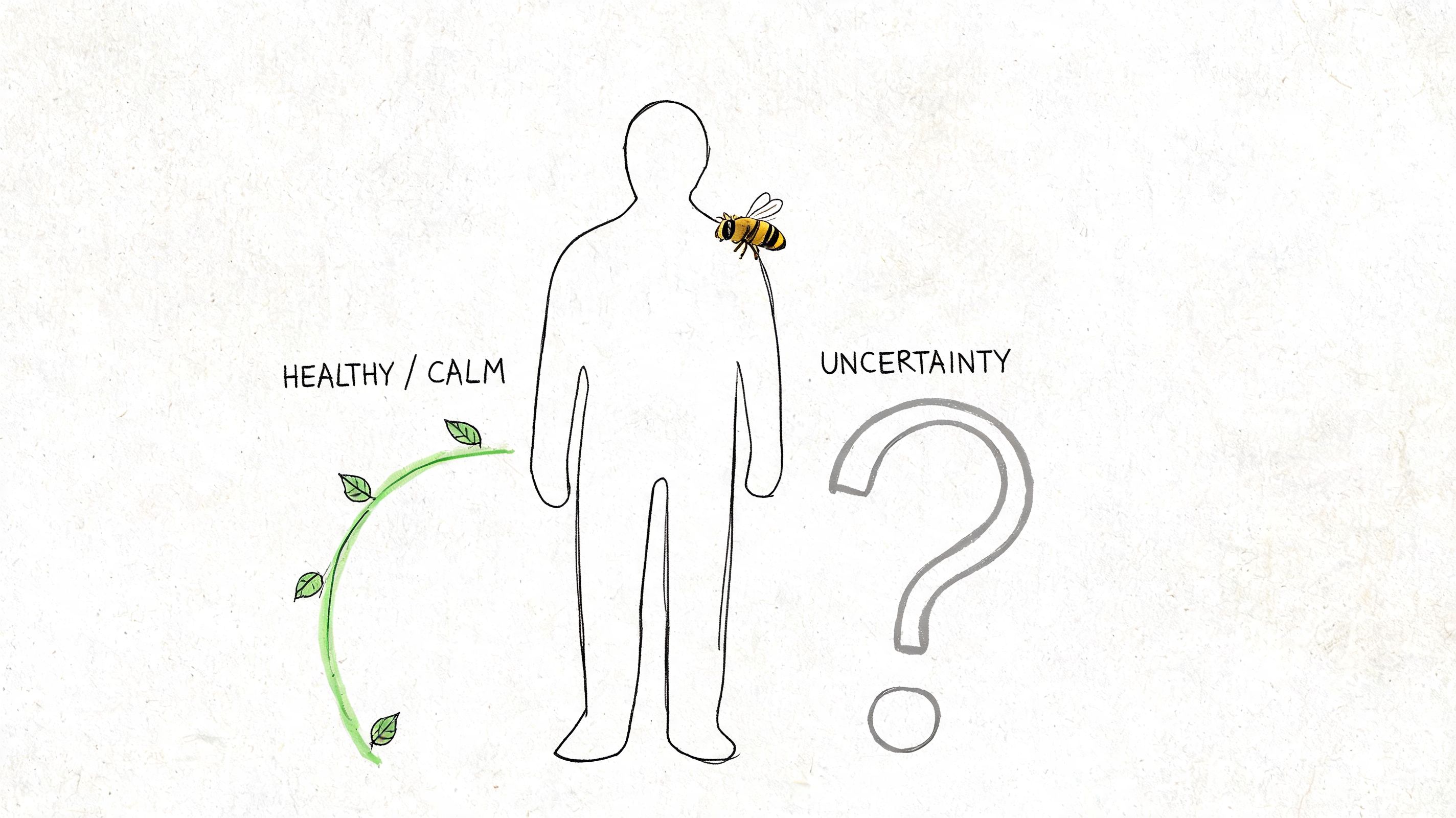
A person is eating outdoors, feels something moving in the mouth, swallows reflexively, and then panics. In practice, the next question is simple. Did the bee go down without stinging, or did it sting somewhere in the mouth or throat first?
When the bee is swallowed without stinging
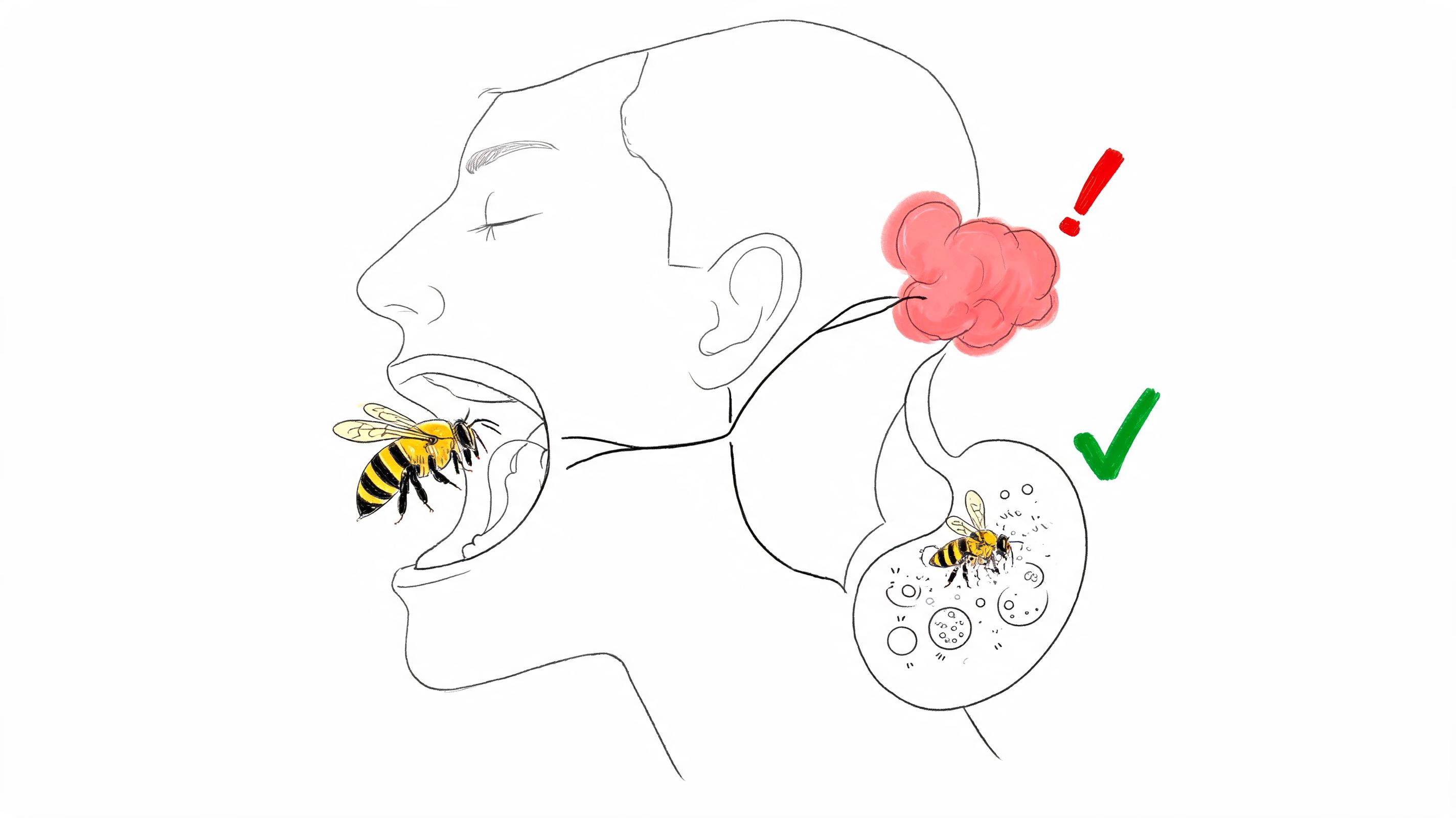
In the usual case, the bee is swallowed, reaches the stomach, and is digested. The venom from a single bee does not act like an injected sting once it is exposed to gastric secretions. From a medical and forensic standpoint, that scenario rarely produces a toxic poisoning picture.
That distinction matters. Families often ask whether swallowing a bee is automatically life-threatening. It usually is not. If there was no sting to the oral cavity or throat, and no allergic reaction followed, the event is commonly limited to a brief fright and temporary discomfort.
Practical rule: A swallowed bee without an internal sting is usually a digestion event, not a venom emergency.
When the bee stings on the way down
The serious version of this event begins before the bee reaches the stomach. A live bee can sting the tongue, soft palate, or back of the throat during swallowing. In those locations, even limited swelling can create a real airway problem.
This is also where my forensic training changes the way I frame the question. In a death investigation, I do not start with "swallowed bee" as the cause. I start by asking whether there was evidence of an internal sting, where it occurred, how fast symptoms developed, and whether the person showed signs of airway compromise or allergic collapse before death.
A throat sting and a swallowed insect are not medically equivalent events. One may pass uneventfully. The other can become an airway emergency within minutes.
For readers comparing this with other small accidental insect exposures, I’ve written separately about bugs in your teeth and what they usually mean medically.
Immediate Risks Airway Swelling and Anaphylaxis
The medical danger comes from two different processes. One is a mechanical problem inside a small space. The other is a body-wide allergic reaction that can progress fast.
Airway swelling in a confined space
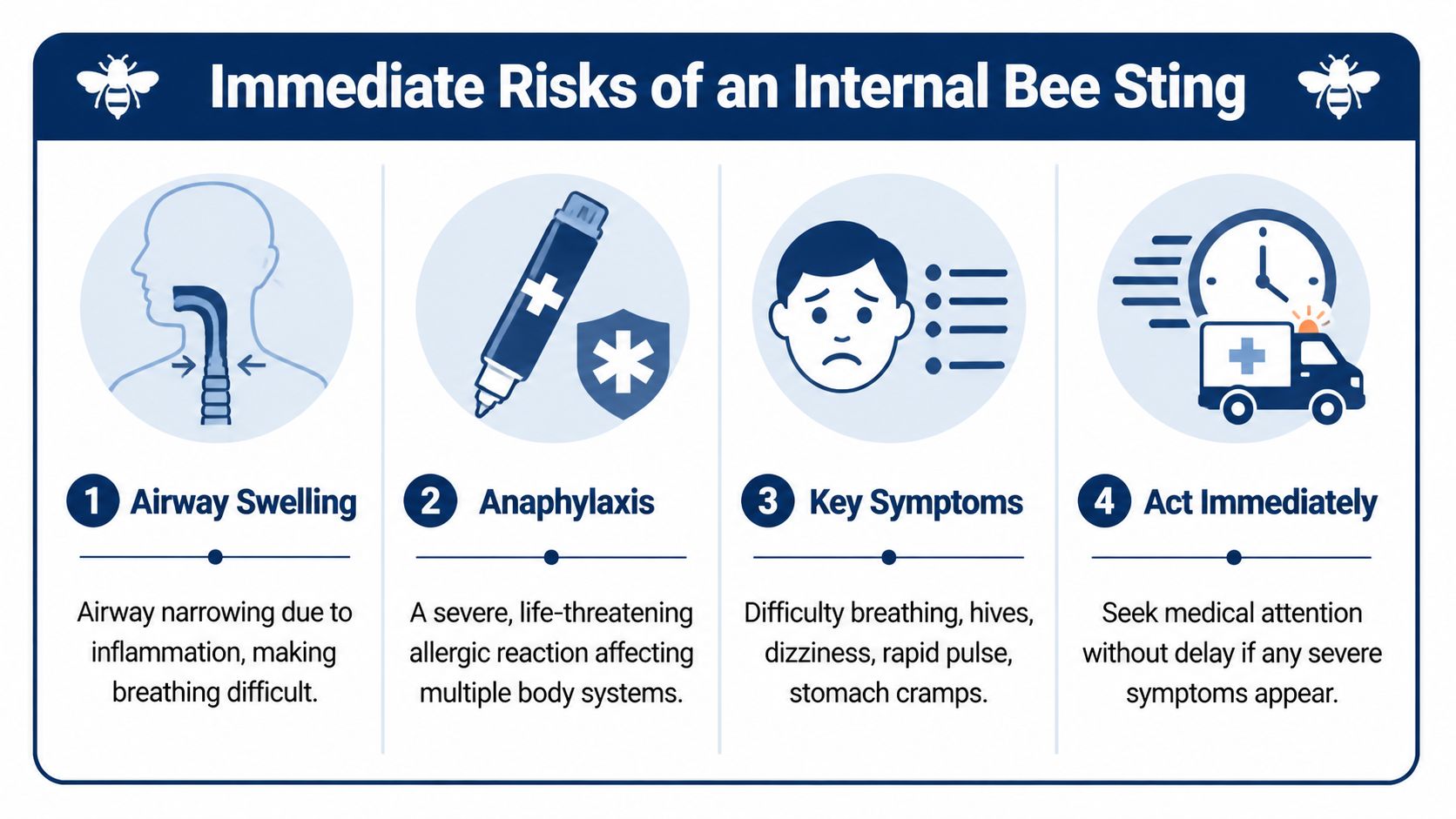
In practice, the immediate concern after an internal sting is often swelling of the tongue, soft palate, back of the throat, or nearby upper airway tissues. Pathologists use the term edema. Clinicians care about what that swelling does. In a hand or foot, swelling is usually painful. In the throat, even modest swelling can reduce the space available for air.
That is why symptom pattern matters more than the story alone. A patient may report pain with swallowing, a feeling that something is stuck, a muffled or hoarse voice, noisy breathing, or visible swelling in the mouth. Trouble handling saliva is especially concerning because it can signal that swelling is interfering with normal swallowing and airway protection.
When airflow becomes restricted, oxygen levels can drop. In someone with underlying heart disease, that added strain can worsen an already fragile situation. The primary emergency, however, is still the airway.
Anaphylaxis and rapid deterioration
Anaphylaxis is different. It is a severe allergic reaction that can affect breathing, blood pressure, skin, and the gastrointestinal tract at the same time or in quick sequence. The onset may be abrupt. A person who seems stable at first can deteriorate within minutes.
Warning signs include:
- Hives or a new widespread rash
- Swelling of the lips, tongue, or throat
- Wheezing or shortness of breath
- Chest tightness
- Vomiting or diarrhea after the sting
- Dizziness, fainting, or sudden weakness
Moderate reactions can also occur, with swelling and pain that intensify before they settle. Those cases are uncomfortable and require observation, but they do not carry the same immediate mortality risk as progressive airway obstruction or full anaphylaxis.
From a forensic perspective, families often ask whether a fatal collapse was caused by suffocation, allergic shock, or a cardiac event triggered during the reaction. Those are separate mechanisms. I do not assume one from the history alone. After death, we correlate witness accounts, emergency records, scene findings, and autopsy evidence before assigning cause and manner of death. That distinction matters medically and legally, especially when the event unfolds in public, at work, or during travel.
Rare cardiac complications can occur during a severe allergic reaction or during profound oxygen deprivation. They are uncommon, and they should be described with restraint. In death investigation, dramatic retellings are common. Objective findings are what support the final conclusion.
Decisive Actions First Aid and Emergency Response
When a bee is swallowed, the right response depends on symptoms, not panic. In many cases, observation is appropriate. A smaller group needs emergency treatment right away.
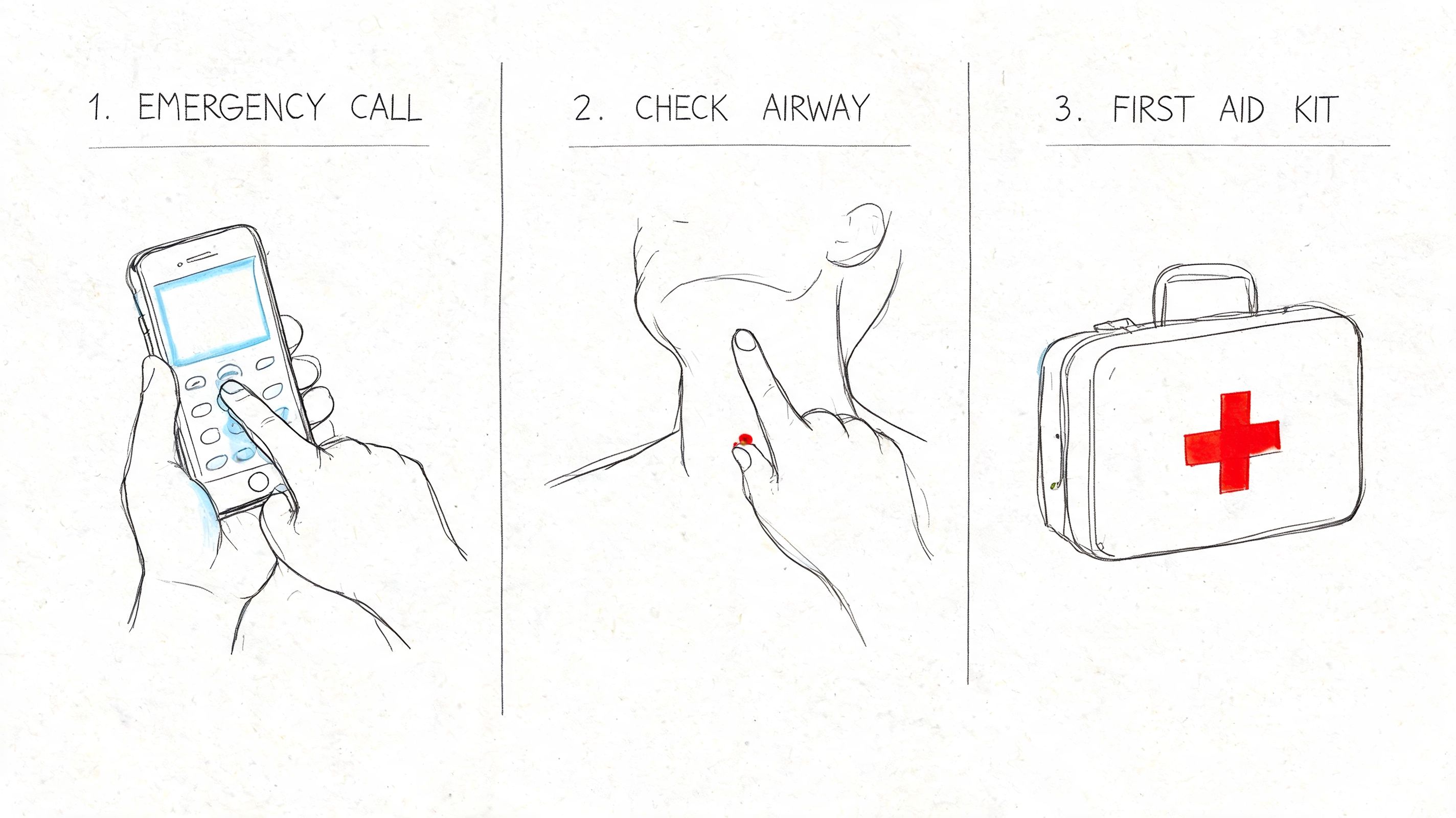
What to do first
Start with calm, direct observation.
- Stop eating or drinking immediately. Further swallowing can worsen pain and make it harder to judge what is changing.
- Look for early signs of an internal sting. Mouth pain, throat discomfort, swelling, hoarseness, coughing, or trouble swallowing matter more than the fact of swallowing the insect.
- Watch breathing, not just appearance. A person can look anxious for many reasons. Breathing difficulty is the key red flag.
If symptoms remain minor and limited to local mouth discomfort, cold fluids or a cold compress to the outside of the mouth or neck may help with comfort while the person is observed. If symptoms are progressing, home observation is not enough.
When to call 911
Call emergency services right away if there is:
- Trouble breathing
- Trouble swallowing saliva
- Rapidly increasing swelling
- Wheezing
- Dizziness, faintness, or collapse
- Chest tightness
- A known history of severe bee sting allergy with any concerning symptom
Emergency threshold: A throat sting is different from a sting on the skin. If breathing or swallowing is changing, that is an emergency until proven otherwise.
This video offers a general visual overview of emergency response principles:
What helps and what doesn’t
An epinephrine auto-injector, such as an EpiPen, is the critical medication for a person who is showing signs of anaphylaxis or who has a prescribed device and a known severe allergy. Antihistamines may help with some allergic symptoms, but they are not a substitute for epinephrine when the reaction is severe.
What does not help is delay. Waiting to see whether throat swelling “settles down” can waste the most important treatment window.
Special Considerations for Children and Allergic Individuals
Children and allergic individuals deserve a different level of caution. The reason is straightforward. A child’s airway is smaller, so swelling that might remain uncomfortable in an adult can become dangerous more quickly in a child.
Young children also don’t always describe symptoms clearly. They may not say, “My throat feels tight.” They may drool, refuse to swallow, cry when trying to drink, or become unusually quiet and distressed. Adults have to interpret behavior, not just words.
Why prior allergy changes the calculation
A person with a known bee sting allergy should treat a possible internal sting as a serious event from the start. If they have a prescribed epinephrine auto-injector, it should be immediately accessible, and family members should know where it is and how to use it.
Preparedness matters more than reassurance in this group. An outdoor event, sports field, ranch, garden, or picnic table can become a high-risk setting if no one has the allergy plan on hand.
Thinking beyond the moment
Some families also ask about broader immune issues after an incident like this. That discussion belongs with the treating clinician or allergist, but for readers who are already exploring addressing chronic immune issues, it can be useful to separate long-term immune management from the immediate emergency response required during a suspected internal sting.
The key point is simple. For a child or an allergic person, don’t minimize symptoms because the event sounds unusual. Unusual events still follow ordinary physiology.
The Forensic Investigation of a Rare Fatality
Most swallowed-bee events never become forensic cases. When one does, the investigation must answer a narrow and important question. Did the bee contribute to death, and if so, how?
That is different from repeating a family story or a witness impression. Cause-of-death work requires findings.
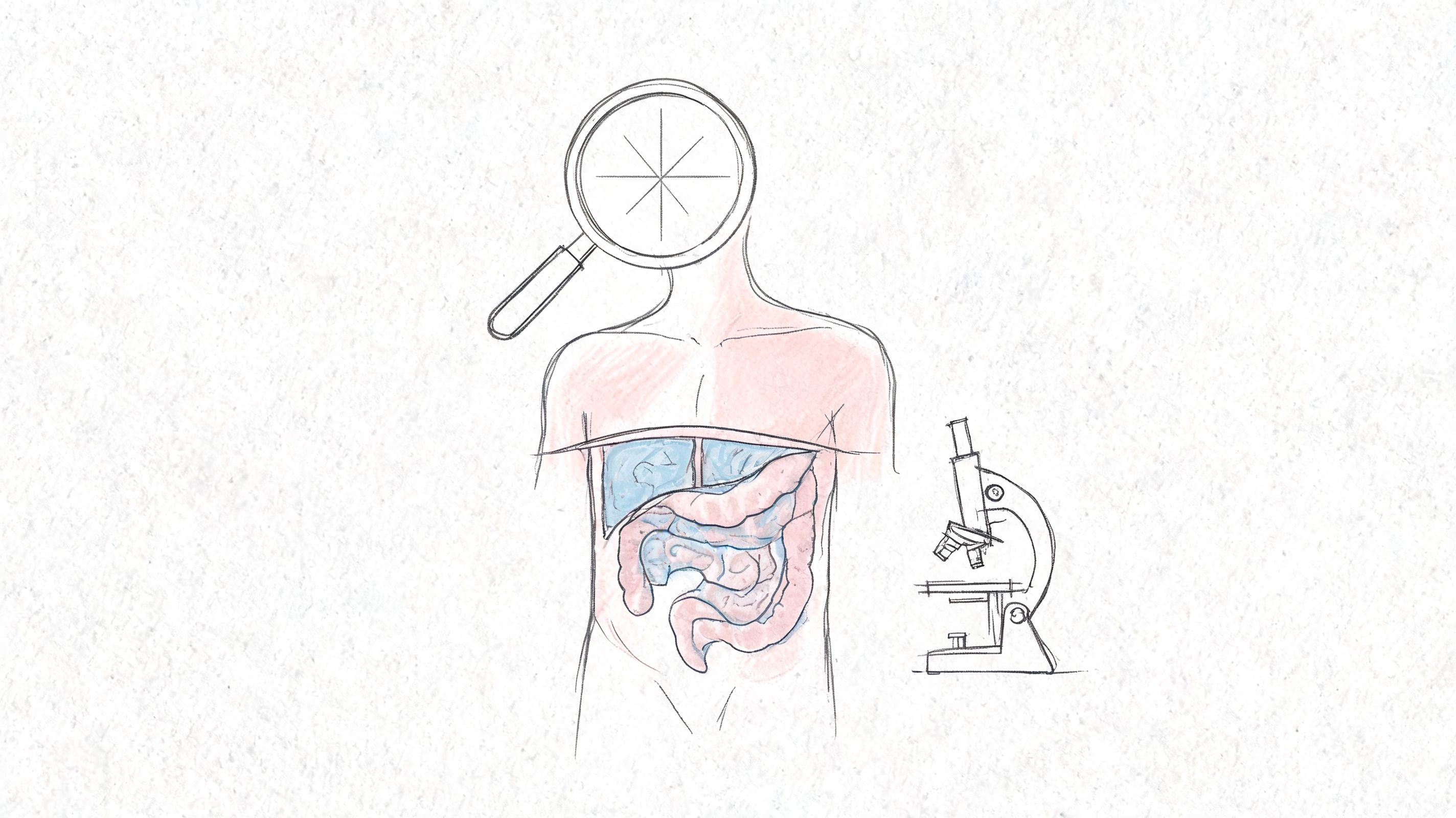
What a forensic pathologist looks for
A postmortem examination can confirm a fatality from a bee sting through specific findings. As described in Dr. Vaibhav Mishra’s discussion of postmortem proof of bee sting fatality, bee venom contains components such as melittin and phospholipase A2 that trigger a rapid inflammatory cascade. Tissue examination may show eosinophilic infiltration, and immunohistochemistry can help identify venom antigens in tissue.
In practical terms, that means we look for:
- The likely sting site, especially in the oral cavity, pharynx, or upper airway
- Airway swelling, including laryngeal edema when present
- Microscopic tissue changes consistent with an allergic or inflammatory reaction
- Context from scene and medical history, including prior allergy history and timing of collapse
Cause of death and manner of death
Families often hear these terms but aren’t always given a plain-language definition.
| Term | Plain-language meaning |
|---|---|
| Cause of death | The disease or injury that led to death |
| Manner of death | The classification of how the death occurred, such as natural, accident, suicide, homicide, or undetermined |
| Chain of custody | The documented handling of specimens and evidence so their identity and integrity can be verified |
A bee-related death, if proven, is often evaluated in the setting of an accidental exposure. But classification depends on the full facts, including medical findings and investigative context.
Objective proof matters. A reported sting, by itself, doesn’t answer the legal or medical question.
For readers who want a broader explanation of death certification standards, I’ve written about how a coroner determines cause of death and what evidence supports that conclusion.
Why this matters to families and attorneys
In a rare fatal case, an independent review can clarify whether the death resulted from airway obstruction, anaphylaxis, a cardiac event associated with the reaction, or an unrelated condition that happened at the same time. That distinction matters emotionally, medically, and legally.
It also matters for dignity. Families deserve a careful answer, not a dramatic one.
Frequently Asked Questions About Bee Ingestion
Can swallowing a bee hurt you days or months later
In most cases, the danger declares itself early. If a person is breathing normally, swallowing without pain, and remains stable after the initial observation period, delayed serious injury becomes much less likely.
The exceptions usually follow a severe first event. In practice, the lingering issues I worry about are complications from prior oxygen deprivation, irritation or injury to the throat after a sting, and the psychological aftermath of a frightening choking or allergic episode. Those problems are not unique to bee ingestion, but they can follow it when the reaction was intense enough to require emergency treatment.
Can the bee cause a reaction even if it didn’t sting
Yes, although that is uncommon. A person may react to material carried on the insect, including pollen or other environmental allergens, or may misinterpret the event and later be found to have had another trigger at the same time.
From a forensic standpoint, that distinction matters. If death or collapse is attributed to a swallowed bee, the history has to be matched to medical findings, witness accounts, scene information, and any documented allergic history. A bee being present does not answer the whole question by itself.
Is there anything useful to do at home after a mild event
Home care begins with observation. Watch for throat pain, hoarseness, coughing, wheezing, lip or tongue swelling, vomiting, hives, or any change in breathing. Symptoms can progress quickly, so a person who seems comfortable at first should still be monitored closely for the next several hours.
Do not try blind finger sweeps or home throat exams. Those efforts can worsen gagging, vomiting, or airway distress.
For people trying to prevent a repeat event, the practical steps are simple. Avoid drinking from open cans left outdoors, keep sweet beverages covered, and be cautious around trash areas, flowering plants, and outdoor food. For home and yard prevention context, this guide to understanding bee infestations is a practical place to start.
Is swallowing a bee worse than swallowing another bug
Sometimes, yes. The concern is not the insect being swallowed. The concern is the possibility of a sting inside the mouth or throat and the chance of an allergic reaction.
That makes bee ingestion different from many routine accidental bug ingestions, which are unpleasant but usually minor. For a useful comparison, see what happens if you eat a fly and why those cases are usually far less medically significant.
When should a family consider a second opinion autopsy
A second opinion is reasonable when the story, the records, and the official conclusion do not fit together cleanly. I see that question arise when witnesses describe sudden throat symptoms but the death certificate lists a broad cause without explaining the mechanism, or when an allergic death is suspected but not well supported by the available evidence.
An independent forensic review can help answer whether the bee was the true cause, a contributing event, or an unrelated finding that happened near the time of collapse. That level of review can be important for families seeking clarity and for attorneys assessing causation.
If your family, law firm, hospital, or county is facing unanswered questions after an unexpected death, Texas Autopsy Services can help provide careful, objective review. I approach every case with the same priorities: medical accuracy, legal clarity, and respect for the person who died.