June 4, 2026 · Texas Autopsy Services
Are Beetles Poisonous? Expert Pathologist Explains
Are beetles poisonous? A forensic pathologist discusses toxic species, cantharidin, and their role in cause of death investigations. Essential info for 2026.
On this page
A beetle on a porch rail, a child reaching to pick it up, a dog nosing through the grass, or a horse owner checking a new bale of alfalfa. Those are the moments when the question becomes practical instead of academic.
In my work as a board-certified forensic pathologist, I look closely at what entered the body, how it entered, and what effect it had. People often associate toxicology with medications, alcohol, or illicit drugs. Nature matters too. Plants, mushrooms, and insects can all produce chemicals that injure tissue or, in rare circumstances, contribute to death.
When people ask are beetles poisonous, the medically accurate answer is that most are not, but a few are important because of the way they defend themselves. The Smithsonian notes that beetles are an exceptionally diverse insect order, with about 350,000 described species worldwide and nearly 30,000 species in the United States alone, which is why broad statements usually fail on this topic. A small minority carry medically relevant chemical defenses, while most are harmless to people (Smithsonian beetle overview).
That distinction matters in forensic practice. A complete cause of death investigation depends on separating a dramatic possibility from a realistic one. If you're trying to understand what forensic medicine involves, my overview of what a forensic pathologist does may help frame the role. When a death scene includes environmental exposures, body fluids, decomposition, or unattended circumstances, families and property owners also benefit from a practical comprehensive guide to biohazard cleanup, because safe handling after a death is a separate issue from determining medical cause.
An Introduction from a Forensic Pathologist
Why this question comes up so often
Individuals asking about beetles rarely do so out of scientific curiosity alone. They usually want to know one of four things. Is the insect dangerous to touch, dangerous to swallow, dangerous to pets, or capable of causing serious illness.
Those are sensible questions. They also require precision. In forensic medicine, a vague category like "dangerous bug" doesn't help much. I need to know the likely species, the route of exposure, the timing, and whether the reported symptoms fit the chemistry of that organism.
What I focus on in toxicology
In my work, natural toxins follow the same logic as any other poison. I ask whether the chemical is an irritant, whether it damages skin or mucous membranes, whether it causes organ injury after ingestion, and whether there is enough history and physical evidence to connect exposure to outcome.
For beetles, the key takeaway is simple. Most beetles are not dangerous to people. WebMD states that overall beetles are not dangerous to people, do not attack people, do not suck blood, and do not give people diseases, while noting that some species are toxic or chemically defensive. That is why the answer to are beetles poisonous is not yes or no in the abstract. It depends on the beetle and on the type of exposure.
Clinical perspective: The wrong question is "Are beetles bad?" The right question is "Which beetle, and what happened after contact or ingestion?"
Why a forensic lens helps
A forensic pathologist is trained to sort rare possibilities from likely causes. That matters because natural toxins can be overestimated by fear or underestimated because they seem ordinary. Beetles are a good example of both errors.
For most families, a beetle on the windowsill isn't a medical emergency. For a veterinarian, a rancher, or an investigator reviewing a sudden unexplained animal death, a blister beetle in hay may matter a great deal. That difference in context is where practical medicine lives.
Poisonous Versus Venomous A Critical Distinction
The route of exposure changes the answer
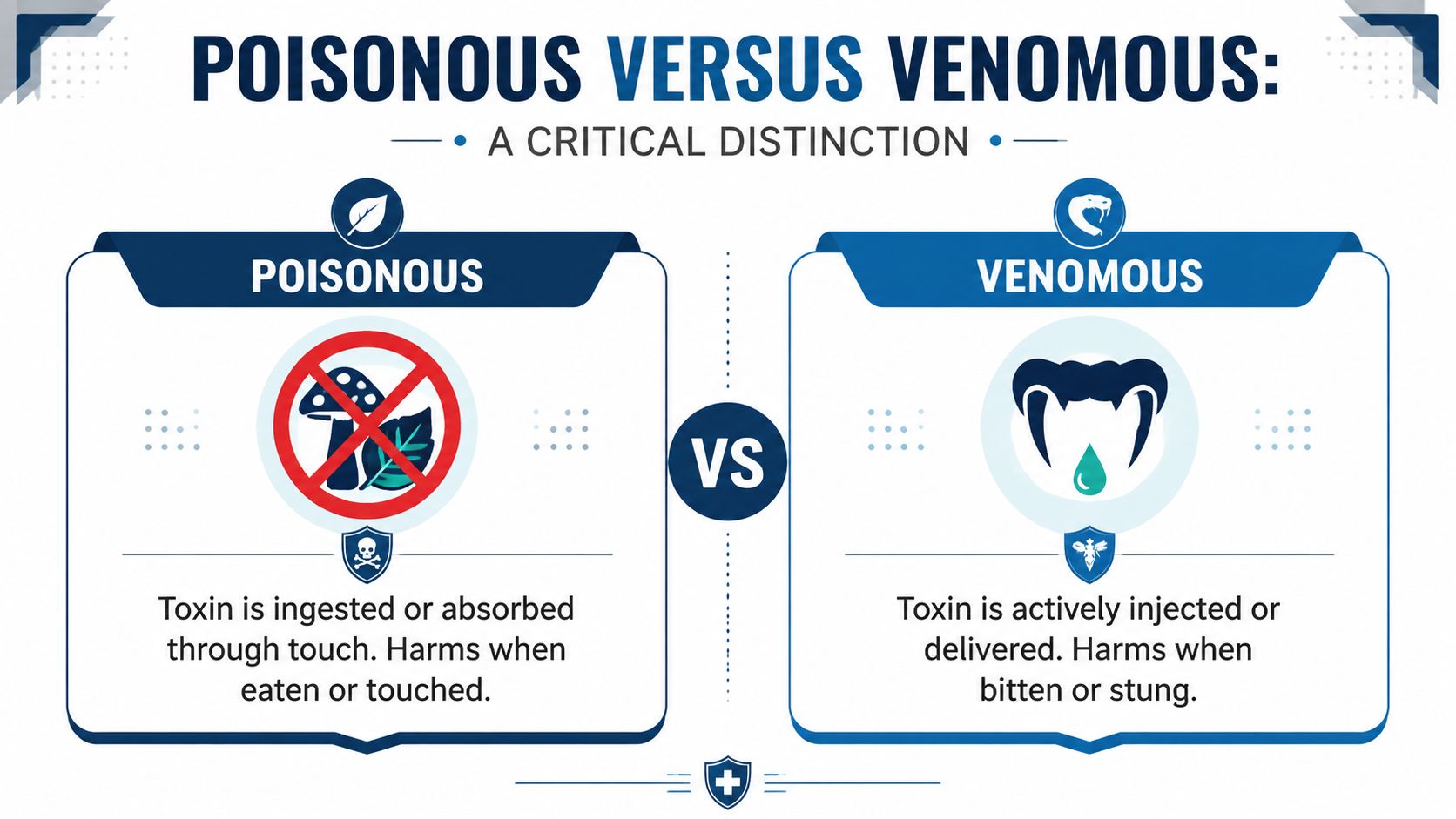
People often use poisonous and venomous as if they mean the same thing. In medicine and forensic pathology, they do not.
A poisonous organism causes harm when its toxin is touched, absorbed, or ingested. A venomous organism delivers toxin by injection, usually through a bite or sting. That difference helps determine what kind of injury to expect and where to look for evidence.
| Term | How harm occurs | Practical example in beetles |
|---|---|---|
| Poisonous | Toxin is absorbed or ingested | Blister beetles and their chemical toxin |
| Venomous | Toxin is injected | A rare exception among beetles |
After that distinction is clear, beetles become easier to understand. Most medically relevant beetles fit under poisonous or chemically irritating, not venomous.
A short visual explanation can help:
The exception that proves the rule
Biology always has exceptions. The Amazonian scorpion beetle (Onychocerus albitarsis) is described as the only known beetle with a venomous sting, which makes it an outlier rather than the standard model for beetle injury (Onychocerus albitarsis reference).
That matters because many articles collapse all of this into one label. They call a beetle poisonous when it is irritating on contact, or they imply stinging behavior when the organism is using a surface chemical defense.
In forensic work, route matters. A swallowed toxin, a skin irritant, and an injected venom leave different histories and different findings.
What works and what doesn't in public advice
What works is identification and exposure history. Did someone touch the insect, crush it, or swallow it. Was there immediate burning or blistering. Was an animal exposed through feed.
What doesn't work is blanket language. Saying all beetles are harmless is inaccurate. Saying beetles are poisonous as a group is also inaccurate. The medically sound answer is narrower and more useful.
Cantharidin The Toxin of the Blister Beetle
The beetle that matters most medically
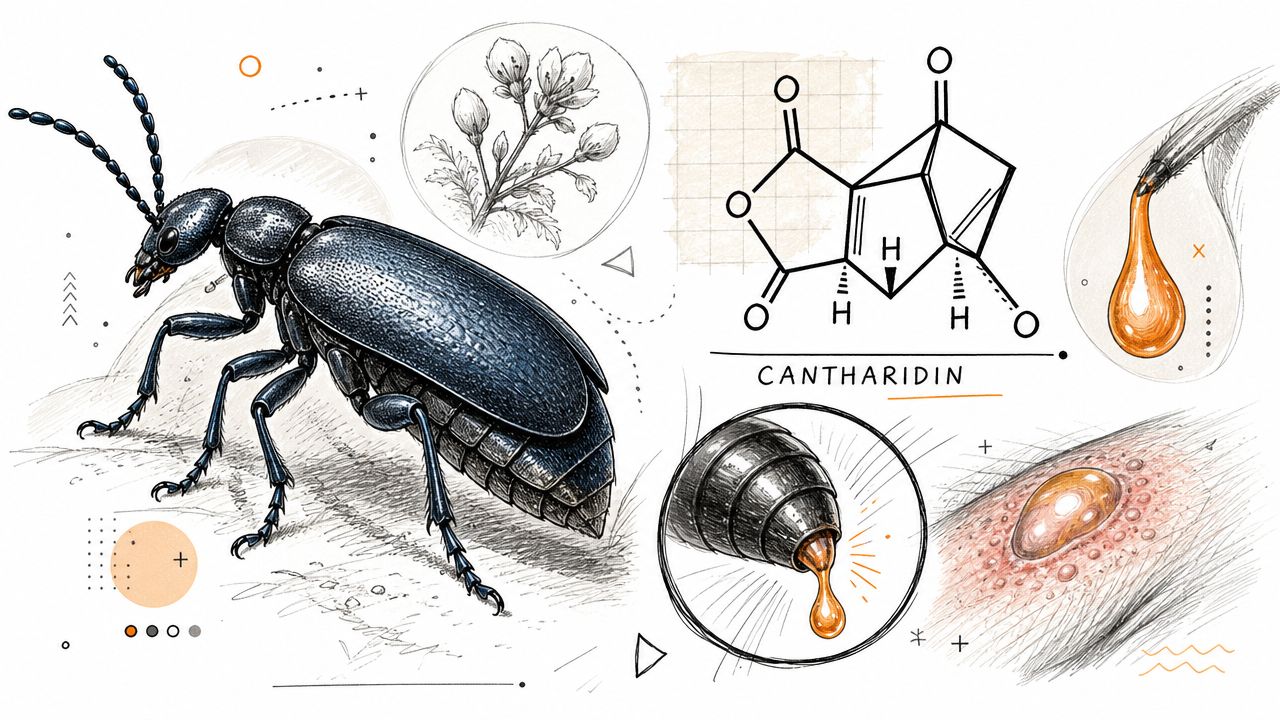
When this question becomes serious, the discussion usually centers on blister beetles. WebMD specifically identifies blister beetles as poisonous, and in medical and veterinary settings they are the best-known example of a beetle with meaningful toxic potential.
Blister beetles produce cantharidin, a defensive toxin. In practical terms, that means the insect doesn't need to bite or sting to cause injury. Contact alone can produce irritation and blistering, especially if the beetle is crushed against the skin.
What cantharidin does to tissue
Cantharidin is an irritant. On skin, the effect can be rapid burning, redness, and blister formation. If ingested, the concern becomes much more serious because mucous membranes and the gastrointestinal tract are more vulnerable to chemical injury.
North Dakota State University notes that cantharidin poisoning can cause mouth sores, colic, diarrhea, bloody feces, dehydration, increased heart rate, and, in severe cases, death. The same source estimates that ingestion of only about 30 to 50 striped blister beetles could be potentially lethal to a horse, and it stresses that dead beetles remain hazardous because they still contain high levels of cantharidin (NDSU guidance on poisonous blister beetles in hay).
That last point is easy to miss and critically important. Killing the beetle doesn't neutralize the toxin.
Why this matters so much in Texas
Texas families may encounter blister beetles outdoors, but the larger practical concern is agricultural. Horses are especially vulnerable when beetles are incorporated into alfalfa hay during cutting and baling. A person may only see a dry bale. The toxin may still be there.
From a forensic standpoint, this is a classic example of a natural toxin with very different human and animal relevance. Human exposures are usually limited and recognizable as irritant injuries. Animal exposures can be severe because the route is ingestion and the dose can accumulate unnoticed in feed.
Practical rule: If blister beetles are suspected in hay, the risk doesn't end when the insects are dead. The toxin persists.
Identifying Cantharidin Poisoning in a Postmortem Examination
What starts the investigation
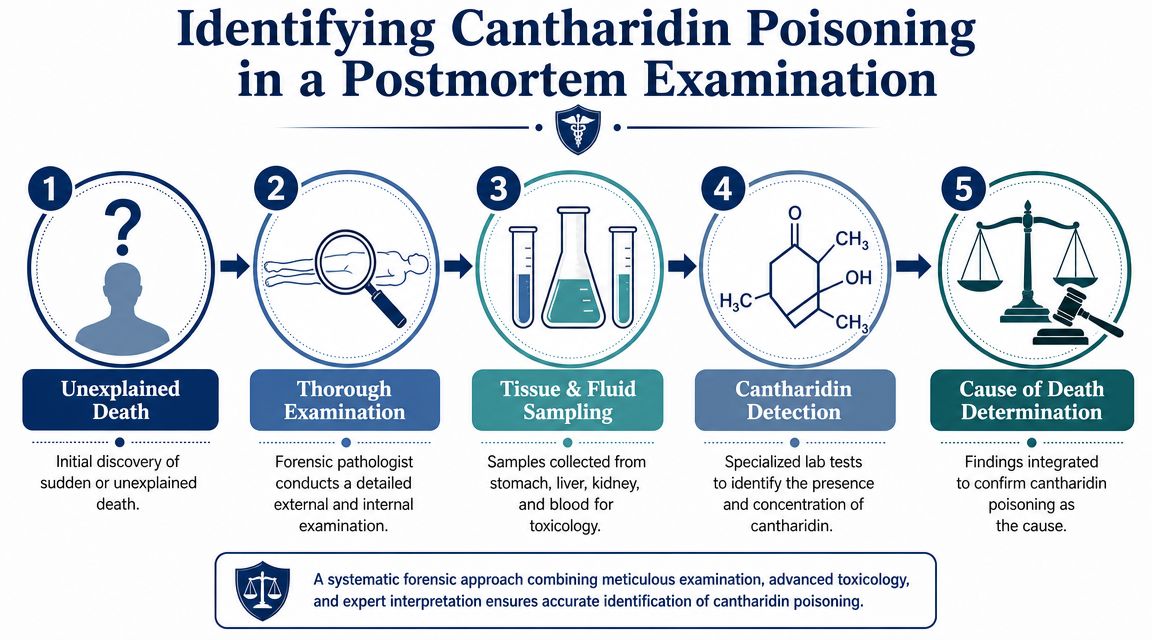
In my work, unexplained deaths rarely announce their cause. The process begins with history. Was there a reported exposure to insects. Was there hay contamination. Were there signs of gastrointestinal distress, oral irritation, or sudden collapse before death.
Those facts guide the autopsy, but they do not replace it. A thorough postmortem examination is still necessary because many conditions can mimic toxic exposure.
What I would examine
Most beetles are not poisonous to humans. The main medically relevant exception is the blister beetle in the family Meloidae, which secretes cantharidin and can cause rapid skin irritation and blistering on contact (cantharidin overview).
If cantharidin exposure were suspected in a postmortem setting, I would focus on several categories of evidence:
- External findings such as skin irritation or blistering if direct contact occurred.
- Oral and upper digestive tract injury because an ingested irritant may damage the mouth, esophagus, and stomach lining.
- Lower gastrointestinal changes if there was significant chemical injury during passage.
- Bladder and urinary tract irritation because toxic irritants can affect more than one epithelial surface.
- Scene and history correlation including possible access to contaminated hay or crushed insects.
A visual summary of that forensic sequence is helpful: example toxicology report
Why toxicology confirms what anatomy suggests
Autopsy findings can raise suspicion, but toxicology helps establish whether the suspected chemical was present. In a possible cantharidin case, sample collection matters. Depending on the circumstances, that can include blood, urine, and stomach contents, along with retained material that may help identify what was ingested.
Medical-legal precision is essential. Irritated tissue by itself is not enough. A proper cause of death determination integrates history, examination, laboratory findings, and exclusion of competing explanations.
A postmortem diagnosis is strongest when the anatomy, the toxicology, and the scene all point in the same direction.
Why this matters to families and attorneys
Rare toxic exposures are easy to dismiss when they are uncommon and easy to overstate when they are alarming. Neither approach serves the truth. Independent forensic review can be valuable when a standard explanation doesn't fit the available facts or when toxic exposure remains an unresolved possibility.
For clarity, a cause of death is the disease or injury that directly led to death. A manner of death is the broader legal classification such as natural, accident, suicide, homicide, or undetermined. Chain of custody means documenting who collected, handled, transferred, and tested evidence so results remain reliable in a medical-legal setting.
Practical Guidance for Texans on People Pets and Livestock
For people and children
Most human encounters with beetles are low risk. The practical advice is simple. Don't let children handle unknown insects, don't crush unfamiliar beetles against bare skin, and don't treat accidental ingestion as trivial if symptoms develop afterward.
If skin contact is followed by burning or blistering, wash the area gently with soap and water and seek medical evaluation if the reaction is significant. For accidental bug ingestion, context matters. The answer isn't always alarm, but it also shouldn't be guesswork. I addressed that broader issue in a discussion of what happens if you swallow a bug.
For pets and farm animals
The more important Texas risk often involves animals rather than people. Mallard Creek Animal Hospital notes that cantharidin poisoning is most common in horses that eat alfalfa hay contaminated with blister beetles, while other animals and people can also be affected. That makes beetle toxicity a practical one health issue where animal and human well-being overlap (veterinary discussion of insects pets should not eat).
For households and ranch settings, the useful approach is prevention:
- Watch feed sources carefully if you care for horses or livestock, especially when alfalfa hay is involved.
- Discourage pet insect eating because species identification is often uncertain after the fact.
- Treat sudden distress seriously in animals showing oral irritation, colic-like behavior, or other abrupt illness after possible feed exposure.
- Share exposure history promptly with your veterinarian. Saying "possible blister beetles in hay" is far more useful than saying only that the animal became sick.
What practical prevention looks like
What works is routine observation and clear communication. Inspect hay before feeding. Keep children from collecting unknown insects. Remove pests without handling them directly when identification is uncertain.
What doesn't work is relying on color or general appearance alone. Many beetles are harmless look-alikes. In small farm and backyard settings, broader toxicology awareness also helps. For readers managing mixed animals, this guide for backyard chicken farmers is a useful example of how everyday environmental toxins can affect animal health in ways people don't anticipate.
Clear Answers and Compassionate Care
The short answer
If someone asks me directly, are beetles poisonous, I answer this way. Most beetles are not poisonous to people. A small number are toxic or chemically defensive, and the most important practical example is the blister beetle.
That answer is more accurate than either extreme. Fear of all beetles is not warranted. Complete dismissal of risk is not warranted either.
Why precision matters after a loss
In my work, public education and death investigation are closely connected. The same principles apply in both settings. Identify the exposure. Document the route. Compare the symptoms or injuries to what the toxin is known to do. Confirm when possible with laboratory testing. Avoid assumptions that outrun the evidence.
That is especially important when a family is grieving. People deserve straightforward language, not speculation. If a natural toxin is relevant, it should be evaluated carefully. If it isn't, the record should make that clear.
A final practical takeaway
Respect for natural toxins doesn't require alarm. It requires attention. Most beetles can be left alone without concern. A blister beetle should not be handled casually. Hay contamination deserves prompt action. Unexplained illness after a suspected exposure should be described accurately to the treating clinician or veterinarian.
The same standard of care applies after death. Answers must be careful, documented, and unbiased. When postmortem services are needed, coordination with experienced funeral professionals also matters, including partners such as Waterloo Mortuary Partnership, so that every step is handled with dignity.
If you need a medically grounded explanation, clarity is possible. It often begins with asking a simple question carefully.
If you need clear answers after a death, or you need an independent review grounded in forensic pathology, contact Texas Autopsy Services. I approach every case with medical precision, respect for the deceased, and compassion for the people seeking the truth.