June 11, 2026 · Texas Autopsy Services
Understanding Your Malignant Biopsy Results
Received malignant biopsy results? Our pathologists explain what the report means, how to read it, and what questions to ask your doctor. Get clear answers.
On this page
- Receiving a Difficult Diagnosis
- What Malignant Means in Pathology
- The Pathologist's Process From Tissue to Diagnosis
- Decoding Key Elements of Your Pathology Report
- What Happens After a Malignant Biopsy Result
- Requesting a Second Opinion on Your Pathology
- A Checklist of Questions for Your Doctor
- Frequently Asked Questions About Biopsy Results
- Malignant means the sampled cells show cancerous features under the microscope.
- A pathology report is not read in isolation. Imaging, symptoms, and clinical history often shape how findings are interpreted.
- Terms like grade, stage, margins, and biomarkers describe different parts of the picture. They are not interchangeable.
- A second pathology review is a standard medical step in selected cases, especially when the biopsy result and imaging do not match.
- Clear questions for your doctor can make the next appointment more productive and less overwhelming.
A person often opens the patient portal expecting a routine update and instead sees a word that changes the day. Malignant. Then the mind starts racing. Is this definite cancer? How serious is it? Did the biopsy show everything? What happens next?
We understand why that moment feels disorienting. As board-certified forensic pathologists, our daily work centers on tissue, diagnosis, and careful interpretation of medical findings. Although our practice focuses on forensic pathology, we bring the same discipline to explaining living biopsy reports in plain language. Families deserve words they can understand, especially when the medical language feels cold or compressed.
What follows is educational information, not medical advice. The purpose is to help you read the report more calmly, understand what the terms usually mean, and prepare for conversations with your treating physicians.
Receiving a Difficult Diagnosis
Many readers arrive here within hours of seeing the report. The call may have been brief. The portal may have posted the result before a physician had time to explain it. Often, a family member is reading over someone else's shoulder, trying to translate phrases that seem written for specialists rather than patients.
A common scene looks like this. A biopsy was done because something on imaging looked concerning, or because there was a lump, bleeding, pain, or another symptom that needed an answer. The report comes back with technical phrases, a final diagnosis, and several terms that sound alarming all at once. Even well-informed people can lose their footing when the wording becomes personal.
A pathology report is designed to be medically exact. It is not designed to be emotionally easy to read.
That difference matters. Reports are written to guide treatment decisions, document what was seen under the microscope, and communicate with surgeons, oncologists, radiologists, and primary care clinicians. They are often accurate but not gentle.
During this stage, many people also need help managing the emotional load while they wait for the next appointment. Some readers find practical support in DeTalks on coping strategies, especially when the first hours after difficult news feel scattered and hard to process.
What people often misunderstand first
- The word feels final: It often sounds like every important question has already been answered. Usually, it hasn't.
- The report may be brief: A short report can still be accurate, but it may not contain the larger clinical plan.
- One finding doesn't equal the whole story: Treatment planning usually depends on more than the single word malignant.
What Malignant Means in Pathology
Malignant is a pathology term for cells that show features of cancer. Under the microscope, pathologists look for patterns that suggest the cells are no longer behaving like the normal tissue they came from.
How pathologists use the term
A benign finding means the sampled cells do not show cancer. An atypical or suspicious finding means the cells are not fully normal, but the evidence may not be strong enough for a definite malignant diagnosis. Malignant means the sample contains cancerous cells with features that support that conclusion.
Those features can include abnormal cell shapes, abnormal nuclei, disorganized growth, invasion into surrounding tissue, and patterns that do not fit normal repair or inflammation. The exact criteria vary by organ and tumor type, which is why pathology reports often include both a final diagnosis and a more specific tumor name.
For readers who want another example of how pathologists translate technical findings into practical language, our guide to pathology reports for cancer may help.

A simple way to picture it
Think of healthy tissue as a well-run neighborhood. Cells know where they belong, how fast to grow, and when to stop. Benign growth is like a building project that stays within its property line. It may still need attention, but it remains contained.
Malignant growth is different. The cells ignore boundaries, multiply in disordered ways, and may invade nearby structures. That invasive behavior is one of the reasons the word carries so much weight.
Practical rule: Malignant describes what the cells are doing biologically. It does not, by itself, tell you every detail about size, spread, or treatment.
The Pathologist's Process From Tissue to Diagnosis
A biopsy diagnosis comes from a chain of careful steps, not a glance through a microscope. Understanding that process can make the report feel less mysterious.
What happens to the sample
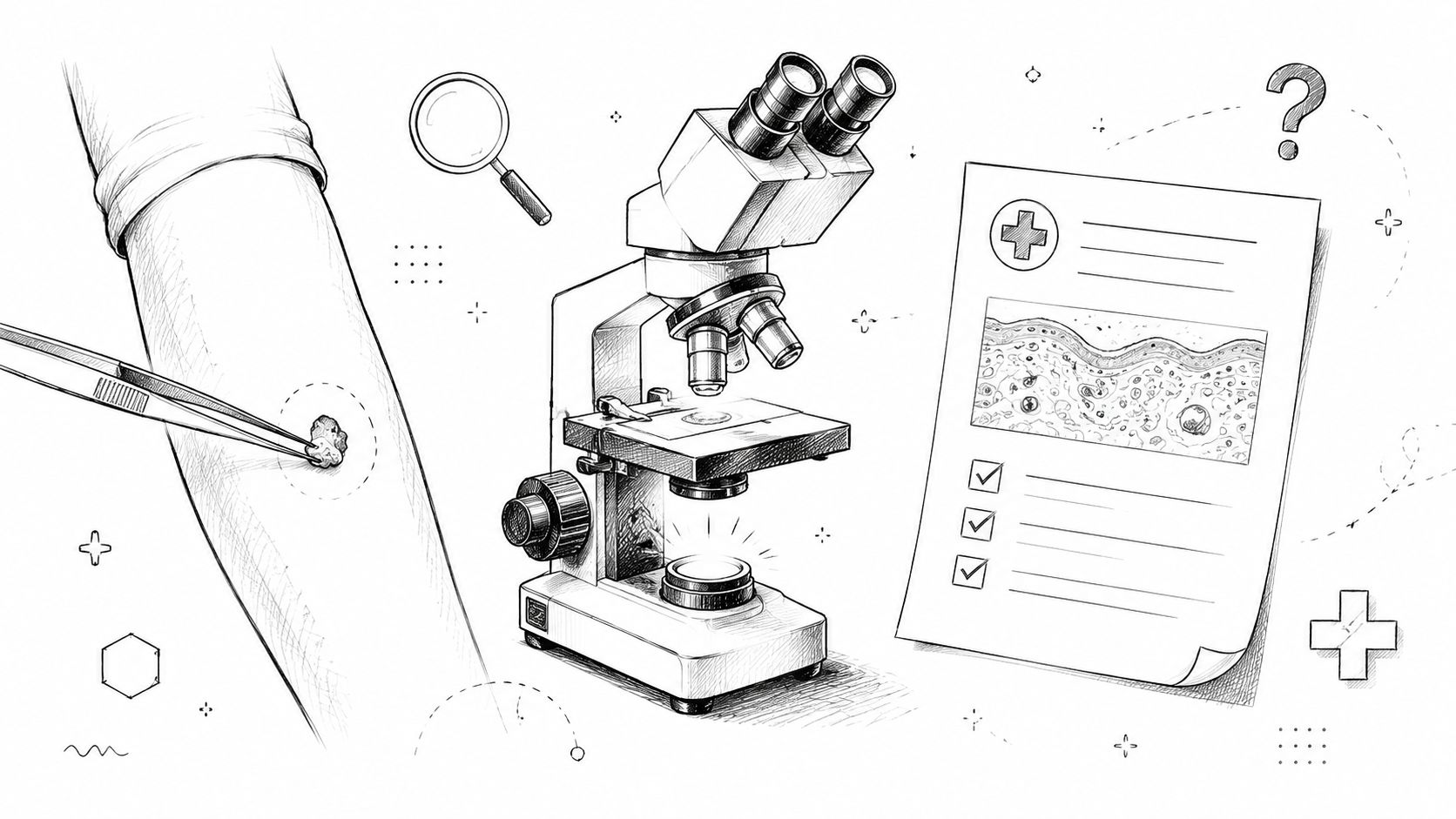
After the clinician removes tissue, the specimen is labeled and sent to the laboratory. The tissue is usually placed in a preservative so the cells stay intact. It is then processed, embedded, sliced into very thin sections, placed on glass slides, and stained so key structures can be seen clearly.
The pathologist reviews those slides under the microscope and correlates what is seen with the clinical question that prompted the biopsy. Sometimes additional stains or special tests are ordered to clarify the tumor type or to separate cancer from look-alike conditions.
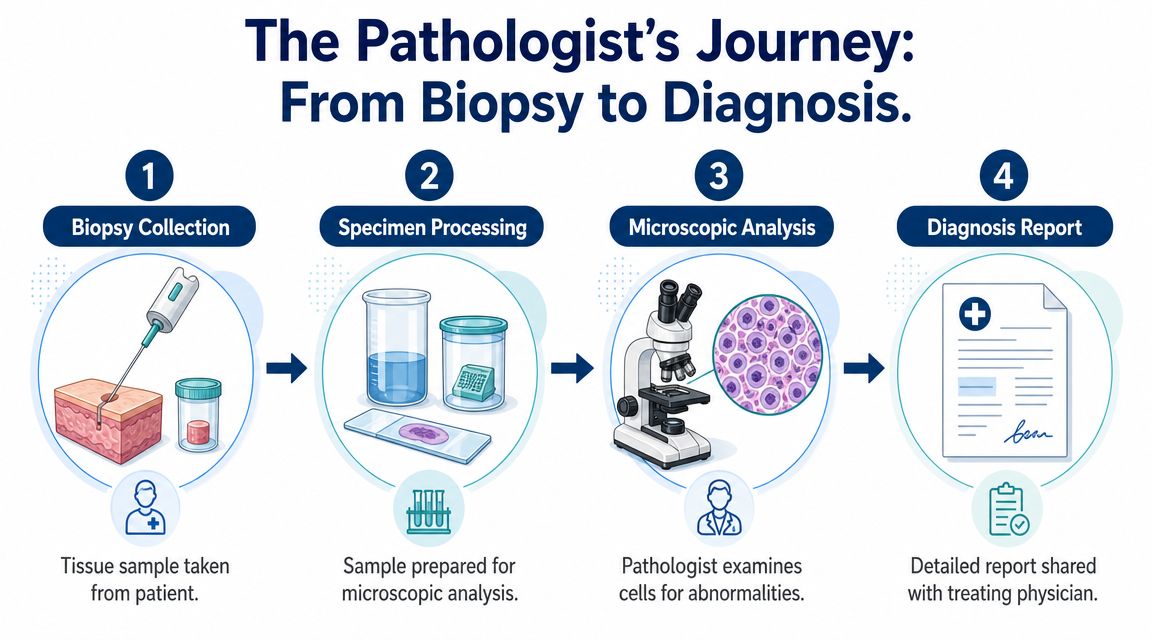
A simplified view looks like this:
| Step | What it means in plain language |
|---|---|
| Collection | A small tissue sample is taken from the area of concern |
| Processing | The lab preserves and prepares the tissue for review |
| Microscopic review | The pathologist examines cell patterns and tissue architecture |
| Reporting | A formal diagnosis is issued to the treating team |
Why context matters
Pathology is strongest when it is interpreted alongside imaging and clinical details. A large breast biopsy study found that the overall cancer prevalence was 22.4%, but the probability rose to 84.6% when mammograms were highly suggestive of malignancy, classified as BI-RADS 5 in that study of women undergoing breast biopsy (PubMed study on biopsy interpretation and imaging context). That same study also described how factors such as age, lump presence, prior biopsy, menopausal status, and postmenopausal hormone therapy affected estimated risk.
That doesn't mean every biopsy follows the same numbers or that one organ system predicts another. It does show something fundamental. A pathologist's conclusion is not meant to float apart from the rest of the medical record.
The best interpretation comes from matching the microscope findings to the scan, the exam, and the clinical history.
Decoding Key Elements of Your Pathology Report
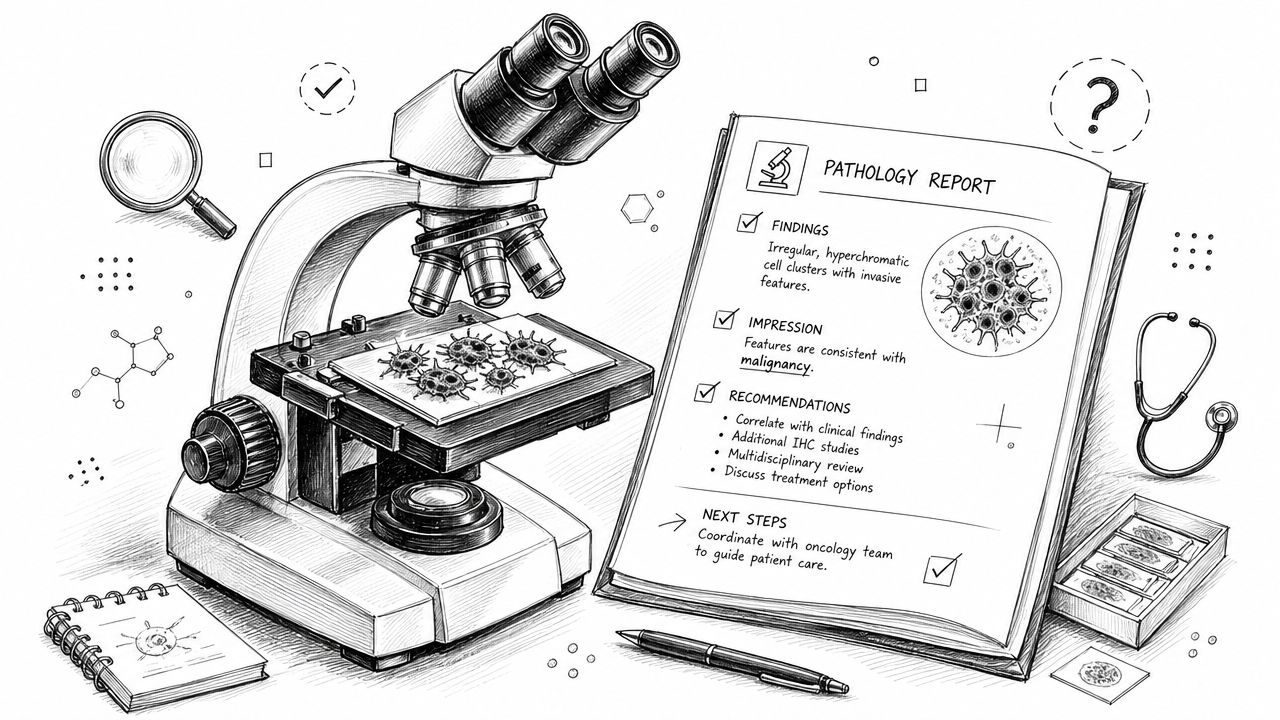
Most pathology reports contain more than the final diagnosis line. Some of the most important words appear in small sections that are easy to skip when emotions are running high.
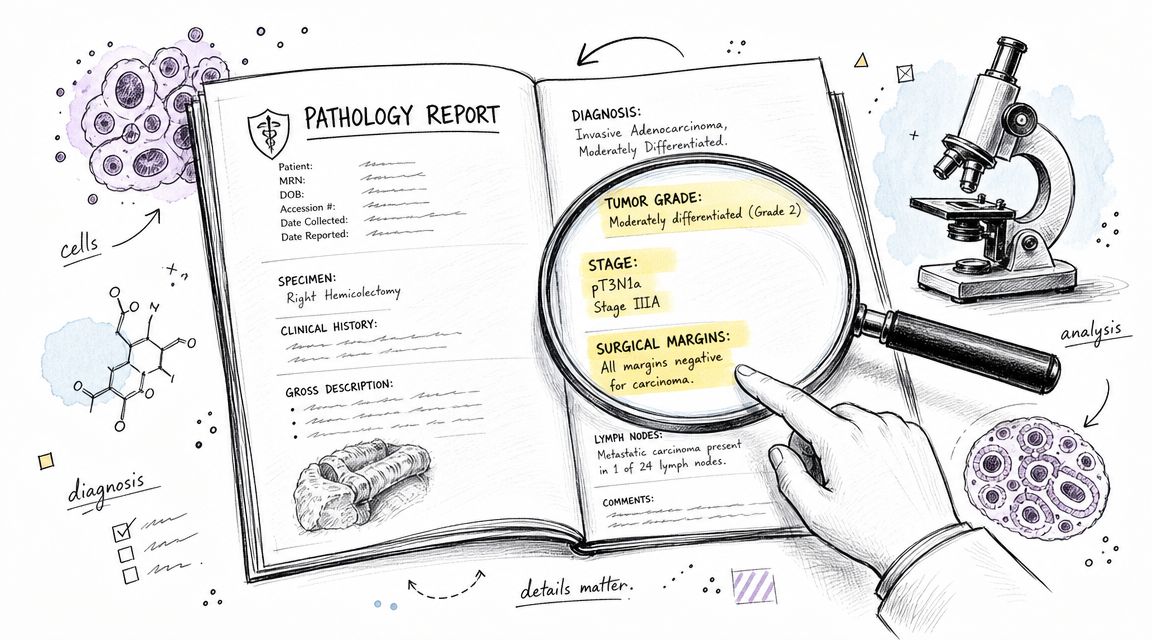
If you have the report in front of you, it may help to compare it with a plain-language walkthrough like our explanation of a biopsy pathology report.
Diagnosis line
This is the core statement. It usually names the tissue sampled and the main finding. Examples often include the tumor type, whether it is malignant, and sometimes whether the sample shows invasion.
The diagnosis line matters most because it answers the primary question the biopsy was meant to address. Still, it may not answer every question you care about. Many readers expect it to include treatment, prognosis, or the complete stage. That information often comes later.
Tumor grade
Grade describes how abnormal the tumor looks compared with the normal tissue it came from. It is about appearance and behavior under the microscope, not about where the tumor is in the body.
A lower-grade tumor generally looks more like the original tissue. A higher-grade tumor usually looks more disorganized and aggressive. The grading system depends on the cancer type, so the meaning of one grade in one organ is not automatically the same in another.
A useful analogy is schoolwork. Two papers may both be submitted, but one closely follows the assignment and the other barely resembles it. Grade tells us how far the cells have drifted from normal structure.
Stage
Stage is different from grade. Stage describes the extent of disease in the body. It usually considers factors such as tumor size, lymph nodes, and whether cancer has spread to distant sites.
Many biopsy reports do not contain a full stage because stage often requires imaging, surgery, or other clinical information. This is one of the most common points of confusion. A malignant biopsy can confirm cancer before anyone knows the final stage.
Surgical margins
Margins matter most when tissue has been removed with the intention of taking out the lesion, not just sampling it. A margin tells whether tumor cells reach the cut edge of the specimen.
Think of cutting a bruised spot out of an apple. If the bad area extends right to the cut edge, some of it may still remain in the apple. If there is a rim of normal-looking tissue around it, that is more reassuring. The exact importance of a margin depends on the tumor type, location, and surgical plan.
A positive margin does not automatically mean failure. It means the treating team needs to interpret whether more treatment is needed.
Biomarkers and special studies
Some reports include biomarkers, receptor studies, molecular tests, or immunostains. These don't replace the diagnosis. They refine it.
For example, they may help confirm the tumor's origin, distinguish one malignancy from another, or guide treatment selection. This is why two people can both have malignant biopsy results but receive very different treatment plans. The cancers may share the word malignant while differing greatly in type and biology.
Terms worth asking about
- In situ: Abnormal malignant cells are present but haven't invaded deeper tissue.
- Invasive: The tumor has broken beyond its starting layer into surrounding tissue.
- Poorly differentiated: The cells look less like the normal tissue of origin.
- Necrosis: Areas of dead tumor tissue may be present within the sample.
What Happens After a Malignant Biopsy Result
The next step is usually not immediate treatment on the same day. Patients typically enter a short period of coordination, where doctors confirm the diagnosis details, gather missing information, and decide which specialists need to be involved.
Who may become involved
A surgeon may assess whether an operation is appropriate. A medical oncologist may discuss drug-based treatment such as chemotherapy, targeted therapy, hormone therapy, or immunotherapy, depending on the cancer type. A radiation oncologist may evaluate whether radiation belongs in the plan.
In many settings, cases are also reviewed by a multidisciplinary team. That can include radiology, pathology, surgery, oncology, and other specialties. This team-based review helps align the biopsy findings with scans, symptoms, and the patient's overall health.
Why more testing is often needed
A biopsy answers one key question. It does not always answer how far the disease extends or which treatment sequence is safest. Additional scans, blood work, or procedures may be ordered for staging or planning.
What happens next often follows this pattern:
- Confirm the pathology details: The tumor type and any special studies are reviewed.
- Match with imaging: Doctors compare the biopsy result with what was seen on mammogram, ultrasound, CT, MRI, PET, or other studies.
- Define the extent of disease: Staging information is gathered if it is not already known.
- Build a treatment plan: The team weighs surgery, medication, radiation, or a combination.
This phase can feel slow when you want certainty immediately. In reality, careful sequencing is part of good care.
Requesting a Second Opinion on Your Pathology
A second pathology opinion is a normal part of medicine. It is not an accusation, and it is not unusual in difficult, high-stakes, or discordant cases.
When a second review makes sense
The strongest reason is discordance, which means the pieces do not fit neatly together. For example, imaging may look strongly suspicious while the core biopsy appears benign, or the pathology wording may be uncertain enough that treatment decisions would change if the diagnosis changes.
That concern is not theoretical. In a study of discordant breast lesions where a benign core biopsy was followed by surgical excision, 7.4% were found to have malignant pathology on further review (PubMed study on discordant breast biopsy findings). The study supports the long-standing practice of taking suspicious mismatch seriously rather than assuming the first benign sample settled the matter.
Other reasons for a second review include rare tumor types, limited tissue, difficult anatomy, borderline findings, or a need to confirm the diagnosis before major surgery or systemic treatment.
What to gather before requesting one
A useful second review usually needs more than the final report alone. The reviewing pathologist may need the original slides, tissue blocks when available, imaging reports, operative notes, and relevant clinic notes. If you're trying to assemble that packet, Bell Law's guide to medical records offers a practical overview of how records are commonly requested.
At Texas Autopsy Services, we also review complex medical materials in selected second-opinion settings, and our broader work in reviewing a case and performing Private Autopsies reflects the same principle. Clear conclusions depend on complete records, careful tissue review, and independence of judgment.
If the biopsy result and the imaging story do not match, asking whether a second pathology review is appropriate is reasonable.
A Checklist of Questions for Your Doctor
Appointments after malignant biopsy results can move quickly. Written questions help anchor the conversation and reduce the chance that important points get lost.
Bring this list to the visit
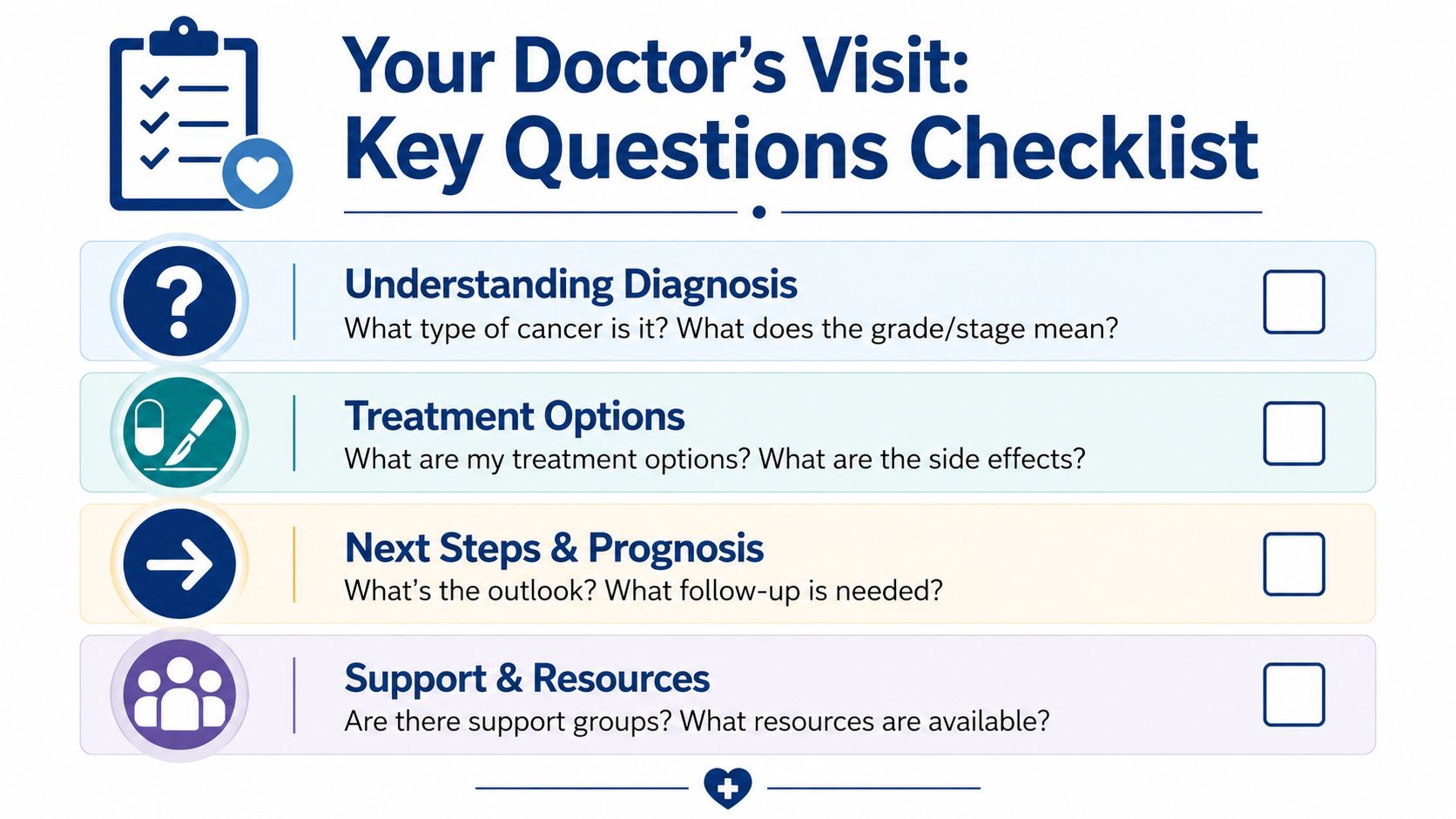
Start with the diagnosis itself.
- Clarify the exact name: What is the full name of the cancer on the pathology report?
- Ask about certainty: Is the biopsy considered definitive, or are more tests needed to refine it?
- Separate grade from stage: Do we know the grade yet, the stage yet, or both?
Then move to planning.
- Ask what happens next: Which specialist should be seen first, and why?
- Review added tests: Are any scans, blood tests, or repeat biopsies needed before treatment decisions?
- Discuss timing factors: What needs to happen before treatment can begin?
This video may help you frame the conversation before your appointment.
End with practical concerns.
- Understand treatment choices: What are the main options, and what is the purpose of each one?
- Ask about side effects and tradeoffs: What are the likely burdens of treatment?
- Request a plain-language summary: Can someone explain the report in everyday terms and write down the next steps?
Frequently Asked Questions About Biopsy Results
Can a biopsy be wrong
A biopsy is a powerful diagnostic tool, but no test exists outside the limits of sampling and interpretation. Sometimes the sample does not capture the most representative area. Sometimes the tissue findings and imaging do not align. That is why clinicians sometimes recommend additional sampling, surgery, or a second pathology review.
What is the difference between grade and stage
Grade is about how the tumor looks under the microscope. Stage is about how much disease is present in the body. A simple way to remember it is this: grade describes the tumor's personality, while stage describes its reach.
Does malignant mean metastatic
No. Malignant means cancerous. Metastatic means cancer has spread from its original site to another part of the body. A tumor can be malignant without being metastatic.
If the report is hard to read, what should I ask for
Ask for the exact diagnosis in plain English, whether the result is considered definitive, whether more tests are needed, and which parts of the report affect treatment. You can also ask whether the pathology was reviewed alongside imaging and whether a second opinion would be useful in your situation.
When a biopsy report changes the course of a family's life, clear explanation matters. If you need help understanding pathology language, forensic review principles, or independent medical clarification after a complex diagnosis or death investigation, Texas Autopsy Services is available to speak with you directly and respectfully.