July 12, 2026 · Texas Autopsy Services
Skin Biopsy Results Time: What to Expect & Why
Worried about skin biopsy results time? Discover factors affecting lab processing & special stains. Learn what to expect & when a second opinion is wise.
On this page
Waiting for a skin biopsy result can feel longer than the biopsy itself. Many patients are told to expect an answer soon, then find themselves checking the portal or waiting for a call with no clear sense of what is happening in the laboratory.
A realistic starting point is this: skin biopsy results often come back in 1 to 2 weeks, and many standard cases are finalized within 7 to 14 days according to Altitude Dermatology's overview of skin biopsy timing. That range is common, but it is not a promise. Some cases move faster. Others take longer because the tissue needs more preparation, more review, or more discussion before a pathologist signs a final report.
For patients and families, the hardest part is usually the silence. The delay often feels like a problem, when in many cases it reflects careful work.
What helps most is understanding the steps behind the result.
Understanding the Wait for Your Results
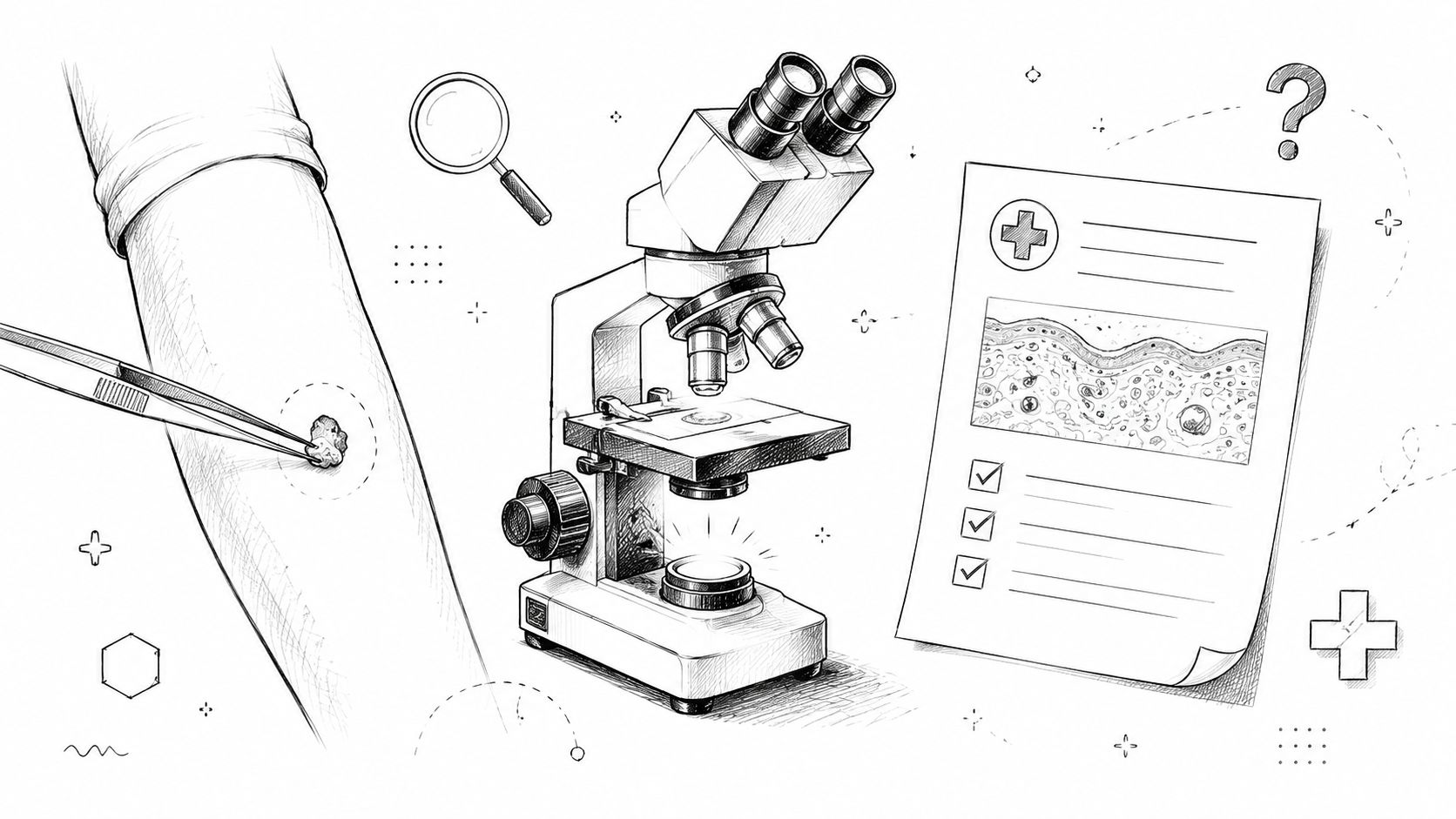
You leave the appointment with a small bandage, then the harder part starts. A few days pass, the biopsy site may already look as though it is healing, and the report still has not appeared in your portal. That gap is where many patients begin to worry.
For skin biopsies, the wait is usually measured in days rather than hours because a diagnosis depends on laboratory review, not on how quickly the skin surface settles. Healing on the outside and analysis in the lab follow different timelines. If you are also comparing this with cosmetic recovery after a procedure, this guide on what to expect from skin treatments explains that visible skin changes and medical reporting are separate processes.
What matters most at this stage is expectation setting. A report can be routine, or it can move through several checkpoints before a pathologist is ready to sign it out. From the patient side, both situations can feel the same. From the lab side, they are very different. We see this often in practice, and the same pattern appears across pathology more broadly in our discussion of how long a pathology report can take.
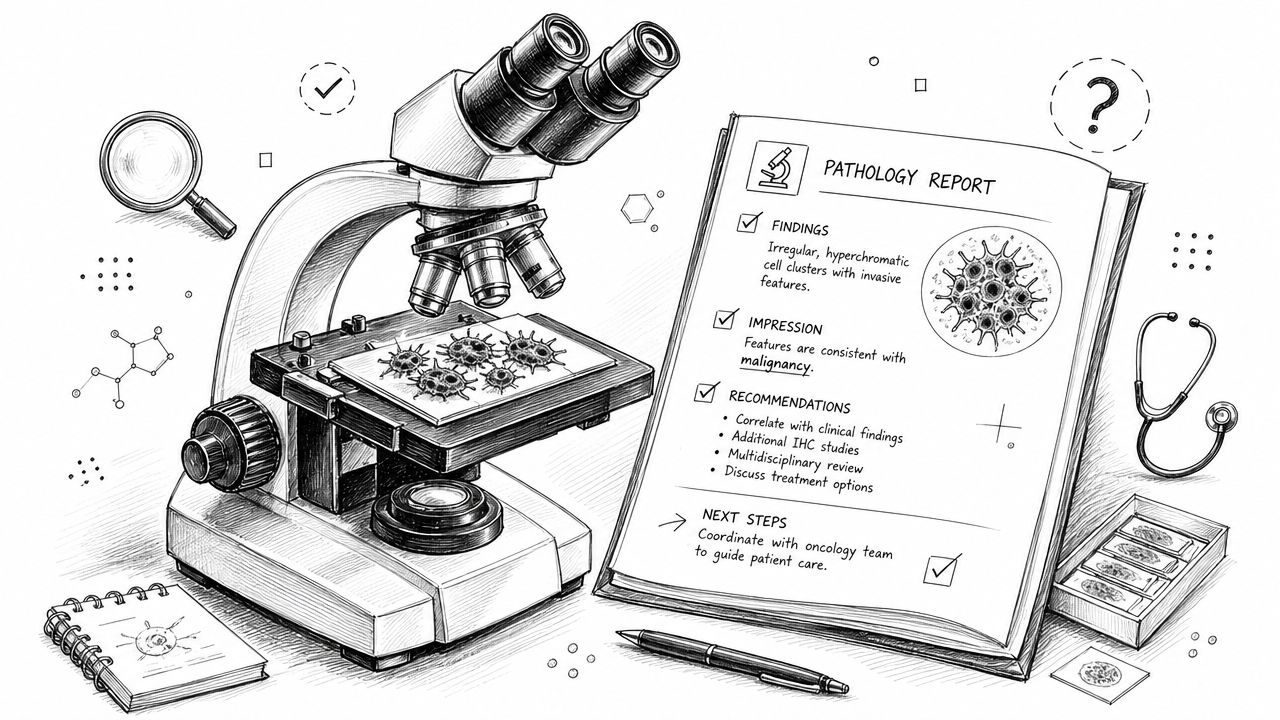
A delay by itself does not point to a serious diagnosis. In many cases, it means the specimen is still in process, the findings need confirmation, or another pathologist is reviewing the slides before the final wording is released.
That distinction matters because pathology can feel like a black box. Patients are told a sample was sent to the lab, then they hear nothing until a result appears. A better way to understand the wait is that the report is built in stages, and some stages are straightforward while others require added work. We will break down those stages later so you can see where extra time comes from and why it may improve accuracy.
If your result has not come back when your clinician expected, it is reasonable to contact the ordering office for an update. In our experience, a brief check-in often clarifies whether the case is still in routine processing, awaiting added review, or pending communication back from the lab.
One final point is often overlooked. When a case takes longer because the findings are borderline, unusual, or difficult to classify with confidence, that same uncertainty can make an independent second-opinion pathology review valuable. For some patients and families, the wait is not only about timing. It is also the first sign that the specimen may deserve another expert look.
The Standard Path of a Skin Biopsy
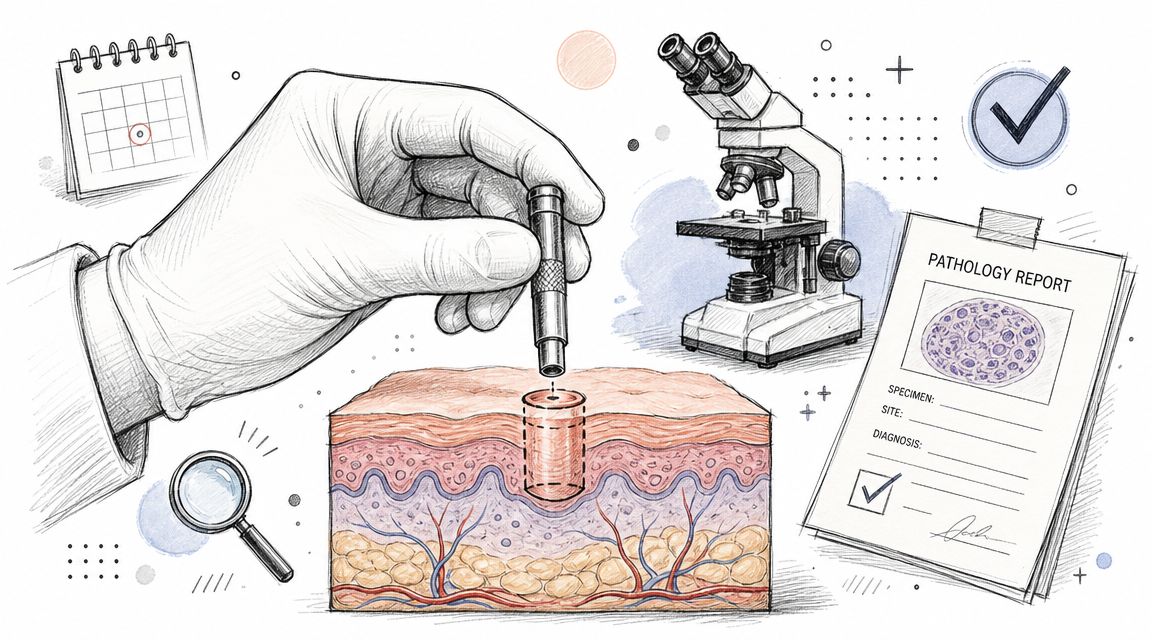
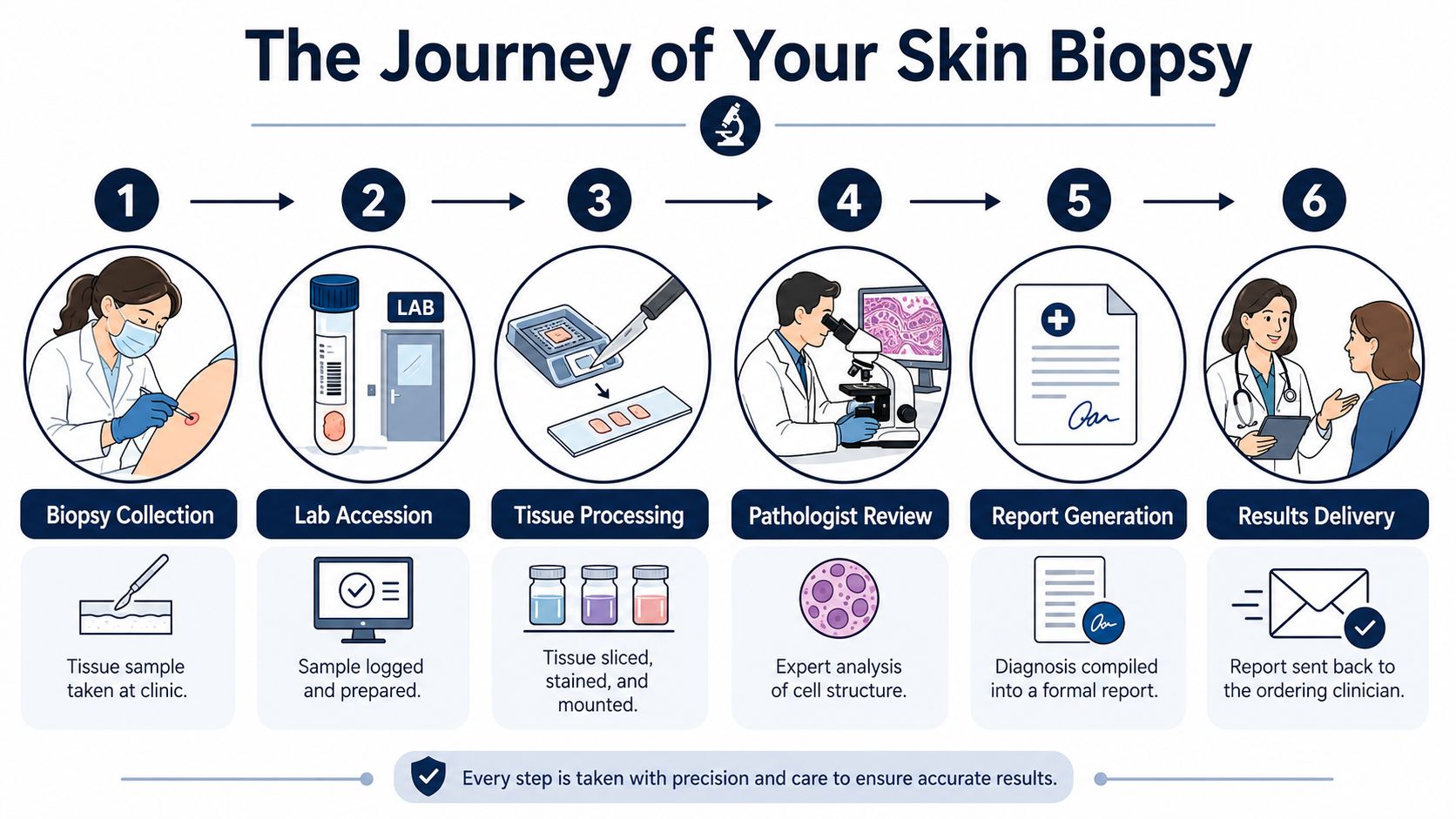
A skin biopsy may be tiny on the outside, but the laboratory work behind it is not. Before any pathologist can say whether a spot is benign, inflamed, atypical, or malignant, the tissue has to be turned into slides that are thin, well-preserved, and readable under the microscope.
Why the sample cannot be read immediately
The specimen usually arrives in formalin, a fixative that preserves cellular detail and prevents tissue breakdown. Fixation takes time. If tissue is under-fixed, the slide quality can suffer. If the sample is very small, fixation may be relatively quick, but the lab still has to process it through a standard series of steps.
Accessioning comes first. The specimen is logged into the laboratory system, matched to the patient and biopsy site, and assigned a case number. That sounds administrative, but it is also a safety step. Correct identification has to be confirmed before anyone touches the tissue.
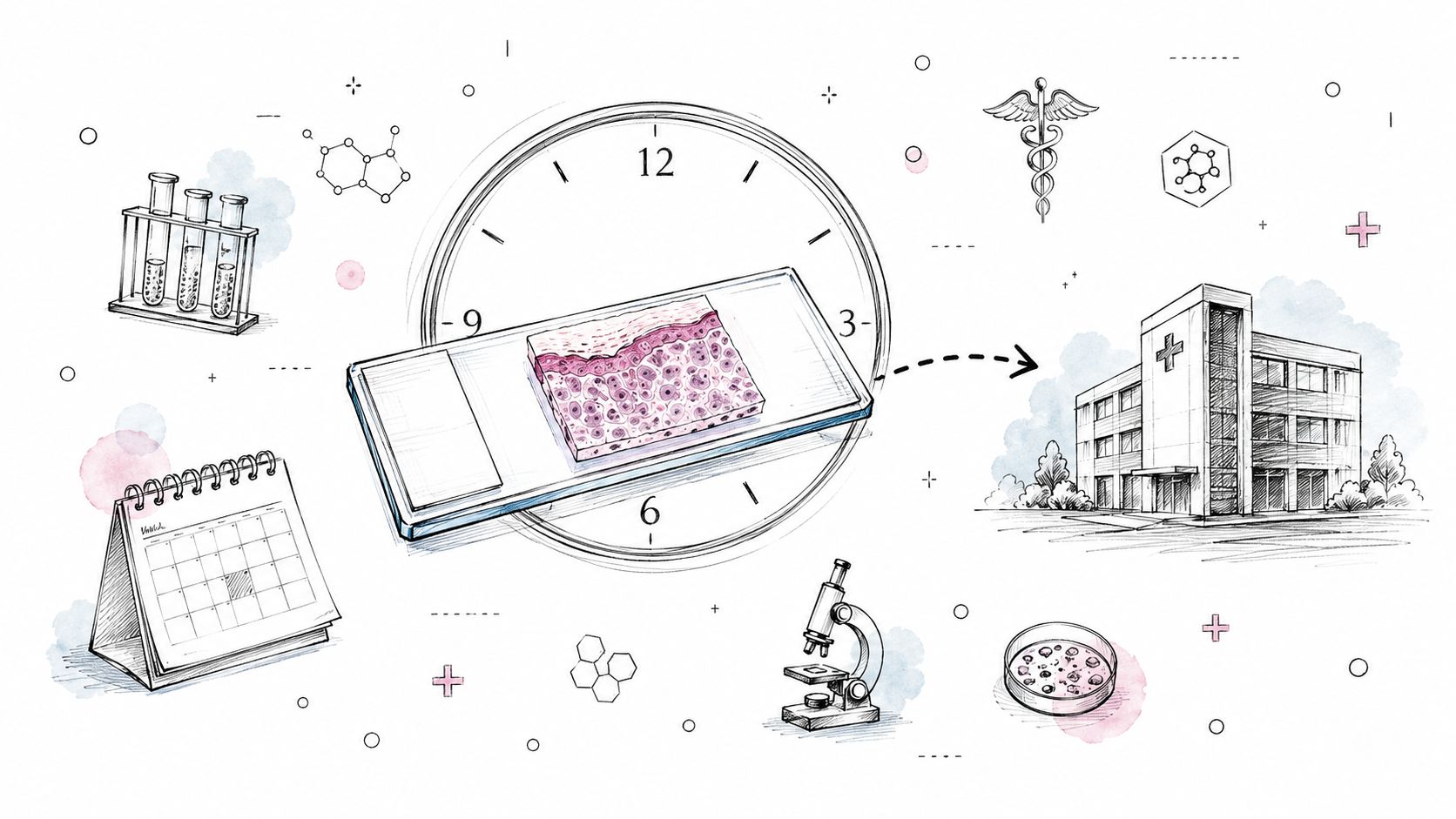
The biopsy then moves through tissue processing. Water is removed with graded alcohols, clearing agents such as xylene prepare the tissue for wax infiltration, and the specimen is embedded in paraffin so it can be cut into sections only a few microns thick. Those ribbons are placed on glass slides, dried, and stained, usually with hematoxylin and eosin, so nuclei, keratin, pigment, inflammation, and overall architecture can be evaluated.
That sequence is one reason pathology is often compared with other lab workflows that depend on staged preparation before interpretation. The same principle explains why toxicology reports take so long. Time in the lab often reflects required processing rather than inactivity.
What happens before the report is signed
Once the slides are prepared, the interpretive work begins. For skin specimens, the pathologist's task involves more than confirming that tissue is present. The review may include the lesion's symmetry, circumscription, maturation, epidermal changes, dermal invasion, ulceration, margin status, inflammatory pattern, and whether the findings fit the clinical question submitted by the dermatologist or surgeon.
Some cases are straightforward. A classic seborrheic keratosis or an uncomplicated cyst may be signed out promptly once the slides are ready. Other cases require a second pass at the block, correlation with the clinician's description, or internal review by another pathologist before the final wording is released.
Timing can also shift for ordinary operational reasons. A biopsy performed late on Friday may reach the lab after the main processing run. If so, full histology setup may start on the next scheduled cycle rather than the same day. Patients often experience that as an unexplained pause, even though the specimen is following normal laboratory handling.
The video below is useful if you want to see the mechanics of sectioning and slide preparation. Around the early portion of the clip, you can see how a paraffin block is cut into thin sections. Later segments help show why staining and slide handling add real bench time before a diagnosis can be issued.
Labs that examine their workflow closely often shorten avoidable delays while protecting diagnostic accuracy. That same discipline underlies broader quality improvement for healthcare professionals.
From the patient side, the wait can feel silent. From the pathology side, the report is being built through fixation, processing, sectioning, staining, microscopic review, and final sign-out.
Key Factors That Can Extend Results Time
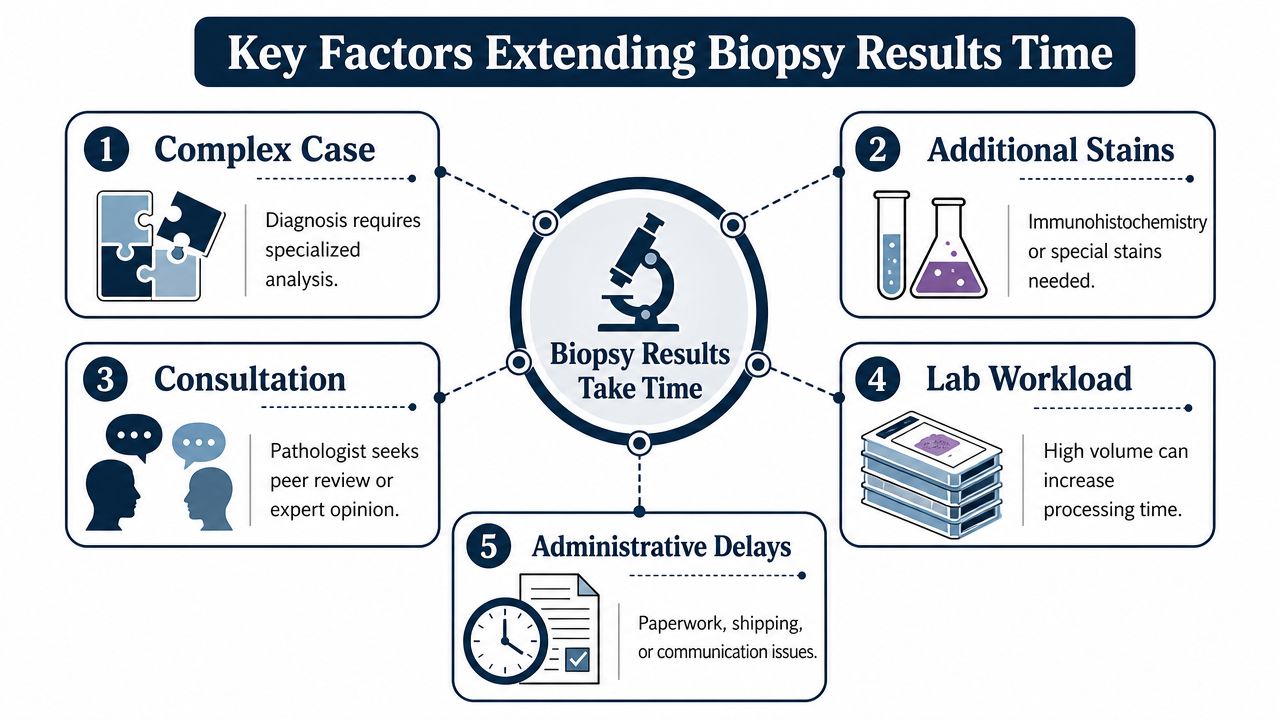
Beyond the standard process, three issues account for many longer waits. The pathologist may need added laboratory work, the diagnosis may need staged review, or the case may be delayed by ordinary operational steps outside the microscope.
Added tests to answer a specific diagnostic question
In practice, immunohistochemistry is often the point where a routine timeline becomes a longer one. If a pigmented lesion raises concern for melanoma or an atypical melanocytic proliferation, we may order markers such as SOX10 or Melan-A to confirm whether the cells in question are melanocytes and to see how they are distributed within the lesion. If the differential diagnosis includes scar, inflammation, or a spindle-cell process, a different panel may be more useful.
Those stains are not ordered to be thorough for its own sake. They are ordered because the first slides leave a real diagnostic fork in the road, and the treatment plan may change depending on which interpretation is correct.
Review that happens in stages
Some cases also slow down because the final opinion is built in steps rather than written after a single look. A pathologist may review the initial slides, request added work from the block, then wait to assess all slides together before signing out the report. If the findings remain borderline or clinically important, another dermatopathologist may review the case internally.
In selected cases, the biopsy is then discussed at a multi-disciplinary team meeting, or MDT. That usually means the pathology is being correlated with the clinical photograph, surgical findings, dermoscopy, or oncology planning. Weekly meeting schedules can add time, but they also reduce the risk of issuing a report in isolation when the consequences of wording are significant.
Operational reality: Delays often reflect quality control. In healthcare, standardized review pathways matter. For clinicians and staff interested in the systems side of that work, this overview of quality improvement for healthcare professionals gives useful context for why controlled processes sometimes take longer but reduce preventable error.
A separate category is administrative. Specimen transport, accessioning backlogs, batching of send-out stains, report routing, and communication gaps between the laboratory and the ordering clinic can all add days that patients experience as silence. Similar timing problems appear in other laboratory settings. Our article on why toxicology reports take so long examines that issue from a forensic laboratory perspective.
From a patient's point of view, these delays can feel like a black box. From a pathology practice's point of view, each added step usually reflects a specific question that must be answered before the report is accurate enough to guide care.
Illustrative Timelines Two Patient Scenarios
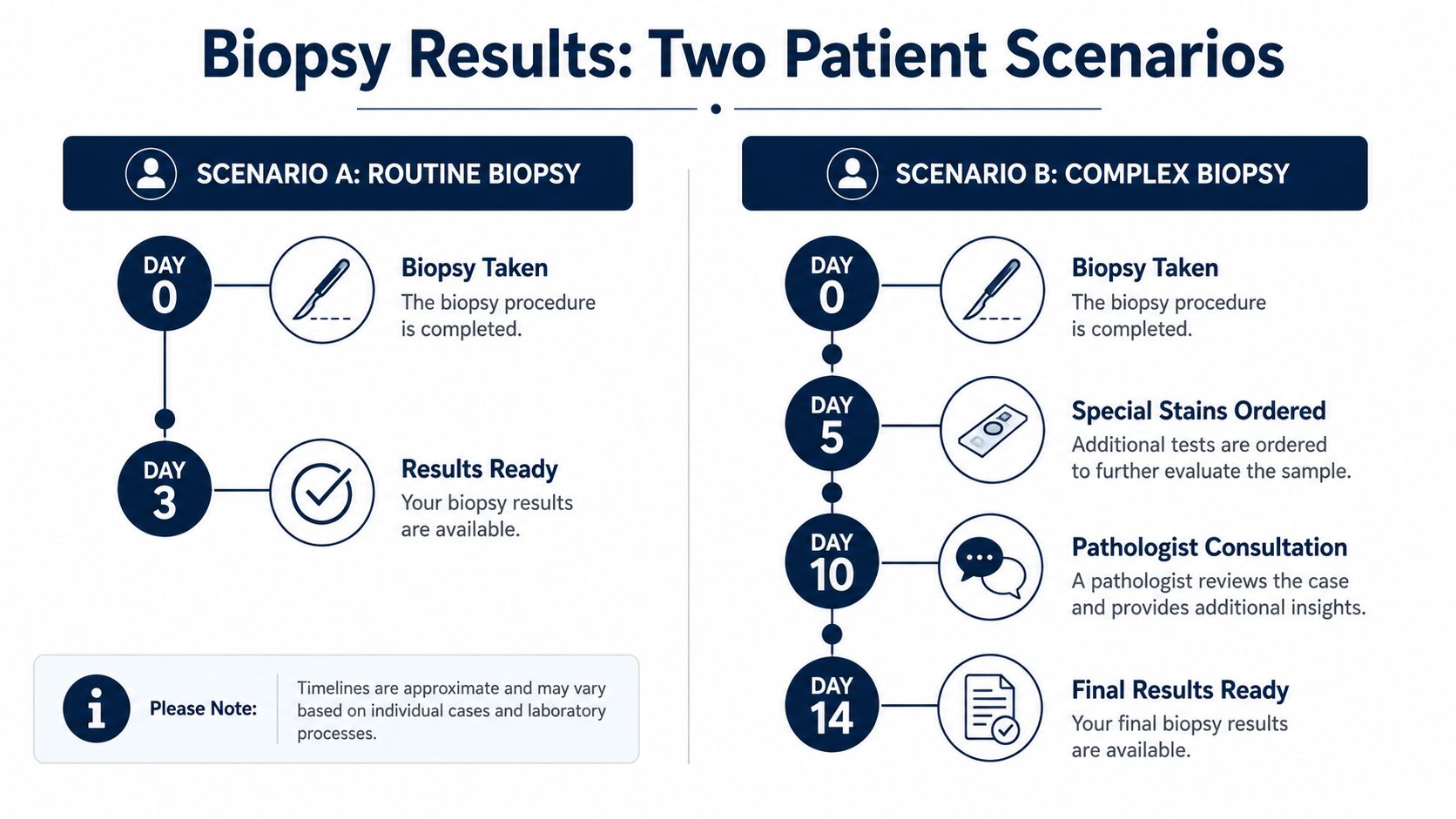
The clearest way to understand skin biopsy results time is to compare a straightforward case with one that needs extra review.
Scenario A routine lesion
A patient has a small mole removed in clinic. The lesion is sampled cleanly, processed without technical issues, and the first slides show a clearly benign pattern. No deeper sections are needed. No immunostains are ordered.
In that kind of case, the report may return within the usual window many patients hear about. The work still goes through accessioning, paraffin embedding, slicing, staining, review, and reporting. It is routine, but it is not instant.
A faster result in this setting usually means the case was simple, not that the lab cut corners.
Scenario B lesion requiring added review
A different patient has a pigmented lesion that is not fully characterized on the first pass. The initial slides raise enough concern that the pathologist requests deeper levels from the paraffin block. After reviewing those new sections, the pathologist still wants immunohistochemistry to clarify the cell population.
The case then waits for all added slides to be prepared and reviewed together. If the findings remain borderline or unusual, another pathologist or a scheduled specialty discussion may be involved before the report is finalized.
That longer timeline can feel ominous, but the important point is this: the delay may reflect caution, not a result.
| Scenario | What happens | Likely experience |
|---|---|---|
| Routine lesion | Standard processing and single-review sign-out | Patient hears back in the usual range |
| Complex lesion | Added levels, special stains, possible consultation | Patient waits longer while the diagnosis is refined |
A longer wait often means the laboratory is trying to avoid a premature answer. For skin pathology, that is usually the right instinct.
Patients sometimes assume that “normal” cases should always come back first and “bad” cases always take longer. Real practice is less predictable. Some benign lesions are technically difficult. Some malignant lesions are obvious on the initial slides. Turnaround follows the work required, not the emotional weight of the diagnosis.
When to Consider a Second Opinion on Pathology
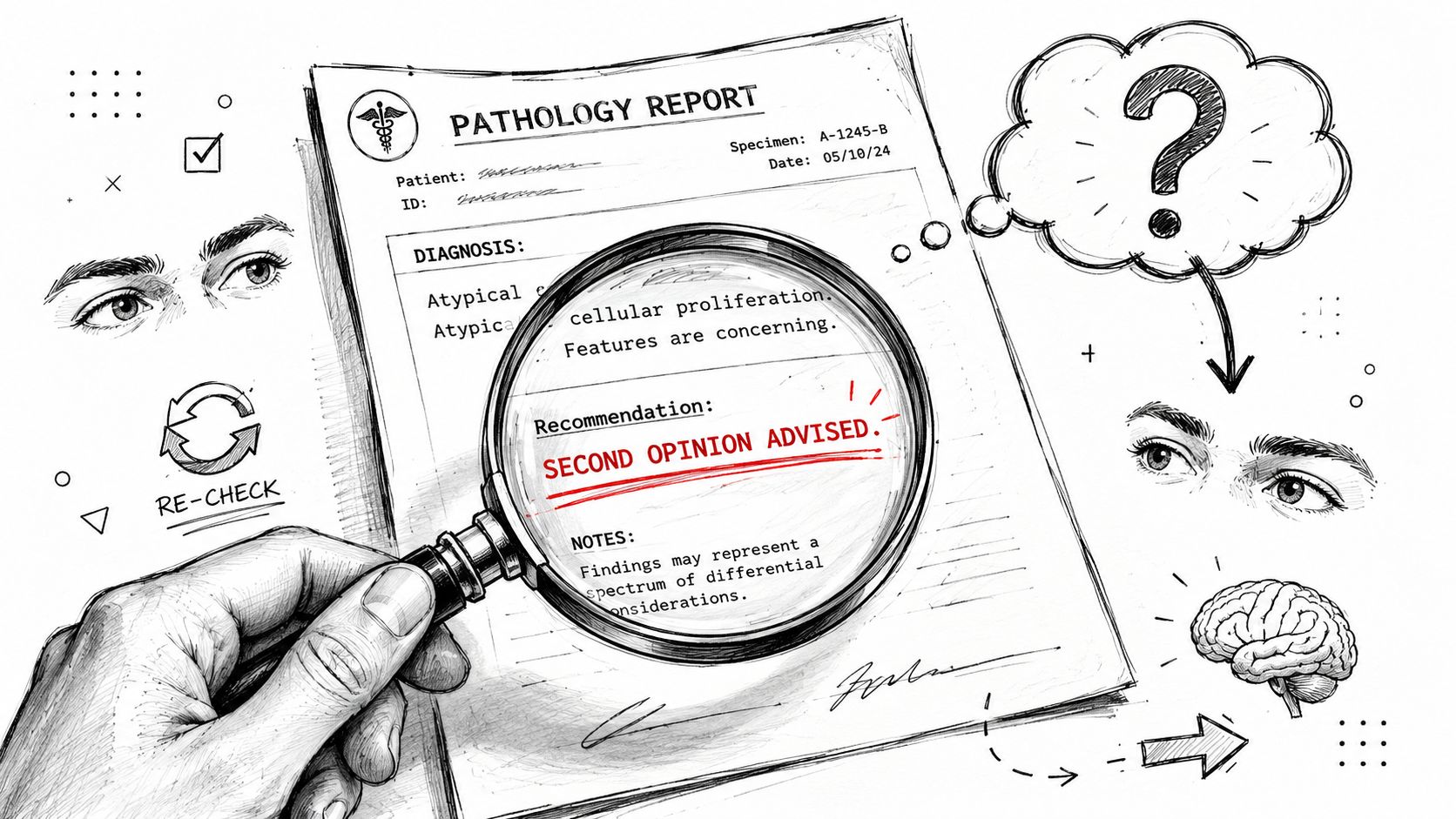
Most pathology reports are clear and sufficient for treatment. But there are times when an independent review makes sense, especially when the result will affect major medical decisions or when the written diagnosis does not fit the clinical picture.
Situations where another review may help
A second opinion can be appropriate when:
- The wording is difficult to act on: Terms such as atypical proliferation or uncertain features can leave patients and treating doctors needing more clarity.
- The diagnosis is rare or unusual: Uncommon lesions often deserve a fresh review by another physician trained in microscopic interpretation.
- The consequences are significant: If the result may change surgery, oncology planning, or long-term surveillance, added certainty has value.
- The timeline has been unusually complicated: Multiple rounds of added testing can be a sign that the case is challenging.
This is not an accusation against the first laboratory. It is a normal part of careful medicine. Independent review is often most useful in the exact cases where the original pathologist already recognized complexity.
Why independent review matters
In legal, postmortem, and medically complex settings, outside review serves a distinct purpose. It separates interpretation from the original treatment setting and gives families or counsel a chance to examine slides, records, and conclusions from a fresh position.
That same logic applies in pathology consultation. A second-opinion review can compare the histology, correlate the written report with the broader medical record, and identify whether the language supports the treatment path being proposed.
For attorneys evaluating medically dense records, support from adjacent professionals can also matter. This overview of hiring a legal nurse consultant is a practical example of how complex medical documentation is often reviewed by more than one type of expert before legal decisions are made.
When the question extends beyond a living patient's biopsy to a death investigation or a disputed medical course, families may also seek a broader independent review through Private Autopsies. In those settings, pathology consultation is part of a larger cause-of-death investigation rather than a stand-alone slide read.
We also discuss this review framework in more detail in our page on pathology consultation services.
How Our Independent Pathology Services Can Assist
As an independent private autopsy and forensic pathology practice serving all 254 Texas counties, we are often contacted by families, attorneys, and professionals who need an unbiased review of tissue findings, records, and reported conclusions. Every examination is performed by a forensic pathologist certified by the American Board of Pathology, and our work is handled with full chain of custody and direct communication from our team.
What our practice reviews
Our role is not limited to the autopsy suite. The same discipline used in forensic pathology applies to slide review, report analysis, medical record correlation, and second-opinion evaluation in cases where the facts need to be checked carefully.
In plain language:
- Cause of death means the disease or injury that started the fatal sequence.
- Manner of death means the category of death, such as natural, accident, suicide, homicide, or undetermined.
- Chain of custody means documented control of evidence or specimens from one responsible party to the next so the material remains identifiable and admissible.
Those definitions matter because pathology findings do not exist in isolation. They often sit inside a broader medical or legal record.
How timing and logistics affect families
Families also worry that requesting an autopsy or additional pathology review will delay arrangements. In many cases, the opposite concern can be addressed directly. The physical hands-on autopsy examination itself typically takes 2 to 4 hours, and the body can often be released to the funeral home within 24 hours of authorization, as explained in our article on how long an autopsy takes.
Ancillary studies can still take longer, and we don't present timelines as guarantees. But the examination itself is usually not what delays funeral planning.
Our statewide logistics are built for careful handling of sensitive material. That includes in-house licensed transport and communication across Texas, whether the matter involves County Forensic Autopsies or operational coordination through our Waterloo Mortuary Partnership. Our practice works within the compliance framework that includes the Texas Funeral Service Commission and the Texas Health & Safety Code, including Chapters 711, 716, and 651.
FAQ
How long do skin biopsy results usually take?
A common range is 1 to 2 weeks, with many standard cases reported in 7 to 14 days, though more complex cases can take longer according to Altitude Dermatology's biopsy timing overview.
Why would a skin biopsy take several weeks?
Longer waits often happen when the lab needs deeper cuts, special stains, immunohistochemistry, or additional specialist review. In some settings, scheduled review meetings also affect timing.
Does a longer wait mean the result is worse?
No. A longer wait may mean the diagnosis needs more technical work before the pathologist can sign the report confidently.
When should someone call the clinic about missing results?
If no result has been received within two weeks, contacting the clinic is reasonable because additional testing or a communication delay may be involved, as noted in Altitude Dermatology's patient guidance.
When is a second-opinion pathology review worth considering?
It is often reasonable when the diagnosis is unusual, the wording is uncertain, the result does not fit the clinical picture, or the finding could significantly affect treatment or legal review.
If you need clear, independent guidance about pathology findings, a private autopsy, or a second-opinion review in Texas, contact Texas Autopsy Services. We speak with families, attorneys, clinicians, and county officials directly, and we handle each case with medical precision, respect, and care.