August 16, 2026 · Texas Autopsy Services
What Is Shaken Baby Syndrome
What is shaken baby syndrome? Learn how abusive head trauma is defined, diagnosed, and debated in medicine and courts, and when a private autopsy helps.
On this page
- Understanding Shaken Baby Syndrome and Abusive Head Trauma
- How Violent Motion Injures an Infant Brain
- Signs and Symptoms Families and Caregivers Notice
- Diagnostic Tools and the Role of Autopsy
- The Classic Triad and Why Courts Are Skeptical
- When a Private Autopsy or Second Opinion Adds Value
- Prevention, Common Questions, and How to Reach Our Team
A baby is taken to the hospital after vomiting, sleeping more than usual, or becoming difficult to feed. The family may have no clear explanation for the change, and the first medical records may contain several possible causes. Later, the words “shaken baby syndrome” can appear in a report or conversation, bringing medical, emotional, and legal consequences before everyone understands what the evidence proves.
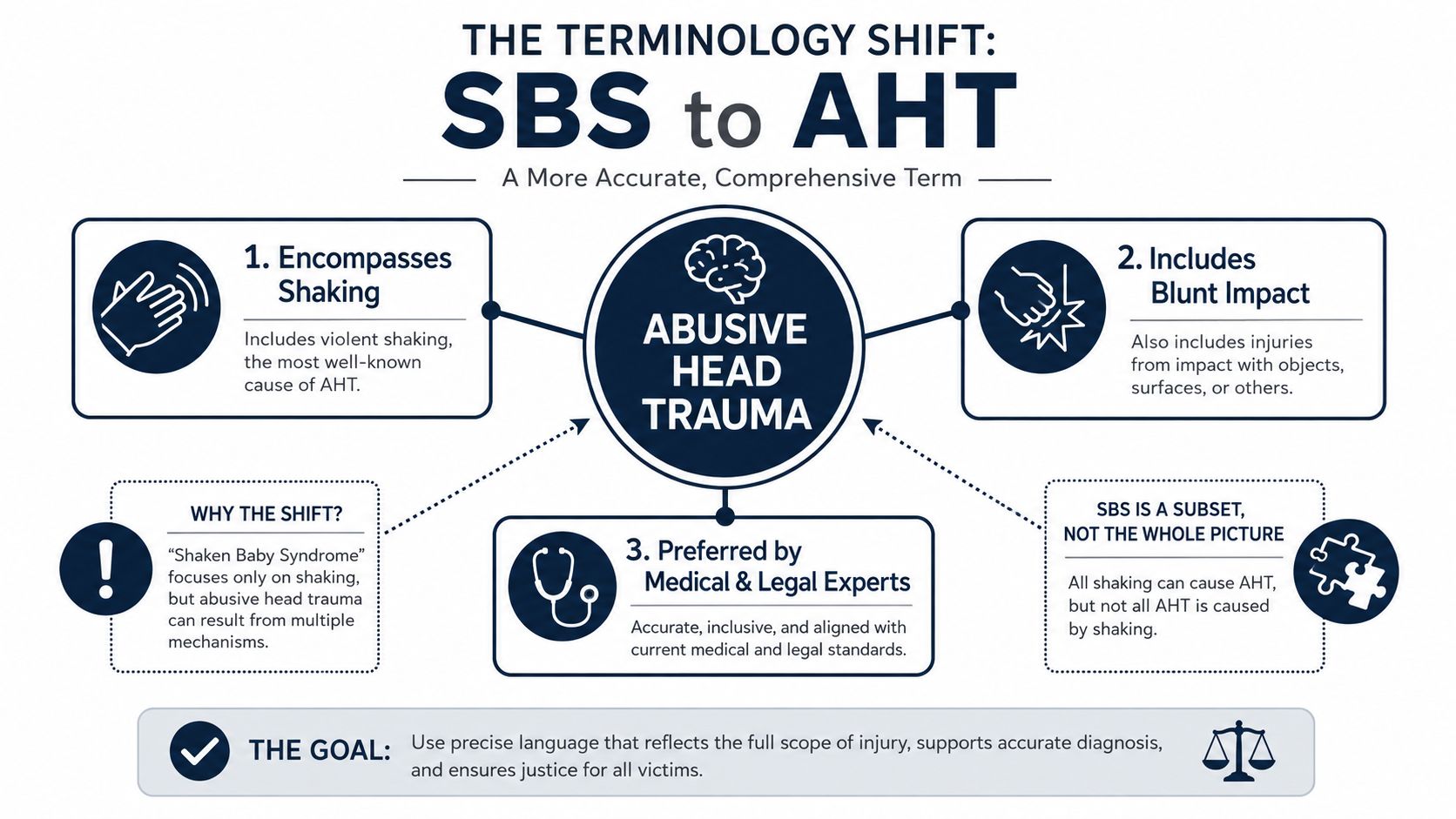
The condition is now more often discussed as abusive head trauma, or AHT. That broader term recognizes that an infant's head injury may involve violent shaking, blunt impact, or both. It also reflects an important forensic principle: serious findings require careful interpretation of the entire medical history, imaging, eye examination, laboratory work, circumstances, and, when appropriate, postmortem findings. A diagnosis must not rest on a label alone.
Understanding Shaken Baby Syndrome and Abusive Head Trauma
Shaken baby syndrome is the older public term for a severe inflicted head injury in an infant or young child. Modern pediatric and forensic medicine generally uses abusive head trauma because the injury pattern may result from violent shaking, blunt impact, or a combination of mechanisms. The terminology matters because “shaken” can imply that the medical record has already established one precise action, while AHT describes the broader injury category that clinicians must investigate.
The condition most often affects children younger than 2 years old, with many cases concentrated in infants younger than 12 months. Published estimates vary because underreporting is common. One authoritative medical source cites approximately 750 to 3,750 cases annually in the United States, while another reports approximately 1,000 to 1,400 cases per year (PubMed medical review). A separate public health estimate describes 1,000 to 3,000 U.S. children affected each year, with about one-fourth dying and 80% of survivors experiencing permanent damage (national medical source).
Why the terminology changed
The older term developed after clinicians recognized recurring patterns of serious brain and eye injury that could not be explained by ordinary falls alone. Modern summaries place those findings in a wider framework that includes the mechanism of injury, the timing of symptoms, possible medical conditions, and other explanations that must be assessed.
| Term | Common use | Scope of injury | Why preferred |
|---|---|---|---|
| Shaken baby syndrome | Older public and legal wording | Often implies shaking as the established mechanism | It can oversimplify a complex investigation |
| Abusive head trauma | Current clinical and forensic wording | Includes violent shaking, blunt impact, or both | It describes the injury category without assuming one mechanism |
The financial and social consequences are also substantial. New York health guidance has estimated that hospitalization and continuing-care costs could reach 1.2 to 16 billion dollars annually in the United States (PubMed medical review). Those figures help explain why families, attorneys, hospitals, and public agencies need accurate terminology and careful evidence review.
A suspected infant head injury can also be confused with other pediatric medical and birth-related issues. Families dealing with questions about delivery-related harm may need separate information about legal options for birth injury, while clinicians and forensic pathologists must still examine the specific facts of the infant's condition.
How Violent Motion Injures an Infant Brain
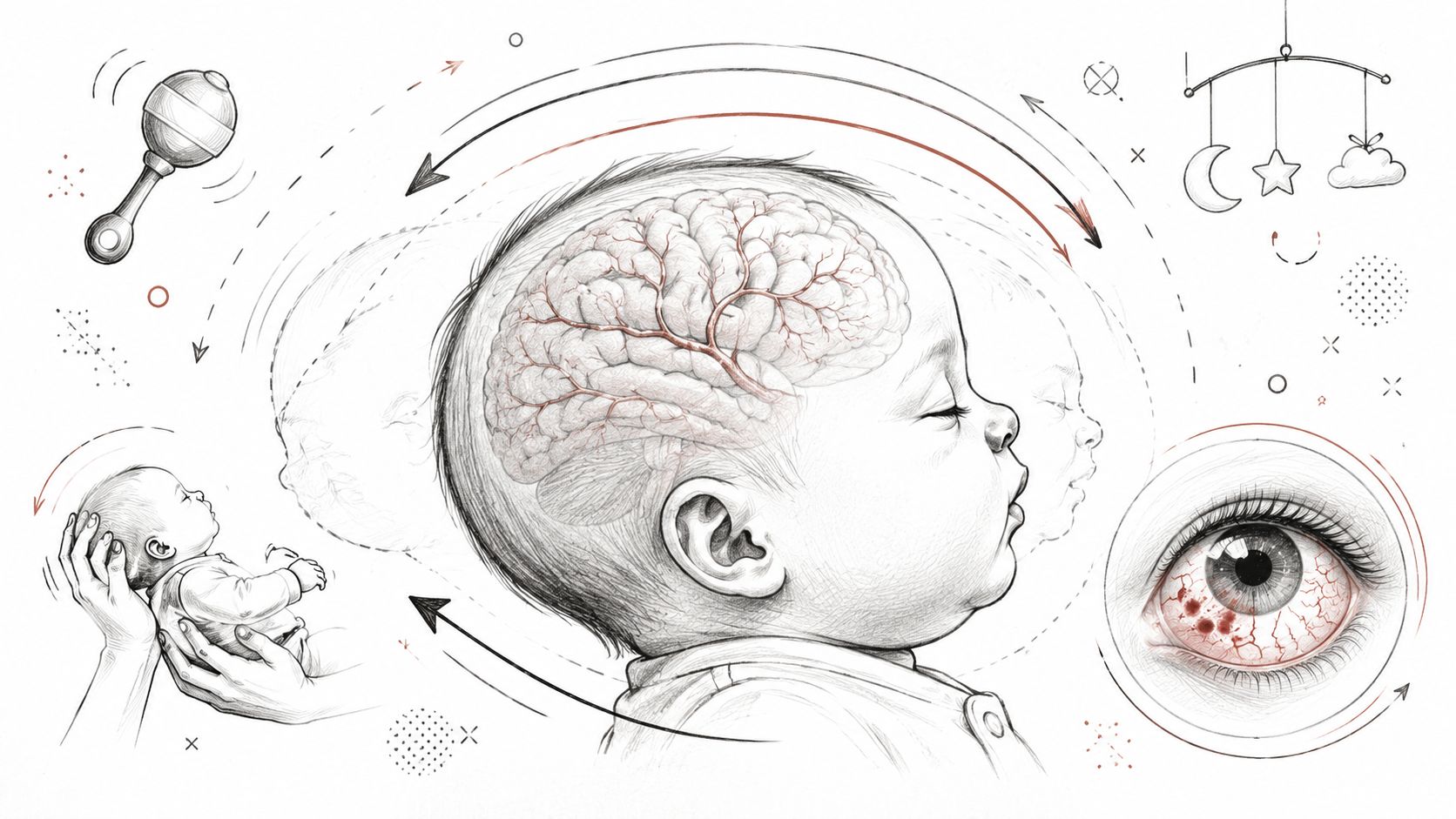
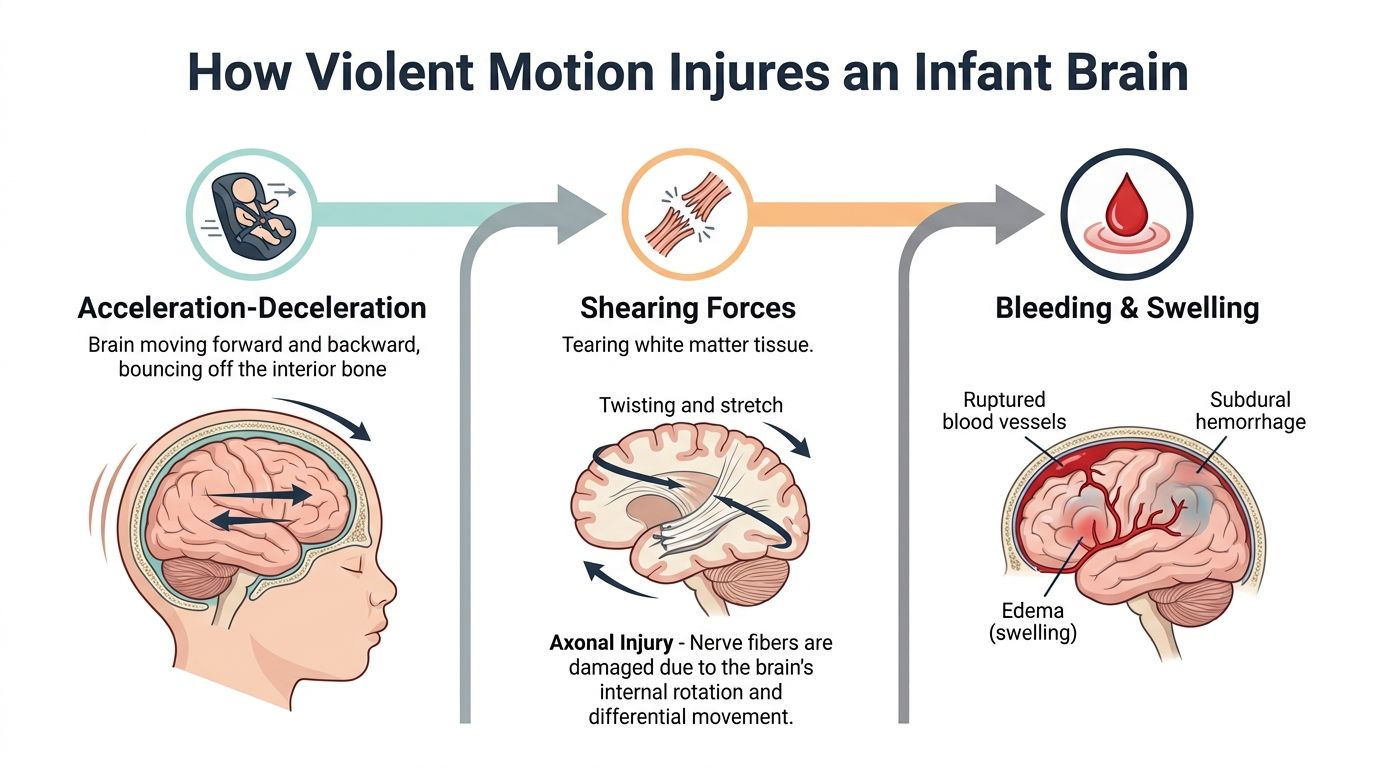
An infant's head is relatively large, while the neck has limited ability to control its movement. During violent acceleration followed by sudden deceleration, the skull can change direction while the brain continues moving. The difference creates shearing forces that stretch brain tissue and blood vessels.
What happens inside the skull
Fragile bridging veins connect the brain's surface with larger venous channels. Tension from violent movement can tear these vessels, allowing blood to collect around the brain. That bleeding is a subdural hemorrhage. Swelling, oxygen deprivation, and widespread injury to nerve fibers may occur as well, depending on the forces involved and the infant's medical condition.
Clinical descriptions of abusive head trauma include repeated acceleration-deceleration forces and, in some cases, blunt impact. Susceptibility-weighted MRI sequences, including T2* and SWI, may reveal bridging vein injuries that are subtle on routine imaging. Those findings can matter when clinicians and forensic specialists compare competing explanations (StatPearls clinical reference).
Why the eyes can provide important evidence
The retina is part of the visual system and contains delicate blood vessels. Movement between the eye's structures can create vitreoretinal traction, producing retinal hemorrhages. Retinal hemorrhage is reported in approximately 85% of abusive head trauma victims.
Finite element modeling found a stress-time integral of approximately 101 Pa·s at the retina during a single abusive shake, compared with approximately 36 Pa·s during a single impact event. The model helps explain why diffuse, multilayer retinal hemorrhages that extend toward the periphery may carry forensic weight, although interpretation still depends on the complete clinical and investigative record (review of ocular findings and biomechanics).
Practical rule: Test the proposed mechanism against brain imaging, eye findings, symptoms, medical history, and scene information together.
Blunt impact may accompany shaking, which is one reason clinicians use the broader AHT term. A postmortem examination can document additional injuries and disease, assess competing explanations, and support a medically reasoned cause and manner of death. It cannot reconstruct every movement or determine guilt by itself. In a contested death, those limits make careful evidence review as important as the injury findings.
Signs and Symptoms Families and Caregivers Notice
Early symptoms of abusive head trauma can resemble ordinary infant illness. An infant may feed poorly, vomit, seem unusually tired, sleep more than expected, or fail to gain weight. These signs are nonspecific, which means they can occur with many medical conditions and don't establish abuse or even head trauma by themselves (clinical review of presentation).
A caregiver should pay attention to a meaningful change from the infant's usual behavior, especially when several symptoms appear together or worsen. The appropriate response is medical evaluation, not an attempt to decide the diagnosis at home.
Symptoms that require urgent attention
More severe presentations may include:
- Breathing pauses: Apnea can signal serious neurologic or systemic deterioration.
- A bulging fontanel: Pressure inside the skull may affect the soft spot on an infant's head.
- Seizures: Abnormal electrical activity can follow significant brain injury.
- Reduced consciousness: An infant who's difficult to awaken or responds less than usual needs immediate assessment.
- Respiratory distress: Trouble breathing may accompany worsening brain or systemic injury.
- Shock: Severe physiologic collapse requires emergency treatment.
These findings can have causes unrelated to abuse, including infection, metabolic disease, accidental injury, or other serious illness. A symptom list is therefore a reason to seek emergency care, not a diagnostic checklist.
Clinicians usually ask when the change began, what the infant was doing before symptoms appeared, whether there was a fall or impact, what care was provided, and whether prior medical or birth complications exist. Honest, detailed information helps the medical team compare the clinical presentation with imaging and laboratory findings. Families should preserve relevant records and avoid altering or discarding potentially important information when a serious injury is suspected.
Diagnostic Tools and the Role of Autopsy
No single test diagnoses abusive head trauma. Cleveland Clinic identifies imaging as the main diagnostic pathway, while clinical references describe a combined assessment involving neuroimaging, eye examination, and skeletal survey (Cleveland Clinic overview). Physicians may also order laboratory testing to evaluate bleeding disorders, metabolic disease, infection, and other conditions that can produce overlapping findings.
How the workup fits together
| Tool | What it looks for | Strength | Limitation |
|---|---|---|---|
| CT or MRI | Hemorrhage, swelling, fractures, and brain injury | Shows internal injury and its distribution | Findings may not identify the exact event or actor |
| Susceptibility-weighted MRI | Small hemorrhagic lesions and bridging vein injury | Can reveal subtle findings important to interpretation | Availability, timing, and image quality affect usefulness |
| Ophthalmologic examination | Retinal hemorrhages and their pattern | Adds specialized assessment of eye findings | Eye findings require expert interpretation and aren't specific in isolation |
| Skeletal survey | Fractures or healing injuries | May identify injuries not visible externally | A normal survey doesn't exclude head trauma |
| Laboratory testing | Clotting, metabolic, and infectious conditions | Helps evaluate alternative explanations | Results must be interpreted with clinical findings |
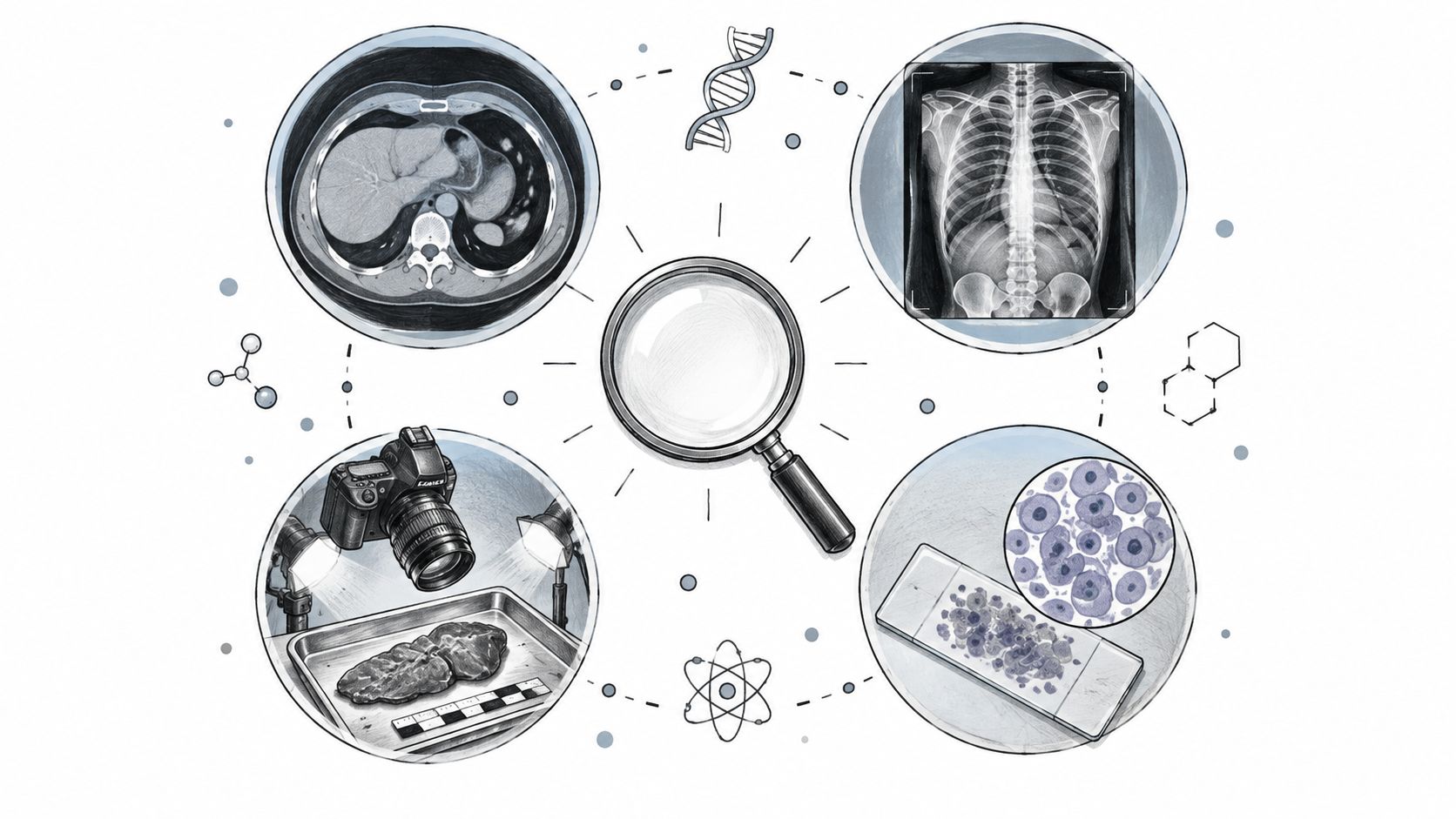
A private autopsy or second-opinion review can add value after a hospital course, particularly when the cause or manner of death remains disputed. Our board-certified forensic pathologists may review prenatal and birth records, emergency and inpatient notes, CT and MRI images, ophthalmology reports, skeletal imaging, laboratory results, and any prior autopsy documentation. The review can also include retained tissue, autopsy photographs, and histology slides when available.
For a focused explanation of brain examination methods, readers can consult autopsy examination of the brain. A postmortem examination doesn't replace the clinical workup. It provides another opportunity to document brain injury, identify disease, assess trauma, obtain appropriate specimens, and compare the findings with the documented history.
The final opinion should distinguish cause of death, the disease or injury that produced death, from manner of death, the classification of how that cause arose, such as natural, accident, suicide, homicide, or undetermined. When evidence cannot support a more specific conclusion, an undetermined classification may be medically appropriate.
The Classic Triad and Why Courts Are Skeptical
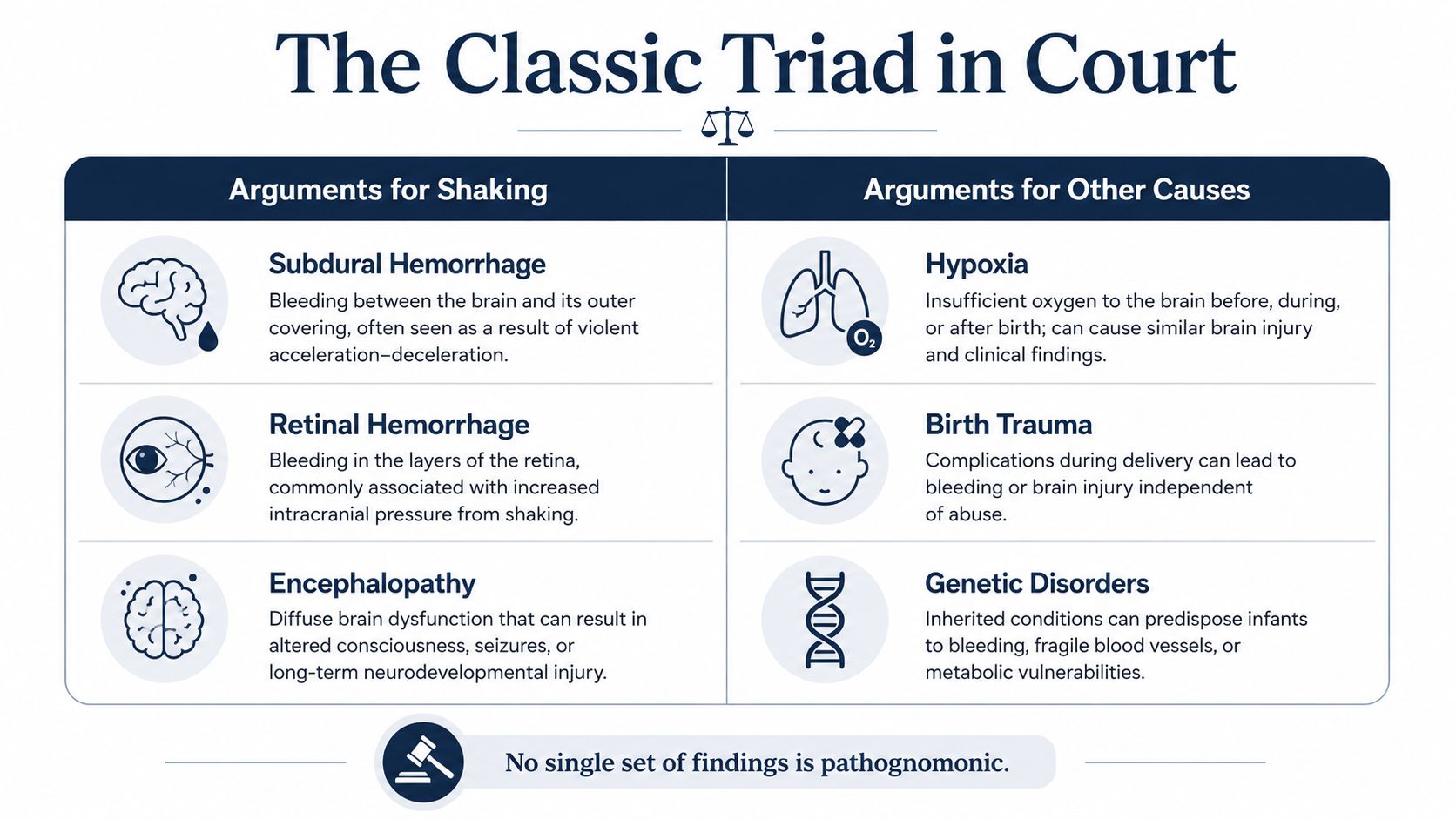
A child may arrive with subdural hemorrhage, retinal hemorrhage, and encephalopathy, the findings commonly called the classic triad. Encephalopathy describes a significant disturbance of brain function, which may include reduced consciousness, seizures, or other neurologic changes. These findings can be medically important, yet a systematic review of diagnostic evidence characterized the evidence connecting the triad to shaking as very low quality or insufficient. The findings require interpretation alongside history, examination, imaging, laboratory results, and possible disease.
The differential diagnosis matters
A differential diagnosis is a structured comparison of possible causes before an opinion is reached. In a suspected AHT case, clinicians and forensic pathologists may examine:
- Accidental trauma: Falls and other events must be compared with the documented injuries and mechanics.
- Birth-related injury: Timing, delivery history, imaging, and clinical progression can change the interpretation.
- Bleeding disorders: Abnormal clotting can produce hemorrhage without inflicted trauma.
- Metabolic disease: Inherited or acquired disorders can resemble aspects of traumatic brain injury.
- Infection: Inflammatory or infectious conditions may cause brain swelling, bleeding, or neurologic decline.
Courts have begun examining older SBS testimony more closely. A 2025 expert review of legal developments highlighted a 2024 appellate case in Victoria as an important moment in the discussion of expert evidence (forensic review of medical and legal developments). U.S. legal analysis has also described a 2024 Texas appellate development, while Reuters reported a 2025 New Jersey Supreme Court ruling as the first U.S. ban on SBS testimony in certain cases. These developments do not establish one rule for every courtroom or resolve the medical facts of a particular death.
Courts need experts to identify what each finding demonstrates, the alternative explanations investigated, and the limits of the available evidence. A sudden infant death syndrome review may also be relevant when the record does not establish a traumatic cause.
When a Private Autopsy or Second Opinion Adds Value
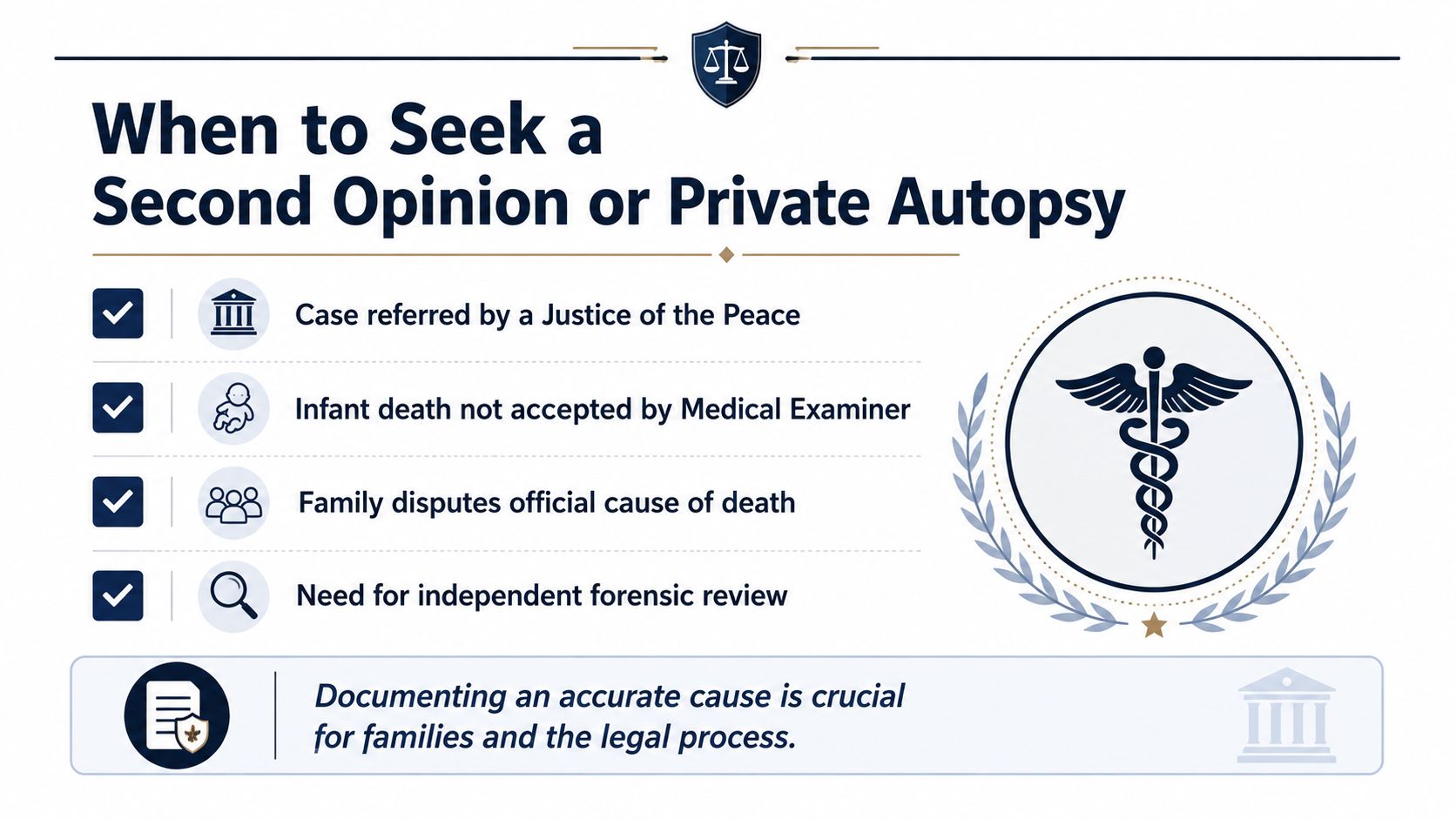
An independent examination can be appropriate when a justice of the peace refers a case, a medical examiner doesn't accept an infant death, or a family disputes the official cause or manner of death. Attorneys may request a second opinion while preparing civil litigation, criminal defense work, an appeal, or a response to an expert report. The purpose isn't to reach a preferred result. It's to test whether the documented evidence supports the stated conclusion.
Our board-certified forensic pathologists may begin with records rather than an immediate examination. The review can include prenatal and delivery records, emergency documentation, hospital imaging, ophthalmologic findings, laboratory results, the hospital course, the official autopsy report, autopsy photographs, and retained tissue slides.
What an independent review may involve
- Record review: We compare the history, symptoms, treatment, imaging, and prior conclusions for consistency.
- Postmortem examination: When authorized and feasible, the examination documents injuries and disease using established forensic methods.
- Specialized testing: Toxicology, molecular testing, or neuropathology consultation may be coordinated when the findings call for it.
- Evidence handling: Samples, slides, images, and records are tracked under a documented chain of custody, meaning a written record of who collected, transferred, stored, and examined each item.
- Written reporting: The final report explains findings, cause of death, manner of death when supportable, limitations, and the reasoning behind the opinion.
Texas Autopsy Services is an independent private autopsy practice based in Elgin, Texas, serving all 254 Texas counties with in-house licensed transport. Our team provides direct communication, HIPAA-compliant reporting, full chain-of-custody documentation, and detailed reports intended to be understandable to families and useful to attorneys. Information about pathology consultation services can help explain how a records-based review differs from a complete postmortem examination.
A private autopsy is postmortem work. It isn't medical advice for a living child, and it can't determine legal responsibility by itself. Its value lies in careful documentation, objective analysis, and a clear explanation of what the evidence supports and where uncertainty remains.
Prevention, Common Questions, and How to Reach Our Team
Prevention starts with one clear rule: never shake an infant. If crying feels overwhelming, place the baby on the back in a safe sleep space, step away briefly, and contact a trusted adult or emergency support. Safe-sleep education and caregiver-coping programs can reduce risk by addressing exhaustion, isolation, and burnout before they affect judgment.
Parents, grandparents, babysitters, child-care workers, and other caregivers all need the same practical guidance. The message should focus on action rather than blame. Asking for help early is safer than trying to manage a crisis alone.
Common questions
How common is shaken baby syndrome?
Estimates vary because some cases may not be recognized or reported, and researchers use different case definitions. See the incidence discussion above for the main estimates. The broader lesson is that reported totals depend on how cases are identified, classified, and counted.
Is the classic triad enough for court?
No. Subdural hemorrhage, retinal hemorrhage, and encephalopathy may be important findings, but the triad alone does not establish shaking or abusive intent. In 2024 and 2025, contested cases continue to draw attention to the difference between a medical pattern and proof of a specific event. Courts and experts should examine the complete record, including alternative diagnoses, imaging, eye findings, medical history, timing, witness accounts, and the limits of each piece of evidence.
What does chain of custody mean in a private autopsy?
It is the documented history of evidence handling. The record identifies who collected, transported, stored, transferred, and examined specimens, slides, images, and other materials. Like a receipt trail, it helps show that the materials reviewed are the same materials collected and that their handling can be examined.
How can a family in any Texas county begin?
Families, attorneys, justices of the peace, and county officials can contact our team to discuss authorization, transportation, records, available specimens, and the type of review needed. We serve all 254 Texas counties. Jurisdiction, preservation, and access to prior materials can determine which option is appropriate.
Texas autopsy and forensic services must comply with applicable requirements of the Texas Funeral Service Commission and the Texas Health & Safety Code, including Chapters 711, 716, and 651. Before work begins, families should receive a clear explanation of authorization, evidence handling, fees, reporting, and the limits of the requested examination.
Texas Autopsy Services provides independent autopsies, second-opinion reviews, and pediatric forensic pathology examinations for families, attorneys, healthcare professionals, and county officials across Texas. If an infant death or suspected abusive head trauma case remains unclear, visit Texas Autopsy Services to contact our team directly for confidential guidance at any hour.