October 27, 2026 · Texas Autopsy Services
SIDS Explained What Families Should Know in 2026
SIDS explained in plain language: how it differs from other infant deaths, how Texas investigations work, and safe sleep steps that lower risk.
On this page
- What SIDS Means and How It Differs From Other Infant Deaths
- Why SIDS Happens and the Triple-Risk Model
- How an Unexplained Infant Death Is Investigated in Texas
- What the Forensic Autopsy Can and Cannot Show
- How to Lower the Risk of Sleep-Related Infant Deaths
- Frequently Asked Questions About SIDS Investigations
- Choosing Support and Next Steps After a Loss
A caregiver checks on a sleeping infant in the morning and finds the baby unresponsive. The questions that follow usually center on what happened, how the cause will be determined, and whether anyone is to blame. Those questions deserve careful answers grounded in the full investigation, not assumptions about sleep or caregiving.
SIDS is the sudden death of an infant under one year old that remains unexplained after a complete autopsy, a death-scene investigation, and a review of the clinical history. It sits within a wider category called sudden unexpected infant death, which accounts for thousands of infant deaths in the United States each year. That group also includes accidental suffocation and strangulation in bed and deaths whose cause stays unresolved.
The label is a conclusion, not a first guess. In Texas, a medical examiner or justice of the peace applies it only after the evidence is in, and no private examination overrides that official classification.
What SIDS Means and How It Differs From Other Infant Deaths
Sudden unexpected infant death (SUID) is an umbrella term for an infant death that is sudden and unexpected. It includes SIDS, accidental suffocation and strangulation in bed, and deaths whose cause remains unknown. SIDS is a diagnosis of exclusion: it's used when a complete autopsy, death-scene examination, and review of the clinical history do not identify an adequate cause. Finding an infant unresponsive during sleep, by itself, does not establish SIDS.
The distinctions matter because the labels describe different conclusions from an investigation. In 2023, the United States recorded 3,549 SUID deaths. The Safe Kids SUID fact sheet reports that 41% were classified as SIDS, 28% as accidental suffocation and strangulation in bed, and 31% as unknown cause.
| Category | What it means | Share of 2023 SUID deaths | What usually decides the label |
|---|---|---|---|
| SIDS | Sudden death of an infant that remains unexplained after a complete investigation | 41% | Scene findings, complete autopsy, and clinical history show no adequate cause |
| Accidental suffocation and strangulation in bed | Death caused by something in the sleep area blocking breathing or pressing on the airway | 28% | Documented evidence of the sleep setting and how the infant was positioned |
| Unknown cause | Death the investigation cannot assign to a more specific category | 31% | The findings support neither SIDS nor an accident, or key information is incomplete |
| All SUID deaths (umbrella category) | Sudden unexpected death of an infant, including the three groups above | 100% | Classification by the official investigating authority |
The CDC's 2024 SIDS data count 1,351 deaths classified as SIDS in the United States. Annual totals can reflect both real changes in deaths and changes in how investigators classify them. A SIDS determination, on its own, doesn't prove that a caregiver caused the death. An accidental-suffocation finding should likewise rest on documented investigative evidence, not assumptions.
Each classification points to a different set of facts in the case file. Understanding why infants may be vulnerable helps explain why some thorough investigations still don't identify a single cause.
Why SIDS Happens and the Triple-Risk Model
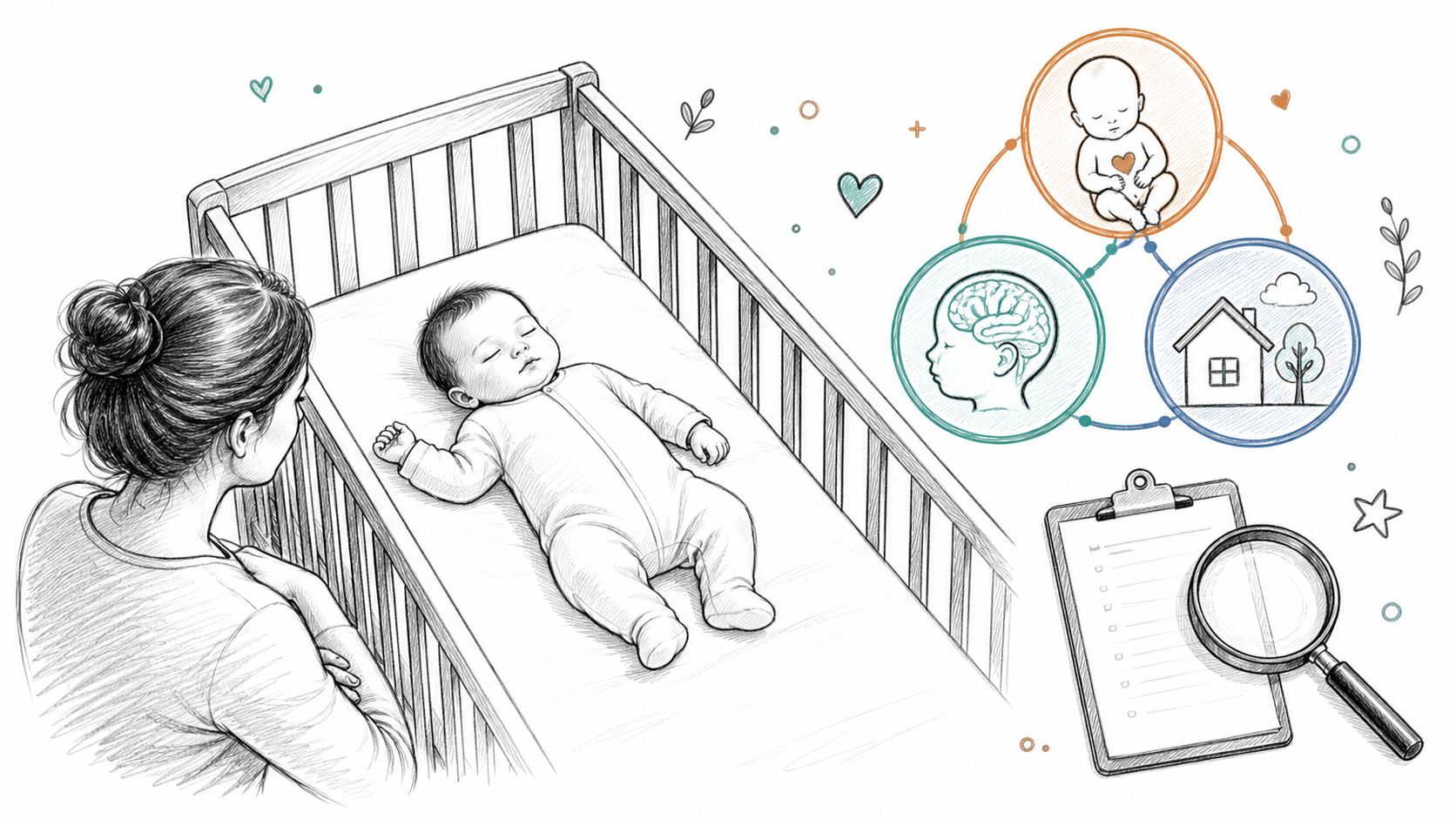
Think of a lock that opens only when three separate keys turn at once. The NIH/NICHD triple-risk model describes SIDS as a death that may occur when an infant's underlying vulnerability, a sensitive developmental period, and an outside stressor coincide. The model is a way to understand interacting risks, not a test that can identify a cause in an individual case.
One part of the model is an intrinsic vulnerability. It may involve genetic or brainstem-related differences that aren't apparent in a routine examination. Another is a critical developmental period, especially early infancy, when the body's systems for waking, breathing, and responding to changes in heart function are still maturing. The third is an external stressor, such as prone sleeping, overheating, or exposure to tobacco smoke. The NIH/NICHD SIDS fact sheet explains why these factors are considered together.
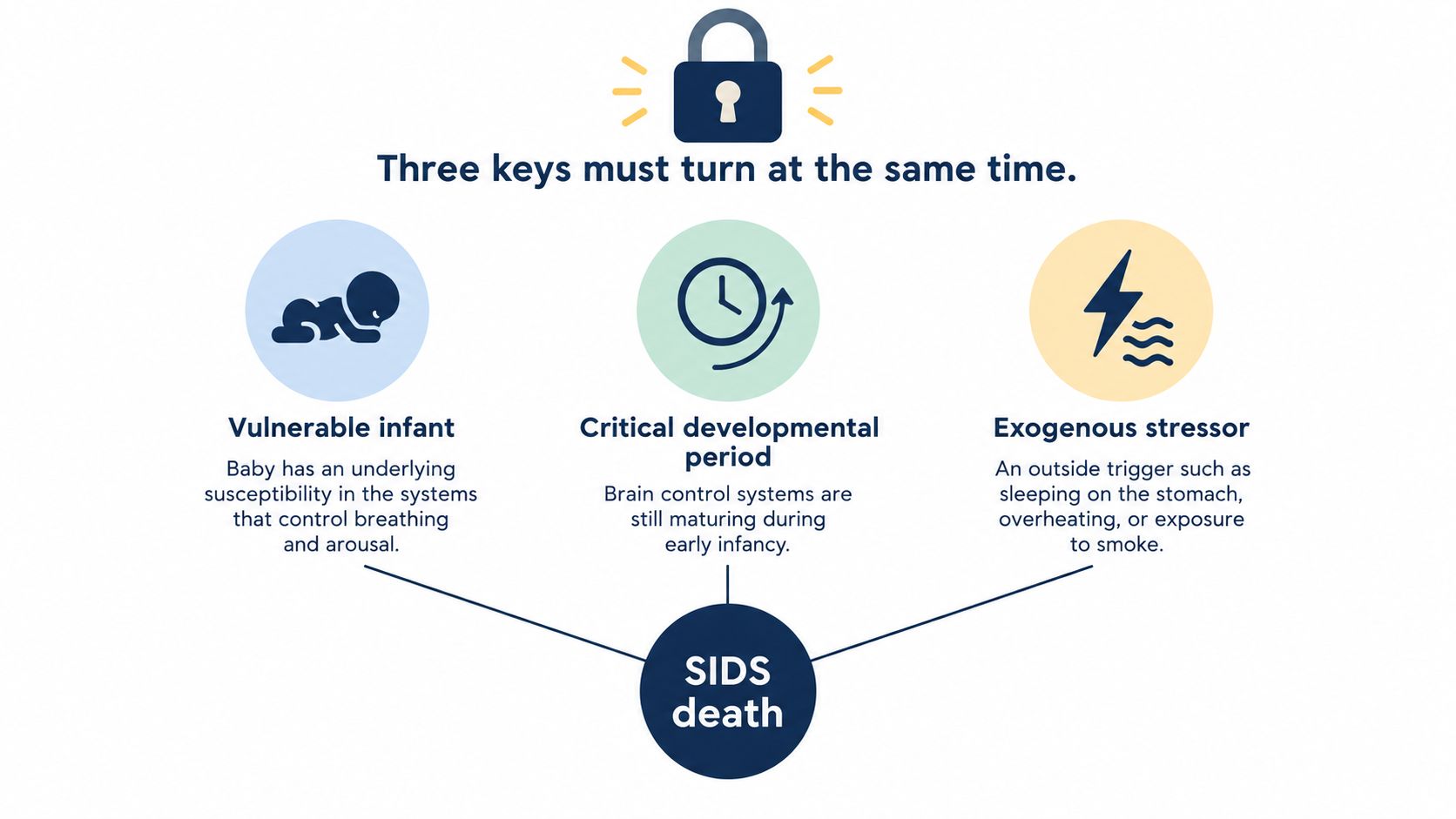
An infant may have appeared healthy because a susceptibility isn't necessarily visible before death or at autopsy. That doesn't mean investigators can infer a particular hidden condition. It means that SIDS is not generally explained by one isolated event, and findings must be interpreted in context.
A population-based study using 80,710,348 live births found that U.S. SIDS incidence declined from 6.3 to 3.4 per 10,000 births between 2000 and 2019, according to the study published in JAMA Network Open and indexed by PubMed. A population trend describes a group over time; it cannot determine why a specific infant died.
The model informs both prevention and investigation. Families can most directly reduce the environmental stressors by following safe-sleep guidance, while investigators consider the full medical and scene record before reaching a classification.
How an Unexplained Infant Death Is Investigated in Texas
An infant who seemed well is found unresponsive after sleep, and no immediate explanation is apparent. The case is evaluated within the broader sudden unexpected infant death category. SIDS is a diagnosis of exclusion: it may be used only after the official investigation finds no other supported explanation.
A cause of death is the medical condition or injury that began the chain of events leading to death. The manner of death is the category assigned to that death, such as natural, accident, or undetermined. A chain of custody is the documented record of who handled each piece of evidence and when.
An official investigation may include the following steps. The sequence is not always linear, and the responsible authority may revisit a classification when additional records or results arrive.
Emergency response and pronouncement. Responders may attempt resuscitation. A physician or authorized official pronounces the death.
Notification and jurisdiction. The death is reported to the justice of the peace or county medical examiner, who determines whether an inquest is needed. The responsible office depends on the county's death-investigation system.
Scene documentation. Investigators record the sleep surface, bedding, nearby objects, room conditions, the infant's position, and other relevant details. Photographs preserve the scene's condition for later review.
Interviews. Investigators speak with caregivers and witnesses about when the infant was last seen well, feeding, sleep routines, and recent illness. These accounts establish the circumstances surrounding the death.
Medical-record review. Prenatal, birth, and later medical records can clarify the infant's health history and any known concerns.
Autopsy and testing. A complete autopsy, toxicology testing, imaging, and specimen collection may contribute to the medical assessment. The chain of custody for samples and other evidence must be documented.
Combined review. The official considers the autopsy and laboratory findings alongside scene documentation, interviews, and records. Each source answers a different question, so no single part is treated as the whole investigation.
Classification and report. The death may be classified as SIDS, accidental suffocation, unknown cause, or another category supported by the evidence. A written report records the findings and conclusion.
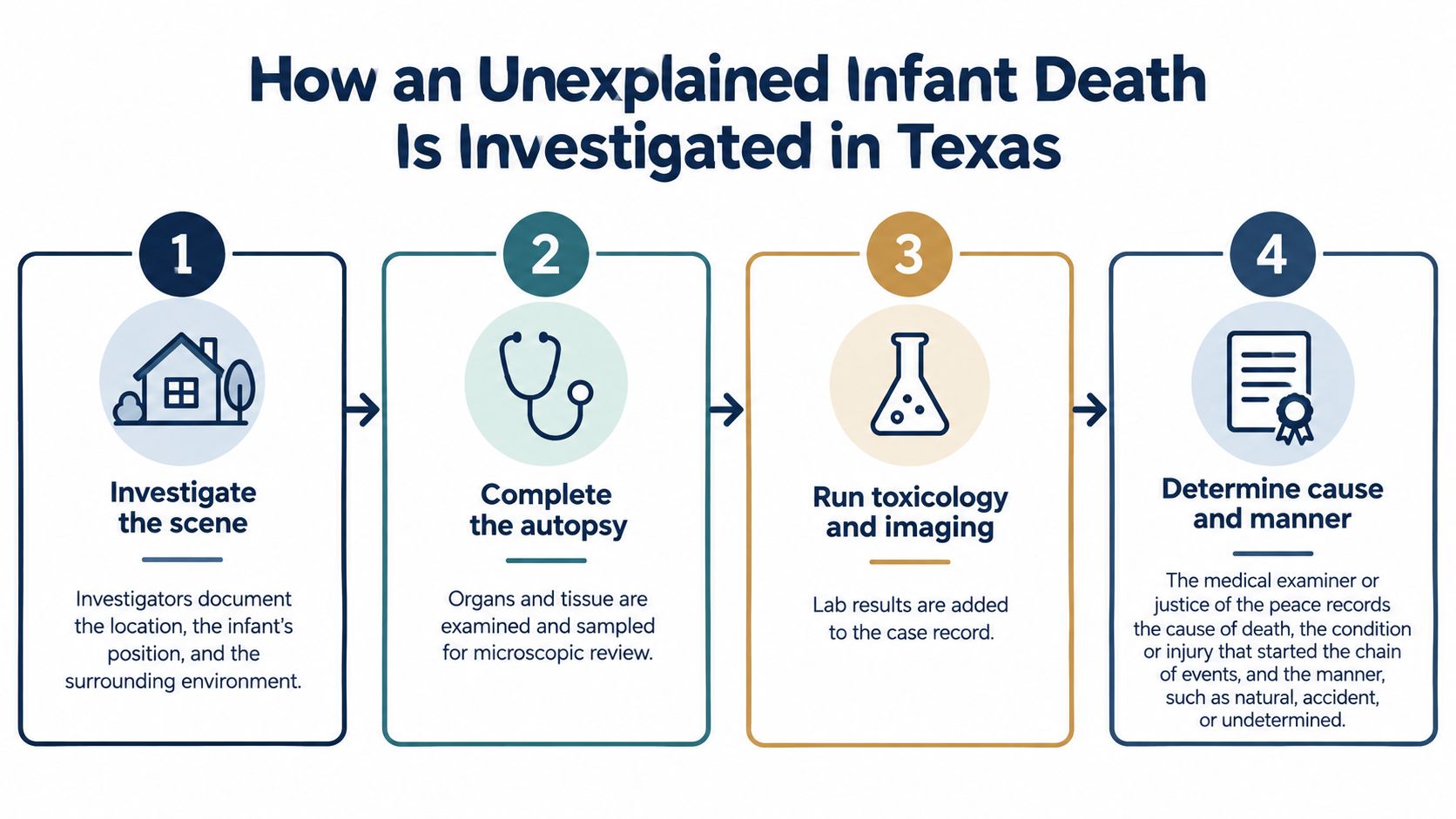
Texas assigns investigative authority through the county death-investigation system. The Texas death-investigation overview explains that a justice of the peace may consult a county health officer or physician about whether an inquest requires an autopsy. The justice may direct a physician to perform the examination or certify that it is unnecessary. Under Article 49.25 of the Texas Code of Criminal Procedure, an autopsy is required when needed to establish or confirm the cause, when a child younger than six dies unexpectedly or from suspected abuse or neglect under the Family Code, or when the applicable district attorney, criminal district attorney, or county attorney orders one.
A health authority may request or order an autopsy when more information is needed to protect public health under Texas Health and Safety Code Section 81.045. A private forensic examination can provide an independent review for a family or counsel. Authority to conduct the inquest and classify the death remains with the Texas office that has jurisdiction. Families and attorneys can ask which office that is, whether an inquest is open, and how independent findings can be provided for consideration. Texas Autopsy Services maintains a guide to infant death investigations in Texas that describes how an independent review can fit alongside the official process.
| Authority | Role in an infant death | Source of authority or limit |
|---|---|---|
| Justice of the peace | Determines whether an inquest and autopsy are needed and can direct a physician to perform one | Texas Code of Criminal Procedure |
| County medical examiner | Performs or directs official autopsies in counties with a medical examiner | Texas Code of Criminal Procedure |
| District attorney, criminal district attorney, or county attorney | Can order an autopsy in an open case | Texas Code of Criminal Procedure |
| Official conducting the inquest | Ensures a legally required autopsy occurs when a child dies unexpectedly or abuse or neglect is suspected | Texas Family Code and Texas Code of Criminal Procedure |
| Health authority | Can request or order an autopsy when survivors do not consent and public-health information is needed | Texas Health and Safety Code Section 81.045 |
| Private forensic pathologist | Provides an independent second opinion engaged by family or counsel | Independent engagement with no authority over the official inquest |
The official office conducting the inquest alone determines which classification the evidence supports.
What the Forensic Autopsy Can and Cannot Show
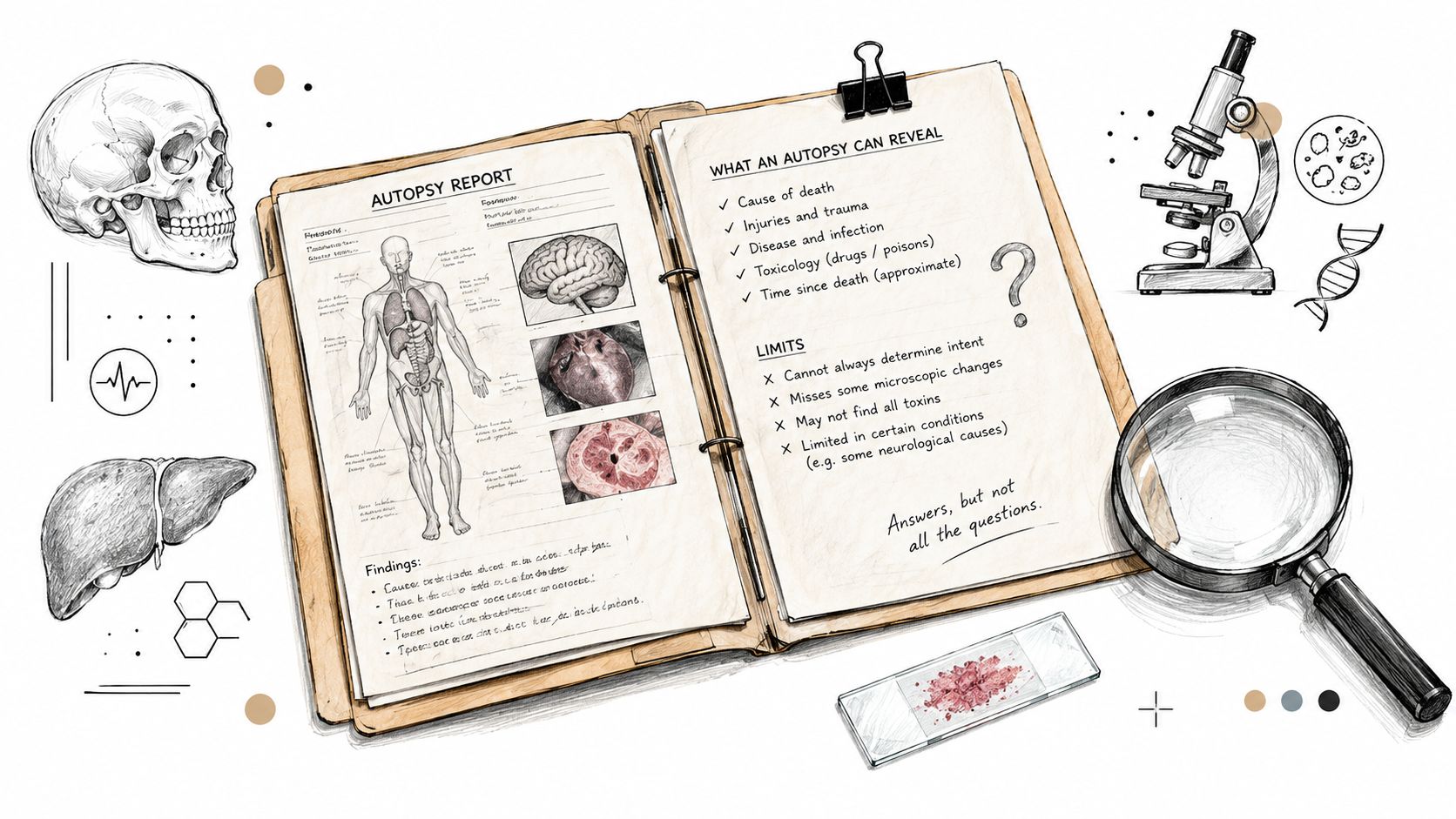
A forensic autopsy can identify injuries, infection, congenital differences, and some structural or metabolic conditions. It examines organs, collects tissue for microscopic review, and can support toxicology testing and imaging. These findings carry real weight, yet a complete examination does not always reveal why an infant died.
That gap is the reason SIDS is called a diagnosis of exclusion. The label applies only after a full autopsy, a scene investigation, and a clinical history review find no other explanation. Some inherited heart-rhythm and metabolic conditions leave no obvious structural change, so an organ examination that looks normal does not rule out every inherited risk. Unsafe-sleep factors also do not automatically eliminate the possibility of an underlying condition.
CDC registry data from 2020–2024 found that 98% of SUID cases had an autopsy and 95% had toxicology testing, while genetic testing wasn't documented for 86% of infants, according to the CDC report in the Morbidity and Mortality Weekly Report. The same report describes a large cohort in which potentially actionable pathogenic or likely pathogenic cardiac variants were found in approximately 4% of infants classified as SIDS. These figures don't establish that genetic testing will explain an individual death. They do show why families may want to ask about follow-up.
Questions about genetic testing and specimens
Ask the investigating physician or genetic counselor whether genetic testing is reasonable after an unexplained death, and whether relevant family history changes that discussion. Genetic testing after an unexplained infant death generally relies on preserved blood and heart tissue, so ask early whether those samples were collected.
Timing matters here. Before burial or cremation, confirm whether samples have been collected and preserved, because options narrow once final arrangements are complete. If samples weren't taken, ask whether stored blood or heart tissue is available and suitable for testing. A genetic counselor can explain what a result may mean for parents and surviving siblings, including whether follow-up evaluation is appropriate.
Every examination performed by Texas Autopsy Services is performed by a board-certified forensic pathologist certified by the American Board of Pathology. When our team conducts an independent review, the findings may be submitted to the official authority handling the case. That authority, not the private examination, controls the official classification and decides how and whether to use any independent findings.
How to Lower the Risk of Sleep-Related Infant Deaths
Safe-sleep guidance developed over time. The American Academy of Pediatrics recommended back or side sleeping in 1992, and the nationwide Back to Sleep campaign began in 1994. In 1996, the guidance for healthy infants shifted to back-only sleeping.
The results were measurable. The National Institute of Child Health and Human Development's campaign history reports that the U.S. SIDS rate fell from 1.17 deaths per 1,000 live births in 1993 to 0.62 by 2000, while the share of infants placed on their backs rose from approximately 17% in 1993 to 73% in 2010. In 2012, the campaign was renamed Safe to Sleep to address SIDS alongside other sleep-related deaths, including accidental suffocation.
Progress has not removed disparities. Reported SIDS rates among African American infants were about twice those among White infants, and rates among American Indian and Alaska Native infants were about three times those among White infants, according to the NIH campaign history. Every family and caregiver deserves clear, practical guidance.
The table below pairs each habit with the hazard it replaces. Read each row as one change to the infant's sleep space or routine.
| Practice | Recommended | Avoid |
|---|---|---|
| Sleep position | Place healthy infants on their backs for every sleep | Side or stomach positions |
| Sleep surface | Use a firm, flat, noninclined surface in a safety-approved crib, bassinet, or play yard, with only a fitted sheet | Couches, armchairs, adult beds, and other soft or inclined surfaces |
| Bedding and objects | Keep the sleep space free of loose items | Loose blankets, pillows, bumper pads, and stuffed toys |
| Room sharing | Keep the infant's sleep surface in the caregivers' room, ideally for at least the first six months | Bed-sharing and routine sleep in car seats, swings, or other sitting devices |
| Feeding | Breastfeed or provide human milk; human-milk feeding is associated with a lower risk of SIDS | Treating feeding choice as a guarantee against SIDS |
| Swaddling | Stop swaddling as soon as the infant shows any sign of rolling | Swaddling after the infant begins to roll |
| Temperature and head covering | Dress the infant for the room and keep the head uncovered | Overheating and covering the head during sleep |
| Tobacco smoke | Keep the home and car smoke-free | Tobacco-smoke exposure around the infant |
These practices address the environmental part of the triple-risk model: each one removes a source of stress or obstruction from the sleep setting. Risk reduction is not a guarantee. Because SIDS is a diagnosis of exclusion, a death can remain unexplained even when every precaution was followed, and that possibility is why careful investigation still matters after any sleep-related loss. For a simple reminder caregivers can share, read about the ABCs of safe infant sleep. A pediatrician can answer questions about an individual infant's health or sleep plan.
Frequently Asked Questions About SIDS Investigations
Can a private autopsy be requested if the official office declined to order one?
A family or attorney can engage a private forensic pathologist for an independent opinion. The official authority still controls the case and the evidence, so the request should be coordinated with that office before any examination is scheduled. A private examination adds a second review of the medical questions. It does not take over the official investigation, and it does not change how the case is classified.
How long does an investigation take?
The timing depends on laboratory results, record requests, scene documentation, and coordination between agencies, so families should ask the investigating office for its current estimate and which results remain outstanding. Waiting is often the hardest part. Knowing which specific tests are pending gives families a clearer picture of where the case stands than a general estimate can.
Does a private autopsy replace the official report?
No. The justice of the peace or medical examiner is responsible for the official classification and the death certificate. An independent report adds a separate medical review that the official office may consider alongside its own findings. For families asking about genetic follow-up, our molecular autopsy guide explains the purpose of that testing and the questions to raise with the appropriate professionals.
Choosing Support and Next Steps After a Loss
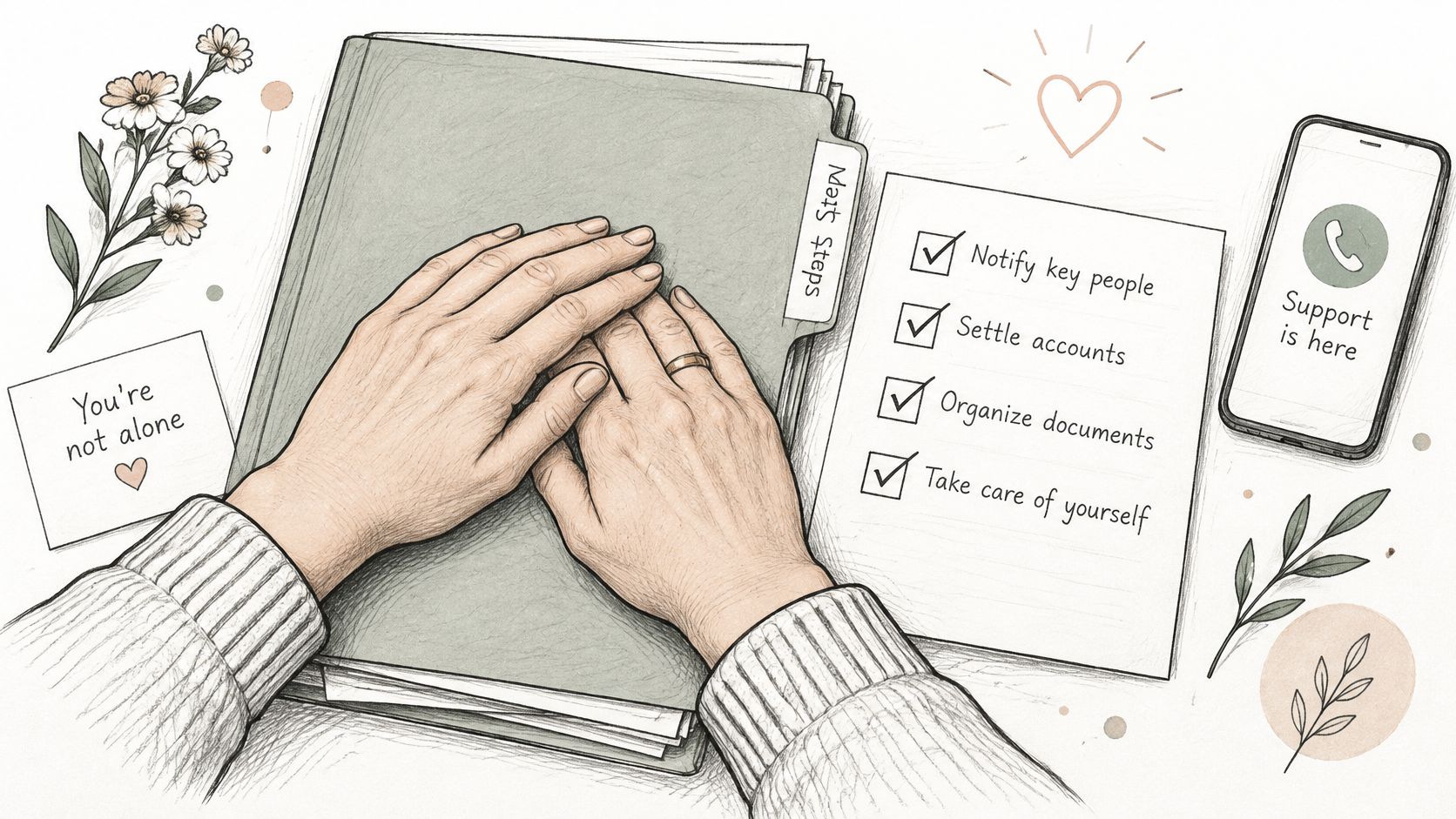
Ask the justice of the peace or medical examiner how to obtain the death certificate and autopsy report when they're available. Ask who can answer questions about the investigation, and keep that contact information with your records. If a report uses terms that are unclear, request a plain-language explanation of what the findings establish and what remains unknown.
A SIDS classification works like a conclusion reached by exclusion: recognizable causes have been looked for and not found, within the limits of the investigation. In Texas, that classification stays with the official authority, not with a private examination, so keep your questions pointed toward the office responsible for the file.
Support can come from hospital social workers, hospice programs, faith communities, and organizations such as First Candle. Siblings and other caregivers may need help too. A resource on closure after a death can help families consider next steps, and some families also compare counseling options beyond their immediate area, including family counsellors serving Vernon, when fit and availability matter as much as distance.
A SIDS classification doesn't establish that a caregiver caused the death. An accidental-suffocation conclusion should rest on documented investigative evidence, not assumptions about the sleep setting. A second opinion may be worth discussing when a report remains unclear or undetermined, the official office declined an examination, or there's disagreement about what the records show.
An independent review may involve examining records, reviewing existing findings, or conducting an examination in coordination with the official authority. The family can ask what material is available, what the review can reasonably test, and how any independent opinion would be shared with the officials responsible for the case.
When you're ready to discuss options, contact Texas Autopsy Services at (806) 230-1889, available 24/7, to speak directly with our team about what an independent review can and cannot address and what a next step may look like. The decision remains with your family.
Texas Autopsy Services provides private autopsies and second-opinion reviews for families and attorneys seeking clarity after an infant death, with every examination performed by a board-certified forensic pathologist certified by the American Board of Pathology. We coordinate with the official authority and explain the process in plain language. Visit Texas Autopsy Services or call our team when you're ready to discuss your options.