June 8, 2026 · Texas Autopsy Services
Exhumed Body After 1 Year: Expert Insights for 2026
Considering an exhumed body after 1 year? A forensic pathologist details decomposition, evidence, & legal steps for families and attorneys in 2026.
On this page
- Answering the Call for Clarity
- The State of a Body One Year After Burial
- How Burial Conditions Affect the Evidence
- Forensic Analyses That Can Still Provide Answers
- The Legal Process for Exhumation in Texas
- Considering an Exhumation What Are Your Next Steps
- Frequently Asked Questions About Exhumation Autopsies
When families or attorneys call me about an exhumed body after 1 year, the first question is usually simple and heavy at the same time. They want to know what is still there, and whether the truth can still be found.
Often, there has been a burial, a funeral, and months of trying to accept an official explanation that still doesn't sit right. Sometimes a death certificate feels incomplete. Sometimes a prior examination left gaps. Sometimes a civil case or criminal concern raises a new question long after burial. In those moments, people are not looking for morbid detail. They're looking for a clear answer about what exhumation can realistically accomplish.
At Texas Autopsy Services, every examination is performed by a board-certified forensic pathologist experienced in medicolegal death investigations. Our work centers on one principle: follow the evidence carefully, explain it plainly, and treat the deceased and their family with respect.
Answering the Call for Clarity
A typical call starts with uncertainty.
A daughter may say her father's death was ruled natural, but the history never fit. An attorney may say there is concern about identification, trauma, or whether intoxication played a role. A county official may need an independent review when confidence in the original conclusion has eroded. By the time exhumation is being discussed, no one is treating it as a routine step.
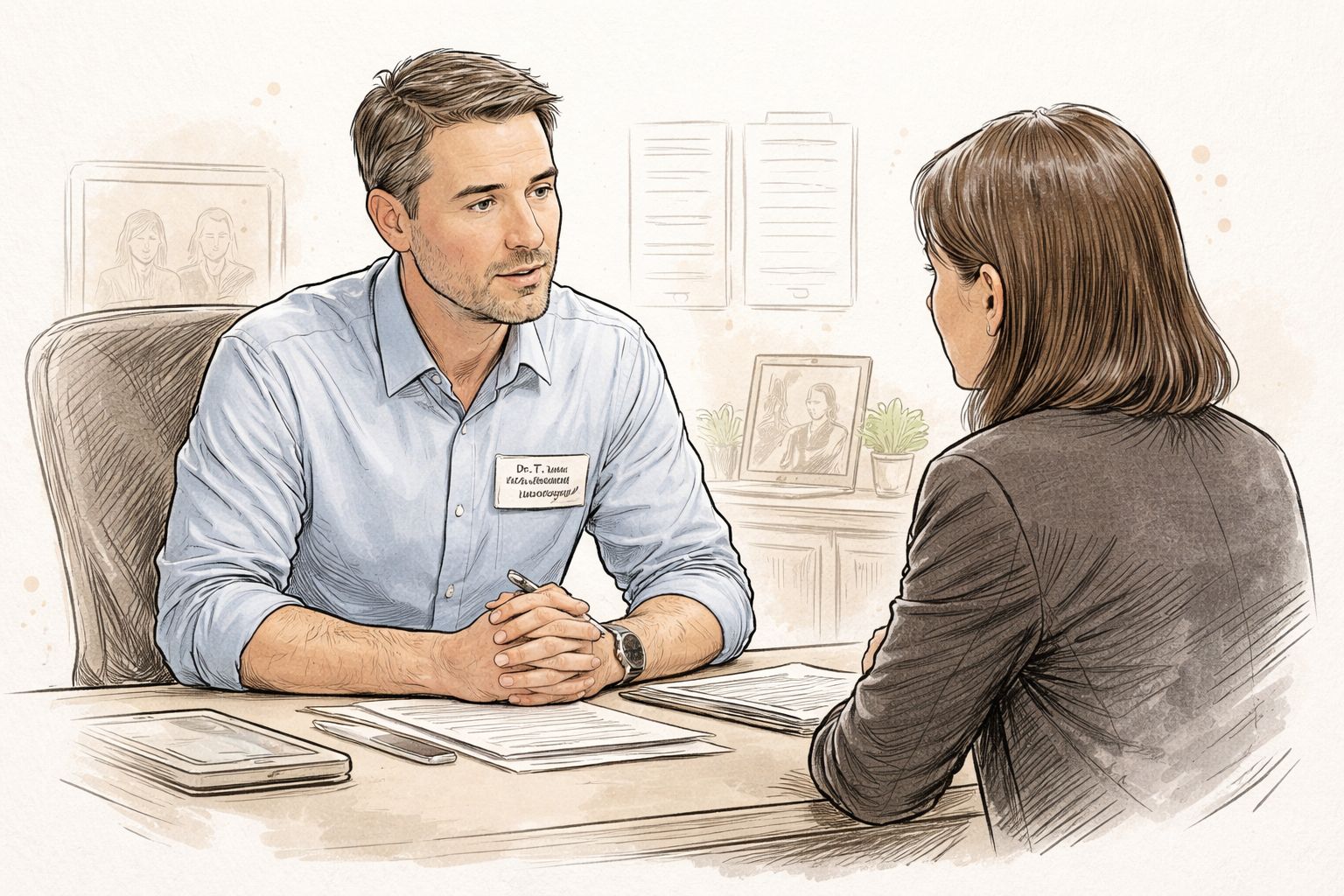
That matters because exhumation is both a forensic procedure and a family event. It involves legal authorization, cemetery coordination, respectful recovery of remains, evidence documentation, and a careful decision about what testing still has value. The public often focuses on what the remains look like. In practice, the harder questions are usually procedural. Who has authority to request it. What evidence can still be collected. How the remains are handled afterward. How the chain of custody is protected if the findings may matter in court.
Why people consider exhumation
The reasons are usually practical, not speculative:
- Cause-of-death concerns: A prior explanation may no longer fit the available records.
- Identification questions: DNA or dental comparison may be needed when identity is disputed.
- Litigation support: Attorneys may need a second opinion autopsy or forensic review tied to a wrongful-death or insurance dispute.
- Evidence review: A later concern about trauma, neglect, poisoning, or burial error may justify reopening the case.
Clinical reality: An exhumation should start with a specific forensic question. Broad suspicion without a defined objective rarely produces a useful outcome.
If you're reading this, you may already be balancing grief, legal pressure, and uncertainty. That's exactly when clarity matters most.
The State of a Body One Year After Burial
The direct answer is this. By about one year after burial, a body has typically progressed to skeletonization, meaning that dry skeletal remains are often what investigators recover, though the exact condition remains highly variable according to forensic references on decomposition stages.
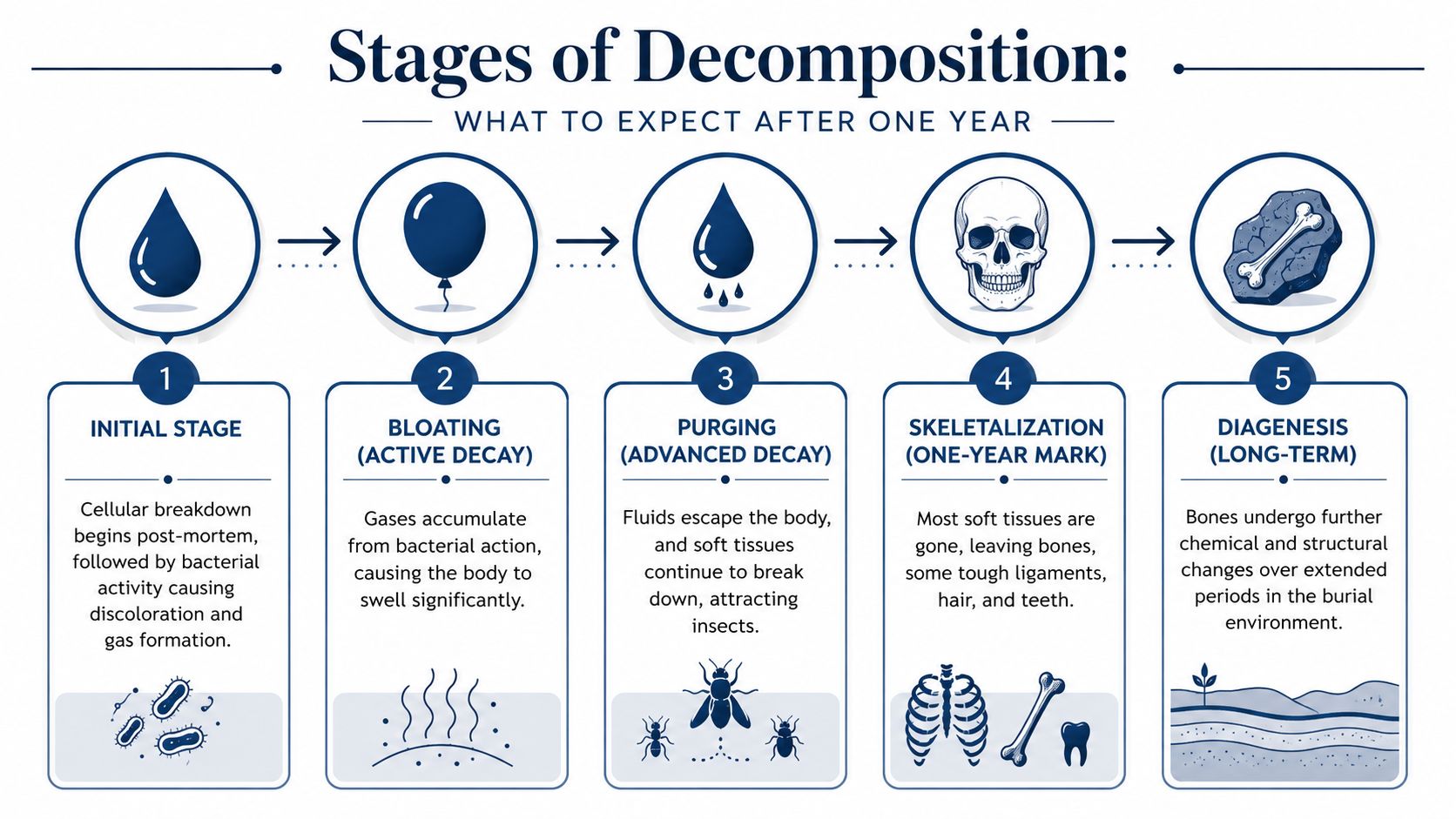
That sentence needs unpacking, because families often hear “skeletonization” and picture complete disappearance. That isn't what the term means in forensic work. It means most soft tissue has broken down to the point that the remains are predominantly skeletal. Teeth, hair, durable connective structures, and sometimes areas of dried or hardened tissue may still be present. In some exhumations, bones remain articulated. In others, the remains are partially disarticulated or scattered within the burial container, depending on soil, moisture, and coffin conditions.
What skeletonization means in practice
At roughly 50 to 365 days postmortem, decomposition commonly reaches the dry-decay or advanced skeletonization transition, when most soft tissue has been removed and decomposition slows because less tissue water remains, as described by the Australian Museum's overview of decomposition stages.
For a family, that means an exhumed body after 1 year is usually not an intact, viewable body in the everyday sense. For a forensic pathologist, it means something else. It means the examination shifts away from routine visual inspection of organs and toward careful recovery, inventory, photography, radiology when available, skeletal assessment, and targeted sample collection.
A helpful background discussion appears in this related article on what an exhumed body can look like after burial.
What remains may still show
Even after substantial decomposition, the remains may still provide useful information:
- Bones: These can show fractures, healed injuries, surgical changes, or certain disease processes.
- Teeth: Dental structures can support identification and may survive when soft tissue does not.
- Ligaments or desiccated tissue: In some cases, small amounts remain and may guide limited sampling.
- Burial context: Clothing, container condition, and the position of remains may matter.
Before watching a visual explanation, I always tell families the same thing. The issue is not whether the remains appear disturbing. The issue is whether the burial environment preserved evidence that still answers a focused question.
A one-year exhumation is not “too late” by definition. It is a different kind of forensic examination.
How Burial Conditions Affect the Evidence
No responsible forensic pathologist should promise that all one-year exhumations will look alike. They won't.
In forensic anthropology, a body buried in a typical coffin may show substantial soft-tissue breakdown within about 1 year, but full skeletonization generally takes 5 to 10 years in an embalmed, coffin-buried case, with major variation based on temperature, soil acidity, burial depth, and coffin materials, according to Live Science's summary of forensic anthropology timelines.
The variables that change everything
A few conditions shape what my team may recover:
| Factor | Why it matters |
|---|---|
| Embalming | It can slow early soft-tissue breakdown, but it does not stop decomposition. |
| Coffin material | The container affects oxygen, moisture, and insect access. |
| Burial depth | Deeper burial can change temperature exposure and drainage. |
| Soil chemistry | Soil acidity influences how soft tissue and bone degrade over time. |
| Moisture and heat | Texas conditions can accelerate some changes and complicate others. |
Texas adds its own challenges. A burial in dry ground behaves differently from one in wet, compacted, or flood-prone soil. Rural cemeteries and older graves may also present container collapse, shifted remains, or mixed debris that requires more deliberate recovery. That's one reason I tell attorneys not to assume that a prior funeral preparation tells them what an exhumation scene will yield.
What works and what does not
Some expectations are useful. Others are not.
- Useful expectation: The burial environment may preserve bone, teeth, and some durable tissues well enough for focused analysis.
- Poor expectation: A one-year exhumation will necessarily allow a full repeat of the original autopsy.
- Useful expectation: Cemetery and mortuary logistics influence evidence quality almost as much as laboratory work.
- Poor expectation: The casket itself guarantees preservation.
Field judgment: The condition of the remains is only part of the case. The condition of the grave, container, and surrounding materials often matters just as much.
When I review a potential exhumation, I want the burial history, embalming information if available, cemetery details, and the exact question being asked. Without that, predictions about evidentiary value are guesswork.
Forensic Analyses That Can Still Provide Answers
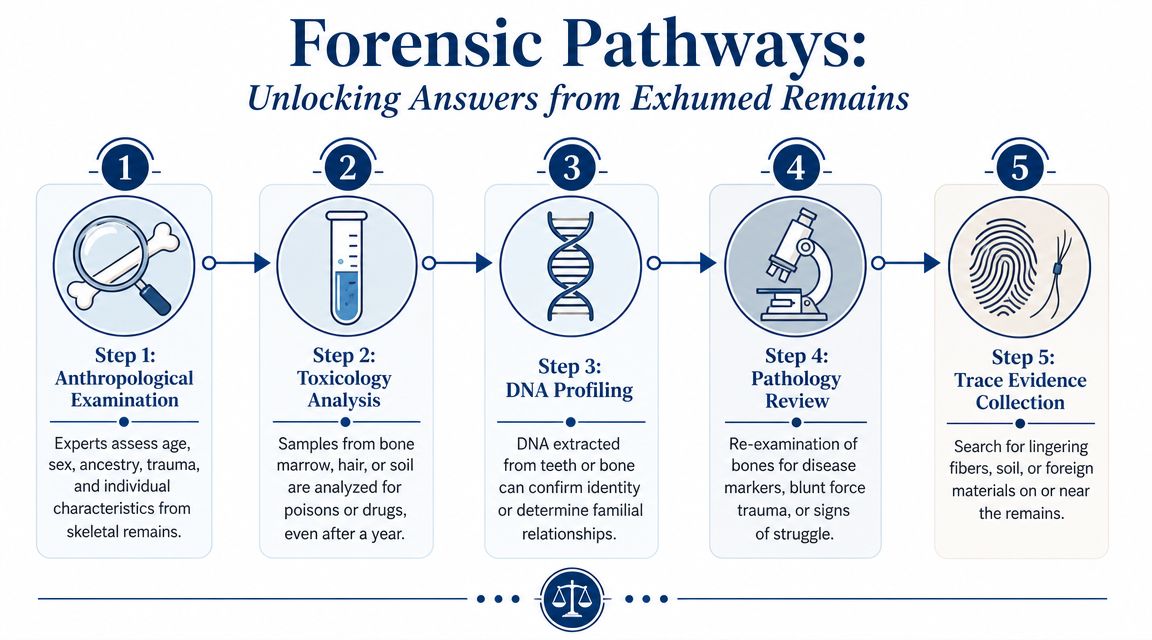
An exhumation is justified when it can answer a real question. The question may involve identity, injury, toxicology, or whether an earlier conclusion should be reconsidered. The fact that a body has been buried for a year does not make those questions impossible. It changes the tools we use.
What a second examination may still show
When soft tissue is largely gone, bones and durable structures become the record.
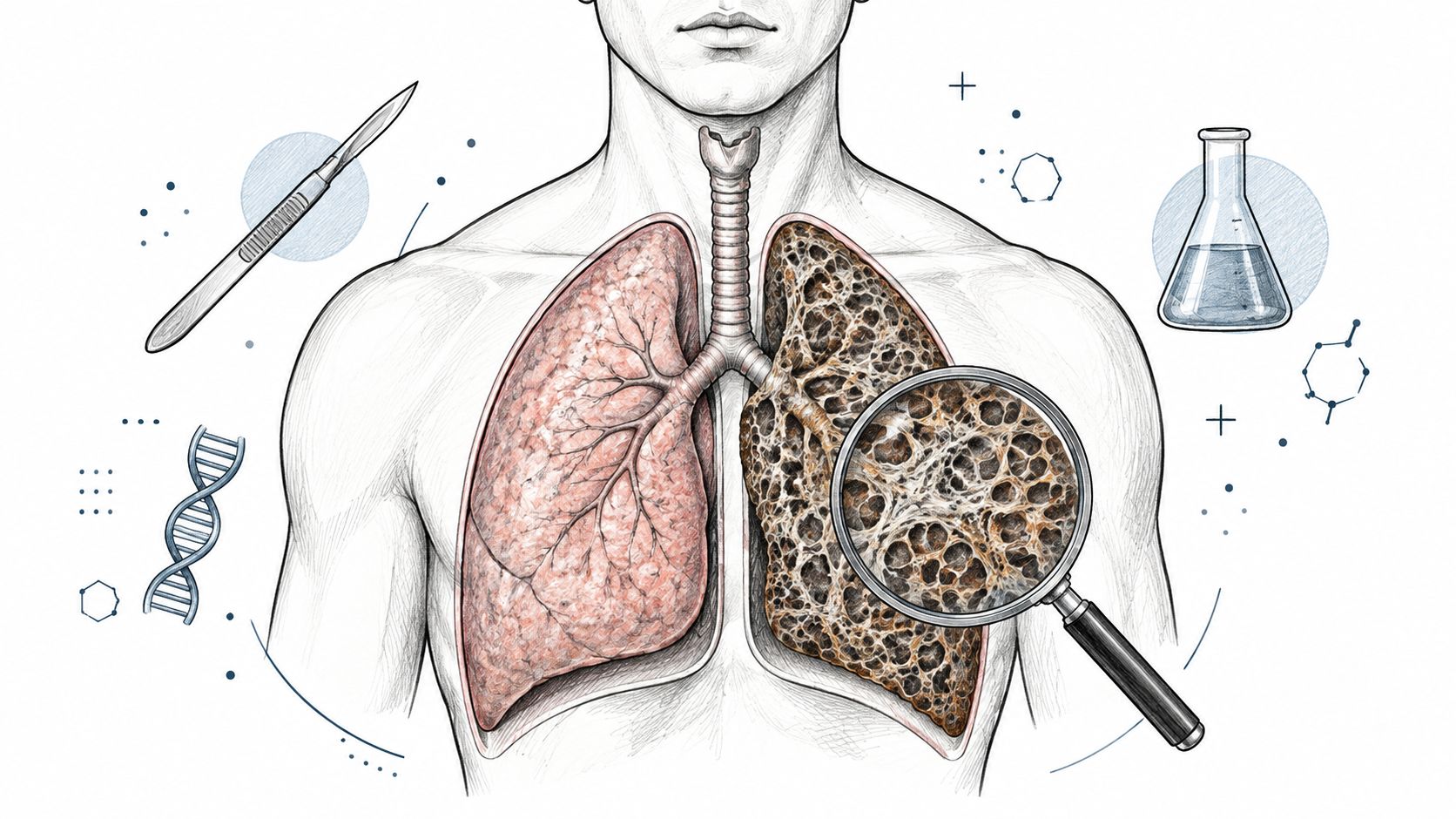
A careful pathology and anthropologic review may identify fractures, prior surgery, anatomical variation, or evidence that an injury occurred before death. Identification work may rely on dental comparison or DNA from retained tissues, bone, or teeth. If the legal issue is whether the buried person is in fact the named decedent, that can be one of the strongest reasons to proceed.
If the question involves embalming, this background piece on whether an autopsy can be performed after embalming is often helpful to families and counsel.
Toxicology after long burial
Toxicology becomes more difficult as time passes, but it is not automatically worthless.
A peer-reviewed review of exhumation toxicology notes that after long postmortem intervals, investigators often rely on hair, liver, and brain because blood is unavailable, and interpretation is limited by degradation and postmortem drug changes, yet these analyses may still be essential to investigating cause of death in the toxicology literature on exhumed remains.
That same body of literature also cautions that samples taken more than two years after death may be largely degraded tissue fragments, with laboratory interpretation becoming very limited in reliability. That does not mean testing should never be done. It means the forensic question must be narrow, and the report must acknowledge limits explicitly.
The practical evidentiary trade-off
Here is the balance I discuss with attorneys and families:
- Strongest uses of exhumation: Identification, skeletal trauma review, confirmation of prior findings, and targeted toxicology where a defined issue exists.
- More limited uses: Broad efforts to reconstruct every physiological event surrounding death when recoverable tissue is poor.
- Essential step: Matching each requested test to a specific legal or medical question before the grave is opened.
This is where a qualified forensic pathologist matters. The goal isn't to order every available test. The goal is to preserve the right evidence, avoid wasted procedures, and produce findings that can withstand scrutiny.
The Legal Process for Exhumation in Texas
For many families, the legal process is harder than the medical one.
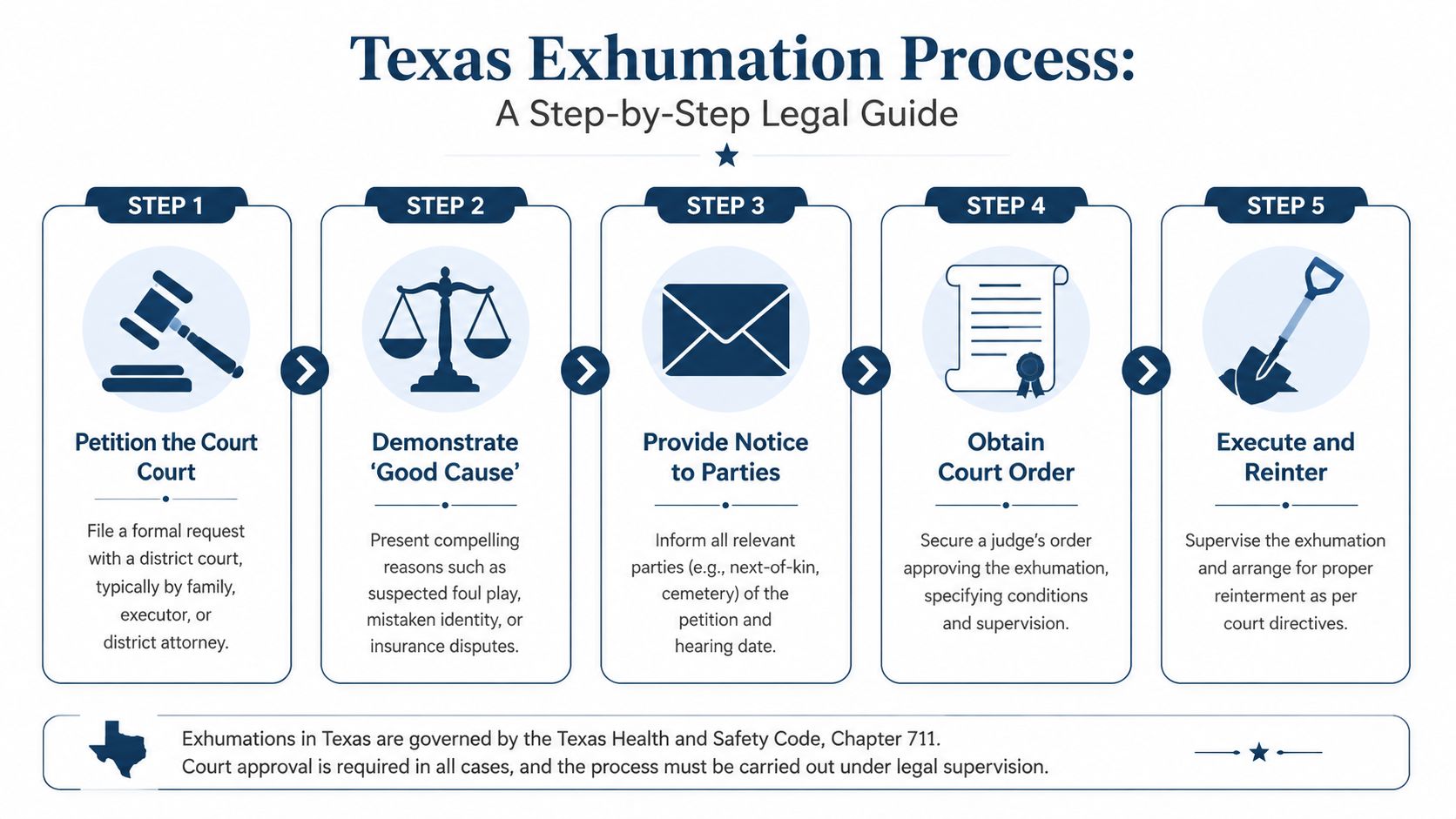
Public guidance on exhumation often describes excavation and examination, but it leaves out the practical barriers. Who authorizes the exhumation, how legal custody is maintained, and what permissions apply under Texas law are often the primary obstacles, as noted in a public explanation of what happens when a body is exhumed.
What families and attorneys should expect
In Texas, exhumation usually involves several layers of approval and coordination. Depending on the case, those may include family consent, cemetery authorization, funeral home participation, court involvement, and coordination with the medical examiner, justice of the peace, or district attorney. The exact route depends on whether the exhumation is contested, whether it is part of a criminal inquiry, and whether the purpose is identification, cause-of-death review, or transfer.
A fuller discussion of exhumation of a body in Texas can help frame the process before any petition is filed.
Why chain of custody matters
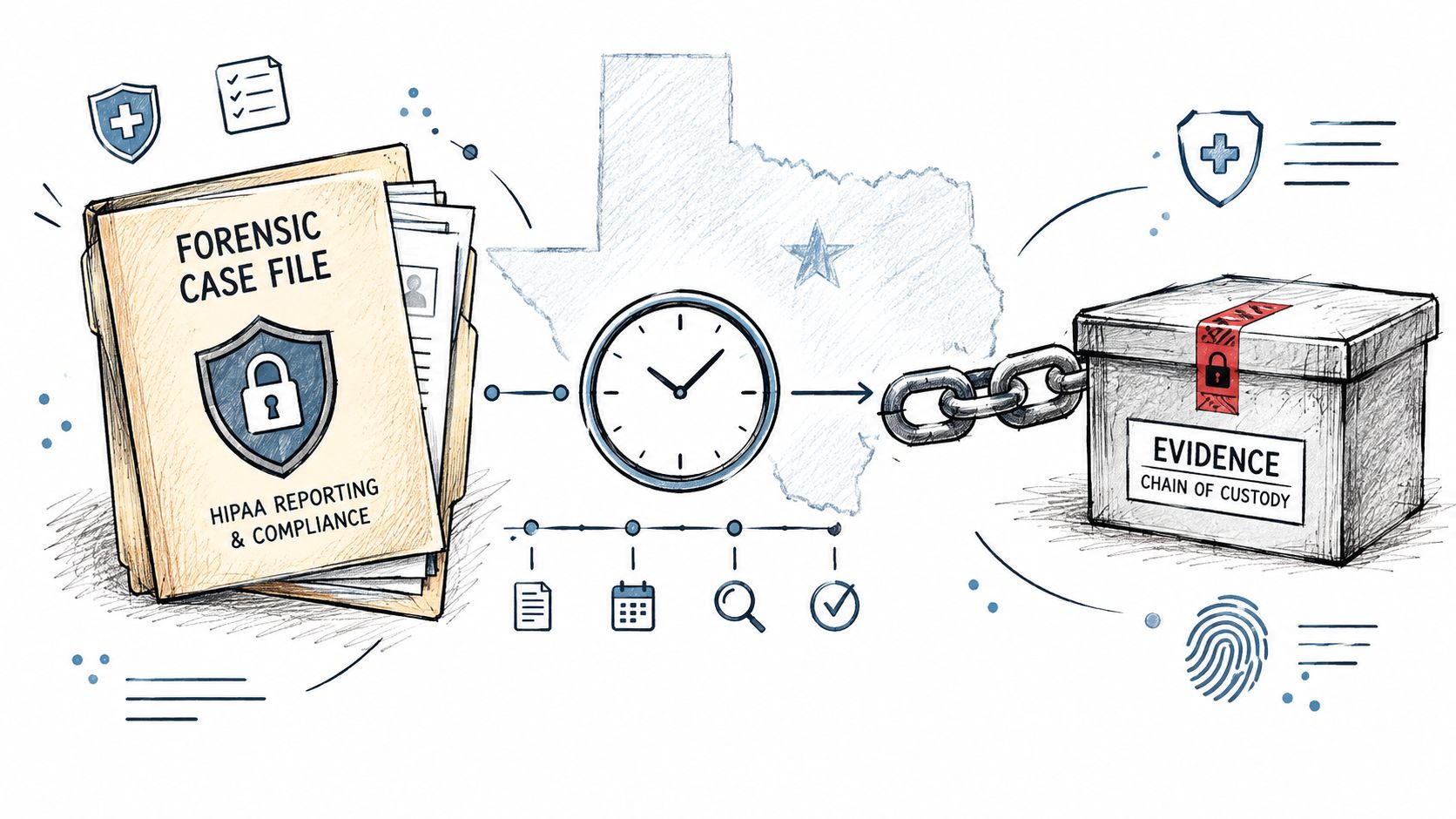
Chain of custody means the documented handling of the remains and every item collected from the moment of recovery through examination, storage, transfer, testing, and reinterment. In a legal case, poor chain of custody can damage the value of otherwise useful evidence.
My team treats this as a medical-legal process, not merely a cemetery procedure. The grave opening, condition of the container, recovery sequence, packaging, labeling, and transfer of any samples all need documentation. If an attorney hopes to use the findings in court, this documentation is not optional.
The legal value of an exhumation often turns less on what is found than on whether every step was documented well enough to defend.
Plain-language definitions
A few terms help keep everyone aligned:
- Cause of death: The disease or injury that led to death.
- Manner of death: The classification of death, such as natural, accident, suicide, homicide, or undetermined.
- Chain of custody: The documented history of who handled the remains or evidence, when, and for what purpose.
Texas families should also understand that exhumation can end with transfer to a new container or reburial after examination. That part deserves planning too. Dignified handling after the forensic work is complete is part of the process, not an afterthought.
Considering an Exhumation What Are Your Next Steps
When people are overwhelmed, I try to narrow the path. The next step is not to rush into court. The next step is to define the question and gather the record.
Start with the existing documents
Before anyone seeks an order, collect what already exists:
- Death records: The death certificate, burial transit paperwork, and any amendment history.
- Medical material: Hospital records, EMS records, prior imaging, and any original autopsy report.
- Funeral and cemetery records: Embalming information, container type, cemetery location, and interment paperwork.
- Legal file material: Pleadings, investigator reports, insurance correspondence, or witness statements if litigation is underway.
A forensic review before exhumation can prevent expensive missteps. If the records already answer the question, an exhumation may not be necessary. If they do not, the review helps define what the court should be asked to authorize.
Build the right team first
Most successful exhumation cases involve coordinated roles rather than one person trying to manage everything.
An attorney may need to handle the petition and notice requirements. A forensic pathologist should define the medical questions and anticipated evidence. A mortuary partner may assist with removal logistics and respectful handling. For families seeking independent review, Private Autopsies can be one route for postmortem evaluation, and our coordination with Waterloo Mortuary Partnership may help when logistical support is needed.
Texas Autopsy Services is one option for that forensic review and examination process in cases where an independent medical-legal opinion is needed.
Keep the legal objective specific
Not every unresolved death becomes a viable exhumation case. Courts and counsel usually need a reason grounded in evidence, not only doubt. If the matter may involve civil litigation, families sometimes also need a plain-language overview of eligibility for wrongful death claims to understand how the forensic question fits into the larger case.
The strongest starting position is simple. Identify the exact issue. Ask whether exhumation can answer it. Then proceed in a way that preserves both dignity and evidence.
Frequently Asked Questions About Exhumation Autopsies
Can an exhumed body after 1 year still be autopsied
Yes, but the examination is different from a fresh autopsy. After a year, the work often centers on skeletal assessment, identification, burial context, and limited tissue or hair sampling rather than a full organ-based examination. The value depends on the question being asked and the burial conditions.
What can realistically be proven or disproven
In the right case, an exhumation may help with identity, skeletal trauma, prior surgery, some disease findings visible in bone, and selected toxicology issues. It may not resolve every disputed detail of death, especially when soft tissue is absent or heavily degraded. Honest forensic work includes both findings and limitations.
Who usually needs to be involved in Texas
That depends on the case, but families should expect some combination of legal counsel, cemetery staff, mortuary personnel, and a forensic pathologist. If the matter is disputed or tied to litigation, court involvement may be necessary. A county authority may also be involved, depending on the reason for exhumation.
How are costs determined
Cost is case-specific. It usually depends on legal complexity, cemetery logistics, transport, personnel needed at the gravesite, imaging or laboratory testing, and reinterment arrangements. I don't recommend relying on general online estimates because they rarely reflect the actual scope of work.
What role does a forensic pathologist play
A forensic pathologist defines the medical questions, advises on what evidence is likely recoverable, supervises or performs the examination, documents findings for medical and legal use, and explains what the evidence can and cannot support. That role is different from funeral logistics and different from legal advocacy. It is meant to remain objective.
If you're considering an exhumation and need a clear, confidential discussion of what may still be learned, contact Texas Autopsy Services. I'll give you a direct assessment of the forensic possibilities, the likely limits, and the practical steps needed under Texas law.