May 10, 2026 · Texas Autopsy Services
Can You Eat a Stink Bug? A Pathologist's View
Can you eat a stink bug? A forensic pathologist explains the health risks, toxicology, and what happens if you or a child accidentally ingests one.
On this page
Stink bugs are not poisonous, but ingesting one is not safe. Systemic poisoning is unlikely, yet the bug's defensive secretions can cause significant discomfort and, in unusual settings, create diagnostic questions that matter in forensic work.
A parent usually asks this after a child puts a bug in their mouth, bites down, and then starts gagging or crying. An adult may ask after finding one in a salad, a drink, or food left uncovered near a window. The fear is understandable. People hear “stink bug” and assume poison, venom, or something dangerous enough to cause serious internal harm.
At Texas Autopsy Services, every examination is performed by a board-certified forensic pathologist experienced in medicolegal death investigations. Our work centers on one principle: follow the evidence carefully, explain it plainly, and treat the deceased and their family with respect.
- Stink bugs are not poisonous, but their chemical defenses can irritate the mouth and stomach.
- Vomiting and nausea are the main short-term concerns after ingestion, especially if the bug is crushed.
- Shellfish allergy matters, because some people may have cross-reactivity with insect proteins.
- A random household stink bug is not the same thing as a properly prepared edible insect.
- In forensic pathology, unusual insect-related compounds can sometimes complicate toxicology interpretation if no one knows an ingestion happened.
A Question I Hear More Often Than You Think
The usual scene is simple. A small child picks up a bug from a windowsill, puts it in the mouth, and someone notices a second too late. Panic follows quickly because bugs feel foreign, dirty, and unpredictable.
That reaction makes sense. Individuals aren't trying to sort out the difference between a poisonous exposure and an irritant exposure in the moment. They want to know whether the child is in danger right now, whether vomiting means toxicity, and whether they need urgent care.
In my field, those distinctions matter. A cause of death is the disease or injury that started the fatal sequence. A manner of death is the medicolegal category, such as natural, accident, suicide, homicide, or undetermined. A strange environmental exposure can look important at first glance, but a careful forensic pathologist has to decide whether it caused harm, triggered temporary symptoms, or had nothing to do with the final outcome.
Why this question belongs in forensic medicine
Most stink bug ingestions are not the kind of events that lead to a death investigation. Even so, they sit at the intersection of toxicology, symptom interpretation, and context. That makes them relevant to my work.
A child who vomits after chewing a bug may have an unpleasant but self-limited reaction. A decedent found with unusual volatile compounds on testing may raise very different questions. The exposure itself may be minor, but the interpretation can still matter.
Practical rule: If a bug causes an immediate bad taste, gagging, or vomiting, think irritation first, not poison first.
Families deserve that distinction in plain language. So do attorneys, clinicians, and investigators. Confusion often starts when people treat every unusual exposure as if it carries the same level of medical threat.
The safest way to frame the answer
If you're asking, “can you eat a stink bug,” the practical answer is no for ordinary household situations. Not because the insect is a hidden lethal toxin, but because accidental ingestion is unpredictable, unpleasant, and unnecessary.
What works is calm assessment. What doesn't work is assuming that “non-poisonous” means “safe to swallow.” Those are not the same thing.
The Science Behind the Stink
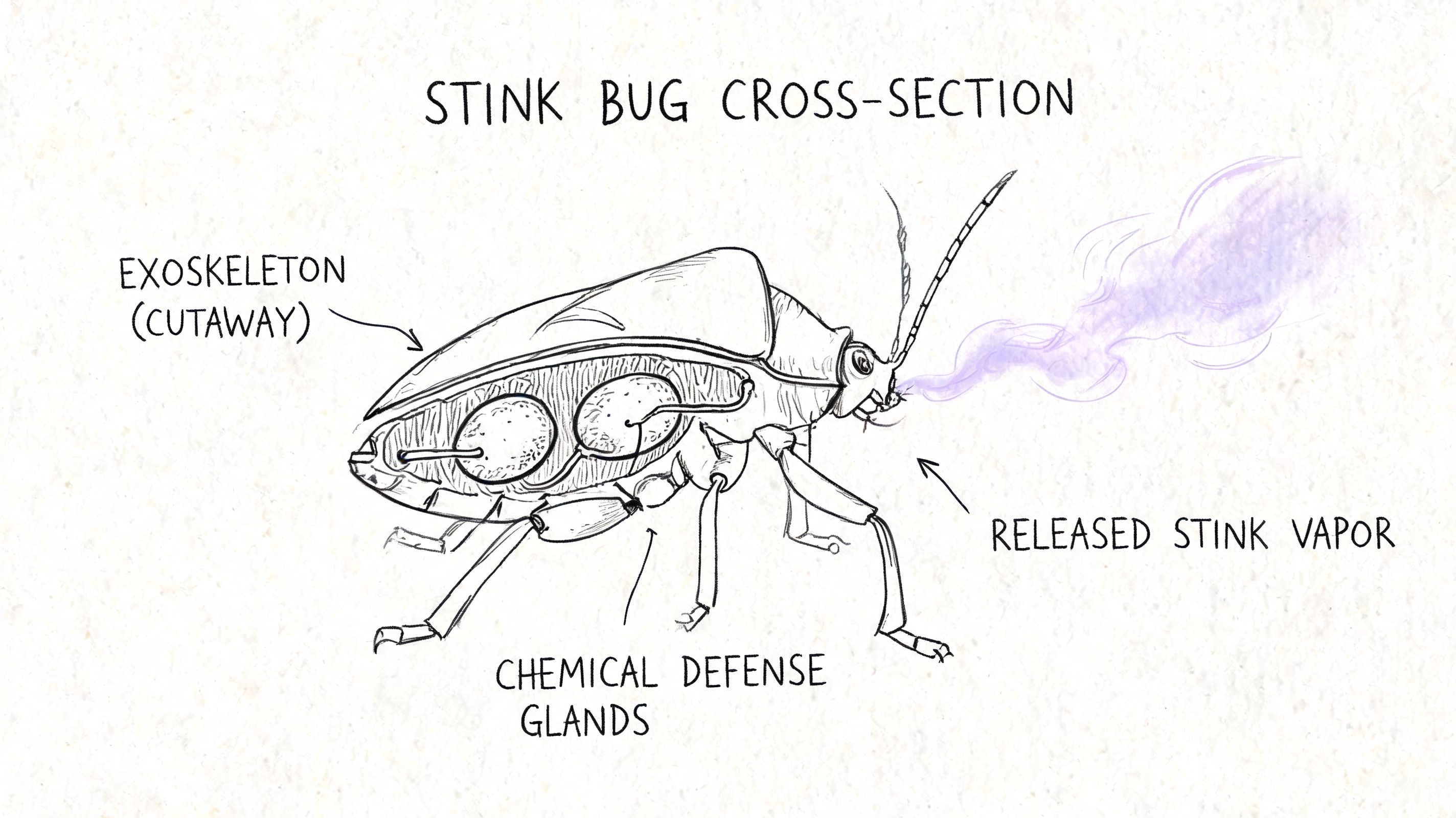
Stink bugs defend themselves chemically. That odor is not incidental. It is the insect's main warning system.
When the bug is disturbed, crushed, or bitten, it releases volatile compounds from defensive glands. Those compounds are meant to repel predators. In practical terms, they make the bug taste and smell so offensive that most animals stop eating it.
What those secretions do
Verified reporting on ingestion notes that stink bugs release defensive secretions composed of volatile organic compounds, including aldehydes associated with the brown marmorated stink bug, and that the smell has been compared to cilantro, ammonia, sulfur, and coriander in different descriptions from the same discussion of ingestion effects in this review of swallowing a stink bug.
That description is useful because it explains why the reaction is often immediate. The bug doesn't need to poison the body. It only needs to trigger a strong sensory and mucosal response.
Repellent does not mean harmless
Many people overlook a key fact. A chemical defense can be non-poisonous and still be very unpleasant. The mouth, throat, and stomach are sensitive surfaces. Strong-smelling and foul-tasting secretions can irritate those surfaces enough to provoke gagging, nausea, or vomiting.
A short comparison helps:
| Exposure type | What it means | Typical concern |
|---|---|---|
| Poisonous | Contains toxins that injure the body through toxic effects | Systemic illness |
| Venomous | Injects toxin through a bite or sting | Envenomation |
| Irritant | Triggers local discomfort or inflammation without systemic poisoning | Pain, nausea, vomiting |
Stink bugs fit most closely into the irritant category when swallowed.
The odor is a defense against being eaten. It is not evidence that the bug is delivering venom.
That distinction is medically useful. It also helps explain why some people feel miserable after contact even though the exposure is not considered toxic in the classic sense.
Immediate Health Risks of Ingestion
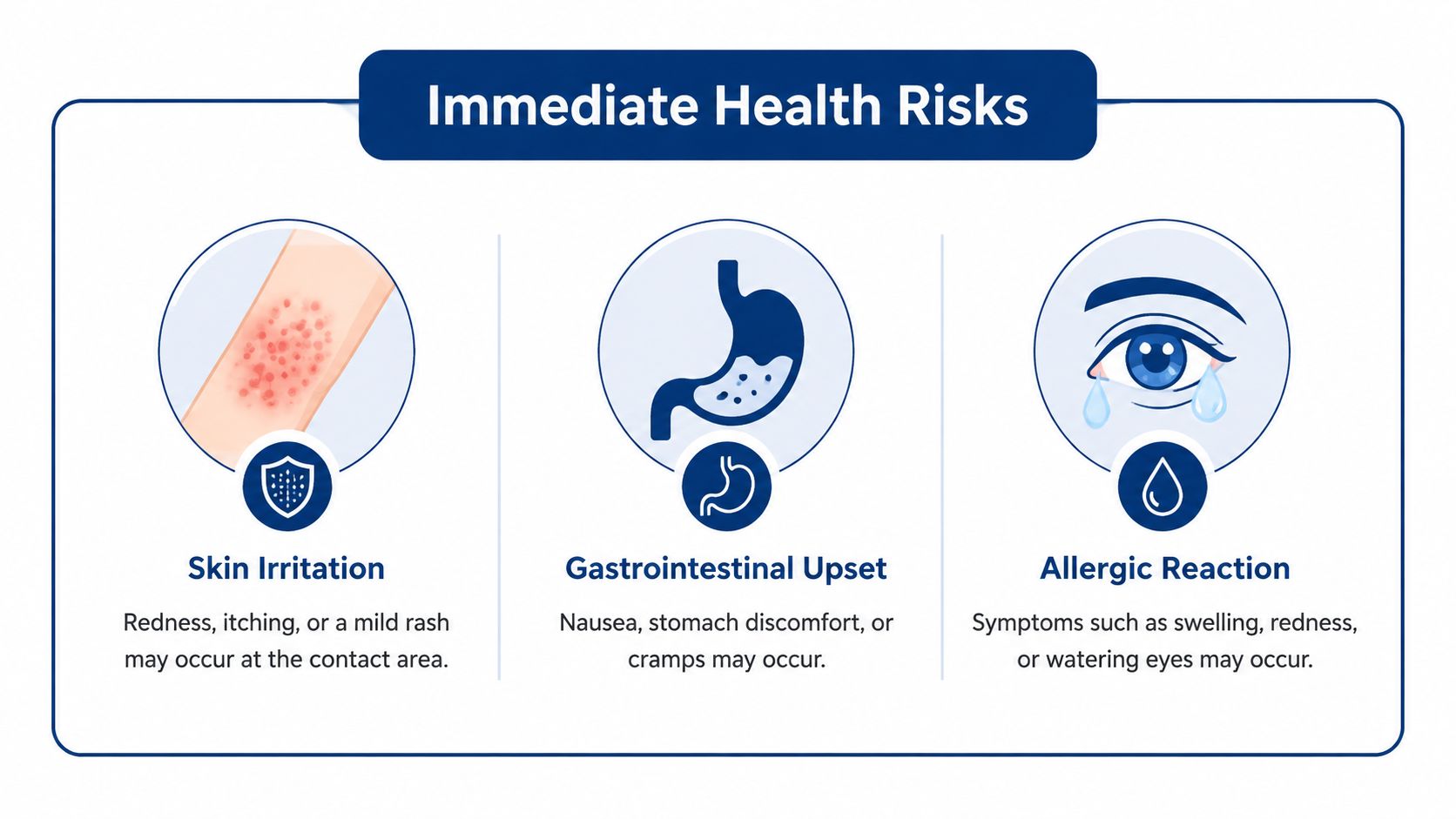
Once a stink bug is in the mouth or swallowed, the first issue is local irritation. The second is stomach upset. The reaction is usually driven by the secretions and by the physical presence of the insect itself.
What symptoms are most likely
Documented information on ingestion states that when stinkbugs are ingested, they release defensive secretions that cause oral mucosa irritation, temporary nausea, and vomiting through mechanical irritation rather than toxicological mechanisms. The same report describes a pediatric case in which a 7-year-old had multiple vomiting episodes that resolved without intervention, and it notes possible cross-reactivity in people with shellfish allergies due to shared proteins between insect exoskeletons and crustaceans in this discussion of stink bug ingestion effects.
That gives us a practical symptom pattern:
- Mouth irritation from contact with the secretions
- Bad taste and gagging immediately after chewing or crushing the insect
- Nausea or vomiting from irritation rather than poisoning
- Allergic concern in a person with known shellfish sensitivity
What usually does not happen
Swallowing a stink bug does not typically lead to a classic toxic syndrome. In other words, this is not the kind of exposure where I would expect venom-like effects, a progressive poison reaction, or a predictable collapse from the insect itself.
That said, symptoms can still feel dramatic to a parent. Repeated vomiting in a child always gets attention, and it should. The key is understanding why it's happening.
Clinical point: Vomiting after stink bug ingestion is more consistent with irritation and disgust response than with systemic poisoning.
That distinction also matters when people start looking for unrelated causes. For example, if someone is worried about contaminants in the environment more broadly, a focused evaluation may be more appropriate than assuming the bug itself is the source of every symptom. In that context, resources explaining full body heavy metal analysis can help readers understand how clinicians separate one type of exposure concern from another.
Where the line changes
If the event involves persistent vomiting, wheezing, swelling, or difficulty breathing, the concern shifts away from an ordinary irritant response. At that point, the person needs prompt medical attention.
For readers comparing insect exposures, my earlier discussion of what happens if you swallow a bee may also help clarify how different insects produce very different risk profiles.
A Forensic Pathologist's View on Insect Ingestion
In day-to-day life, a swallowed stink bug is usually a brief and unpleasant event. In forensic work, the same exposure can matter for a different reason. It can affect interpretation.
A forensic pathologist doesn't just collect findings. We decide what those findings mean, what they do not mean, and whether they belong in the final cause of death analysis. Small environmental details can matter if they explain symptoms, scene findings, or toxicology results.
Why context matters in toxicology
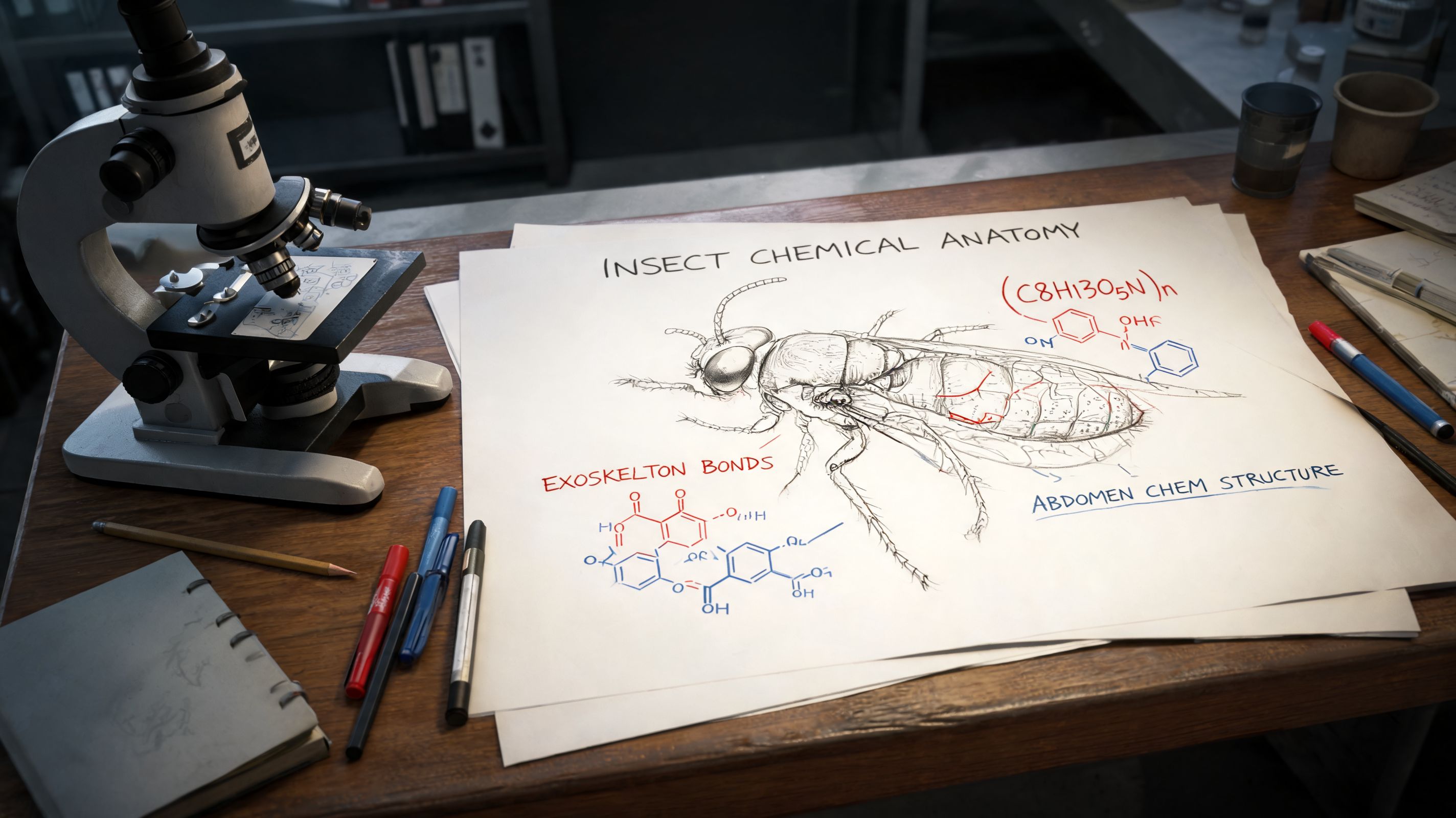
Verified material notes that stink bugs release aldehydes such as (E)-2-hexenal, which can cause nausea and vomiting, and that in a postmortem setting these chemicals could appear on toxicology screening as unusual volatile organic compounds, potentially resembling decomposition-related or environmental compounds if the ingestion history is unknown. That same discussion emphasizes why forensic pathologists should consider such exposures, especially in areas with high stink bug populations like Texas, in this poison-related review of eating bugs.
That does not mean stink bug ingestion commonly drives cause-of-death findings. It means unexplained compounds require careful interpretation.
What I look for in a careful investigation
When I review a case with unusual toxicology, I'm not asking only, “What chemical is present?” I'm also asking:
- Scene history: Was there evidence of insects in the home, food, bed, or nearby containers?
- Witness history: Did anyone report gagging, vomiting, or swallowing an insect before death?
- Clinical timeline: Did symptoms stop on their own, or were they part of a larger medical decline?
- Autopsy correlation: Do the physical findings support a fatal toxic exposure, or only a temporary irritant event?
An independent autopsy can help families and attorneys. A second review often clarifies whether a strange laboratory finding has true causal significance or is merely noise. My article on what a toxicology report shows explains that broader framework in more detail.
The practical forensic takeaway
People sometimes assume forensic pathology is about spectacular causes of death. Much of the work is quieter than that. It involves separating meaningful findings from misleading ones.
A defensible opinion depends on history, scene evidence, pathology, and toxicology lining up together.
That is also why professionals entering this field need broad training. Readers interested in the discipline itself may find this career guide for forensic evaluators useful for understanding how medicolegal specialists are trained to evaluate unusual evidence.
In short, a stink bug usually doesn't kill. But a poorly understood exposure can still complicate a death investigation if no one asks the right questions.
Culturally Eaten Insects vs Accidental Ingestion
A fair question follows naturally. If people ask “can you eat a stink bug,” and some cultures do eat certain insects, is this really dangerous or just unfamiliar?
The answer is that species and preparation matter. A bug that ends up in a child's mouth on a windowsill is not the same as an intentionally harvested edible insect processed for food.
Where edible stink bugs fit
Verified information reports that certain stinkbug species, including Encosternum delegorguei, are eaten in parts of rural Zimbabwe and South Africa and contain high levels of protein with all nine essential amino acids. The same source notes that proper preparation matters, including removing defensive glands, and that food safety depends heavily on storage because traditional grain bags can allow contamination with carcinogenic aflatoxins, while clean sealed bags eliminate that contamination risk in this summary on whether stink bugs are poisonous or dangerous.
That is a very different situation from accidental ingestion in a home.
The comparison that matters
| Household accidental ingestion | Prepared edible insect use |
|---|---|
| Unknown species | Specific identified species |
| No controlled preparation | Deliberate preparation |
| Defensive glands still present | Defensive glands removed |
| Uncertain cleanliness | Storage protocols matter |
| Unplanned exposure | Cultural food practice |
This is the trade-off people often miss. The question is not only “is a stink bug edible in theory.” The question is whether this bug, from this environment, was handled in a way that makes it appropriate for consumption. In most homes, the answer is no.
What works and what does not
What works is respecting the difference between food science and accidental exposure. What doesn't work is assuming that because one species can be eaten somewhere under controlled preparation, any bug in a kitchen or bedroom is fair game.
For readers comparing insect ingestion scenarios, my discussion of what happens if you eat a fly addresses a similar problem from a different angle. The common thread is that accidental exposure is not the same thing as intentional food use.
What to Do If Someone Eats a Stink Bug
The first step is to stay calm. Most exposures are upsetting, not catastrophic, and a calm adult is more useful than a frightened one.
Immediate steps at home
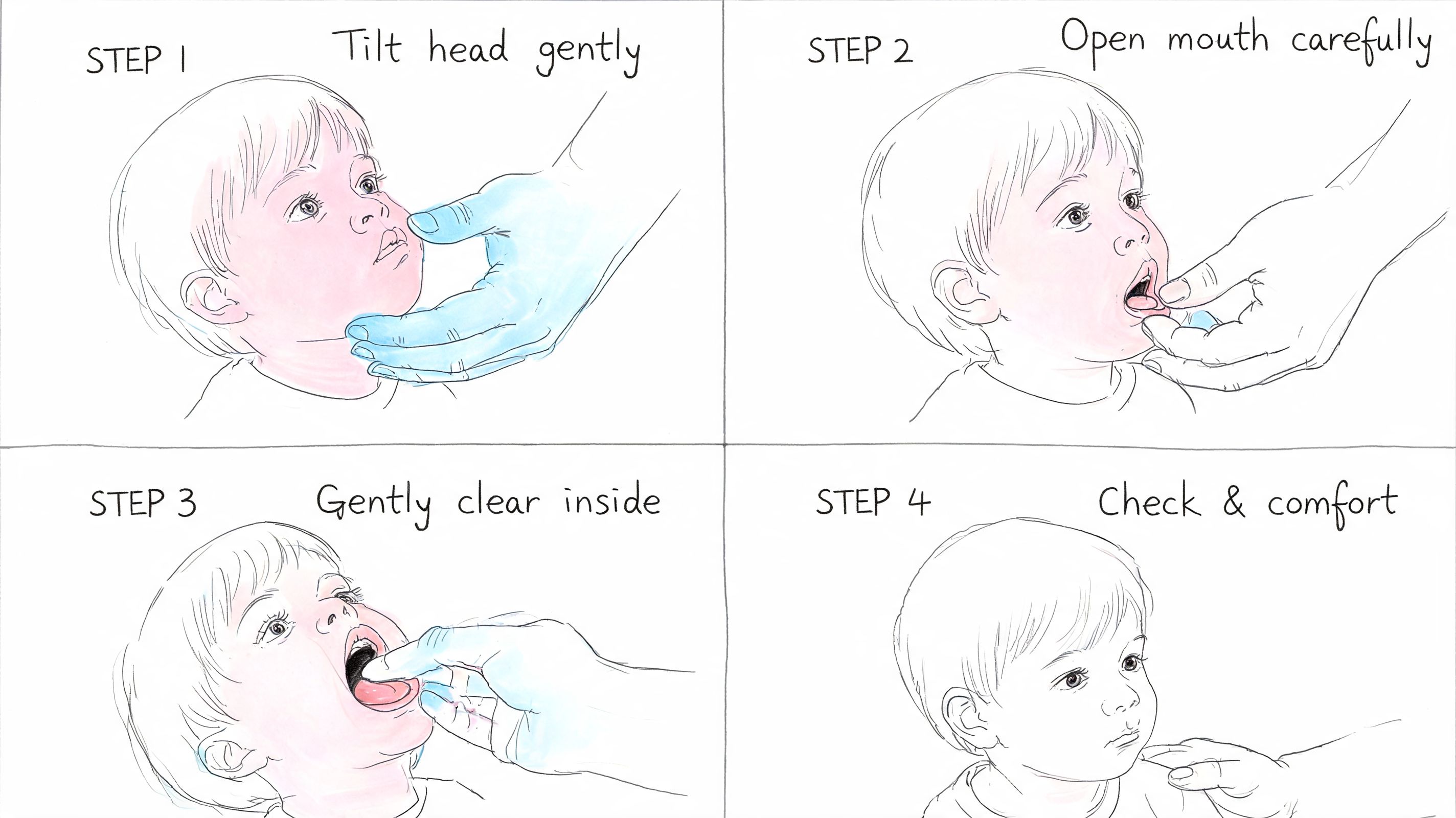
If the person is alert and breathing normally, use a simple sequence:
- Remove any visible pieces from the mouth if you can do so safely.
- Rinse the mouth with water to clear residue and reduce the lingering taste.
- Watch for vomiting or continued gagging over the next period of observation.
- Look for allergy signs such as swelling, hives, wheezing, or trouble breathing.
If there is choking, treat that as a choking emergency first. The insect type becomes secondary to the airway.
When to get outside help
Home observation is usually reasonable if symptoms stay mild and brief. Medical evaluation becomes more important when the picture changes.
- Persistent vomiting means the reaction is no longer minor.
- Breathing trouble suggests an emergency.
- Known shellfish allergy raises the threshold for concern because cross-reactivity is possible.
- Severe distress in an infant or small child deserves prompt medical guidance even if the event seems simple.
If symptoms move beyond brief irritation, contact poison guidance or seek urgent medical care.
Some readers prefer a visual refresher for emergency response basics. This short video is a useful public-facing reference for airway safety and immediate caregiver response:
What not to do
Do not force food down immediately. Do not induce vomiting. Do not assume the absence of poison means there is no risk at all.
The right approach is controlled observation. The person either settles down, or they declare themselves with symptoms that clearly need more attention.
Frequently Asked Questions
Can a stink bug poison a child?
Based on the verified material used here, stink bugs are non-poisonous. The main problem after ingestion is irritation with nausea or vomiting, not systemic poisoning.
Why would someone ever eat a stink bug intentionally?
Some species are used as food in certain cultures. Verified analysis of Encosternum delegorguei shows a complete amino acid profile and cholesterol-lowering fatty acids, but safety depends on proper preparation, removal of defensive glands, and storage in clean sealed containers to avoid aflatoxin contamination, as summarized in this Science News discussion of edible stinkbugs.
Should I worry if my pet eats one?
Pets can also have irritation and vomiting after eating insects. I can't give veterinary advice here, but the same practical rule applies. Watch for ongoing vomiting, breathing difficulty, or signs of marked distress and contact your veterinarian promptly if those occur.
Could stink bug ingestion matter in a death investigation?
Usually it's a minor event. In selected forensic cases, unusual volatile compounds or a poorly documented exposure history can complicate interpretation. That is one reason thorough medicolegal review matters for families, attorneys, and counties seeking objective answers, including in County Forensic Autopsies.
What does chain of custody mean in this context?
Chain of custody is the documented handling of evidence from collection through testing and reporting. In forensic pathology, that helps preserve confidence that specimens and findings were identified, stored, and analyzed properly.
If your family needs clear answers after a death, or if an attorney or agency needs an independent forensic review, Texas Autopsy Services provides compassionate, medically precise autopsy and forensic pathology services across Texas. My goal is simple: give families and professionals careful, unbiased findings they can trust.