June 23, 2026 · Texas Autopsy Services
Fear Factor Spider Eating a Forensic Analysis
A medically accurate analysis of the Fear Factor spider eating stunt. Our forensic pathologists explain the real risks from toxins, choking, and infection.
On this page
- Fear Factor spider eating became a durable pop culture reference because it turned live arachnid consumption into a reward-based stunt.
- The television framing emphasized shock and competition, but it left out the actual medical and forensic risks of ingesting spiders.
- From a forensic pathology standpoint, the main danger usually isn't systemic toxicity. It's mechanical injury, aspiration, allergic reaction, and microbial exposure.
- In a death investigation involving unusual ingestion, a forensic pathologist examines the airway, gastrointestinal tract, toxicology, history, and scene context before determining cause and manner of death.
- Viral reuse of these clips matters. Repeated exposure to high-risk stunts can affect how viewers, especially teens, judge injury risk.
A family once asked us about a televised stunt that looked absurd on screen but medically serious in real life. That gap between entertainment and physiology is where forensic pathology becomes useful.
The Spectacle and the Science Gap
The early Fear Factor spider eating segments became famous because they took a common fear and turned it into a public performance. What viewers mostly remember is disgust, not physiology.
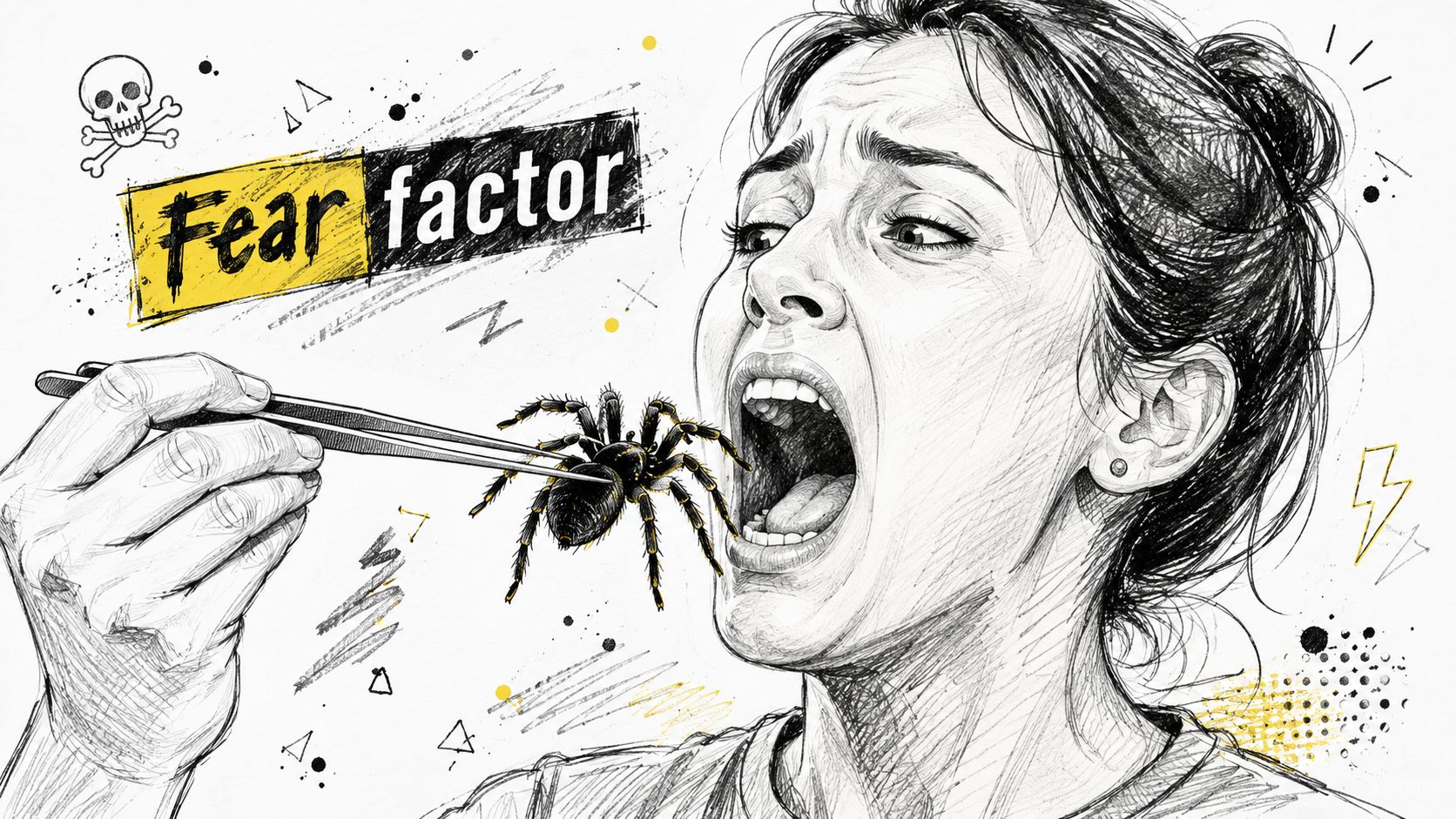
That imbalance still shapes how people talk about these clips. Existing coverage focuses almost entirely on the stunt and not on the medical or toxicological questions, leaving audiences to wonder whether eating similar spiders could cause systemic toxicity, anaphylaxis, or lasting health effects, especially in children or people with allergies, as reflected in the episode coverage on Rotten Tomatoes for Fear Factor Season 4 Episode 2.
That missing context matters. Once a stunt is edited as entertainment, viewers often assume the danger was either exaggerated for television or fully controlled by production. In reality, even a controlled stunt can expose the mouth, throat, airway, and stomach to real injury mechanisms.
Practical rule: A stunt can be choreographed and still carry authentic medical risk.
Publicity also has a second life after broadcast. Reputation professionals often point out that visibility and value are not the same thing, a point explored well in Press Release Zen on reputation. In medical terms, the same principle applies. A memorable stunt can dominate public attention while leaving the most important risk information out of view.
We see the same problem in smaller, non-televised incidents. People remember the old myth about nighttime swallowing and often treat spider ingestion as a joke, even though the physical consequences depend on the circumstances, the amount swallowed, and whether choking or allergy is involved. We addressed that broader misconception in our discussion of whether you swallow spiders when you sleep.
Why a forensic lens changes the discussion
Entertainment asks whether the stunt was shocking enough to hold attention. Forensic pathology asks different questions.
- What entered the body and in what condition
- How it was swallowed, including speed and chewing
- Whether the airway was threatened
- Whether a reaction followed, such as aspiration or allergy
- What objective findings would remain if the event caused injury or death
That shift from spectacle to mechanism is where the science begins.
Deconstructing the Fear Factor Spider Stunt
Before discussing risk, the event itself has to be described accurately. In this case, the best-known example came from a specific Las Vegas episode rather than from vague internet retellings.
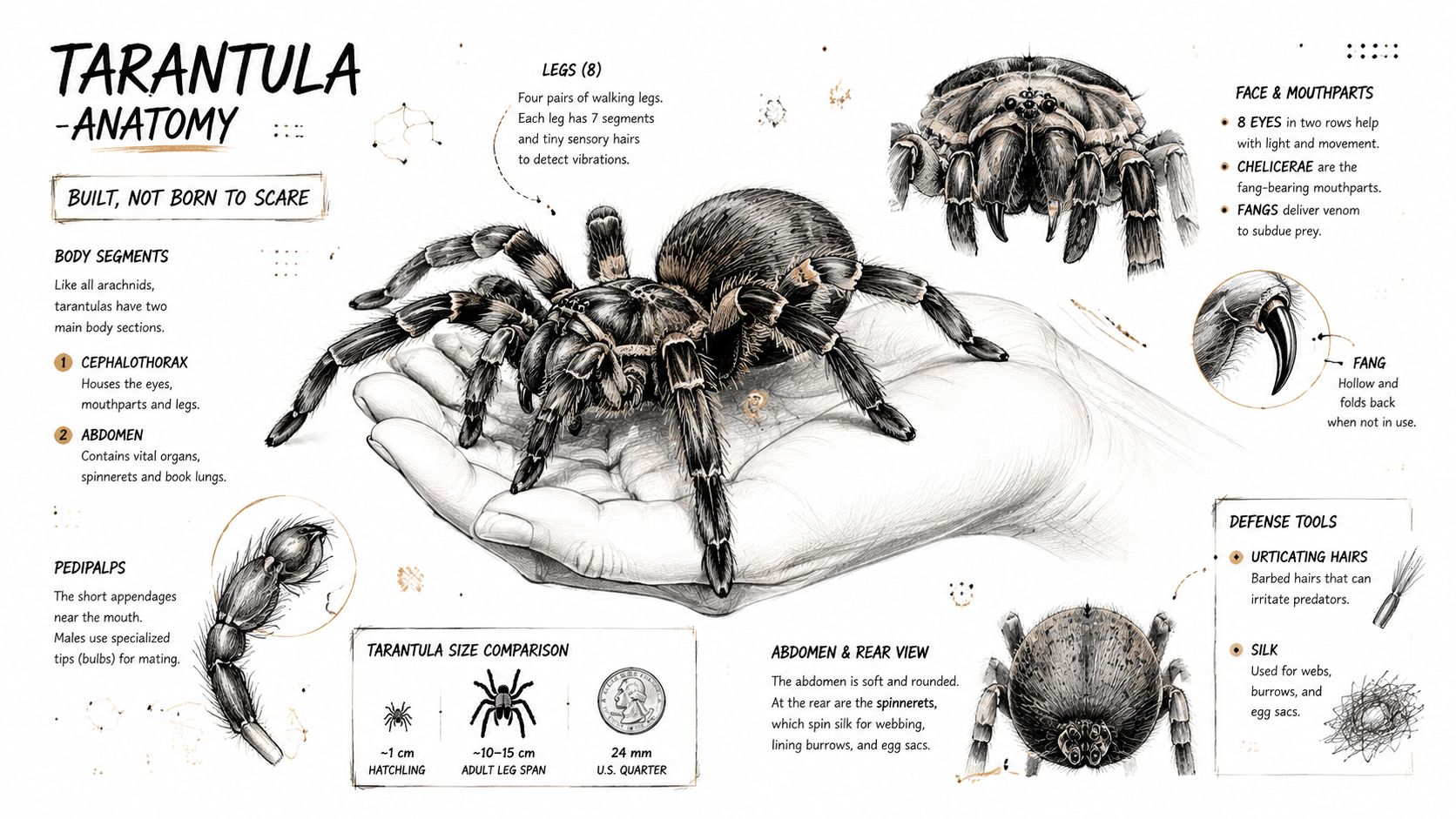
What happened on the episode
In Season 4, Episode 2, contestants in Las Vegas were required to eat African cave-dwelling spiders. Each contestant could eat up to six, and each spider earned two gaming chips for a roulette round, with a 2004 sports car available as a potential prize, according to the Tubi episode listing for the roulette spider-eating challenge.
Those details matter because they show that the stunt was not random. It had fixed rules, a measured reward system, and a direct tie between ingestion and competitive gain. The act of eating spiders was not incidental. It was the scoring mechanism.
Why the setup matters medically
A forensic review pays attention to the structure of the event, not just the species involved. The Las Vegas challenge combined several conditions that affect risk:
| Stunt feature | Why it matters in a medical review |
|---|---|
| Live arachnid ingestion | Introduces hard body parts, biologic material, and possible contaminants |
| Rapid eating under pressure | Increases the chance of incomplete chewing |
| Reward for each spider consumed | Encourages pushing past discomfort or gag response |
| Competition setting | Reduces careful pacing and may affect judgment |
A person calmly swallowing a small foreign substance in a clinical setting is not the same as a contestant consuming multiple live spiders while trying to win. The physiology changes when speed, disgust, adrenaline, and social pressure combine.
The body does not distinguish between a stunt done for television and any other high-stress ingestive exposure.
A second spider-eating challenge later circulated in clips involving Iraqi camel spiders used a different reward structure, with contestants eating them for time reductions in another stunt rather than direct roulette chips. That distinction is useful culturally, but the Las Vegas episode remains the clearest example of a quantified ingestion challenge tied to a visible prize.
For forensic purposes, the key point is simple. This was a repeat-consumption stunt with incentive pressure. That combination drives the risk analysis far more than the novelty of the animal alone.
Medical Dangers of Eating Spiders
A televised spider-eating stunt invites viewers to focus on venom. In medical review, that is rarely the first concern. The immediate hazards are mechanical injury, airway compromise, allergic reaction, and contamination from ingesting a live arthropod under stress.
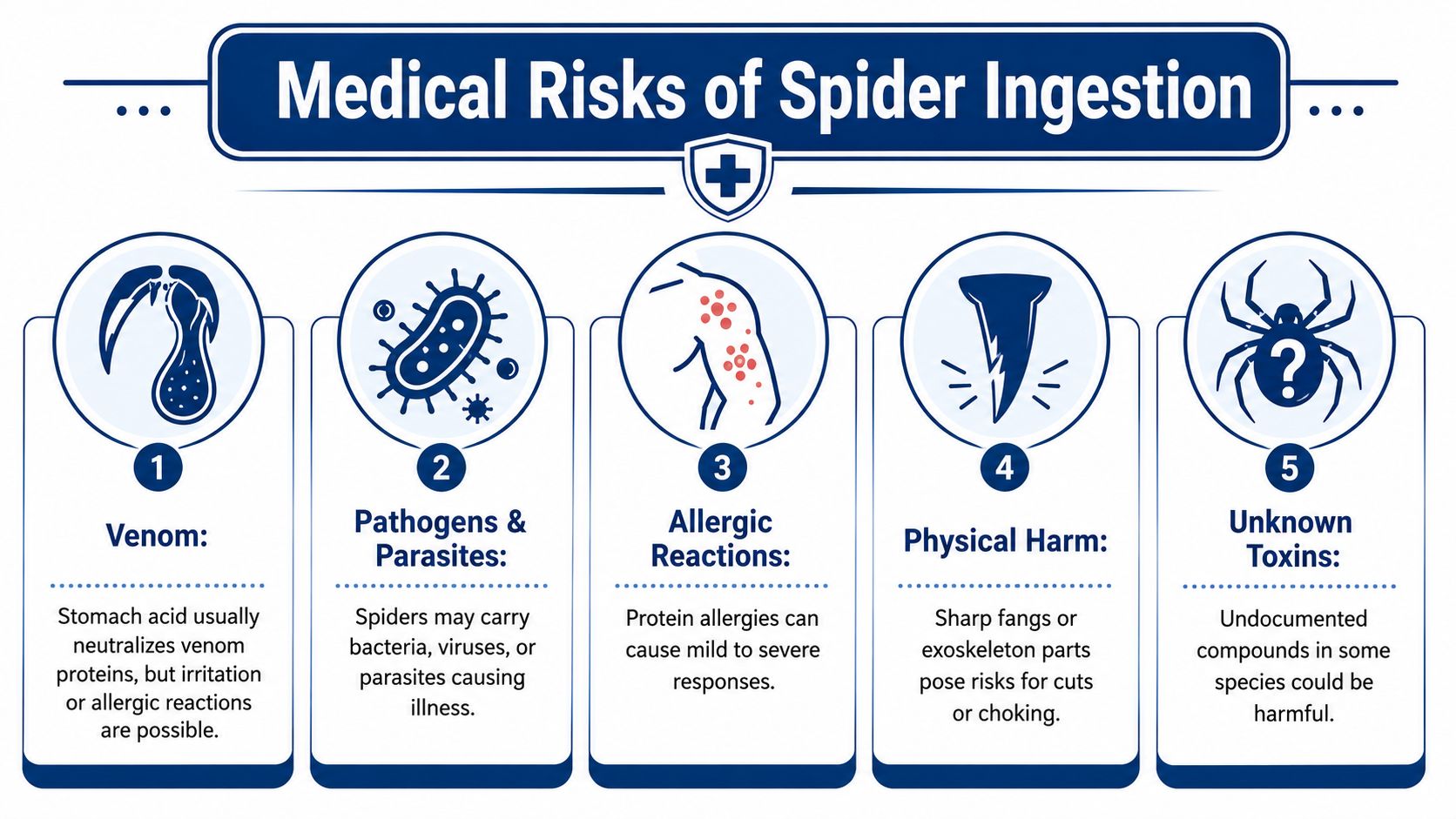
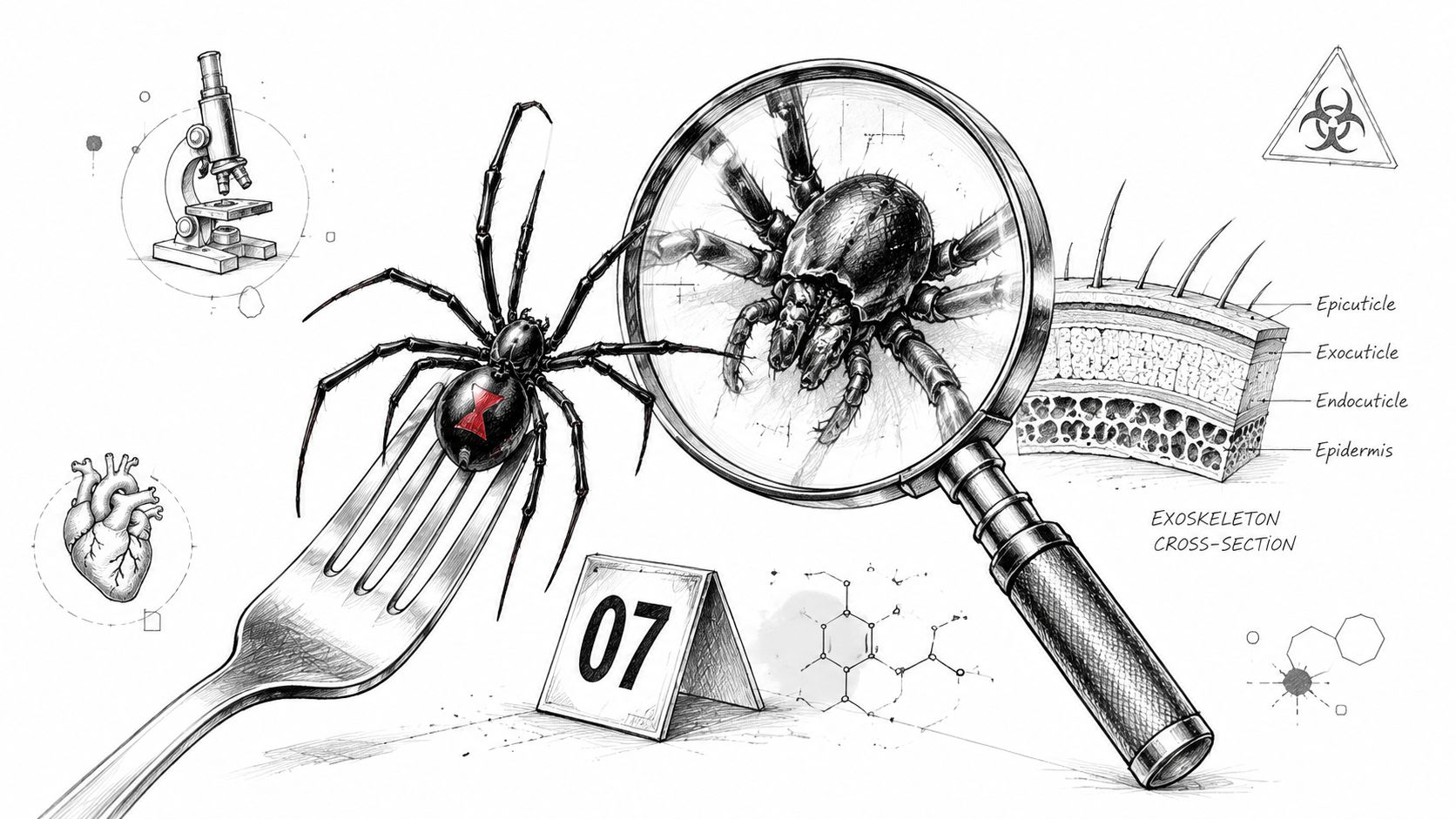
From a forensic pathology standpoint, the body often treats this less like a toxin exposure and more like an atypical foreign-body ingestion. Chelicerae, legs, and exoskeletal fragments can abrade the oral cavity, pharynx, or esophagus. If chewing is incomplete, fragments or vomitus can reach the airway. In a high-pressure contest setting, that sequence matters more than the spectacle.
Mechanical injury is the first medical problem
The mouth, throat, and upper esophagus are lined by tissue that tears easily. A live or poorly chewed spider presents multiple rigid points of contact. Small abrasions may cause only pain or brief bleeding, but they also explain why a participant may gag, retch, or stop swallowing normally.
Airway risk deserves the most sober attention. A person who laughs, panics, inhales sharply, or forces down another bite before clearing the first can aspirate fragments or gastric contents. In practice, the danger is not limited to choking at the moment of the stunt. Aspiration can also set up inflammation or pneumonia hours later.
Common mechanical concerns include:
- Aspiration: Spider material or vomitus enters the airway and interferes with breathing or seeds later lung infection.
- Incomplete chewing: Larger fragments are harder to pass safely through the pharynx and esophagus.
- Mucosal injury: Rigid body parts can scratch or puncture the lips, tongue, throat, or esophageal lining.
- Secondary vomiting: Gagging and retching create another route for aspirating stomach contents.
For readers who want a broader medical explanation of insect and arthropod ingestion, our guide on what happens if you swallow a bug covers the same physiology in a more general setting.
A brief video recap helps show how speed and pressure alter the act of ingestion:
Allergic and infectious complications are easy to miss on screen
Physical trauma is only part of the risk profile. Spider tissues contain proteins that can provoke hypersensitivity in susceptible people. The reaction may stay limited to oral itching or swelling, or it may progress to anaphylaxis with airway swelling, hypotension, and multisystem involvement.
Contamination is a separate issue. A spider can carry surface bacteria, environmental debris, parasites, or residues from whatever it contacted before ingestion. Television compresses all of that into a few seconds of footage. A medicolegal review has to consider handling, storage, species identification, and whether the specimen was wild-caught or controlled before the stunt.
Some of the more serious outcomes in unusual ingestion cases come from the body's inflammatory or allergic response rather than from a classic poison.
Venom is a narrower concern than viewers assume
Venom is designed for injection by bite. Swallowed venom often loses potency because digestive processes break down many protein-based components before they can enter the bloodstream in the same way. That does not make swallowing a spider harmless. It means the risk assessment changes.
In forensic casework, the more plausible concerns are injury to tissue, airway compromise, emesis with aspiration, allergic reaction, and contamination. Those are ordinary medical mechanisms applied to an unusual exposure.
A stunt can end without visible collapse and still leave a participant with a medically significant problem. That gap between what the audience sees and what the body experiences is where forensic pathology adds needed clarity.
How a Forensic Pathologist Investigates Atypical Ingestion
When a death involves possible unusual ingestion, the investigation is methodical. It does not begin with assumptions about what "should" have happened. It begins with findings.
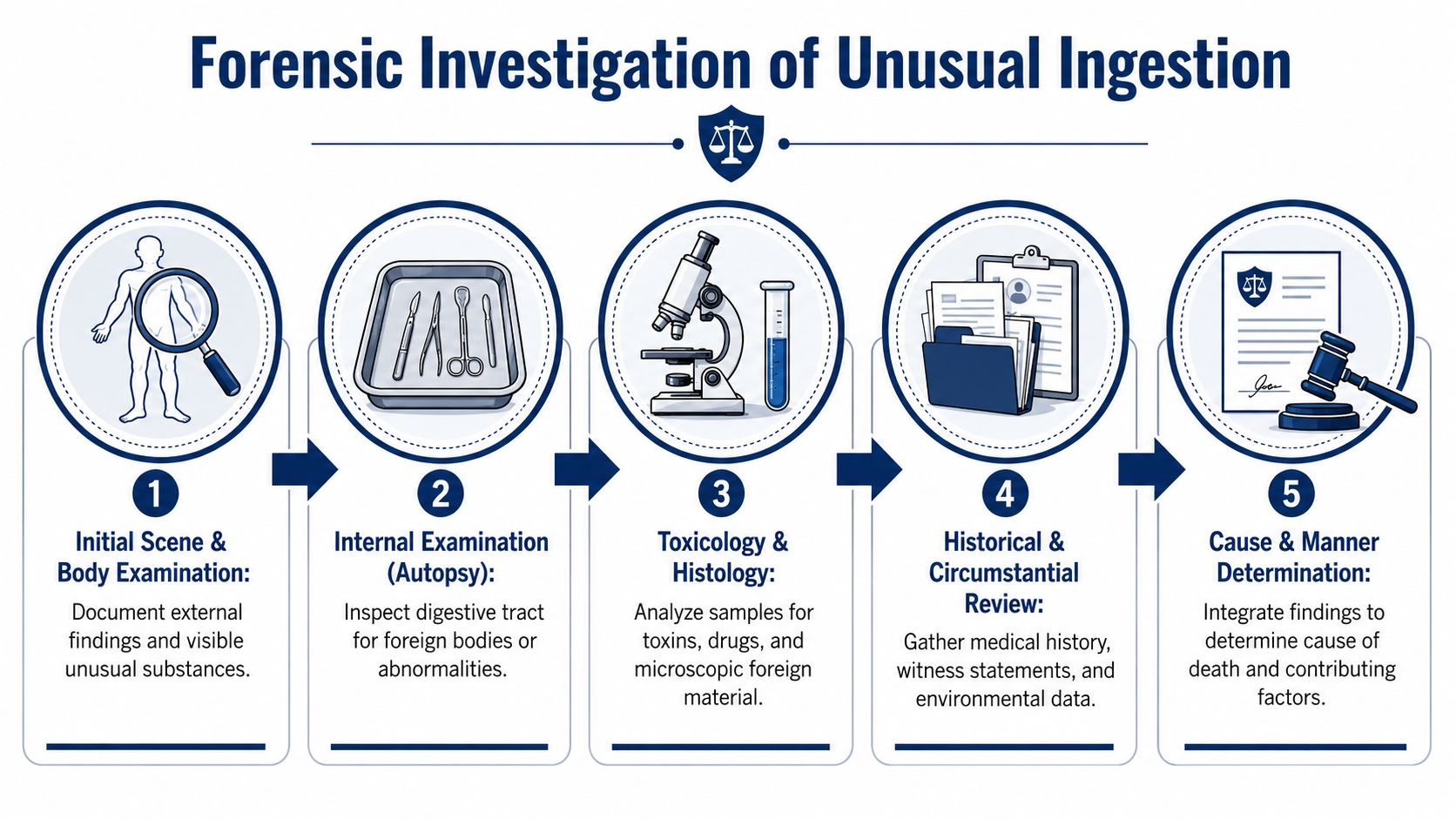
Cause of death, manner of death, and chain of custody
Three terms often need plain-language definition.
Cause of death is the medical reason a person died. In an ingestion case, that might involve aspiration, an allergic reaction, infection, or another identified process.
Manner of death is the classification used in medicolegal death investigation, such as natural, accident, suicide, homicide, or undetermined. It is not a moral judgment. It is a legal-medical category.
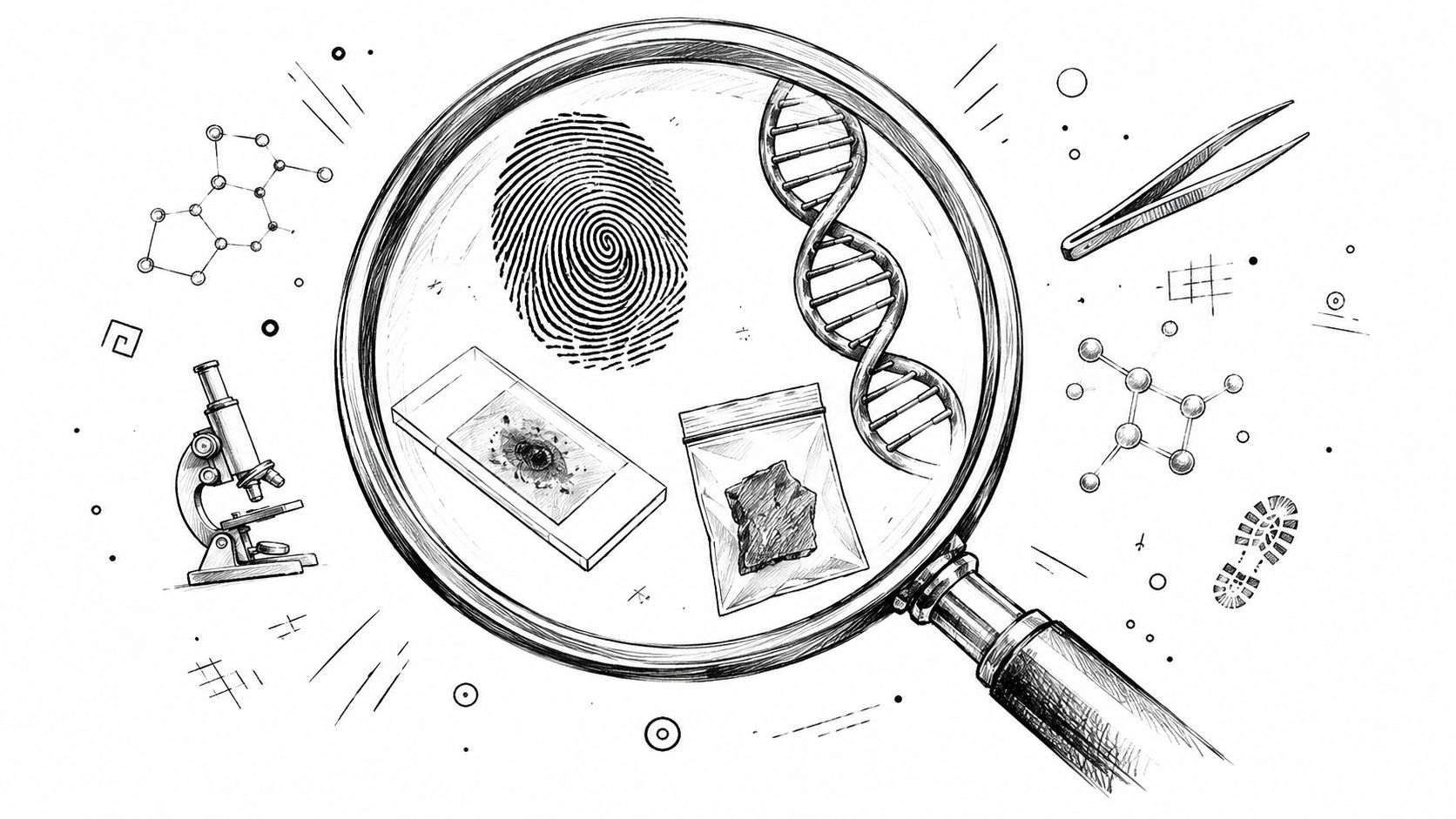
Chain of custody is the documented handling of evidence from collection through transfer and analysis. It helps preserve integrity for legal review and court use.
Those definitions matter because unusual ingestion cases can attract speculation very quickly. The role of forensic pathology is to separate what is observable from what is merely dramatic.
What the examination actually looks for
A postmortem review in this setting usually develops in layers.
First, there is the external examination. We look for signs of distress, vomitus, oral injury, facial petechiae when relevant, and any material around the mouth or airway.
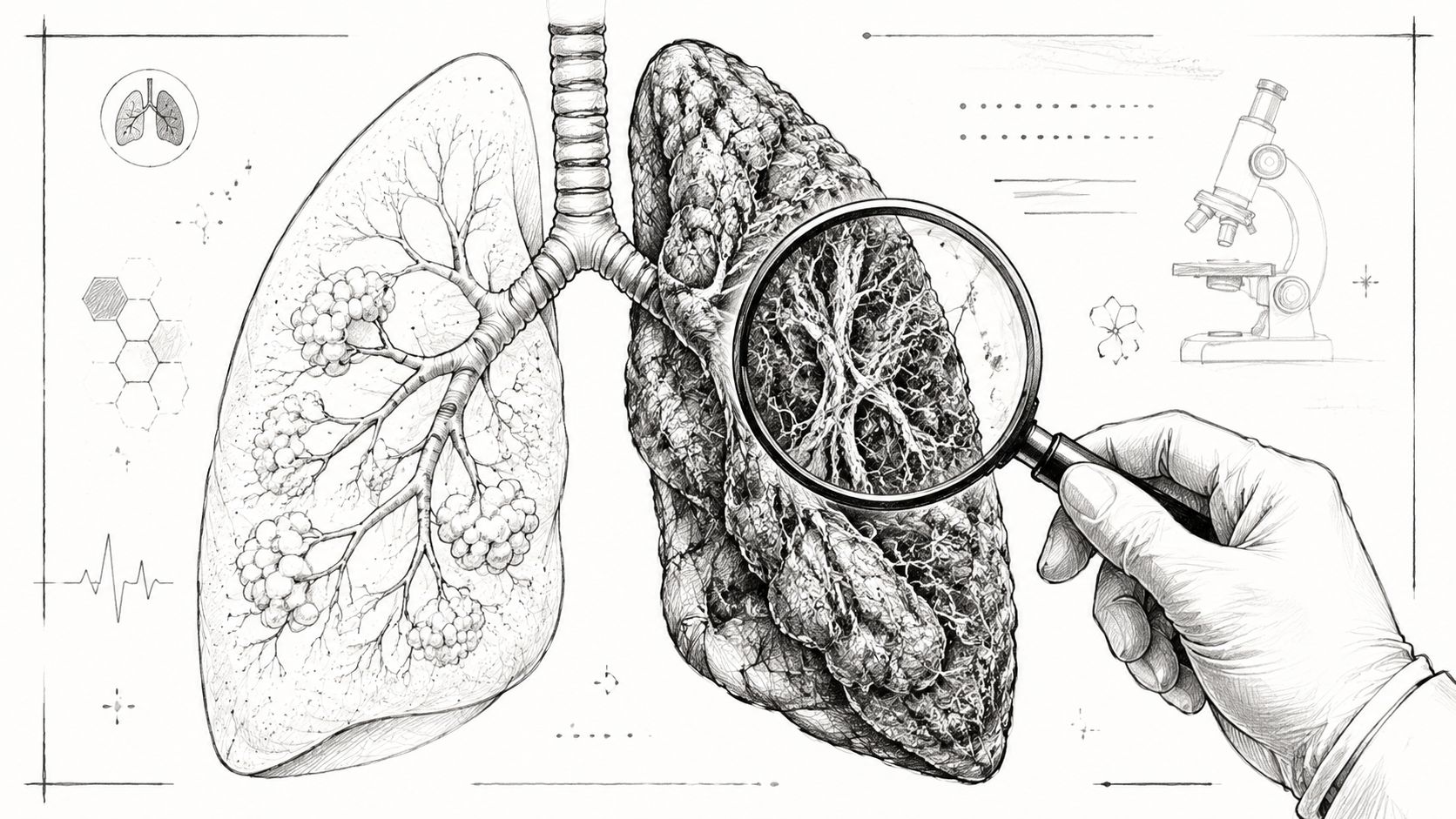
Second comes the internal examination. The airway receives close attention. The tongue, pharynx, larynx, trachea, and bronchi may show aspirated material, congestion, edema, or obstruction. The esophagus and stomach are assessed for foreign material and mucosal injury. The lungs are inspected for evidence consistent with aspiration or inflammation.
Third, supporting studies may be needed. Histology can identify tissue-level changes. Toxicology may help exclude other contributors. Context matters too, including scene information, witness statements, known allergies, and medical history.
We discuss specimen handling in more detail in our overview of specimen collection procedures, because unusual exposure cases often depend on careful preservation and documentation.
When an independent autopsy helps
Independent review is especially important when the first explanation is incomplete or disputed. Families may want a clearer understanding of a sudden death. Attorneys may need a court-admissible analysis. Counties may need support when local resources are limited.
Situations where independent review can help include:
- Unclear airway findings: Was there choking, aspiration, or neither?
- Possible allergic death: Were there findings that support an anaphylactic process?
- Conflicting accounts: Do witness statements match the physical evidence?
- Questions about handling: Was evidence preserved with proper chain of custody?
For families and counsel seeking that kind of review, our pages on Private Autopsies and County Forensic Autopsies explain how independent medicolegal examination fits within Texas practice.
In forensic pathology, objectivity is not a style choice. It is the work.
Texas law also shapes the process. Procedures involving decedents, disposition, and related professional obligations intersect with the Texas Health & Safety Code, including Chapters 711, 716, and 651, and with the regulatory role of the Texas Funeral Service Commission. Those rules matter because a valid autopsy process depends on lawful authorization, documented handling, and respect for the deceased.
Most cases are not solved by a single dramatic finding. They are solved by fitting anatomy, pathology, toxicology, and history into one defensible conclusion.
Legal and Ethical Questions in Televised Risk Taking
The problem with a televised stunt is not only what happened during filming. It is what happens afterward, when isolated clips continue to circulate without context.
Why repeated sharing changes the public health picture
The reuse of these segments on platforms like TikTok and YouTube shows their staying power in popular culture and highlights how rarely arachnid consumption appears in mainstream media, which is one reason these clips became strong reference points for discussions about food taboos and risk, as seen in the circulating Fear Factor camel spider clip on TikTok.
That kind of repetition can normalize behavior that was originally staged as exceptional. Viewers stop seeing a controlled production environment and start seeing an act that appears survivable, repeatable, and maybe even funny. In medicine and forensic work, that shift matters because imitation rarely includes the safeguards, screening, or emergency planning that may exist in a production setting.
A public-health view does not require panic. It requires honest framing. When a stunt enters meme culture, its educational burden increases. The clip becomes detached from its original conditions, and the audience fills the gaps with assumptions.
How Texas death investigation fits in
In Texas, official death investigation responsibilities may involve Justices of the Peace, county systems, or medical examiner offices depending on the jurisdiction and circumstances. When a death is sudden, unexplained, unusual, or potentially injury-related, proper medicolegal review is essential.
Private forensic pathology also has a role. Counties without a medical examiner may need forensic autopsy support. Families and attorneys may need an independent review when questions remain after an official process. That work must stay objective, legally compliant, and carefully documented.
The ethical issue is broader than one television show. Entertainment industries, social platforms, and the public all affect how risk is perceived. Our concern is not censorship. It is accuracy. When the danger is real but poorly explained, people make decisions with bad information.
A calm forensic explanation helps correct that. It does not dramatize the event. It restores proportion.
Frequently Asked Questions About Ingestion and Autopsy
Is swallowing a spider usually fatal
Usually, no. Many cases would be more likely to cause distress, gagging, irritation, or no major injury at all. The danger rises when the event involves rapid swallowing, poor chewing, airway compromise, allergy, or contamination.
A single answer never fits every case. Age, health conditions, immune status, and the details of ingestion all matter.
What is the difference between venom and poison in ingestion cases
Venom is generally delivered through a bite or sting. Poison harms through swallowing, inhalation, or contact. In spider ingestion cases, people often focus on venom, but the more practical concerns are mechanical injury and the body's reaction to foreign biologic material.
That distinction is important because it changes both emergency thinking and postmortem analysis.
Can a family request a second opinion autopsy in Texas
In many situations, yes. A family, attorney, or agency may seek an independent autopsy or independent review of records and findings, depending on the legal posture of the case and the status of the decedent's remains. The specific process depends on authorization, timing, and whether the body has already undergone examination or disposition.
For related logistical support, some families also work through coordinated mortuary arrangements such as the Waterloo Mortuary Partnership.
Do media stunts affect real injury patterns
They can. Recent research on reality-TV-related dare culture indicates that teens exposed to high-risk stunts are more likely to underestimate injury probability, a concern reflected in the discussion surrounding this YouTube reference to youth risk-taking and stunt exposure.
From a forensic standpoint, that matters because injury patterns do not arise in a vacuum. Social imitation, peer pressure, and repeated exposure to risk-normalizing media can shape behavior long before a pathologist ever sees the case.
What should families or attorneys ask when unusual ingestion may be relevant
Start with direct questions.
- What was the actual medical mechanism? Ask whether the evidence supports aspiration, allergic reaction, infection, trauma, intoxication, or another cause.
- What was found in the airway and stomach? That helps distinguish swallowing from aspiration.
- Was toxicology necessary? In some cases it helps exclude competing explanations.
- Was the chain of custody documented? That matters for reliability and legal use.
- Is an independent review warranted? It may be, especially when the findings are incomplete or disputed.
If your family, agency, or legal team is facing questions after a sudden or unusual death, Texas Autopsy Services can help you understand the autopsy process, legal considerations, and options for an independent forensic review. We serve all 254 Texas counties, and every examination is performed by a forensic pathologist certified by the American Board of Pathology. When families need clarity, our team believes they deserve plain answers, careful documentation, and respectful communication.