July 29, 2026 · Texas Autopsy Services
Bacterial Culture Testing in Forensic Autopsies
Learn how bacterial culture testing helps determine cause of death in forensic autopsies. Texas Autopsy Services explains the process clearly.
On this page
- Bacterial culture testing identifies live microbes from postmortem samples to help determine if infection contributed to death.
- The process involves sterile specimen collection, transport, and lab incubation, with initial results often available in 2 to 5 days.
- A positive culture doesn't automatically prove cause of death; our pathologists correlate results with tissue examination and medical history.
- Every examination is conducted by a forensic pathologist certified by the American Board of Pathology, ensuring expert interpretation.
- We manage the entire process, including chain of custody and reporting, to provide families and attorneys with clear, court-admissible findings.
Sudden, unexplained deaths often require us to look for hidden causes. When the external examination or medical history points toward a possible infection, bacterial culture testing becomes an essential tool. It’s not a guess; it’s a methodical process of following clues. For example, if a seemingly healthy person dies after a brief, high-fever illness with no signs of trauma, we may collect blood and lung samples. The goal is to see if an aggressive bacterial infection, like sepsis, was the underlying cause of death.
What is Bacterial Culture Testing?
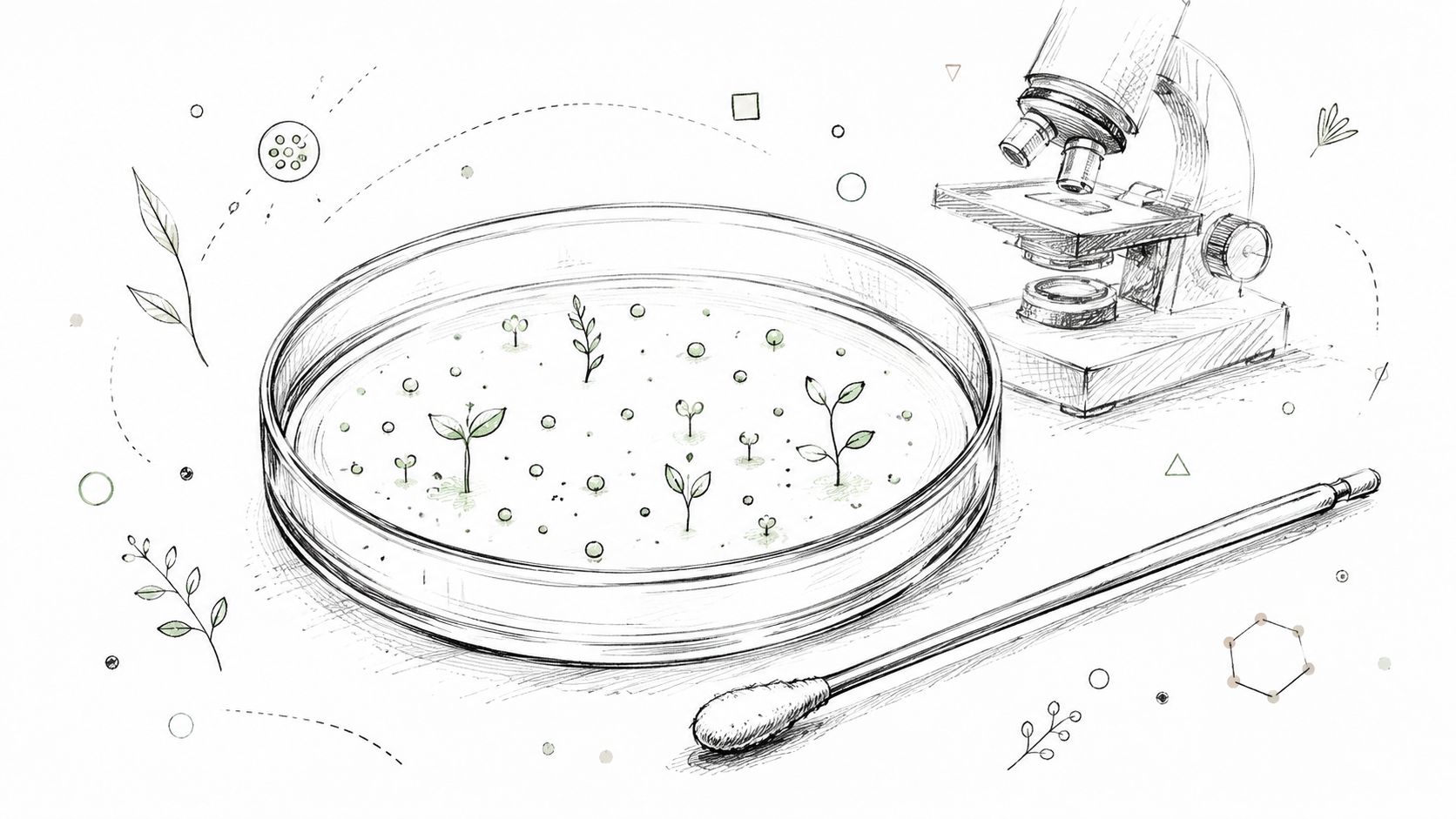
Bacterial culture testing is a laboratory method where we take a sample of tissue or fluid from the body and place it in a special nutrient-rich environment, called a culture medium. This allows any bacteria present in the sample to grow into visible colonies. Think of it as planting seeds from a specific garden plot to see what sprouts. By identifying the organisms that grow, we can determine if a harmful infection was present at the time of death.
The process begins during the autopsy, where one of our board-certified forensic pathologists collects a specimen. This could be blood, lung tissue, cerebrospinal fluid, or a swab from a wound. The choice of what to sample is deliberate, guided by the circumstances of the death and the questions we need to answer. These samples are then sent to a laboratory for incubation and analysis.
Why Cultures Matter in a Cause of Death Investigation
In a private autopsy, bacterial cultures provide objective evidence that can confirm or rule out infection. This is particularly important in cases of:
- Suspected Sepsis: A widespread infection in the bloodstream.
- Pneumonia: An infection in the lungs.
- Meningitis: An infection of the membranes surrounding the brain and spinal cord.
- Post-Surgical Complications: Infections that can develop after a medical procedure.
A culture result helps our pathologists build a complete picture. It complements what we see with the naked eye and under the microscope, adding a critical layer of information to our final cause of death determination.
How We Handle Testing and Reporting
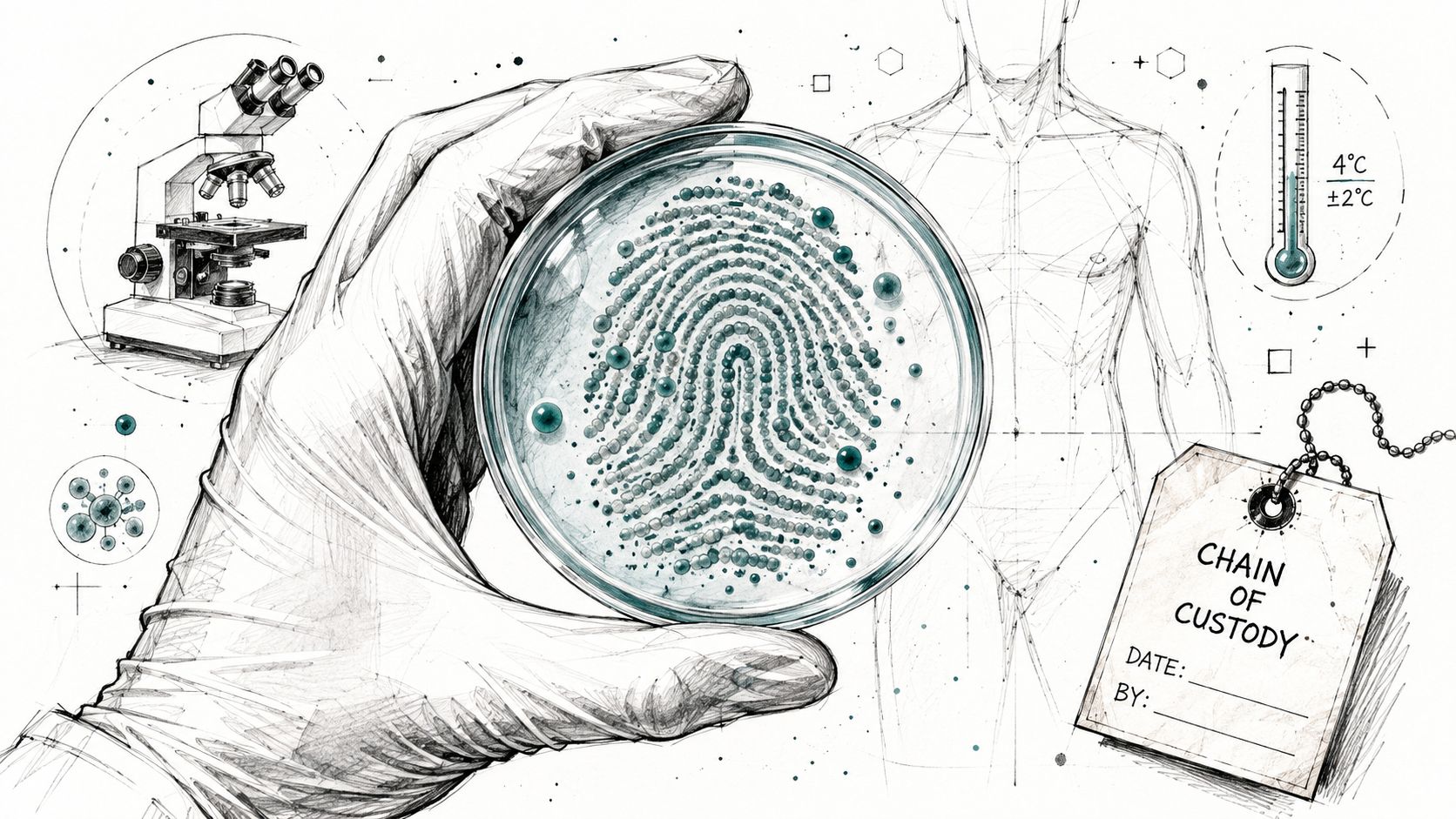
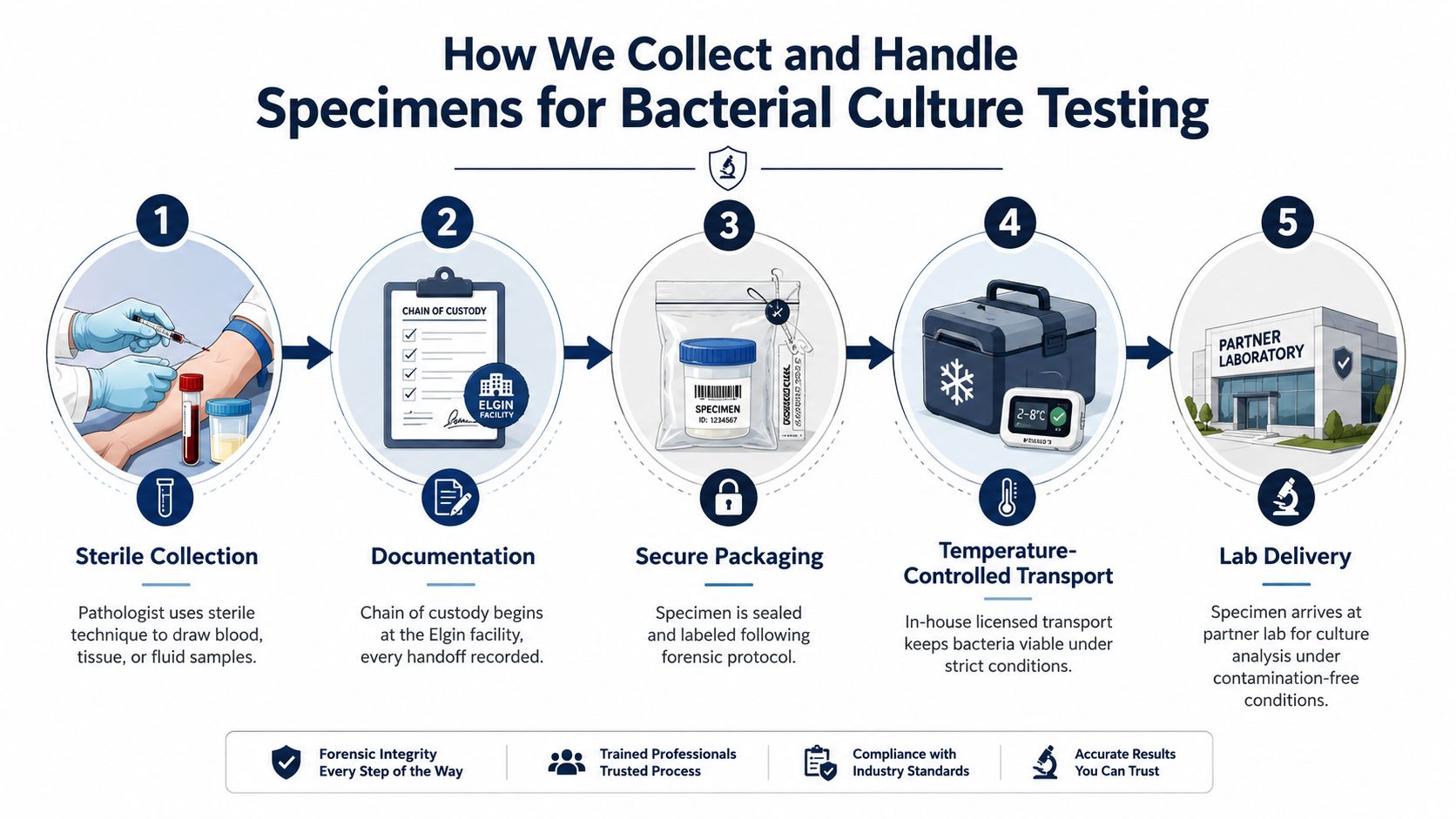
Our team follows strict protocols to ensure every test is reliable and the results are defensible. We use sterile techniques for collection to prevent contamination. Every sample is managed with a full chain of custody and transported under temperature-controlled conditions from our facility to an accredited lab. This process ensures the integrity of the specimen.
All findings are integrated by our forensic pathologists, who are certified by the American Board of Pathology, into a comprehensive and court-admissible report. We explain what the results mean in plain language, providing clarity for families and legal professionals across Texas.
The Process of Specimen Collection and Handling
Getting an accurate culture result depends entirely on the integrity of the specimen. If a sample is contaminated or improperly handled, the findings become unreliable. That’s why our process is built on precision and accountability from start to finish. We treat it as a critical component of the overall death investigation.
Here’s how we protect the viability and legal standing of every sample:
Sterile Collection: Our board-certified forensic pathologists use sterile instruments and containers to collect samples. This minimizes the risk of introducing outside bacteria that could confuse the results. We target specific sites, like blood from the heart or tissue from an infected organ, based on the case history.
Chain of Custody Documentation: From the moment a sample is collected, we start a chain of custody record. This document logs every person who handles the specimen, along with the time and date of each transfer. This unbroken paper trail is crucial for ensuring the evidence is admissible in any legal proceeding and complies with Texas statutory requirements.
Secure Packaging: Specimens are placed in labeled, tamper-evident containers. This not only prevents spillage or cross-contamination but also ensures that the sample arriving at the lab is the exact one we collected.
Temperature-Controlled Transport: Bacteria can be sensitive to temperature changes. To keep organisms viable for testing, we use our in-house licensed transport service to move specimens in insulated, temperature-monitored containers. This preserves the sample for accurate analysis. You can learn more about our detailed specimen handling in our guide on Specimen Collection Procedures.
Coordination with Accredited Labs: We work with accredited laboratories that meet high standards for quality and accuracy. Upon delivery, we confirm the specimen's condition and ensure it’s processed promptly. Following proven lab sterility methods at every step is fundamental to reliable results.
This disciplined approach ensures that when we report a culture finding, we can stand behind its validity.
Interpreting Bacterial Culture Results
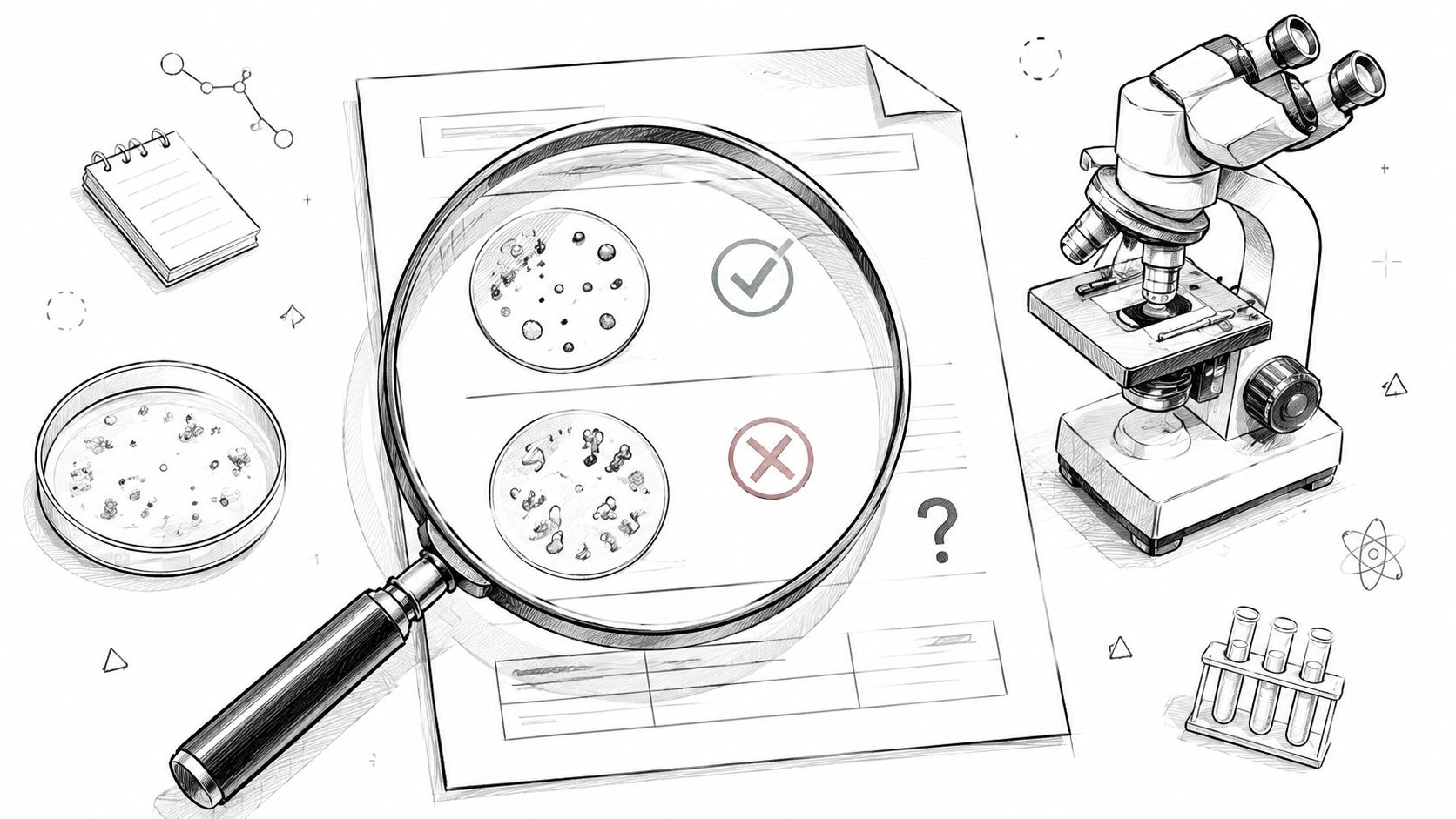
A laboratory report showing a "positive" culture means that bacteria grew from the sample. However, this finding alone doesn't prove that the bacteria caused death. Interpreting the result correctly requires expertise and context. Our board-certified forensic pathologists are trained to distinguish between a true infection and other possibilities.
A culture result is one piece of evidence, not the final answer. It must align with the other findings from the autopsy. For example, finding Staphylococcus aureus in a blood culture is much more significant when the microscopic examination of tissues also shows inflammation and bacterial colonies. This correlation is what turns a lab result into a medically sound conclusion.
Limitations of Culture Testing
It’s also important to understand the limitations of bacterial cultures. A result can sometimes be misleading.
- Contamination: Bacteria from the skin or the environment can accidentally be introduced during collection. An experienced pathologist knows how to recognize patterns that suggest contamination rather than a true infection.
- Postmortem Overgrowth: After death, bacteria that are normally present in the body can multiply and spread. It takes a skilled eye to differentiate this from an infection that was active before death.
- False Negatives: If the person received antibiotics before death, the drugs may prevent bacteria from growing in the culture, even if an infection was present. Some bacteria also require special conditions to grow and may not appear in a standard culture.
Because of these factors, our pathologists never rely on a culture result in isolation. We analyze it alongside the gross findings, microscopic examination of tissues, toxicology results, and the decedent’s medical history. This comprehensive approach is central to our work, whether for a private family or for county forensic autopsies.
Timelines for Results
For most common bacteria, preliminary results are available within 24 to 48 hours. Full identification and testing to see which antibiotics are effective can take an additional 24 to 72 hours. Some slower-growing organisms may require a week or more. We communicate these timelines to families and attorneys so they know what to expect.
How Culture Findings Shape the Autopsy Report
The final autopsy report is a narrative that explains the cause of death by connecting all the available evidence. Bacterial culture results are woven into this narrative to provide a complete and logical picture. Our goal is to explain not just what we found, but what it means in the context of the entire case.
When a culture is positive, our report will detail the specific organism identified. We then correlate this finding with the microscopic examination. For instance, the report might state: "The postmortem blood culture grew Streptococcus pneumoniae. This finding is consistent with the microscopic examination of the lungs, which revealed acute inflammation and numerous bacteria, confirming a diagnosis of bacterial sepsis secondary to pneumonia."
This integration of multiple lines of evidence creates a robust and defensible conclusion. If the culture results do not align with other findings, we explain that as well. A report might note that while a skin bacterium was found, it was likely a contaminant because there was no corresponding inflammation in the tissues. This transparency is key to building trust and providing clarity.
The Role in Legal and Family Matters
For families, a clear explanation of how an infection contributed to death can provide much-needed answers and closure. For attorneys, a well-documented report that connects culture results to physical evidence is essential for personal injury, medical malpractice, or insurance cases.
Our reports are written to be understood by non-medical professionals while retaining the scientific precision required for legal scrutiny. Every report issued by Texas Autopsy Services includes:
- A plain-language summary of the findings.
- Detailed descriptions of the gross and microscopic examinations.
- The results of all ancillary tests, including bacterial cultures.
- A concluding opinion on the cause of death that synthesizes all the evidence.
We also address other relevant factors, like our process for communicable disease screening and how we adhere to laboratory standards, which you can read more about in our article on laboratory accreditation standards.
Frequently Asked Questions About Bacterial Culture Testing
How long does bacterial culture testing take?
Most routine bacterial cultures provide preliminary results within 2 to 3 days. Full identification and antibiotic susceptibility testing can extend this to 5 days or more. Some organisms grow very slowly and may require weeks. We can provide a more specific timeline based on the case.
Does a positive culture mean infection caused the death?
Not always. A positive result must be interpreted in context. Our board-certified forensic pathologists correlate culture findings with microscopic evidence of tissue inflammation and the decedent’s clinical history to distinguish a true infection from contamination or postmortem overgrowth.
What does a negative culture result mean?
A negative culture means no bacteria grew under the laboratory conditions used. This could be because there was no infection, but it can also occur if antibiotics were administered before death or if the organism requires special growth media. A negative result is just one piece of the puzzle.
When should cultures be ordered in a private autopsy?
We recommend cultures when there's a clinical suspicion of infection, such as in cases of sudden death with fever, death following surgery, or suspected pneumonia or meningitis. Our pathologists will help you decide if testing is likely to provide valuable information for determining the cause of death.
How much does bacterial culture testing cost?
The cost varies depending on the number and type of samples tested. When ordered as part of a private autopsy, we provide a flat-rate, all-inclusive price that covers specimen handling, transport, and reporting to ensure transparency for families and attorneys.
If you have questions about whether bacterial culture testing is appropriate for a specific case or need to understand the findings from a report, our team is here to provide clear, compassionate guidance. Please contact our office to speak directly with our staff.