July 14, 2026 · Texas Autopsy Services
Bug Flies in Reporter Mouth: Health Risks & Forensics
Discover what happens if a bug flies in reporter mouth. Forensic experts detail the low health risks & insects' critical role in investigations for 2026.
On this page
- What to Do If You Swallow a Bug
- Separating Fact from Fiction About Ingesting Insects
- The Forensic Pivot When Insects in the Mouth Are a Clue
- How Oral Insect Activity Helps Determine Time of Death
- Our Process for Documenting Forensic Evidence in Texas
- Frequently Asked Questions About Forensic Examinations
Bug Flies in Reporter Mouth and What It Really Means
- A live bug entering someone's mouth is usually unpleasant, not medically serious.
- There is no verified historical “bug flies in reporter mouth” incident that carries documented media or forensic significance according to the verified record summarized from WebMD's overview of oral myiasis.
- Accidentally swallowing a single fly rarely causes illness in a healthy person, because stomach acid breaks down the insect quickly, as explained by Mayo Clinic Laboratories.
- In forensic pathology, insects in the mouth mean something very different after death. Oral insect activity can help estimate the post-mortem interval when collected and analyzed correctly, as described in forensic entomology literature.
- In Texas, private autopsies require proper legal authorization, and every examination at our practice is performed by a forensic pathologist certified by the American Board of Pathology.
Many readers land on this topic because they saw a clip, remembered an awkward on-camera moment, or had the same thing happen outdoors. A gnat, fly, or other small insect suddenly hits the face or enters the mouth. It feels alarming in the moment, especially if the search phrase is bug flies in reporter mouth and the results mix medical advice with sensational language.
From a forensic standpoint, that search phrase blends together two very different subjects. In a living person, accidental insect ingestion is usually minor. In a death investigation, insects in the mouth can be an important forensic clue. Families, attorneys, and investigators need those two ideas kept separate.
What to Do If You Swallow a Bug
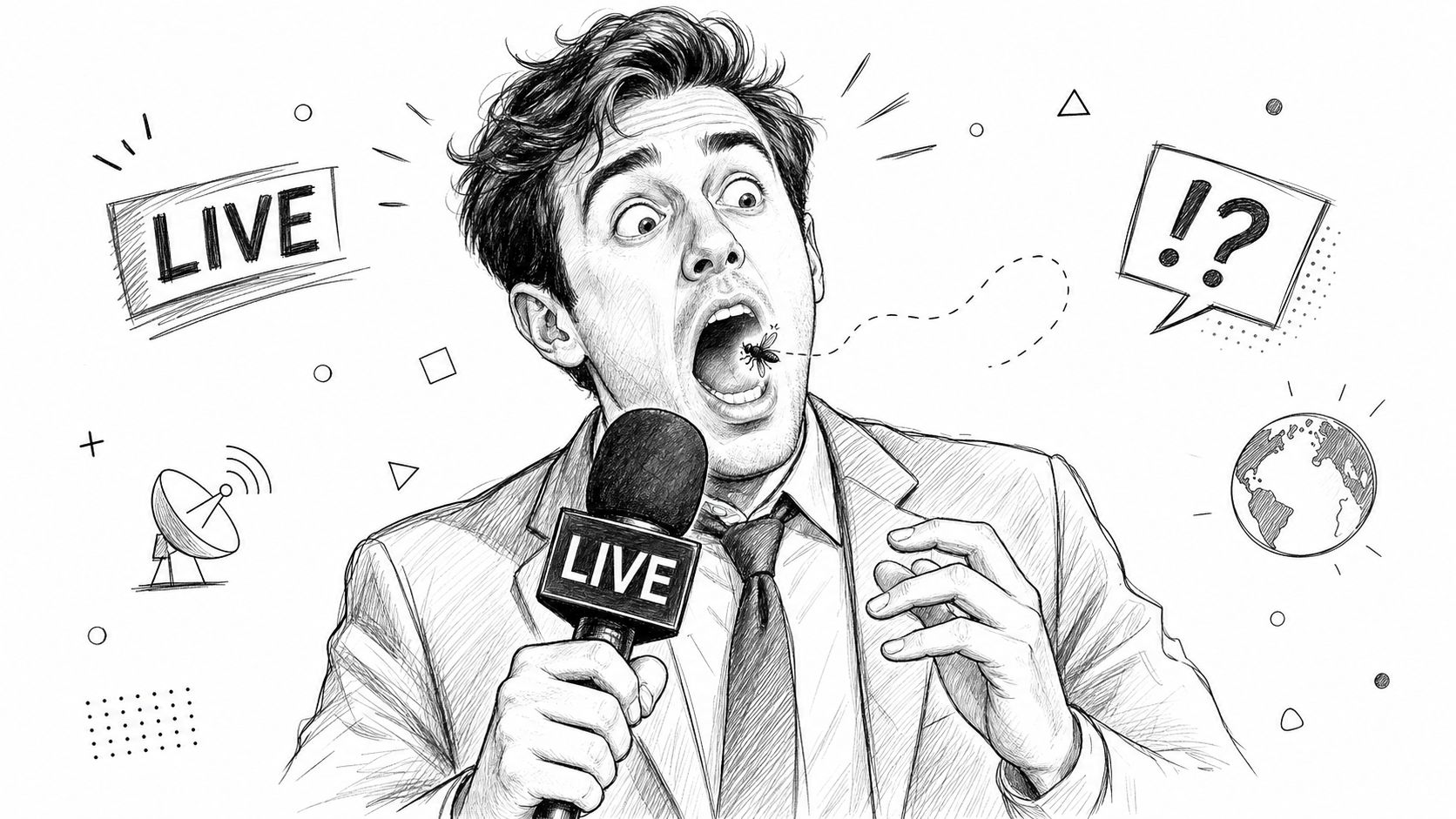
A bug entering the mouth during a live report, a ball game, a bike ride, or yard work is startling. A typical reaction involves coughing, spitting, or gagging. That response is normal.
Immediate steps
If the insect is still in your mouth, spit it out if you can. Then rinse your mouth with water. If you think you swallowed it, take a few calm breaths and drink some water.
A practical way to think about it is simple:
- Stop and breathe. Coughing for a moment doesn't always mean choking.
- Rinse your mouth. This helps clear any debris or unpleasant taste.
- Sip water. That can ease throat irritation after coughing or gagging.
- Pay attention to symptoms. Ongoing trouble breathing matters more than the fact that a bug was swallowed.
Practical rule: If breathing is normal and symptoms settle quickly, the event is usually self-limited.
For a more focused discussion of common concerns after accidental ingestion, our earlier post on what happens if you swallowed a fly gives plain-language background.
When to get medical help
Most cases don't require treatment. The exception is when the problem is not the insect itself, but the body's response.
Seek urgent medical care if there is trouble breathing, persistent choking, swelling of the lips or throat, or a severe allergic-type reaction. Those signs point to an airway issue, not a routine ingestion event. Mild throat irritation or disgust alone usually improves without intervention.
This is educational information, not personal medical advice. If someone has a known severe insect allergy, airway symptoms deserve prompt medical attention even when the event seems small.
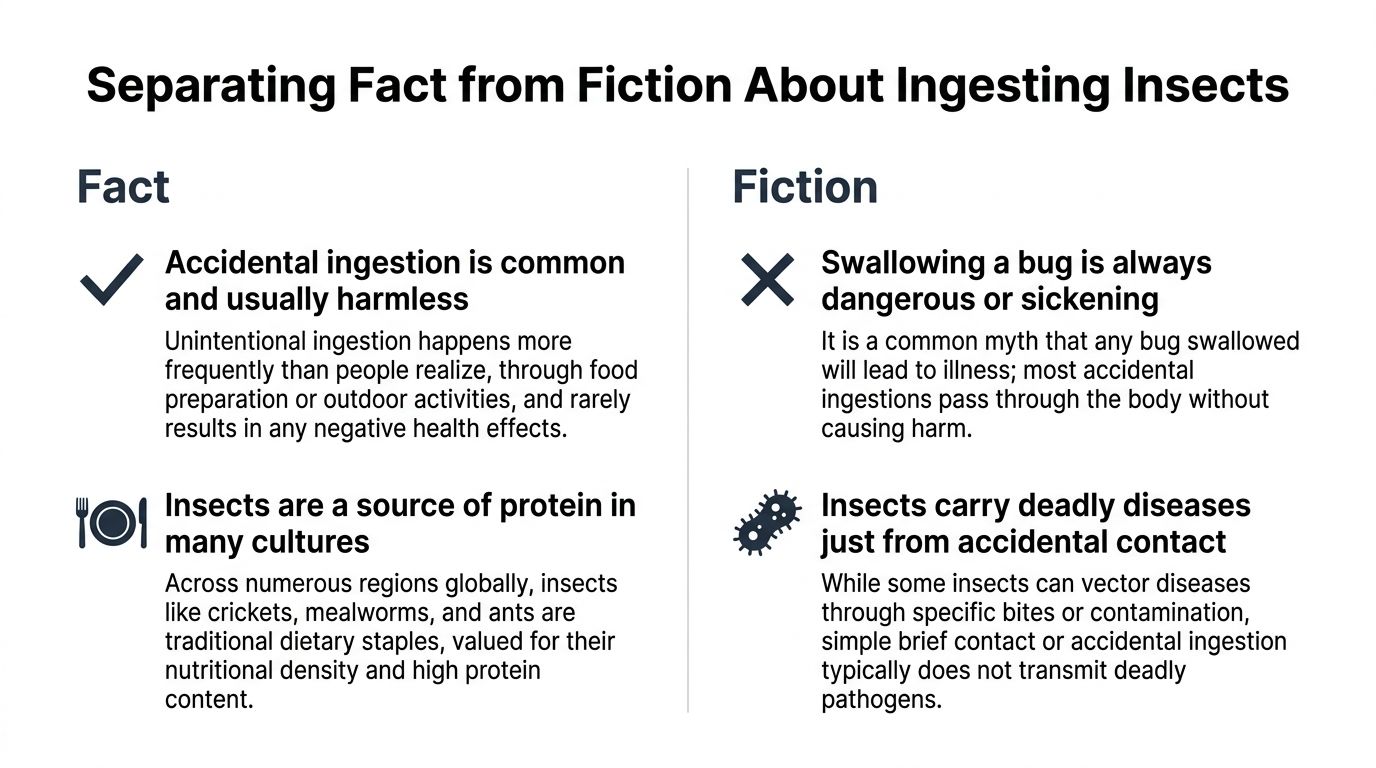
Separating Fact from Fiction About Ingesting Insects
A live insect brushing past someone's lips during a broadcast feels dramatic because it is visible, sudden, and unpleasant. That reaction often leads people to blend together several very different concerns. From a medical standpoint, those concerns need to be separated before they can be understood.
The phrase bug flies in reporter mouth sounds like shorthand for a famous documented incident. The record does not show a recognized forensic, medical, or journalism category built around that wording. It is best understood as a search phrase, not a diagnosis or a named event.
The first myth is that swallowing one small insect usually causes serious illness. As noted earlier, that is uncommon for a healthy person. In most cases, the insect is another bit of organic material entering the digestive tract. The body handles it the same basic way it handles many other contaminants we encounter in daily life. Unpleasant does not mean dangerous.
The second myth involves parasites. People often hear about larvae in the mouth and assume that a swallowed fly and tissue infestation are the same process. They are not. Oral myiasis is a rare condition in which fly larvae colonize oral tissues, usually in the setting of major local vulnerability such as poor oral hygiene, open wounds, severe debility, or impaired self-care, as described in PubMed's summary of oral myiasis context. That is a disease process involving tissue colonization. Accidental ingestion is a brief exposure event.
A practical comparison helps here. Swallowing a bug is usually a gastrointestinal event. Oral myiasis is a soft-tissue infestation. Those are as different as getting mud on your shoe versus having an infection in a wound. The word "fly" appears in both situations, but the biology is not the same.
This distinction matters because sensational wording can turn a minor everyday mishap into something that sounds medically exotic. For a clinician, the key question is simple: did an insect pass through the mouth, or is there evidence that insects or larvae are present in tissue? Those are very different findings, and they lead to very different conclusions.
Prevention is straightforward in outdoor spaces where insects are a constant nuisance. Physical barriers reduce the chance of bugs reaching food, drinks, and faces during conversation. In patios and pool areas, well-fitted screening such as Florida pool enclosure mesh can reduce those exposures.
The Forensic Pivot When Insects in the Mouth Are a Clue
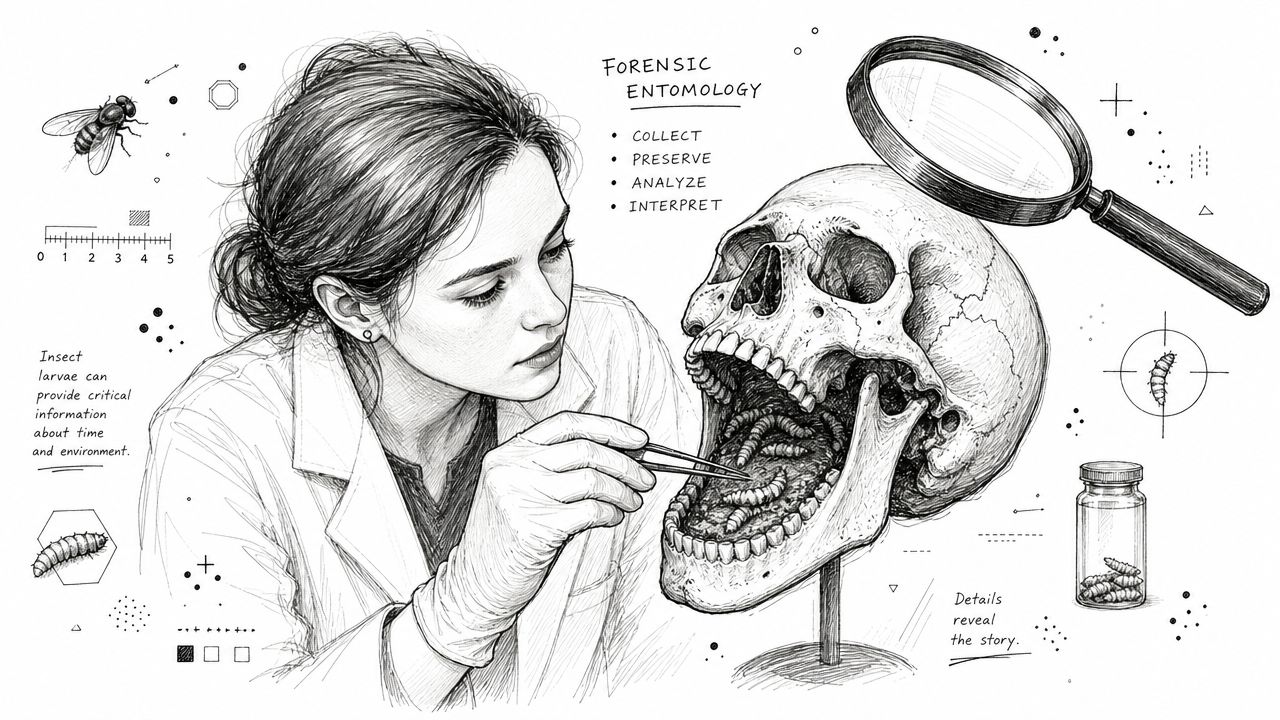
In a living person, an insect in the mouth is usually a brief nuisance. In a postmortem examination, insects in the mouth can become evidence. That change in meaning is where forensic pathology and forensic entomology intersect.
Why the mouth matters after death
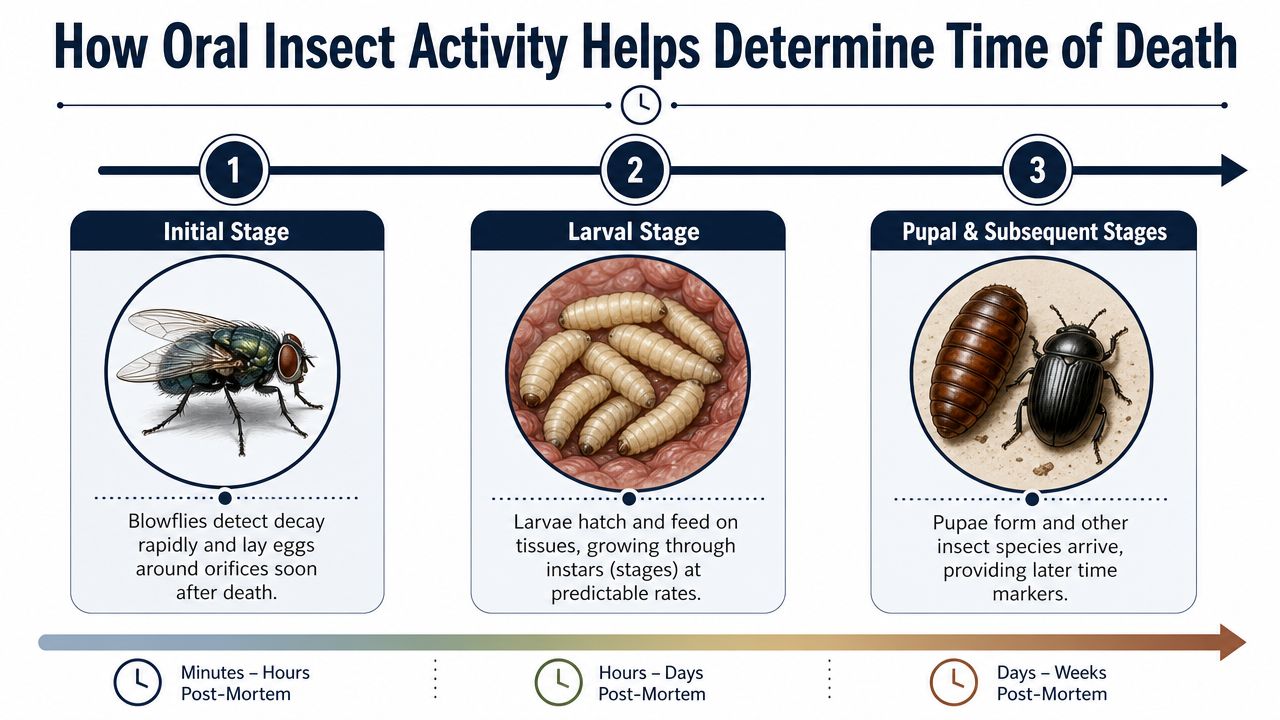
After death, insects do not colonize the body randomly. Within minutes of death, blow flies, family Calliphoridae, are attracted to fresh corpses and specifically begin laying eggs in the mouth, eyes, and nose because these natural openings provide immediate access to soft tissues and fluids, as described by NC State's forensic entomology overview.
The mouth is important because it is moist, accessible, and biologically favorable for early insect activity. For a forensic pathologist, that means the mouth is one of the first places that may need careful observation before anything is disturbed.
What forensic entomology means
Forensic entomology is the use of insect evidence in death investigation. It helps answer questions about timing, environment, and sometimes whether a body may have been moved.
For non-medical readers, one clear distinction helps. Cause of death means the disease or injury that started the fatal process. Manner of death is the classification of how the death occurred, such as natural, accident, suicide, homicide, or undetermined. Insect activity does not replace those determinations, but it can support the broader cause of death investigation by helping establish the post-mortem timeline.
How Oral Insect Activity Helps Determine Time of Death
A fly in a living person's mouth is usually a nuisance. The same finding in a decedent can become a timing clue. That shift, from everyday annoyance to forensic evidence, is where many readers first see why forensic entomology matters.
One of the most useful concepts in forensic pathology is the post-mortem interval, or PMI. In plain language, PMI is the time that has passed since death. Oral insect activity can help estimate that interval, but only if the insects are identified, documented, and interpreted in context.
Early in the evaluation, it helps to see the process as a timed sequence rather than a single observation.
The biological clock
Insects develop in stages. Eggs hatch into larvae. Larvae pass through predictable growth phases before moving toward pupation and adulthood. For a forensic pathologist, that progression works like a clock whose speed changes with temperature.
The mouth can be especially informative because it is moist, protected, and accessible to early colonizing flies. If the oldest larvae in that area are aged correctly, their stage of development can help estimate how long colonization has been underway. In turn, that can help narrow the PMI, particularly when the body is found after the earliest post-mortem changes have already progressed.
A short educational video can help make that sequence easier to picture.
What investigators measure
This analysis is more technical than many people expect. Investigators do not merely record that maggots are present and assign a time frame. They first determine the insect species, because different flies grow at different rates. Then they estimate the age of the oldest relevant larvae, since those specimens usually provide the best timing information.
Several variables matter at the same time:
- Species identity, because developmental timelines differ among insects.
- Larval stage, because each growth phase follows a recognizable pattern.
- Temperature history, because insect growth speeds up in warmer conditions and slows in cooler ones.
- Location on the body, because a moist area such as the mouth can change how soon insects colonize and how they develop.
A useful comparison is a pediatric growth chart. A child's height means little unless you know the child's age and sex and compare that measurement to the right reference standard. Larval length or weight works the same way. A measurement has value only when the examiner knows the species and the temperatures the insects experienced.
Forensic point: Insect evidence carries the most weight when it is interpreted alongside scene findings, body condition, weather records, and other post-mortem changes.
Readers who want a practical case-based explanation can review our discussion of the forensic significance of bugs in the mouth.
Our Process for Documenting Forensic Evidence in Texas
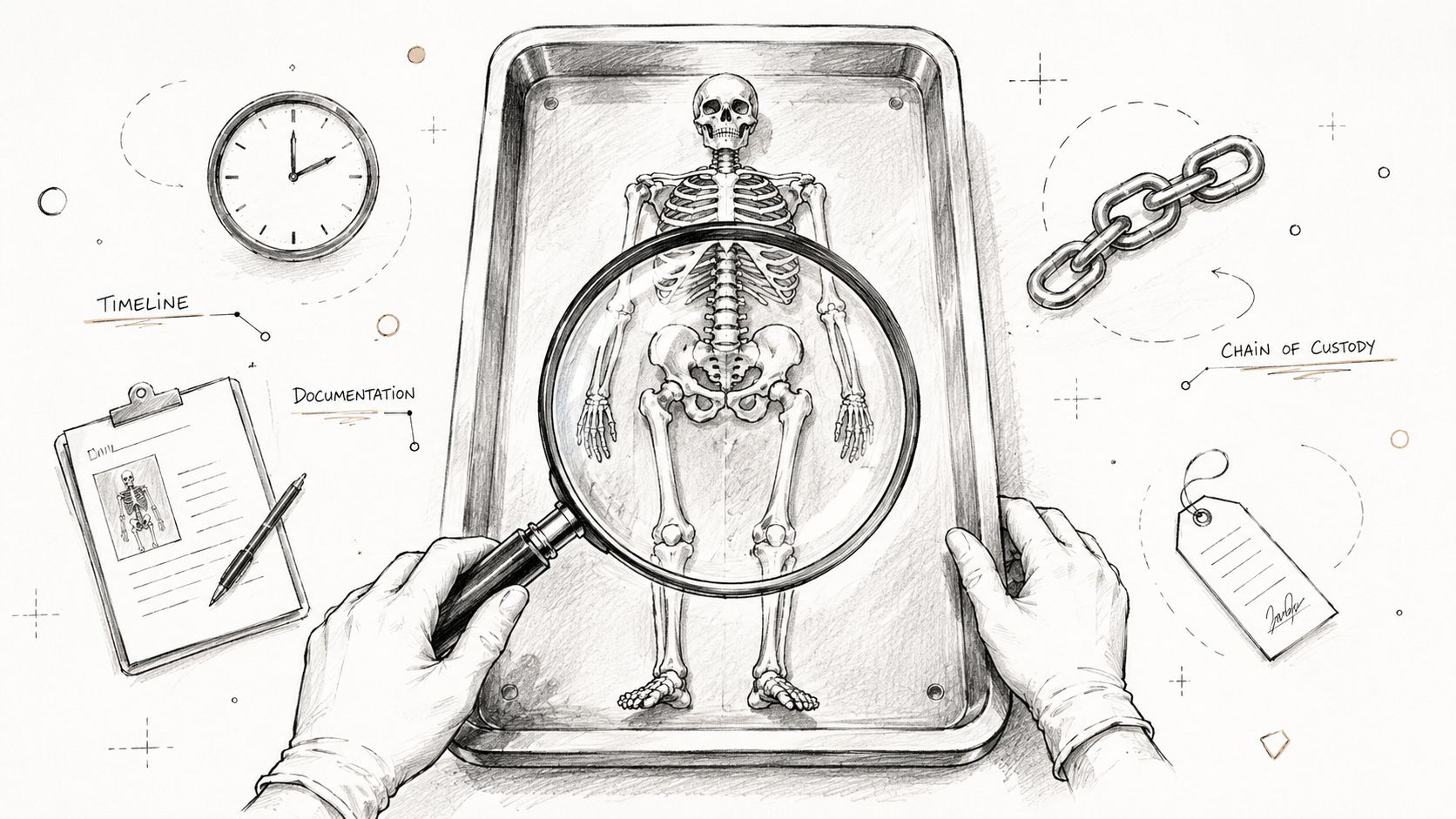
A useful forensic record starts at the moment the examiner first sees the body. If insect activity is present around the lips, teeth, or oral cavity, the first task is to preserve the scene as it exists before anyone cleans, repositions, or samples it. That principle applies in an independent autopsy, a second-opinion autopsy, or a forensic pathology record review.
What chain of custody means
Chain of custody is the written history of an item from collection through analysis. It identifies who handled the evidence, when they handled it, how it was packaged, where it was stored, and when it changed hands. In medicine, an analogy is a specimen label on a biopsy jar. If the label is wrong or incomplete, confidence in the specimen drops. In forensic work, the same problem can affect whether a finding is medically reliable and legally usable.
For families, that documentation helps answer a basic question: are we looking at the same evidence that was collected at the start? For attorneys, it addresses authenticity, preservation, and admissibility. In Texas, those points matter because death investigation work must fit within state law, accepted forensic practice, and the recordkeeping expected when findings may later be reviewed in court.
The original condition must be documented before collection begins. Once the pattern is disturbed, that part of the scene cannot be recreated.
How the documentation process works
The process is orderly and chronological. We begin with identification of the body and confirmation of the case information provided with the remains. We then document the body as received, including sealed containers, body bag condition, clothing, oral findings, and any trace material visible before manipulation.
Photography comes first. Overall photographs establish orientation. Mid-range photographs show the head and mouth in context. Close-up and macro images record the precise location of insect activity, debris, or associated injury. The goal is not only to prove that insects were present. The goal is to create a visual record that another qualified examiner can later review and understand.
Written notes follow the same sequence. We record time, date, personnel present, anatomical location, condition of the evidence, collection method, packaging method, and storage status. Each transfer is logged. Each container is labeled. If a specimen is divided for different forms of testing, that split is also documented so the paper record matches the physical evidence.
The table below shows the parts of the workflow that often matter most later.
| Step | Documentation purpose |
|---|---|
| Initial photographs | Preserve appearance and position before handling |
| Case labeling | Tie each specimen to the correct decedent and case file |
| Collection log | Record who collected what, when, and from where |
| Packaging and sealing | Reduce contamination and show whether a container was opened |
| Transfer record | Track movement between examiner, courier, laboratory, and storage |
| Final report correlation | Match photographs, notes, specimens, and conclusions |
Readers who want a broader explanation of forensic evidence collection standards and documentation practices can review that guide for the larger legal and procedural framework.
Why process errors matter
Small documentation failures can create large interpretive problems. A mislabeled vial, an unlabeled photograph, or an incomplete transfer record can weaken confidence in the evidence even if the medical observation itself was sound. In forensic pathology, the conclusion is only as durable as the records supporting it.
That is one of the practical differences between a cursory observation and a forensic examination. People searching for private autopsy services Texas, an independent autopsy, or an autopsy near me are often trying to understand whether the work will stand up to scrutiny. The answer depends on method, documentation, and professional qualifications. In Texas, every private autopsy must be performed by a forensic pathologist certified by the American Board of Pathology for court-admissible findings and compliance with the Texas Health & Safety Code chapters identified by Texas Autopsy Services.
Frequently Asked Questions About Forensic Examinations
FAQ
What is the difference between cause of death and manner of death?
Cause of death is the injury or disease that led to death. Manner of death is the forensic classification of how the death occurred. Those are related but not identical conclusions.
Can insects in the mouth determine the exact time of death?
No responsible forensic pathologist treats insect evidence as a perfect clock. It can help establish a minimum post-mortem interval and refine the timeline when combined with scene findings, temperature history, and species identification.
Can insect specimens be used for more than timing?
Yes. In some cases, insect material may also support toxicological or molecular testing, which can add context to the death investigation. The usefulness depends on condition, preservation, and the questions being asked.
Who can authorize a private autopsy in Texas?
Texas law requires that proper authorization from the legal next-of-kin be obtained before a private autopsy can proceed, and all examinations must comply with state statutes including the Texas Health & Safety Code, as outlined in Texas Autopsy Services' explanation of the autopsy process.
What can families and attorneys expect from an independent autopsy?
They should expect a medically grounded process, careful documentation, and clear reporting. They should also expect limits to be stated clearly. A credible forensic pathology expert does not promise a desired outcome. The duty is to determine findings objectively.
If readers are evaluating options, related services may include Private Autopsies, County Forensic Autopsies, and logistical coordination through the Waterloo Mortuary Partnership.
If your family, agency, or legal team needs help understanding a death investigation, Texas Autopsy Services is available to speak with you directly. We serve all 254 Texas counties, and every examination is performed by a forensic pathologist certified by the American Board of Pathology. We handle these matters with medical precision, full chain of custody, and respect for the deceased and the people seeking answers.