July 8, 2026 · Texas Autopsy Services
How Is Cremation Done in USA
Learn how is cremation done in usa with our complete 2026 guide. We explain legal steps, crematory process, remains handling, costs, and more.
On this page
- Navigating the First Steps After a Loss
- The Legal and Administrative Path to Cremation
- The Cremation Process A Step by Step Explanation
- Ensuring Identity with a Secure Chain of Custody
- Handling of Medical Implants and Final Remains
- Water Cremation An Eco-Friendly Alternative
- The Irreversible Step When to Consider a Private Autopsy
- Frequently Asked Questions About Cremation
What Families Should Know About How Cremation Is Done in the USA
- Cremation in the United States follows a legal process before it becomes a physical process. Authorization, identification, permits, and required approvals come first.
- The body is cremated in a chamber heated to 1,400 to 1,600°F, where heat reduces soft tissue and leaves bone fragments, according to Gupton-Jones College.
- Identification and chain of custody matter at every step. A permanent metal ID tag and matching records help ensure the correct remains are returned.
- Medical implants are handled differently depending on the type. Pacemakers must be removed before cremation, while items such as titanium hips or surgical screws usually remain until they are separated afterward.
- Cremation is irreversible. If there are unanswered questions about cause of death, a private autopsy should be considered before cremation takes place.
When a death has just happened, families are often asked to make permanent decisions while still trying to absorb what has changed. One of the most common situations we see is this: a family knows their loved one wanted cremation, but they don't know what happens next, who has to sign what, or how anyone can be sure the right remains come back to them.
That uncertainty is understandable. Cremation can sound simple from the outside, but the actual process includes legal safeguards, identification procedures, facility protocols, and decisions that can't be undone.
For some families, there are also memorial questions to think through later. Some choose an urn, some prefer burial of cremated remains, and others create outdoor remembrance spaces with items such as personalized memorial stepping stones that give relatives a physical place to visit and reflect.
Families also often need basic clarity on the roles of each provider involved. If you're sorting out who handles care of the body versus who arranges services, our explanation of mortuary vs funeral home can help make those first calls less confusing.
Navigating the First Steps After a Loss
The first steps after a death often feel administrative at the very moment a family has the least energy for paperwork. Even so, cremation in the USA begins with legal authority and careful handling, not with the cremation chamber itself. That's an important point, because many families search for how cremation is done in USA and assume the answer starts at the crematory. It doesn't.
The process usually begins when the deceased is transferred from the place of death into professional care. From there, identity must be confirmed, documentation must be completed, and any required approvals must be obtained before anything irreversible happens. Those safeguards are not red tape for its own sake. They exist to protect the deceased, the family, and the integrity of the process.
What families are usually trying to understand
In the first day or two, most questions fall into a few categories:
- Who can authorize cremation if several family members are involved
- What documents are required before a crematory can proceed
- Whether cremation must wait for medical or legal review
- How the facility confirms identity throughout transport and handling
- What the family receives at the end
Cremation is both a disposition choice and a legal event. The legal side is what makes the physical process trustworthy.
For families in Texas, these early steps also sit within a broader regulatory framework that includes the Texas Funeral Service Commission and the Texas Health & Safety Code. When those rules are followed correctly, the result is not only compliance but reassurance. A well-run process should leave a clear record of who handled the deceased, when authorization was given, and how identity was maintained from start to finish.
Why understanding the process helps
Grief often makes ordinary decisions harder. Plain explanations can restore some sense of control.
That is especially true when families have questions about whether a medical examiner needs to review the death, whether a viewing can still occur, or whether cremation affects later options for memorialization. It also matters when there are any concerns about the cause of death. Once cremation takes place, the opportunity for a full postmortem physical examination is gone.
The Legal and Administrative Path to Cremation
A family may be ready for cremation, yet the process still cannot begin that day. That delay often feels frustrating in the middle of grief. In practice, it serves an important purpose. Cremation is irreversible, so the law requires a careful series of checks before permission is given.
Why the paperwork matters
The paperwork creates a traceable record, much like a chain of signed handoffs in a hospital or laboratory. Each document answers a different question. Has the death been medically certified? Does any public official need to review the case? Who has the legal authority to choose cremation?
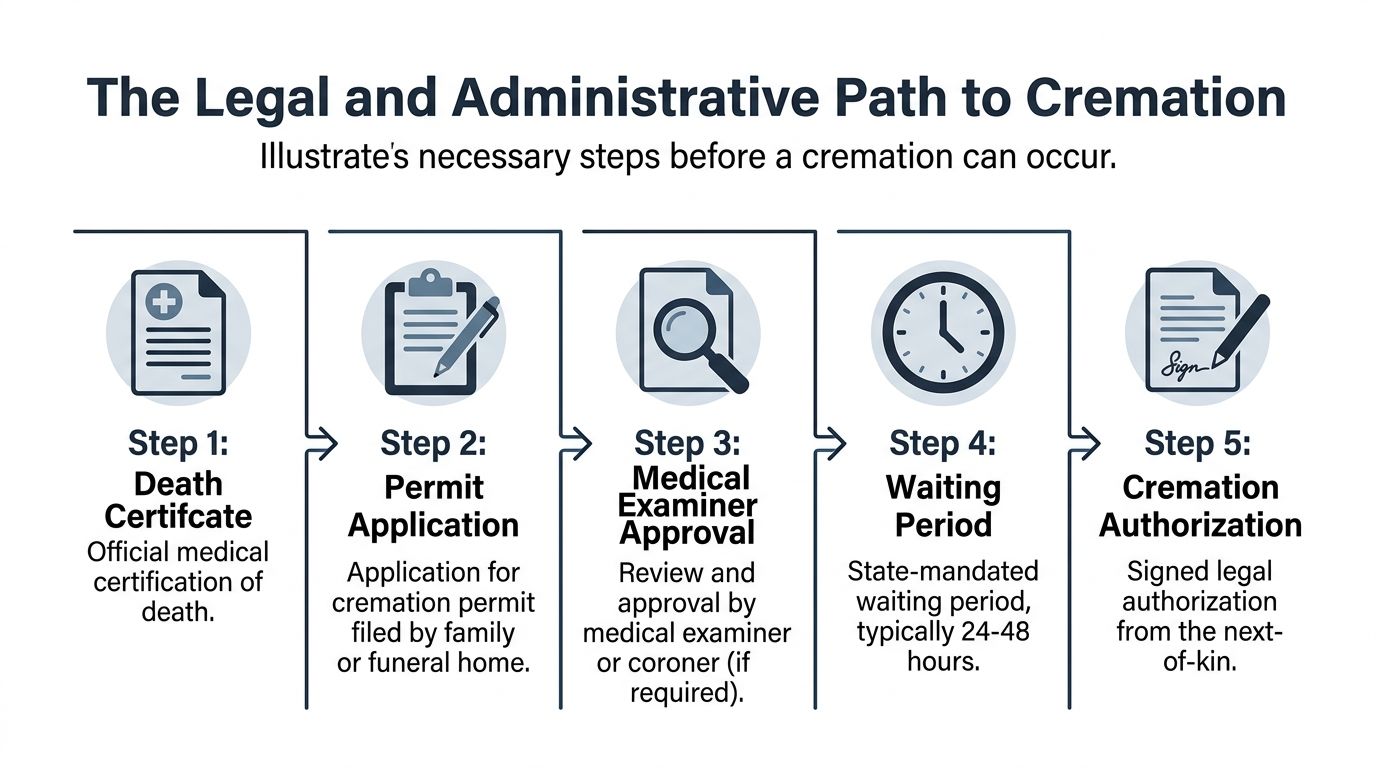
One of the first documents is the death certificate, which includes the medical certification of death. Some deaths also require review by a medical examiner or coroner before cremation can be approved. That review protects both the family and the public by making sure no required investigation is cut short.
A waiting period is also common under state rules. In practical terms, this period allows time for identification, documentation, and any needed legal clearance while the body is kept under appropriate care.
Who usually gives permission
Written authorization must come from the legally authorized person. Depending on the situation, that may be the next of kin or an agent named in a valid document. The signature matters because it creates a clear legal record of who directed the cremation and confirms that the funeral home or crematory acted on proper authority.
This step often becomes the most sensitive one for families. If relatives disagree, if there is a recent separation or remarriage, or if no one is sure who has priority under state law, the provider should pause and clarify that question first. In our experience as a medical-legal practice, it is always safer to resolve uncertainty about family authority or the circumstances of death before cremation is placed on the schedule.
The administrative path often includes several coordinated steps:
- Medical certification of the death
- Permit or application requirements set by the state or local authority
- Medical examiner or coroner review when the facts of the death require it
- A required waiting period and appropriate refrigeration
- Signed cremation authorization from the correct decision-maker
State law shapes the details. In Texas, cremation providers must comply with statutes including Texas Health & Safety Code Chapter 716. One relevant requirement, as described in this overview of Texas cremation-related handling requirements, is that only authorized personnel may handle the body and the cremation container must be labeled with the decedent's identity before the process begins.
That may sound administrative, but it reflects a larger safeguard. Every signature, label, permit, and recorded handoff helps show that the right person was identified, the right person gave permission, and the cremation went forward only after legal clearance was complete. For families, that record can provide something very important during a difficult time. Confidence that the process was handled carefully and respectfully.
The Cremation Process A Step by Step Explanation
A family has signed the paperwork, the legal clearance is in place, and the next question is often the hardest one to ask out loud. What happens now?
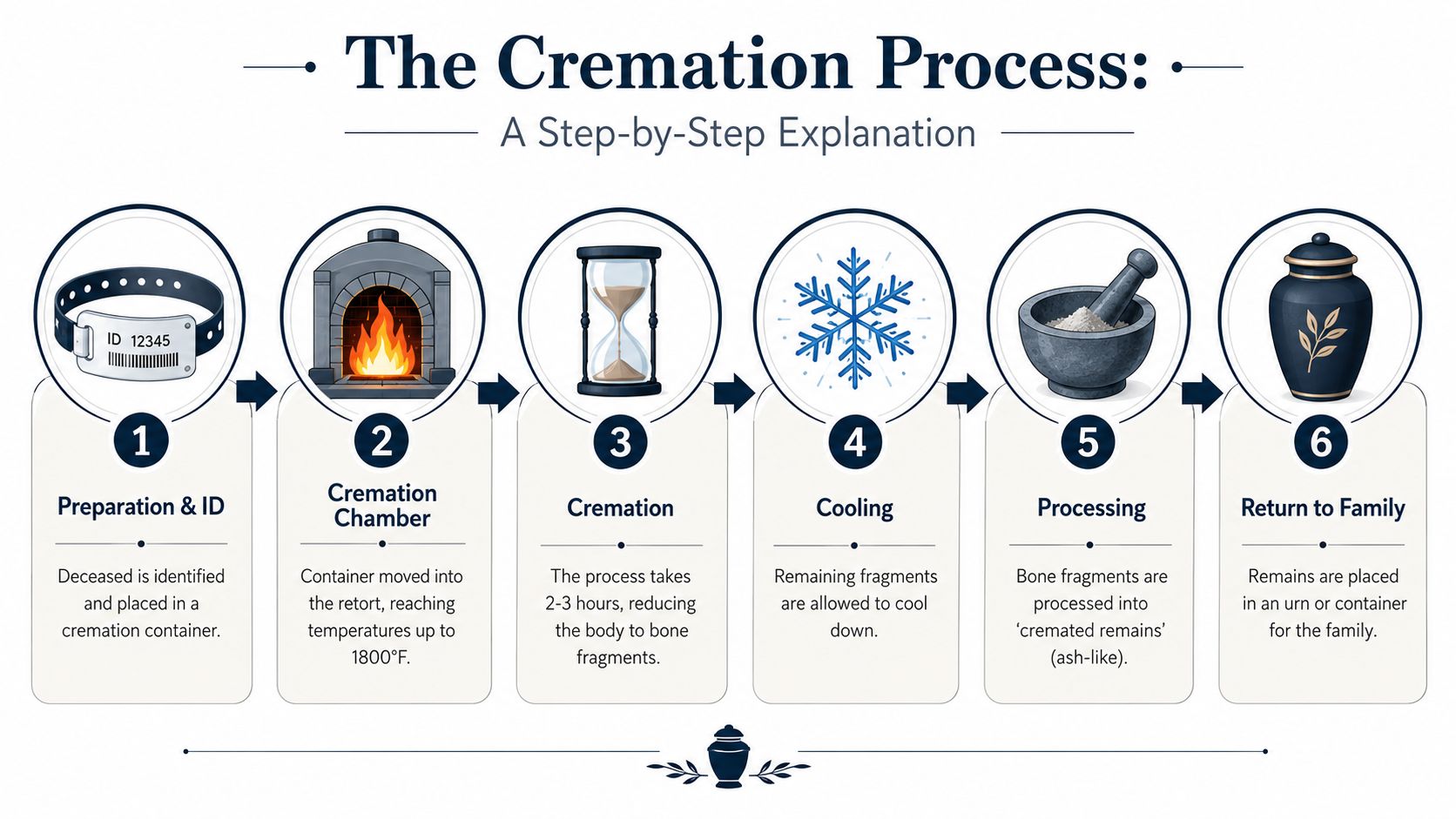
Cremation follows a defined sequence. Each step has a practical purpose, and each safeguard helps confirm that the process is carried out for the correct person, with the correct authorization, under controlled conditions. In medical-legal practice, that order matters. It protects dignity, safety, and trust.
Preparation before the chamber
Before cremation begins, the deceased is placed in a combustible cremation container. The container supports respectful handling and allows staff to transfer the body into the chamber without unnecessary disturbance.
Staff also complete final checks before the chamber is used. As noted earlier, high heat reduces the body over time and leaves bone fragments rather than loose fireplace-like ash. Battery-powered implanted devices such as pacemakers and defibrillators are removed beforehand because heat can cause them to rupture. That step protects personnel and equipment, but it also prevents avoidable interruptions in a process that should remain controlled from start to finish.
For families who want to understand how identity is protected during these handoffs, our guide to chain of custody procedures in cremation care explains why each transfer, label, and recorded check matters.
What happens inside the retort
The cremation chamber is commonly called a retort. Inside that chamber, carefully controlled heat reduces soft tissue and leaves bone fragments and certain inorganic materials. The length of the cycle varies based on the individual and the equipment being used, so families should expect some variation rather than a fixed timetable.
A simple comparison can help here. The chamber does not "burn a body into ashes" in the way many people picture wood burning in a fire. Instead, heat changes the body step by step until only the bone material remains for later processing.
To help visualize how these steps fit together, the following video provides a brief overview of the process.
What families receive afterward
After the chamber has cooled, staff collect the remaining bone fragments and process them into a more uniform consistency. That processed material is what families receive as cremated remains.
The Cremation Association of North America explains the cremation process in detail, including the identification checkpoints used during removal, transport, storage, placement in the cremator, removal, processing, placement in the urn, and final return to the authorized agent. Those repeated checks may sound procedural, but they serve an important purpose. They create a clear record showing that the remains returned to the family were tracked throughout care.
Families usually receive the cremated remains in a temporary container or in the urn they selected. Decisions about scattering, burial, division among relatives, or keeping the urn at home are usually made after the remains have been returned.
Ensuring Identity with a Secure Chain of Custody
The question many families consider is often the most important one. How do we know the remains we receive are those of our loved one?
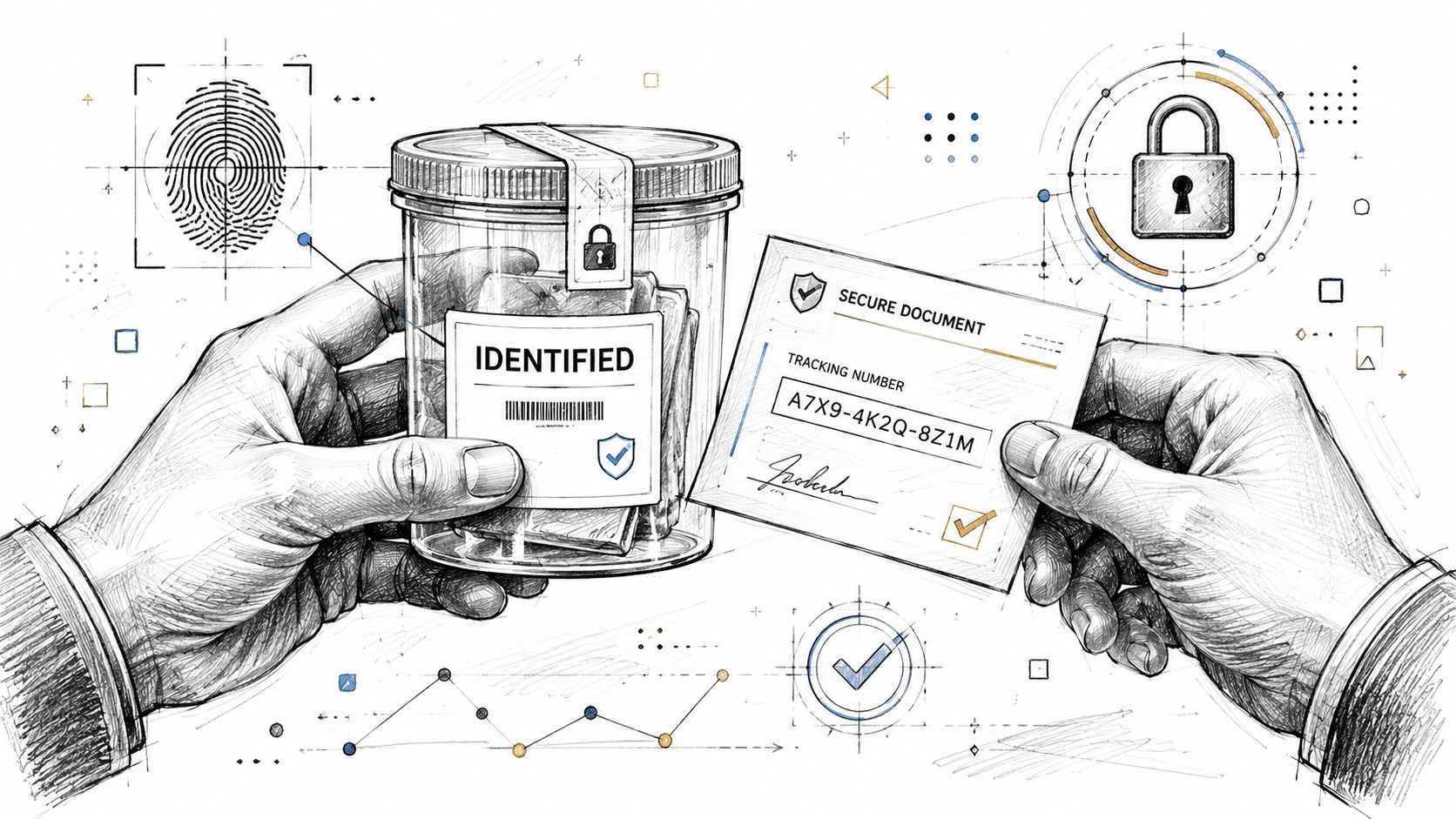
The answer is chain of custody, which means a documented record showing who had custody of the deceased, when custody changed, and how identity was maintained throughout. In forensic work, chain of custody is not optional. It is the paper and process trail that protects trust.
What chain of custody means
In cremation practice, a durable identification method stays with the deceased from the beginning of care through final return of the remains. A common example is a permanent metal ID tag assigned to the individual and matched to records, labels, and facility logs.
The general cremation reference on Wikipedia notes that post-cremation processing reduces cooled bone fragments to a fine powder weighing an average of 2.4 kg (5.3 lb) and that a permanent metal ID tag attached to the body ensures identification is maintained throughout. It also notes that families typically receive the final remains within 2 to 4 days after the cremation cycle, assuming permits and identification procedures are complete.
Why this matters to families
For a grieving family, identification may seem like a technical issue until they realize how much reassurance it carries. Every handoff matters. Every label matters. Every log entry matters.
A secure process usually includes:
- Consistent identification from removal through final packaging
- Matching documentation on the container, records, and release paperwork
- Restricted handling by authorized personnel only
- Final verification before remains are released to the family or funeral representative
For those who want a fuller explanation of how documented handling works in death care and forensic settings, our guide to chain of custody procedures gives more context.
In forensic pathology, identity is not based on memory or assumption. It is based on documented continuity.
That same principle helps cremation providers protect dignity and accuracy in a setting where the family must be able to trust the process without witnessing every step themselves.
Handling of Medical Implants and Final Remains
Families often ask what happens to the parts of the body that don't burn, and whether personal medical hardware stays with the cremated remains. This is one of the least explained parts of cremation, even though it matters to many people.
Implants removed before cremation
Some devices must be removed before cremation begins. The clearest examples are pacemakers and defibrillators, because battery-powered devices can become dangerous in the chamber. Their removal is a safety requirement.
This is one reason a pre-cremation review matters. Staff need enough information about the deceased's medical history to identify devices that require removal before the body enters the retort.
Metal that remains after cremation
Other metal items behave differently. Surgical screws, plates, pins, and joint replacements such as titanium hips usually do not disappear during cremation. They survive the heat and are separated later from the bone fragments.
As explained in this overview of how surgically implanted metal is handled after cremation, these items are removed by strong magnets or manual sorting. The same source states that they are generally sent for recycling, though whether they can be returned to the family can vary between providers.
That variation is important. If a family has cultural, ethical, or personal concerns about implants, they should ask the crematory in advance how that facility handles recovered metal.
A few practical points help clarify what families usually receive:
- Processed cremated remains are the bone fragments after cooling and mechanical processing
- Recovered surgical metal is usually separated before final packaging
- Container choice can be temporary or permanent, depending on the family's plans
- Postmortem care details may influence logistics before disposition, and our explanation of postmortem care definition may help if you're sorting out that earlier stage
The final remains are typically placed into a sealed bag and then into an urn or temporary container. What matters most is that the provider explains the process clearly before cremation happens, not afterward.
Water Cremation An Eco-Friendly Alternative
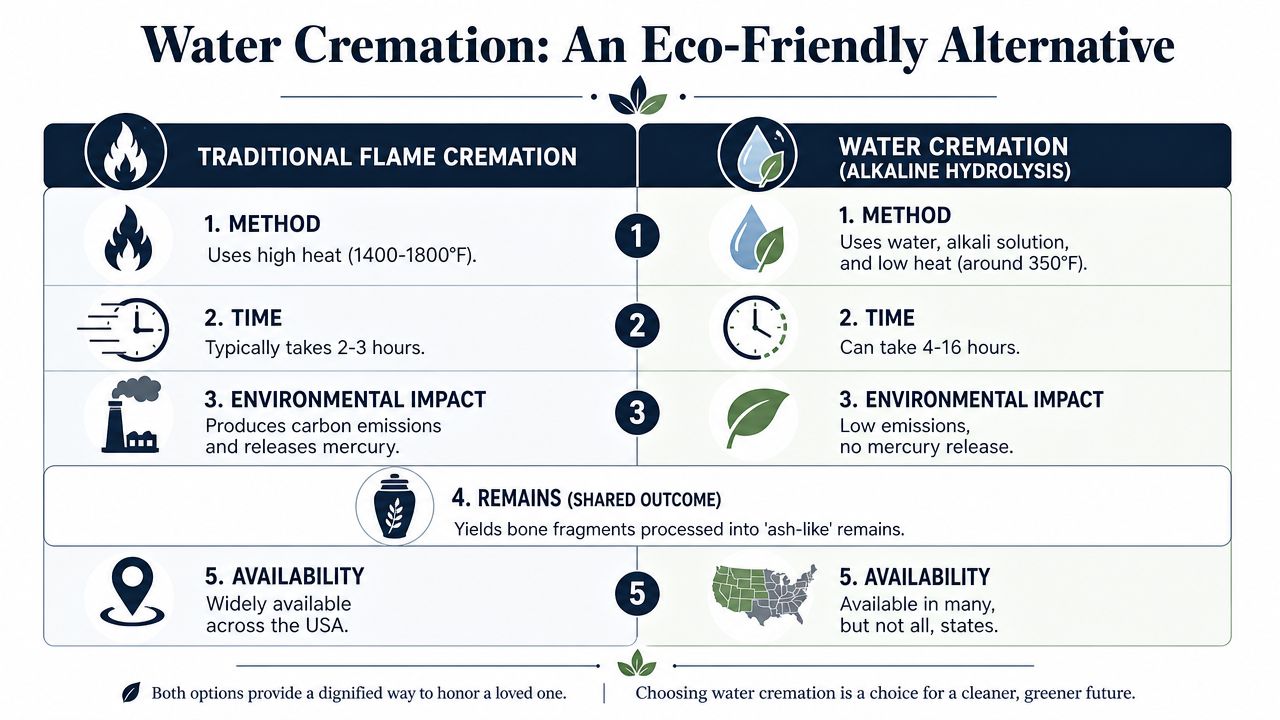
When people ask how cremation is done in USA, they usually mean flame-based cremation. But that is no longer the only option discussed in American death care. Another method, often called water cremation, uses alkaline hydrolysis rather than direct flame.
How it differs from flame cremation
In flame cremation, heat in a retort reduces the body to bone fragments. In water cremation, water, alkali, heat, and pressure break down soft tissue over time, leaving bone fragments that are later processed into remains similar in purpose to those from flame cremation.
The practical comparison looks like this:
| Method | Main process | End result |
|---|---|---|
| Flame cremation | High heat in a cremation chamber | Bone fragments processed into cremated remains |
| Water cremation | Alkaline hydrolysis using water and alkali | Bone fragments processed into cremated remains |
Families often ask whether the remains can still be placed in an urn, buried, or scattered. In general terms, yes. The memorial decisions after the process are similar.
Why more families are asking about it
The broader trend helps explain why alternatives are getting attention. The Cremation Association of North America reports that the national cremation rate reached 62.8% in 2025, up from 3.56% in 1960, and projects it could reach 78.4% by 2040. The same source describes environmental concerns and a preference for personalized services as part of that shift.
Water cremation is relevant in that context because some families want a method they view as gentler or more environmentally conscious. Availability still depends on state law and local provider access, so it is not an option everywhere.
Some families don't want the most traditional option. They want the option that best fits their values, their faith, and their questions about environmental impact.
For that reason, a careful funeral home or cremation provider should explain not only what is available, but also what is legally authorized in the state where the death occurred.
The Irreversible Step When to Consider a Private Autopsy
Cremation closes the door on one kind of answer. Once it has taken place, a full physical examination of the body can no longer be performed.
That is why timing matters when a family has unanswered concerns. If there is uncertainty about a sudden death, a disagreement about what happened in a hospital or care facility, a possible injury, or a need for independent confirmation, the window to act is before cremation.
Cause of death and manner of death
In plain language, cause of death is the disease, injury, or condition that started the chain of events leading to death. Manner of death is the classification of how the death occurred, such as natural, accident, suicide, homicide, or undetermined.
Those terms matter because families sometimes receive a preliminary explanation but still feel that the full picture is missing. A death certificate may answer part of the question, but not always all of it.
When families may want answers first
A private autopsy may be worth considering when:
- The death was unexpected and relatives still do not understand why it happened
- Medical care is being questioned and the family wants an independent review
- A hereditary condition may be involved and surviving relatives need clarity
- Litigation or insurance issues exist and documentation may later matter
- Family members disagree about whether the reported cause of death is complete
Every examination in our practice is performed by a forensic pathologist certified by the American Board of Pathology. For families seeking independent postmortem review before cremation, our Private Autopsies page explains the process. We also support counties through County Forensic Autopsies, and some families come to us through our Waterloo Mortuary Partnership when they are coordinating local logistics.
A private autopsy does not automatically prevent a later viewing or cremation. What it does is preserve the opportunity to seek answers before an irreversible step is taken.
For families and attorneys alike, that distinction can matter for peace of mind as much as for documentation.
Frequently Asked Questions About Cremation
Does cremation happen right after death
Usually not. Legal authorization, documentation, and any required waiting period come first. If the death requires medical examiner review, cremation must wait until that process is complete.
Is cremation done one person at a time
Licensed cremation practice is designed around individual identification and controlled handling. Families should expect the provider to explain its identification and release procedures clearly.
Are cremated remains really ashes
Not in the same sense as fireplace ash. The final material comes from bone fragments that are cooled and mechanically processed into a uniform, sand-like consistency.
Can a person still be viewed before cremation
In many cases, yes. Whether that is possible depends on the family's wishes, the condition of the body, and the arrangements made with the funeral home or mortuary.
What happens if the person had a pacemaker or artificial joint
Battery-powered devices such as pacemakers need to be removed before cremation because of heat-related safety risks. Artificial joints and other surgical metals usually remain through cremation and are separated afterward.
Can a private autopsy be done after cremation
No. Cremation is irreversible from a forensic examination standpoint. If there are unresolved questions about cause of death, families should consider an independent autopsy before cremation is authorized.
What does chain of custody mean in plain language
It means there is a documented record of who handled the deceased and the remains at each stage. In medical-legal settings, this protects identity, accountability, and trust.
Who should families call if they still have unanswered questions before cremation
If the question is about funeral arrangements, the funeral home or crematory should explain the process and authorization requirements. If the question is about cause of death, medical concerns, or whether an independent examination should happen before cremation, a forensic pathology practice is the appropriate next call.
If your family is facing cremation but still has unanswered questions about cause of death, timing, or whether an examination should happen first, Texas Autopsy Services is available to speak with you directly. We serve all 254 Texas counties, and every examination is performed by a board-certified forensic pathologist. In a moment that feels uncertain, clear information and careful guidance can help you make a decision you won't have to revisit with doubt.