July 10, 2026 · Texas Autopsy Services
Negative Biopsy Results: What to Do Next
Received negative biopsy results and have questions? Understand false negatives, what results mean, and vital next steps, including second opinions.
On this page
What to Do After Negative Biopsy Results
Summary
- A negative biopsy means the examined tissue did not show cancer, but it only speaks to the sample that was taken.
- For some procedures, negative results are common. About 80% of image-guided breast biopsies are benign, even when imaging looked suspicious, according to Loma Linda University Health's summary of National Cancer Institute and American Cancer Society data.
- Some biopsy types have meaningful false-negative risk. Prostate biopsies can have false-negative rates of 20% to 30%, and long-term follow-up after one negative biopsy still found later prostate cancer diagnoses.
- If symptoms, imaging, or lab findings still don't fit, it's reasonable to ask about follow-up imaging, repeat biopsy, or a second pathology review.
- When a death occurs and medical questions remain unresolved, a private autopsy in Texas may help clarify the cause of death and support legal or administrative review.
A family member waits by the phone for days, then hears the words they hoped for. The biopsy is negative. Relief comes first. Then a quieter thought follows. If the result is good news, why do the symptoms still feel real? Why does the scan still seem concerning? Why does the explanation still feel incomplete?
That uneasy reaction is more common than many people expect. A negative biopsy result is often reassuring, and in many cases it does reflect a benign process. Still, medicine depends on matching the pathology result with the full picture, including symptoms, imaging, and the reason the biopsy was done in the first place.
We work with families after death, not in place of a treating physician, but we see the consequences of uncertainty. Clear explanations matter. So does knowing when a result fits and when it deserves a second look.
The Phone Call You've Been Waiting For
The call often comes at an ordinary moment. Someone is driving home, folding laundry, finishing work, or sitting in a parking lot before going inside. Then the message arrives. The biopsy is negative. For a moment, the room feels lighter.

Then the details start catching up. The pain is still there. The lump is still there. The imaging still sounded worrisome. A blood test may still be abnormal. Families often tell us that this is the point when relief and confusion sit side by side.
A negative biopsy result is often good news. It can mean the suspicious area turned out to be inflammation, scar tissue, a benign growth, or another non-cancerous finding. But it doesn't always mean the story is over.
A reassuring result should reduce panic. It should not stop careful thinking.
That distinction matters because a biopsy examines tissue that was sampled, not every cell in an organ or every possible explanation for symptoms. If the result and the overall clinical picture line up, the negative result may be enough. If they don't line up, more review may be appropriate.
Families often struggle here because “negative” sounds final in everyday language. In medicine, it can be more limited than that. It means no malignancy was found in the material examined. It does not automatically answer every symptom, every image, or every later development.
What a Negative Result Means and What It Doesn't
A negative, or benign, biopsy result means the pathologist did not find cancer in the tissue that was removed and examined. That is reassuring news. It is also a precise statement with limits.
The key idea is this: a biopsy answers the question, "What was present in this sample?" It does not automatically answer, "Why are these symptoms still happening?" or "Does every part of this area look benign?"
What the report is actually saying
A pathology report works like a close inspection of one piece of a larger puzzle. The pathologist studies the cells on the slides that came from your biopsy. If those cells look benign, the report says so. It does not claim that every nearby cell was tested.
That detail matters because families often hear the word "negative" in everyday language and assume it means the whole problem has been ruled out. In medicine, the meaning is narrower. The report says no malignancy was identified in the material submitted for review.
If you have read the report and felt buried in unfamiliar terms, this guide on how to read a biopsy pathology report explains the wording in plain language.
What doctors compare the biopsy against
Clinicians do not read a biopsy result in isolation. They compare it with the reason the biopsy was done in the first place. That includes the scan, the exam, the symptoms, and how the abnormal area looked during the procedure.
Doctors often call this concordance. A simple way to understand it is: does the biopsy result fit the rest of the case?
| Situation | What it usually means |
|---|---|
| Benign biopsy and low concern on imaging or exam | Often reassuring, with routine follow-up |
| Benign biopsy and strongly suspicious imaging | More review, repeat biopsy, or another procedure may be recommended |
| Benign biopsy and symptoms that persist or worsen | The explanation may still be incomplete |
A family can feel confused here, and for good reason. A "good news" phone call can still leave an unanswered question if the lump, bleeding, pain, weight loss, or abnormal scan has not changed. That does not mean the result is wrong. It means the result may be incomplete for the problem you are still living with.
What a negative result does not guarantee
A benign biopsy does not guarantee that every nearby area is benign. It does not guarantee that the sample captured the exact spot causing concern. It does not guarantee that another condition, including a non-cancerous but still serious one, has been fully explained.
That is why follow-up can still be appropriate after a negative result. Careful doctors do this every day. They ask whether the biopsy answer and the clinical picture line up.
If they do, the result usually brings real reassurance.
If they do not, asking for a second review is reasonable. Families who are worried about whether a missed diagnosis could involve a preventable error sometimes also read resources from Mattiacci Law for medical malpractice, but the first step is usually medical clarification, not assuming wrongdoing.
The goal is not to create fear. The goal is to help you trust the result when it fits, and question it respectfully when it does not.
The Reality of False Negatives and Diagnostic Limits
A negative biopsy can feel like the case is closed. Sometimes it is. Sometimes it is more like checking one room in a house while the noise is still coming from somewhere else.
That is the hard truth behind a false negative. The biopsy report looks benign even though the concerning process was not fully captured or recognized. Families deserve to know this possibility exists, because “good news” can still clash with ongoing pain, bleeding, weight loss, a growing lump, or a scan that still looks suspicious.
Why a biopsy can miss a problem
A biopsy is a sample, not the whole story. Pathologists can only study the tissue they receive, and clinicians can only target the area they can reach or see clearly.
Several limits can lead to a false negative:
- Sampling error. The needle or instrument may pass next to the abnormal spot instead of through it.
- Technique and access limits. Some locations are small, patchy, deep, or difficult to target.
- Interpretation challenges. Early or subtle disease can be hard to distinguish from benign change, especially if the microscopic findings are faint.
- Mismatch between tests. A pathology result may look reassuring while imaging, lab results, or symptoms still point in another direction.
That mismatch matters. A biopsy should fit the whole picture, not just stand alone.
In breast core needle biopsy, false negatives are uncommon overall, but they do occur. A peer-reviewed review in PMC found false-negative results in approximately 2.2% of outcomes, with both radiologic targeting problems and pathology interpretation contributing. For a family waiting for certainty, that small percentage still matters if their case falls inside it.
If you are stuck in the uncertain middle ground, this discussion of inconclusive biopsy results and what they can mean can make the reasoning clearer.
Why one negative biopsy may not settle the question
The chance of a miss is different across body sites and biopsy methods. A biopsy of a large, irregular, or hard-to-reach area has different limits than a biopsy of a well-defined surface lesion. Some diseases also grow in scattered pockets, which means one sample can hit normal tissue while another sample a few millimeters away would show the answer.
Prostate biopsy is a well-known example. False negatives are recognized in prostate testing, which is why urologists often continue surveillance or consider repeat sampling when PSA, MRI findings, or the exam still raise concern. The lesson applies more broadly. A negative result can be accurate for the exact tissue tested and still fail to explain the patient's full problem.
This is often what families are sensing when they say, “The report says benign, but something still feels wrong.”
They may be right to ask more questions.
When concern should stay on the table
Persistent red flags deserve a second look, especially when the biopsy result does not line up with the rest of the evidence. Doctors may revisit the imaging, review whether the correct target was sampled, ask for another pathologist to review the slides, or recommend a repeat biopsy from a different area.
That is not overreacting. It is careful medicine.
When families begin to wonder whether a delayed diagnosis caused avoidable harm, they may need both medical clarification and legal guidance. A general overview of Mattiacci Law for medical malpractice can help readers understand the kinds of medical error issues lawyers may review. Legal information does not answer the medical question by itself, but it can help families organize records and ask sharper questions when trust has been shaken.
Navigating Your Next Steps and Follow-Up Care
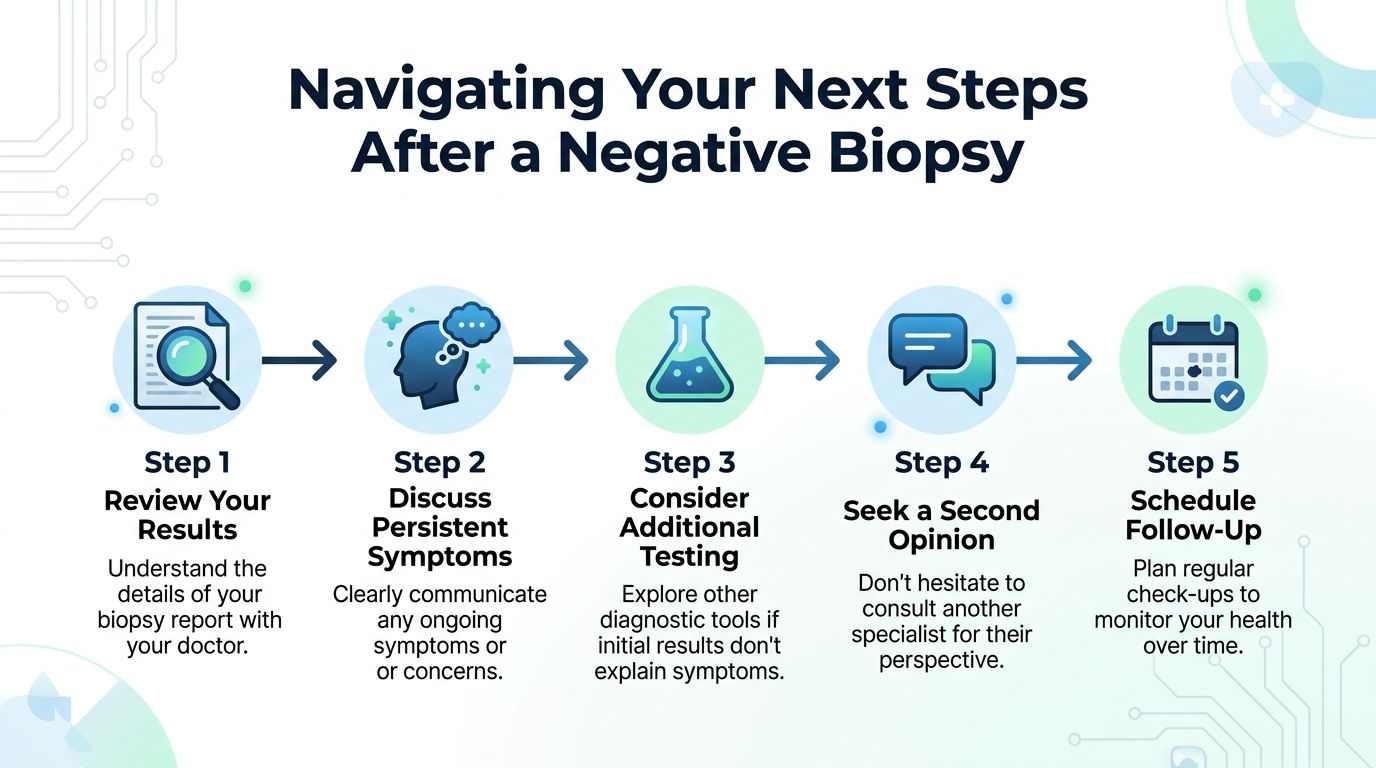
Once the initial relief or confusion settles, individuals often want a plan. That is where many medical conversations fall short. Patients are told the biopsy is negative, but they aren't always told what happens if the symptoms continue.
Common follow-up paths
The next step depends on why the biopsy was done and whether the result matches the rest of the evidence. Common paths include:
Observation with a schedule
Sometimes the safest choice is follow-up over time. That may include repeat visits, repeat labs, or repeat imaging to watch for change.More imaging
If the pathology and scan don't fit together, additional imaging may help show whether the suspicious area has changed or whether a different target should be sampled.Repeat biopsy
This can be appropriate when suspicion remains high. In prostate care, this issue is well recognized. After initial sextant biopsies, up to 13% of cancers can be missed, and authorities now recommend a minimum of 12 cores with a low threshold for repeat biopsy when concern remains high, as discussed by Renal & Urology News.Additional testing
Some patients may need other laboratory markers or different diagnostic approaches, depending on the organ system involved.
What to write down before the next appointment
Families often remember only part of the result call. Writing down questions before the next discussion can make the visit more productive.
What did the biopsy sample
Ask where the tissue came from and whether that location matches the suspicious area seen on imaging.Does the result fit the symptoms
If pain, bleeding, weight loss, or other concerns are continuing, say that directly and ask how those symptoms change the plan.What is the threshold for repeating testing
A time-based plan matters. Ask what specific change would trigger another scan or another biopsy.Who is coordinating follow-up
Make sure one clinician is clearly responsible for next steps.
Keep a short timeline with dates of imaging, procedures, symptoms, and calls. That record helps when different specialists are involved.
The emotional side of waiting is real too. Medical uncertainty often causes as much distress as a confirmed diagnosis. Some families find practical value in structured coping with stress methods while they move through repeat appointments and testing. Emotional support does not replace medical follow-up, but it can make that period more manageable.
How to Advocate for Yourself and Request a Second Opinion
When negative biopsy results don't match the larger picture, speaking up is not overreacting. It is part of careful care.
Questions that move the conversation forward
The quality of the result discussion matters. When a biopsy result is unexpected or contradicts symptoms, the conversation should come from the treating clinician who can explain the full context. That point is emphasized in this discussion of who should deliver biopsy results.
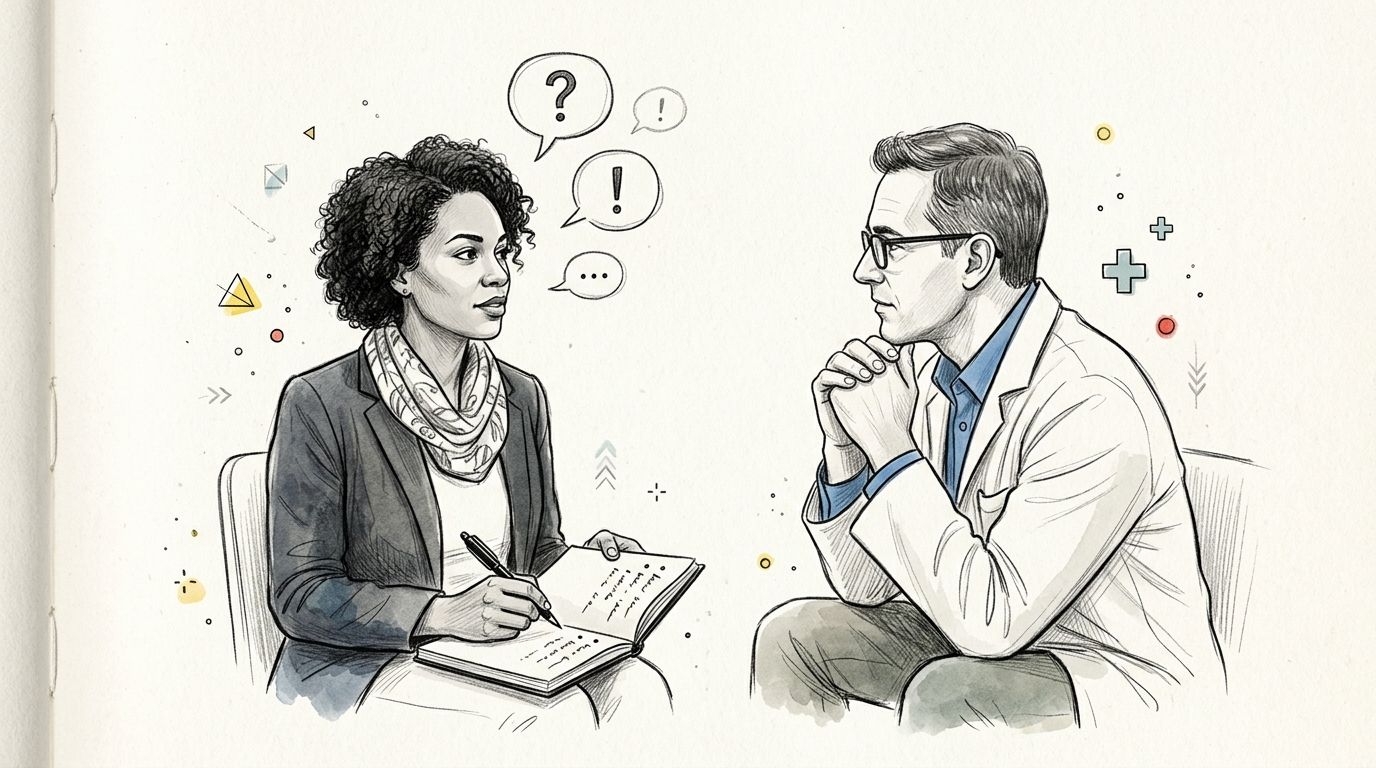
A second visit is often more useful than the first result call. Bring notes and ask direct questions such as:
- Did the pathology result match the imaging findings
- Was the sampled tissue taken from the exact area that looked suspicious
- If my symptoms continue, what is our next step
- At what point would you recommend repeat imaging or repeat biopsy
- Should my slides be reviewed by another pathologist
If you are unsure how to organize records for a review, this page about requesting an expert case review outlines the kinds of materials that are commonly gathered when a case deserves another look.
How a second pathology review works
A second opinion on pathology is a routine part of medical care, especially when findings are unexpected, treatment decisions are significant, or symptoms remain unexplained.
The process usually includes:
| Step | What happens |
|---|---|
| Request records | The patient or authorized representative asks for the pathology report and related medical records |
| Transfer slides | The original glass slides or tissue blocks are sent to another pathology service for review |
| Correlate findings | The reviewing doctor compares pathology with imaging and clinical history |
| Issue opinion | A written second-opinion interpretation is provided |
Here is a short video resource that may help patients think through what follow-up conversations should cover.
A second opinion is not an accusation. It is a way to test whether the result, the symptoms, and the treatment plan truly fit together.
That distinction matters for families who worry they will offend a doctor. In good medical practice, a thoughtful second look is not a threat. It is part of quality control.
When Forensic Pathology Provides the Final Answer
For living patients, uncertainty after negative biopsy results is handled through clinical follow-up, repeat sampling, and second opinions. After death, the path changes. The question becomes whether a postmortem examination can clarify what medicine did not fully resolve during life.
Plain-language forensic terms
A few terms help families understand this process:
- Cause of death is the disease or injury that led to death.
- Manner of death is the classification of how the death occurred, such as natural, accident, suicide, homicide, or undetermined.
- Chain of custody means documented control of the body, specimens, and records so the evidence remains identifiable and reliable.
In Texas, private autopsies are legally permissible for decedents who do not otherwise require a statutory autopsy, and they are available statewide with in-house licensed transport and chain of custody, as described by Forensic Medical of Texas on requesting an autopsy. The legal framework also intersects with Texas Funeral Service Commission requirements and Texas Health & Safety Code provisions, including Chapters 711, 716, and 651.
When an independent autopsy becomes important
An independent autopsy may be appropriate when a county medical examiner declines jurisdiction, or when an official investigation ends without a clear answer. In Texas, the legal next-of-kin may authorize a complete or limited examination in those situations, as explained by Texas Autopsy Services private autopsy information.
For families and attorneys, the value is often twofold. First, the examination may identify natural disease, medical complications, or inherited conditions that were not fully recognized before death. Second, the written findings may matter in legal or insurance settings. Autopsy reports from board-certified forensic pathologists can be court-admissible and may include expert testimony when needed, as noted through the Waterloo Mortuary Partnership pathology page.
When legal concerns involve delayed diagnosis, treatment decisions, or possible negligence, families may also want a basic explanation of medical malpractice laws in Texas. A lawyer addresses legal deadlines and claims. A forensic pathologist addresses the medical evidence after death. Those roles are different, but they can intersect.
FAQ
Can a negative biopsy still be wrong
Yes. A negative result can be a false negative if the sample did not capture the abnormal area or if the findings do not match the clinical picture. The risk depends on the organ and the biopsy method.
Does a benign result mean I definitely do not have cancer
Not always. It means the examined tissue did not show cancer. If symptoms, imaging, or lab results remain concerning, doctors may recommend more follow-up.
Who should explain unexpected biopsy results
The treating physician, nurse practitioner, or physician assistant involved in the case should provide context when the result is unexpected or does not fit the symptoms.
When should someone ask for a second opinion
A second opinion is reasonable when the result conflicts with symptoms, imaging remains suspicious, treatment decisions are significant, or the explanation still feels incomplete.
When does a private autopsy make sense in Texas
It may make sense when a county medical examiner declines the case or when a family still lacks a definitive cause of death after the official process ends.
If a death has occurred and your family still does not have clear answers, Texas Autopsy Services is available to discuss the autopsy process, legal next-of-kin authorization, chain of custody, and what an independent examination can and cannot determine. Every examination is performed by a forensic pathologist certified by the American Board of Pathology. We serve all 254 Texas counties with direct communication, in-house licensed transport, and a respectful, confidential process.