August 18, 2026 · Texas Autopsy Services
Laboratory Analysis Services Explained for Texas Families
Learn how laboratory analysis services support private autopsies in Texas, from toxicology and histology to chain of custody, turnaround, and costs.
On this page
- What Laboratory Analysis Services Mean in a Postmortem Context
- The Four Core Lab Disciplines Used in Forensic Autopsies
- Sample Collection and Chain of Custody in Texas
- Turnaround Times and Cost Factors Families Should Understand
- How Results Are Interpreted Into Cause and Manner of Death
- Requesting Services, Second Opinions, and Working With Texas Autopsy Services
- Common Misconceptions About Private Autopsies and Lab Testing
The global clinical laboratory services market was valued at USD 291.01 billion in 2025 and is projected to reach USD 545.79 billion by 2034, but postmortem laboratory analysis services have a different purpose: they combine toxicology, histology, microbiology, and genetic testing under strict chain of custody. Texas Autopsy Services runs these workflows in-house from Elgin, with flat-rate pricing and 24/7 availability.
A family may be waiting for answers after an unexpected death, while an attorney is trying to determine whether an existing report is complete. A hospital laboratory may have tested a person during treatment, but those results don't always answer the questions that arise after death. Postmortem testing examines specimens in a medical-legal setting, where collection, preservation, documentation, interpretation, and reporting all matter.
Texas Autopsy Services is an independent private autopsy and forensic pathology practice based in Elgin, Texas. We serve families, attorneys, medical professionals, agencies, and county officials across all 254 Texas counties. Every examination is performed by a forensic pathologist certified by the American Board of Pathology, and our team coordinates licensed transport, specimen handling, laboratory analysis, and written reporting with respect for the deceased and the people seeking clarity.
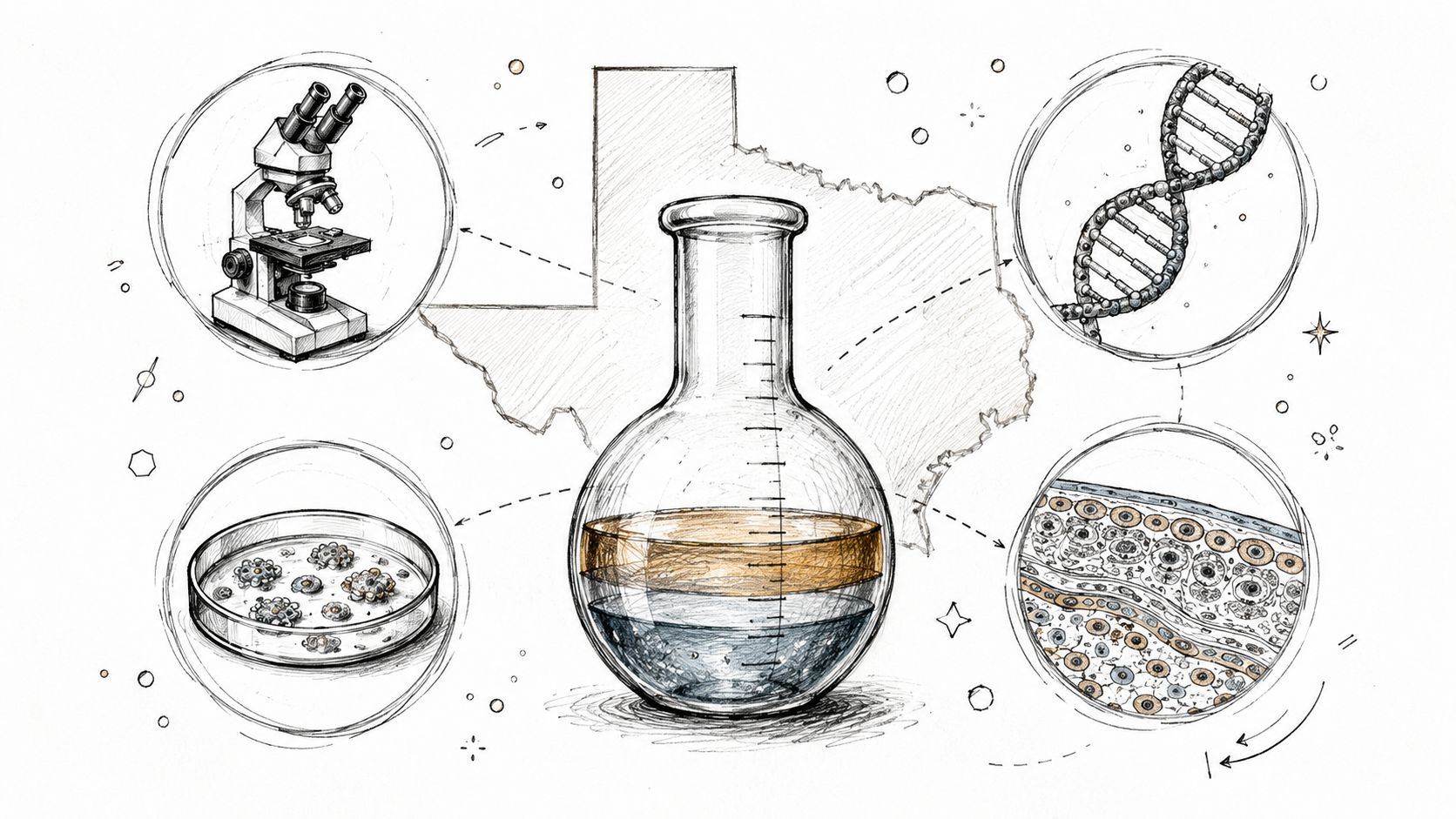
- Postmortem laboratory analysis may include toxicology, histology, microbiology, and genetic testing.
- Cause of death identifies the disease, injury, or condition that began the fatal sequence. Manner of death describes the classification, such as natural, accident, suicide, homicide, or undetermined.
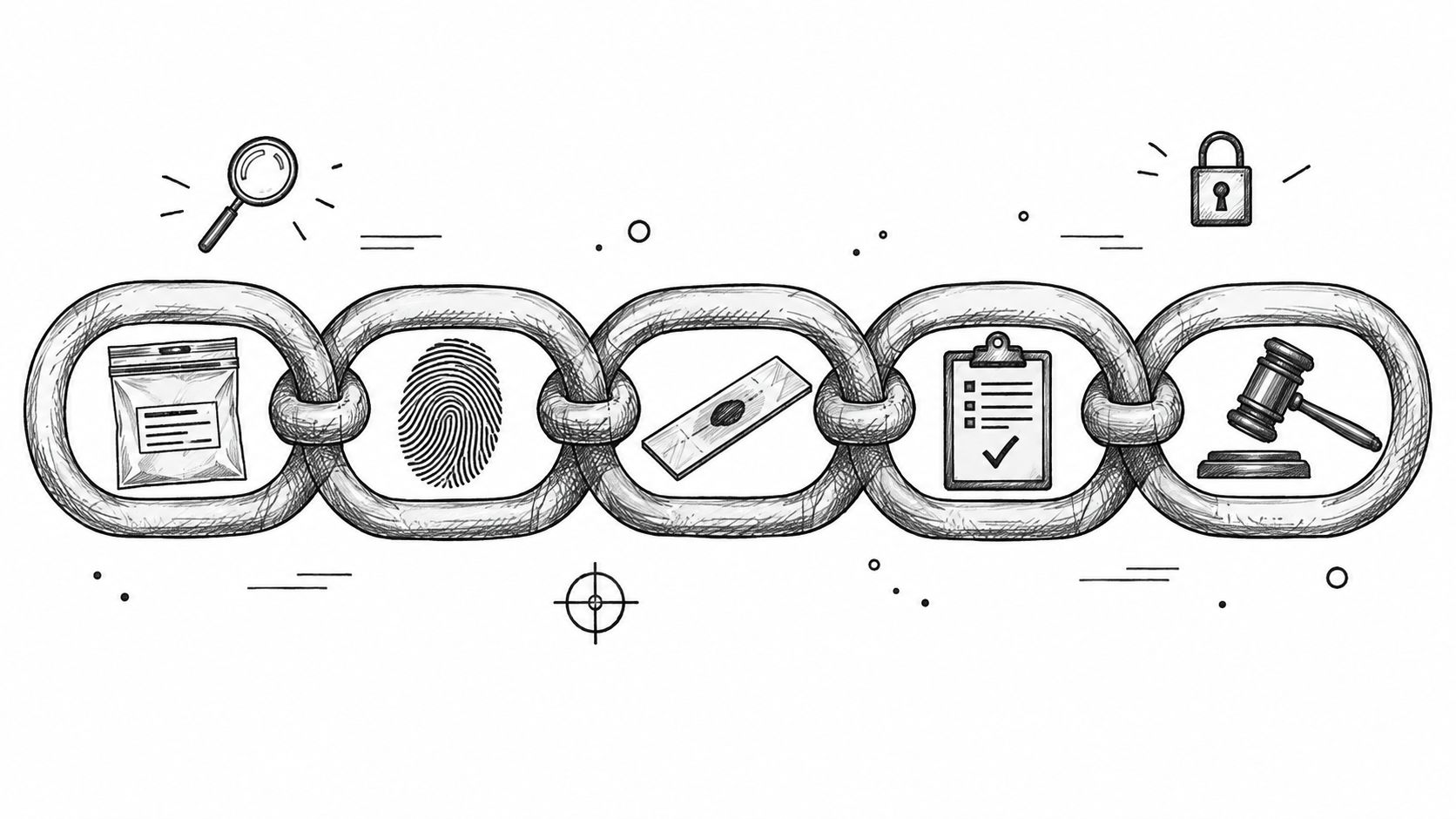
- Chain of custody documents who collected, sealed, transported, received, tested, and stored each specimen.
- Texas law provides specific safeguards for bodies and anatomical specimens, including labeling, transport records, and chain-of-custody documentation under Texas Health and Safety Code Chapter 691.
- An independent autopsy or second-opinion review can help clarify an incomplete, disputed, or difficult cause-of-death determination.
What Laboratory Analysis Services Mean in a Postmortem Context
Laboratory analysis services are the tests performed on bodily fluids, tissues, and other specimens to help explain a death. They run alongside the physical autopsy, not in place of it. The pathologist first considers the circumstances, medical history, scene information, external findings, and internal findings. Laboratory results then add another layer of evidence.
Routine hospital testing is designed to guide care for a living patient. A clinician may order a blood count, metabolic panel, culture, or drug screen to support immediate treatment. Postmortem testing has a different setting and purpose. The person is deceased, the samples may change after death, and the findings may later be reviewed by attorneys, courts, insurers, public agencies, or family members.
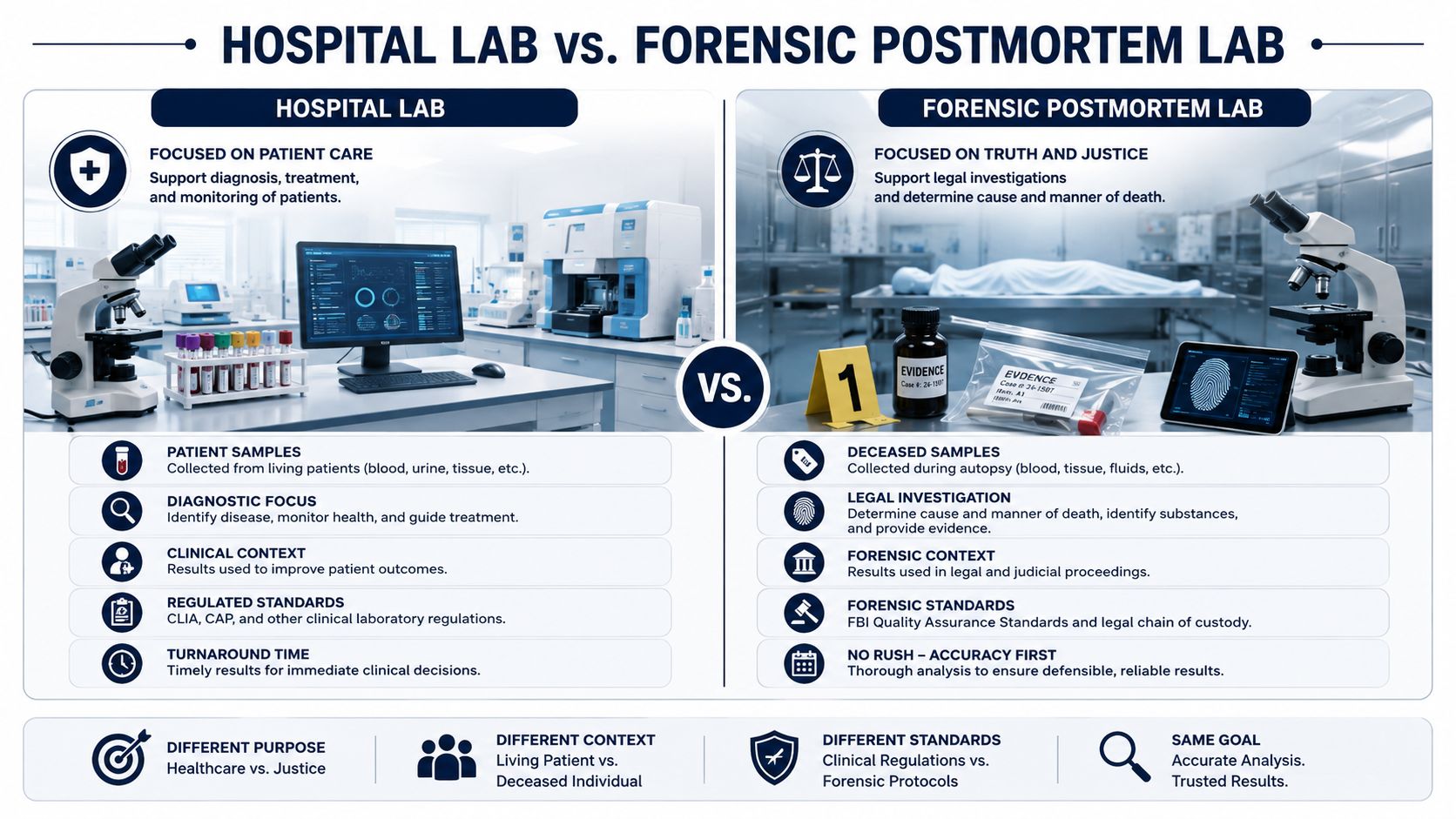
How postmortem testing differs from hospital testing
Postmortem specimens require careful selection. Blood, urine, vitreous fluid, tissue, bone, hair, or other material may be appropriate depending on the case. The interpretation also changes because circulation has stopped, decomposition may occur, medications may redistribute between tissues, and treatment before death may affect the specimen.
| Discipline | Question It Answers | Typical Sample | When It Is Indicated |
|---|---|---|---|
| Toxicology | Are drugs, alcohol, poisons, or metabolites present, and how might they relate to death? | Blood, urine, vitreous fluid, tissue | Suspected overdose, poisoning, impairment, medication effects, or unexplained death |
| Histology | What microscopic disease or injury is present in the organs? | Fixed tissue sections | Sudden death, suspected heart disease, lung disease, inflammation, or subtle injury |
| Microbiology | Is there evidence of infection that could have contributed to death? | Blood, tissue, cerebrospinal fluid, or other specimens | Suspected sepsis, meningitis, pneumonia, or other infectious process |
| Genetic testing | Could an inherited condition, identity question, or molecular finding help explain the death? | Blood, tissue, or preserved DNA material | Sudden unexplained death, identity concerns, or suspected hereditary disease |
Texas Autopsy Services conducts examinations from its Elgin facility and coordinates services statewide. The practice's work operates within the broader Texas legal framework, including Texas Health and Safety Code Chapters 691, 711, 716, and 651, as well as applicable Texas Funeral Service Commission requirements. Those rules address matters such as handling, disposition, and professional responsibilities. They don't turn a laboratory result into a conclusion by themselves. A board-certified forensic pathologist must evaluate the evidence as a whole.
The Four Core Lab Disciplines Used in Forensic Autopsies
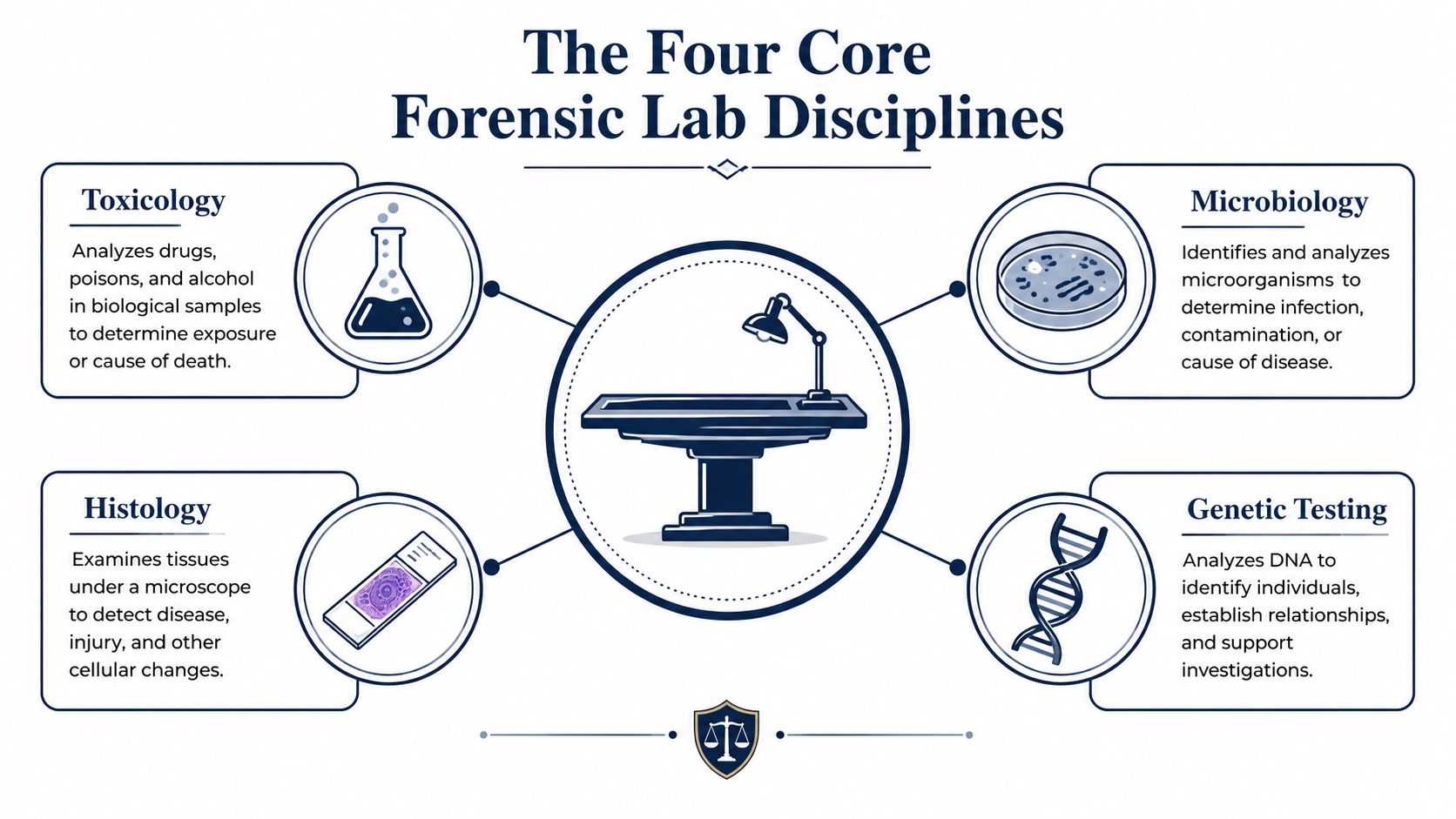
A complete forensic workup rarely depends on one test. Each discipline answers a different question, and the findings become useful when they agree, explain one another, or expose an important conflict.
Toxicology
Toxicology looks for drugs, alcohol, poisons, and metabolites. A report may identify a substance, measure its concentration, and describe whether the result is consistent with therapeutic use, impairment, toxicity, or a potentially fatal exposure. Interpretation is not a simple comparison between a number and a fixed fatal threshold.
After death, substances can move between organs and blood. This process, known as postmortem redistribution, means that a detected concentration must be considered alongside the specimen site, decomposition, medical history, prescription information, tolerance, and autopsy findings. Toxicology may support a cause of death, contribute to it, or show an exposure that isn't responsible for the death.
Families and attorneys can find a plain-language explanation of this discipline in our guide to toxicology testing.
Microbiology
Microbiology examines specimens for organisms or other evidence of infection. Blood, tissue, and cerebrospinal fluid may be collected when the circumstances or autopsy findings raise concern about sepsis, meningitis, pneumonia, or another infectious process.
A positive culture doesn't automatically prove that infection caused death. Contamination, postmortem bacterial growth, specimen quality, and the difference between colonization and invasive disease must be considered. Histology can show whether tissue contains an inflammatory response or an injury pattern that supports the laboratory result.
Histology
Histology is the microscopic examination of tissue. A heart that appears only mildly abnormal during gross examination may show important microscopic disease. Similarly, lung tissue, brain tissue, liver, kidney, and other organs may reveal inflammation, scarring, hemorrhage, infection, or injury that isn't visible to the unaided eye.
The tissue is preserved, processed, placed on slides, and reviewed by qualified professionals. Histology takes time because the specimen must be prepared before it can be interpreted. Its value often lies in showing a pattern rather than a single isolated finding.
Genetic testing
Genetic testing examines DNA or other molecular material. It may assist with identity questions, clarify a suspected inherited condition, or help evaluate a sudden unexplained death when an inherited cardiac or metabolic disorder is considered.
Genetic results require careful communication. A variant may be significant, uncertain, or unrelated to the death. The finding must be interpreted with the autopsy, medical history, family history, and available clinical records. Testing is generally ordered when it has a defined forensic or medical purpose, not solely because a sample is available.
Sample Collection and Chain of Custody in Texas
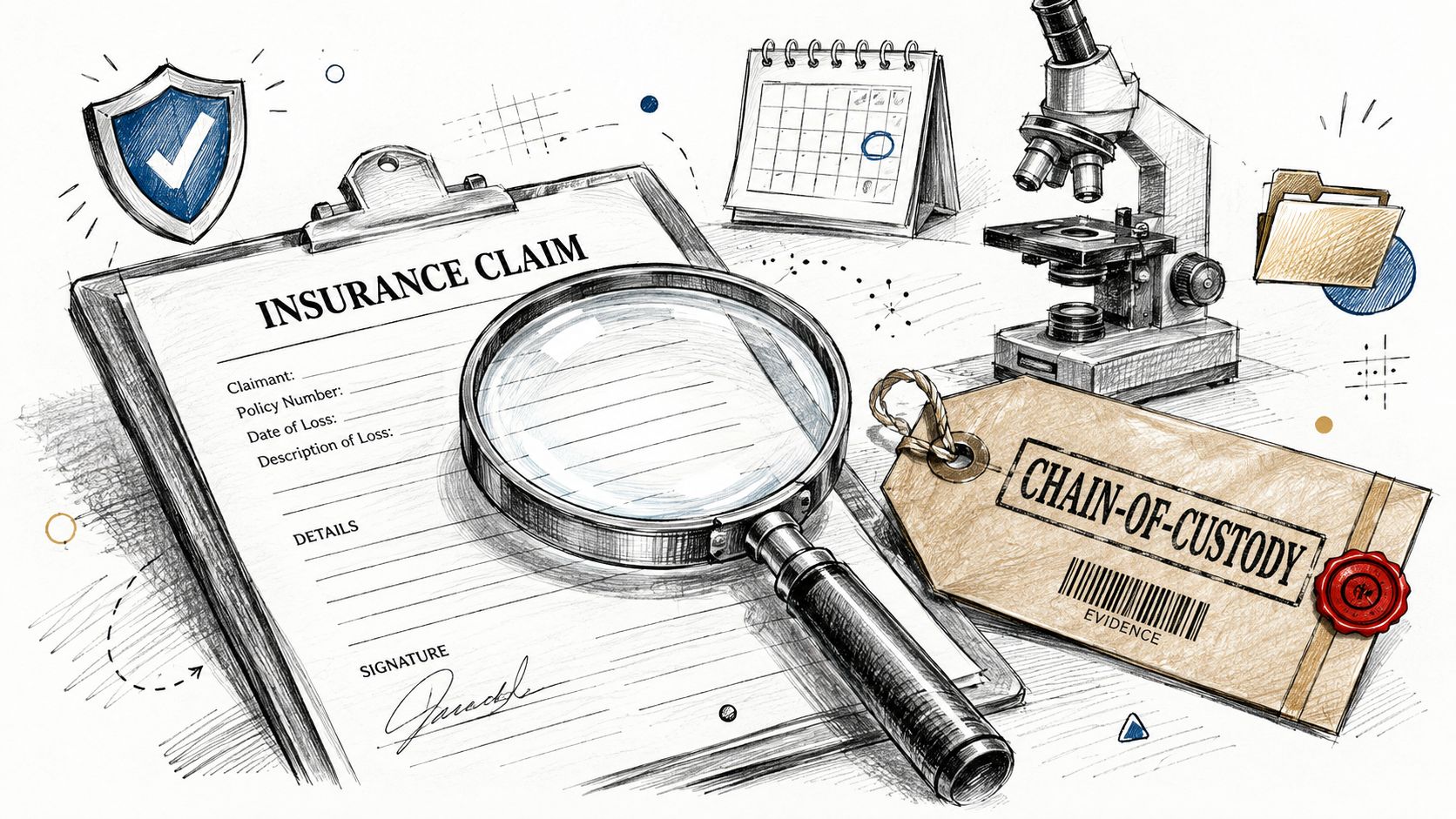
Chain of custody is the documented history of a specimen from collection through final reporting. It records what was collected, who handled it, how it was sealed, where it was transported, who received it, and what happened during testing and storage.
Texas Health and Safety Code Chapter 691 requires each body or anatomical specimen to be properly transported, labeled as human tissue, and tracked with a chain-of-custody form. The sender and receiver must keep records in a way that allows inspection by the Texas commission or a district or county attorney at any time. These requirements protect both the dignity of the deceased and the reliability of the evidence.
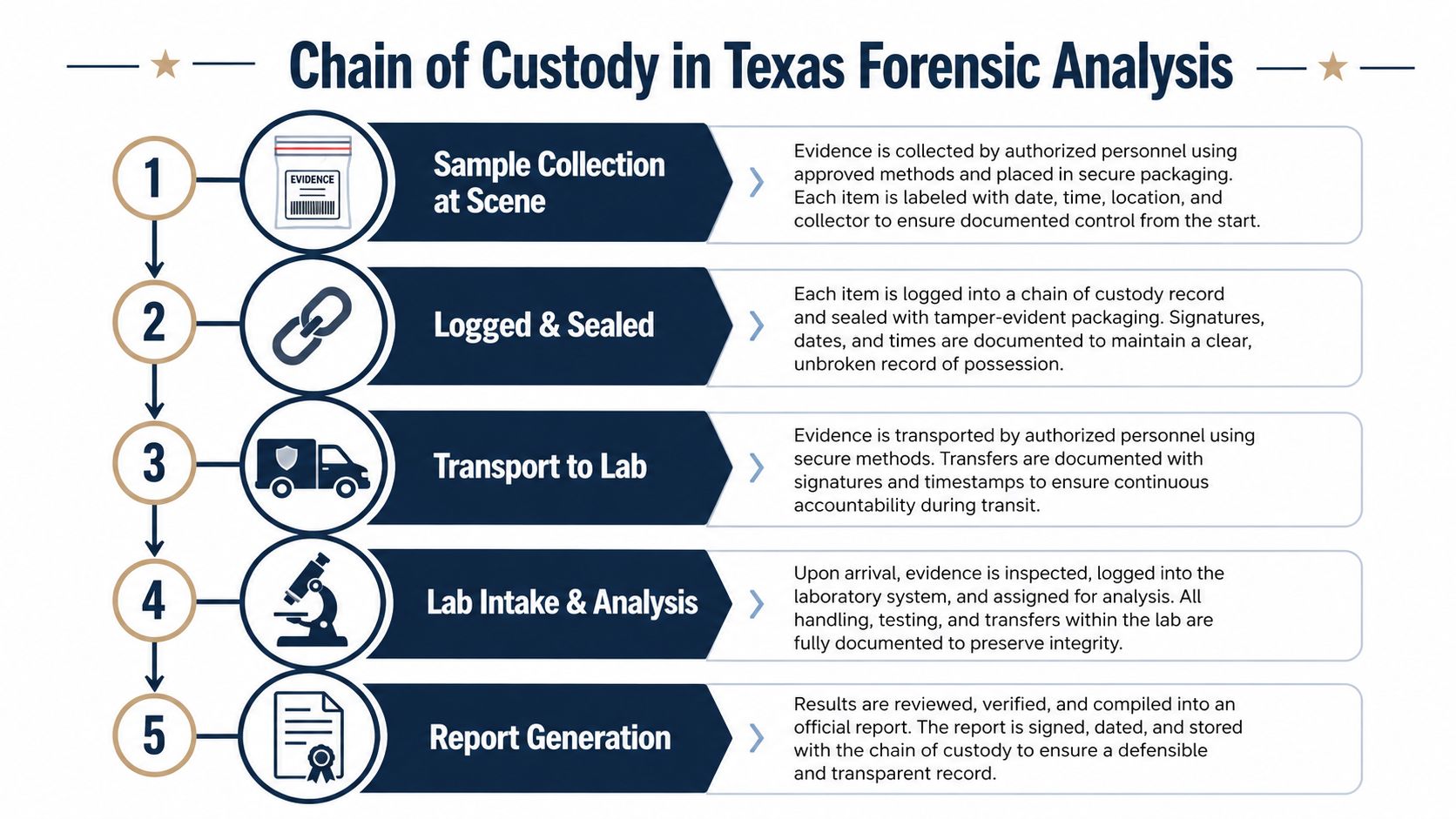
The documented path of a specimen
The process begins when the pathologist or trained professional selects specimens based on the case questions. Each container is labeled, sealed, and matched to the case documentation. The team then records the transfer to secure storage or transport.
Texas Autopsy Services uses in-house licensed transport and coordinates services across all 254 Texas counties. Secure, temperature-controlled storage helps preserve specimens and bodies while examination and laboratory work proceed. The exact handling requirements depend on the specimen and the testing method.
A practical chain-of-custody sequence includes:
- Collection: The specimen is collected during the examination and identified with case information.
- Sealing: The container is sealed so unauthorized access is apparent.
- Transfer: A documented person or service transports the specimen under controlled conditions.
- Laboratory intake: The receiving laboratory checks the seal, labeling, condition, and accompanying records.
- Analysis and reporting: Testing, storage, transfers, and final disposition are recorded.
Practical rule: A specimen without a clear documented history may be challenged even when the laboratory result itself appears technically sound.
A missed signature, an unexplained storage interval, or a label that doesn't match the submission form can create questions about identity and integrity. That doesn't automatically make a result false, but it can weaken confidence in the evidence and complicate testimony. Our chain-of-custody procedures are designed to keep each transfer traceable.
Privacy is a separate protection. HIPAA-compliant reporting limits access to sensitive medical information and supports careful communication with authorized family members, attorneys, agencies, and other appropriate recipients. Privacy protects information. Chain of custody protects evidentiary integrity. A sound forensic workflow requires both.
Turnaround Times and Cost Factors Families Should Understand
Laboratory analysis doesn't always finish when the physical examination ends. A preliminary impression may be available sooner, but a final opinion may require toxicology, tissue processing, special stains, microbiology, molecular testing, record review, or consultation about conflicting findings.
Toxicology can take longer than a gross examination because specimens may require extraction, instrument analysis, confirmation, and interpretation. Histology also requires fixation, processing, slide preparation, and microscopic review. Specialized molecular testing or rare toxicology panels may require referral to an outside laboratory, which adds another stage to the process.
For many cases, families hear that most cases are completed within 24–48 hours, but that statement should be understood as a general service expectation rather than a guarantee. Final laboratory-confirmed results may take longer, particularly when the workup includes specialized testing. Complexity, specimen condition, the number of assays, laboratory capacity, and the need for additional records all influence completion.
What affects the cost
Texas Autopsy Services uses flat-rate, all-inclusive pricing for its private autopsy services. Depending on the engagement, the bundled service may include transport, secure storage, imaging, standard laboratory work, and reporting. Families and attorneys should confirm the exact scope before authorization because specialized send-out tests can create additional charges.
Ask for clear answers about:
- Included testing: Confirm which toxicology, histology, microbiology, or molecular services are part of the quoted examination.
- Transport and storage: Determine whether licensed transport and secure storage are included.
- Specialized analysis: Ask whether rare toxicology panels or molecular testing could require separate laboratory fees.
- Reporting: Clarify whether the written report, records review, and communication about results are included.
- Additional work: Establish how amended reports, supplemental testing, or testimony are handled.
A transparent estimate doesn't mean every case costs the same. It means the family or referring attorney can understand the expected scope before work begins.
How Results Are Interpreted Into Cause and Manner of Death
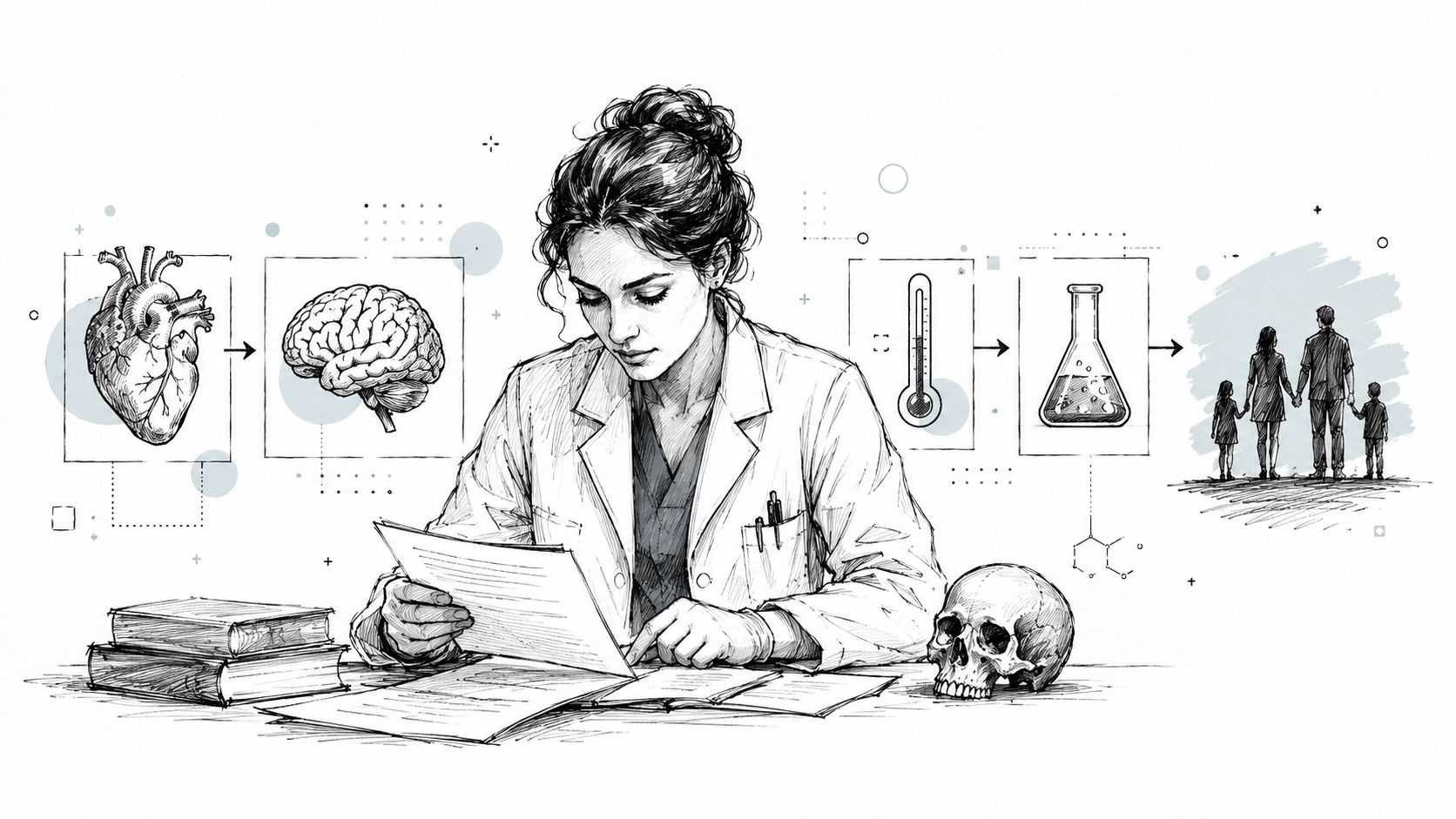
A laboratory report contains findings. It doesn't independently announce the cause of death. The forensic pathologist interprets the results with the history, circumstances, autopsy findings, imaging, microscopic examination, and other available evidence.
Cause of death is the disease, injury, or condition that began the fatal sequence. For example, a fatal injury may be the cause even when several physiological events occurred afterward. Manner of death is the classification applied to the circumstances, generally natural, accident, suicide, homicide, or undetermined.
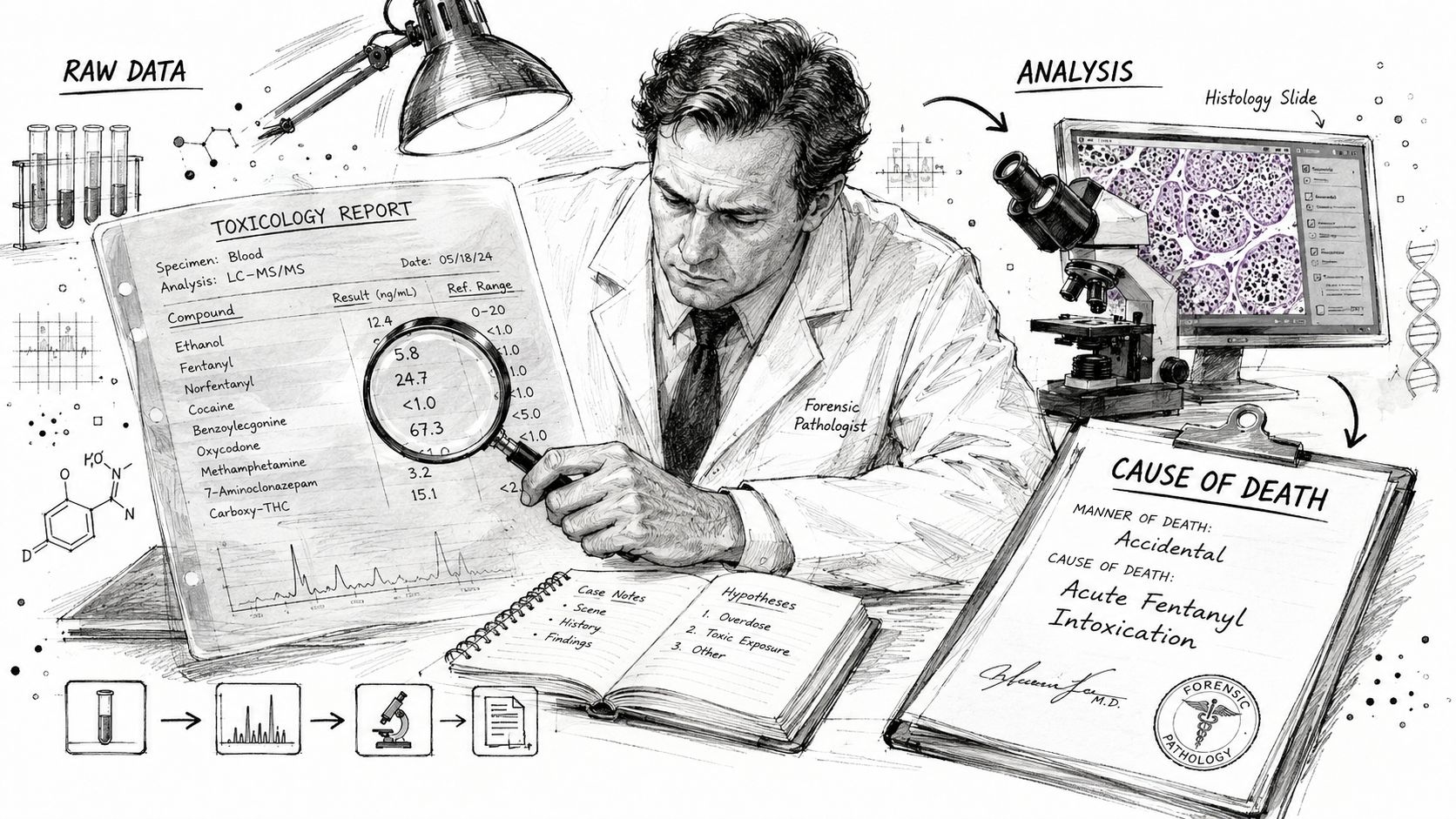
Why context controls interpretation
Consider an unexpected death at home with mild coronary atherosclerosis and a low but non-zero vitreous glucose result. Neither finding, standing alone, establishes a cause of death. The pathologist would consider the medical history, scene circumstances, heart examination, histology, toxicology, other laboratory findings, and whether the complete evidence supports a particular disease process.
The phrase consistent with is not the same as diagnostic of. “Consistent with” means the finding can fit a conclusion but may not prove it alone. “Diagnostic of” indicates that the finding has a more specific and decisive relationship to the diagnosis. Careful reports use this language deliberately.
A toxicology concentration is evidence to interpret, not a verdict separated from the rest of the case.
A board-certified forensic pathologist must explain how the evidence supports the final opinion and identify meaningful limitations. That explanation matters in court because attorneys, judges, and jurors need to distinguish a measured laboratory finding from the medical-legal conclusion drawn from it. Families also deserve that distinction in plain language.
Texas Autopsy Services provides additional background on this reasoning in how a coroner determines cause of death. This information is educational and isn't a substitute for a case-specific forensic opinion.
Requesting Services, Second Opinions, and Working With Texas Autopsy Services
A private autopsy or second-opinion autopsy may be appropriate when the original report doesn't explain the death, the family has unresolved medical questions, litigation is being considered, or a medical examiner declined to take the case. A review may involve the existing autopsy report, toxicology, histology, photographs, imaging, medical records, death-scene information, and other available materials. Sometimes a records review is appropriate. In other cases, an examination or additional testing may be necessary.
The first practical step is direct communication with the team at (806) 230-1889. We gather the basic facts, identify the location of the deceased, discuss authorization, and determine whether the requested work is a new examination, a second opinion, or a county forensic service.
What coordination usually involves
Our team can coordinate:
- Transport: In-house licensed transport across all 254 Texas counties, including one-way and round-trip arrangements.
- Storage: Secure, temperature-controlled storage at the Elgin facility when required.
- Examination planning: Selection of the appropriate autopsy, review, or laboratory work based on the case questions.
- Laboratory coordination: Submission of specimens to appropriate forensic laboratories and tracking of results.
- Reporting: A written report intended to explain the findings and support medical-legal review.
- Communication: Direct contact with the team rather than a call center or intermediary.
Every examination is performed by a forensic pathologist certified by the American Board of Pathology. The American Board of Pathology requires applicants for forensic pathology certification to hold AP/CP or AP certification, complete 12 months of training in an ACGME-accredited forensic pathology program, and have at least 30 autopsies by the time the certification application is submitted. These requirements are described by the American Board of Pathology.
We also coordinate pathology support through the Waterloo Mortuary Partnership when appropriate. Flat-rate, all-inclusive pricing helps families understand the expected scope, while specialized testing or unusual logistics should be discussed before authorization.
Common Misconceptions About Private Autopsies and Lab Testing
Private autopsy services are sometimes misunderstood because families receive information from funeral homes, government offices, hospitals, and attorneys at the same time. The following distinctions can help prevent avoidable confusion.
A private autopsy automatically delays funeral arrangements
Transport and storage must be coordinated carefully, but a private examination does not prevent funeral planning. The timing depends on authorization, the condition and location of the body, the requested examination, and the needs of the receiving funeral home. Families should communicate their religious, cultural, cremation, burial, or memorial preferences as early as possible.
Private chain of custody is weaker than government chain of custody
Chain of custody depends on documentation and controlled handling, not on whether a service is public or private. Texas Health and Safety Code Chapter 691 requires proper transport, human-tissue labeling, chain-of-custody forms, and records that can be inspected by authorized officials. A private practice must still maintain an auditable path for each specimen.
A second opinion attacks the original pathologist
A second-opinion review isn't automatically adversarial. It can identify unclear terminology, explain the limits of testing, reconcile conflicting findings, or determine whether additional material should be reviewed. An independent opinion should address the evidence rather than criticize a person.
Toxicology gives a simple yes-or-no answer
Toxicology can identify substances without proving that they caused death. Concentration, specimen type, postmortem redistribution, medical history, tolerance, decomposition, and other findings all affect interpretation. A detected drug may be incidental, contributory, or causal.
Histology and microbiology are optional extras
These disciplines aren't needed in every case, but they can answer questions that gross examination and toxicology cannot. Histology may identify microscopic disease, while microbiology may help evaluate infection. The pathologist orders testing based on the circumstances and examination findings.
Texas law also establishes specific procedures for certain deaths. A justice of the peace may seek the opinion of a county health officer or physician about whether an autopsy is needed, and must order one in specified situations, including when it is necessary to determine the cause of death or when a child younger than six dies unexpectedly or from abuse or neglect. Texas law also bars an autopsy order for deaths caused by certain infectious diseases, including Asiatic cholera, bubonic plague, typhus fever, or smallpox, as summarized by the CDC Public Health Law Program's Texas guidance.
For an infant 12 months old or younger who dies suddenly or is found dead with an unknown cause, Texas law requires immediate reporting. The justice of the peace or medical examiner must inform the parents or legal guardian that an autopsy will be performed, and the parents or guardian must be notified of the results after completion. The state must reimburse a county $500 when the primary cause is sudden infant death syndrome, according to Texas Health and Safety Code Section 673.002.
A family facing an unexplained death shouldn't have to interpret laboratory terminology alone. Texas Autopsy Services offers independent autopsies, second-opinion reviews, coordinated forensic laboratory analysis, licensed transport across Texas, and plainspoken reporting from its Elgin facility. Visit Texas Autopsy Services or call (806) 230-1889 to discuss the circumstances, available records, and the most respectful next step.