August 20, 2026 · Texas Autopsy Services
When My Father Died: A Practical Texas Guide for Families
When my father died, here's a calm Texas guide to next steps: autopsies, death certificates, probate, grief support, and family checklists that actually help.
On this page
When my father died, the first priorities were clear even though the family's thoughts were not: confirm the death, determine whether Texas law requires a county investigation, and protect the option of an independent autopsy before the body is embalmed or cremated. Globally, only 59 of 195 countries, or 30.3%, reported all-cause autopsy rates, while 69.7% did not, so families can't assume postmortem review is handled uniformly. 2023 systematic review of global autopsy reporting
A phone call can leave a family standing in a quiet house, looking at a father's belongings and waiting for someone to explain what happens next. One sibling may be calling relatives while another is asking whether the funeral home should come. In those first hours, calm decisions matter because disposition can limit later examination.
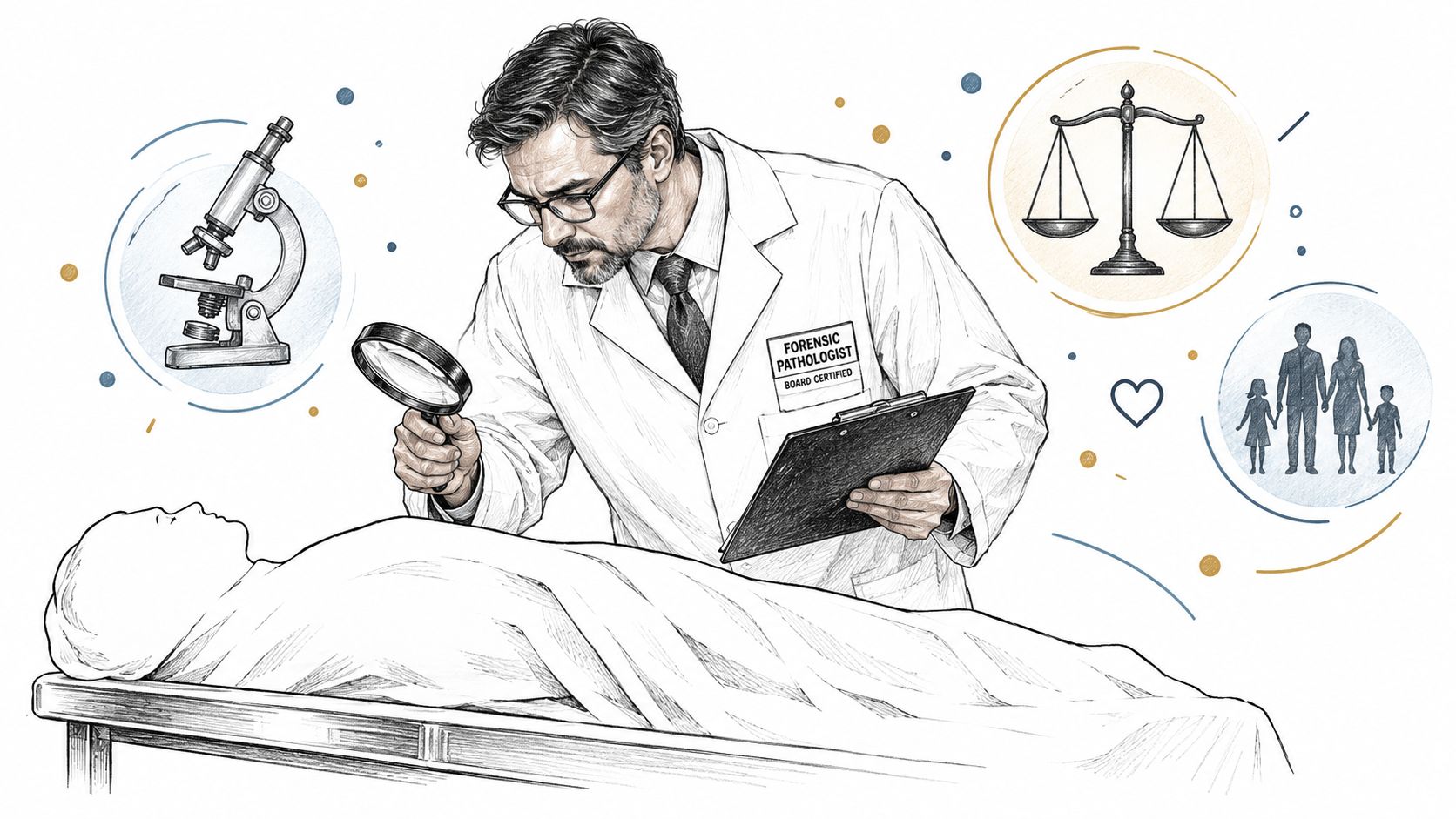
Texas Autopsy Services is an independent private autopsy and forensic pathology practice based in Elgin, Texas. We serve families, attorneys, healthcare professionals, agencies, and counties throughout all 254 Texas counties, with every examination performed by a forensic pathologist certified by the American Board of Pathology.
The First 24 Hours After Your Father's Death
Confirm the death through the appropriate professional or authority before making arrangements. If your father died at home unexpectedly, call 911 and avoid moving the body or disturbing medications, medical devices, documents, or objects that may help explain what happened. Emergency personnel, law enforcement, a justice of the peace, or another authorized official will determine the next response.
Texas law governs which deaths require an inquest or county investigation. An unexpected, sudden, unattended, violent, suspicious, or medically unexplained death may fall under that system, but the responsible authority must make the determination. Families shouldn't try to classify the death themselves or assume that a treating doctor's explanation ends the inquiry.
Protect the scene and identify the decision-maker
If questions exist about the cause of death, preserve the scene. Don't clean medication containers, discard medical equipment, wash clothing, delete messages, or rearrange furniture. Gather the names of physicians, hospitals, caregivers, witnesses, and anyone who last spoke with your father.
The family should identify the legal next of kin and choose one person to communicate with officials, the mortuary, attorneys, and an independent forensic practice. Collect available medical records, medication lists, hospital discharge papers, photographs of injuries or the scene, and insurance information. Keep personal effects together and ask the investigating authority how they'll be released.
Practical rule: Don't authorize embalming, cremation, burial, or transport to a final disposition until the family has decided whether an independent autopsy is needed.
A county investigation and a private autopsy can sometimes proceed in coordination, but they serve different purposes. If the county declines an autopsy, or if the family has concerns about medical error, workplace exposure, an unresolved injury, or an incomplete explanation, contact an independent forensic pathology practice promptly. Our plain-language guide on mortuary versus funeral home arrangements can help clarify which provider handles transport, preparation, and disposition.
The first day also includes necessary notifications. Contact close family, the hospice or medical provider when relevant, and the funeral or mortuary provider only after confirming whether an investigation is pending. You don't need to solve probate, insurance, or every financial issue immediately. Preserve the evidence, identify authority, and protect the examination decision first.
County Forensic Autopsy or Private Autopsy in Texas
A county forensic autopsy is part of a public death investigation. The justice of the peace, medical examiner, or another legally authorized county official determines whether the death falls within the county system and whether an examination is needed. The family doesn't control that investigation, and the county generally handles its own investigative costs under its applicable procedures.
A private independent autopsy is authorized by the legal next of kin. The family selects the practice, signs written consent, and pays for the service unless another arrangement applies. It can provide an independent examination, additional testing, review of medical records, and a separate opinion about cause and manner of death.
The practical differences
| Factor | County Forensic Autopsy | Private Independent Autopsy |
|---|---|---|
| Authority | County authority, such as a justice of the peace or medical examiner | Legal next of kin |
| Purpose | Public medicolegal investigation | Independent clarification, second opinion, or litigation support |
| Cost | Generally handled through the county system | Paid by the family, attorney, insurer, or another authorized party |
| Scope | Determined by the investigating authority and case circumstances | Defined through consent, case questions, examination, and testing plan |
| Chain of custody | Maintained under the county investigation | Documented by the private practice from transfer through reporting |
| Later use | Official investigative findings | May support insurance, probate, civil claims, family decisions, or expert testimony |
A private examination doesn't replace a county investigation when Texas law requires one. The county retains its legal authority, evidence responsibilities, and reporting role. The private path can add value when the public examination was declined, limited, disputed, or unable to address a specific medical question.
Timing matters because embalming and cremation can restrict what a pathologist can examine. Families should ask the funeral provider whether preparation has begun and should communicate with the county investigator before authorizing a private transfer.
Our resource on who can request an autopsy in Texas explains the role of legal next of kin and surviving adult children. Attorneys should also preserve relevant records and tell the practice about potential litigation before transport or testing begins.
Cause of death means the disease, injury, or condition that produced the death. Manner of death describes the circumstances, commonly natural, accident, suicide, homicide, or undetermined. A private forensic pathologist may state an independent opinion, but the legal authority responsible for the official investigation controls the official determination where county jurisdiction applies.
How the Autopsy Process Works Step by Step
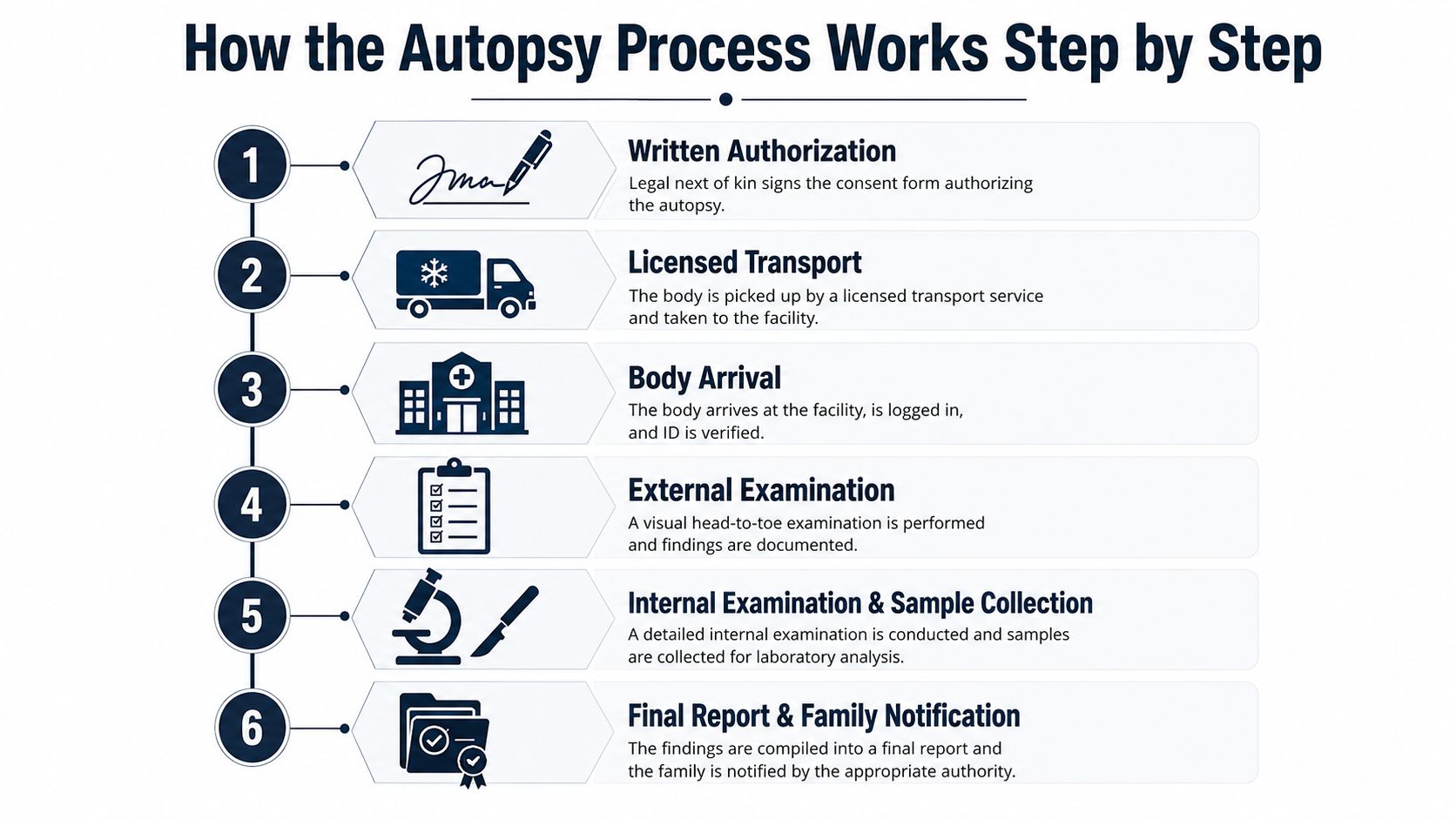
A private autopsy begins with a conversation about the family's unanswered question. We document the identity of the deceased, the circumstances reported by the family or attorney, known medical history, medications, prior procedures, and any available county or hospital records.
The legal next of kin signs written authorization. That consent defines who may authorize the examination and who may receive the report. If relatives disagree, the practice may need documentation of legal authority before proceeding.
From transport to examination
Licensed professionals transport the body to the examination facility. The team records the transfer, condition of the remains, personal effects, and identifying information. Chain of custody is the documented history of who possessed evidence, when it changed hands, and how it was secured.
The pathologist starts with an external examination. This may document clothing, identifying marks, injuries, medical devices, surgical scars, and other visible findings. Photographs and written observations create a permanent record that can be reviewed later.
The internal examination evaluates the major organs and body systems. The pathologist collects tissue and fluid samples when indicated. Toxicology, histology, microbiology, molecular testing, imaging, or other ancillary studies may be appropriate depending on the circumstances.
Why one finding rarely answers everything
Postmortem interval, the estimated time since death, is difficult to determine precisely in many cases. Algor mortis, livor mortis, and rigor mortis are generally most reliable during the first 2 to 3 days, and precision drops after 48 to 72 hours as decomposition advances. Forensic review of postmortem interval estimation
No single method works accurately across every decomposition stage or environment. Temperature, insect access, body movement, and the difference between scene and autopsy conditions can change interpretation. The pathologist therefore correlates examination findings with records, scene information, toxicology, and other testing.
Most cases are completed within 24 to 48 hours when the examination and necessary testing allow it, but a final report may take longer when toxicology, microscopy, or outside laboratory work is required. The completed report identifies the findings, explains the medical reasoning, and states the independent opinions on cause and manner of death when supportable. Authorized recipients may use it for insurance claims, probate questions, family understanding, or legal proceedings.
Legal and Administrative Tasks in the Weeks Ahead
Once the examination decision is settled, the family must manage records, agencies, property, benefits, and final arrangements. County officials perform duties required by Texas law, while relatives gather documents and report the death to institutions.
The funeral home or local registrar can explain how to order certified death certificates through the Texas Vital Statistics process. Banks, insurers, retirement administrators, government agencies, and other organizations may require certified copies, not photocopies. If the certificate is delayed, review this explanation of a pending death certificate to understand why some claims or account changes may remain open.
Separate official duties from family tasks
A county investigative report and a death certificate answer different questions. The certificate records vital information for official transactions. The forensic report describes examination findings and the medical basis for a cause-of-death opinion.
Create one secure folder containing:
- Identity records: Social Security information, marriage or divorce records, military documents, and identification.
- Financial records: Bank accounts, life insurance, retirement plans, property deeds, tax returns, and debts.
- Medical records: Hospital records, physician contacts, medication lists, prior imaging, and county investigator information.
- Legal papers: Wills, trusts, powers of attorney, beneficiary forms, and attorney contact details.
Notify Social Security, employers, pension administrators, insurers, banks, and investment firms. Ask each organization which documents it needs and when they are due. If the death was already reported, ask Social Security whether further action is required for survivor benefits or payments.
Probate depends on the estate, the will, ownership structure, beneficiary designations, and Texas procedure. A small estate affidavit may fit some estates. Others require dependent administration or another court process. Have a Texas probate attorney review the facts instead of relying on a general threshold.
Inherited property raises separate questions about title, basis, sale, and taxes. The Red Rock Properties tax guide provides background on inherited-property tax issues. It does not replace Texas legal or tax advice.
Texas law also assigns duties in certain disposition situations. Under Texas Health and Safety Code § 711.002, when an inquest is held, the person conducting it must inter the remains. Review Texas Health and Safety Code Chapter 711 with the responsible official or counsel when questions arise.
Keep administrative tasks separate from decisions that belong to the family. That division reduces confusion while relatives are still dealing with the loss of their father.
Grief After Losing a Father and When to Seek Help
Grief after a father's death isn't generic sadness. It can involve the loss of a role, a source of advice, family history, financial support, or the person who marked important transitions. Weddings, births, graduations, holidays, and ordinary decisions may feel different because the relationship has changed permanently.
Common early reactions include disrupted sleep, poor concentration, difficulty making decisions, anger, numbness, guilt, and a sense of unfinished conversation. Some adult children feel relief after a long illness and then feel guilty about that relief. Others feel practical responsibility before they have had time to understand the loss.
When grief needs professional support
There's no single correct schedule for mourning. Still, persistent low mood, inability to cope, or distress that lasts more than two weeks can justify seeking support. National Institute on Aging guidance on grief and mourning provides general bereavement information, but father-loss grief may require a counselor who understands parent-child relationships and adult role changes.
Seek urgent help if there are persistent suicidal thoughts, escalating substance use, inability to provide basic care for yourself or dependents, severe confusion, or danger in the home. Contact emergency services when immediate safety is at risk. For nonurgent support, consider a licensed grief counselor, a Texas-area bereavement group, a faith leader, or a secular support organization.
Support can be practical. Ask one person to handle calls, another to organize documents, and another to stay with a grieving family member during difficult appointments. If language or location makes care difficult, a resource such as this guide to grief therapy for expats may help families understand how to locate counseling across cultural or geographic boundaries.
A forensic report can answer medical questions, but it can't resolve every emotional question surrounding a father's death. Families may need both factual clarification and sustained human support.
A Family Checklist and How to Reach Our Team
Grief makes ordinary administrative tasks harder. A written checklist lets a spouse, adult child, sibling, attorney, or trusted friend take responsibility for specific work without asking the family to repeat every detail.
First-week checklist
- Confirm authority: Identify the justice of the peace, medical examiner, hospital, hospice provider, or other official handling the death.
- Protect the examination option: Decide whether to request a private autopsy before embalming, cremation, burial, or other disposition.
- Secure records: Gather medical records, medication information, identification, insurance documents, and contact details for witnesses or caregivers.
- Coordinate arrangements: Confirm who controls transport, funeral arrangements, cremation authorization, and release of personal effects.
- Notify essential contacts: Tell close family, the employer, immediate insurers, and the attorney handling urgent questions.
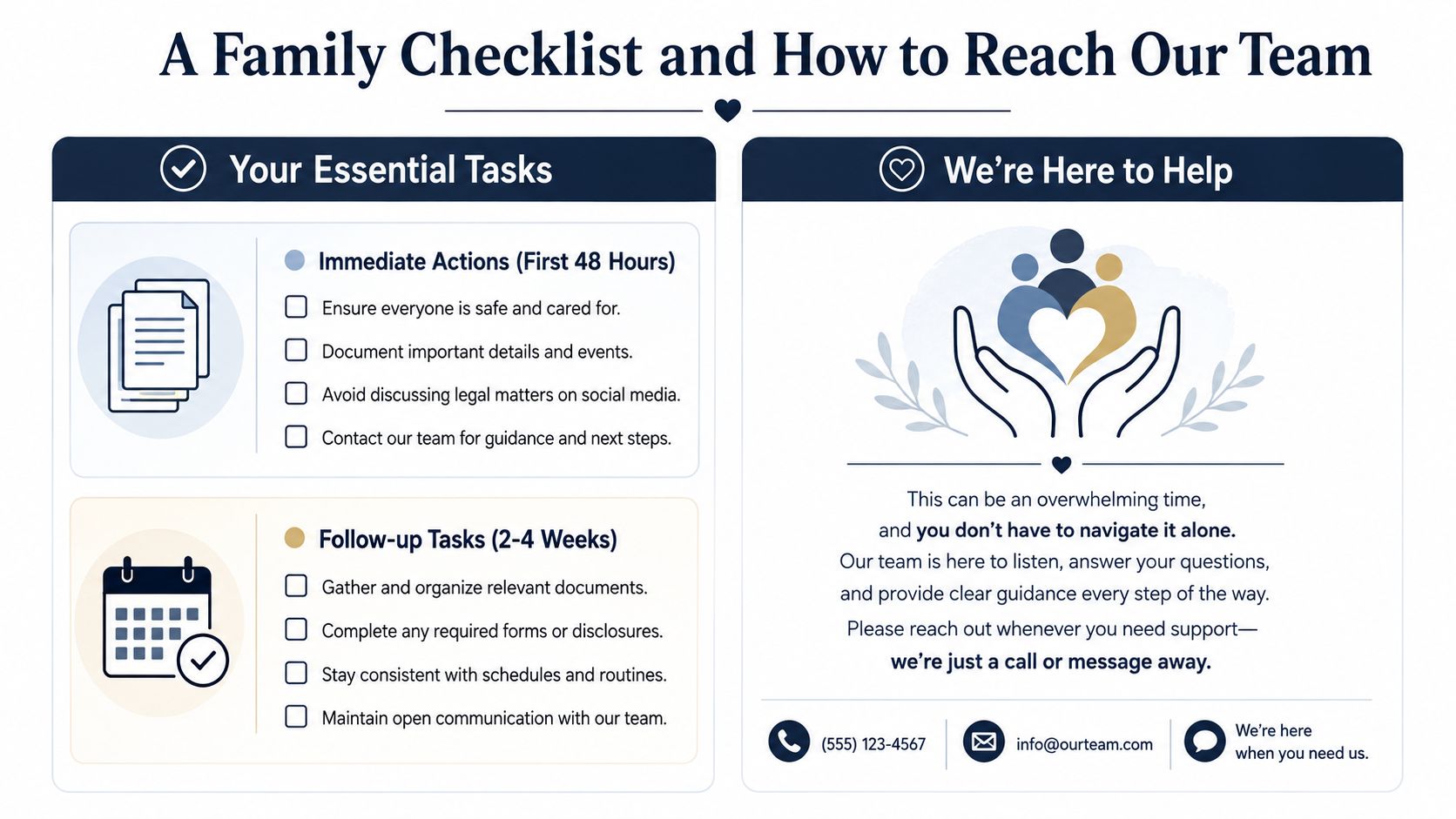
First-month checklist
- Order records: Obtain certified death certificates and request the county or private forensic report when available.
- Notify institutions: Contact banks, insurers, Social Security, retirement plans, employers, and benefit administrators.
- Address the estate: Consult a Texas probate attorney about the will, property, debts, beneficiary forms, and the appropriate court process.
- Protect wellbeing: Arrange grief counseling or support through a licensed provider, faith community, or bereavement organization.
The family doesn't need to complete every task at once. Assigning one administrative role to a trusted person can give the closest relatives room to grieve, while a resource about planning your legal and financial assets can help organize broader household records for future needs.
If you're deciding whether an independent autopsy is appropriate, contact Texas Autopsy Services for a confidential discussion of the medical questions, legal authority, available options, costs, and timing. Our team provides private autopsy and second-opinion services across Texas, with licensed transport and communication in plain language.
Texas Autopsy Services provides independent private autopsies, forensic pathology consultations, and second-opinion reviews for families, attorneys, healthcare professionals, and Texas counties. Visit Texas Autopsy Services to discuss what happened, what remains possible, and which next step fits your family's circumstances.