September 23, 2026 · Texas Autopsy Services
Death by Exposure What It Means and How It Is Determined
Learn what death by exposure means, how forensic pathologists determine it, and how Texas Autopsy Services helps families and attorneys with clarity.
On this page
- Understanding What Death by Exposure Really Means
- How Cold and Heat Lead to Fatal Exposure
- Why Exposure Often Looks Like Heart or Lung Disease
- How Forensic Pathologists Determine Death by Exposure
- Differential Diagnosis and Common Misunderstandings
- Legal Documentation and Independent Review in Texas
- Finding Clarity After a Possible Exposure Death
A family may be told that a loved one died from “exposure,” yet the death certificate may also mention heart failure, respiratory disease, intoxication, or another condition. That combination can feel incomplete, especially when the person wasn't found in a wilderness setting or during obviously extreme weather. Families, attorneys, and county officials often need to know whether temperature caused the death, contributed to it, or was unrelated.
Death by exposure is a forensic description of fatal physiologic stress caused by environmental cold or heat. It isn't a single disease, and it usually can't be established by examining the body alone. Our board-certified forensic pathologists evaluate the scene, environmental conditions, medical history, toxicology, and autopsy findings together before reaching a cause-of-death opinion.
- Exposure includes cold and heat, not only freezing conditions.
- Cause of death identifies the disease, injury, or physiologic process that resulted in death.
- Manner of death describes the circumstances, such as natural, accidental, suicide, homicide, or undetermined.
- Cold can trigger cardiovascular or respiratory death without hypothermia appearing as the only listed cause.
- A careful review depends on scene evidence and timing, because postmortem findings are often nonspecific.
Understanding What Death by Exposure Really Means
A person is found deceased in a home after a period of cold weather. The heating system may not have worked properly, the person may have had limited mobility, or the available clothing and bedding may have been inadequate. The family sees a death certificate that mentions hypothermia, or perhaps a natural disease, and reasonably asks how the conclusion was reached.
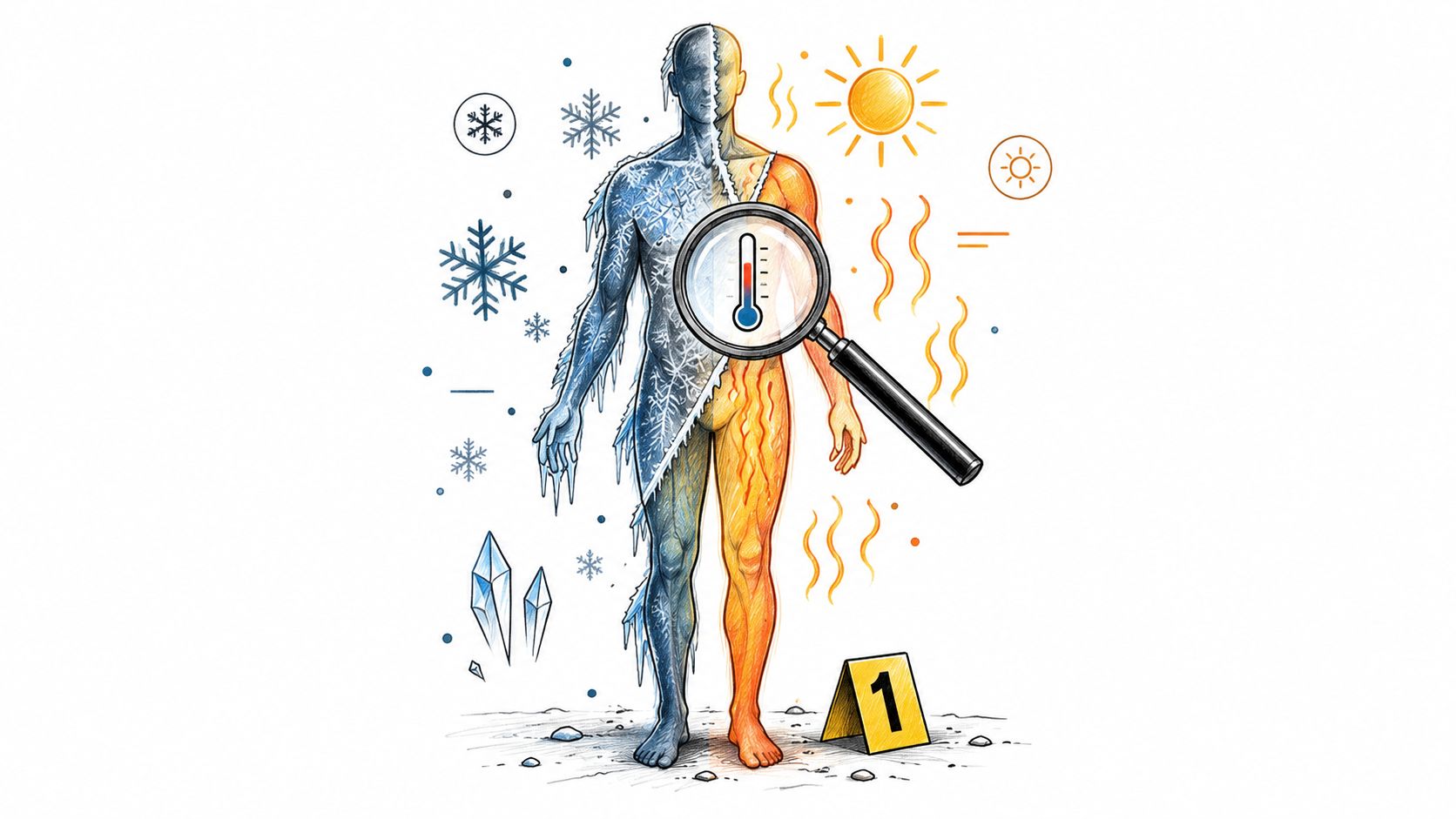
That uncertainty is common. Death by exposure means that environmental temperature stress overwhelmed the body's ability to maintain essential functions. Cold exposure can lead to hypothermia, while excessive heat can produce hyperthermia and related organ failure. Neither term automatically explains the entire case.
Cause, manner, and contributing factors
The cause of death is the medical explanation for why a person died. In an exposure case, it might be hypothermia, hyperthermia, or a natural disease process aggravated by environmental temperature. The manner of death addresses how the circumstances are classified. Exposure may occur accidentally, through neglect or unsafe conditions, or in circumstances that remain undetermined after investigation.
A contributing factor is a condition that helped produce death without being the sole cause. Intoxication, immobility, chronic illness, inadequate insulation, or poor nutrition can reduce a person's ability to respond to temperature stress. The same environment may be survivable for one person and fatal for another because vulnerability differs.
Practical rule: Exposure is an environmental circumstance that must be connected to a physiologic outcome. Finding a person in a cold or hot location does not, by itself, prove that temperature caused the death.
Why the phrase is often misunderstood
Many people associate exposure only with freezing outdoors. That image leaves out indoor deaths, heat-related collapse, and cardiovascular or respiratory events triggered by cold. A global analysis estimated that non-optimal ambient temperatures were associated with about 5,083,173 deaths per year from 2000 to 2019, approximately 9.43% of all deaths worldwide. The study estimated about 4,594,098 cold-related deaths and 489,075 heat-related deaths, with cold-related exposure accounting for the larger share in that analysis (global temperature-related mortality analysis).
Those findings describe population-level mortality, not the circumstances of any particular person. For an individual death, the central question remains whether the documented environment, timing, vulnerability factors, and medical findings support exposure as the cause or a contributing factor.
How Cold and Heat Lead to Fatal Exposure
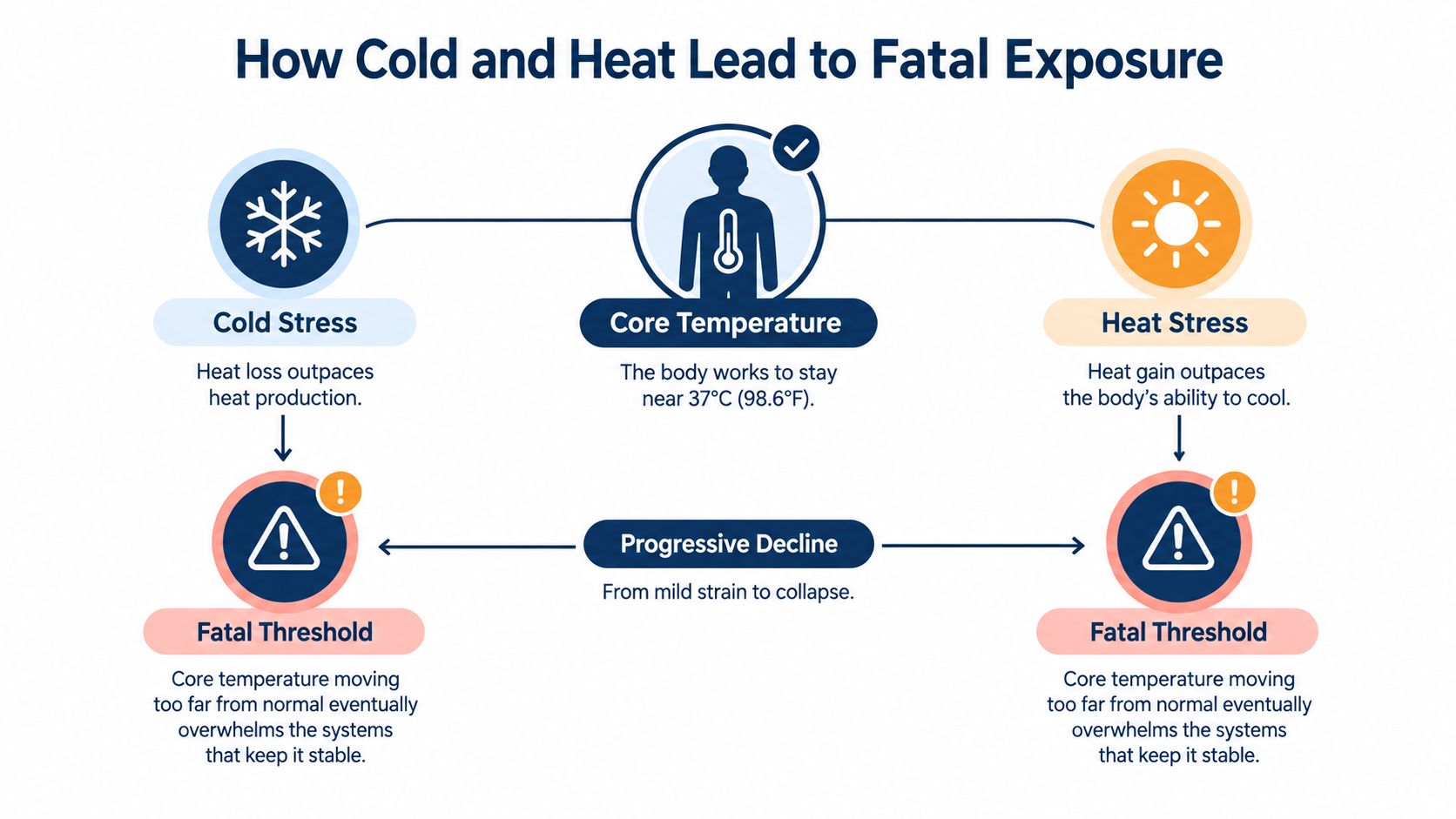
A person may be found in a cold room, on an icy roadside, or in a hot enclosed space, but the location alone does not tell the full medical story. Forensic review asks whether the environment, the timeline, and the body's response fit exposure as the cause of death.
The body normally protects its core temperature through shivering, changes in blood flow, sweating, and behavior. Death follows when those defenses are overwhelmed and the brain, heart, lungs, and other organs can no longer function normally.
Hypothermia is defined as a core body temperature below 35°C, or 95°F (American Thoracic Society clinical guidance). Severe or life-threatening hypothermia is commonly marked below 32°C, about 89.6°F, with mortality risk increasing as core temperature falls (Archives of Pathology and Laboratory Medicine reference).
Cold exposure follows different patterns
Cold kills through several pathways, and the setting helps explain which one was likely involved.
- Cold-water immersion can cause rapid hypothermia because water removes body heat efficiently.
- Outdoor exposure may develop more slowly when wind, wet clothing, fatigue, poor nutrition, or thin insulation increase heat loss.
- Indoor exposure can still become fatal during prolonged cold, especially in vulnerable people. Classic forensic guidance identifies prolonged indoor cold below about 16°C, or 60°F, as a relevant setting in some cases (American Thoracic Society clinical guidance).
The air does not need to be freezing. Clinical guidance notes that temperatures above 40°F, or 4°C, can still cause hypothermia when a person is wet, chilled, or exposed long enough. Dangerous body-temperature decline can also occur around 50°F, or 10°C, depending on the circumstances (HealthLink BC guidance on hypothermia).
Heat can overwhelm the same regulatory system
Heat exposure creates the opposite problem. Heat gain exceeds the body's ability to lose heat through sweating, blood-flow changes, and movement of heat away from the core. As that control fails, dehydration, circulatory strain, altered mental status, organ injury, and collapse may follow.
The medical process differs from hypothermia, but the forensic question is the same. Investigators must decide whether the environment created substantial heat stress and whether the history, scene, and medical findings support hyperthermia as the cause or a contributing factor. Families seeking a focused explanation of heat-related deaths can review our guidance on heat-related death investigations.
Why Exposure Often Looks Like Heart or Lung Disease
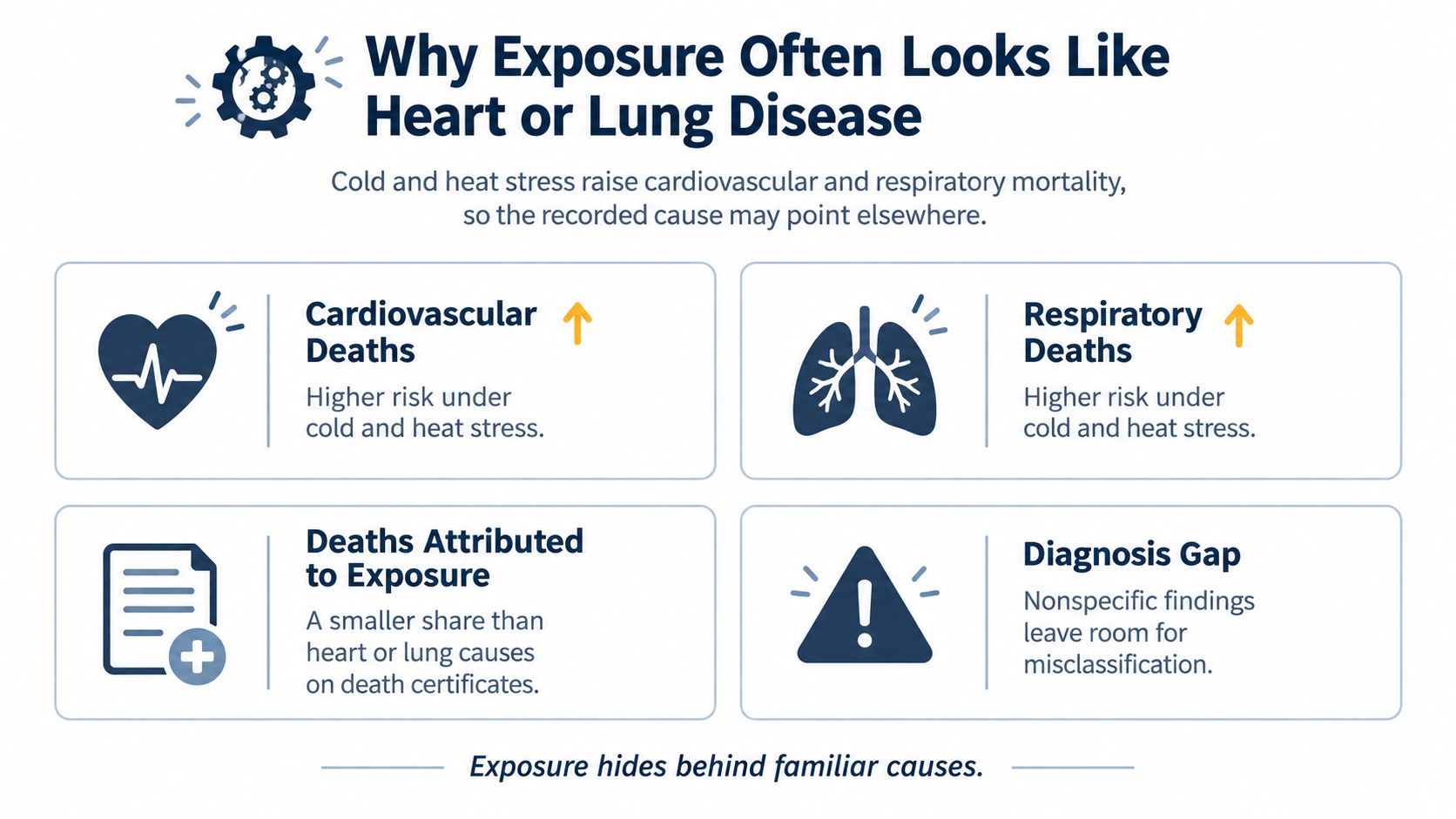
Cold stress frequently triggers cardiovascular and respiratory deaths that are recorded as natural disease rather than exposure. A person may die from heart failure, a stroke, a fatal rhythm disturbance, or respiratory failure, while the environmental trigger is missed unless the full scene and medical context are reviewed.
A systematic review of temperature and cardiovascular mortality found that each 1°C decrease in temperature was associated with a 1.6% increase in cardiovascular-disease mortality. The same review reported that cold spells were linked with higher all-cause mortality, cardiovascular mortality, and respiratory mortality, with risk ratios of 1.10, 1.11, and 1.21, respectively.
Exposure may be a trigger, not the only cause
Cold places extra demand on the heart and lungs. For someone with coronary artery disease, congestive heart failure, chronic lung disease, or another serious illness, that added stress may be enough to tip the balance. The underlying disease still matters, but the temperature may have helped bring on the final event.
That is why death records can be misleading if they are read without the surrounding evidence. A certificate may list a natural disease as the immediate cause and mention cold exposure as a contributing condition, or it may leave out the environmental factor if the investigation did not establish it. The absence of the word “hypothermia” does not prove temperature played no role.
Why population statistics and individual records differ
U.S. death-certificate data for 2006 through 2010 recorded 10,649 weather-related deaths, or about 2,000 deaths per year. Of those deaths, 63% were attributed to excessive natural cold, hypothermia, or both, while 31% were attributed to excessive natural heat, heat stroke, sun stroke, or all (U.S. weather-related mortality discussion).
More recent analysis estimated about 45,992 excess annual deaths from low temperatures from 2000 through 2020, compared with 3,414 annual deaths attributed to high temperatures (analysis of temperature-related mortality in the United States). These measures do not mean the same thing. One is an estimate of excess mortality, while the other is based on recorded attribution. That gap helps explain why exposure can be undercounted when temperature acts as a trigger for a familiar heart or lung condition.
How Forensic Pathologists Determine Death by Exposure
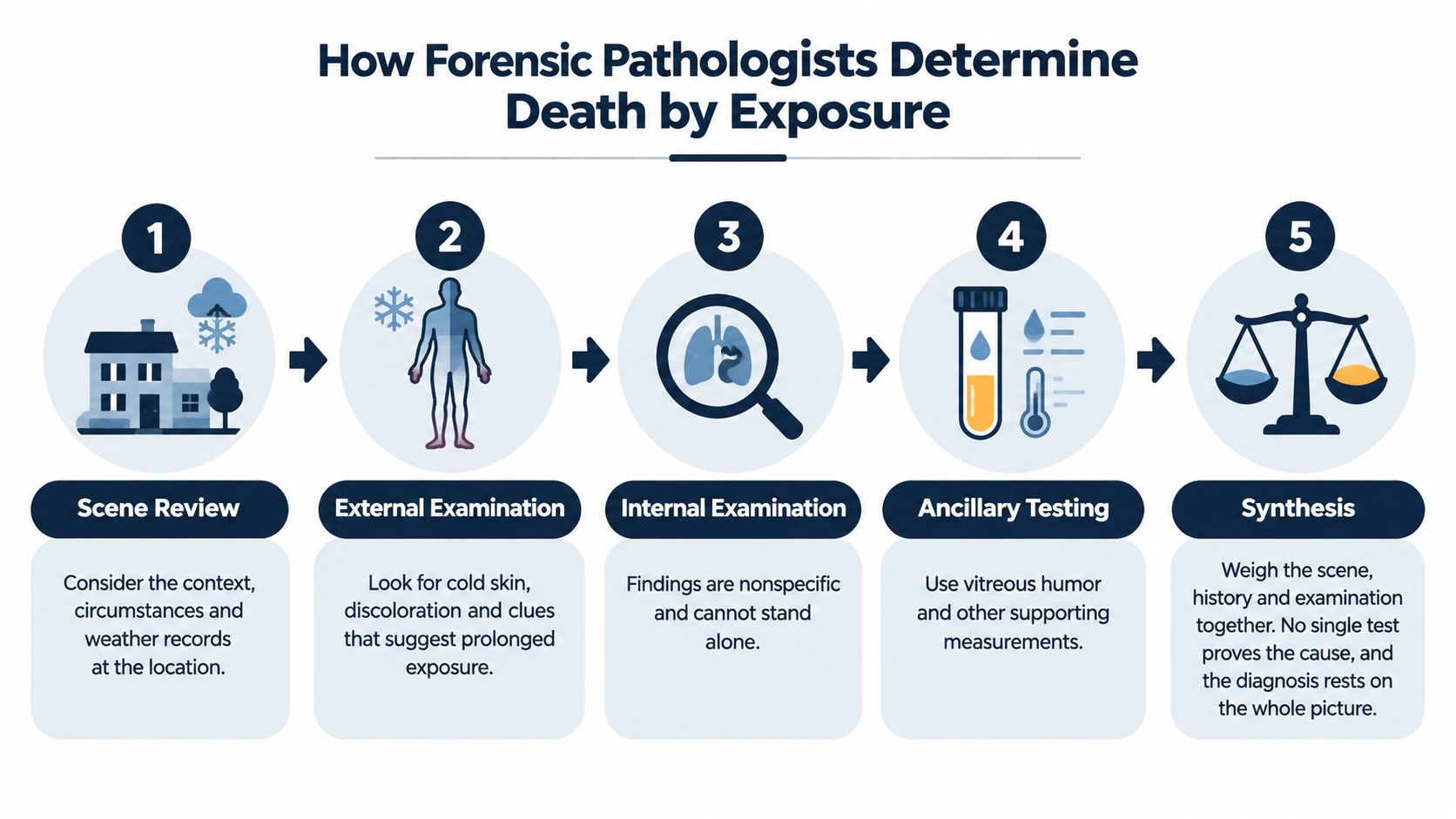
Forensic pathologists determine death by exposure through a diagnosis of exclusion. They ask whether the full record supports environmental temperature as the cause, or as a significant contributor, after other explanations have been weighed and ruled out.
That process matters because the body often leaves only indirect clues. Findings may fit hypothermia or hyperthermia, but a single autopsy sign rarely carries the answer by itself. The opinion comes from how the pieces fit together.
The evidence is assembled in stages
Scene reconstruction identifies where the person was found, how long exposure may have continued, what clothing or bedding was present, whether heating or cooling systems were working, and what weather records show during the relevant period.
Medical history shows the vulnerabilities that may have shaped the outcome. Intoxication, immobility, poor insulation, chronic disease, malnutrition, and medication effects can alter heat balance, judgment, movement, and the ability to seek help.
External and internal examination documents injuries, disease, decomposition, and findings that are compatible with exposure. These observations help narrow the possibilities, but they usually do not tell the whole story on their own.
Toxicology and ancillary testing can identify intoxication or other conditions that contributed to death. A detected substance still has to be interpreted alongside the scene, because presence alone does not explain the fatal process.
Synthesis brings the timeline, scene, history, examination, and testing into one conclusion. The pathologist then states the cause of death and, when the evidence supports it, the manner of death.
Exposure deaths often hide behind familiar medical labels. A person may be found with cardiac collapse, respiratory failure, or another terminal event that looks ordinary on paper, yet the colder or hotter environment may have triggered the final chain of events. That is why families and attorneys need the medicolegal record, not just the postmortem report. Our explanation of how a coroner determines cause of death explains why scene facts, records, and medical findings have to be read together.
Differential Diagnosis and Common Misunderstandings
Forensic pathologists compare exposure with other possible explanations rather than treating a cold or hot scene as proof. A person may die from natural disease while exposed to an uncomfortable temperature, or temperature may accelerate a disease that would otherwise have remained stable. Intoxication may also impair judgment, movement, and protective behavior without being the only cause.
Conditions that can look similar
Hypothermia refers to dangerous cooling of the core body temperature. It requires evidence that the body lost more heat than it could produce or conserve, supported by the circumstances and exclusion of other causes.
Hyperthermia involves excessive heat gain or failed cooling. The investigative focus includes the surrounding environment, duration, physical condition, medications or substances, and disease processes that could produce similar organ failure.
Intoxication can cause death directly, but it can also increase exposure risk by causing confusion, sedation, impaired coordination, or immobility. Toxicology results therefore need to be evaluated alongside the scene and autopsy.
Natural disease may be the primary cause, a contributing factor, or an alternative explanation. Heart disease, stroke, and respiratory disease can produce sudden death in a person who was also cold or overheated.
Exposure isn't limited to dramatic weather
One persistent misunderstanding is that exposure requires extreme outdoor conditions. A cool indoor environment, wet clothing, prolonged contact with cold surfaces, or limited mobility may create serious risk without a visually dramatic scene. The body's vulnerability, insulation, duration, and ability to respond all matter.
A second misunderstanding is that an autopsy can always settle the question immediately. For environmental deaths, the body often cannot provide a definitive answer by itself. The forensic pathologist must determine whether the total evidence supports exposure over competing causes, and sometimes the most accurate conclusion remains undetermined when the evidence cannot reasonably distinguish among possibilities.
Legal Documentation and Independent Review in Texas
Exposure can appear in records at different levels. It may be listed as the primary cause of death, identified as a contributing factor, or omitted when the investigating authority does not have enough evidence to connect temperature with the death. Classification can also be inconsistent when temperature stress contributes to a death through another pathway, such as cardiovascular strain or respiratory decline, rather than appearing as the sole listed cause.
Texas families and attorneys also need to understand who has authority over the death investigation. County officials, justices of the peace, medical examiners, funeral service providers, and other agencies may have different duties under applicable law. The Texas Funeral Service Commission and Texas Health & Safety Code Chapters 711, 716, and 651 form part of the compliance context for funeral, disposition, and related professional matters. A private review supplements, but does not supersede, the authority of a government death-investigation agency.
How Exposure Is Documented on Death Records
| Documentation Level | What It Means | When It Is Used |
|---|---|---|
| Primary cause | Exposure is identified as the principal medical cause of death. | The evidence supports hypothermia or hyperthermia as the direct fatal process. |
| Contributing factor | Temperature stress helped produce death but was not the only or immediate cause. | Cold or heat aggravated disease, intoxication, immobility, or another vulnerability. |
| Not recorded | Exposure isn't listed on the available record. | The investigation did not establish a sufficient connection, or the environmental evidence was not available. |
What an independent review can examine
An independent autopsy or second opinion autopsy may review the original report, photographs, toxicology, medical records, death-scene documentation, weather information, and death certificate. If appropriate and legally permitted, a new examination may add information that was not available during the original investigation. The opinion remains evidence-based and cannot guarantee a particular conclusion.
A chain of custody is the documented record of who collected, transported, stored, examined, and transferred evidence. Maintaining that record protects the integrity of specimens, photographs, documents, and other materials that may later be used in administrative or court proceedings.
Families and counsel often manage extensive records across multiple parties. Neutral legal document tracking tools can help organize versions, dates, requests, and custody-related documentation, but they do not replace forensic interpretation or legal advice. For broader case support, attorneys and agencies may also consider forensic consultant services.
Texas Autopsy Services is an independent private autopsy and forensic pathology practice based in Elgin, Texas, serving all 254 Texas counties. Every examination is performed by a forensic pathologist certified by the American Board of Pathology. The practice provides in-house licensed transport, direct team communication, full chain-of-custody documentation, and thorough reporting when a family, attorney, healthcare professional, or county official needs an additional review.
Finding Clarity After a Possible Exposure Death
Uncertainty after a possible exposure death doesn't mean the investigation failed. Environmental deaths are difficult precisely because temperature can act through several pathways, including direct hypothermia, hyperthermia, cardiovascular stress, respiratory deterioration, intoxication, or interaction with chronic disease.
Before requesting a review, gather the information available:
- Timeline: When the person was last known to be well, discovered, or moved.
- Location conditions: Indoor or outdoor setting, clothing, bedding, heating or cooling, moisture, and weather records.
- Medical history: Chronic disease, medications, mobility limitations, nutrition, and substance-use information.
- Existing records: Death certificate, autopsy report, toxicology, medical records, photographs, scene reports, and agency correspondence.
A private autopsy service or second-opinion review can examine whether the recorded cause and manner are supported by the complete evidence. Our team explains the autopsy process in plain language, uses transparent flat-rate, all-inclusive pricing, and reports that may be suitable for legal review when the evidence supports the conclusions. Most cases are completed within 24–48 hours, although the actual process depends on authorization, transport, testing, records, and the circumstances of the death.
If someone close to you may have died from cold or heat exposure, you deserve an explanation that respects both the evidence and your loss. Contacting an independent forensic pathology practice can help you understand what records exist, what questions remain, and whether further examination or review is appropriate.
Texas Autopsy Services provides private autopsy services, second-opinion reviews, and forensic pathology support for possible exposure deaths across all 254 Texas counties. Visit Texas Autopsy Services to contact our team directly and discuss the circumstances, records, and next steps with compassion and precision.