September 29, 2026 · Texas Autopsy Services
Forensic Toxicology Requirements Guide
Review essential forensic toxicology requirements for medicolegal cases. Learn about specimen collection, chain of custody, and lab accreditation standards.

On this page
- Introduction to Medicolegal Toxicology Standards
- Required Specimen Types and Collection Protocols
- Chain of Custody and Evidence Tracking
- Analytical Methods and Confirmatory Testing
- Laboratory Accreditation and Quality Systems
- Reporting Standards and Statutory Integration
- Personnel Qualifications and Certification
- Impact of Toxicology on Death Certification
- Quick Reference Compliance Checklist
- Glossary of Forensic Toxicology Terms
A toxicology result can be chemically accurate and still fail to support a legal conclusion if the specimen's identity, handling, or transfer history is incomplete. For families, attorneys, healthcare professionals, and Texas county officials, understanding forensic toxicology requirements means looking beyond the test itself. The defensibility of a result depends on the entire process, from collection and storage to laboratory analysis, reporting, and testimony.
- Evidence integrity matters as much as analytical accuracy.
- Blood, urine, vitreous humor, and tissue each provide different information.
- Every specimen transfer requires documented custody, identification, and secure handling.
- ISO/IEC 17025 accreditation, validation, proficiency testing, and continuing oversight distinguish a defensible laboratory system.
- Texas law connects toxicology findings to the formal autopsy report and, in specific circumstances, death-certification language.
A family may seek an independent autopsy after receiving an unexpected cause of death. An attorney may need to determine whether a toxicology result can withstand challenge. A county official may be evaluating whether a laboratory's documentation is sufficient for a medicolegal investigation. In each situation, the practical question is the same: Can another qualified professional trace the specimen, understand the testing, and evaluate the conclusion without relying on assumptions?
Our team treats toxicology as part of an end-to-end forensic process. Every examination is performed by a forensic pathologist certified by the American Board of Pathology, with specimen handling, laboratory coordination, reporting, and communication managed as connected parts of the investigation. Our approach to the forensic toxicology examination process begins with preserving reliable evidence and ends with a clear explanation of what the findings do, and do not, establish.
Introduction to Medicolegal Toxicology Standards
A realistic courtroom problem often starts early. A specimen is collected correctly and sent for testing. The laboratory identifies a substance with a valid analytical method. Later, during testimony, the opposing attorney asks who received the sample after collection, when the transfer occurred, and whether the seal was intact. The file contains a laboratory result, but a missing signature or unexplained custody gap prevents the witness from demonstrating continuous control.
The chemical finding may still be accurate. The legal problem is that the evidence record no longer proves the sample tested in the laboratory was the same sample collected during the investigation. Scientific validity and evidentiary integrity are separate requirements. A court may question whether a result is usable when the chain of custody is incomplete, even if the instrument produced a technically sound result.
The American National Accreditation Board guidance for ABFT recognition identifies ISO/IEC 17025 accreditation as a foundational requirement for testing and calibration laboratories. Organizations seeking recognition from the American Board of Forensic Toxicology must maintain accreditation through the ANAB ISO/IEC 17025 program, and the ABFT forensic toxicology accreditation checklist is assessed in its entirety every 2 years. That recurring assessment reflects the continuing nature of compliance in criminal, civil, and medicolegal proceedings.
Practical rule: A toxicology result must be traceable from the original collection through final reporting, not merely supported by an instrument printout.
For our board-certified forensic pathologists, that principle changes how a case is managed. Collection, transport, storage, analysis, review, and reporting each create an opportunity either to preserve reliability or to introduce uncertainty. Families and legal teams deserve an explanation of both the result and the process that gives the result meaning.
Required Specimen Types and Collection Protocols
Postmortem toxicology doesn't depend on one universal specimen. Different biological matrices answer different questions, and the value of each sample depends on its collection site, condition, storage, and relationship to the rest of the case.
Choosing the right biological matrices
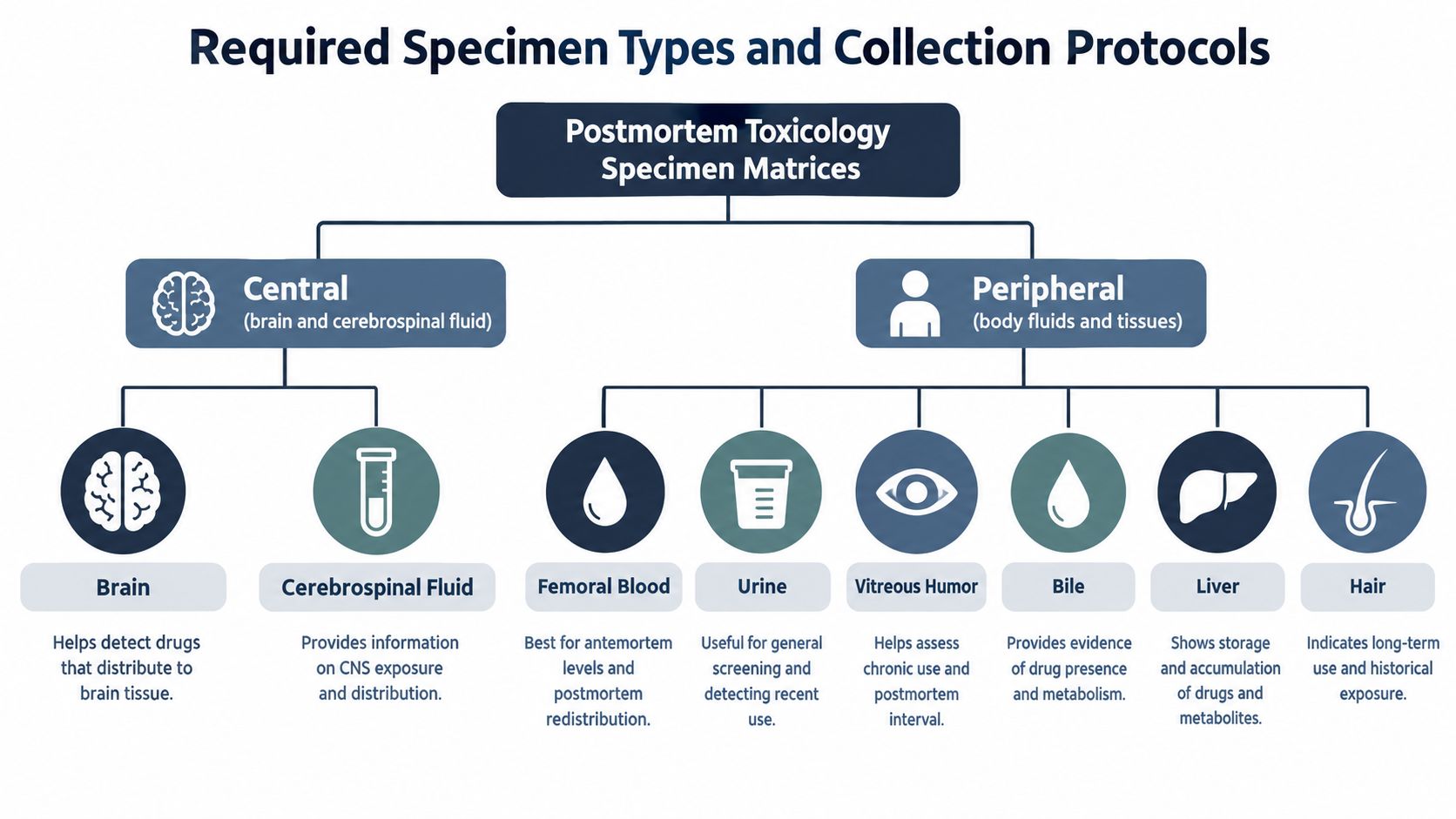
The principal specimens may include central and peripheral blood, urine, vitreous humor, liver, lung, oral fluid, plasma, serum, and other viscera. The New York City Office of Chief Medical Examiner describes a forensic toxicology service accredited by the New York State Forensic Laboratory Accreditation Program and ANAB to ISO/IEC 17025 for testing, while recognizing the varied handling and interpretive demands of postmortem specimens. The specimen collection procedures used in postmortem toxicology should therefore be selected by the pathologist according to the circumstances of death and the questions under review.
Central blood can be affected by postmortem redistribution and nearby organ concentrations. Peripheral blood, commonly collected from a protected site such as the femoral vein, may provide a more useful measure for interpreting antemortem exposure, although it still requires context. Urine can help show prior exposure or metabolism, but its presence doesn't automatically establish impairment or a fatal concentration.
Vitreous humor is collected from the eye and can remain useful when other specimens are compromised. It may support interpretation of certain substances and physiological conditions, but it isn't a replacement for blood. Solid tissues such as liver or lung may be important when blood is unavailable, severely decomposed, or insufficient for the testing plan.
Preserving specimens before testing
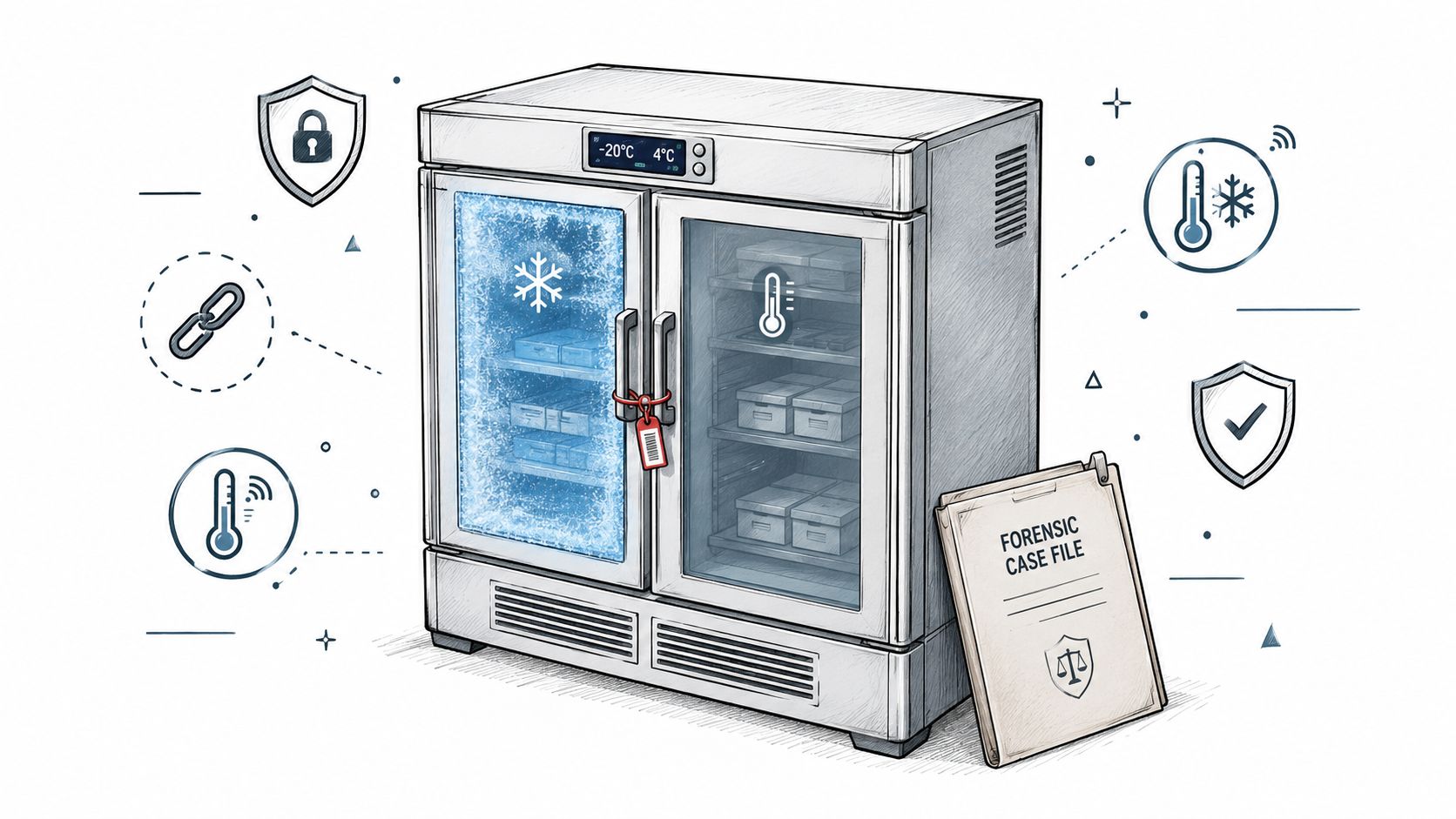
Collection should occur with clean instruments, appropriate containers, unique identification, and documentation of the collection site and condition. Samples should be sealed promptly and refrigerated at about 4°C, following the applicable laboratory submission requirements. The purpose is to slow degradation and preserve the specimen's evidentiary and analytical value.
Exact volume requirements depend on the laboratory's validated method, the testing menu, the available matrix, and whether additional testing may be needed. For that reason, a responsible submission protocol shouldn't promise one universal volume for every case. It should specify what was collected, what wasn't available, the amount submitted, and the reason for any limitation.
Our team records the matrix, anatomical source, collection circumstances, container information, and storage history. That information helps the forensic pathologist distinguish a detected substance from a conclusion about cause of death. Detection is a laboratory observation. Interpretation requires the specimen, the autopsy findings, medical history, scene information, and the analytical method to be considered together.
Chain of Custody and Evidence Tracking
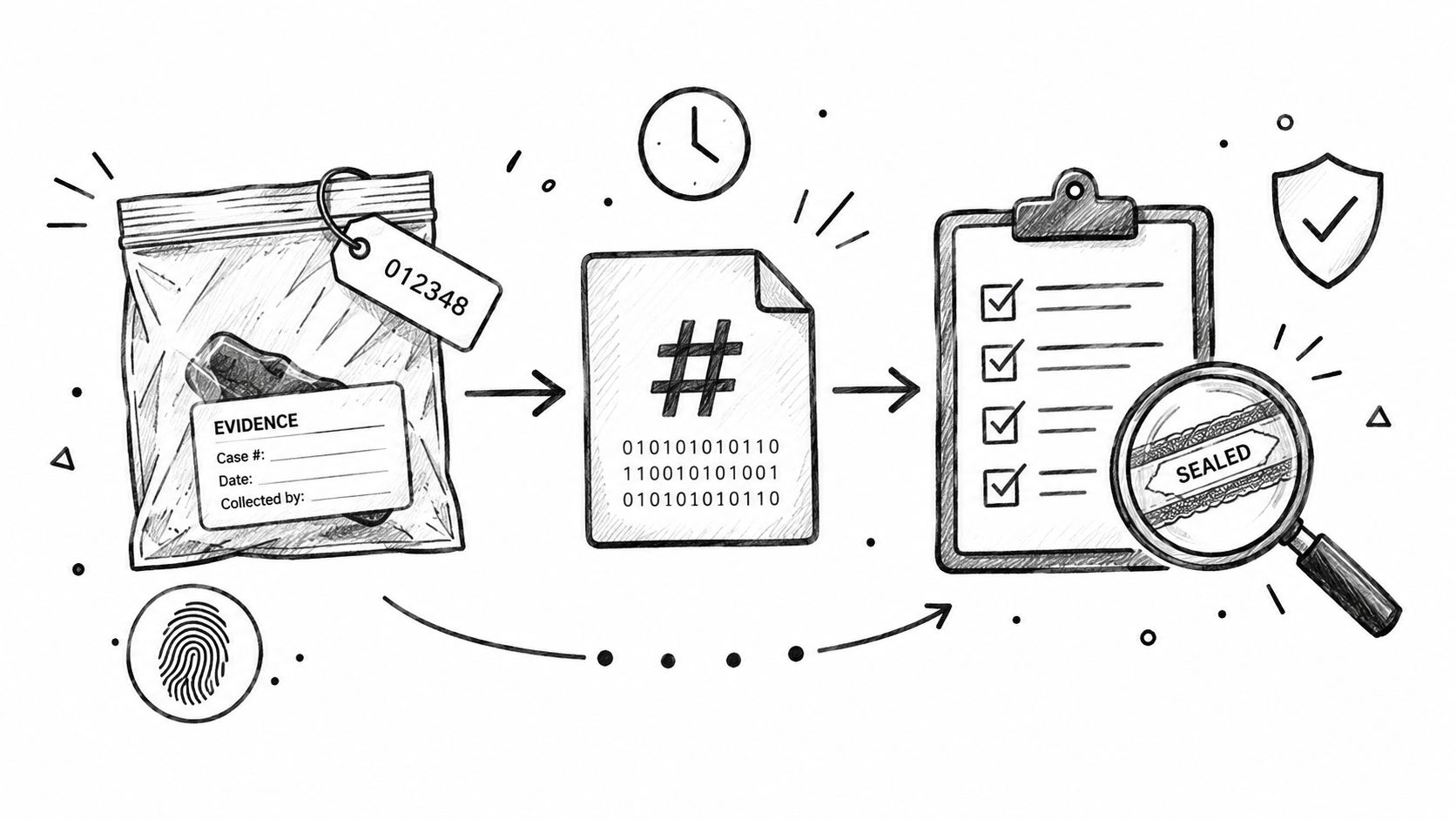
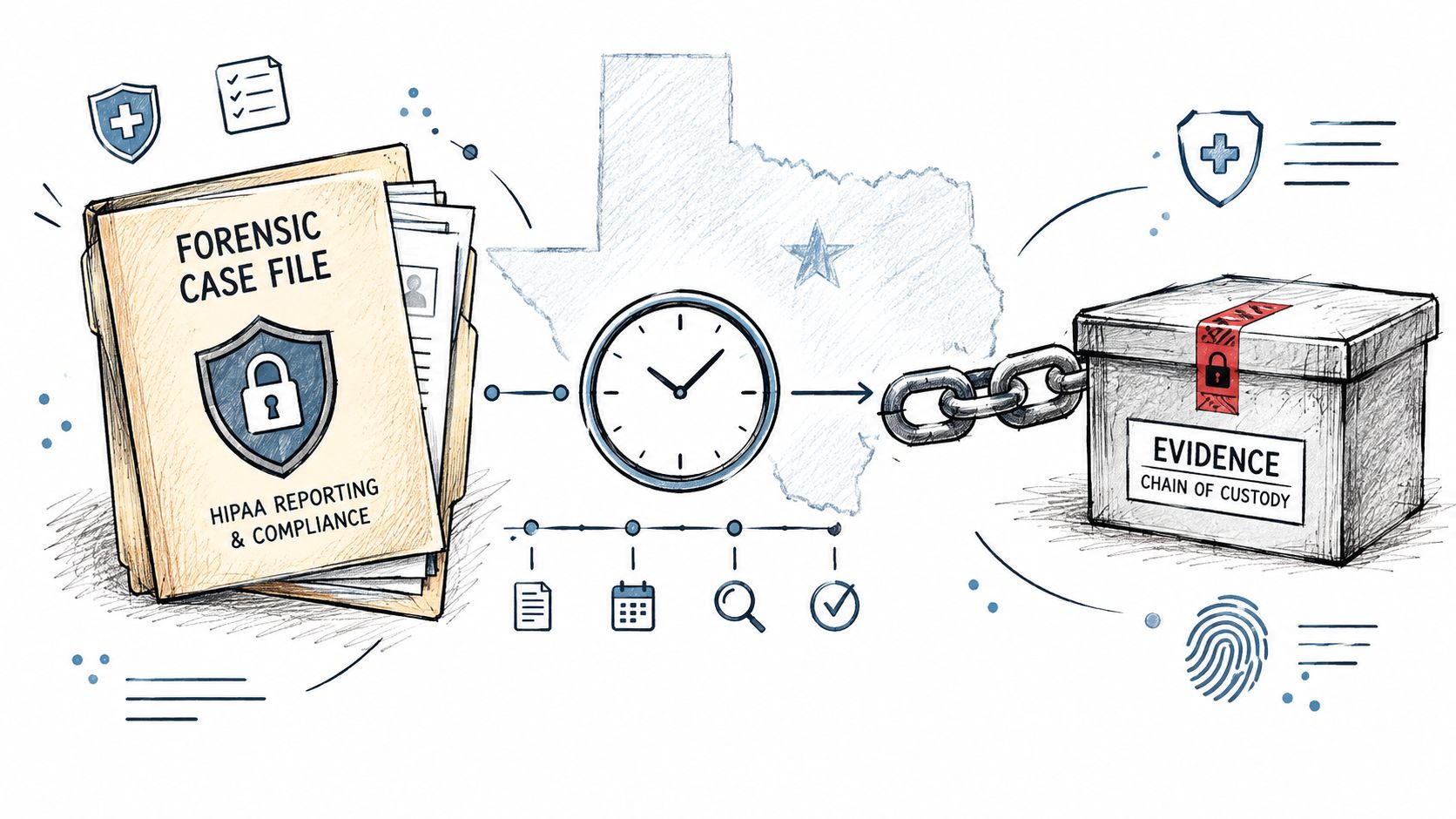
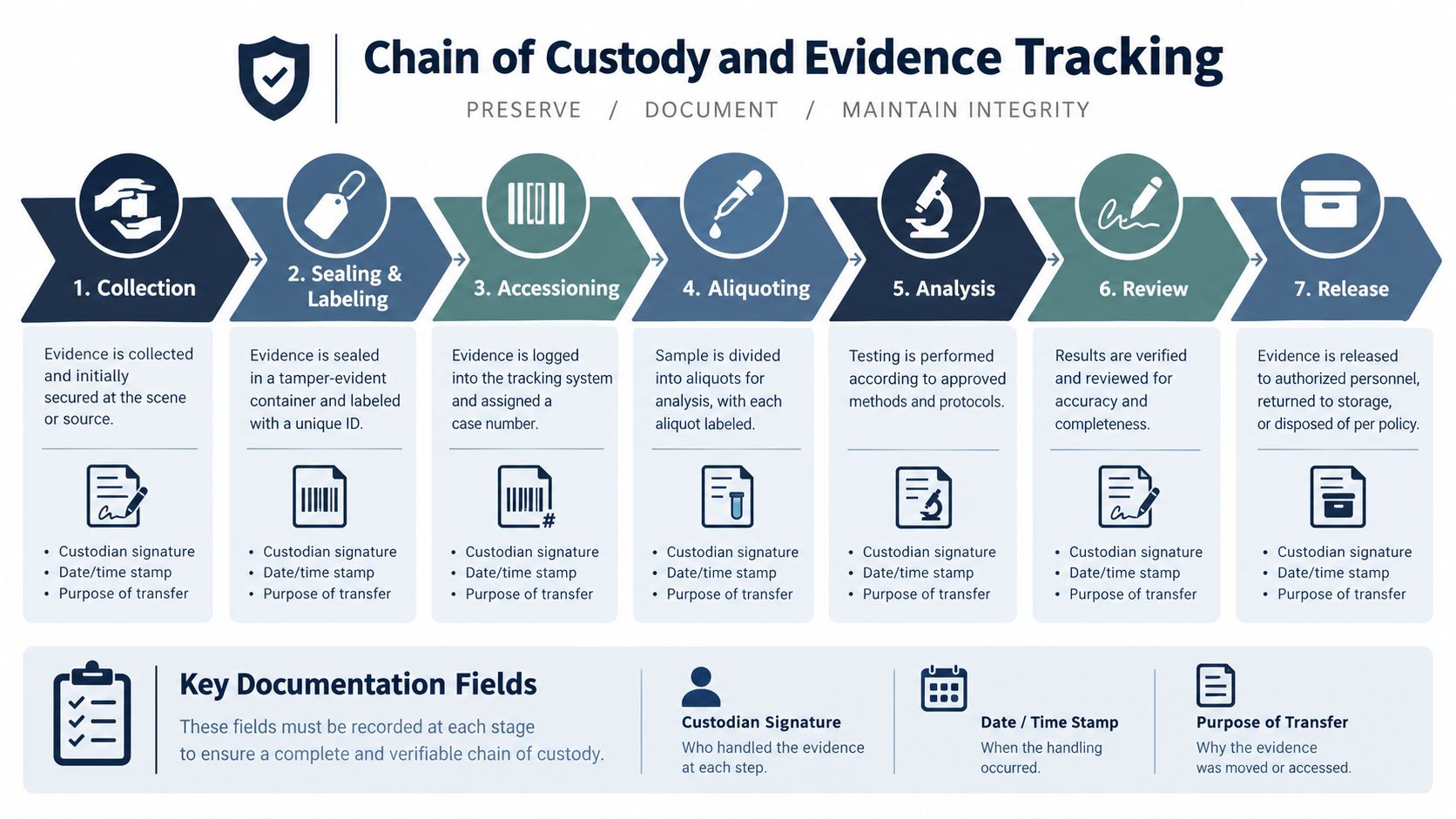
Chain of custody is the documented history of who possessed a specimen, when possession changed, what action was taken, and where the specimen was stored. It begins at collection and continues through final reporting, retention, and disposal.
Each specimen needs a unique identifier that connects the physical container to the case record. The container should be sealed in tamper-resistant packaging, and every handoff should record the date, time, signature, recipient, and transfer details. Separate evidence sets should have separate documentation rather than being grouped under a vague general entry.
What the record should show
The New York City Office of Chief Medical Examiner's toxicology information describes the importance of documenting identifiers, sample details, collection time, recipient, and delivery method. The forensic toxicology standards published by the New York State Department of Health further describe internal custody records that identify every person handling a specimen or aliquot, record dates of receipt, transfer, and action, and preserve documentation contemporaneously with accessions, temporary storage, analysis, long-term storage, and disposal.
A practical custody record should make it possible to answer these questions:
- Identity: Which specimen or aliquot was handled?
- Condition: Was the seal intact, and was any discrepancy recorded?
- Person: Who received, transferred, opened, analyzed, or stored it?
- Timing: What date and time did each event occur?
- Purpose: Why was the specimen moved or opened?
- Location: Where was it held before and after the action?
- Disposition: When was it retained, returned, or discarded?
Internal controls and auditability
Specimens should remain in dedicated, secured storage under conditions that preserve integrity until authorized disposal. An aliquot created for a second test must have its own traceable relationship to the original specimen. A corrected report should preserve the original record, document the reason for correction, and identify the person who approved the change.
For attorneys and county officials reviewing a laboratory file, broader audit trail requirements for 2026 provide useful context for understanding why contemporaneous records matter in regulated evidence systems. Our licensed transport and laboratory coordination procedures are designed to preserve custody from collection through reporting, with discrepancies documented rather than corrected.
Analytical Methods and Confirmatory Testing
A preliminary screen and a confirmed result serve different purposes. Screening methods are designed to examine a broad range of substances efficiently and identify findings that require more specific evaluation. A presumptive positive is not, by itself, the final basis for a cause-of-death conclusion.
The two-stage workflow
A defensible workflow generally proceeds in two stages:
- Screening: The laboratory applies validated panels or methods to identify possible drugs, metabolites, alcohols, or other toxic agents.
- Confirmation: The laboratory uses a more specific validated method, often involving mass spectrometric techniques, to identify and measure the substance with greater specificity.
Confirmation should occur in a recognized setting when the result may be used in court. Recent accreditation guidance from the American Board of Forensic Toxicology addresses confirmation testing in a CAP- or SAMHSA-recognized setting and includes external quality expectations for international laboratories before application. The exact test menu depends on the case, specimen condition, suspected substances, and available information.
A confirmed concentration still doesn't answer the entire medicolegal question. Postmortem redistribution, tolerance, drug interactions, disease, decomposition, and specimen location may affect interpretation. The forensic pathologist must compare the toxicology report with autopsy findings, investigative records, prescription information, and other relevant evidence.
A positive screen identifies a testing direction. It doesn't automatically establish impairment, poisoning, or cause of death.
Our team requests testing that fits the case rather than ordering a broad panel without a clear interpretive purpose. The trade-off is straightforward. A narrow panel may miss an unexpected substance, while an indiscriminate panel can produce findings that require careful interpretation without resolving the central question. Method selection should be documented and proportionate to the investigation.
Laboratory Accreditation and Quality Systems
A laboratory can employ skilled analysts and still lack the quality system needed for a court-ready result. Accreditation evaluates not only whether testing can be performed, but whether the laboratory controls personnel competence, methods, equipment, records, quality assurance, and corrective action.
ISO/IEC 17025 is the foundational laboratory standard identified for ABFT recognition through ANAB. The ABFT checklist is assessed in its entirety every 2 years, and ongoing annual continuing education is part of the broader certification and surveillance environment described by ABFT. External proficiency testing and method validation add another layer of independent performance review.
Comparing practical needs with formal standards
| Requirement Category | Baseline Operational Need | Formal Accreditation Standard |
|---|---|---|
| Personnel | Staff must be trained for assigned procedures and able to document competence. | Defined education, training, competency, and continuing-education expectations apply. |
| Methods | Procedures should be suitable for the specimen and testing question. | Methods require validation, controlled changes, and documented performance characteristics. |
| Quality control | Runs need appropriate controls and review of unexpected results. | Quality systems require documented monitoring, corrective action, and objective evidence of compliance. |
| Proficiency testing | The laboratory should demonstrate that analysts can produce reliable results. | External proficiency testing or equivalent external quality assessment supports continuing competence. |
| Records | Case files should preserve custody, raw data, reviews, and reports. | Controlled records must support traceability, audit, and reassessment. |
The laboratory accreditation standards relevant to forensic testing are useful when comparing providers. A certificate alone isn't enough. Attorneys should ask whether the scope of accreditation includes the actual matrix, analyte, and method used in the case.
The New York City Office of Chief Medical Examiner's dual accreditation illustrates how larger public-sector programs formalize testing competence. For counties and private practices, the lesson is practical: evaluate the laboratory's current scope, quality records, proficiency participation, validation documentation, and review process rather than relying on a credential name without context.
Reporting Standards and Statutory Integration
A toxicology report should be readable by a laboratory professional, a forensic pathologist, an attorney, and, when appropriate, a family member seeking a clear explanation. The report must identify the specimens tested, methods used, findings obtained, limitations, and the supporting materials needed to interpret the results.
Consensus standards from the American Academy of Forensic Sciences describe reporting based on the totality of available case information, clear and transparent language, and supporting materials sufficient for interpretation and testimony in postmortem and other forensic contexts. A report that lists concentrations without explaining specimen source or analytical limitations leaves too much room for misunderstanding.
Texas law and the autopsy record
Texas law defines an autopsy report broadly. Under Texas Health and Safety Code Chapter 671, the report includes the postmortem examination report, X-rays, photographs taken during the examination, the toxicology report if any, and other reports involving examination of internal organs and structures after dissection.
That definition matters for litigation and public records review. Toxicology isn't an isolated laboratory attachment. It can form part of the broader autopsy record that supports the cause and manner of death.
Our board-certified forensic pathologists integrate laboratory findings with the physical examination, medical records, investigative information, and relevant history. Cause of death identifies the disease, injury, or toxic exposure that produced death. Manner of death classifies the circumstances, such as natural, accident, suicide, homicide, or undetermined, when the available evidence supports a classification. Neither conclusion should be based on a toxicology number considered alone.
Personnel Qualifications and Certification
Personnel qualifications operate at two connected levels. The laboratory must ensure that analysts meet defined education, training, competency, and continuing-education standards. The physician interpreting the postmortem findings must have the appropriate forensic pathology training and certification.
The American Board of Pathology requirements state that applicants must graduate from medical school, complete an ACGME- or RCPSC-accredited pathology or pathology-subspecialty residency, and complete a minimum of 30 autopsies by the time the application is submitted. The ABPath forensic pathology requirements require AP/CP or AP certification and 12 months of training in an ACGME-accredited forensic pathology program. The forensic pathology examination is a one-day computer-based test with written, practical, and virtual microscopy sections.
What qualifications mean operationally
Credentials don't replace case-specific competence. A qualified team must also know how to:
- Select specimens: Choose matrices that address the circumstances and preserve interpretive value.
- Assess limitations: Recognize degradation, redistribution, contamination, and incomplete history.
- Review data: Confirm that the reported finding matches the validated method and specimen identity.
- Communicate conclusions: Separate established findings from opinions that depend on assumptions.
- Support testimony: Explain procedures, controls, limitations, and conclusions in understandable language.
Every examination performed through Texas Autopsy Services is conducted by a forensic pathologist certified by the American Board of Pathology. Our operations are supported by licensed professionals handling logistics, transport, documentation, and family communication. We don't treat certification as a substitute for a complete quality system. The pathologist's interpretation and the laboratory's process must support each other.
Impact of Toxicology on Death Certification
Toxicology can influence the language used on an official death certificate, but the result must be interpreted with the autopsy and investigation. A detected substance may be incidental, therapeutic, contributory, or causal. The concentration, specimen source, clinical history, autopsy findings, and circumstances all matter.
Texas provides a specific rule for certain fentanyl-related deaths. Under Texas Health and Safety Code Chapter 193, when toxicology shows a controlled substance in Penalty Group 1-B at a lethal amount or concentration under generally accepted scientific standards, and the autopsy is consistent with opioid overdose, the death certificate must use either “Fentanyl Poisoning” or “Fentanyl Toxicity.”
Applying the rule carefully
The statutory language contains connected conditions. A laboratory finding alone doesn't satisfy the complete requirement. The toxicology must show the relevant controlled substance at a lethal amount or concentration, and the autopsy must be consistent with opioid overdose.
That is why a forensic pathologist shouldn't copy a laboratory result directly into a death certificate without medical and investigative analysis. A report may identify fentanyl, a metabolite, or another substance, yet the final cause-of-death wording may depend on evidence outside the toxicology report.
Families may also encounter differences between a preliminary statement, a finalized autopsy report, and a death certificate amended after additional testing. Those documents serve related but distinct purposes. Our team explains the relationship among them without treating any single laboratory result as self-interpreting.
Where Texas law requires the specified terminology, the certifying authority must use the statutory wording. Where the evidence doesn't meet that rule, the pathologist must document the medically supported conclusion using appropriate cause-of-death language.
Quick Reference Compliance Checklist
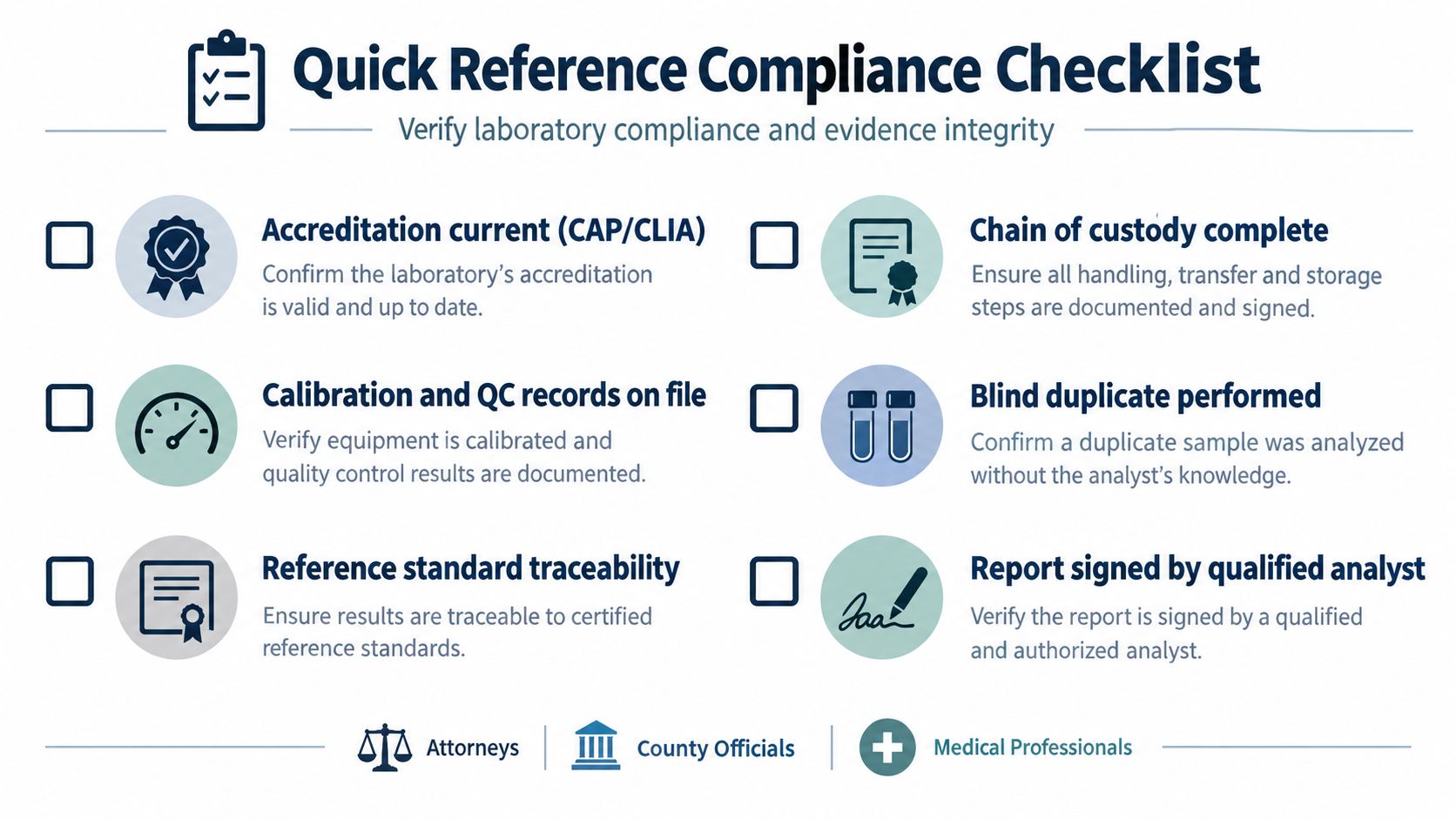
Attorneys, county officials, and medical professionals can evaluate a forensic toxicology file by checking the process in the same order the evidence moved through the system. The following checklist isn't a substitute for legal advice or laboratory accreditation review, but it identifies common gaps that deserve follow-up.
Specimen and custody review
- Specimen identity: Confirm that every container and aliquot has a unique identifier linked to the case.
- Collection detail: Verify the matrix, anatomical source, collection date and time, collector, and specimen condition.
- Sealing: Check for tamper-resistant packaging and a record of seal condition at each opening.
- Storage: Confirm that secure storage conditions were documented from accession through disposal.
- Transfers: Look for recipient names or signatures, dates, times, purpose of transfer, and delivery method.
- Separate evidence sets: Ensure that different evidence groups have distinct custody records.
- Transport: Review who transported the specimens, where they were delivered, and whether any discrepancy was recorded.
Laboratory and report review
- Accreditation scope: Confirm current accreditation and verify that it covers the relevant testing method, analyte, and specimen type.
- Validation: Request the method validation summary or applicable performance documentation.
- Quality control: Determine whether controls, instrument maintenance, calibration, and corrective actions were reviewed.
- External assessment: Ask whether the laboratory participates in proficiency testing or external quality assessment relevant to the work.
- Confirmation: Distinguish a preliminary screen from a confirmed result.
- Analyst qualification: Confirm that the report was reviewed and signed by qualified personnel.
- Interpretive limits: Check whether the report explains uncertainty, specimen limitations, and the difference between detection and causation.
A file that contains every listed item is easier to defend and easier to understand. A file with missing records isn't automatically invalid, but the gap should be identified, explained, and evaluated by qualified counsel and forensic professionals.
Glossary of Forensic Toxicology Terms
Chain of custody is the documented history of an item of evidence. It identifies the specimen, each person who handled it, each transfer, each action taken, and the storage or disposition event that followed.
Cause of death is the disease, injury, toxic exposure, or combination of conditions that produced death. In a toxicology case, a detected substance may be part of the cause, a contributing factor, or an incidental finding. The classification depends on the full medicolegal record.
Manner of death describes the circumstances in which death occurred. Common classifications include natural, accident, suicide, homicide, and undetermined. Toxicology can inform the classification, but it doesn't determine manner by itself.
Postmortem toxicology is the analysis of biological specimens collected after death to identify and measure drugs, alcohols, poisons, metabolites, or other chemicals relevant to the investigation.
Screening test is an initial analytical procedure intended to detect a broad range of possible substances. A screening result may indicate that confirmatory testing is needed.
Confirmatory testing uses a more specific, validated analytical method to establish the identity and, when appropriate, concentration of a substance. Confirmation provides stronger analytical support than a preliminary screen, but interpretation still requires case context.
Matrix means the biological material tested, such as peripheral blood, urine, vitreous humor, liver, or lung. The same substance can have different interpretive significance depending on the matrix.
Postmortem redistribution describes movement of a substance between tissues and body fluids after death. It can affect measured concentrations and is one reason specimen site and collection details matter.
Aliquot is a measured portion removed from an original specimen for testing, retesting, or another documented purpose. An aliquot must remain traceable to the parent specimen.
Accreditation is formal recognition that a laboratory operates according to defined competence and quality requirements within an identified scope. ISO/IEC 17025 addresses testing laboratory competence and quality systems.
Method validation is the documented process of demonstrating that an analytical method performs appropriately for its intended use, specimen type, and target substances.
Totality of available case information means that interpretation considers the toxicology findings alongside autopsy observations, medical records, scene information, investigative reports, and other relevant evidence. It prevents a single result from being treated as a complete explanation without context.
Texas Autopsy Services provides independent autopsy, second-opinion, and forensic pathology support across all 254 Texas counties, with every examination performed by a board-certified forensic pathologist certified by the American Board of Pathology. If you need help evaluating a toxicology finding, preserving evidence, or arranging a private autopsy, visit Texas Autopsy Services to contact our team directly and discuss the next appropriate step.