September 17, 2026 · Texas Autopsy Services
Pediatric Autopsy: What Families Should Know in Texas
Pediatric autopsy explained for Texas families. Learn what the exam covers, consent rules, timelines, and how independent pathologists approach each case.
On this page
- What a Pediatric Autopsy Actually Is
- Why Pediatric Autopsy Findings Matter
- What the Examination Covers
- Full, Limited, and Minimally Invasive Options
- Texas Consent Rules and Reporting Deadlines
- How a Sensitive Case Is Handled From Call to Report
- Common Misconceptions Families Should Question
- Practical Questions and How to Reach Us
A pediatric autopsy is a postmortem examination of a fetus, infant, or child performed by a board-certified forensic pathologist to determine the cause and manner of death. In Texas, written consent from the legally authorized family hierarchy is required before the examination begins, except in a narrow statutory medical examiner or justice-of-the-peace exception.
Families often reach us after receiving an explanation that feels incomplete. A newborn may have died without a clear reason, an infant may have died suddenly, or a child's medical records may leave important questions unanswered. In those moments, an autopsy isn't an accusation against the treating team. It's a structured medical investigation intended to clarify what happened, what could not have been known during life, and whether the findings matter for relatives or future pregnancies.
- A pediatric autopsy examines fetal, neonatal, infant, and childhood deaths using age-appropriate pathology methods.
- Autopsy findings can correct or refine a clinical diagnosis, including in cases where the treating team had a reasonable explanation before death.
- Families may discuss full, limited, minimally invasive, and stepwise options, along with tissue, organ, and DNA retention.
- Texas law governs consent, authorization, and certain reporting duties, while a medical examiner or justice of the peace may control deaths requiring a public investigation.
- Every examination performed by Texas Autopsy Services is conducted by a forensic pathologist certified by the American Board of Pathology, with documented handling and communication throughout the process.
A typical first call is quiet and practical. We ask where the child is located, whether a medical examiner or justice of the peace has accepted the case, what questions the family needs answered, and whether burial or cremation arrangements create time constraints. We also explain what an independent autopsy can and cannot establish before anyone signs consent.
What a Pediatric Autopsy Actually Is
A pediatric autopsy is a postmortem medical examination of a fetus, infant, or child by a forensic or pediatric pathologist. Its purposes are to determine the cause of death, meaning the disease, injury, or condition that led to death, and the manner of death, meaning the classification of the circumstances, such as natural, accidental, suicide, homicide, or undetermined when those categories apply.
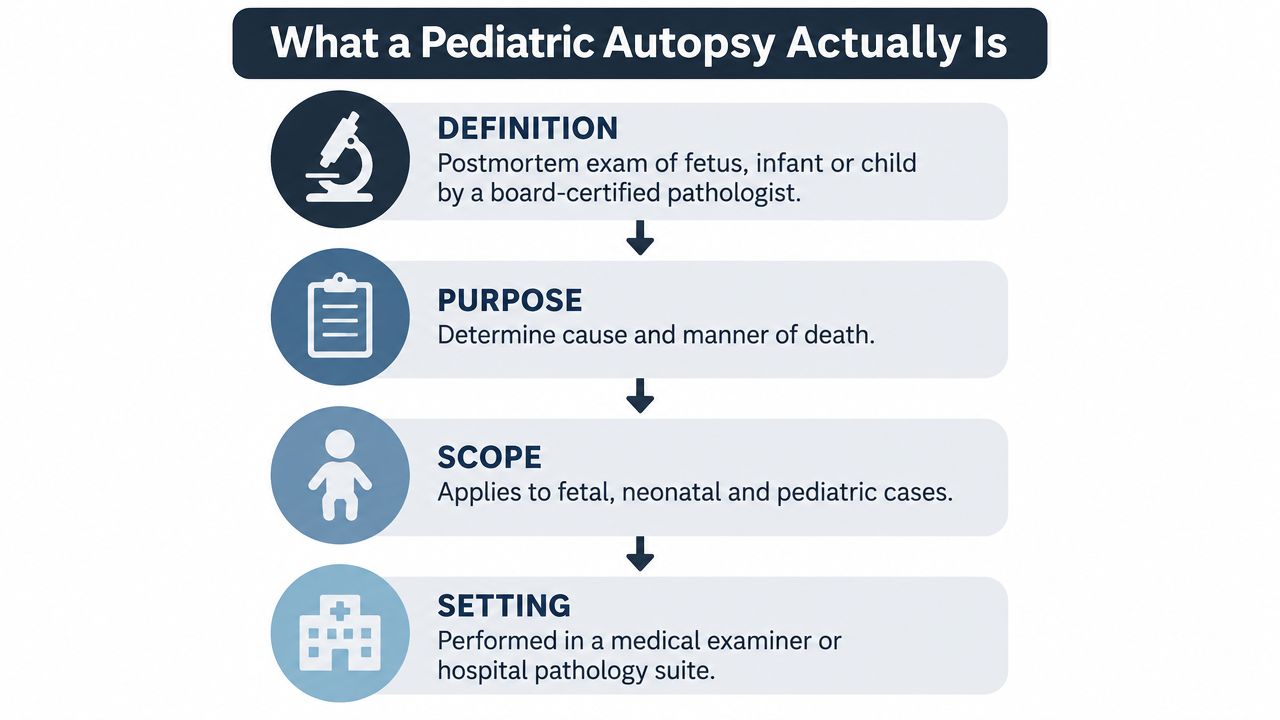
Age changes the examination because the medical questions change.
Fetal and perinatal examinations
A fetal autopsy generally concerns a stillbirth from 20 weeks of gestation through delivery. The placenta, umbilical cord, fetal growth, congenital development, and signs of infection often receive particular attention. In fetal loss, placental examination and maternal pregnancy history can be as important as the fetal examination itself.
Perinatal and neonatal cases include the period around birth and the first month of life. Our board-certified forensic pathologists look closely for congenital anomalies, infection, complications involving delivery, respiratory problems, and conditions that may not have been apparent during pregnancy.
Infant and childhood examinations
After the neonatal period, the questions more often involve natural disease, accidental injury, sudden unexplained death, infection, metabolic conditions, or inherited disorders. The examination remains carefully adapted to the child's age, development, size, and medical history.
A pediatric autopsy isn't performed because the family is presumed to be at fault. It's performed because a complete postmortem examination can provide medical evidence that records and imaging alone may not supply. Our explanation of infant autopsy considerations addresses questions that commonly arise after an unexpected infant death.
Before any incision, the person with legal authority must provide written authorization unless a statutory investigative exception applies. That consent process matters, and families should understand both the scope they're authorizing and what may happen to tissue or samples afterward.
Why Pediatric Autopsy Findings Matter
A child may die after doctors have formed a reasonable diagnosis, yet the postmortem examination can show a different cause or reveal a second condition. In one pediatric series involving 240 cases, the clinical and pathological diagnoses agreed in 169 cases, or 70.5%, while 71 cases, or 29.6%, differed before death. Another analysis of 141 pediatric cases found a 36.2% misdiagnosis rate, with the final pathological diagnosis matching the clinical diagnosis in 63.8% of cases. The same published pediatric autopsy analysis also summarizes historical perinatal autopsy rates, including 92.4% for pregnancies terminated for fetal abnormalities, 87.7% for intrauterine death, and 58.8% for liveborn babies.
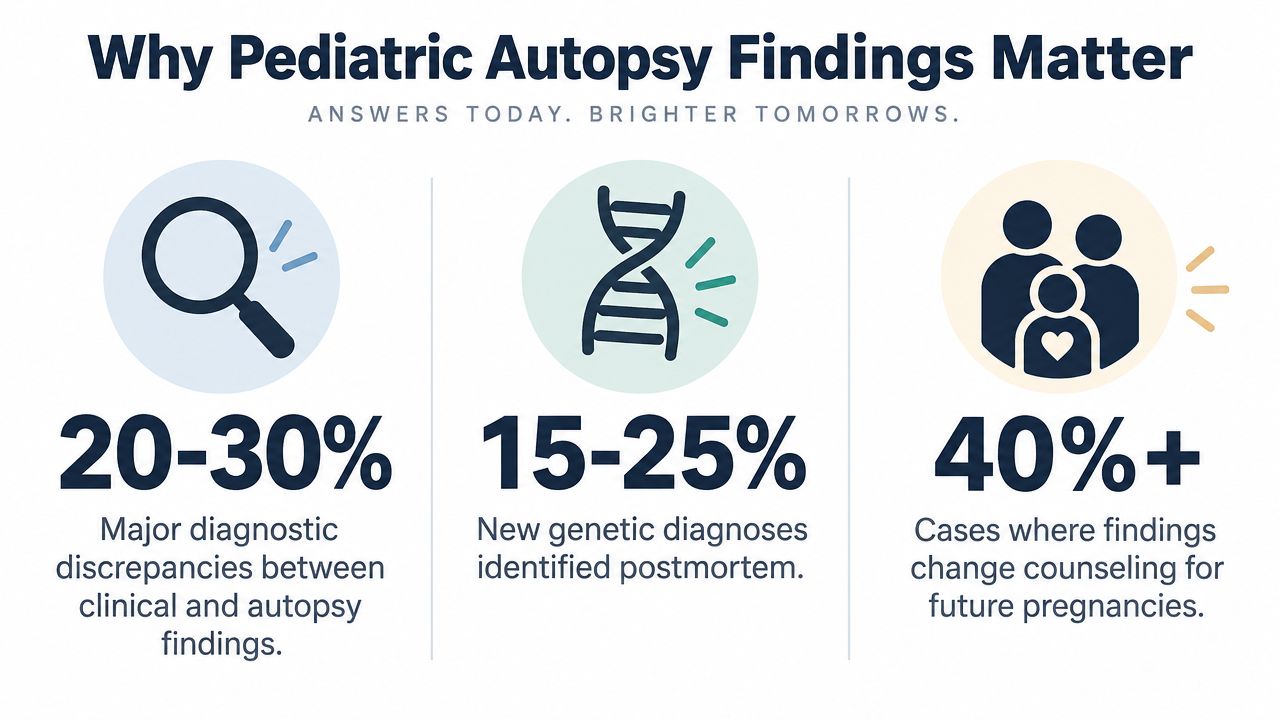
These results do not mean clinicians acted carelessly. Children can deteriorate quickly, and several disorders may produce similar signs. The examination gives the pathologist a way to compare the clinical impression with the organs, tissues, laboratory results, and medical history. That comparison may confirm an unavoidable disease, or identify infection, a structural abnormality, a metabolic disorder, or an inherited condition that was not visible during life.
What the result can change
For a family, the findings may serve several purposes:
- Medical confirmation: The examination may support the suspected diagnosis and explain how it caused death.
- Family risk assessment: Findings may lead to genetic counseling or testing for parents, siblings, or future pregnancies.
- Clinical learning: Hospitals and treating clinicians may use the report in mortality review and quality improvement.
- Legal evaluation: An independent medical opinion may help when the cause of death is disputed or medical records conflict.
Historical perinatal data also show that examination has been pursued when fetal abnormalities or intrauterine death created difficult questions. More recent U.S. national data found fetal autopsy in 20.9% of stillbirths. These figures do not decide whether a particular family should authorize an examination. That decision depends on the medical questions, the available consent options, and what information the family hopes to obtain.
A report finding no hidden disease still has value. A documented negative result can narrow possible diagnoses, reduce unsupported blame, and give genetic or prenatal specialists a sounder basis for counseling. Families considering related legal questions may also review this family wrongful death lawsuit guide, while obtaining legal advice from an attorney familiar with the specific case.
What the Examination Covers
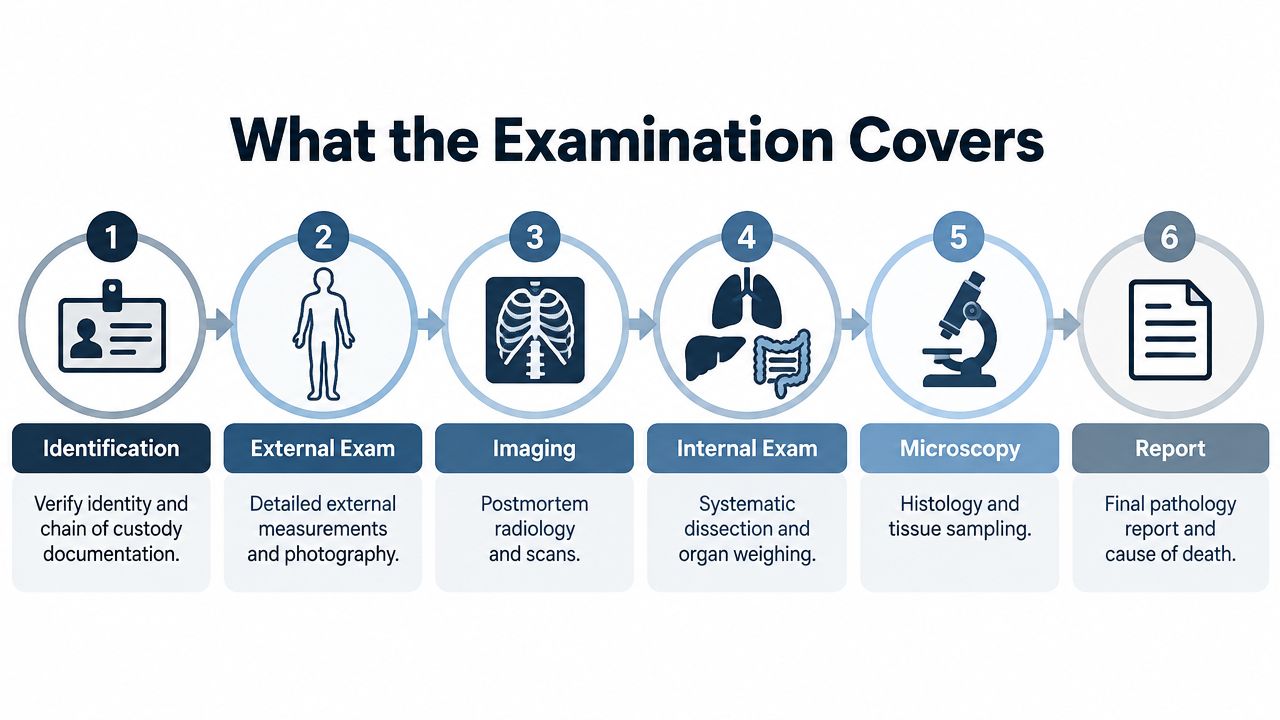
A complete pediatric autopsy uses several layers of examination. The purpose isn't to collect isolated observations. It's to connect identity, history, anatomy, microscopy, imaging, and laboratory testing into one defensible medical opinion.
Identification and external examination
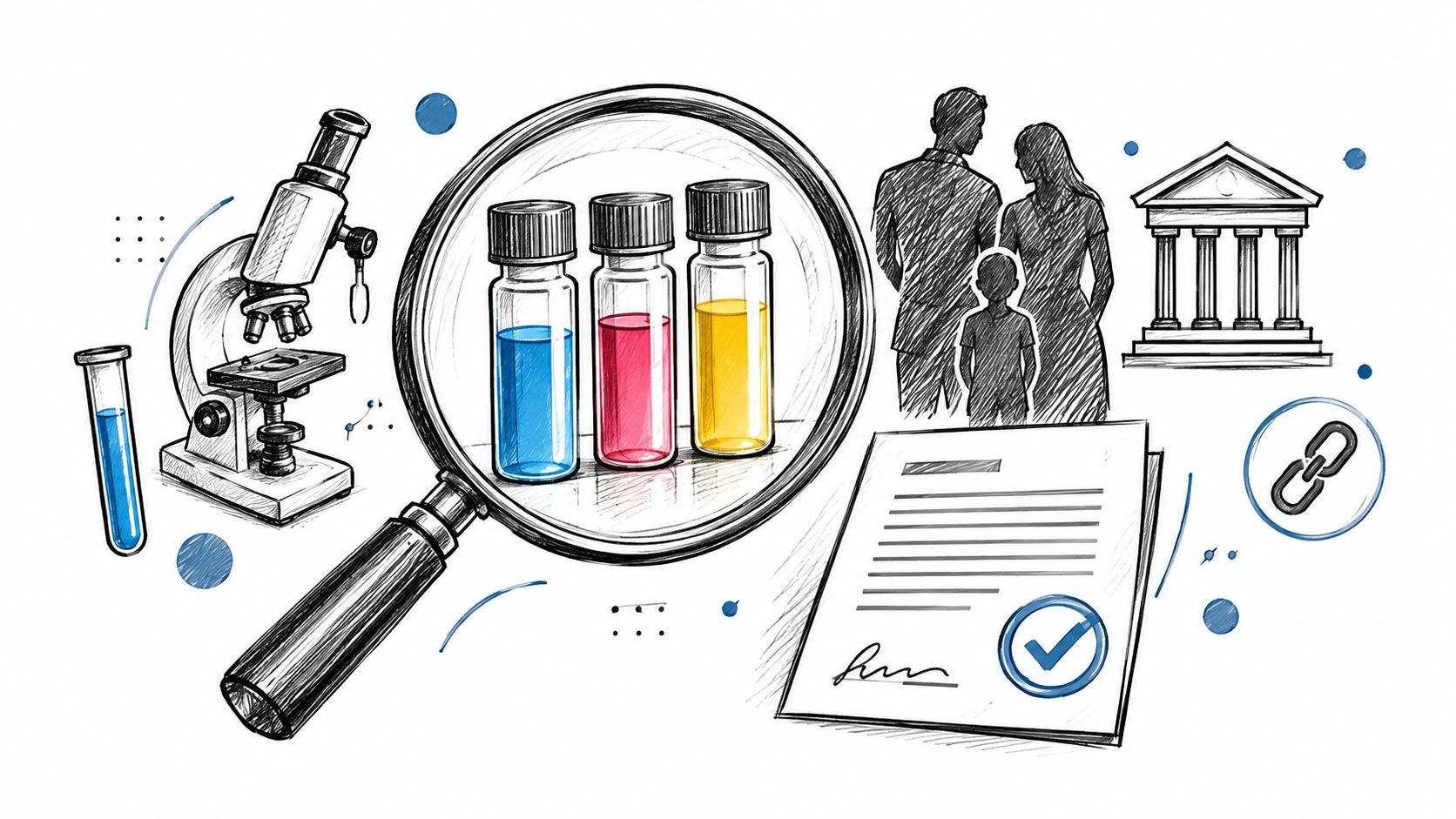
The process begins with identity verification, authorization records, photographs, and chain of custody documentation. Chain of custody is the written record showing who received, stored, examined, transferred, or released the remains and any evidentiary samples.
The external examination records the child's condition, growth measurements, gestational-age indicators when relevant, developmental features, dysmorphic findings, medical devices, therapeutic marks, injuries, and other visible details. The guidance for unexplained infant and child deaths recommends a full external examination and complete internal assessment because serious findings may not be visible from the outside.
Imaging and internal examination
Postmortem radiographs or CT imaging may help identify skeletal abnormalities, fractures, foreign objects, or injury patterns. Imaging can be especially useful when the question involves skeletal dysplasia, trauma, or a complex congenital condition.
Internal examination then evaluates the brain, neck structures, chest, abdomen, pelvis, and major organs. Organ weights and measurements are interpreted with pediatric reference standards because normal anatomy changes substantially with growth. The examination guidance calls for complete dissection of these regions, rather than a cursory inspection.
Microscopy and laboratory studies
Histology means examining thin tissue sections under a microscope. Major organs are sampled to detect inflammation, infection, ischemic injury, developmental abnormalities, metabolic storage, or other changes that gross examination cannot establish.
Additional testing depends on the history and findings. It may include toxicology, microbiology, metabolic studies, skeletal imaging, or genetic testing. Chromosomal microarray and targeted genetic panels can be considered in fetal and neonatal cases, while metabolic testing may be appropriate when an inherited metabolic disorder is possible. Toxicology is selected based on age, circumstances, medications, and suspected exposure.
The final report integrates these findings with medical records, scene information when available, pregnancy history, and laboratory results. A single abnormality doesn't automatically explain a death. The pathologist must determine whether it is sufficient, incidental, or part of a larger disease process.
The following video provides a visual introduction to the examination process. It's educational information only and doesn't replace case-specific guidance from a qualified forensic pathologist.
Full, Limited, and Minimally Invasive Options
Families don't always have to choose between an unrestricted examination and no examination at all. The appropriate scope depends on the medical questions, religious or cultural beliefs, the condition of the remains, and whether a public agency has jurisdiction.
| Scope | Procedures Examined | Tissue Retention | Best Fit |
|---|---|---|---|
| Full autopsy | External examination, internal dissection, histology, imaging when indicated, and ancillary testing | May involve retained tissue, slides, blocks, organs, or samples when needed for diagnosis | Cases with an unclear cause, multiple possible explanations, suspected inherited disease, or complex injury |
| Limited autopsy | Examination restricted to specified organs or body regions | Retention is limited to the authorized areas and required samples | Families with defined questions, religious concerns, or partial clinical answers |
| Minimally invasive examination | External review, imaging, and needle-core tissue biopsies without opening the body cavities | Small tissue samples may be retained for microscopy or testing | Families seeking diagnostic information with less alteration of the body |
A full examination generally offers the broadest opportunity to detect unexpected disease. A limited examination can answer a focused question, but it may miss an important finding outside the selected region. A minimally invasive approach can preserve appearance and may be acceptable when traditional autopsy consent is withheld, but it may not answer every question that a complete dissection could address.
A feasibility study reported successful completion of minimally invasive perinatal and pediatric autopsy in 97.8% of cases. Adequate histologic sampling was reported for the heart and lungs in 100%, kidneys in 100%, liver in 96.7%, spleen in 94.5%, adrenal glands in 89.0%, pancreas in 82.4%, and thymus in 56.0% of cases, with no significant difference in the unexplained rate for stillbirths and intrauterine fetal deaths compared with standard autopsy (study details).
Practical rule: Ask exactly which organs, samples, slides, blocks, and DNA materials may be retained, and whether they'll be returned, destroyed, or stored under a stated policy.
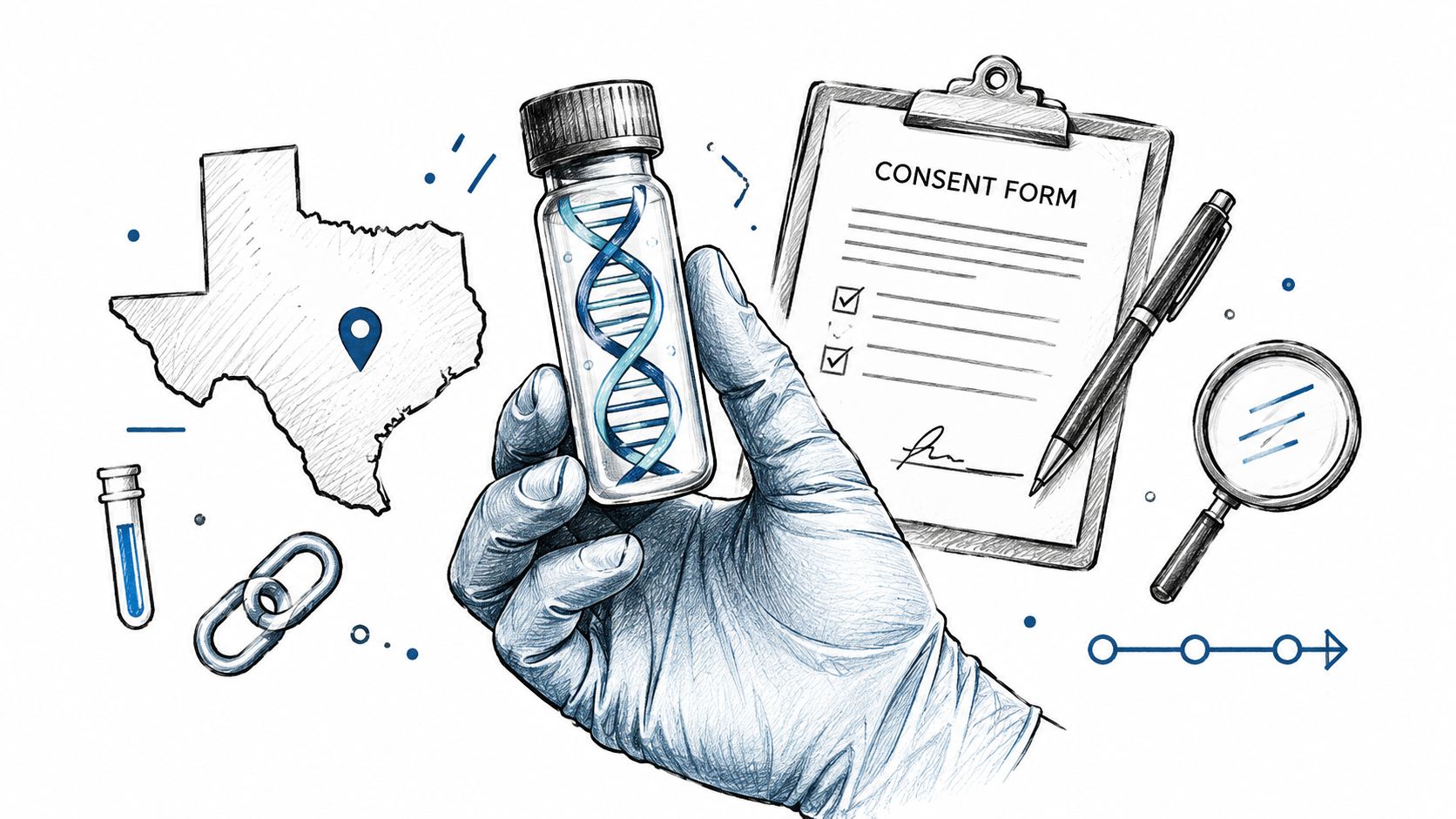
Consent should address the examination scope, ancillary testing, tissue retention, and whether genetic material may be used for additional evaluation. Those choices can affect burial or cremation planning, so they deserve a direct conversation before authorization.
Texas Consent Rules and Reporting Deadlines
Texas requires written informed consent before a physician performs a postmortem examination or autopsy, unless the person authorized to consent cannot be identified or contacted after due diligence. Under the Texas exception, an authorized medical examiner, justice of the peace, or county judge may permit the examination only when it occurs not less than 24 hours and not more than 48 hours after death or after the body came into official possession, as provided by Texas Code of Criminal Procedure Article 49.32.
For a private pediatric autopsy, the written authorization must come from the person legally entitled to provide it. Texas rules establish a hierarchy that places the spouse first, followed by the person acting as guardian or the executor or administrator of the estate, then adult children, parents, and adult siblings. When multiple people at the same level are reasonably available and one objects, a majority may consent under the applicable form rules (Texas autopsy consent form requirements).
Which agency controls the case
A private examination cannot override the authority of a medical examiner, justice of the peace, or other official agency that has accepted jurisdiction. Sudden, unexplained, suspicious, accidental, or potentially criminal deaths may require an official investigation. Families should ask whether the body is under public authority before arranging independent services.
The Texas autopsy request guidance explains common authorization questions in accessible terms. We still recommend confirming the specific situation with the agency handling the death, because jurisdiction and consent can depend on the circumstances.
Texas Health and Safety Code requirements also address reporting. A designated physician who performs an autopsy ordered by state law must file the autopsy report no later than the 30th day after the autopsy request, unless a required test cannot be completed within that period and the physician certifies that fact when filing the report (Texas Health and Safety Code). A statutory deadline doesn't mean every private examination follows the same schedule. Histology, toxicology, microbiology, metabolic testing, and genetics can affect completion, so families should request a written explanation of expected milestones.
How a Sensitive Case Is Handled From Call to Report
The first conversation should establish facts, not pressure a family into a decision. Our team asks for the child's identity, current location, death certificate or pronouncement information when available, agency involvement, medical records, and the questions the family wants answered. We explain the proposed scope, fees, transport arrangements, and factors that can affect reporting before proceeding.
If the case is accepted, licensed transport professionals coordinate collection from a hospital, hospice, funeral home, or residence. Identification is checked at transfer, and the movement of the remains is documented. Secure storage and controlled access protect the integrity of the examination and support a complete chain of custody.
Examination and laboratory work
At the examination facility, our pathologists review the history and perform the authorized procedure with respect for the child and the family's wishes. The remains are prepared for release after the examination, while tissue sections, slides, blocks, and laboratory samples are handled according to the consent terms and applicable requirements.
Histology processing and ancillary studies may continue after the physical examination. We contact the family or authorized representative when important milestones arise, especially if preliminary information affects funeral arrangements, vital records, or an urgent family medical question.
Our death scene investigation information explains why scene context can matter in some forensic cases, although a private pediatric autopsy doesn't replace an official scene investigation when a government agency has jurisdiction.
Report review
The final report describes the relevant findings, the cause of death, the manner of death when determinable, and limitations that affect interpretation. Our team reviews the report with the family, attorney, or authorized recipient by phone or meeting, using plain language rather than assuming medical training.
The timing depends on the examination scope and testing. Families should receive clear updates rather than an unconditional promise, particularly when genetic, metabolic, or toxicology studies remain pending.
Common Misconceptions Families Should Question
Families often hear conflicting advice about what an autopsy will mean for the child's appearance, funeral, or timeline. The practical answer depends on the examination scope and the condition of the remains, but several common statements are too absolute.
Myth and fact
Myth: An autopsy always disfigures the child.
Fact: Standard incisions are placed so clothing, burial clothing, or swaddling generally conceals them. Families can ask how the selected procedure affects an open-casket service.Myth: An autopsy prevents an open-casket funeral.
Fact: A completed examination doesn't automatically prevent viewing. The funeral director and pathology team can discuss preparation, timing, and the family's preferences.Myth: Burial must wait for weeks.
Fact: The physical examination and final report are separate events. The remains may be released before every laboratory study is complete, depending on the case and the receiving funeral professional. The final written report can take longer when specialized testing is needed.Myth: Cremation makes every autopsy question impossible.
Fact: Cremation destroys many forms of anatomical evidence, but records, prior imaging, retained tissue, photographs, and other materials may still permit a limited review. Once cremation occurs, options are narrower, so families should seek guidance promptly.
A provider should answer these questions before consent:
- Credentials: Is every examination performed by a forensic pathologist certified by the American Board of Pathology?
- Scope: Which organs, tissues, imaging studies, and laboratory tests are included?
- Retention: What happens to retained tissue, organs, slides, blocks, and DNA?
- Cost: Is the estimate flat-rate and all-inclusive, or can testing and transport create additional charges?
- Review rights: Can the family request a second opinion from another qualified pathologist?
A second opinion may involve records, photographs, slides, tissue blocks, or a review of a prior autopsy report. It may not require another examination of the body.
Practical Questions and How to Reach Us
Families usually need direct answers to a small group of practical questions before deciding. Examination type, transport distance, authorization, laboratory studies, and the condition of the remains all affect the process. Texas Autopsy Services provides private autopsy services throughout all 254 Texas counties, with licensed in-house transport, direct team communication, and flat-rate, all-inclusive pricing explained before authorization.
What to prepare for the first call
Gather whatever is available, without delaying the call while searching for every document:
- Identification information: The child's full name, date of birth, and current location.
- Death documentation: Pronouncement details, funeral home information, and any medical examiner or justice-of-the-peace contact.
- Medical records: Hospital records, prior diagnoses, medication history, imaging, and laboratory results.
- Pregnancy history: For fetal or neonatal cases, prenatal records, ultrasound findings, delivery notes, and placental information can be important.
- Family questions: Write down the specific uncertainty, such as infection, congenital disease, inherited risk, trauma, or disagreement about the listed cause.
Families sometimes compare this first conversation with the work of a medical patient intake coordinator. The important distinction is that our team collects intake information directly for a forensic pathology consultation and explains what the examination can realistically answer.
Frequently asked questions
How long does a pediatric autopsy take?
The examination itself and the completed report follow different schedules. Most cases are completed within 24 to 48 hours for the examination, while histology and specialized testing may extend the final reporting process. We provide case-specific expectations rather than a guarantee.
How much does a private autopsy cost?
Cost depends on the examination scope, transport, storage, and ancillary testing. We explain the fee and payment options before consent, including whether additional testing is included or requires separate authorization.
Can a family request a second opinion?
Yes. A second opinion may review an existing autopsy report, medical records, photographs, slides, tissue blocks, imaging, and laboratory results. The available material determines how thorough the review can be.
Who receives the final report?
The report is provided to the authorized recipient identified during intake. Families may also authorize delivery to an attorney, treating clinician, insurer, government agency, or other appropriate party, subject to privacy and legal requirements.
Can the pathologist discuss the findings with us?
Our team can arrange a follow-up call or meeting to explain the report in plain language. Attorneys and medical professionals may receive a separate technical discussion when the authorization and case purpose support it.
Texas Autopsy Services provides independent pediatric, fetal, perinatal, and second-opinion autopsy services across Texas, with every examination performed by a forensic pathologist certified by the American Board of Pathology. If your family needs clarity after a child's death, visit Texas Autopsy Services to request a confidential consultation and discuss the next appropriate step.