November 3, 2026 · Texas Autopsy Services
Stillbirth Causes, Testing and What Families Can Ask
Stillbirth evaluation covers placenta, autopsy, genetics and labs. See what each test can show and how Texas families request an independent exam.
On this page
According to CDC stillbirth information, nearly 1 in 3 stillbirths had no specified cause in earlier U.S. reporting. On a global scale, UNICEF stillbirth estimates counted an estimated 1.9 million babies stillborn worldwide in 2023 at 28 weeks or later, about one death every 17 seconds.
A number that large does not answer the question a family carries home from the hospital. They want to know what happened to their baby, what testing can still show, and which records to request before those options narrow. Three things matter first: how often stillbirth happens, which exam answers which question, and which office holds which record.
- Stillbirth is not rare in the United States, and a large share of cases are first recorded without a specified cause.
- Recording thresholds differ, with many U.S. reports counting deaths at 20 weeks of pregnancy and international comparisons often using 28 weeks.
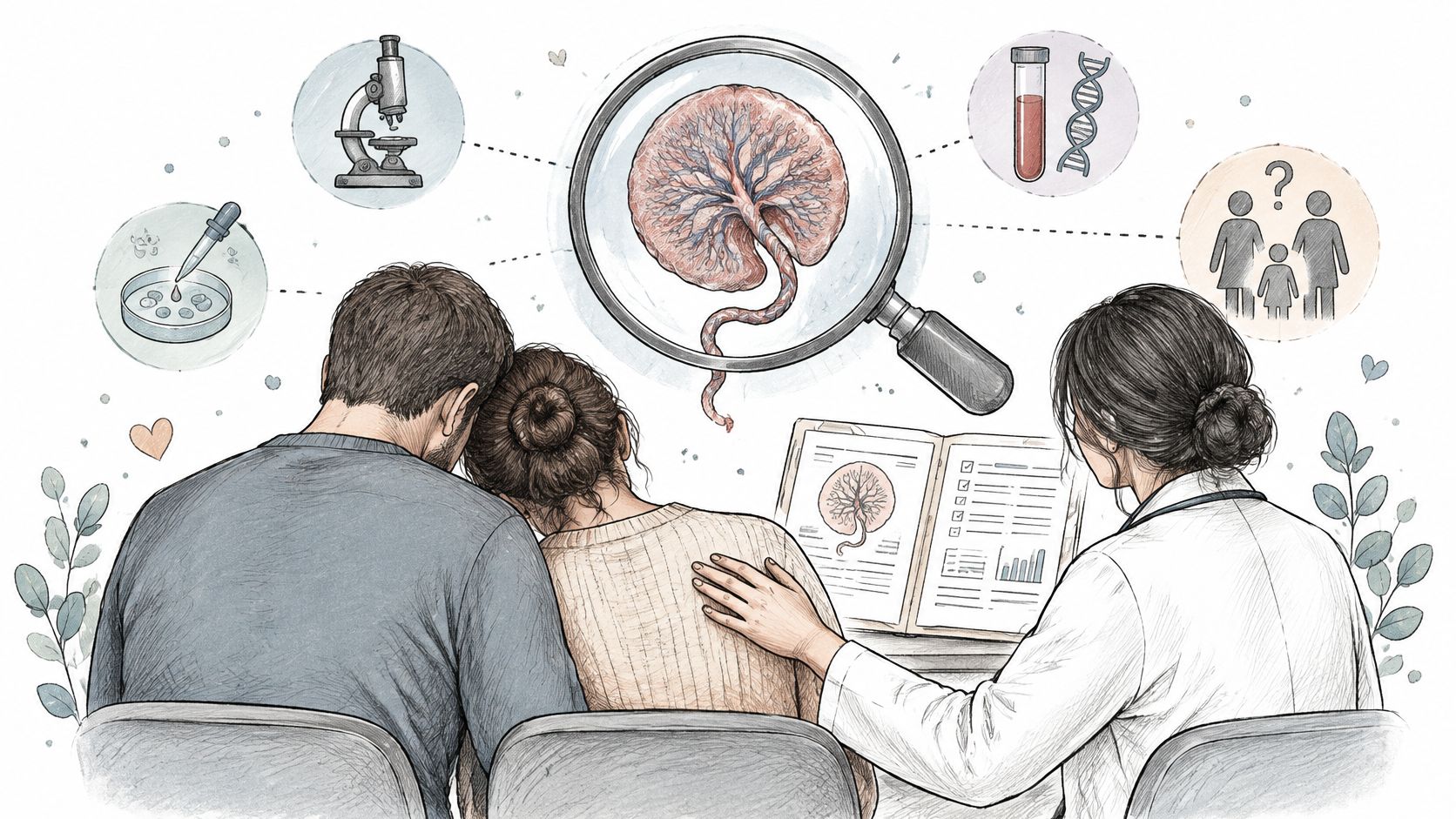
- Each exam in a stillbirth workup has its own job. The placenta is often the most informative single specimen, while examination of the baby, genetic testing, and laboratory work each look for problems the placenta cannot show. It works the way a mechanic checks the engine, the fuel line, and the wiring separately before naming a failure.
- A complete review fits findings together across the placenta, cord, baby, genetics, and pregnancy records rather than relying on one result.
- Records have different holders, so families request prenatal, delivery, pathology, and certificate documents separately.
- Unknown can be an honest result after a complete review, and it does not by itself prove poor care.
These are the questions we help families work through, one exam and one record at a time.
What Stillbirth Means for a Family
A family may leave the hospital with a short discharge note, a fetal death certificate worksheet to complete, and no clear explanation. One document records care given. Another creates a legal record. Neither is the same as a full postmortem review of the baby, placenta, and pregnancy history.
Stillbirth means the death of a baby before or during birth. Families hear two timing thresholds, and the difference causes confusion. Many U.S. reports count deaths at 20 weeks of pregnancy or later, while international comparisons often use 28 weeks or later. The same loss can appear in one count and not the other, so it's worth asking which definition a report uses before comparing numbers.
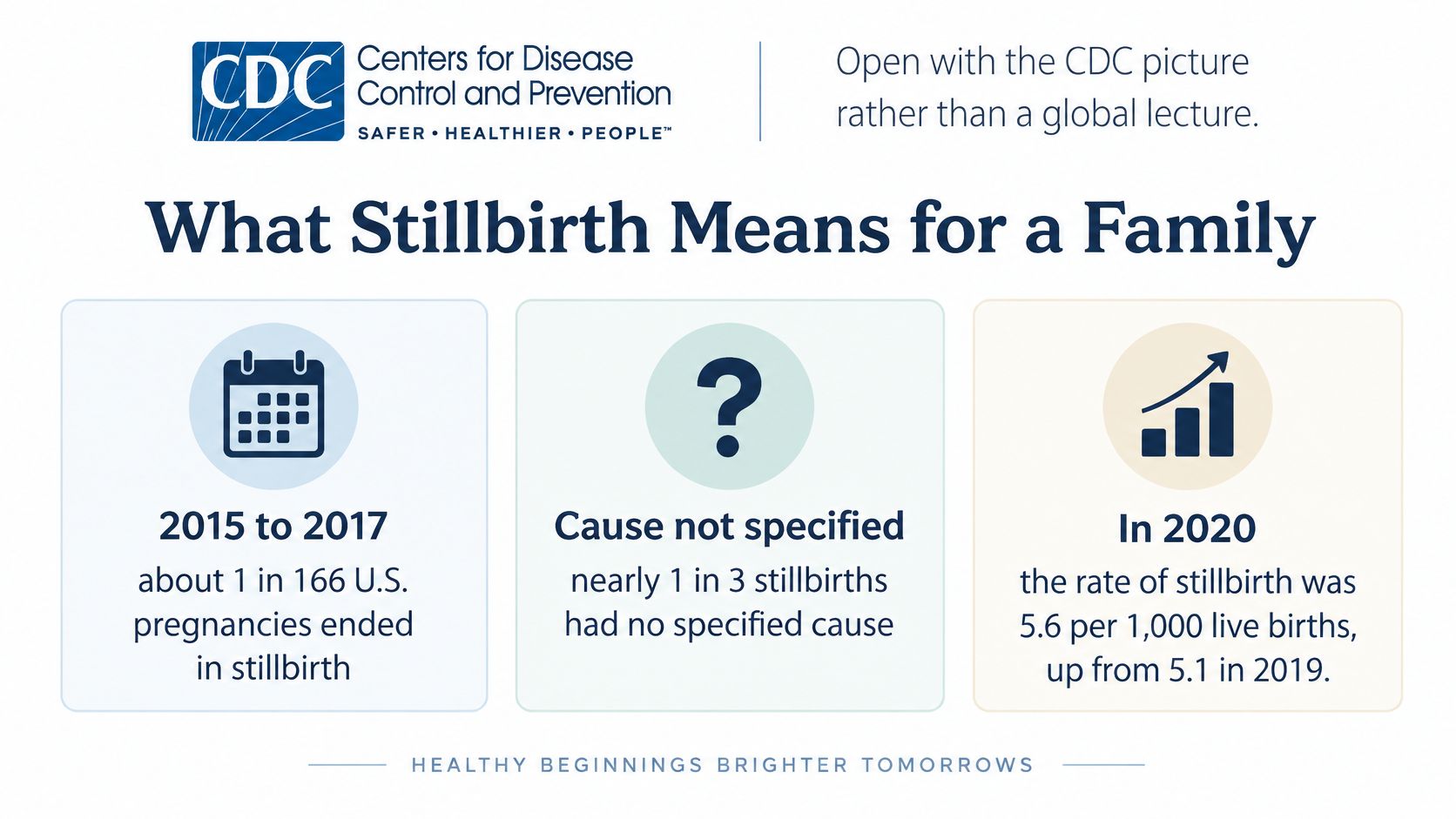
The U.S. picture is the useful starting point for Texas families. According to CDC stillbirth information, about 1 in 166 U.S. pregnancies ended in stillbirth for 2015 to 2017, and nearly 1 in 3 stillbirths had no specified cause. In 2020, stillbirth occurred among non-Hispanic Black women at approximately twice the rate observed among non-Hispanic White women and Asian or Pacific Islander women.
What Those Numbers Can and Cannot Say
Those figures show burden and unequal risk across groups. They don't name the cause in any one death, and a population level disparity should never substitute for a case specific review. A higher group rate isn't a diagnosis for a family. It's a reason to review medical history, prenatal care, placental findings, and clinical and social risk factors carefully.
A group statistic can prompt better questions. It cannot answer why a particular baby died.
Two terms appear on certificates and reports. Cause of death is the disease, condition, or injury that led to death, stated as specifically as the evidence allows. Manner of death is the broad category, such as natural. Families sometimes expect the certificate to contain the full reasoning, but it's a summary, not the underlying examination.
Grief support sits alongside, not inside, that medical review. Some families want counseling or holistic support for adults navigating loss, while others focus first on records and testing. Either order is reasonable. The practical point is timing, because the placenta and tissue samples may not be kept for long, while paperwork can usually be gathered later.
What Testing After Stillbirth Can Show
A complete stillbirth evaluation isn't a choice between autopsy and nothing. It's a set of exams with different jobs, and they're not equally informative.
| Exam | Useful in SCRN cases (n=512) | What it can show | Main limit |
|---|---|---|---|
| Placenta, cord and membranes | 64.6% (95% CI 57.9 to 72.0) | Growth restriction, malperfusion, abruption, infection, cord thrombosis, abnormal cord insertion | Placenta must be saved and examined, and a normal placenta doesn't rule out every maternal cause |
| Fetal autopsy | 42.4% (95% CI 36.9 to 48.4) | Growth, anomalies, infection, internal findings matched to records | Requires consent, and some deaths leave few anatomic changes |
| Karyotype or chromosomal microarray | 11.9% (95% CI 9.1 to 15.3) | Chromosomal or copy number conditions, most useful with anomalies or suggestive family history | A normal result doesn't exclude placental or maternal disease |
| Antiphospholipid antibody testing | 11.1% | Maternal clotting related condition relevant to later pregnancy counseling | One result needs clinical correlation before it's called a cause |
| Maternal history and prenatal records | No percent reported in that study | Hypertension, diabetes, infection, reduced movement, labor events | Incomplete if the placenta and baby weren't examined |
| Toxicology | No percent reported in that study | Drugs or toxins, ordered when history raises the question | A negative screen doesn't rule out other causes |
| Imaging | No percent reported in that study | Structure recorded before dissection or when dissection is declined | Doesn't replace microscopic placental examination |
Those percentages come from the Stillbirth Collaborative Research Network study of 512 fully evaluated stillbirths, summarized in ACOG guidance on management of stillbirth, where placental pathology was considered useful in 64.6% of cases and fetal autopsy in 42.4%. Genetic testing by karyotype or microarray was useful in 11.9%, and antiphospholipid antibody testing in 11.1%. Useful doesn't mean the test alone named the cause. It means the result helped determine or narrow the cause when combined with the rest of the record.
Placenta, Cord, and Membranes First
The placenta shows how the pregnancy was supported in the days and weeks before death. Gross and microscopic examination can identify fetal growth restriction, maternal or fetal vascular malperfusion, which means blood flow problems on the mother's or baby's side of the placenta, abruption, where the placenta separates early, infection, umbilical cord thrombosis, meaning a clot in a cord vessel, and abnormal cord insertion. We recommend asking whether the placenta was saved even when a family declines fetal autopsy, because placental examination can proceed on its own and may shift a case from unexplained to explained.
The Baby, Genetics, and Targeted Tests
A fetal autopsy documents weight and measurements, external findings, and internal disease or malformation. Our guidance on fetal autopsy measurements and what they document explains why those numbers matter for judging growth. Genetics has a narrower job. It's most likely to help when anomalies, unusual features, or a suggestive family history are present, and it needs an adequate sample, often from placenta or fetal tissue. Toxicology looks for drugs or toxins when history or circumstances raise that question, so it isn't a routine answer for every loss. Imaging, such as X-ray or postmortem MRI where available, records structure before dissection or when dissection is declined, but it can't show microscopic placental disease.
Consent, the suspected mechanism, and whether tissue was saved determine which rows apply to a given baby. This is education about postmortem testing, not medical advice for a living pregnancy, and questions about current care belong with the treating clinician.
Common Causes and How Findings Fit Together
In most stillbirth reviews, the placenta answers first. The same endpoint can follow placental failure, infection, a cord accident, or a fetal condition, and the placenta often holds evidence of which path the pregnancy took. A workup after stillbirth isn't a yes-or-no choice between autopsy and nothing. It's a set of exams with different jobs, and placental pathology usually carries the most weight in sorting out the mechanism.
The diagram below maps those branches from a common starting point.
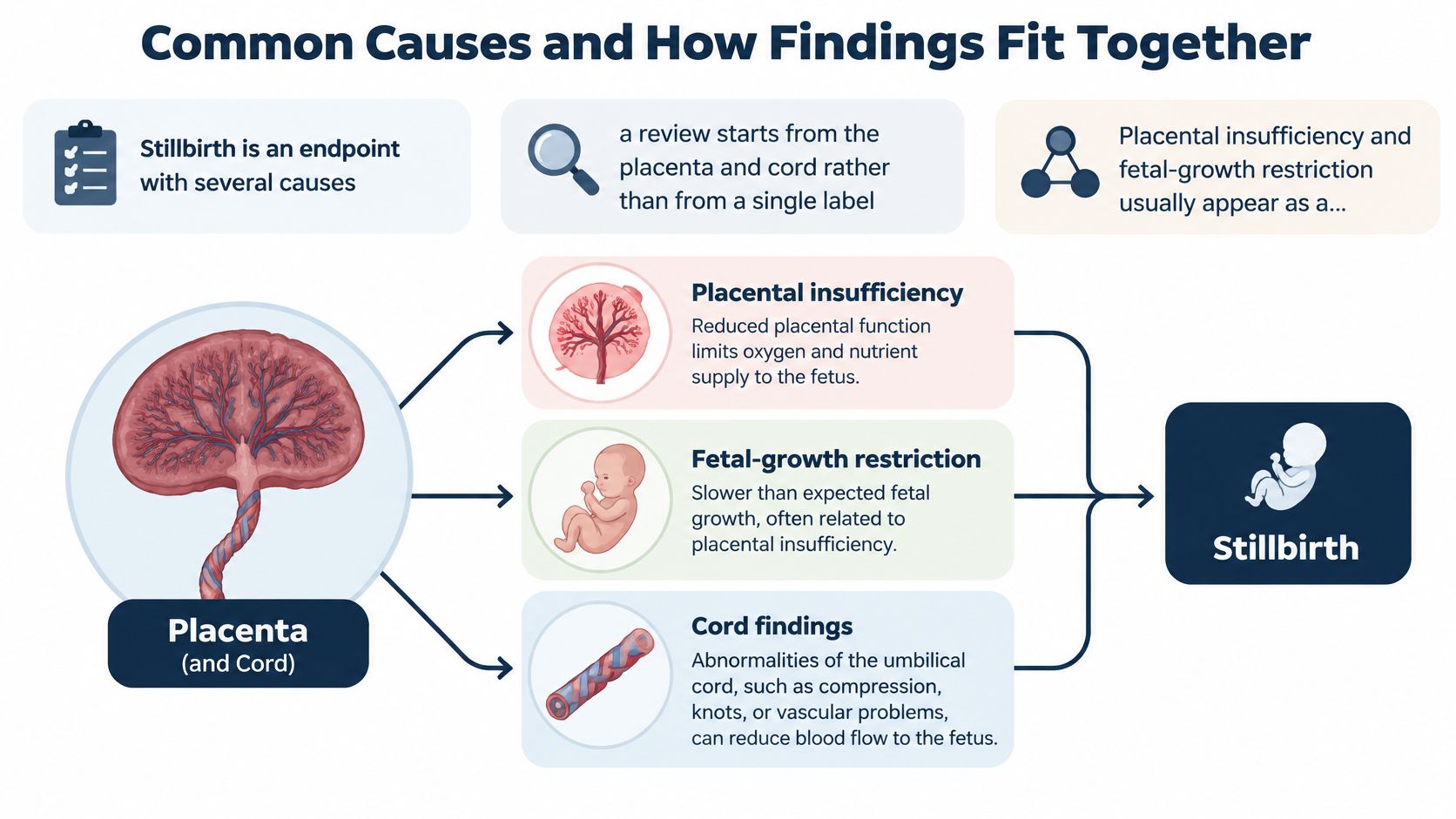
Placental insufficiency and fetal growth restriction usually appear together. The baby is small for gestational age, and the placenta shows maternal or fetal vascular malperfusion under the microscope. Neither finding alone is enough. A small baby with a normal placenta sends us looking elsewhere, while matched growth and placental findings support a placental mechanism.
Maternal disease is read the same way. Hypertensive and diabetic disease are documented in prenatal records, but a diagnosis on a chart doesn't by itself explain a death. We ask whether the placenta shows injury consistent with that disease and whether growth, timing, and laboratory results line up. As ACOG information on stillbirth summarizes, major mechanisms include placental insufficiency, hypertensive or diabetic maternal disease, infection, prolonged pregnancy, complications of labor, umbilical cord disorders, and fetal congenital or genetic abnormalities. Congenital abnormalities are a recognized cause, but they account for a minority of stillbirths in high-income countries, while the proportion in low-income settings is less certain because diagnostic capacity is limited.
Infection may appear in the membranes, placenta, or fetal tissue. Fever during labor alone doesn't confirm it. The finding carries weight when histology, meaning microscopic tissue examination, matches the clinical course.
Umbilical cord problems include thrombosis, tight coiling, true knots, and abnormal insertion into the placenta. A cord around the neck is common in live births too, so it matters most when it fits with acute changes, growth problems, or a clot. Labor complications and prolonged pregnancy are read against the delivery record and fetal monitoring when that record exists.
The short video below walks through how placental and fetal findings are correlated in practice.
Two Fictional Composites
Say a term pregnancy involves reduced fetal movement, maternal high blood pressure, a small baby at delivery, and a placenta showing maternal vascular malperfusion. Each item is ordinary on its own. Together, they support a placental cause tied to maternal disease, and that conclusion can change counseling and monitoring in a later pregnancy. Families weighing testing options can read our overview of how to get genetic testing and when it's indicated before deciding whether that row applies.
Contrast a second composite. The external exam is normal, the placenta was discarded, and no genetic sample was saved. That review may stay unexplained because the most informative specimen is gone, even when every available step was taken. A negative or nondiagnostic fetal exam doesn't exclude a placental or maternal mechanism.
A 2026 update of stillbirth research priorities identifies unanswered questions about which post-death tests best determine cause, how testing can reveal previously unrecognized placental disease, and why some stillbirths remain unexplained even after investigation. No single test reliably answers every case. Placental structure, growth, infection, thrombosis, genetic conditions, and maternal disease each need different evidence.
Plain rule: A cause is supported when independent findings point the same way. When they don't, unknown is the honest result.
Naming a cause and judging preventability are different questions. A supported mechanism answers the first, and it doesn't settle the second on its own.
Records, Support and Texas Next Steps
No single office holds the whole file after a stillbirth. Each record lives with whoever created it, so a complete picture comes together only when the family requests the pieces one by one. Knowing which holder has which document saves weeks of back-and-forth.
- Prenatal records: Held by the clinic or practice that provided pregnancy care. Ask for visit notes, ultrasound reports, and laboratory results, because these show what was known and monitored before the loss.
- Delivery note and fetal monitoring: Held by the hospital. Request the labor record and monitoring strips if monitoring was used.
- Placenta pathology report: Held by the hospital pathology department, if the exam was done. Ask specifically, because it may not be in the discharge packet.
- Hospital autopsy report or decline letter: Held by the hospital, or by the county office that handled the case if one did.
- Fetal death certificate worksheet: Often started at the hospital and completed with the funeral home. Keep a copy before it's filed.
Our walkthrough of a medical records request and what to ask for covers the request wording. When a family asks us for an independent fetal or perinatal exam, these same records are what the pathologist reads alongside the new findings. An exam adds to this file. It doesn't replace it, and it doesn't by itself prove preventability or negligence.
Support after a stillbirth isn't standardized anywhere. A 2026 global scorecard summary found no global consensus on respectful care after perinatal death, with seven of 20 indicators lacking enough data. Families shouldn't assume a system will offer recognition automatically. Asking directly works better than waiting.
Choices at the Hospital and Afterward
Families can usually ask for time with the baby, photos or mementos if they want them, and control over who is told and when. There's no correct set of choices. Some families later want guidance on choosing a comforting keepsake after loss, and others don't. Hospital bereavement staff can explain options without the family committing to any of them.
Texas Rules That Govern Disposition
Burial or cremation follows Texas funeral rules, not clinical ones. The Texas Funeral Service Commission oversees funeral service providers, and state funeral and health laws govern how remains are handled, how cremation is authorized, and how funeral directors are licensed. A licensed funeral home can confirm which rules apply to each step of the family's arrangements.
Employment leave and insurance depend on the employer plan and on applicable federal or state rules, and we don't decide those claims. Families can ask their human resources office what leave category applies and ask the hospital billing office how the delivery and any testing will be coded. Grief after a stillbirth is a normal response to a death. Support should fit the family's culture and wishes, and nobody should be told how they're supposed to feel.
Common Questions About Stillbirth Reviews
Can a Private Exam Help if the Hospital Already Performed an Autopsy
Yes. A private exam can provide an independent second opinion autopsy reading of the findings, slides, and records. Its conclusions are compared with the hospital file rather than substituted for it, and agreement between two readers can itself be useful information.
Is There Any Point to an Exam if the Placenta Was Discarded
Yes, with a clear limit. The report can still document the baby's measurements and findings and review the records in full. The strongest placental evidence is lost, so some questions may stay open even with careful work.
Does a Normal Test Rule Out a Medical Cause
No. Most single tests answer only part of the question. A normal genetic result, for example, narrows the possibilities but says nothing about placental blood flow or infection. Normal results close doors one at a time rather than closing the case.
Does a Cause Unknown Result Mean Care Was Poor
Not by itself. An unknown result can follow a complete workup with every specimen saved and examined. Likewise, a named placental disease isn't proof of negligence. Questions about the standard of care belong to a legal review, and in Texas counties without a medical examiner, a justice of the peace is the official who handles inquests on deaths under county authority.
How a Private Exam Works and When to Call
A private exam follows a set order so families, funeral homes, and attorneys all know what happens next. The steps below describe our autopsy process for fetal and perinatal cases.
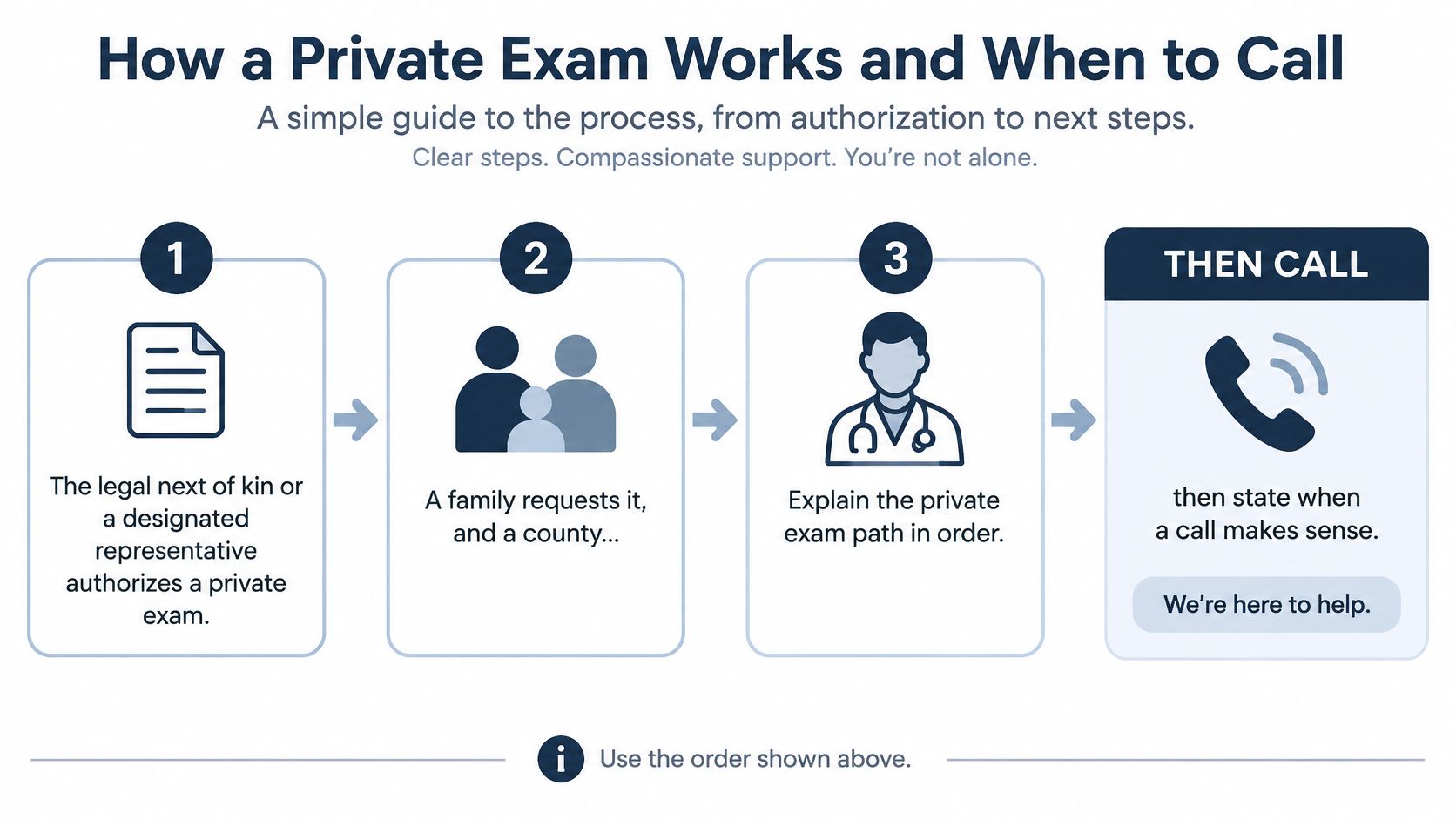
- Authorization comes first. The legal next of kin or a designated representative authorizes a private exam. A family requests it, and a county office doesn't order it. We confirm authority before anything moves.
- We coordinate transport. Our team works directly with the funeral home, and after authorization we receive the baby into our care within 24 hours. Our in-house licensed transport serves all 254 Texas counties from Elgin, Texas.
- We confirm the questions. Before the exam, we agree on what the family or attorney needs answered, most often how and why the baby died and whether the placenta was fully reviewed. The exam is built around those questions.
- A board-certified pathologist performs the exam. Every examination is performed by a forensic pathologist certified by the American Board of Pathology. The same pathologist writes the report and reviews the findings with the family. Families aren't handed off to a technician.
- Funeral plans stay on track. We coordinate timing with the funeral home so viewing and services aren't delayed without need. The examination is performed carefully and respectfully so the baby can still be viewed.
- Chain of custody applies throughout. Chain of custody means a documented record of every transfer of the body and specimens, from release to return. Reports are written so they can be used in a legal setting when needed, which matters for attorneys and for Texas County officials who review these cases.
- Timing depends on laboratory work. Most cases are completed within 24 to 48 hours of the exam itself, and we contact the family with preliminary findings. Histology and outside laboratory testing can take longer, so we don't promise a final date.
- We explain the report in plain language. After the written report, we walk through every finding with the family and answer questions directly. Medical terms are translated as we go.
When a Call Makes Sense
An independent autopsy review is worth a call when a county office declined the case, the placenta wasn't fully reported, the cause was left unclear, or a family or attorney wants a second reading of a hospital exam. Families searching for private autopsy services Texas or an autopsy near me usually fall into one of those groups. It's a poor fit if the only goal is a guaranteed cause or a promised lawsuit outcome. An honest cause of death investigation can't offer either.
No exam can promise an answer. A complete exam can promise that the available evidence was actually looked at.
When families call us at (806) 230-1889, three facts let us say quickly whether an exam can still help. We ask for the gestational age, whether the placenta was saved, and whether a funeral time is set. With those, we can explain what's possible, what's already been lost, and what a report could realistically add. There's no need to decide on the first call, and our team is available around the clock for families and for the funeral homes and attorneys helping them.
If your family or client is left with an unclear cause after a stillbirth, we provide independent fetal and perinatal examinations, second opinion reviews of hospital findings and records, and plain language reporting across all 254 Texas counties, with full chain of custody from transport through the final report. Contact Texas Autopsy Services to speak directly with our team about what an exam can still show in your baby's case, with no obligation to decide on the first call.