October 12, 2026 · Texas Autopsy Services
Updated Autopsy Report: What Changes, When, and Why
An updated autopsy report can add new testing or expert review to an earlier finding. Learn what changes, when amendments occur, and how
On this page
- What an Updated Autopsy Report Actually Means
- What a Compliant Autopsy Report Contains
- Supplemental Findings, Addendums, and Formal Amendments
- How New Testing and Second Opinions Change Conclusions
- Chain of Custody and the Auditability of an Update
- How Families or Attorneys Can Request a Review
- A Plain-Language Change Matrix for Comparing Reports
- Common Questions About Updated Autopsy Reports
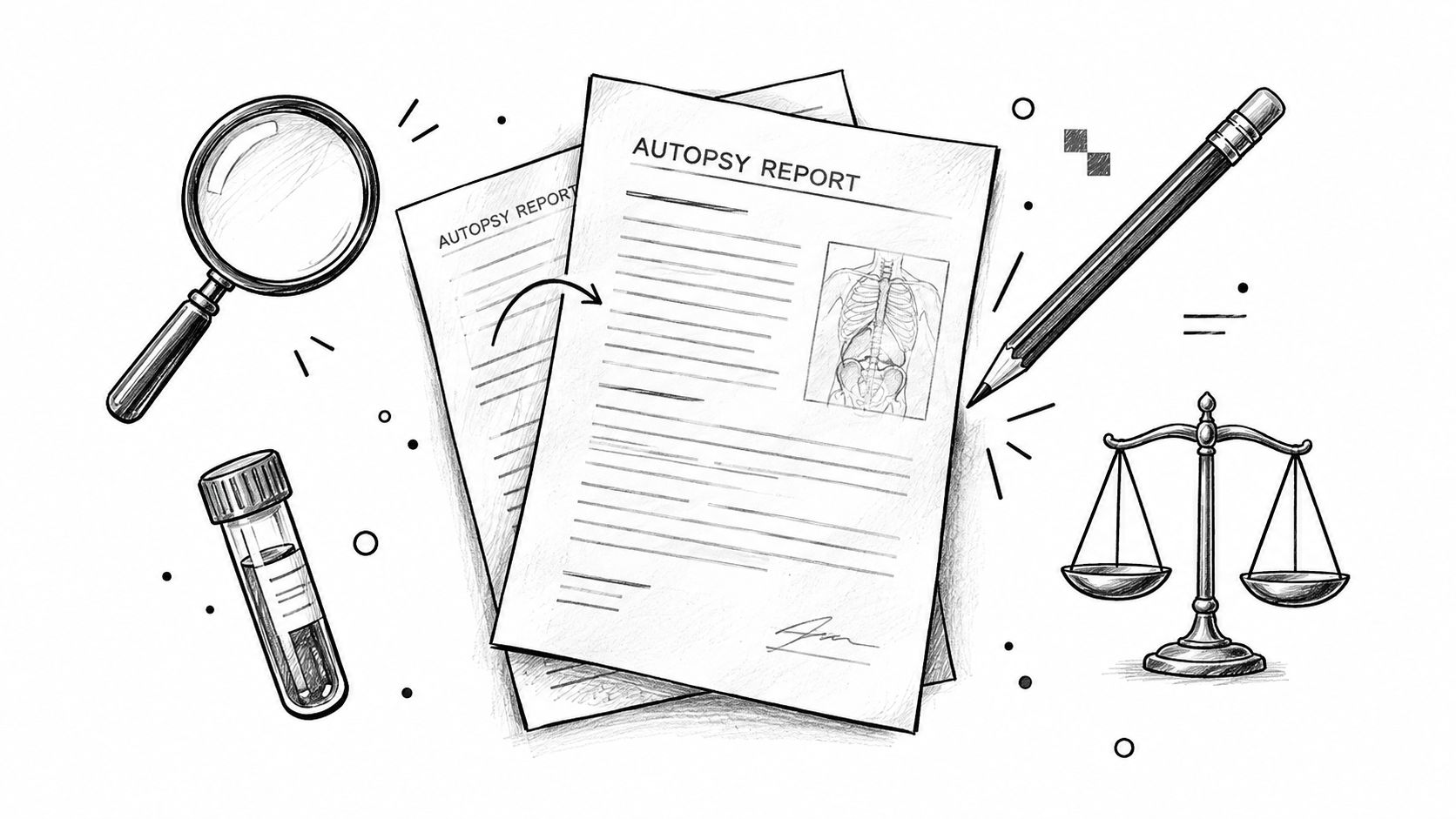
An updated autopsy report is a controlled supplement or formal amendment to the original record, and it usually appears when delayed testing, new records, or a second review changes what can be said with confidence. It is not a silent rewrite, and it should make clear what changed, what stayed the same, and why the new wording matters.
A family often learns this months after the first report, when a toxicology panel, histology slide review, or added medical information changes the medical-legal picture. That can be hard to absorb, especially when the original conclusion already guided a death certificate, an insurer, or a lawyer's next step.
What an Updated Autopsy Report Actually Means
A grief-stricken family may first see one cause of death in the original paperwork, then later receive an amended document that says something more specific, or entirely different. That usually means the case file gained new evidence, not that the first examiner guessed. The better way to think about an updated autopsy report is as a controlled evidentiary document that builds on the first one rather than erasing it.
When an update becomes necessary
Three situations drive most updates. The first is delayed laboratory evidence, such as toxicology or tissue analysis that was not ready when the initial report was issued. The second is new information, like medical records, scene details, or witness statements that change how the findings are understood. The third is a second expert review, where an independent forensic pathologist re-reads the file and reaches the same conclusion, a refined one, or a different one.
That distinction matters because a revision can change several things at once. It might clarify the cause of death, which is the disease or injury that led directly to death. It might adjust the mechanism of death, which is the body process that stopped life, such as bleeding, respiratory failure, or arrhythmia. Or it might change the manner of death, which is the medicolegal category, such as natural, accident, suicide, homicide, or undetermined.
A legitimate update should tell the reader exactly what was added, what was interpreted, and what conclusion was or was not changed.
For families, that means the document should read like a clear explanation, not a private rewrite. For attorneys, it should preserve the original report date, identify the amendment date, and show how the new evidence affected the conclusion. For anyone trying to understand the file, the key question is simple, what changed, and why.
What a Compliant Autopsy Report Contains
Before anyone can judge whether an update is meaningful, they need to know what a proper original report should contain. The National Association of Medical Examiners standards require a report to be readable and descriptive, while still including interpretations and opinions that make the findings informative. Under those standards, a forensic autopsy report should include the date, place, and time of examination, the decedent's name when known, and the case number. It should also document external and internal examinations when performed, include a separate injuries section, and state diagnoses, interpretations, and cause of death. The standards were established in 2005 and organized into 8 sections with 31 standards as described in the NAME performance standards material.
The parts that matter most
The report is not just a narrative. It is a structured record that separates what was seen from what was concluded. That matters because later evidence may change the interpretation without changing the original observation. A bruise, fracture, or organ finding can still be the same fact even if a later toxicology result shifts how that fact is read.
The plain-language terms help keep everyone on the same page:
- Cause of death means the injury or disease that started the chain leading to death.
- Mechanism of death means the body process that failed.
- Manner of death means the medicolegal classification used in death investigation.
Families, attorneys, vital records staff, insurers, and courts all rely on those distinctions. A report that is complete on the front end gives everyone a stable base when an update arrives later. It also makes it easier to see whether the revised document is truly adding evidence or just restating the same conclusion in new language.
For readers who deal with compliance language in other settings, the way CloudOrbis compliance updates are organized offers a useful analogy. The point is the same, keep the record traceable, separate original observations from later interpretation, and show what changed.
Supplemental Findings, Addendums, and Formal Amendments
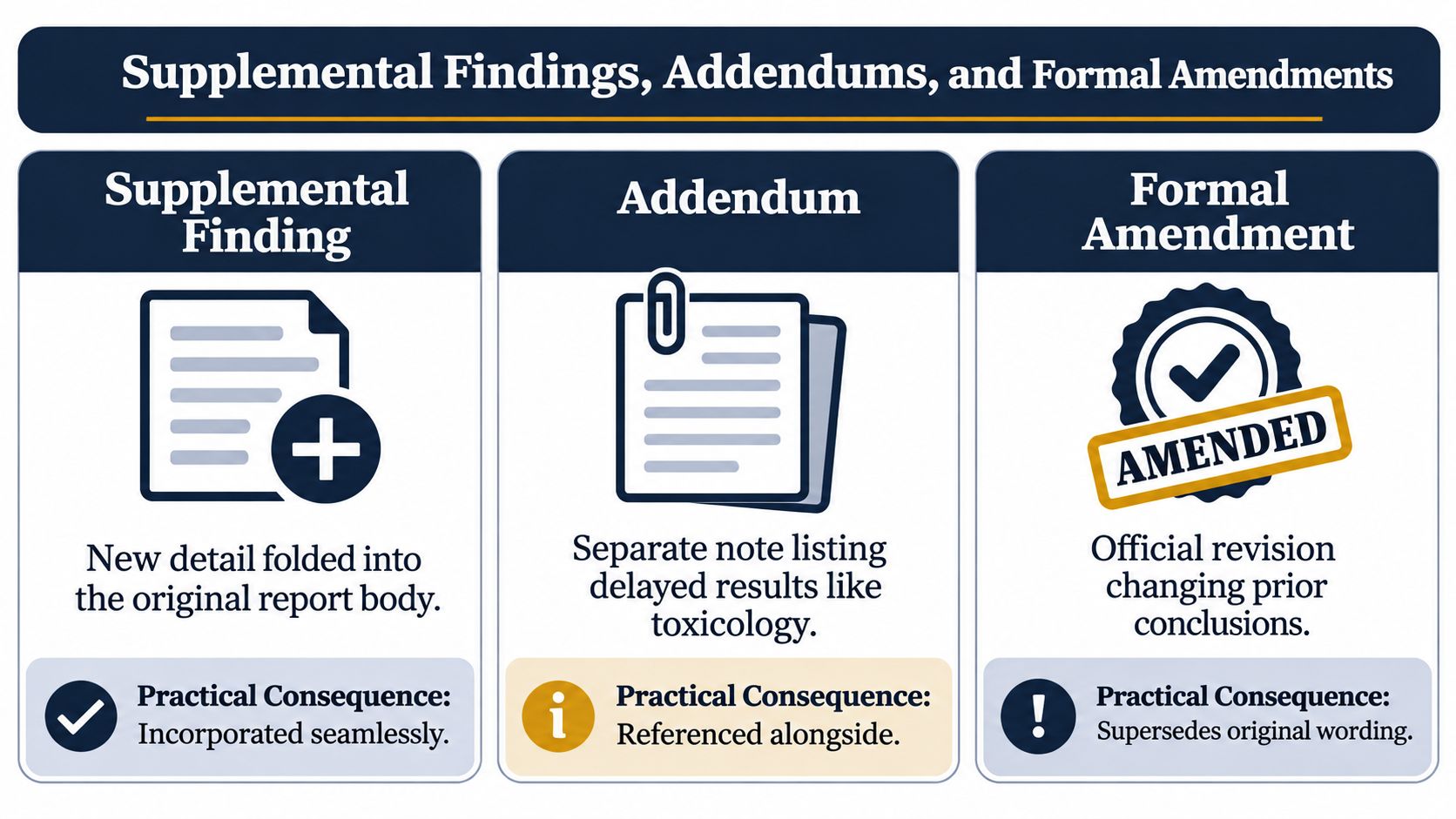
Not every update changes the headline conclusion. A supplemental finding can fold new detail into the body of the original report. An addendum usually stands beside the first report and lists delayed results or added review. A formal amendment goes further, it replaces or revises prior wording about cause or manner of death.
How the language usually differs
A supplemental finding is the lightest touch. It may add a detail that fits cleanly with the original observations and doesn't require a new conclusion. An addendum is more explicit, it can list new toxicology, histology, or record-review results and then state whether the original conclusion still stands. A formal amendment is the document you issue when the evidence no longer supports the earlier wording.
The practical consequence matters to everyone downstream. Vital records offices need to know whether a death certificate should be amended. Courts need to know whether the revised language changes an opinion already relied on. Insurers need a clear explanation of whether the underlying conclusion shifted. Law enforcement may need to know whether the manner of death moved from undetermined to something more specific, or the other way around.
If the evidence is still incomplete, the responsible report says so plainly. Certainty should never be padded.
A good update keeps the original findings visible, identifies what was added, and explains whether the conclusion is unchanged, modified, or still indeterminate. That is especially important when the revision clears up wording without changing the underlying medical opinion. The reader should be able to tell whether the document confirms the first result, sharpens it, or replaces it.
For a related example of how record annotation works in pathology, our internal note on annotation of an autopsy shows why later entries should stay visibly tied to the original examination.
How New Testing and Second Opinions Change Conclusions
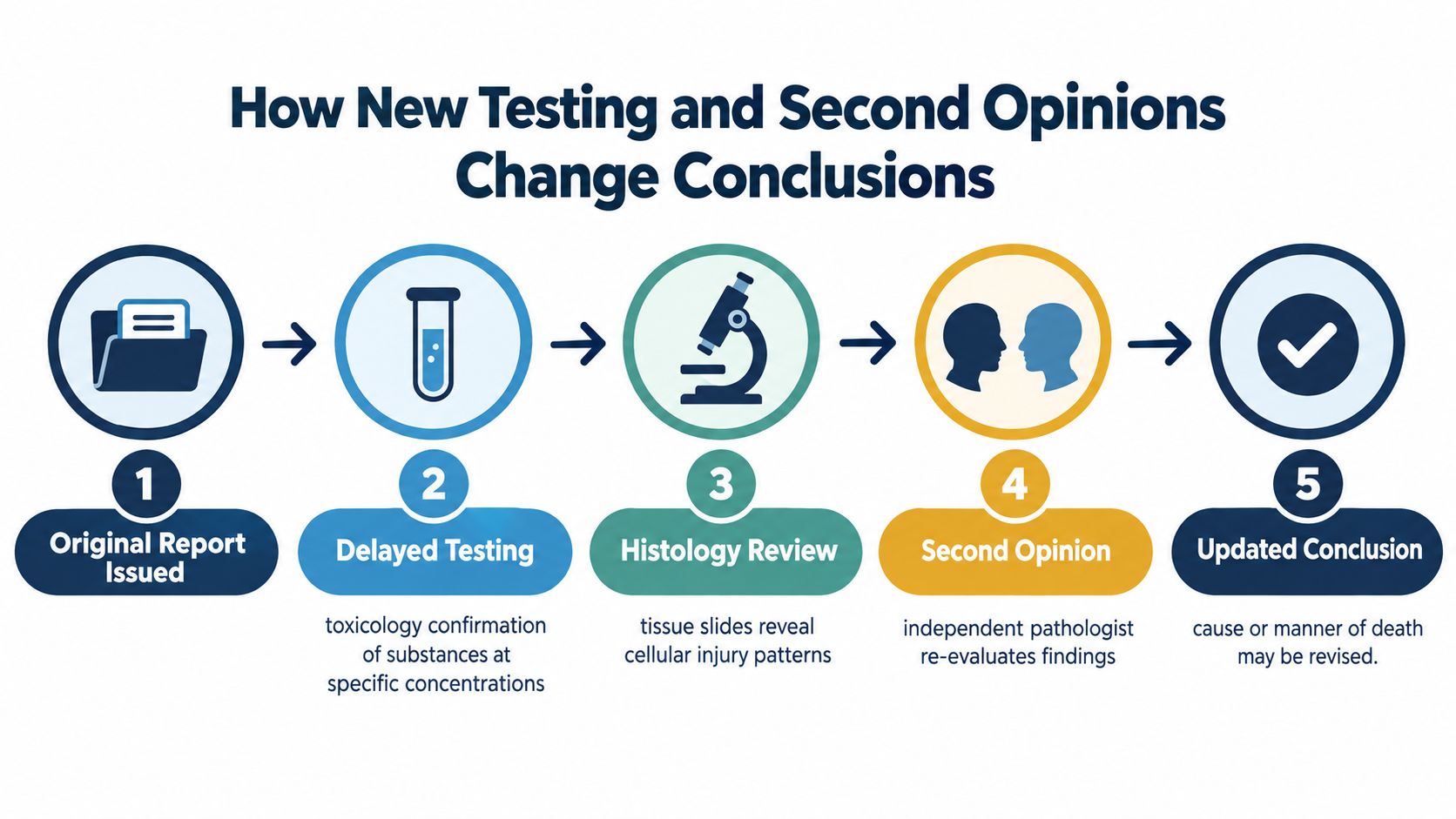
Delayed testing can clarify a case in ways the first report couldn't. Toxicology may show whether a substance was present, but it has to be read with specimen type, collection timing, medical history, postmortem redistribution risk, and the autopsy findings themselves. A negative result can matter just as much as a positive one, because it may rule out a suspected substance or show that the wait was about laboratory processing, not a hidden finding.
What new evidence can add
Histology, which is microscopic review of tissue slides, can show cellular injury patterns that help place disease or trauma in time. Molecular or genetic testing can identify inherited cardiac or metabolic conditions that don't always show up clearly at autopsy. Medical-record review can explain why a person's clinical course matches, or doesn't match, the postmortem findings.
Second-opinion review works the same way in principle. A new examiner may agree with the original conclusion, refine the wording, or identify a different cause or manner of death. The strength of the update comes from how the new evidence fits with the original observations, not from the new test alone.
Our board-certified forensic pathologists see this in everyday case review. One file may contain a clear injury pattern but no final laboratory results yet. Another may include a toxicology report that needs context because the substance found doesn't, by itself, explain death. The careful approach is to integrate the whole record, then state what can be supported.
A late result isn't automatically a dramatic result. It's only meaningful when it answers the same question the autopsy was asked to answer.
A case can change direction, stay the same, or remain uncertain. What matters is that the logic is visible. If the new material doesn't support a stronger conclusion, the report should say that instead of forcing certainty.
Chain of Custody and the Auditability of an Update
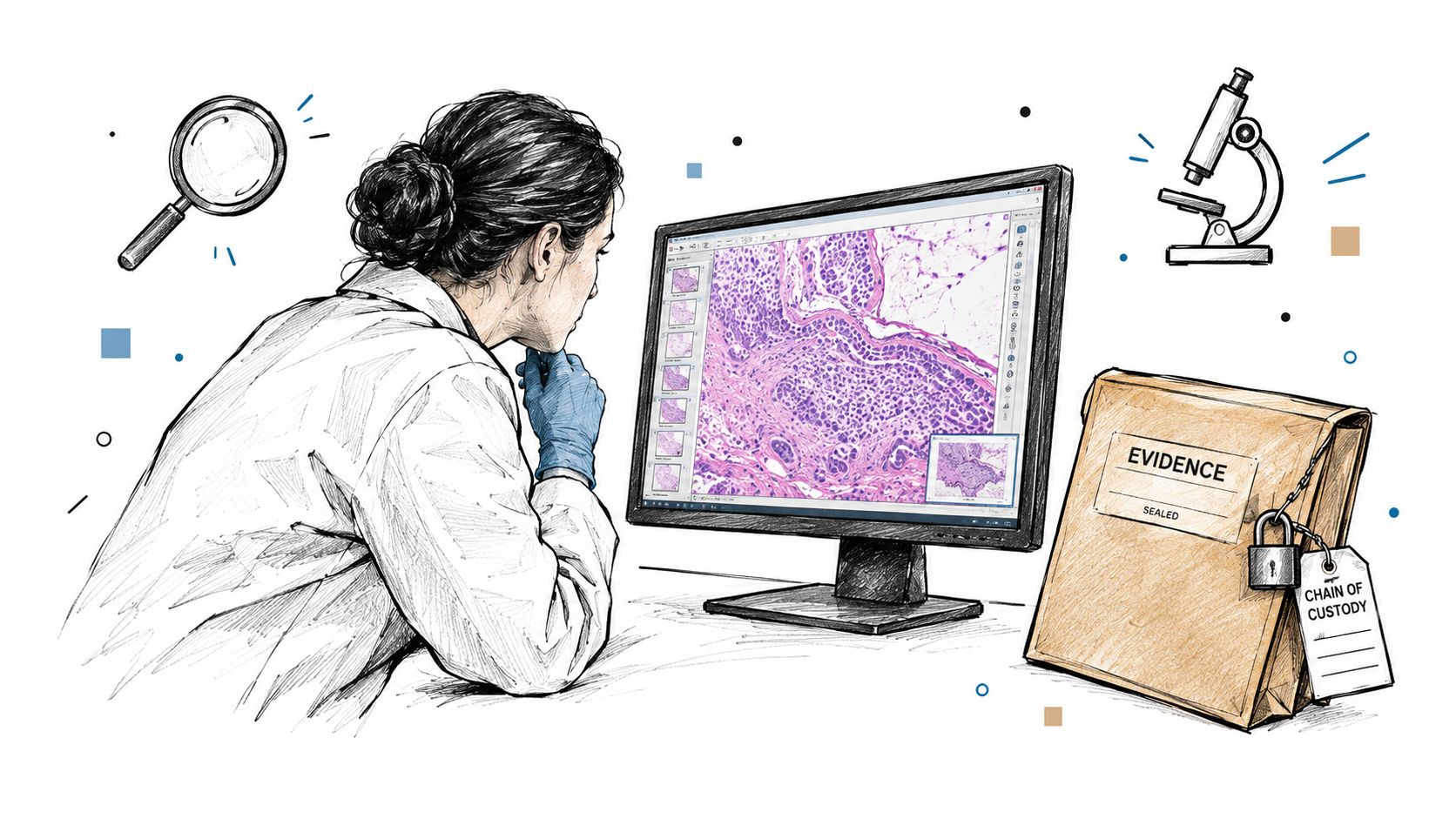
An update years after the original examination is only as strong as the paper trail behind it. Chain of custody means the record of who handled a specimen, when they handled it, how it was stored, and what happened to it next. That record is what lets a reviewer trust that the sample belongs to the right case and wasn't mixed up, damaged, or left with an unexplained gap in control.
Why traceability changes the weight of the report
The National Institute of Justice guidance on death investigation says the file should capture custodians, containers, labels, preservatives, collection locations, transfers, and final disposition. It also notes the value of photographs and report identifiers in tying visual evidence to the examination as outlined in the death-investigation guidance. When an update arrives much later, those controls become the difference between a clean explanation and a fight over whether the evidence can still be trusted.
A defensible update should carry a revision history, list every newly reviewed item, and keep the original report intact without making hidden changes. It should also reference the exhibits or images supporting the revised conclusion and disclose any specimen limitations. That way, if a court, insurer, or reviewing physician asks how the conclusion changed, the answer can be reconstructed from the record itself.
For Texas families and attorneys, that audit trail is just as important as the final wording. It shows whether the conclusion came from fresh evidence, a corrected interpretation, or a better-documented review. A report with a clean custody record is easier to defend because its reasoning can be checked line by line.
For a practical discussion of how evidence tracking is handled in casework, our note on chain of custody procedures offers a useful companion reference.
How Families or Attorneys Can Request a Review
The safest first step is to gather the core documents before asking for a second opinion. That usually means the original autopsy report, the death certificate, relevant medical records, and any scene or witness information that helps explain the clinical and investigative picture. It also helps to know who ordered the original autopsy and which authority still controls the case file.
What to ask for on the first call
A family member or attorney should ask whether the reviewer can provide a written opinion based on the existing file, whether additional records are needed, and whether the outcome will be a consultation letter or a formal amended report. Those are not the same thing. A consultation letter gives an independent opinion. A formal amendment is the document that may need to go back to vital-records authorities or other agencies.
If records still need to be gathered, a structured retrieval process matters. A practical overview of that work appears in the guide to vendor selection and pricing, which is helpful when an attorney needs to organize the file before review. The point is to bring the reviewer a complete record, not a partial one.
Keep the original report, keep the death certificate, and keep every letter that explains what changed.
For readers who want a case-review pathway, our internal note on review my case outlines the kind of documentation that helps an independent forensic pathology practice evaluate whether an update is warranted. One practical option is Texas Autopsy Services, which performs independent postmortem review and prepares a written finding based on the record and examination materials.
A clear request usually leads to a clearer answer. If the evidence supports a change, that change should be stated plainly. If it doesn't, the reviewer should say that too.
A Plain-Language Change Matrix for Comparing Reports
The easiest way to understand an updated report is to compare it line by line with the original. A change matrix makes that comparison visible. It helps a family, attorney, or reviewer see whether the revision changed the core conclusion or only refined the wording around it.
| Element | Original Report | Updated Report | Evidence Added |
|---|---|---|---|
| Cause of death | First stated conclusion | Same, refined, or revised | Toxicology, histology, records |
| Mechanism of death | Body process described in the first report | Same or clarified | Microscopy, clinical course |
| Manner of death | Initial medicolegal category | Same, changed, or indeterminate | New investigative information |
| Contributing conditions | Listed or not listed | Added, removed, or narrowed | Medical records, expert review |
| Wording | Original phrasing | Revised phrasing | Plain-language clarification |
| Limitations | What was unavailable then | What remains unresolved now | Pending testing, specimen limits |
| Downstream notices | Who already received the first report | Who must receive the update | Vital records, insurer, court, law enforcement |
How to read the matrix
If a line changed, ask why. If a line stayed the same, ask whether the new evidence confirmed it or merely didn't affect it. If a line is missing, that is a signal to ask whether the revised report was meant to be complete or whether it was only a supplemental note.
The best practices are straightforward. The report should mark which lines were revised, identify what evidence drove the change, and note whether downstream agencies need to be told. That keeps the comparison focused on facts rather than suspicion.
The goal of a comparison matrix isn't to look for trouble. It's to see exactly what the evidence supports, and what it doesn't.
When a family or lawyer can read the report this way, the document stops feeling opaque. It becomes a record that can be tested, explained, and trusted.
Common Questions About Updated Autopsy Reports
A wording refinement is different from a meaningful change. If the revised report only makes the same conclusion clearer, that is usually a clarification. If it changes cause, mechanism, manner, or a listed contributing condition, that is a substantive revision.
An update can take time because testing, review, and documentation all move at different speeds. A long wait doesn't by itself mean drugs, poisoning, or any other result. It often just means the file was waiting on the next step in the review process.
In Texas, Health and Safety Code Chapter 671 is the most directly relevant statute for determination of death and autopsy-report issues, while funeral, cemetery, crematory, and death-record rules sit in separate statutory categories. That separation matters because those subjects are not interchangeable legal buckets.
A death certificate can be amended after the original autopsy if the revised evidence supports a change and the proper authority makes or records that change. The key issue is not whether the first version exists, it's whether the revised conclusion is documented clearly enough for the record set that depends on it.
If you're trying to sort through a changed report, you don't have to do it alone. A careful review can show whether the update clarifies the original conclusion, modifies it, or leaves it unchanged, and that's often the most important answer a family needs.
If you're holding an original report and a later revision, our team can review the file, explain what changed in plain language, and prepare a documented forensic opinion that fits the evidence. Texas Autopsy Services offers independent autopsy and second-opinion review work across Texas, and you can reach us through Texas Autopsy Services when you're ready to talk through the next step.